



How to choose the right butchery machine
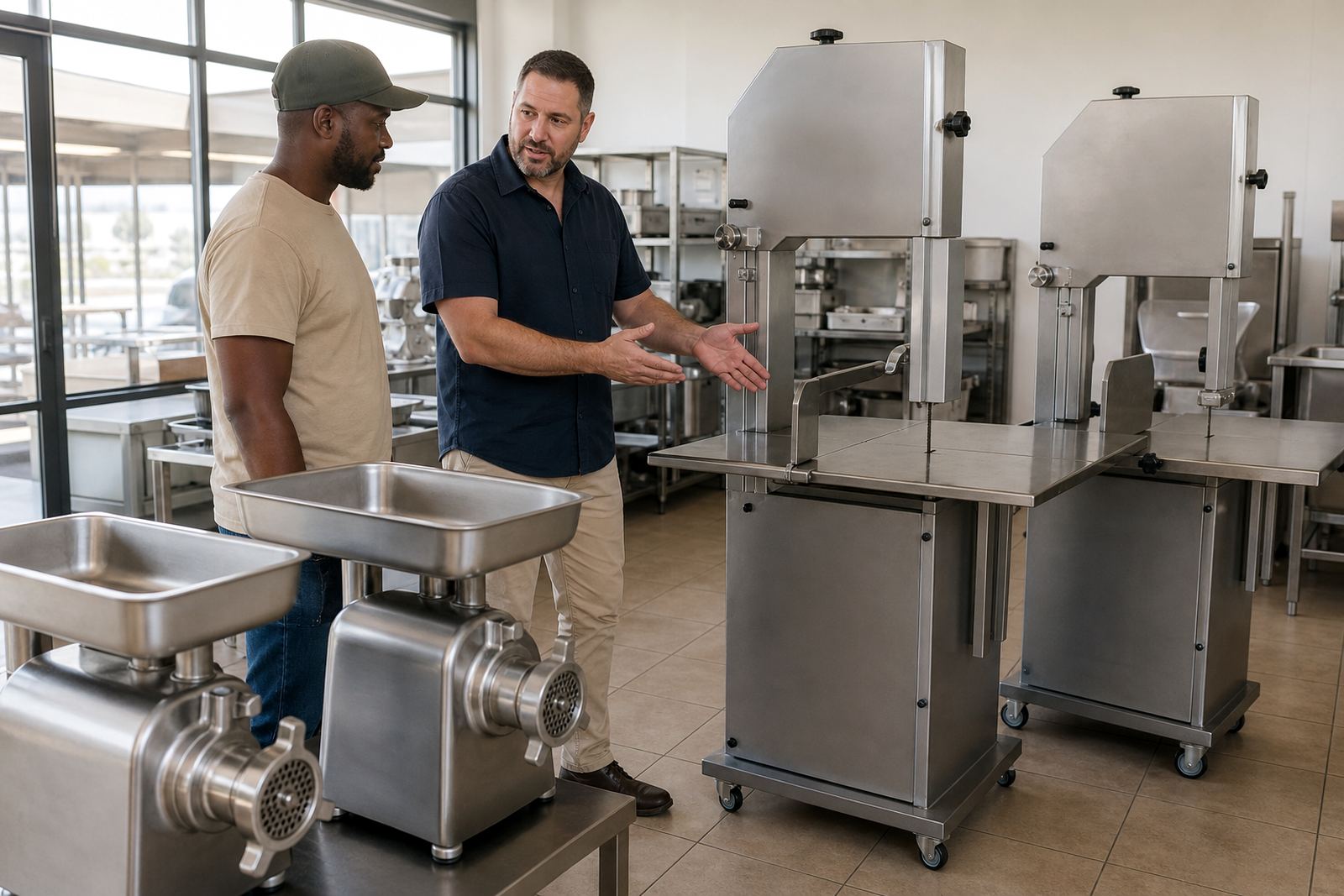
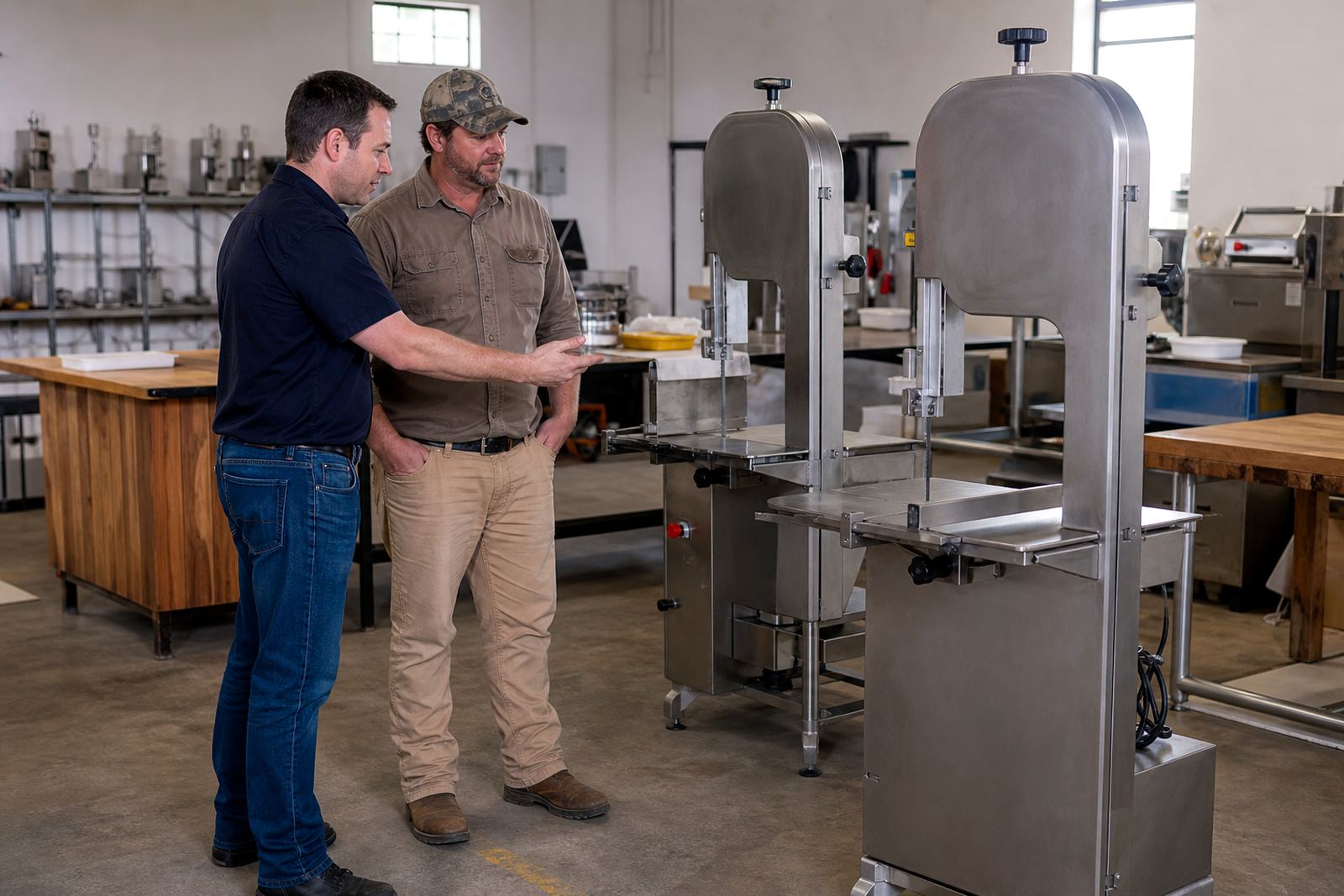
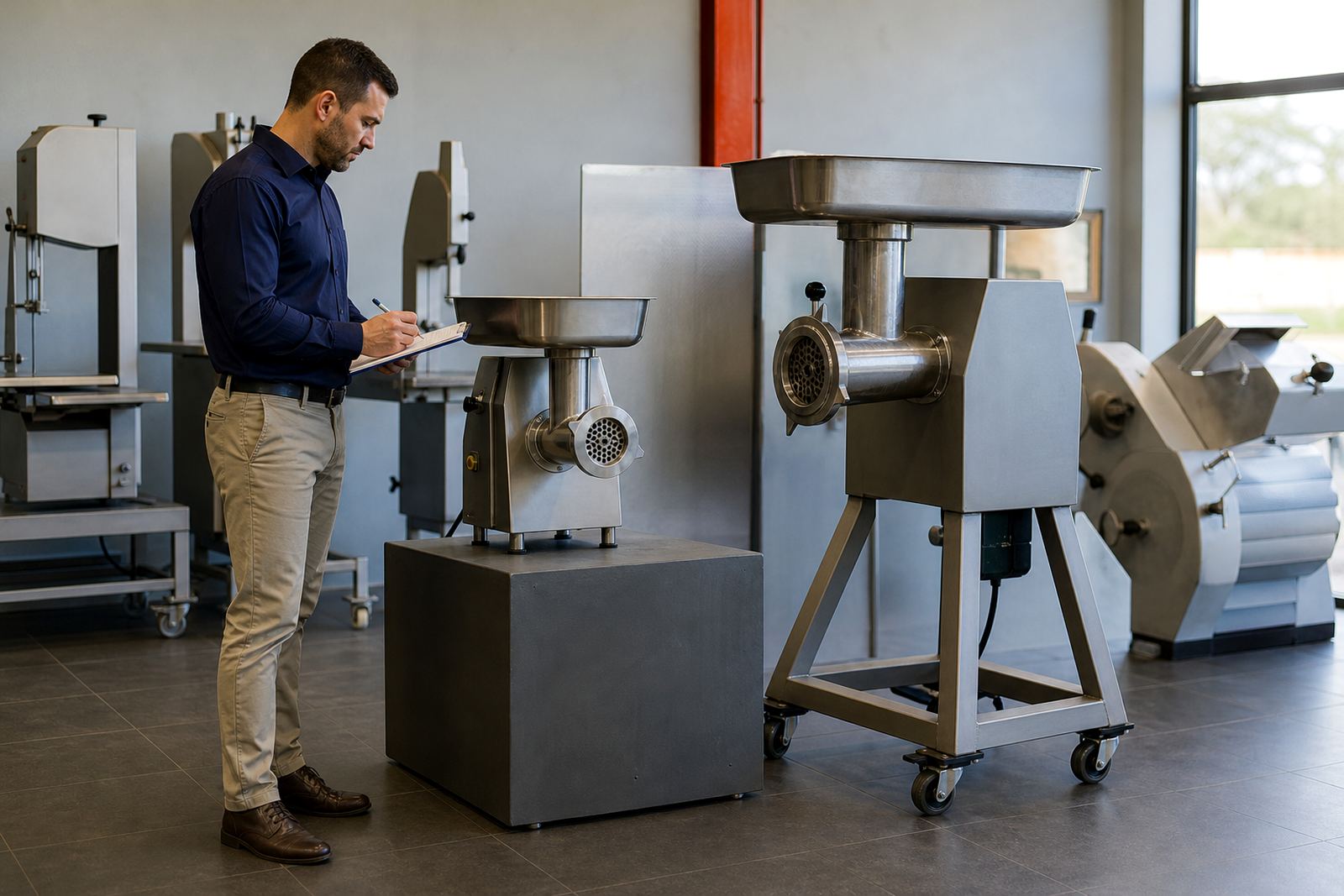
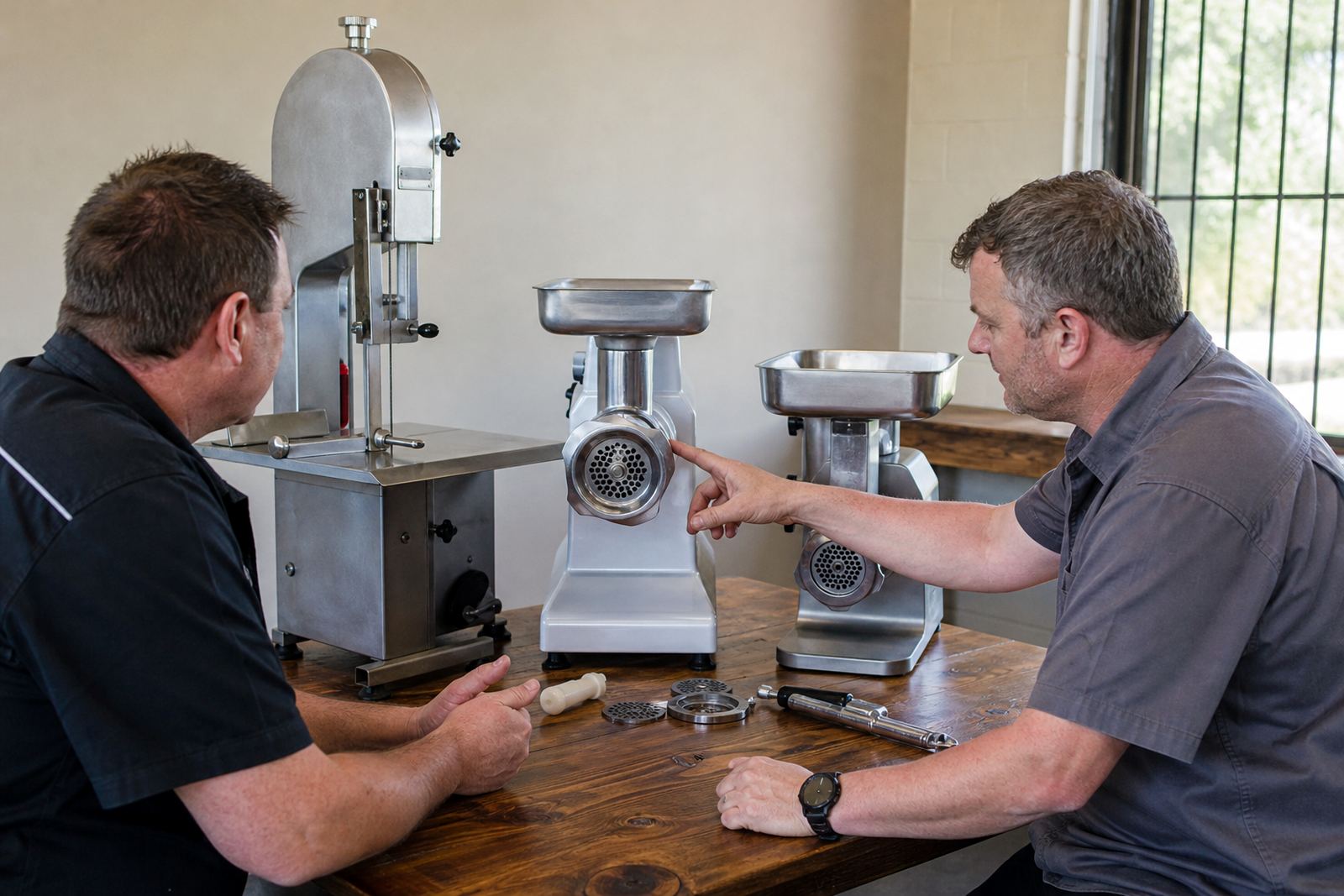
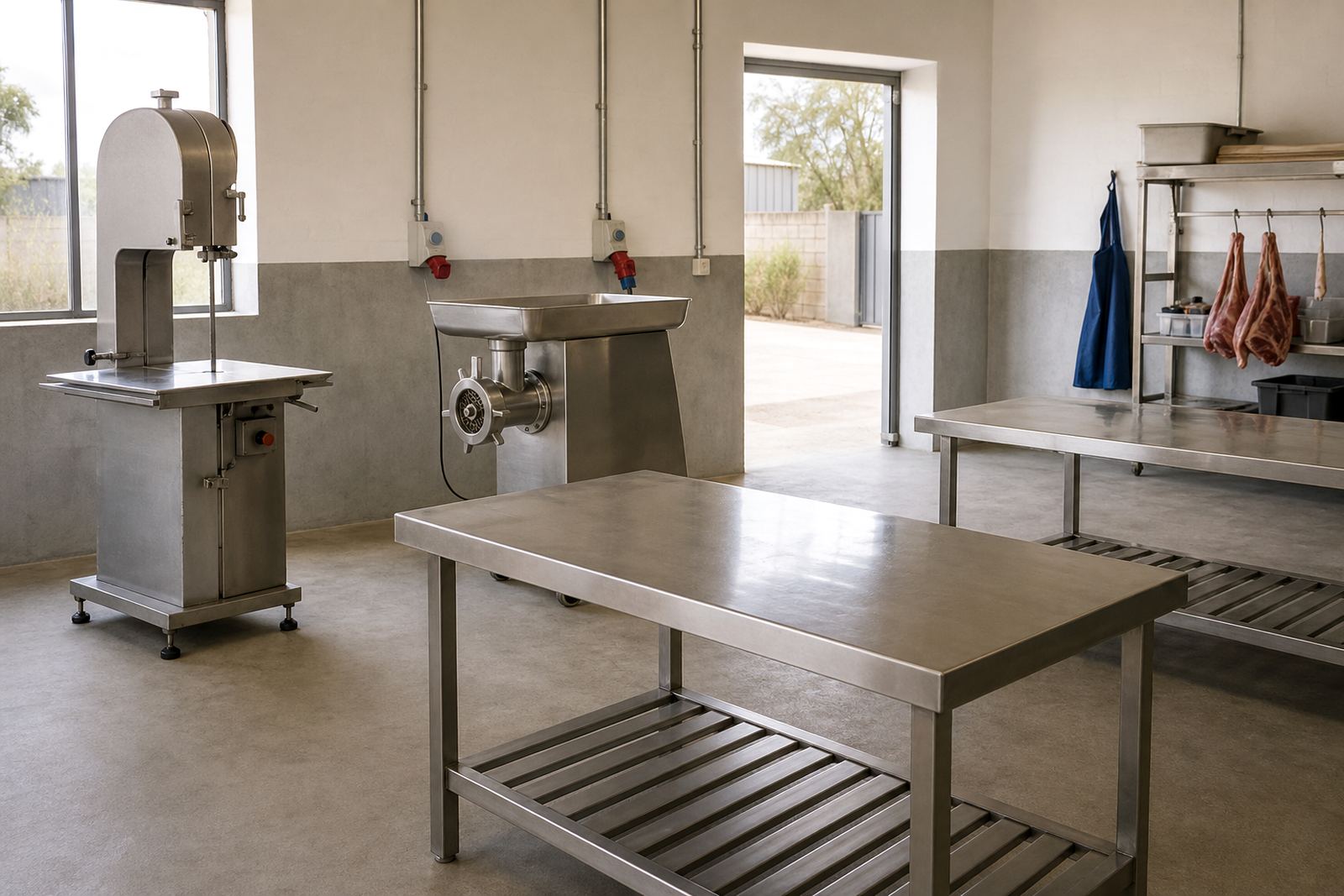
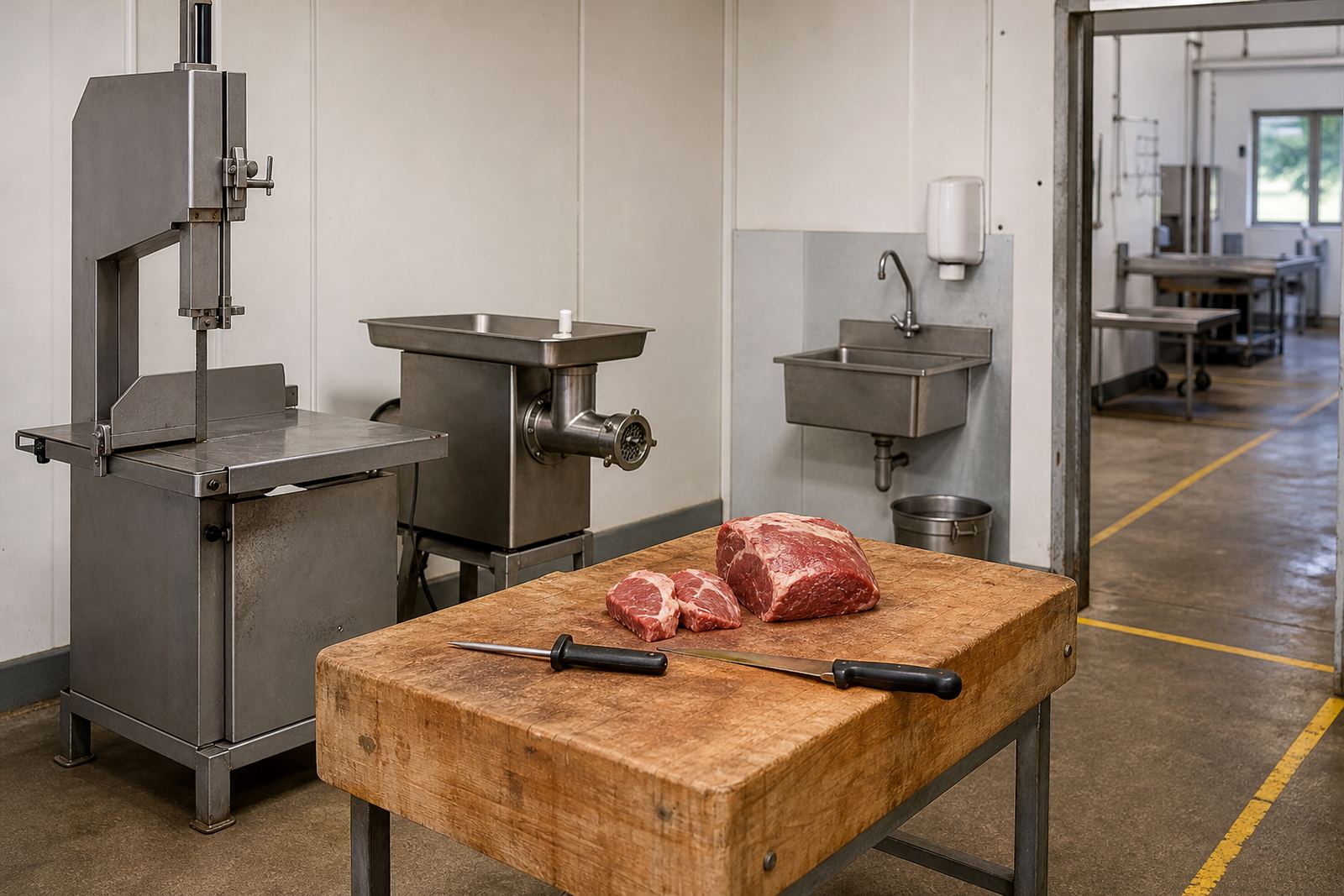
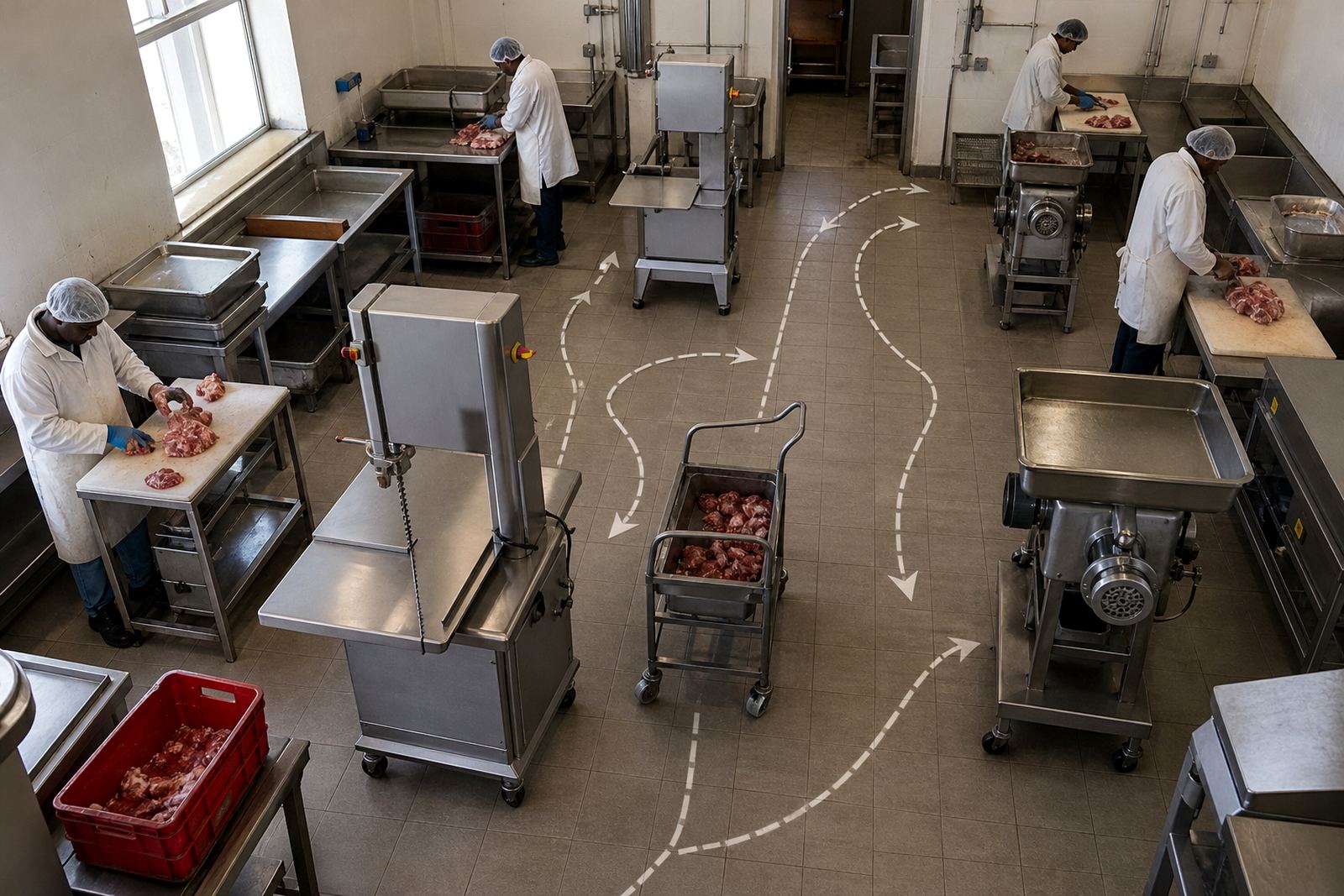
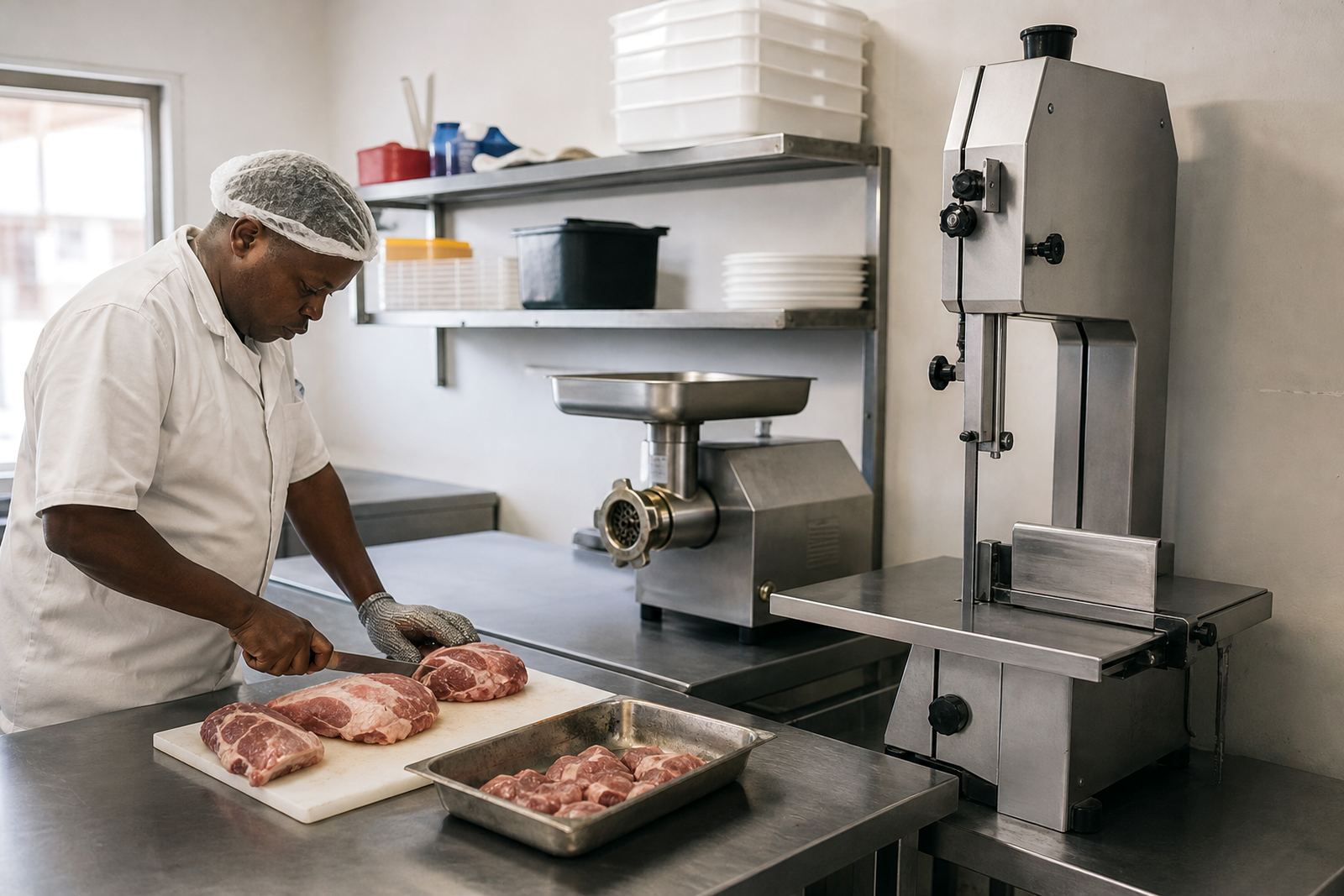
Choosing between a bandsaw and a mincer starts with the job you do most often. A bandsaw is suited to cutting through carcass sections, frozen product and larger pieces with more control, while a mincer is built for consistent mince, sausage meat and other prepared mixes. In a home setup, space, cleaning time and how often the machine will be used matter just as much as output. In a commercial room, you also need to think about workflow, staff training and whether the unit will stand up to daily use in hot Free State conditions or coastal humidity in places like Durban and Cape Town.
We keep these guides general so you can compare practical features without getting lost in technical jargon. If you are based in Bloemfontein, Johannesburg, Pretoria, Kimberley, Welkom or Kroonstad, the same basic questions apply, namely how the machine fits your room, how easy it is to clean and whether servicing is simple enough to keep downtime low.
Bandsaw basics for safe cutting
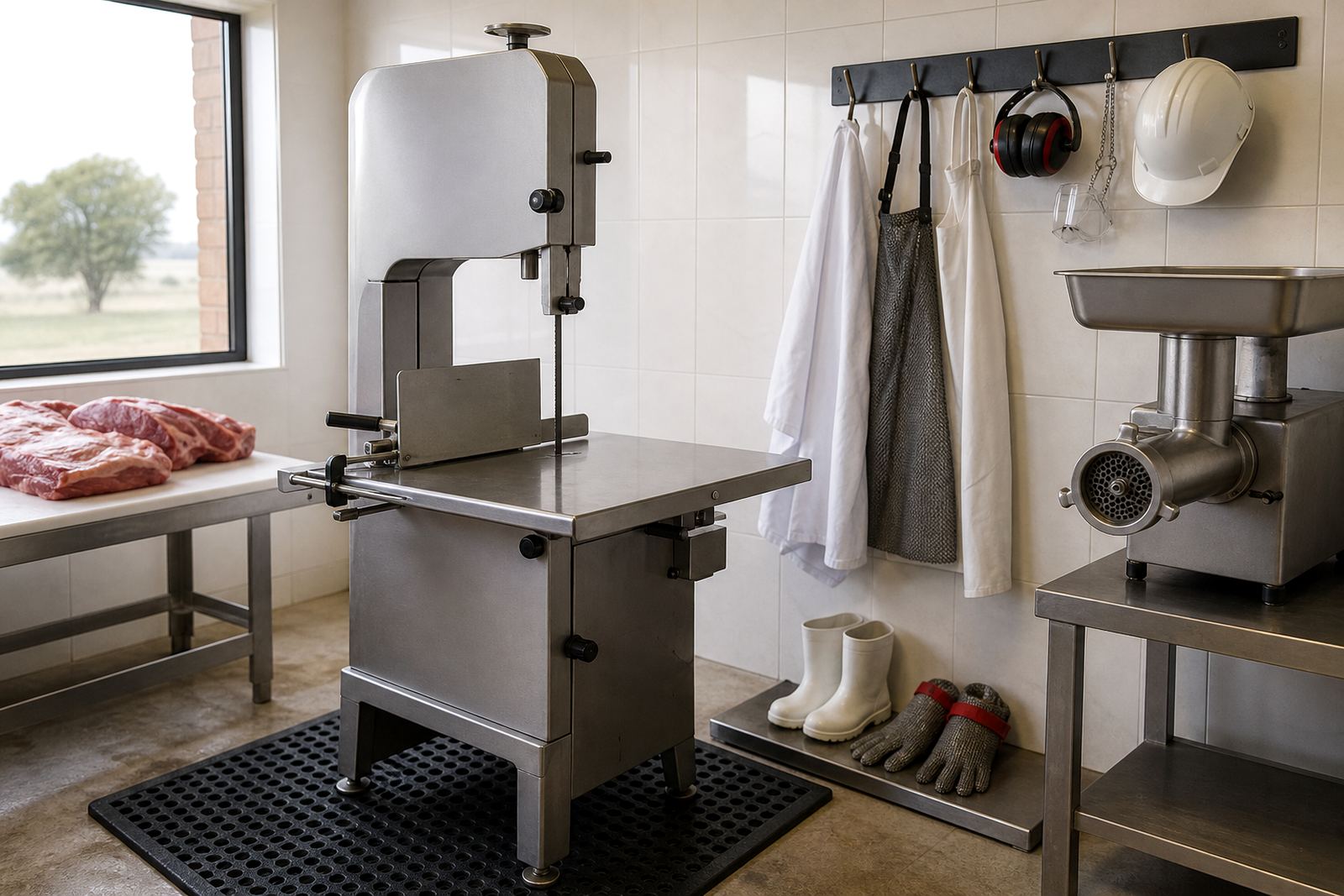
A butchery bandsaw should always be used with the guards in place and with steady, controlled feeding of product. Good practice starts with a clean cutting area, clear footing and proper PPE. Hands should stay away from the blade path, and operators should never rush cuts just to save a few seconds. If you are handling frozen sections or dense cuts, a well set machine helps with cleaner slices and less strain on the operator.
- Keep the blade area clean during and after use.
- Check guards before switching on.
- Use suitable gloves and aprons where needed.
- Do not force product through the cut.
- Switch off and isolate power before cleaning or adjustments.
Mincer use in small and busy prep rooms
Mincers are often used for regular production of mince, burger mix and other prepared meat products. The main thing is consistency. Feed the machine at a steady pace, keep the product suitably prepared, and avoid overworking the motor by pushing through more than the unit can handle. For home butchers and smaller shops, ease of cleaning matters just as much as output because any residue left behind can affect hygiene and product quality. During load-shedding or power interruptions, it is worth planning your prep so product is not left standing too long.
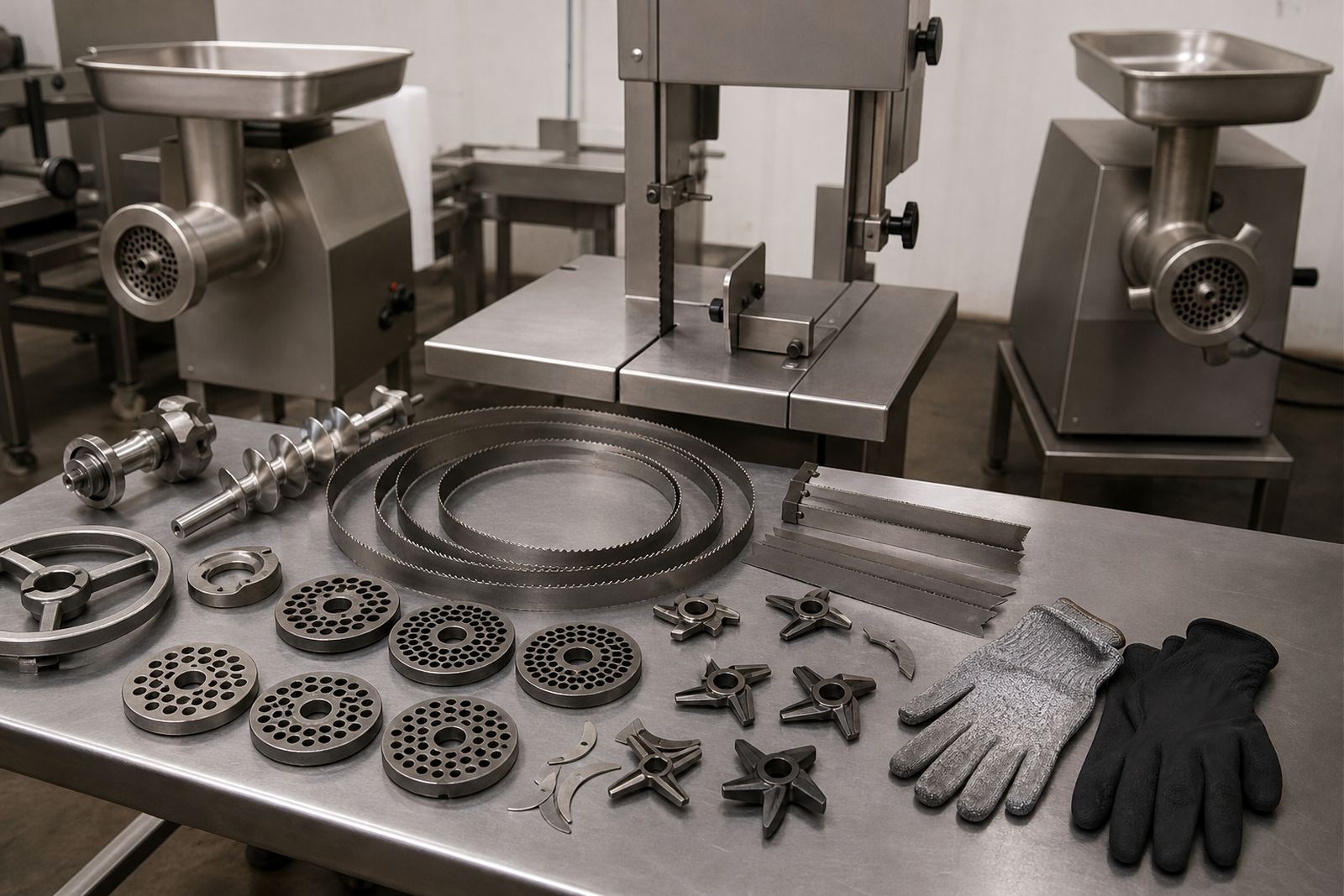
When a mincer is used correctly, you get a better finish and less wear on the plate and knife. If the cut is getting rough, the parts may need attention. That can be as simple as cleaning, checking alignment or replacing worn components before the machine starts giving trouble.
Cleaning and daily care that prevents breakdowns
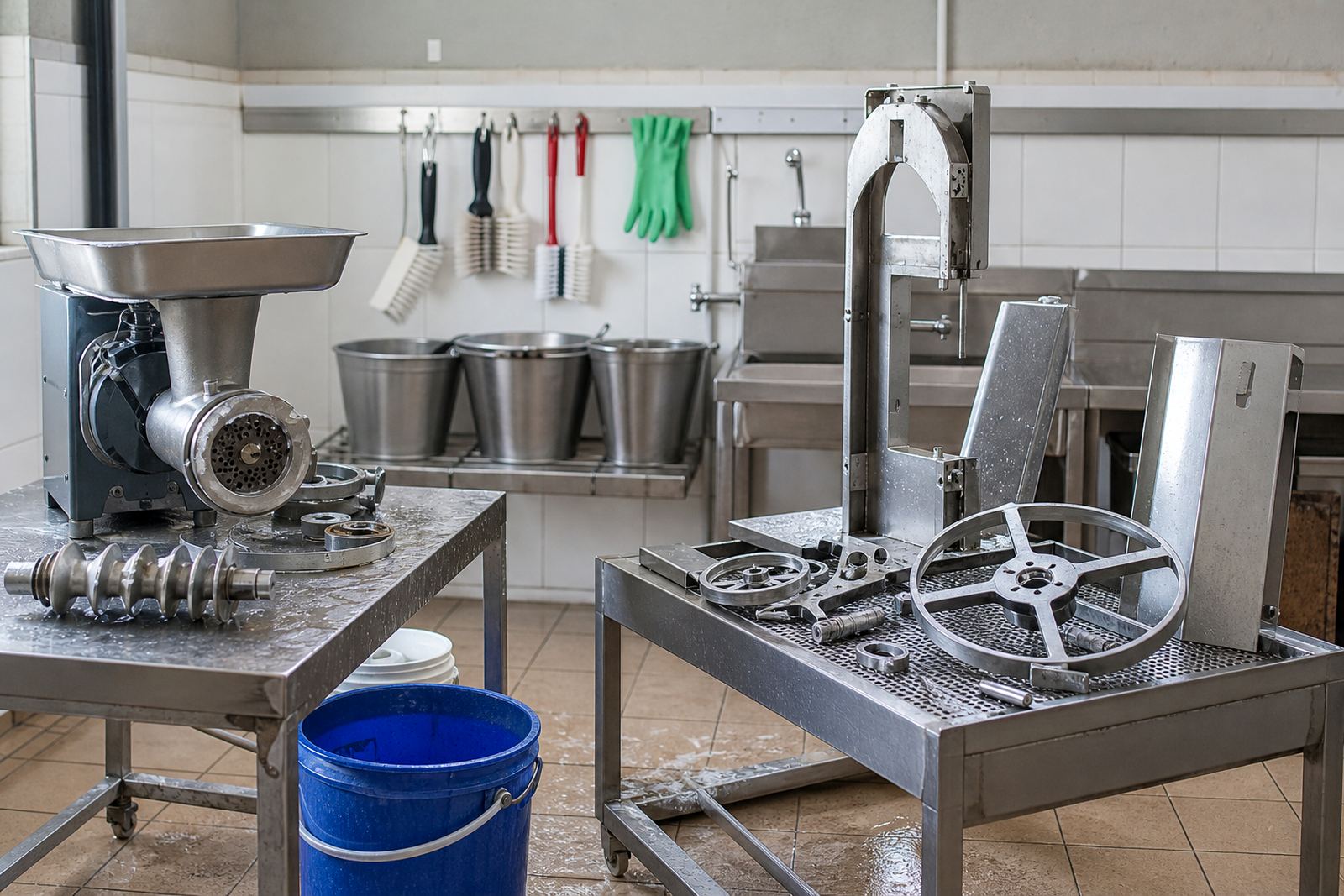
Good cleaning habits extend the working life of both bandsaws and mincers. The aim is to remove fat, meat fibre and moisture before they harden or cause corrosion. This is especially important in areas with damp air or where a room is washed down often. A quick wipe is not enough on its own. Open the machine where it is safe to do so, remove loose residue, clean contact points and dry all parts properly before reassembly.
- Clean after each production run, not only at the end of the day.
- Dry parts fully before storage or reassembly.
- Check blades, plates and knives for wear.
- Use the correct cleaning method for the surface and material.
- Keep the floor around the machine clear of water and grease.
When servicing and parts replacement are due
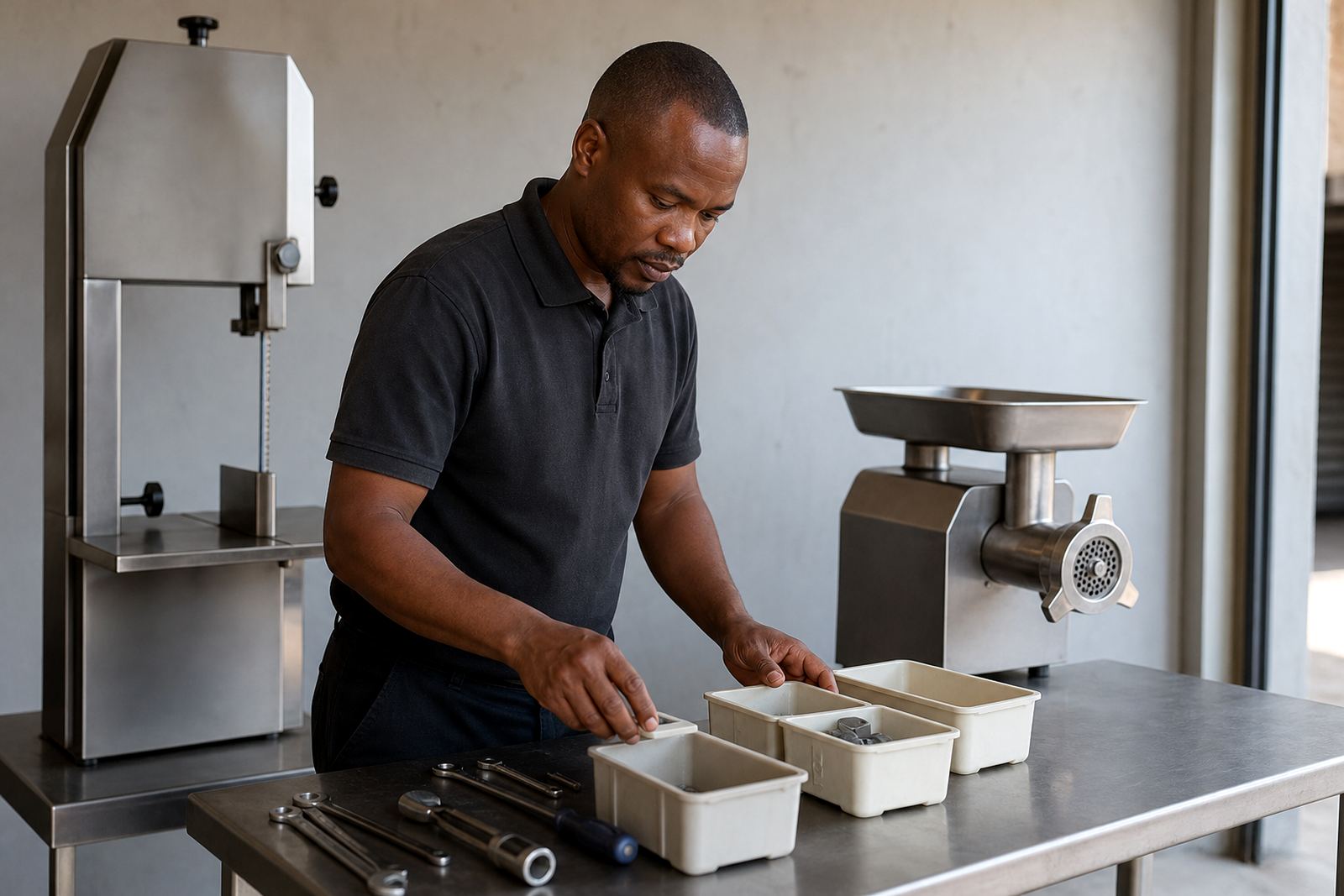
If a machine starts running hot, cutting unevenly or making unusual noise, it may be due for servicing. Regular attention can prevent larger faults and reduce costly downtime. Bandsaws may need blade replacement and set checks, while mincers often need plate and knife changes when output drops or the finish becomes inconsistent. Preventive maintenance is usually easier and cheaper than waiting for a breakdown callout.
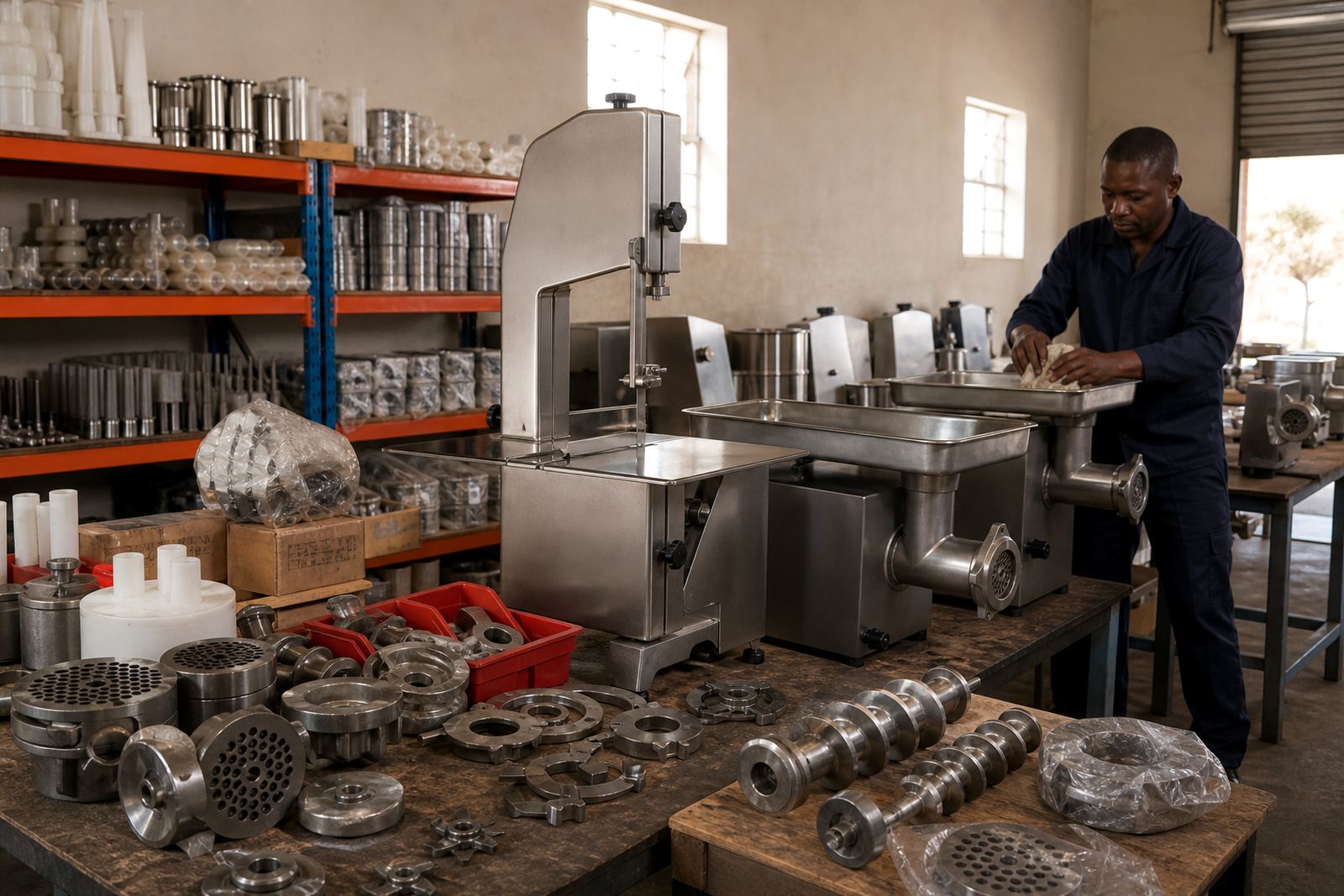
Our servicing and parts support is geared for commercial rooms and home users alike, from Bloemfontein Supply through to Johannesburg Delivery, Pretoria Delivery, Durban Delivery and Cape Town Delivery. We also support Kimberley, Welkom and Kroonstad with supply needs, so operators can keep their equipment working without unnecessary delay.
Installation, training and everyday setup
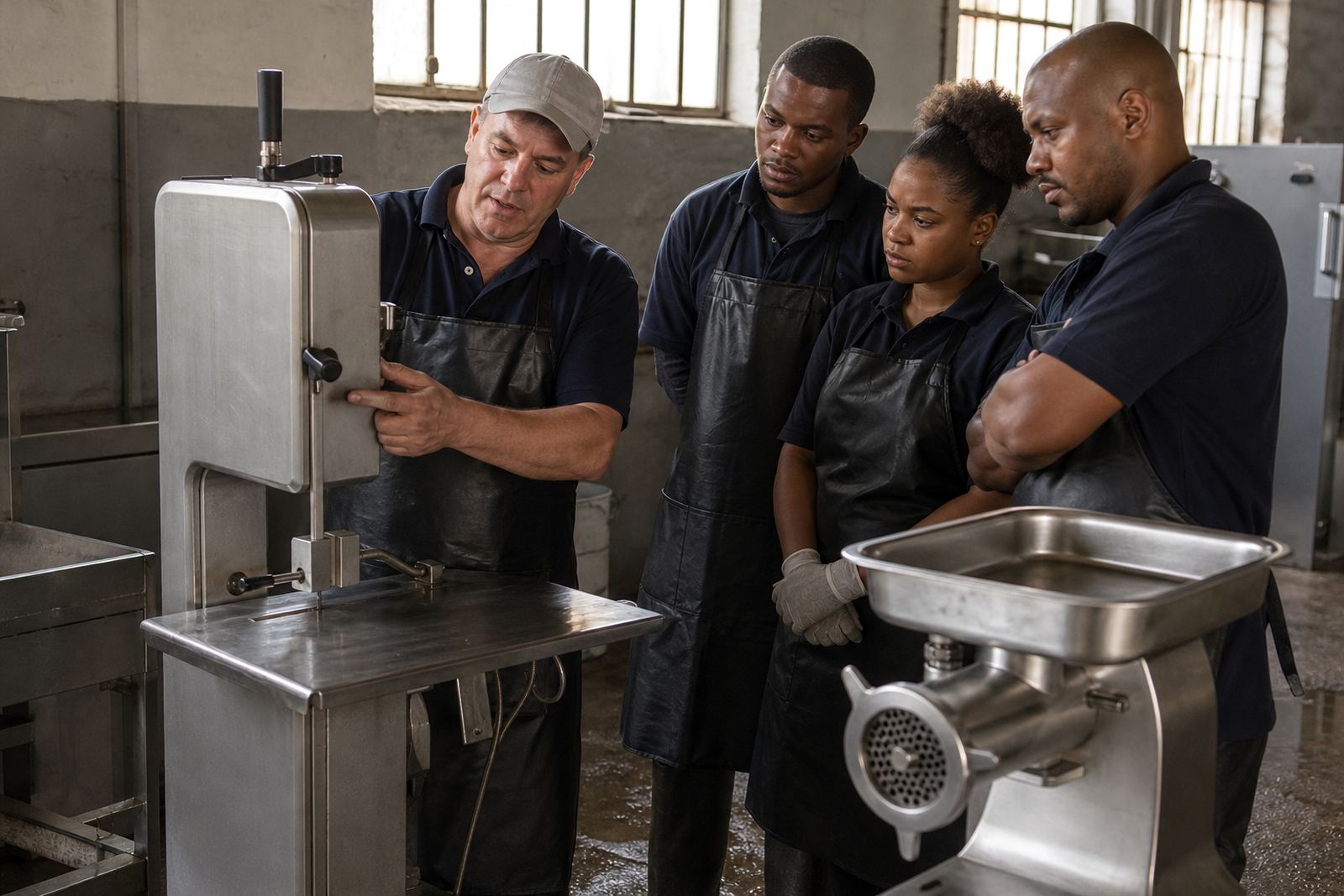
Correct setup makes a real difference to safety and day-to-day use. A machine should sit level, have enough working space around it and be placed where cleaning is practical. Power access, drainage and traffic flow all matter in a butchery room. For larger operations, training is worth the time because staff who understand the machine are less likely to misuse it or skip steps during cleaning.
We offer installation, operator training and cleaning demonstrations so the people using the equipment know how to handle it properly. That includes safe start-up, basic care, blade and plate handling, and what to do when a machine does not sound or cut the way it should. Practical guidance keeps the workshop calmer and the equipment in better shape.
Use these guides to narrow your shortlist
These guides are here to help you make a sensible decision before you buy, install or service a machine. The right choice depends on how much product you handle, the space you have available and how often the machine will be cleaned and used. A home butcher may need a simpler setup with easy maintenance, while a commercial room usually needs stronger workflow planning and a service routine that does not interfere with trading.
If you are comparing options, start with the basics: what you cut, how often you cut it, who will operate the machine and how fast it must be cleaned afterwards. That gives you a better fit than chasing features you may never use. When you are ready, our contact form is the best way for clients to ask questions and request help.