

Start With Safety Before Any Cleaning
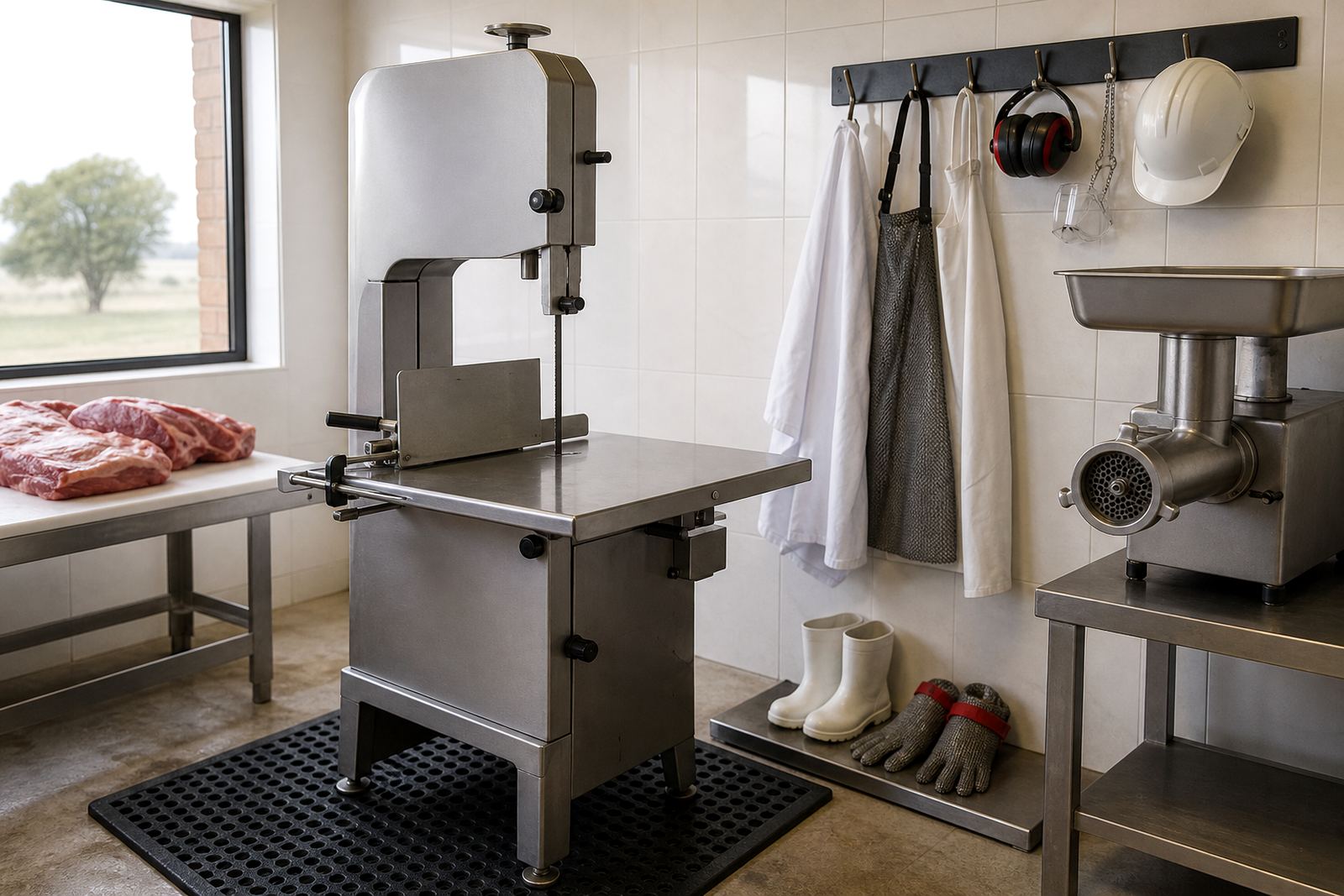
Before you clean any butchery machine, switch it off, isolate the power and wait for all moving parts to stop completely. In a shop or home prep area, rushing this step can lead to cuts, trapped fingers or damage to guards and fittings. Wear suitable gloves, use a brush rather than bare hands near sharp edges, and keep a dry cloth close for wiping down external surfaces.
For many South African butchers, cleaning happens after a long day in warmer months or in a chilly Free State morning before opening. Build the habit into your close-down routine so the task is never left until grime hardens. If the area is busy, mark the floor around the machine while cleaning to prevent anyone from stepping in.
- Turn power off at the socket or isolator
- Confirm the blade, feed opening or cutting parts have stopped
- Keep hands clear of sharp edges and moving components
- Use gloves, apron and closed shoes
- Keep water away from electrical parts and switches
Clean the Bandsaw After Each Use
A bandsaw should be cleaned soon after use, before meat residue and fat dry onto the blade, table and guides. Wipe away loose scraps first, then remove food traces from the work surface, blade area and collection points. Do not hose down electrical components or spray water into bearings and switches. In many premises around Bloemfontein, Johannesburg and Pretoria, dust can mix with fat and make a sticky film that is harder to remove later.
Use warm water with an approved cleaning solution, then rinse and dry all food contact areas properly. If the machine has guards or covers that can be opened for cleaning, close them again once the parts are dry. Regular cleaning also helps you spot early signs of wear such as loose fittings, damaged seals or buildup around the guides.
- Scrape off visible residue first
- Clean the table, blade area and guards
- Dry all surfaces before reassembly
- Check for loose screws, wear or build-up
- Never leave moisture around electrics
Keep the Mincer Clean From Hopper To Plate
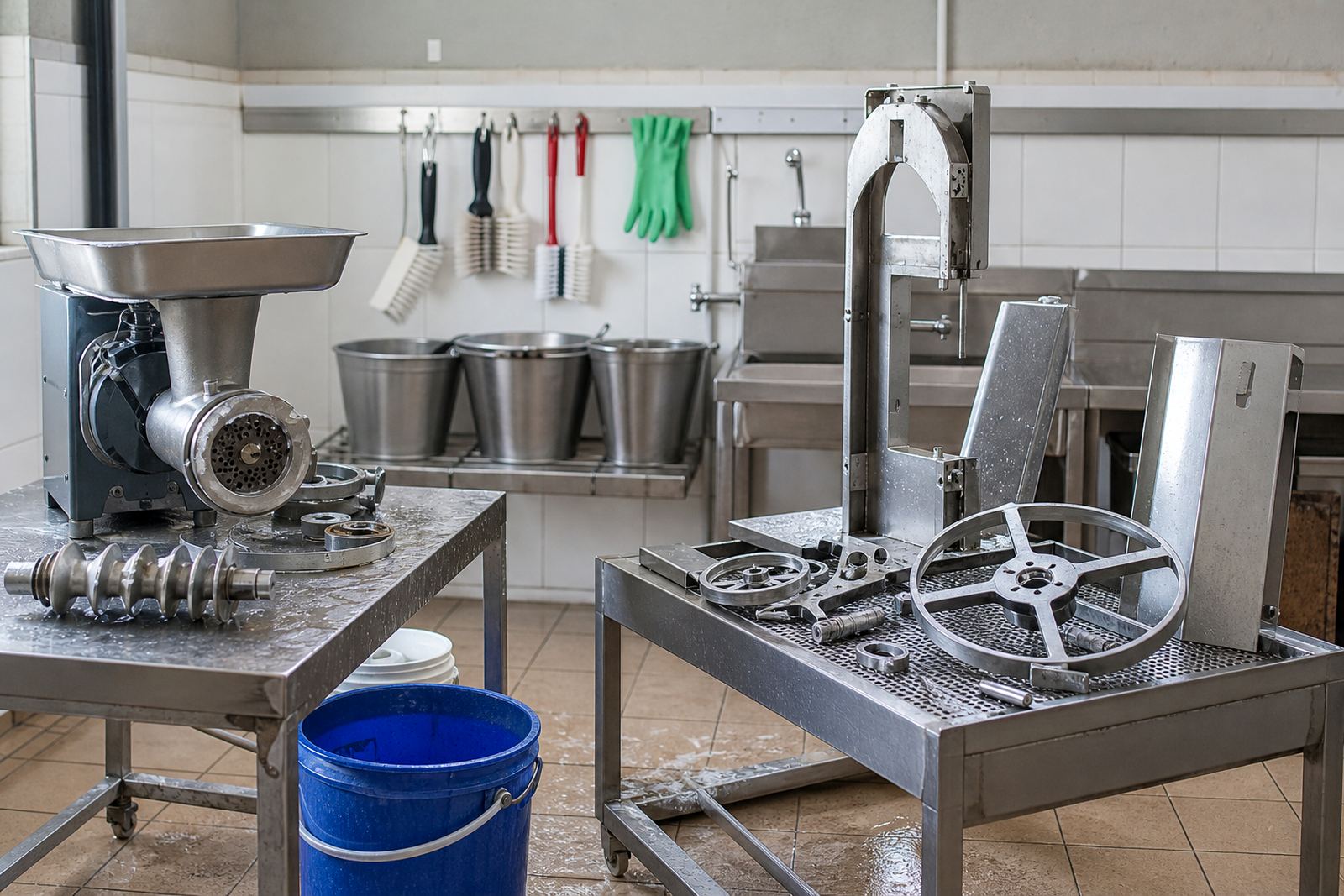
Mincers need careful cleaning because residue can stay inside the feeding section, plate and knife assembly. Take the machine apart only as far as your manual or training allows, then clean each food contact part separately. Wash, rinse and dry every piece fully before refitting. If moisture remains inside the housing, it can affect performance and hygiene.
Pay close attention to the feed tray, throat, plates and knives. These parts should be handled with care because they are sharp and can be damaged if dropped or scrubbed with rough tools. A soft brush and cloth are usually enough for daily cleaning. For deeper cleaning, follow your service schedule and let a trained person check alignment, fit and wear.
- Disassemble only according to your procedure
- Wash and dry plates, knives and feed parts separately
- Do not leave steel parts wet overnight
- Keep grit and bone fragments out of the feed section
- Reassemble correctly before next use
Do Not Forget The Surrounding Prep Area
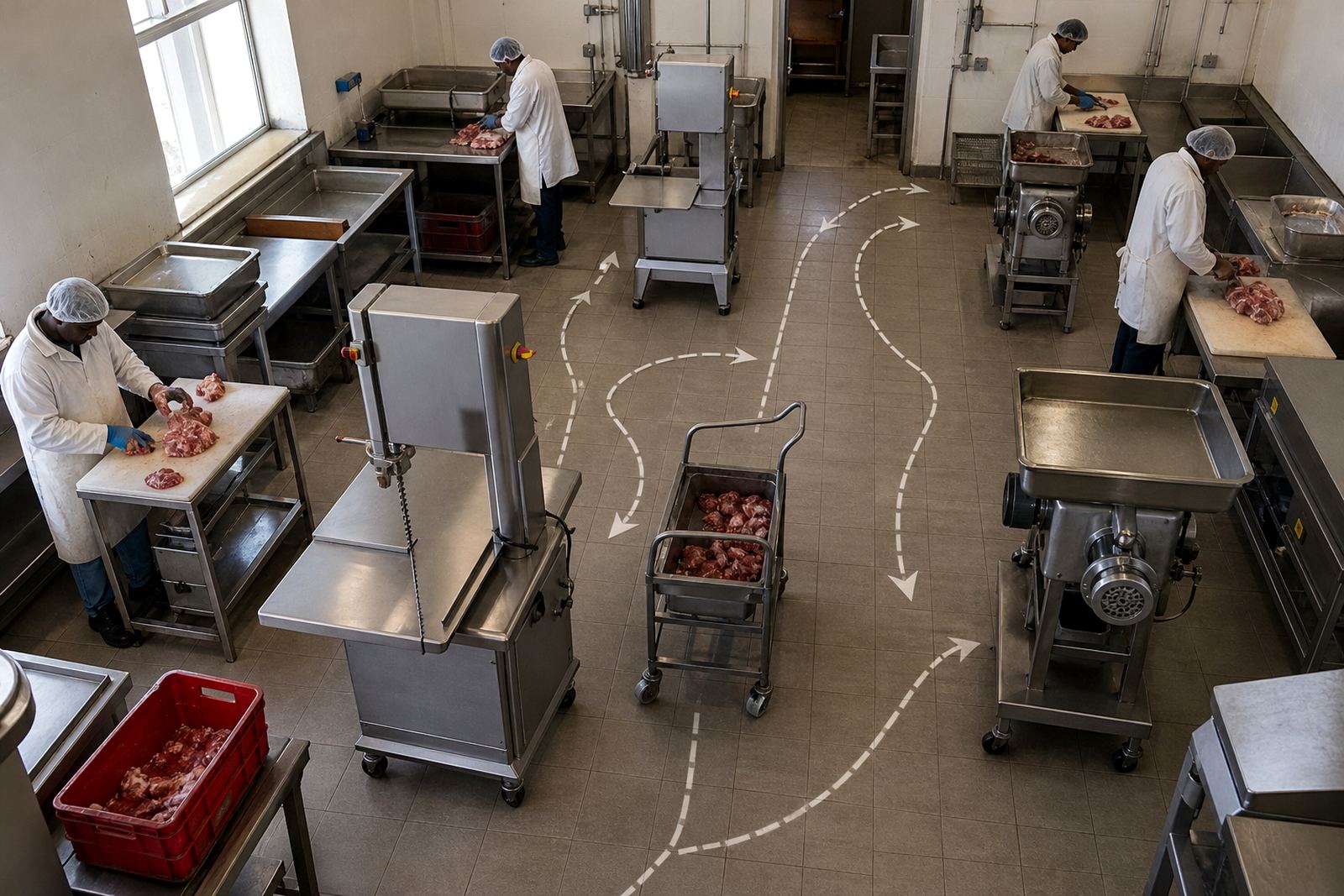
The area around the machine matters as much as the machine itself. Meat scraps, fat, packaging, dust and spilled water can create slip risks and attract pests. Clean the floor, splash zones, benches, drains and nearby storage spaces at the end of each shift. In coastal towns like Durban and Cape Town, humidity can make surfaces feel greasy for longer, so extra drying is useful. In drier places such as Bloemfontein and Kimberley, dust can settle quickly and mix with residue.
Keep cleaning tools separate from meat contact tools and store them where they will dry properly. Bins should be emptied regularly and lids kept closed. If you use a prep room with tile or sealed concrete floors, check the corners and under stands where fat often collects and gets missed during a quick wipe-down.
- Clean floors and drains after production
- Wipe benches, handles and nearby switches
- Empty waste bins before they overflow
- Store brushes and cloths in a clean dry place
- Check under machines and around legs
Use A Simple Daily And Weekly Routine
A clear routine makes cleaning easier to keep up, whether you work from a home setup or a busy commercial room. Daily cleaning is for visible residue, external surfaces and immediate food contact parts. Weekly cleaning should include a closer check of guards, seals, fasteners and hard-to-reach areas. If your operation runs through load-shedding periods, make sure the machine is cleaned and dried fully before power comes back on so no one is tempted to rush the reset.
Many small teams work better with a short checklist pinned near the wash-up area. That way, the same steps happen every time and nothing gets forgotten when the room is busy. Keep records of deeper cleaning and any faults noticed, especially if several staff members use the same equipment.
- Daily: wipe, wash, rinse and dry all food contact areas
- Daily: check guards and covers are back in place
- Weekly: inspect wear points and hidden residue areas
- Weekly: confirm fittings are secure and parts sit correctly
- Monthly: arrange servicing if performance changes
When To Stop And Call For Service
If cleaning reveals unusual noise, rough movement, loose blades, damaged plates or repeated residue build-up, stop using the machine and arrange a service check. Cleaning is not the same as repair. A machine that is hard to strip, hard to reassemble or difficult to keep clean may need adjustment or replacement parts. That is especially important in a business where turnaround matters and staff rely on safe equipment every day.
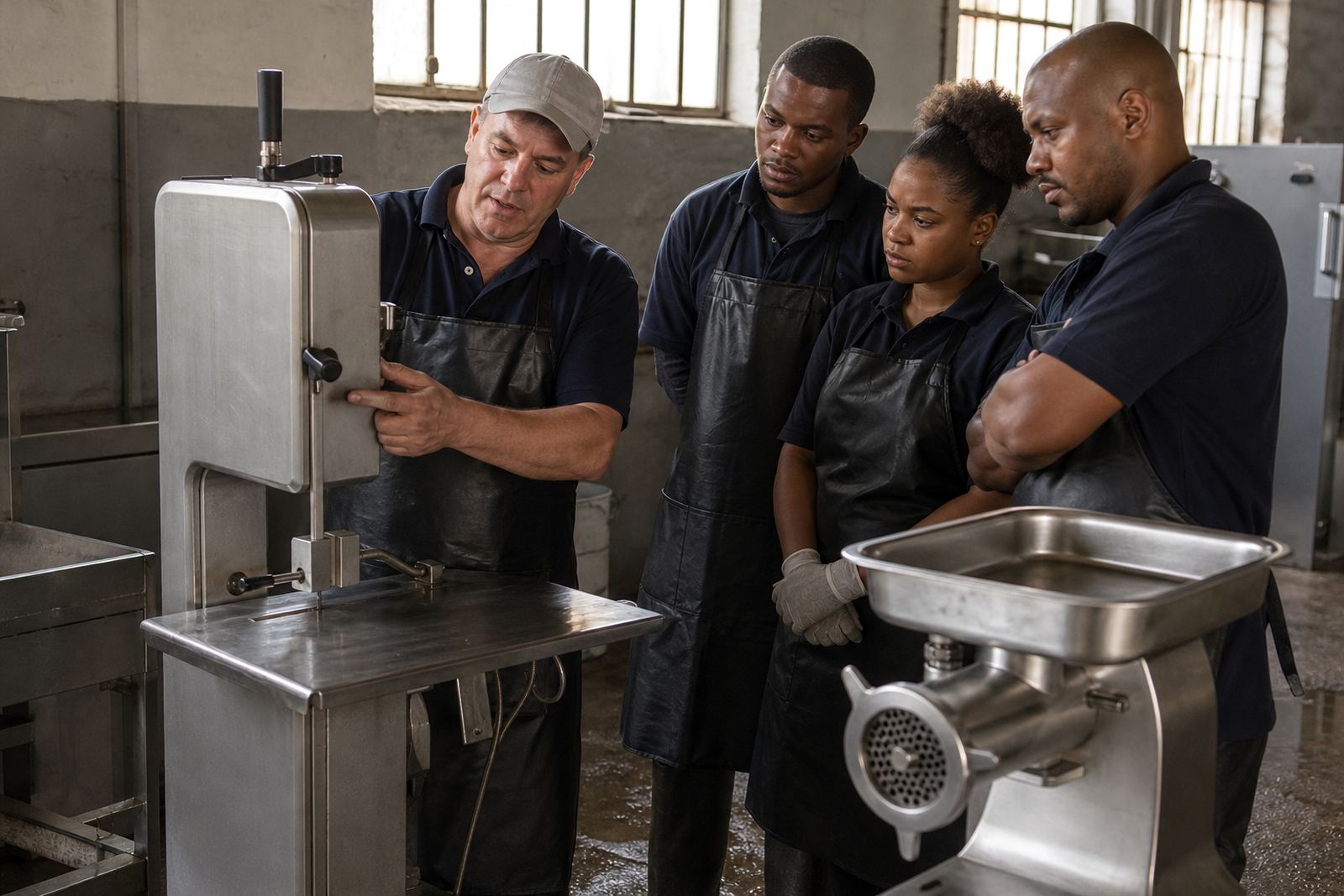
MorCut Butchery supports commercial and home butchers from Hamilton in Bloemfontein, with delivery and servicing across South Africa including Johannesburg, Pretoria, Durban, Cape Town, Kimberley, Welkom and Kroonstad. Our team can assist with servicing, blade replacement, plate and knife change, preventive maintenance, breakdown callouts, parts supply, delivery and setup, plus practical operator training and cleaning demonstrations. Clients can reach us through the enquiry form on our contact page.