

Start With the Work You Need The Saw to Do
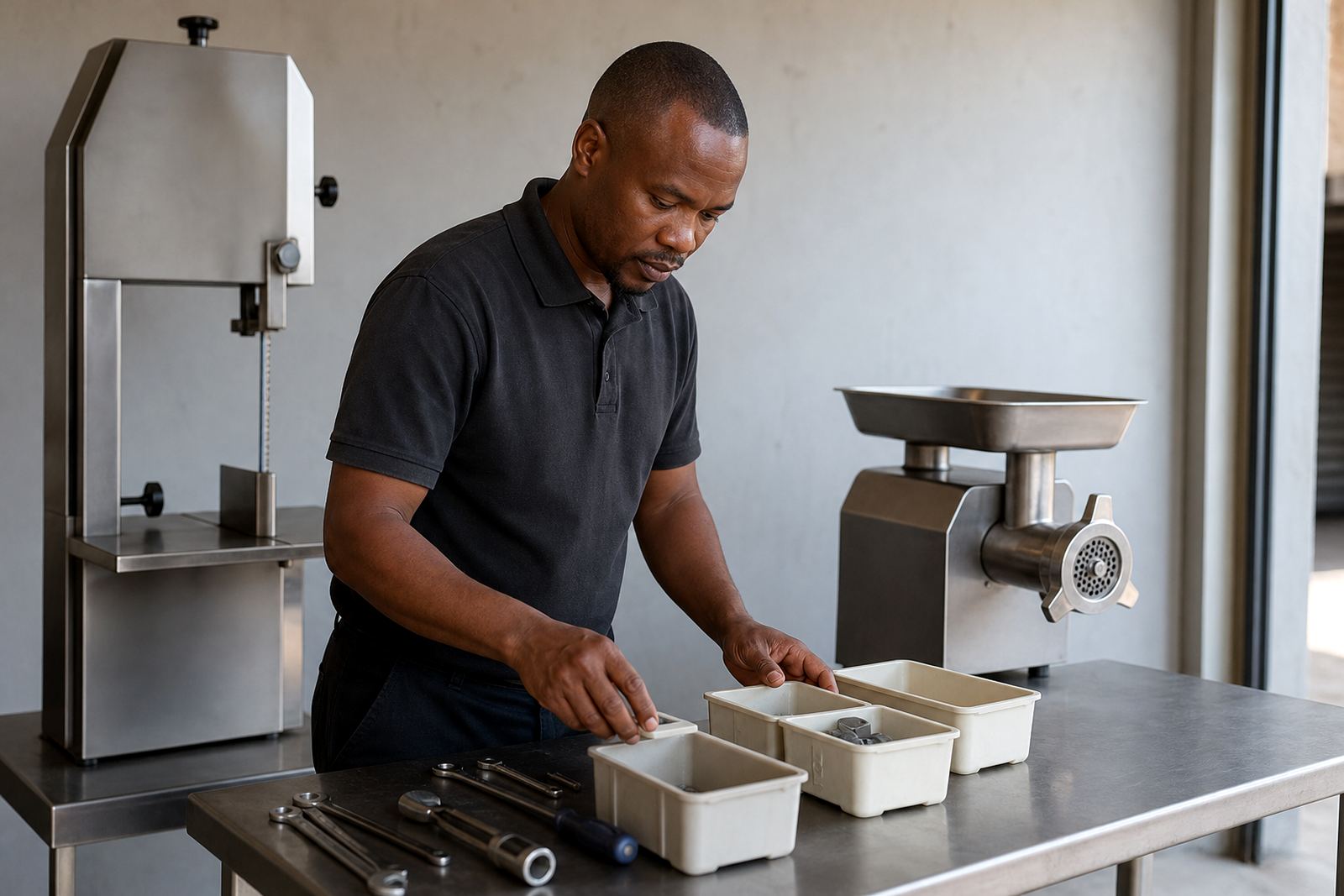
Before you compare models, write down the kind of cuts you make most often. A bandsaw for a small home butchery, a farm run operation, or a busy shop in Bloemfontein will not face the same demands as one used for heavier daily production. Think about what you cut, how often you cut it, and who will be using the machine.
Commercial butchers often need a saw that keeps up with repeated use, while a home butcher may want something simpler to clean and easier to position in a tighter room. If you work in a coastal town like Durban or Cape Town, also think about moisture, cleaning frequency, and where the machine will stand when not in use. In hotter inland areas like Pretoria or Kimberley, dust and power interruptions can also affect daily routine.
- Daily cutting volume
- Type of meat and bone work
- Available floor space
- Who will operate the saw
- How often the machine can be cleaned
Compare Bandsaw Types by Practical Use
Not every bandsaw suits every butcher. Some are better for smaller batches and straightforward cutting, while others are chosen for a more demanding shop floor. The best choice is the one that suits your pace of work and your cleaning process, not the one with the most features.
When comparing options, look at how the machine is set up for everyday use. Check whether the table feels comfortable for the operator, whether the guards are easy to keep in place, and whether the saw can be cleaned without leaving trapped waste behind. A machine that is awkward to clean often becomes a problem later on.
- Small shop use versus full commercial use
- Simple day to day operation
- Easy access for cleaning and blade changes
- Guard placement and operator safety
- How the saw fits your room layout
What to Check Before You Buy
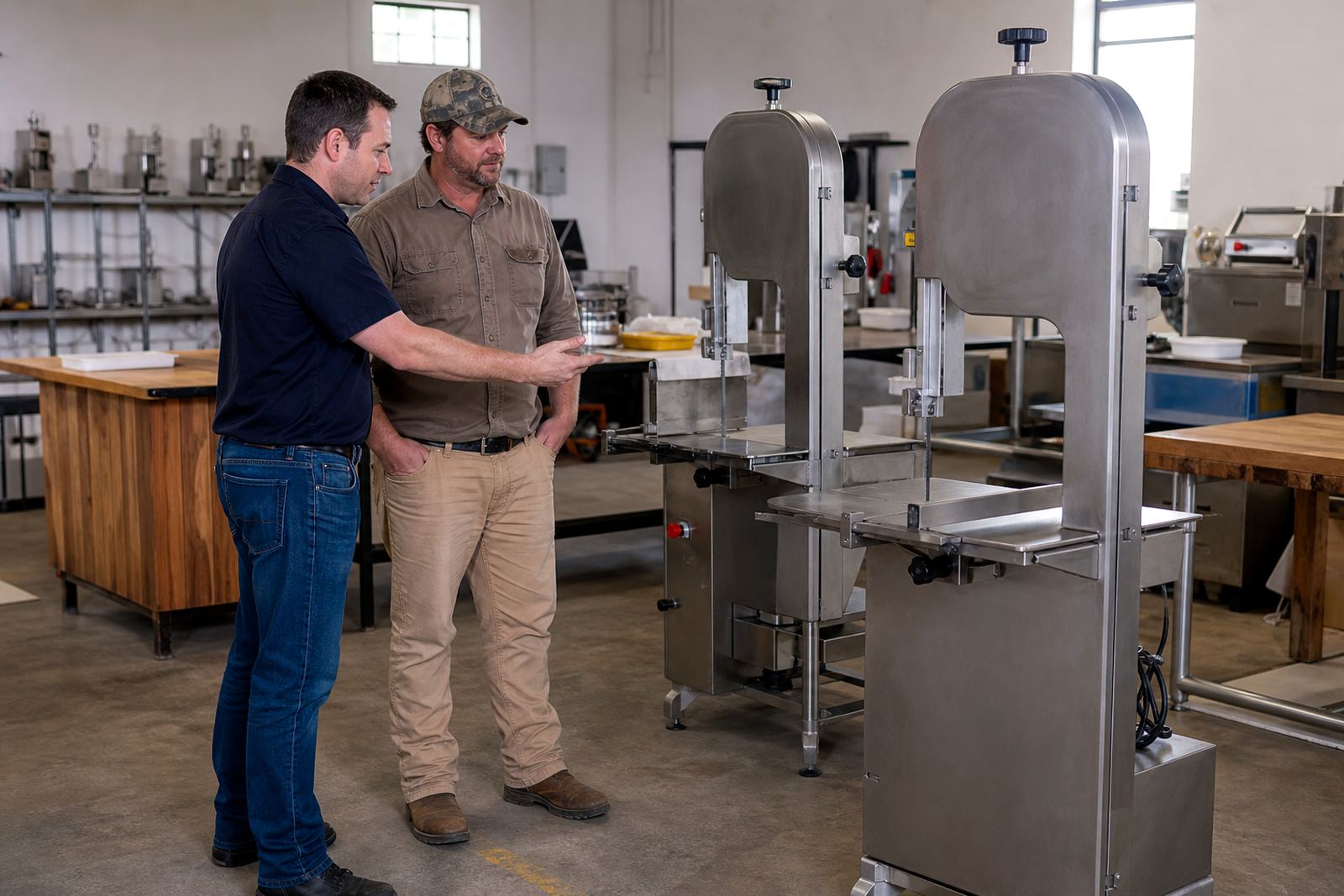
Ask practical questions before you commit. A good supplier should be able to explain how the saw is used, what care it needs, and what to expect during installation. If the machine will be delivered to Johannesburg, Pretoria, Durban, Cape Town, or beyond, ask about setup and support so you are not left to guess after delivery.
It also helps to think ahead about spare parts and servicing. Blades, guides, belts and other wear items need attention over time, and a busy butcher does not have the luxury of waiting when a machine is out of action. MorCut Butchery supports clients from Hamilton in Bloemfontein and supplies across South Africa, including Bloemfontein, Kimberley, Welkom and Kroonstad.
- Installation support
- Availability of parts and blades
- Servicing and breakdown callouts
- Delivery and setup options
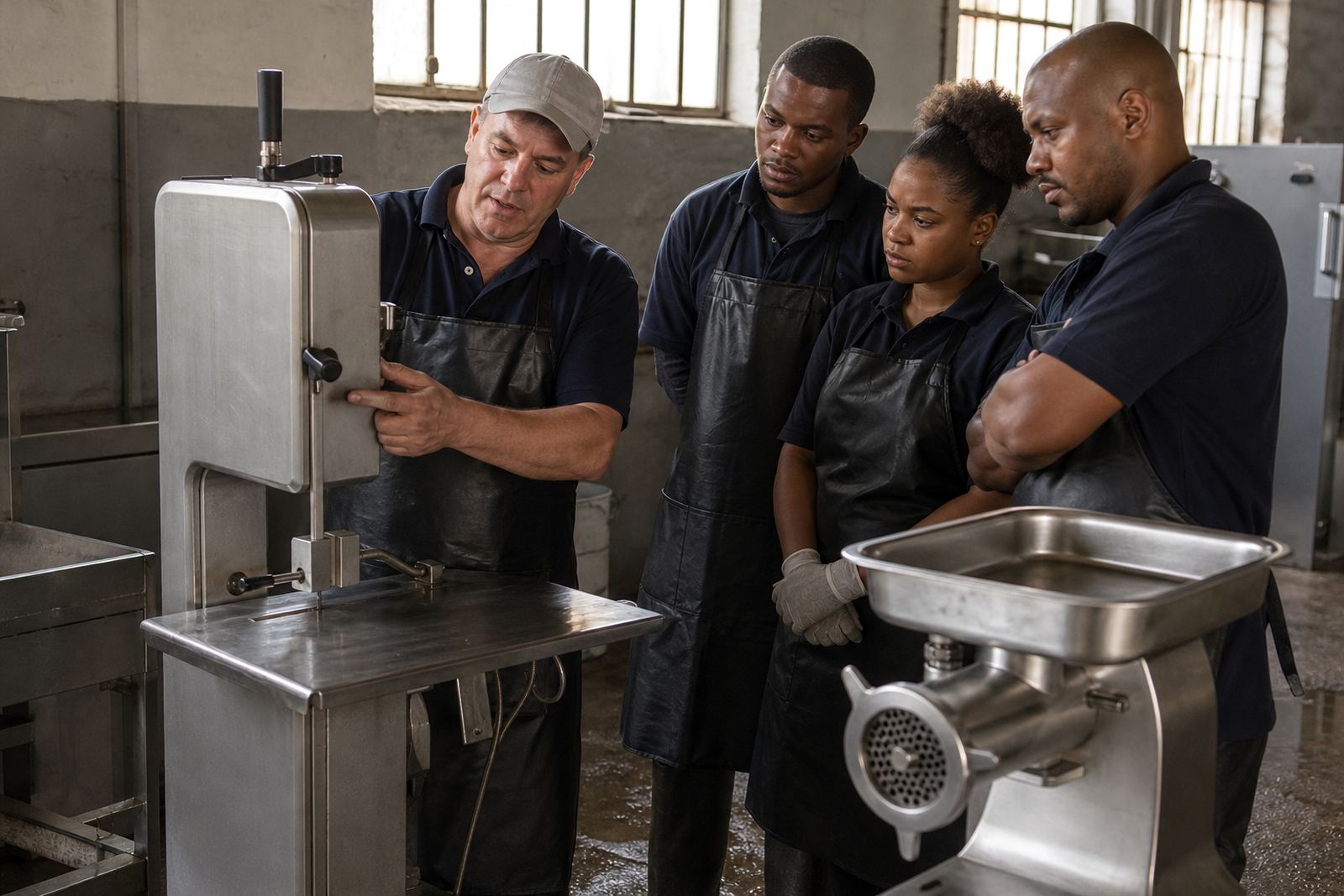
- Training for new operators
Safety Matters Every Time the Saw Runs
A bandsaw should always be used with the guards in place and only by someone who has been shown how to handle it properly. Good operator habits matter as much as the machine itself. Keep loose clothing, jewellery and gloves that could snag away from moving parts, and use the correct PPE for the job.
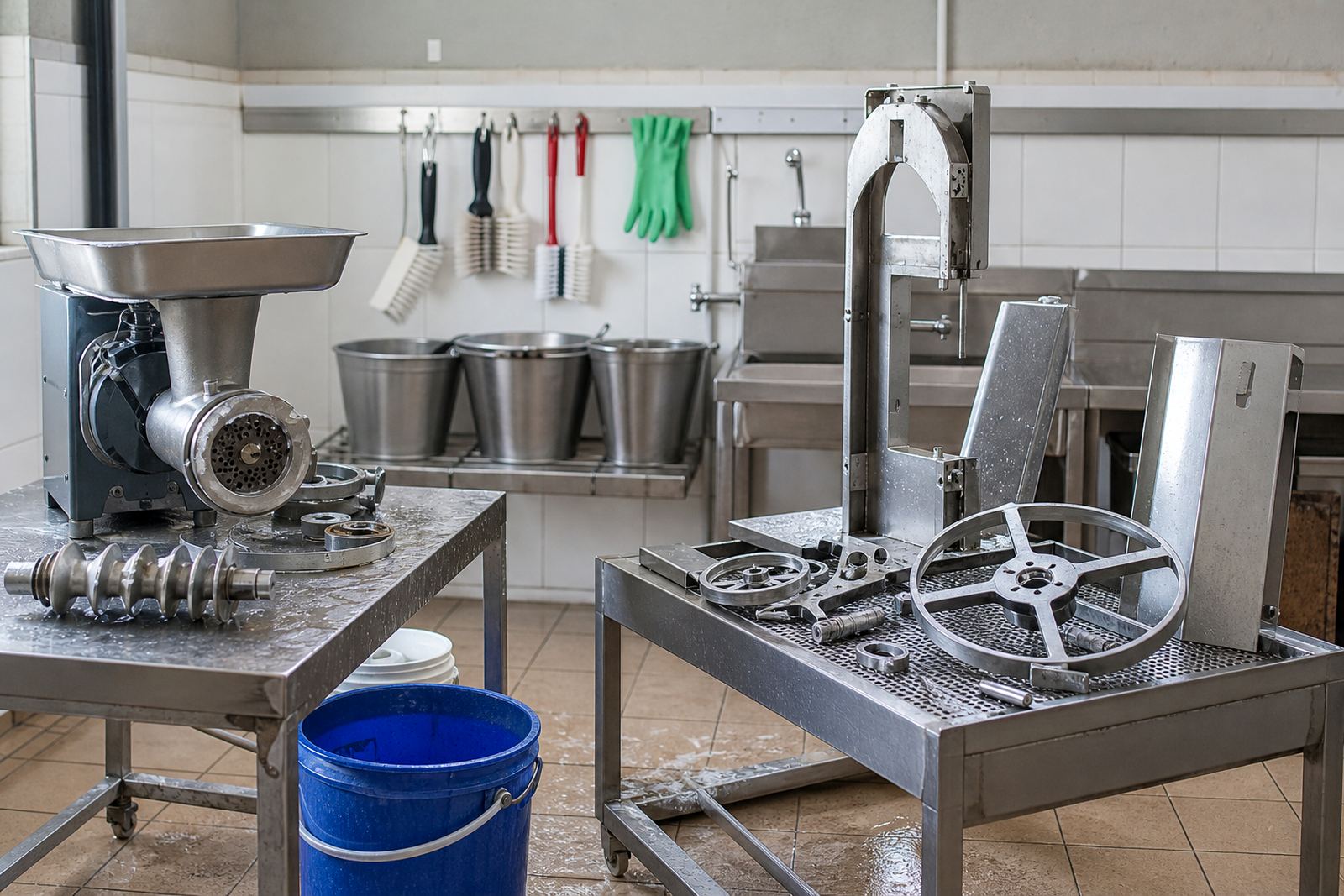
Cleaning is part of safety too. Meat residue left behind can cause hygiene problems and may also affect how smoothly the saw works. Make sure the machine is switched off before cleaning, and never rush blade changes or plate adjustments. A few extra minutes spent correctly is better than a hurried fix that causes trouble later.
For butchers working through long shifts, especially during load shedding or after a power interruption, it is worth checking that the machine is left in a safe state before work resumes. Restart only after a proper inspection.
Care and Maintenance That Keep the Saw Working
Regular care helps a bandsaw last longer and stay more dependable. Simple cleaning after use, proper blade care, and routine checks on moving parts go a long way. In a humid area, wipe down exposed surfaces so moisture does not sit on the machine. In drier inland towns, check for dust build-up around the working parts.
Servicing should be planned, not only done when something breaks. Preventive maintenance can catch wear early and save time in the middle of a busy week. If the saw starts cutting unevenly, making unusual noise, or needing extra effort from the operator, that is a sign to have it checked.
- Clean after every use
- Inspect guards and moving parts
- Replace worn blades when needed
- Keep the area around the machine clear
- Book servicing before peak trading periods
Buying for a Shop, Farm or Home Setup
The right bandsaw for a commercial butcher in Bloemfontein may not be the same as the one for a home user in Kroonstad or a small supply point in Welkom. Start with your space, your volume, and your cleaning routine. If the machine is for a shared work area, then ease of supervision and operator training become even more important.
MorCut Butchery works with commercial and home butchers across South Africa, with supply and delivery in Bloemfontein, Johannesburg, Pretoria, Durban, Cape Town, Kimberley, Welkom and Kroonstad. The team can also assist with installation, servicing, blade replacement, training and breakdown callouts, so the saw stays ready for the day to day work it was bought for.