

Start With the Work You Need the Shop to Do
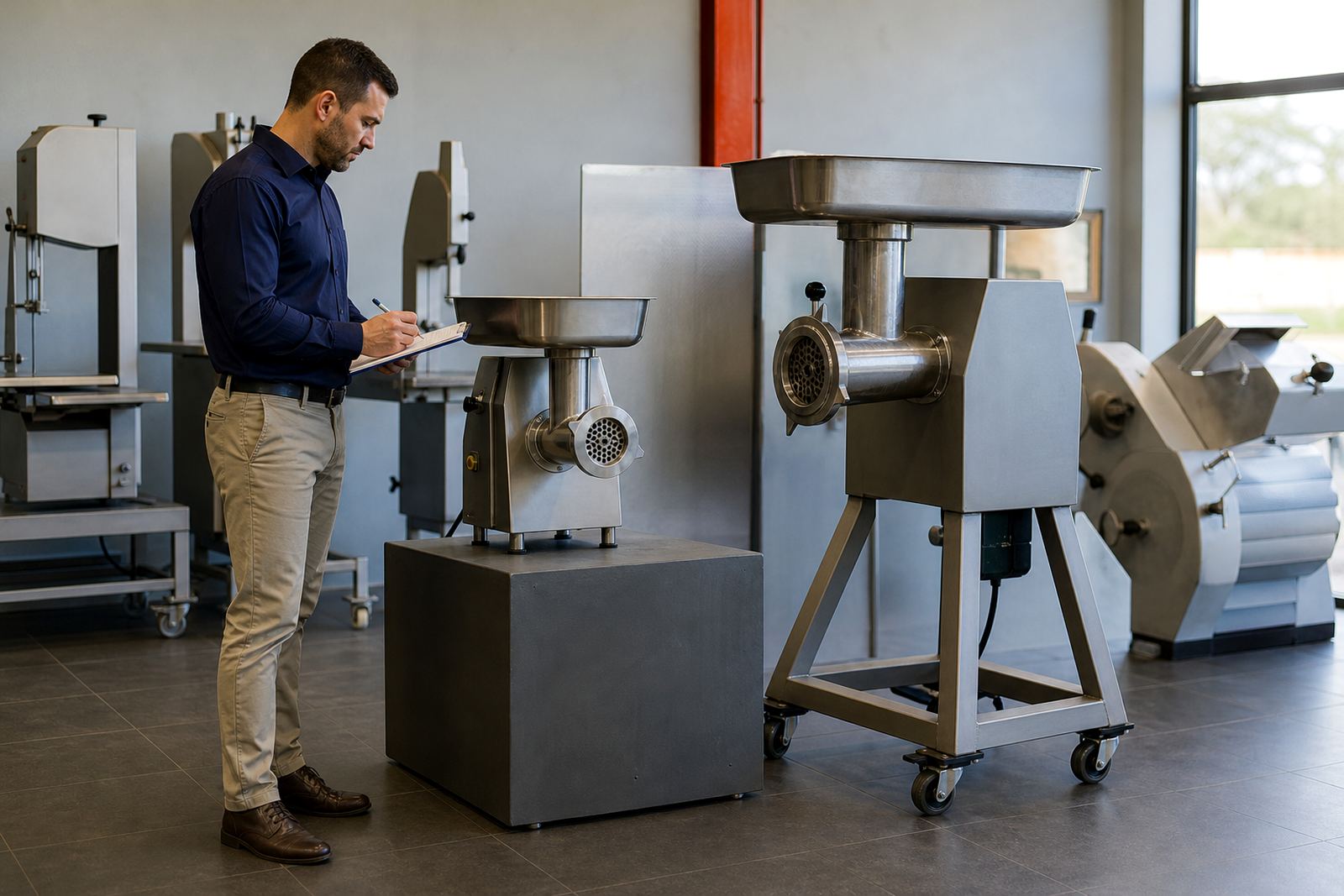
Before you buy anything, map out the day to day work in your shop. A small butchery in Bloemfontein may handle cut, mince and portion work differently from a home butcher serving weekend orders, so your first choice should follow your actual workflow. The aim is to avoid overbuying equipment that takes up room, draws extra power and becomes hard to clean after a busy day.
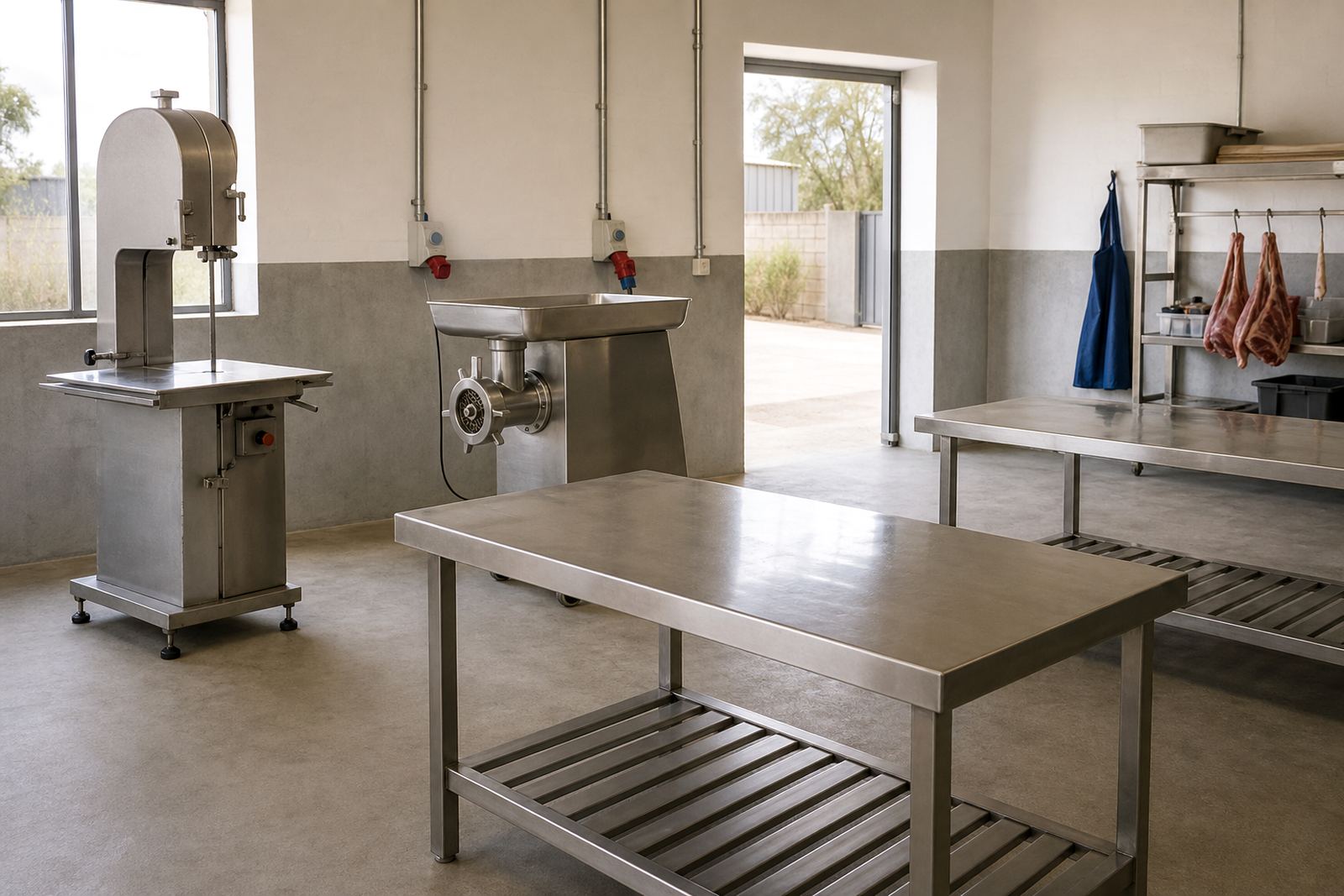
A good start-up list usually begins with a bandsaw for cutting through bone and larger portions, plus a mincer for mince, boerewors mix and other prepared products. If you will process both carcass sections and retail packs, think about how products move from receiving to cutting, then to weighing, wrapping and cold storage. That layout matters as much as the machine itself.
- Count your daily volume, not your busiest fantasy day.
- Measure the available floor space and door openings.
- Check whether your supply area has enough power points and safe cable routing.
- Plan cleaning access around each machine, not just beside it.
Choose the Core Machines First
The two core machines for many start-up butcheries are the bandsaw and the mincer. A bandsaw helps with clean, controlled cutting of bones and frozen or chilled portions, while a mincer supports daily sales of mince and seasoned products. If your shop is small, one reliable machine that suits your workload is better than a room full of gear you will not use properly.
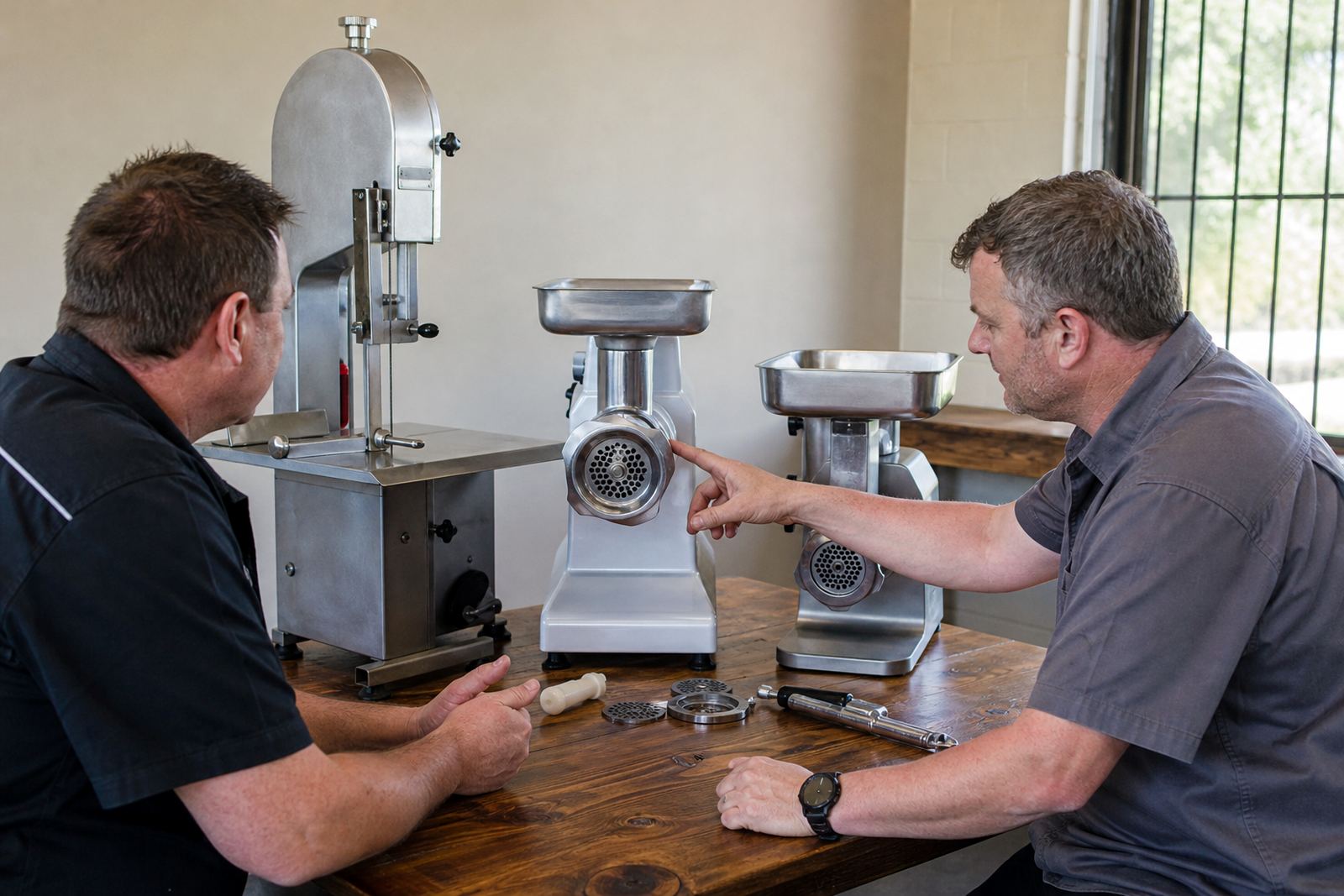
When comparing options, look at ease of use, guard placement, blade access, cleaning time and whether the machine suits the amount of product you expect to process. For home butchers, a compact setup can be enough. For a shop in Johannesburg or Durban with heavier trade, you may need a more consistent setup and a stronger service plan. The right choice is the one that supports steady production without slowing your team down.
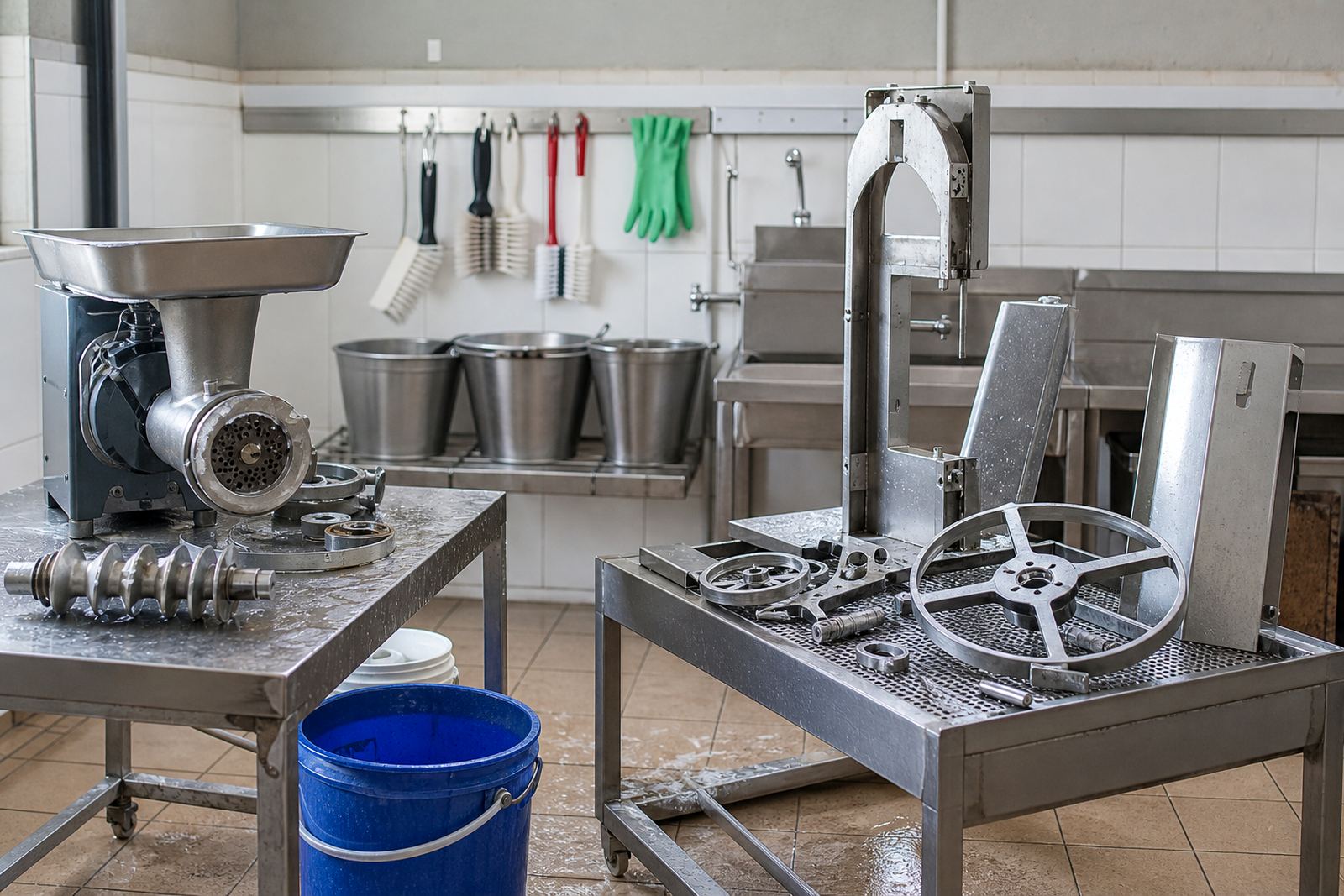
- Ask how easy it is to strip down for washing and sanitising.
- Check that guards and safety features are simple to use every day.
- Make sure replacement parts are available locally.
- Choose equipment that suits your staff skill level and training time.
Plan the Room Around Food Safety and Cleaning
A butchery works best when cleaning is part of the layout, not an afterthought. Surfaces should be easy to wash down, and there must be enough space for bins, crates, knives, cleaning tools and a clear path for staff. In coastal areas like Cape Town and Durban, humidity can make cleaning and drying slower, so it helps to keep equipment dry after every wash and store removable parts properly. In colder inland towns, dust and temperature swings can also affect how often you inspect seals and moving parts.
Keep raw product handling separate from ready-to-sell areas as far as your space allows. Ensure floor drains, mop points and splash control are practical for the size of your shop. If your premises fall under municipal or health inspections, it is wise to keep records of cleaning routines and maintenance, even for a small operation. That makes your daily work easier and helps when someone asks how the shop is kept in order.
- Set a fixed cleaning time before opening and after trading.
- Keep separate cloths or brushes for machine parts and floor cleaning.
- Dry all removed parts before reassembly.
- Store cleaning chemicals away from food contact areas.
Set Up Safe Daily Use for Staff and Family Run Shops
Whether you are hiring staff or running a family shop, safe handling needs to be built into the routine. Machines with moving blades and cutting surfaces must be used with guards in place and only by people who know the process. Never rush a cut or reach into a machine while it is running. Even a well kept machine can cause injury if the operator is tired, distracted or unfamiliar with the controls.
Basic PPE matters. Use suitable cut protection, aprons and footwear that can handle wet floors. Keep hands clear, tie back loose clothing and make sure training covers cleaning, start-up and shut-down steps, not only the cutting action itself. In a start-up shop, it is common for one person to do several tasks, so everyone should know who is responsible for switches, guards and cleaning at the end of the shift.
- Train every operator before first use.
- Never bypass a guard or safety device.
- Switch off and isolate before cleaning or changing parts.
- Keep a simple log for faults, repairs and blade changes.
Keep the Machines Working With Basic Care
Good care extends the life of your equipment and keeps your shop moving on busy mornings. Bandsaws need regular cleaning, blade checks and attention to moving parts. Mincers need prompt cleaning after use, correct reassembly and routine inspection of plates, knives and feed areas. If product starts to look uneven or the machine sounds different, stop and inspect it before the issue becomes a breakdown callout.
Load-shedding can interrupt normal trading, so it helps to protect your process with a simple restart routine. After power returns, check that the machine is clean, dry and safe to run again. Do not restart in a hurry. If your shop uses backup power, make sure the equipment is still operating within the practical limits of your setup. A short delay is better than damage to a motor or a costly stop in production.
At MorCut Butchery in Hamilton, Bloemfontein, we help commercial and home butchers keep bandsaws and mincers in working order through servicing, parts supply and practical training support. Our team includes people who handle sales, workshop work, logistics and customer support, so the process stays organised from enquiry to delivery and setup across South Africa.
Use a Start-Up Checklist Before You Open
A checklist keeps the first weeks calmer, especially when you are still getting used to the pace of trade. It also helps if you are setting up in Bloemfontein and supplying customers in Kimberley, Welkom or Kroonstad, where deliveries and parts planning need to be handled carefully. A short written list is often better than memory when the shop gets busy.
Use the checklist below as a starting point and adapt it to your own setup. Once the basics are in place, you can add maintenance dates, training notes and stock re-order points. That way the shop becomes easier to manage, not harder, after opening day.
- Machine positions set and clear of obstructions.
- Guards fitted and checked.
- Cleaning tools ready for the first wash-down.
- Operator training completed.
- Plates, knives, blades and spare parts stored safely.
- Delivery, servicing and maintenance contacts recorded.
If you need help choosing bandsaws or mincers, or arranging installation, servicing or breakdown support, use the enquiry form on our contact page. We supply from Bloemfontein and support customers in Johannesburg, Pretoria, Durban and Cape Town, as well as nearby supply areas and delivery routes across South Africa.