

Measure the room before you buy anything
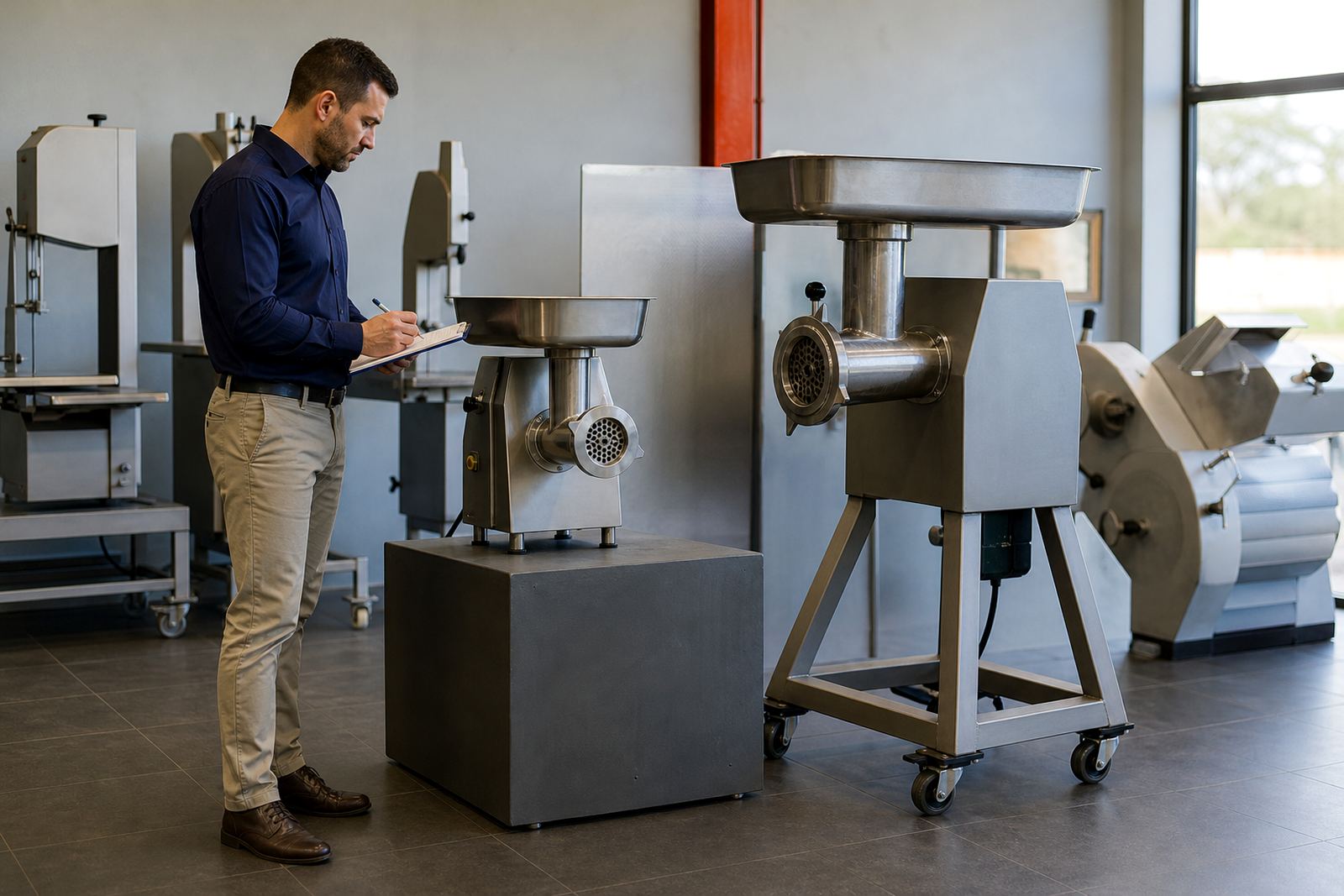
Start with a tape measure and a clear floor plan. In a tight shop or home butchery, the machine footprint is only part of the picture. You also need working space for loading meat, moving trays, cleaning around the base and reaching switches without stretching across wet floors.
Allow for doors that open, people passing through, and enough room to lift product safely. If the room is on a concrete slab in Hamilton, Bloemfontein or a garage conversion in another town, check where the power point sits, where water can be used for cleaning and how the floor drains. A machine that fits on paper can still block the daily workflow if it sits in the wrong place.
- Measure floor space, doorway width and any narrow passages
- Mark where the operator stands and where product moves next
- Check socket positions and cable reach before final placement
- Leave space for cleaning, blade changes and safe access to guards
Choose the right machine for the task
For small spaces, the best choice is often the machine that handles your most common work without needing extra handling. A bandsaw is useful where bone-in cutting is regular. A mincer suits mince, sausage filling and regular small-batch prep. If you are running a home setup or a compact shop, think about what happens every day, not only the busiest day.
Do not squeeze in a machine that is larger than the work demands. Oversized equipment can waste floor area, create clutter and slow down cleaning. For many smaller butcheries in Bloemfontein, Kimberley, Welkom or Kroonstad, one well-placed bandsaw and one reliable mincer can cover the core work flow if the layout is planned properly.
- Match the machine to the cuts and volumes you handle most often
- Keep maintenance access in mind, not just purchase price
- Plan for load-shedding with safe shutdown and restart routines
- Choose equipment that can be cleaned thoroughly every day
Set the layout so work moves in one direction
A small area works best when tasks follow one clear path. Raw product should arrive, be cut or minced, then move straight to packing, chilling or display. Avoid having people cross back and forth between the bandsaw, mincer and prep table. That causes delays and makes slip hazards more likely.
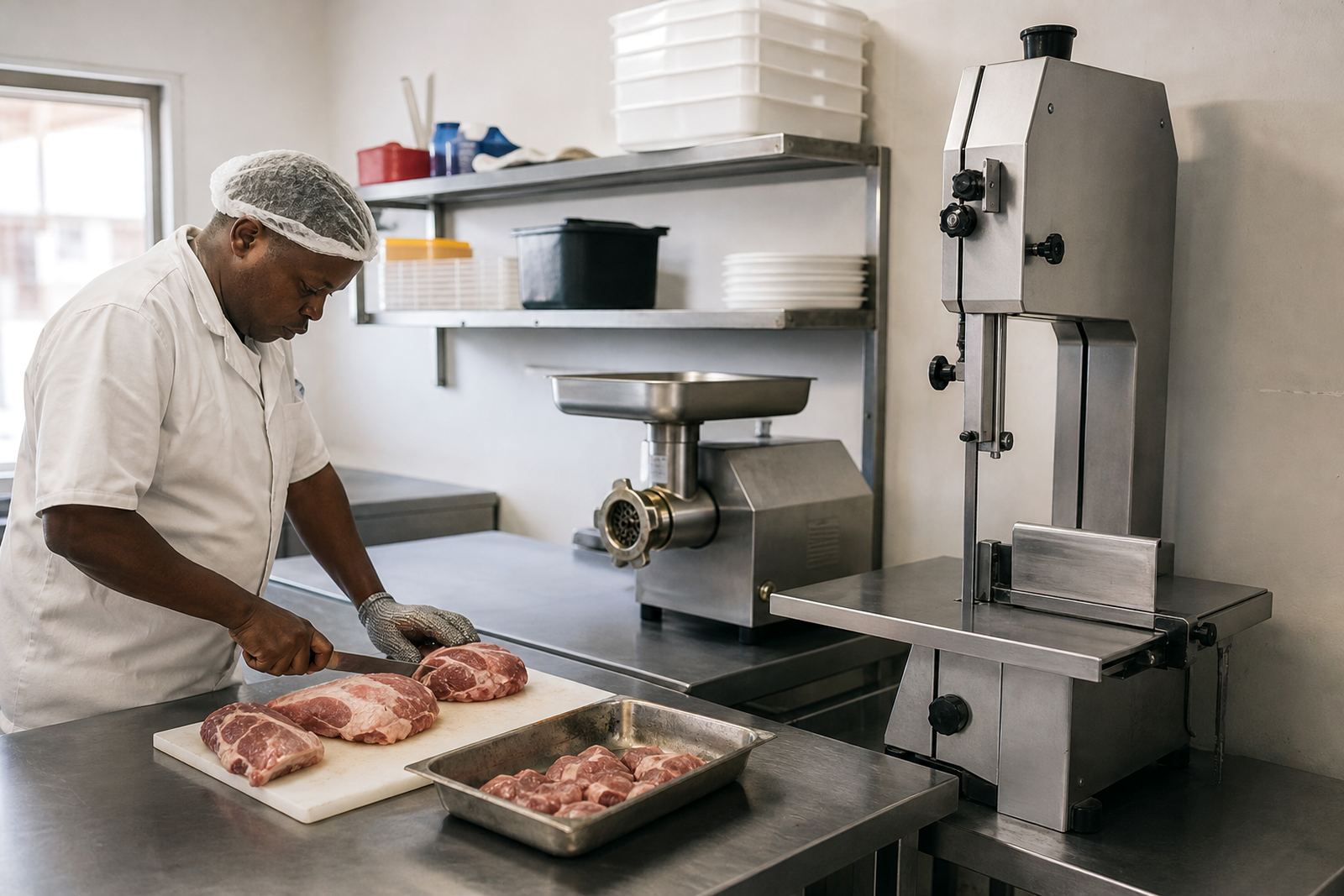
Place the bandsaw where the operator can feed product safely without bumping into walls or doors. Put the mincer near the prep side so trimmed meat can be processed without carrying heavy containers across the room. In Durban and other coastal areas, extra care is needed because humidity can make floors slick and metal surfaces need careful drying after cleaning.
- Keep the cutting area separate from the packing or serving point
- Use one clear route for raw product and one for finished product
- Do not place machines under low shelves or cluttered corners
- Allow enough room for a second person to assist when needed
Keep cleaning simple from day one
Small spaces get dirty faster because every surface is closer to the action. Choose a layout that lets you clean around and under the machine without moving heavy equipment each day. Smooth floors, easy access to the sides and clear reach to wash points all help. If the room is cramped, cleaning gets rushed, and that can affect hygiene.
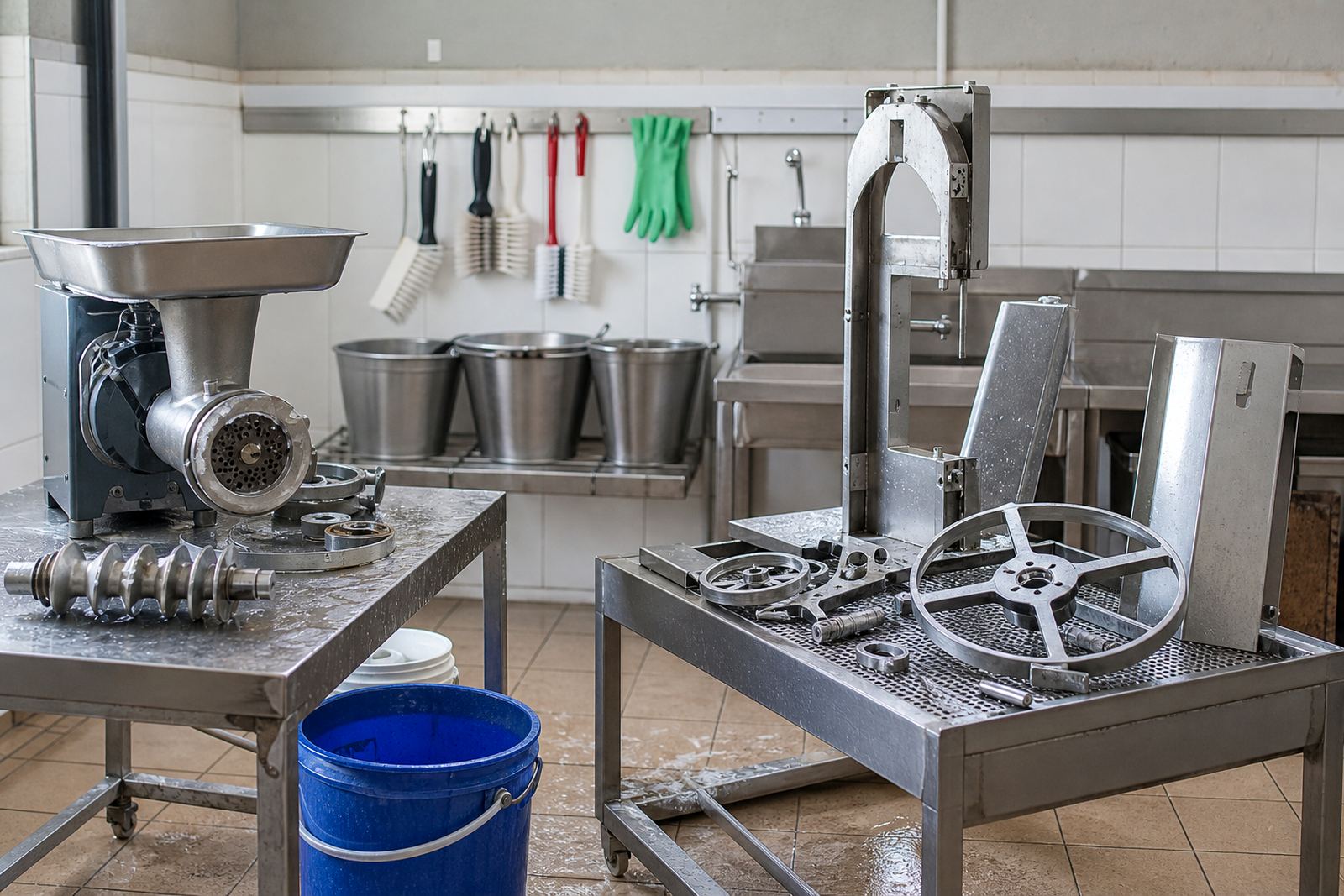
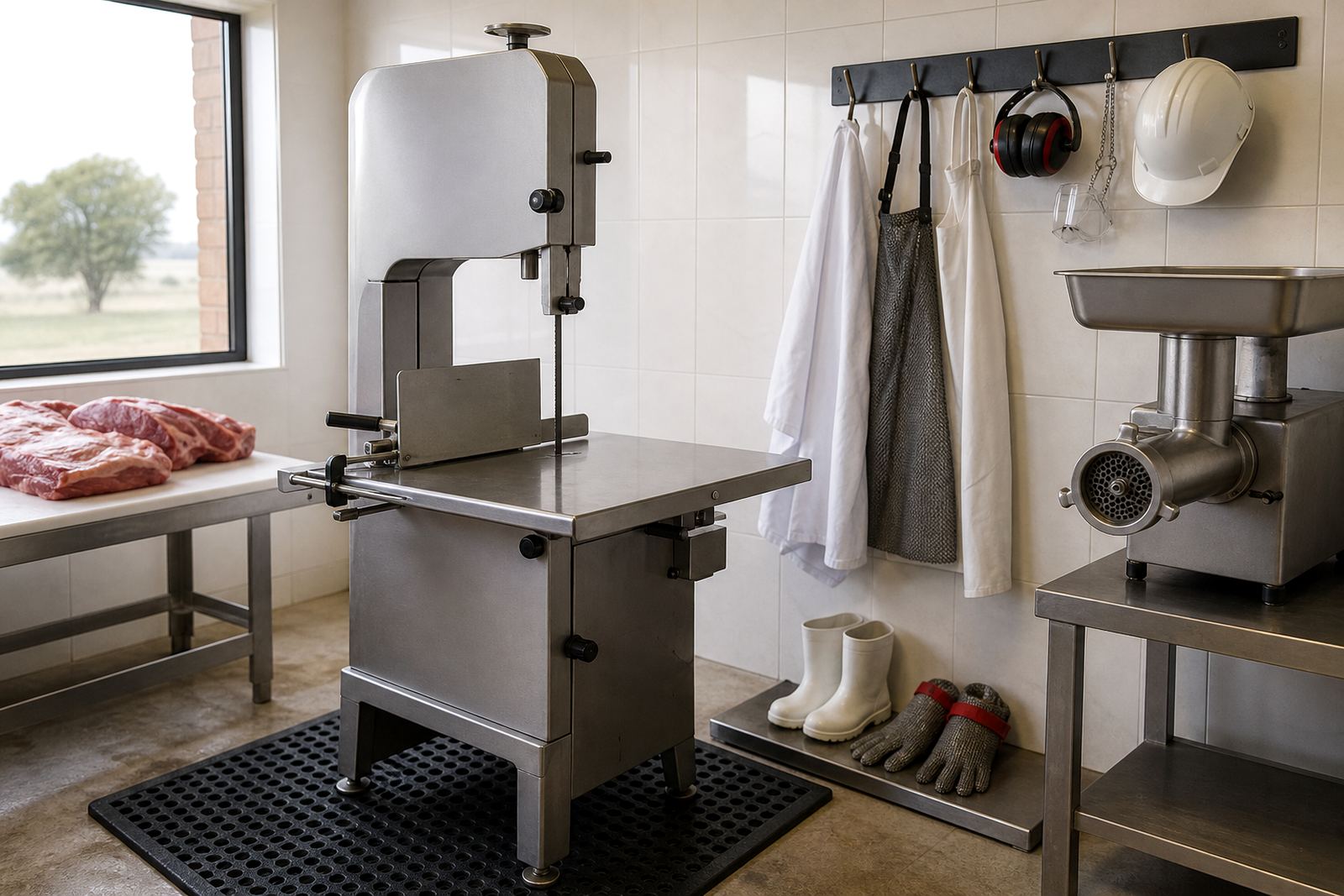
For both bandsaws and mincers, cleaning should be part of the daily closing routine. Remove residue, wash the contact parts properly and dry surfaces before switching off for the night. Do not leave blades, plates or knives lying around the sink area. Even a small room needs proper storage for removable parts, cleaning brushes and PPE.
- Wipe down after every session, not only at day end
- Store blades, plates and knives in a safe marked place
- Use gloves and eye protection during cleaning and part handling
- Check that water does not pool around cables or sockets
Plan for power cuts and everyday interruptions
Load-shedding affects many butcheries in South Africa, especially where refrigeration and prep work all depend on one supply. In a small space, a power cut can be even more disruptive because there is less room to spread out unfinished work. Build a simple shutdown routine so the area stays safe and tidy when the power goes off.
Keep a torch close by, know where the main isolation point is and make sure operators do not restart machines until guards are in place and the area is clear. If the room is shared with storage or retail space, keep the path to exits open. It is also worth checking that cords and plug points are not overloaded. A neat setup makes interruptions easier to manage.
- Have a clear shutdown and restart procedure
- Keep lighting available for evening or outage conditions
- Do not crowd sockets with multiple heavy appliances
- Test guards and switches regularly after cleaning or moving equipment
Care routines that save space and time
Good care keeps the equipment working and helps a small room stay orderly. If a bandsaw or mincer is neglected, you end up storing spare parts, temporary trays and cleaning items all over the floor. Regular servicing prevents that buildup. It also helps spot wear early, before a breakdown takes up space and time you do not have.
A simple routine works well for compact butcheries in Johannesburg, Pretoria, Durban or Cape Town as much as it does in Bloemfontein. Check blades, plates and knives for condition, keep guards in place, and arrange periodic servicing before the machine starts giving trouble. If you need help with installation, servicing, parts, delivery or training, use the enquiry form on our contact page and we will assist from Hamilton, Bloemfontein.
- Keep a log of cleaning, servicing and part changes
- Replace worn cutting parts before they affect output
- Ask for operator training when staff change or new equipment arrives
- Schedule preventive maintenance instead of waiting for a breakdown
A simple checklist for tight butcher spaces
Before you commit to any layout, walk the room as if you were doing the daily job. Ask where product lands, where waste goes, where the operator stands and how the floor gets cleaned. If the answer feels awkward in any one spot, the layout will probably be awkward in practice too. A small space can still work well when each move has a purpose.
- Will the machine fit with safe working room around it?
- Can the operator reach controls without leaning or twisting?
- Is there space for cleaning, drying and safe storage of parts?
- Can the room cope with power cuts, wet floors and busy periods?
- Does the layout support safe movement from raw product to finished product?
If you are setting up a compact home butchery or a small commercial room, start with the workflow first and the machine second. That order saves space, cuts clutter and makes the day easier to manage.