

Start With The Basics Before Any Switch Is Thrown
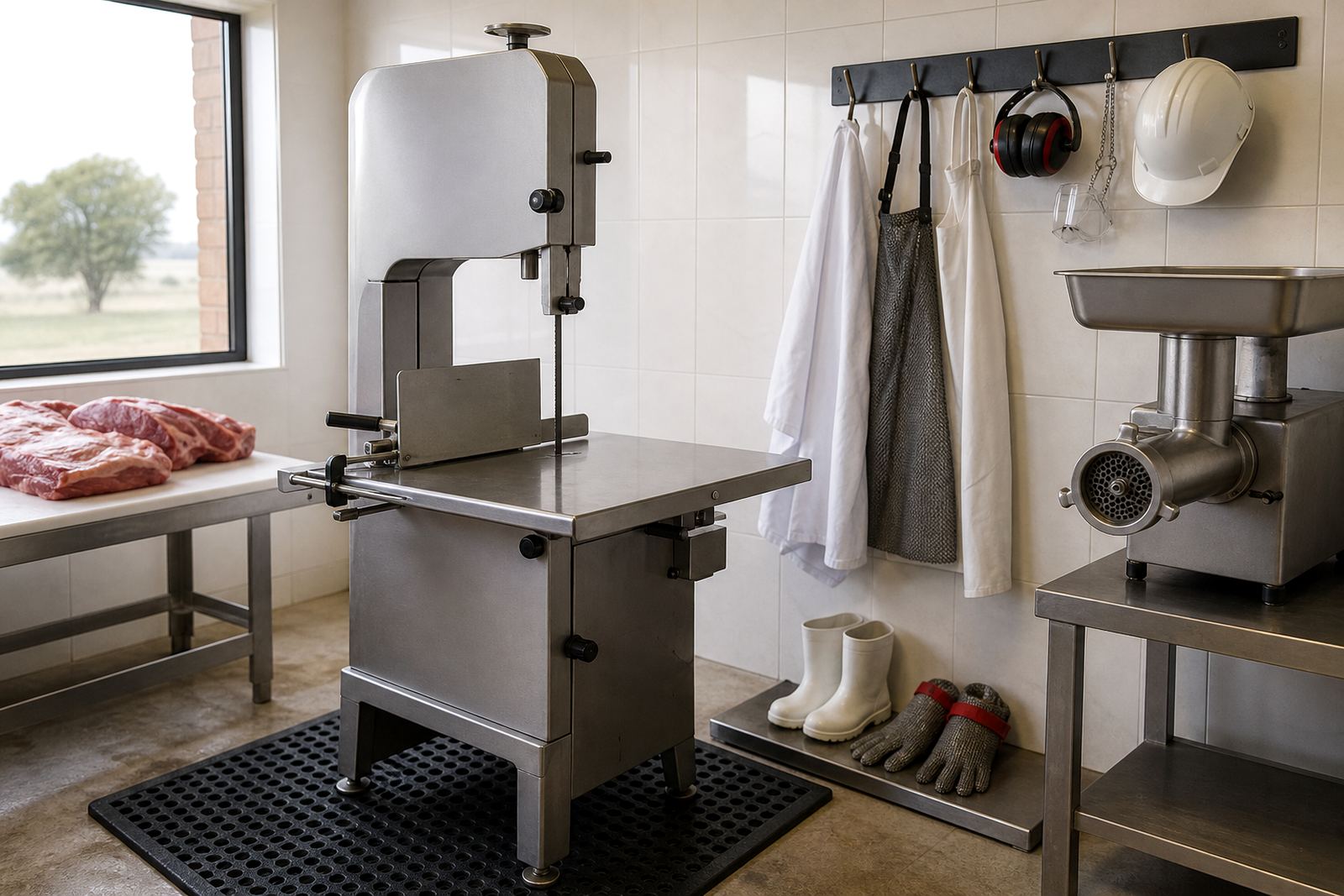
Before a bandsaw or mincer is used, the operator should take a slow look over the machine and the work area. Check that the guard is in place, the table or feed area is clear, and the floor around the unit is dry enough to avoid slips. In a busy Bloemfontein butchery, that simple pause can prevent a rushed mistake, especially when the shop is opening early or packing up after a long day.
Keep hands clear of cutting paths and never reach around moving parts. If a cover, guard or safety device looks damaged, stop there and arrange attention before the machine goes back into service. A machine that is clean, steady and properly set up is easier to use and much safer for staff. Good habits cost less than an injury or a ruined shift.
How To Use Guards Without Cutting Corners
Guards are there to keep fingers, clothing and loose items away from moving parts. On a bandsaw, the guard should sit correctly over the blade path and any access point should close as intended. On a mincer, the feed opening should never be treated like a shortcut for hands or tools. Use the pusher or feed method supplied with the machine and keep the area around the opening clean.
Do not remove a guard just to speed up a job. If a cut feels awkward, it usually means the machine is not set up right or the operator needs a better method. The same rule applies whether the machine is working in Hamilton, Bloemfontein or doing service in Durban where humidity can make surfaces damp and slippery.
- Check that all fixed guards are fitted before starting.
- Use the correct feed tools, not knives or improvised items.
- Never bypass a safety switch or latch.
- Stop the machine before adjusting, clearing or cleaning.
PPE That Helps In A Real Working Shop
Personal protective equipment should match the task. Good grip gloves, apron protection and suitable footwear help reduce slips, cuts and bruises during normal butchery work. Eye protection is worth using where splashes, bone fragments or cleaning spray may be present. If a team member is handling blades or plates during maintenance, extra care and the right PPE matter even more.
Clothing should fit properly and not hang loose near moving parts. Sleeves, scarves, jewellery and long apron ties can catch on equipment and cause trouble very quickly. Hair should be tied back and any item that can snag should be removed before work starts. In cooler Free State weather, layered clothing is common, but it still needs to stay clear of the machine. A small slip here can turn into a serious injury.
Safe Feeding, Cutting And Mincing Habits
The machine should do the work it was built for, not the operator’s hands. Feed product at a steady pace and keep pressure controlled rather than forcing meat through the unit. With a bandsaw, use calm movement and keep the workpiece stable. With a mincer, make sure product is prepared in suitable pieces and never push down hard with fingers near the opening.
When a cut jams or the feed slows, switch off and wait for complete stop before checking anything. Do not try to pull product back while the machine is moving. That applies in a home butchery in Kimberley as much as it does in a commercial shop in Pretoria. Machines need patience. Staff do too.
- Keep both hands in safe positions at all times.
- Use the right speed and do not overload the machine.
- Do not use damaged blades, plates or knives.
- Stop immediately if you hear odd noise, vibration or rubbing.
Cleaning And Breakdown Care After The Last Job
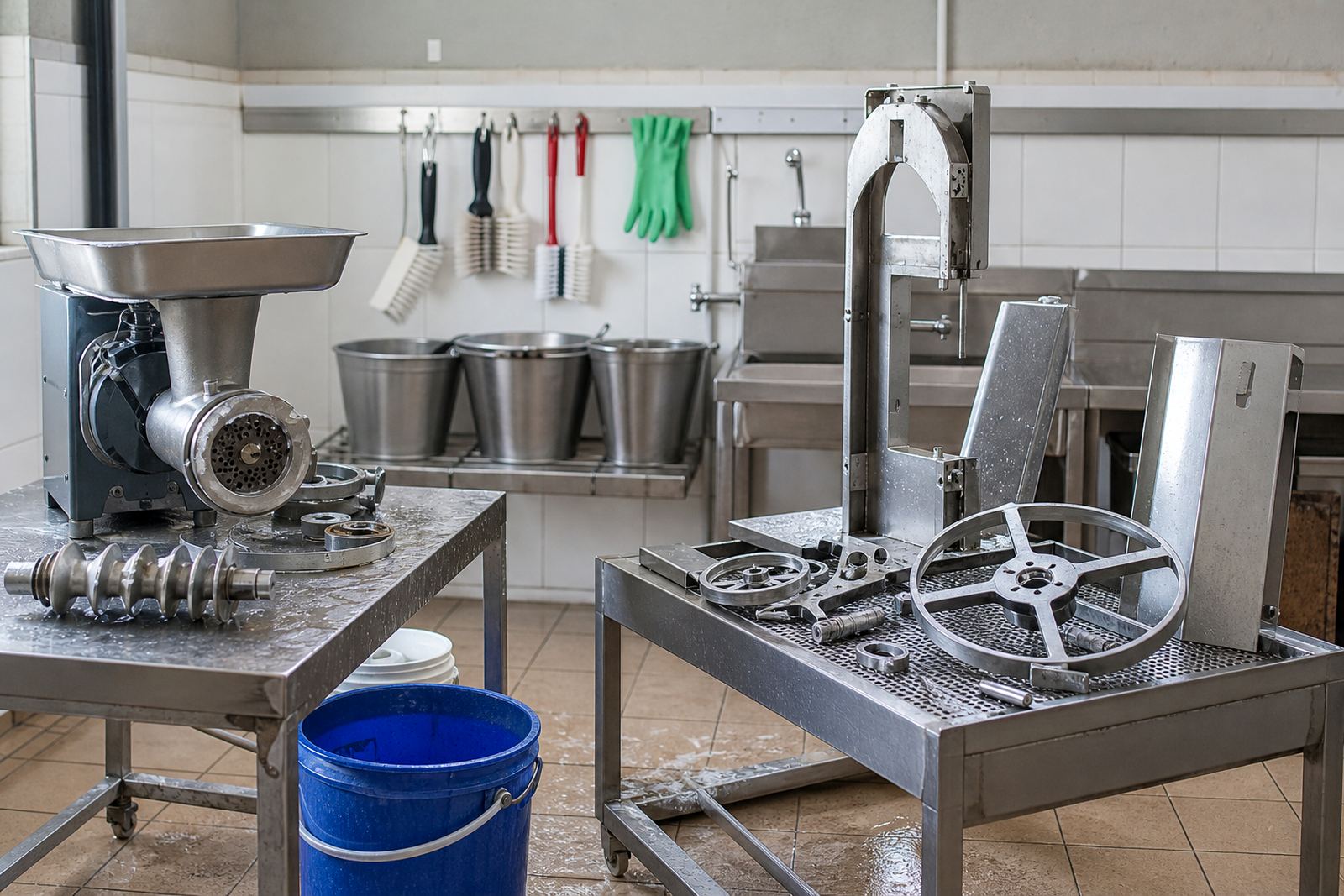
Cleaning is part of safety, not an extra task. Switch off the machine, isolate power if required, and wait for moving parts to stop before cleaning starts. Remove residue, wash down the correct surfaces, and dry everything properly before the next shift. In coastal places like Cape Town and Durban, moisture can sit on metal longer than expected, so drying matters more than people think.
Never use open water on electrical parts, switches or motors. Use the cleaning method recommended for the unit and keep chemicals away from places where they are not meant to go. After cleaning, check that the guard, cover and all fittings are back in place. A machine left half-assembled is a problem waiting for the morning crew.
When Servicing, Training And Parts Make The Difference
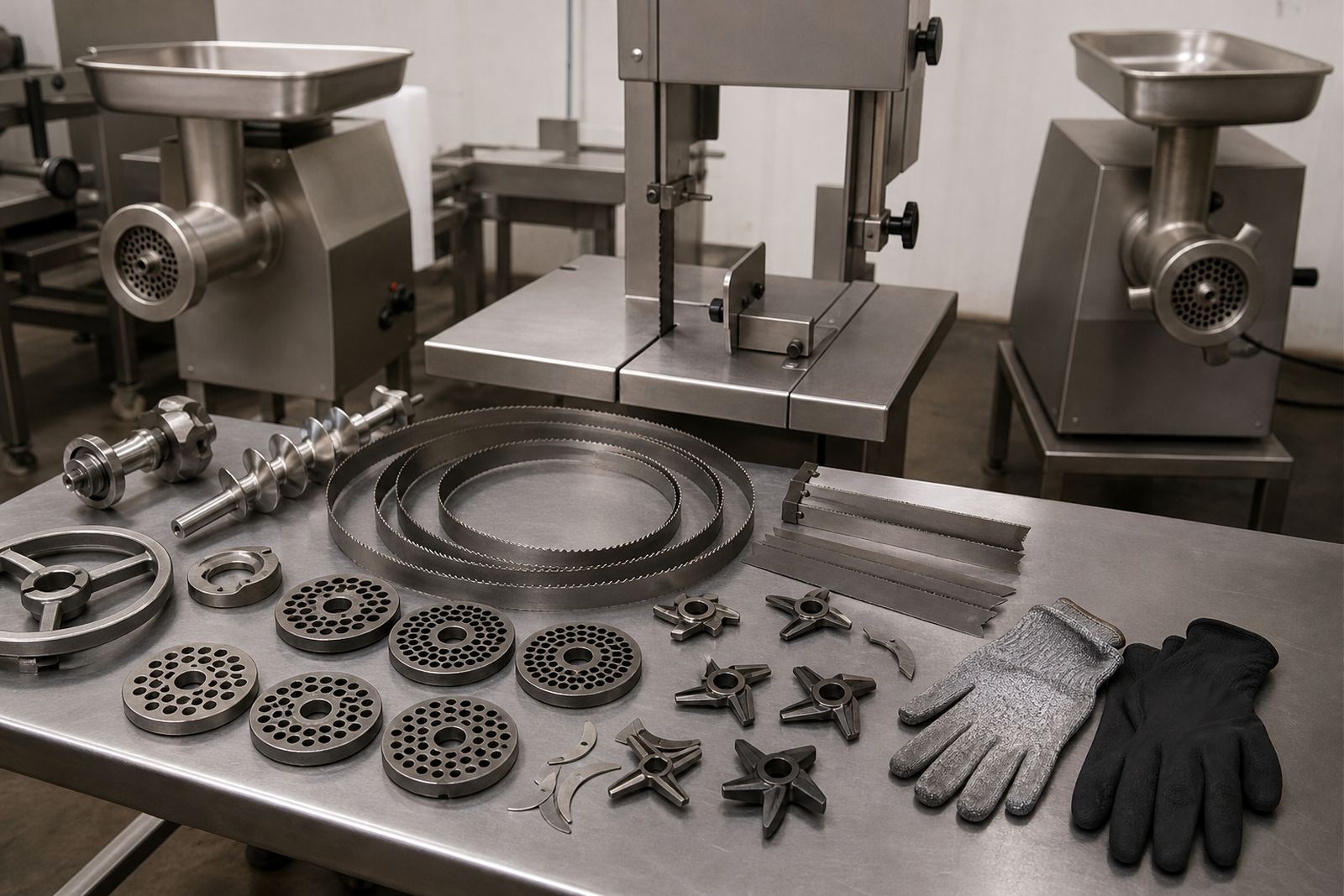
Routine servicing helps keep a bandsaw or mincer safe to run. Worn blades, dull knives, tired plates and loose fittings can make operators push harder than they should, which increases the risk of injury. Scheduled checks, proper replacement parts and a trained eye from the workshop side can keep small faults from turning into breakdowns. That is useful for shops in Welkom, Kroonstad and Johannesburg where machines may run hard through the week.
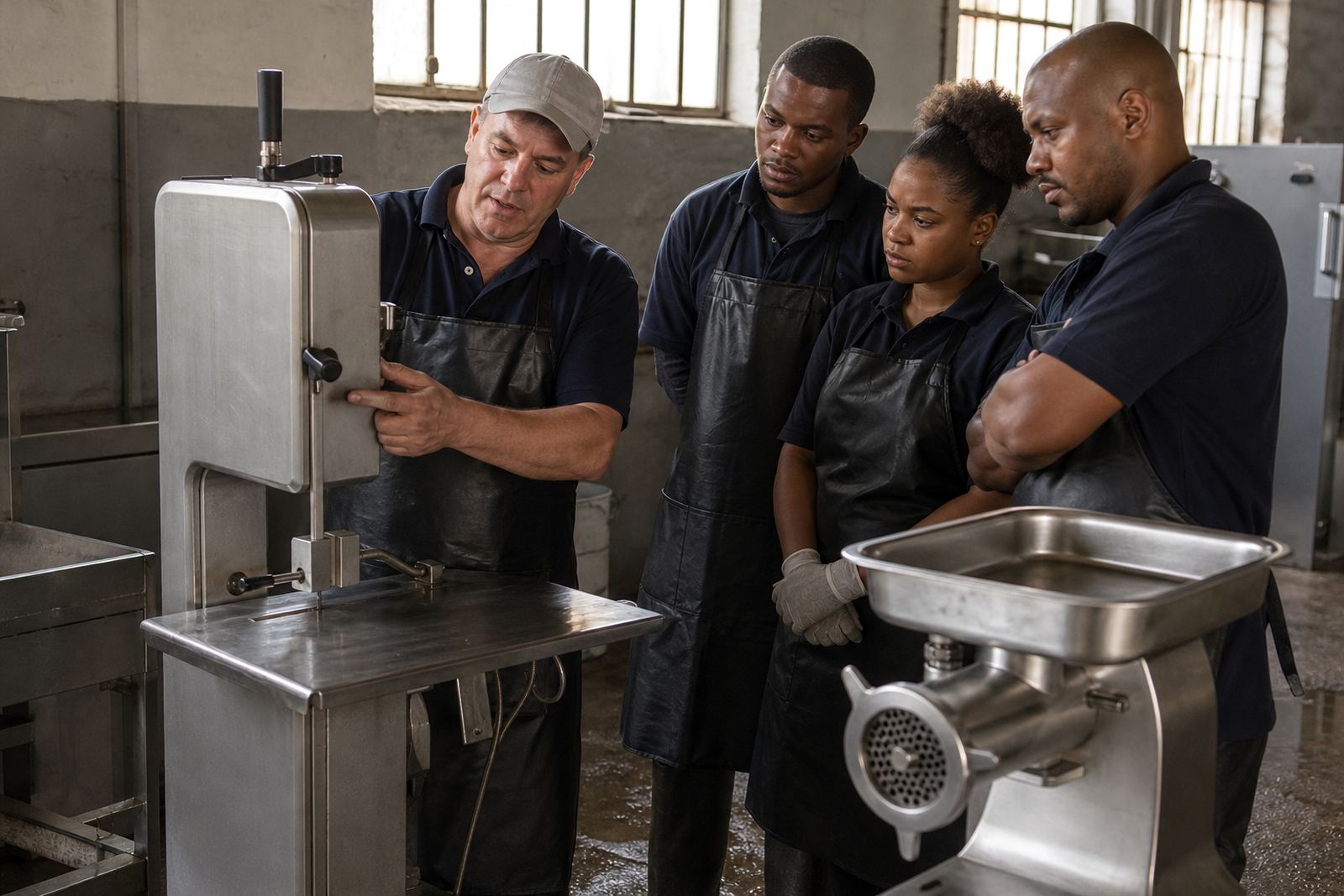
Training should cover start-up, shutdown, cleaning, blade change, plate and knife change, and what to do when something feels wrong. If a machine starts to vibrate, smell hot or cut poorly, it should be taken out of use until checked. It is better to lose a few minutes than a whole day. The same applies to power cuts and load-shedding: restart only after a proper check, not in a rush.
- Book servicing before wear becomes visible.
- Replace damaged or blunt cutting parts promptly.
- Keep spares, fasteners and cleaning tools organised.
- Train new staff before they work alone on the machine.
A Simple End-Of-Day Safety Checklist
At closing time, use the same routine every day. A fixed checklist helps teams avoid missed steps and keeps the machine ready for the next shift. It also makes supervision easier, whether the unit is in a small home setup or a larger shop serving a steady customer flow.
Use this quick closing list: switch off and isolate power, wait for full stop, remove leftovers, clean and dry all working surfaces, check guards and fittings, store blades or parts safely, and leave the area tidy. If anything looks loose, damaged or unusual, make a note and report it before the next start-up. A clear end-of-day routine is one of the simplest ways to keep people safe.