

Start with your home butchery routine, not the machine
If you process meat only now and again, a simple setup is usually easier to manage than a larger unit with more parts to clean. Think about where the machine will stand, how close it is to power and water, and whether you have a dry area for storage after use. In Bloemfontein and other Free State towns where dust and dry air are common, a covered storage spot helps keep moving parts cleaner between uses.
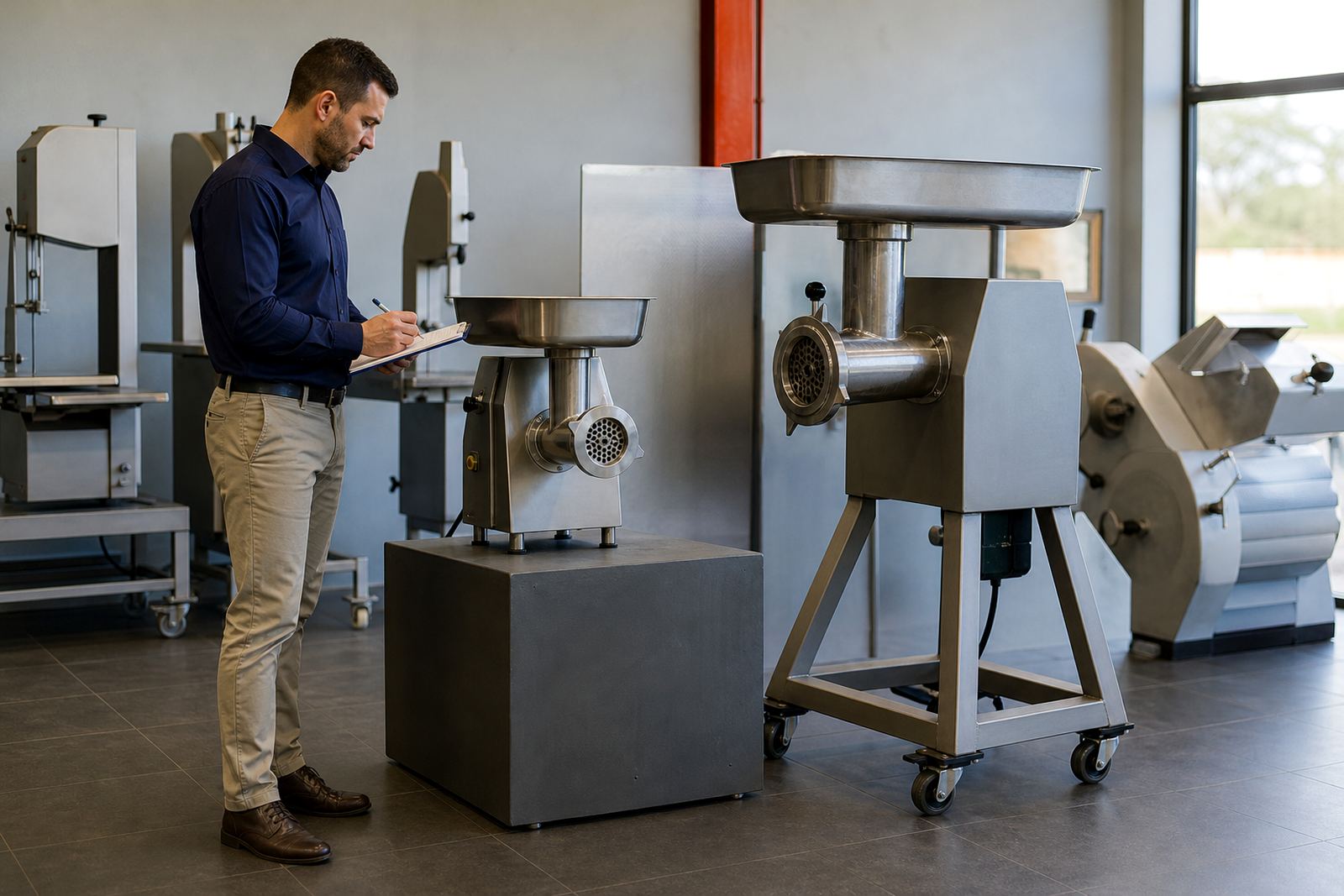
For a home butcher, the best choice is often the one that matches your actual routine. A machine that is too large can be awkward to clean and harder to move around a small scullery or prep room. A practical setup should also allow safe handling of meat, enough counter space for sorting, and easy access to cleaning tools.
- Measure the space before you buy.
- Check for a nearby plug point and stable surface.
- Allow room for loading, cutting and cleaning without crowding.
- Keep raw meat handling separate from ready-to-pack meat.
Choosing between a bandsaw and a mincer for home use
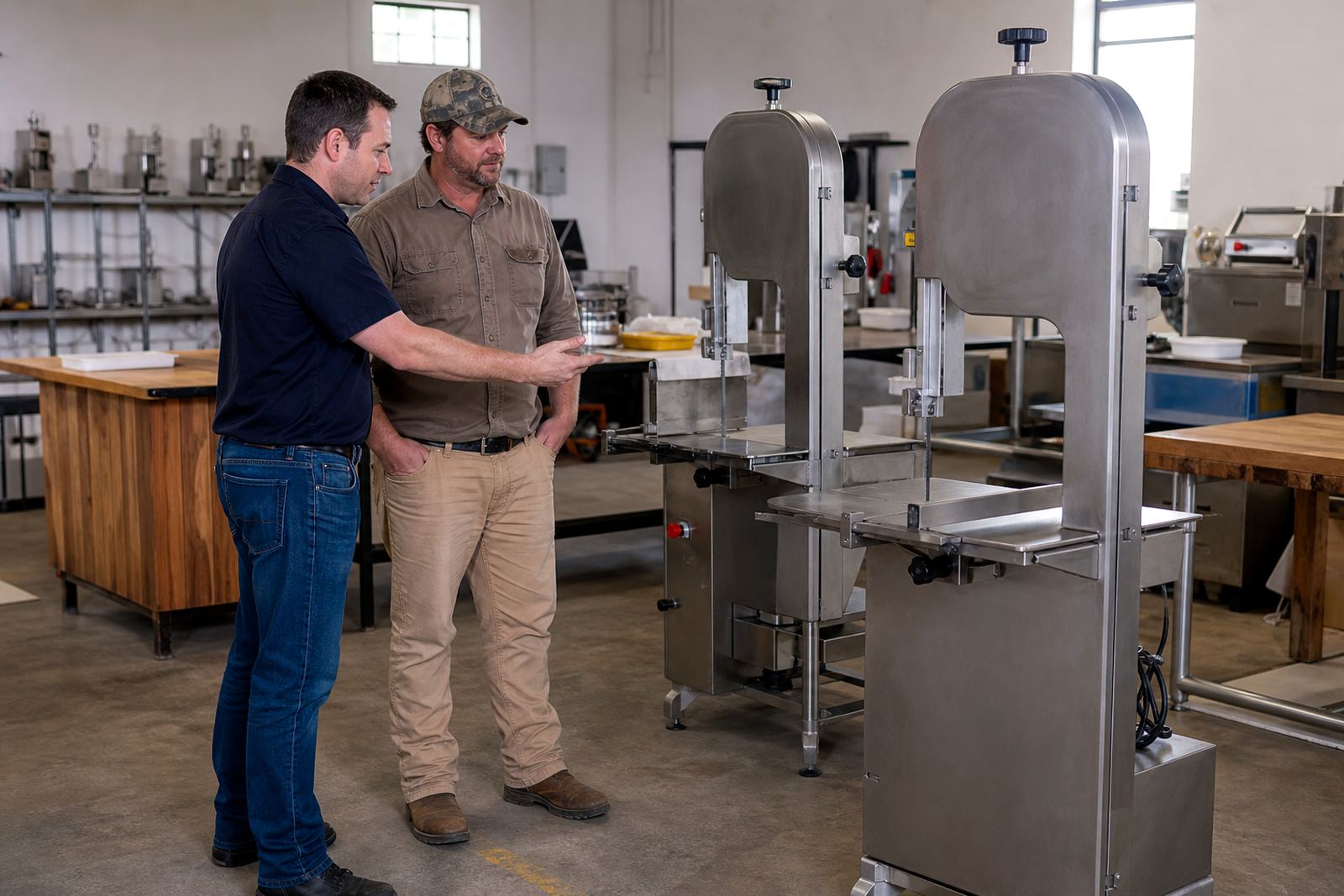
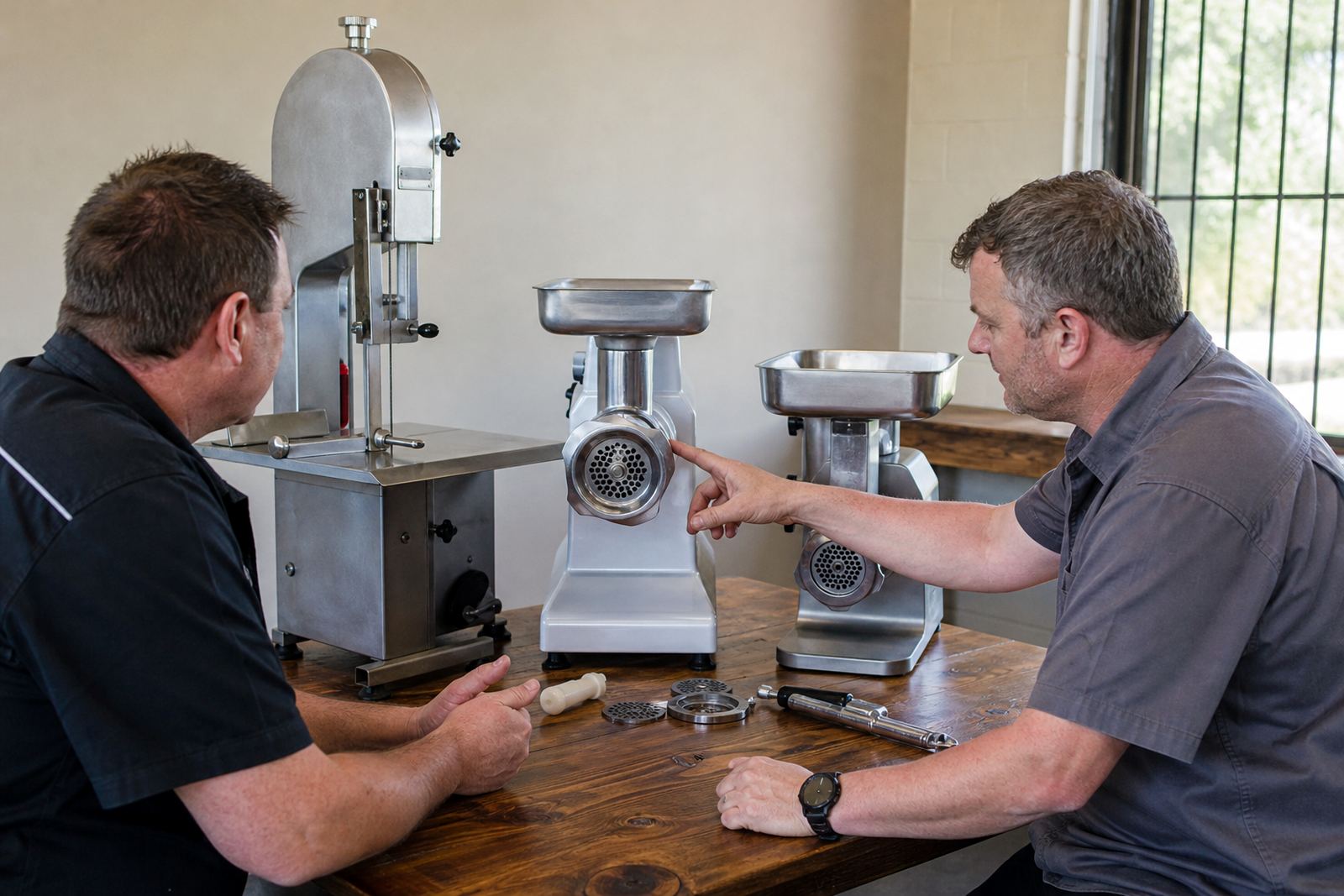
A bandsaw is useful when you need to cut bone-in portions or divide larger cuts neatly and evenly. A mincer is better for preparing mince, burger mixtures and sausage fillings. Many home butchers start with one, then add the other later as their needs grow.
If you already buy larger sections of meat from a local supplier in Johannesburg, Pretoria, Durban or Cape Town, a bandsaw can help you portion more efficiently. If your focus is mince for family meals, a mincer may be the first machine to consider. Either way, the important point is to choose equipment that is easy to strip down, clean and reassemble without fuss.
- Pick a bandsaw for bone-in cutting and neat portioning.
- Pick a mincer for mince, patties and sausage work.
- Choose easy-access parts so cleaning does not become a chore.
- Make sure the controls are simple enough for confident home use.
A practical safety checklist before you switch on
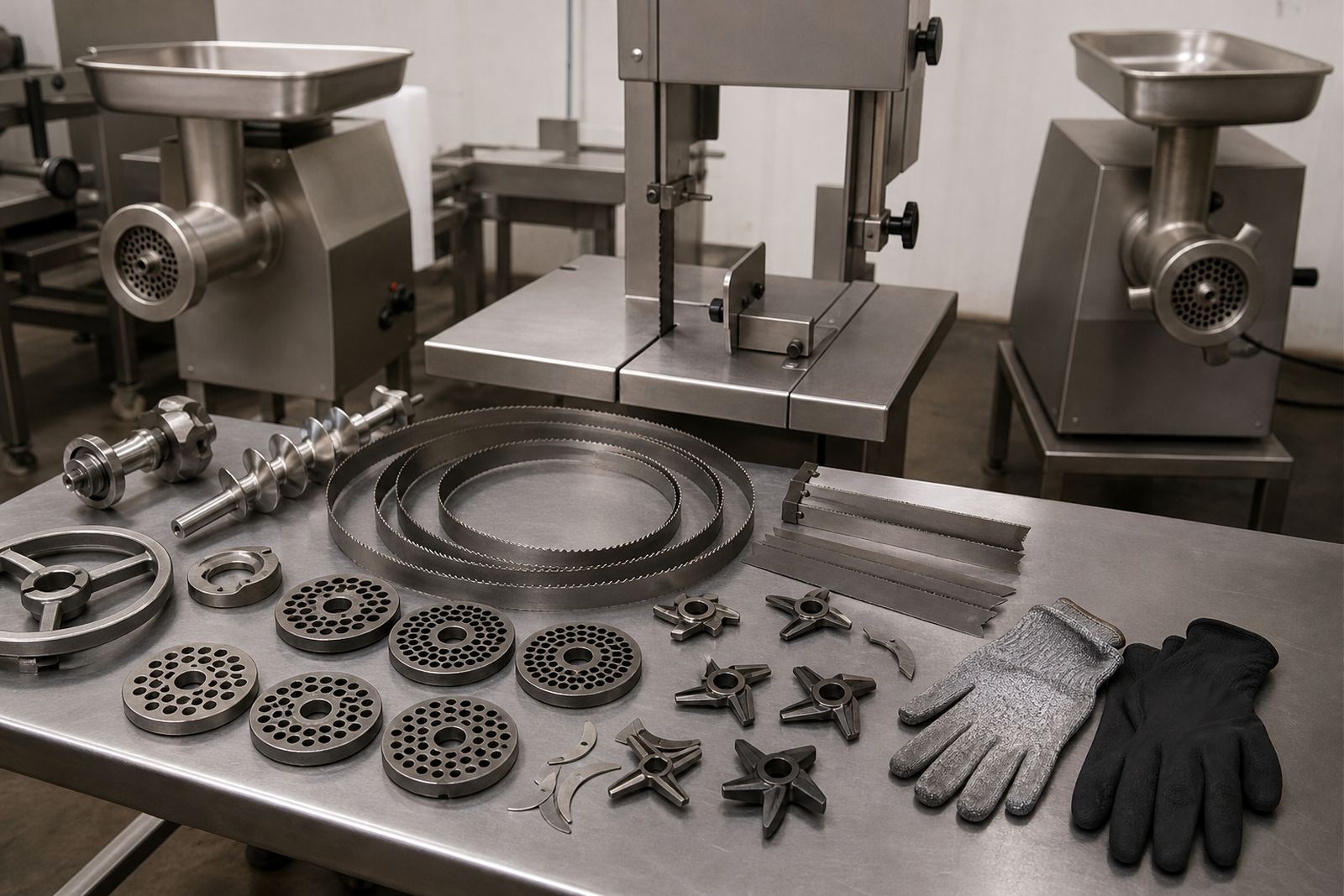
Home butchery should never be rushed. Before use, check that guards are in place, the work area is dry and the floor is not slippery. Wear suitable PPE such as cut-resistant gloves where appropriate, an apron and closed shoes. Keep hands clear of moving parts, and never bypass a guard or force meat through a machine.
Good safety habits matter just as much as the machine itself. In many homes, load-shedding can interrupt a work session, so it is sensible to switch off, unplug and wait until power is stable again before resuming. If you are working in coastal areas like Durban or Cape Town, be extra careful about moisture build-up and wipe down equipment after use to help reduce rust risk.
- Check guards and switches before every session.
- Keep fingers away from blades, plates and moving feed points.
- Do not leave the machine unattended while it is running.
- Unplug before cleaning, changing parts or moving the unit.
Cleaning that saves time later
A clean machine is easier to use next time and safer for the household. Rinse off residue soon after use, then wash, dry and store the parts properly. Do not leave meat scraps sitting overnight, especially in warm weather. For home users, the best routine is often a short cleaning process directly after each session rather than a bigger clean-up later on.
Pay attention to areas where fat, fibre and fine meat residue can collect. Plates, knives, guards and removable covers should be handled carefully so they do not chip or wear unevenly. If you are unsure about the best way to clean a part, ask for a cleaning demonstration before your first proper use. A little guidance upfront can save a lot of trouble.
- Clean soon after use, before residue dries hard.
- Dry all parts fully before storing.
- Keep spare cloths, brushes and sanitiser near the prep area.
- Store clean parts in a dry cupboard or container.
How to plan for parts, servicing and the odd breakdown
Even home equipment needs attention from time to time. A dull blade, worn plate or tired knife set can affect performance and make the machine work harder than it should. Preventive maintenance helps avoid small issues becoming bigger repairs, and it is usually easier to sort out wear early than after a breakdown.
MorCut Butchery supplies home and commercial users from Bloemfontein, Hamilton and across South Africa, with delivery and setup support available in places such as Kimberley, Welkom and Kroonstad. The team also assists with servicing, parts supply, blade replacement, plate and knife changes, and operator training. That kind of support matters when you want a machine that stays reliable for regular family use.
- Watch for dull cutting parts and slower performance.
- Book servicing before problems interrupt your schedule.
- Keep a note of the parts you use most often.
- Use trained help for fitting blades, knives and plates.
A simple buying checklist for the home butcher
Before you place an order, think about daily use rather than just the first purchase. Will the machine fit your kitchen or prep room? Can one person clean it safely? Do you need delivery and setup, or will you collect? These questions help you avoid buying equipment that looks fine on paper but is awkward in practice.
MorCut Butchery was founded in 2008 and is led by Pieter Johannes van Rensburg from Hamilton, Bloemfontein. The team includes Lerato Mokoena, Willem Jacobus Smit, Ayanda Khumalo, Morne du Plessis, Naledi Sekgobela and Themba Dlamini, each focused on practical support for customers who want straightforward advice and proper after-sales help. If you are comparing options, use this list before sending your enquiry through the contact page.
- Is the machine easy to clean after each use?
- Will it fit your space and power supply?
- Can you get parts and servicing when needed?
- Do you need training, delivery or setup support?