

Start With a Clean, Clear Prep Area
Before any meat comes out, clear the prep table, check that bins are empty, and make sure the floor is dry enough for safe movement. In Bloemfontein and other Free State towns, dust can settle quickly, so it helps to wipe down surfaces before the first cut and again through the day. Keep a separate space for raw product, finished packs and waste so there is less chance of cross-contact.
Set out your cutting, mincing and packing flow in the same order every day. That simple habit saves time, helps staff move safely, and makes it easier to spot where hold-ups start. If the team knows where blades, plates, bags and trays belong, the whole room runs better even during load-shedding or a busy Saturday rush.
Arrange the Work From Whole Cut to Packed Portion
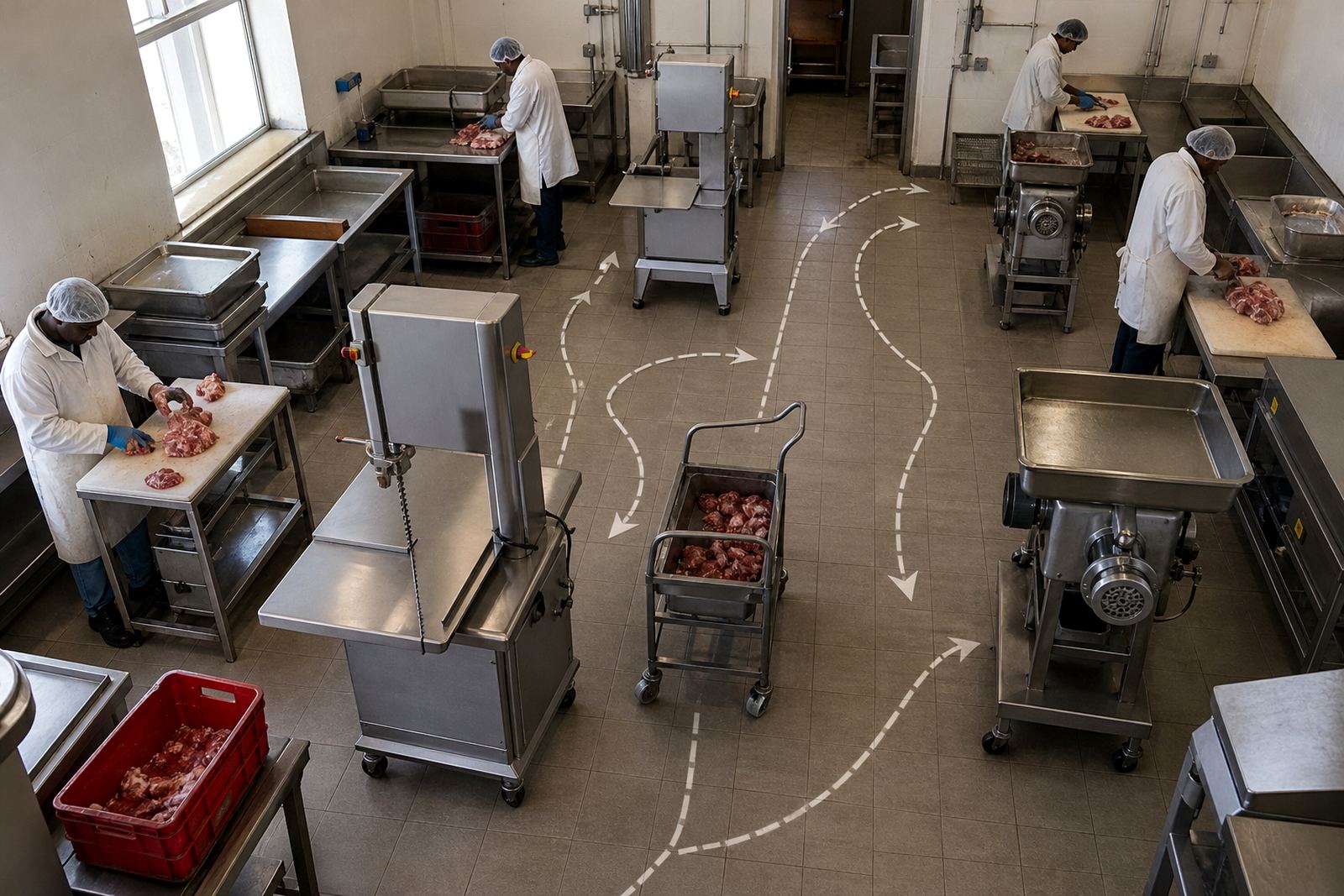
The smoothest workflow usually starts with trimming and portioning, then moves to mincing, then packing and labelling. Keep whole cuts close to the bandsaw area, and place the mincer where trimmed meat can move in short, safe steps. Finished packs should be sent straight to a clean packing table or chill area, not left around the cutting space.
For commercial butchers, it helps to mark the route on the floor or plan the room so staff do not cross paths more than necessary. A simple one-way movement pattern reduces backtracking and keeps the pace steady. Home butchers can use the same approach on a smaller scale by setting out trays in the order they will be used.
- Keep raw meat, trimmed meat and packed product in separate zones.
- Place the bandsaw close to the first cutting point.
- Keep the mincer near the trimming station but away from packing bags.
- Move finished product directly to chilling or dispatch.
Prepare the Bandsaw Area for Safer Cutting
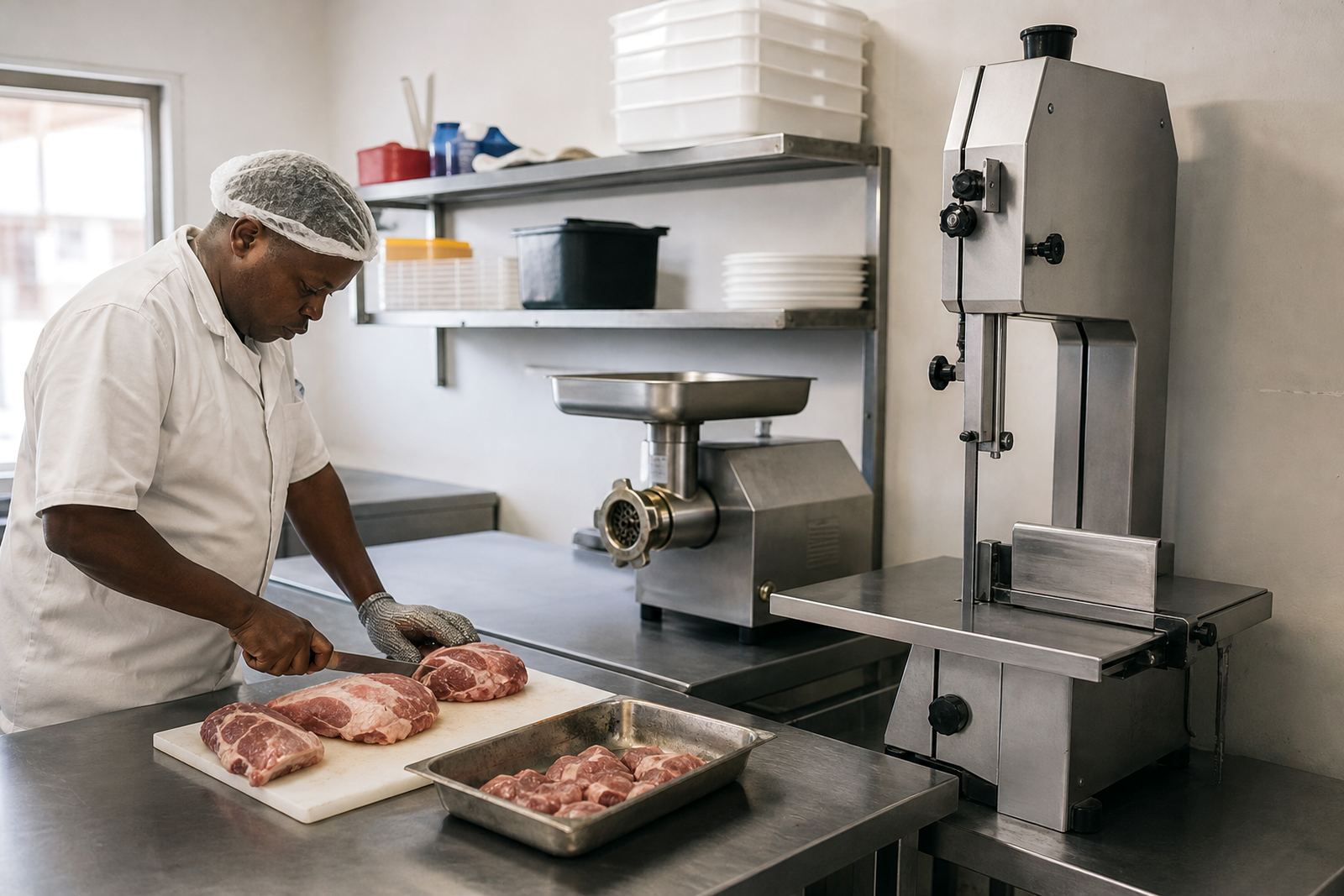
A bandsaw should always be used with guards in place and with the operator focused on the cut. Keep the blade path clear, use proper pushing tools where needed, and never rush a piece through. A clean saw table makes it easier to control the meat and also helps reduce waste from awkward cuts or slipping product.
Before the shift starts, check the blade condition, the guard position and the general cleanliness of the machine. If a blade starts to wander or the cut looks rough, stop and sort it out before continuing. A quick check at the start can prevent bigger problems later, especially when the room is warm or the team is working long hours.
- Switch off and isolate the machine before cleaning.
- Keep hands clear of the blade path.
- Wear suitable PPE such as gloves, apron and non-slip footwear.
- Remove bone fragments and fat build-up as work goes on.
Use the Mincer at the Right Point in the Process
The mincer works best when trimmed meat is ready and there is a steady supply of clean, prepared product. Do not overload the feed opening, and keep the feed area tidy so the operator can work at a controlled pace. If the mincer is placed too far from the trimming station, staff end up carrying trays back and forth which slows everything down.
For smooth output, sort the meat before it reaches the mincer and keep small containers nearby for seasonings, fat ratios or batch separation if needed. Cleaning between batches matters, especially where different products are processed on the same day. A quick rinse is not enough, proper cleaning and drying is needed so residue does not build up in hidden areas.
Pack, Label and Chill Without Delays
Packing should happen as soon as the product is ready, not after the table has filled up. Keep bags, trays, labels and scales in one clean zone so the worker packing does not have to leave the station often. In humid coastal towns like Durban, careful packing and quick chilling help protect product quality, while in hot inland conditions the same discipline stops unnecessary softening or moisture build-up.
Labels should be checked before use and the packing area should stay separate from raw meat handling. If you batch-pack, finish one product type at a time and send it straight to cold storage. That small discipline makes stock control easier and keeps the room from becoming cluttered.
- Pre-sort labels and packs before the first cut.
- Keep the packing surface dry and uncluttered.
- Move packed product to chilling quickly.
- Do not let raw product sit beside finished packs.
Daily Care That Keeps the Line Moving
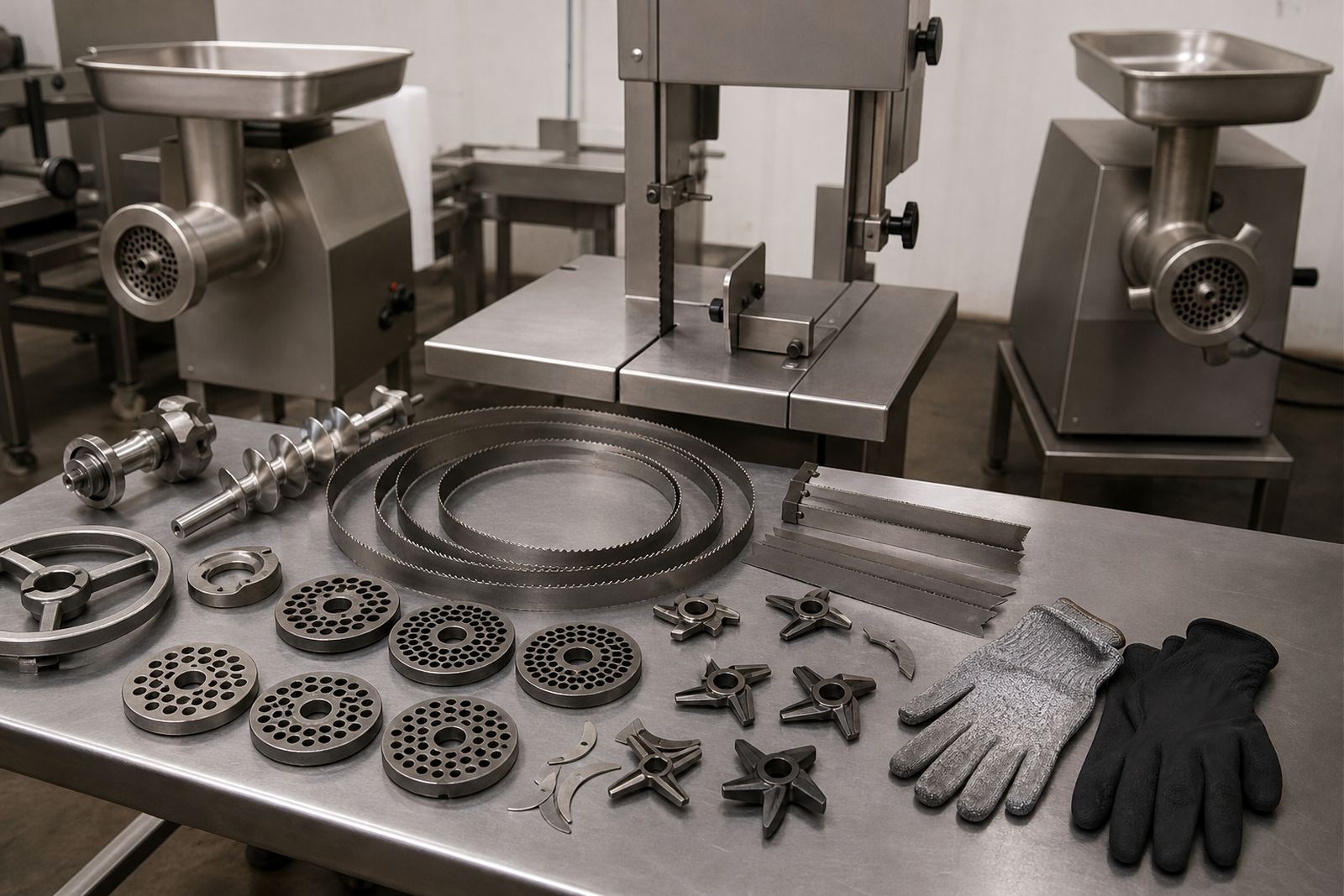
Good prep flow depends on regular care of the equipment, not just the cutting room. Clean the saw and mincer after use, check the blade, plate and knife condition, and watch for wear on moving parts. If a machine starts making unusual noise, slows down or leaves uneven cuts, arrange servicing before it becomes a breakdown. That is less disruptive than stopping in the middle of a busy day.
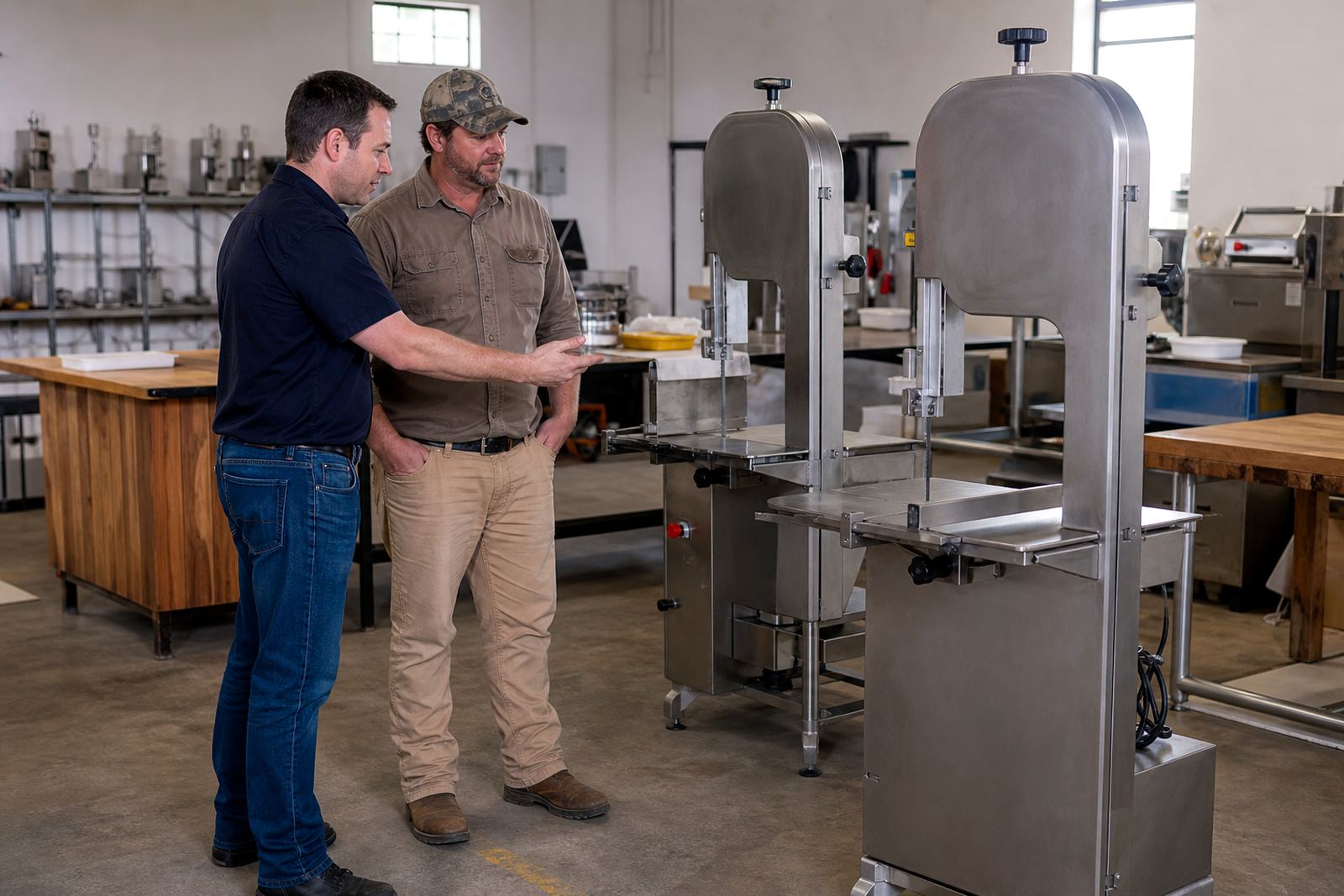
MorCut Butchery supports bandsaw and mincer installation, servicing, blade replacement, plate and knife change, breakdown callouts and preventive maintenance across Bloemfontein, Johannesburg, Pretoria, Durban, Cape Town, Kimberley, Welkom and Kroonstad. Our team also assists with delivery and setup, cleaning demonstrations and operator training so your staff can work safely and keep the flow orderly.
For clients in Hamilton, Bloemfontein and beyond, a planned maintenance routine makes the whole prep area easier to manage. It also helps reduce downtime during power interruptions and keeps the work line ready for the next order.
A Simple End-Of-Shift Checklist
At the end of the day, the room should be reset so the next shift can start without sorting through clutter. Wipe down every work surface, clean and dry the machines, return tools to their place and store consumables in sealed containers. If a part needs replacing, set it aside for follow-up rather than leaving it in the way.
A short checklist keeps standards steady and makes handover easier between staff. It also helps the manager see what needs attention before the next delivery or production run. When the area is prepared properly, the next shift starts cleaner, faster and safer.
- Clean and dry the bandsaw and mincer.
- Check blades, plates and knives for wear.
- Restock packing materials and labels.
- Confirm waste has been removed and floors are safe.
- Log any faults or parts needed for servicing.