

Plan ahead before the rush starts
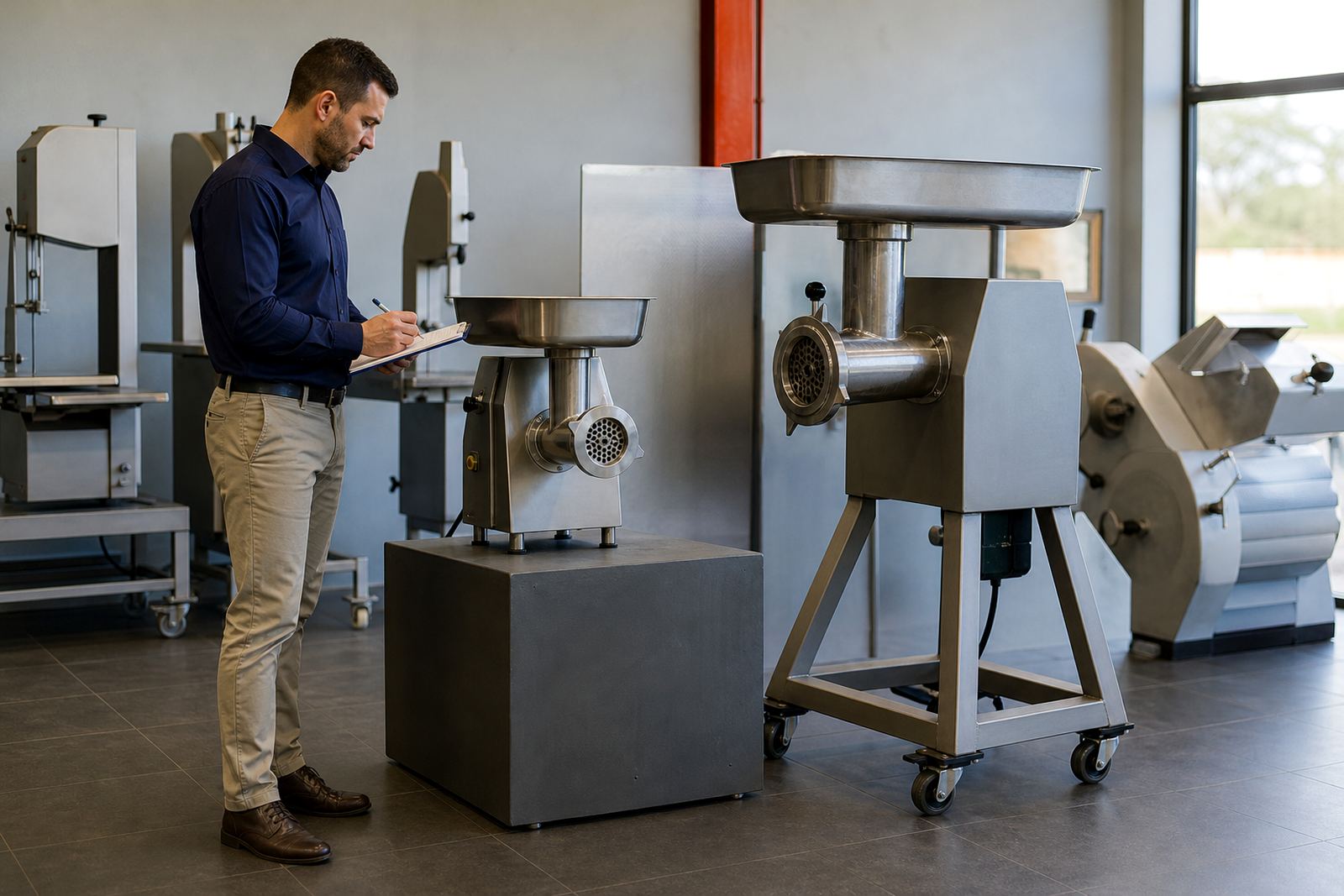
Peak trading periods are usually where small issues become costly ones. If your bandsaw or mincer has been running flat out through month-end, holidays, braai weekends or stock-up periods, book a check before the rush arrives rather than after a breakdown.
Look at your own trading pattern first. A home butcher may only need a simple pre-season service and a fresh set of wearing parts, while a busy commercial block in Bloemfontein, Johannesburg or Durban may need a fuller maintenance plan with scheduled callouts. It helps to match the service to your volume instead of waiting for a noisy motor, blunt blade or slow feed to force the issue.
- Set service dates before your busiest trading weeks
- Check blades, plates and knives early
- Keep spare wear parts on hand for quick changeovers
- Make sure guards, switches and safety covers are working properly
What to check on bandsaws and mincers
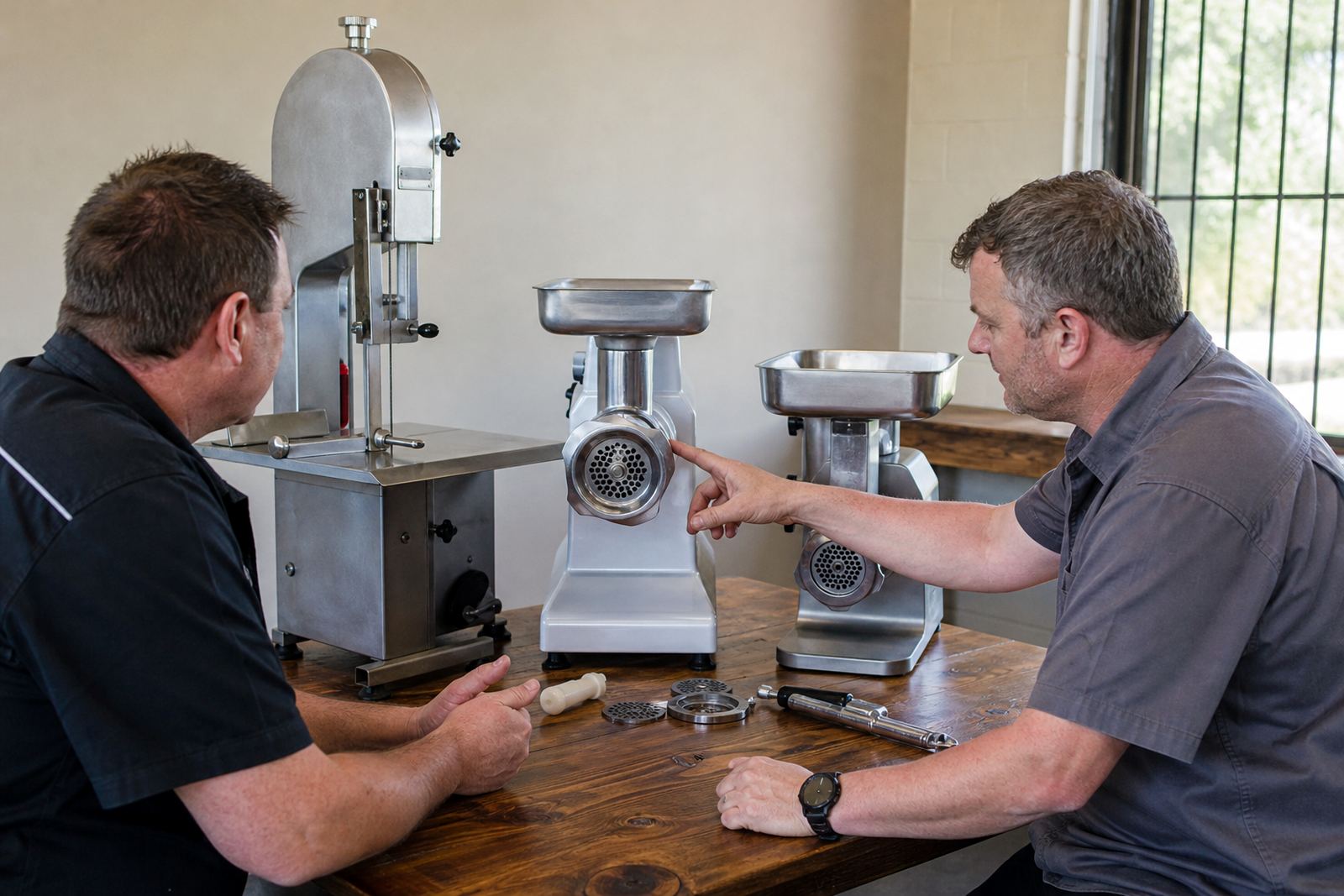
A seasonal inspection should focus on the parts that take the most strain. On bandsaws, look for blade wear, guide condition, alignment, drive smoothness and any buildup around moving parts. On mincers, check the plate and knife set, feed performance, noise, heat and whether the machine is pulling product through evenly.
Cleaning matters just as much as mechanical condition. Dried fat, meat fibres and residue can shorten component life and make the equipment harder to sanitise properly. A proper clean after each shift is still the best habit, especially where humidity or dust can affect storage and working conditions. In coastal areas like Cape Town or Durban, dry the machine properly before storing it. In drier inland towns such as Bloemfontein or Kroonstad, dust control and regular wiping still make a real difference.
- Inspect for worn cutting parts before the busy period begins
- Listen for unusual vibration, rattling or strain
- Clean food-contact areas thoroughly after use
- Dry all surfaces before storage to reduce corrosion risk
Build a service plan that fits your trading season
Good planning is not only about fixing faults. It also means setting up a service rhythm that suits your operation. Some businesses need a simple once-off seasonal service, while others benefit from preventive maintenance with regular visits, especially where equipment runs daily and downtime causes real delay.
A practical plan usually covers installation support, servicing, blade replacement, plate and knife change, cleaning demonstrations and operator training. If you work across multiple sites, such as supply points in Bloemfontein, Johannesburg, Pretoria or Cape Town, keep one person responsible for booking maintenance and recording what has been done. That way you are less likely to miss a worn part or forget a repeat issue.
- Keep a written service record for each machine
- Book preventive maintenance before peak trading
- Separate urgent breakdowns from routine checks
- Allow time for setup after any major part change
Train staff before the pressure builds
Machines tend to fail faster when operators are rushed or not familiar with the correct way to use them. Before a busy season, make sure staff know how to switch equipment on and off properly, how to feed product safely and how to stop the machine if something sounds wrong.
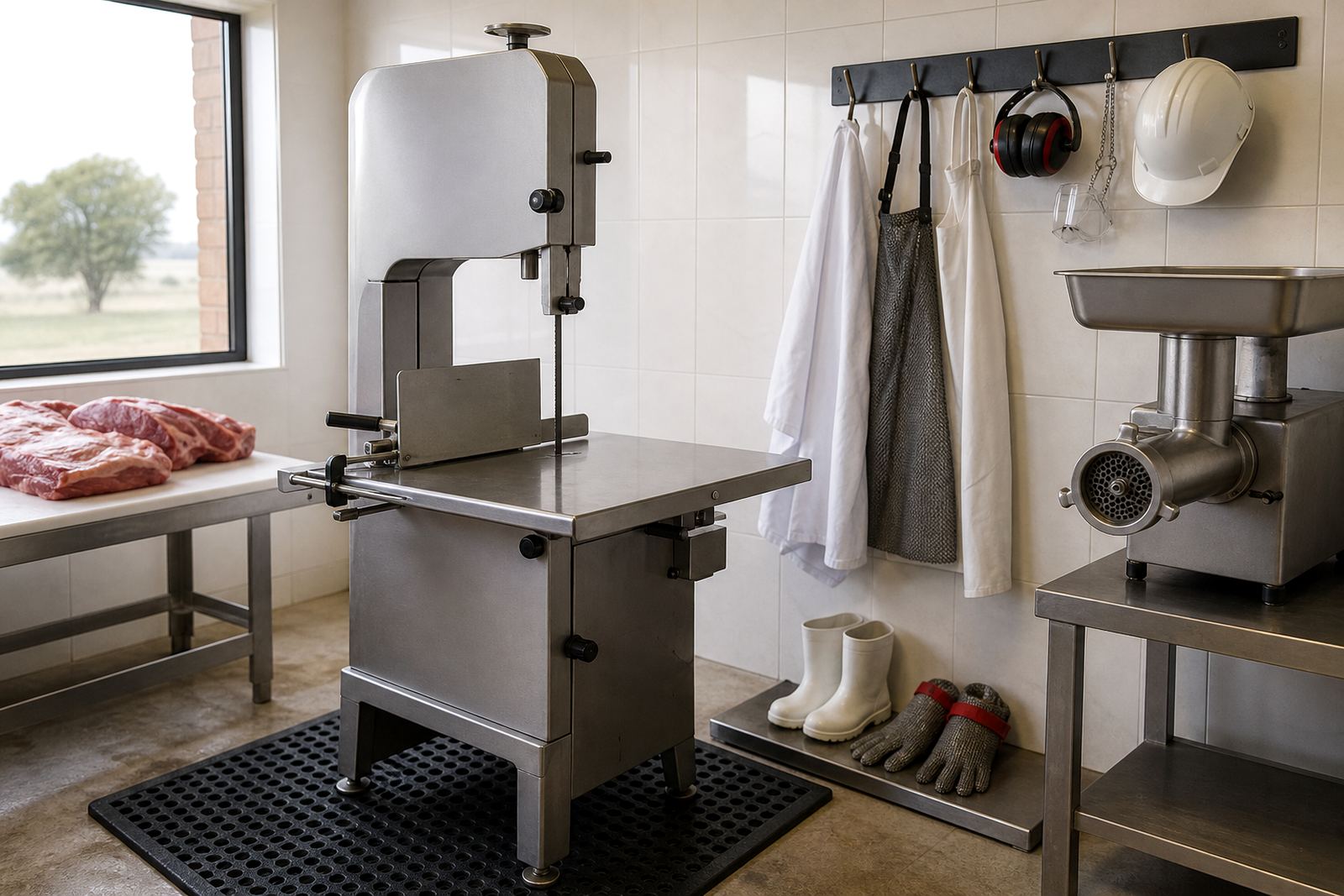
Training should also cover safe cleaning, correct use of PPE and the importance of guards. No one should bypass a cover just to save a few seconds. It is also worth reminding staff not to force product into a mincer or push carcass pieces through a bandsaw faster than the machine can handle. That sort of pressure leads to wear, poor cuts and avoidable stoppages.
For seasonal teams or temporary staff, keep the instructions simple and visible. A short refresher before trading picks up can prevent a lot of trouble later on.
Keep spare parts and consumables on site
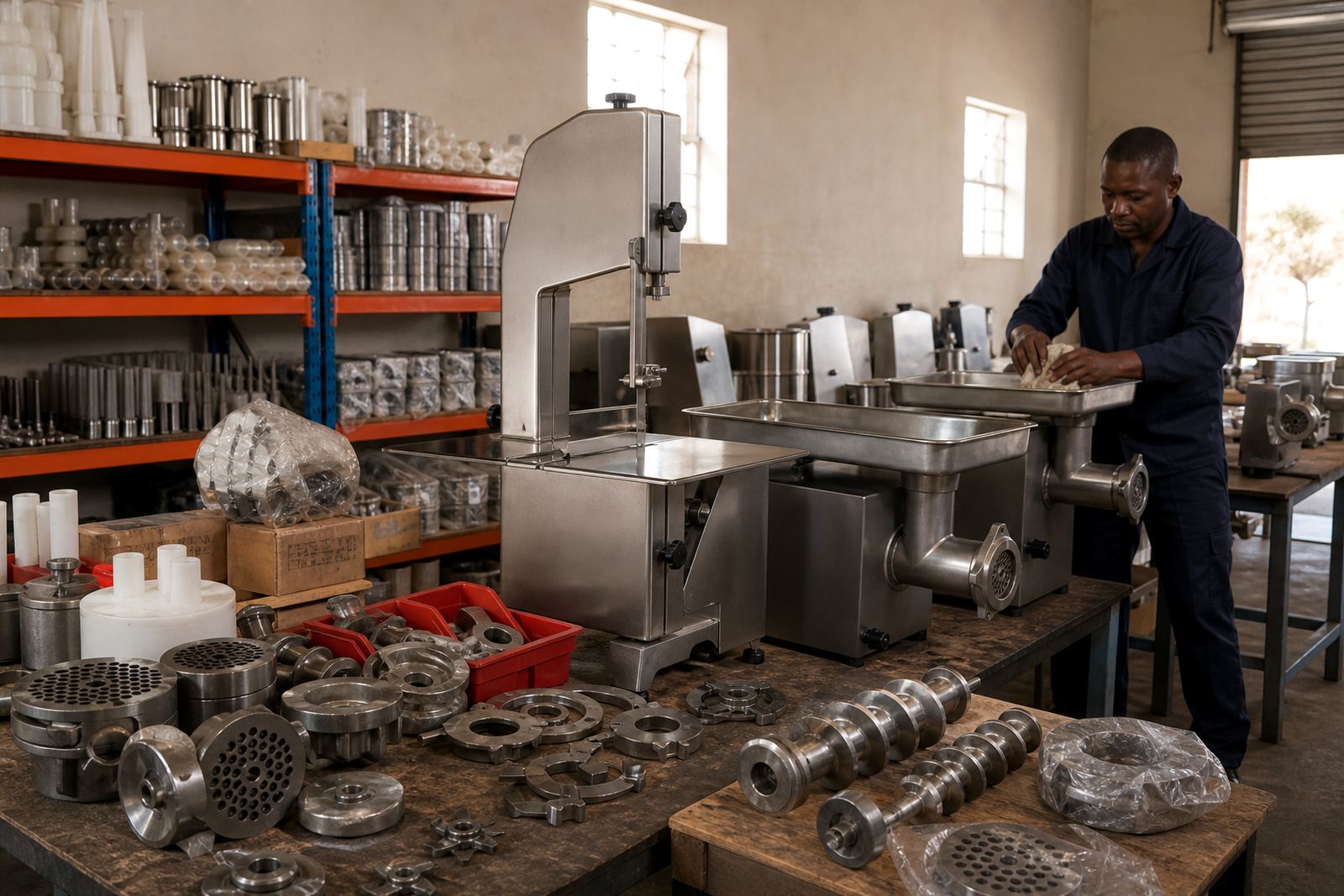
Once trading gets busy, waiting for a small part can hold up the whole counter. It is sensible to keep the common wearing items nearby so the equipment can be brought back into service quickly after routine maintenance or a minor fault.
For many butchers, that means having the usual replacement items, cleaning supplies and a basic record of what fits each machine. If you are operating from Hamilton in Bloemfontein and sending product or equipment between branches, this becomes even more important because stock movement can complicate planning. Our team also supports delivery and setup for branches and supply areas including Kimberley, Welkom and Kroonstad.
- Keep common wear parts identified and easy to find
- Store cleaning items where staff can reach them quickly
- Track which machine uses which plate, knife or blade set
- Do not wait until the last item is worn out before ordering
Safety habits that matter in a busy shop
Seasonal demand can make people cut corners, but safety still comes first. Use the guards that belong on the machine, keep hands clear of moving parts and wear suitable PPE for cleaning and handling meat. If a bandsaw or mincer starts making a different noise, vibrating more than usual or slowing down under load, stop and check it before continuing.
In a busy butchery, a quick routine helps: inspect, clean, dry, store and report any fault straight away. That applies whether you are working from a home setup or a commercial site. If a breakdown does happen, it is better to call for help early than push the machine until a larger repair is needed.
MorCut Butchery has been supporting butchers since 2008 from Hamilton, Bloemfontein, with service, delivery and maintenance support across South Africa. That includes Bloemfontein, Johannesburg, Pretoria, Durban and Cape Town, with practical help from a team led by Pieter Johannes van Rensburg.
Quick seasonal checklist for your next busy period
Use this checklist a week or two before trade ramps up. It helps you spot problems while there is still time to sort them out properly, instead of dealing with stress during your busiest shift.
- Service bandsaws and mincers before the rush
- Replace worn blades, plates or knives as needed
- Check guards, switches and covers
- Train staff on safe use and cleaning
- Stock cleaning materials and basic spare parts
- Schedule callouts for preventive maintenance
- Test the machine under normal working load
A little preparation goes a long way. The right checks now can help your equipment last longer, work better and stay safer through the season.