
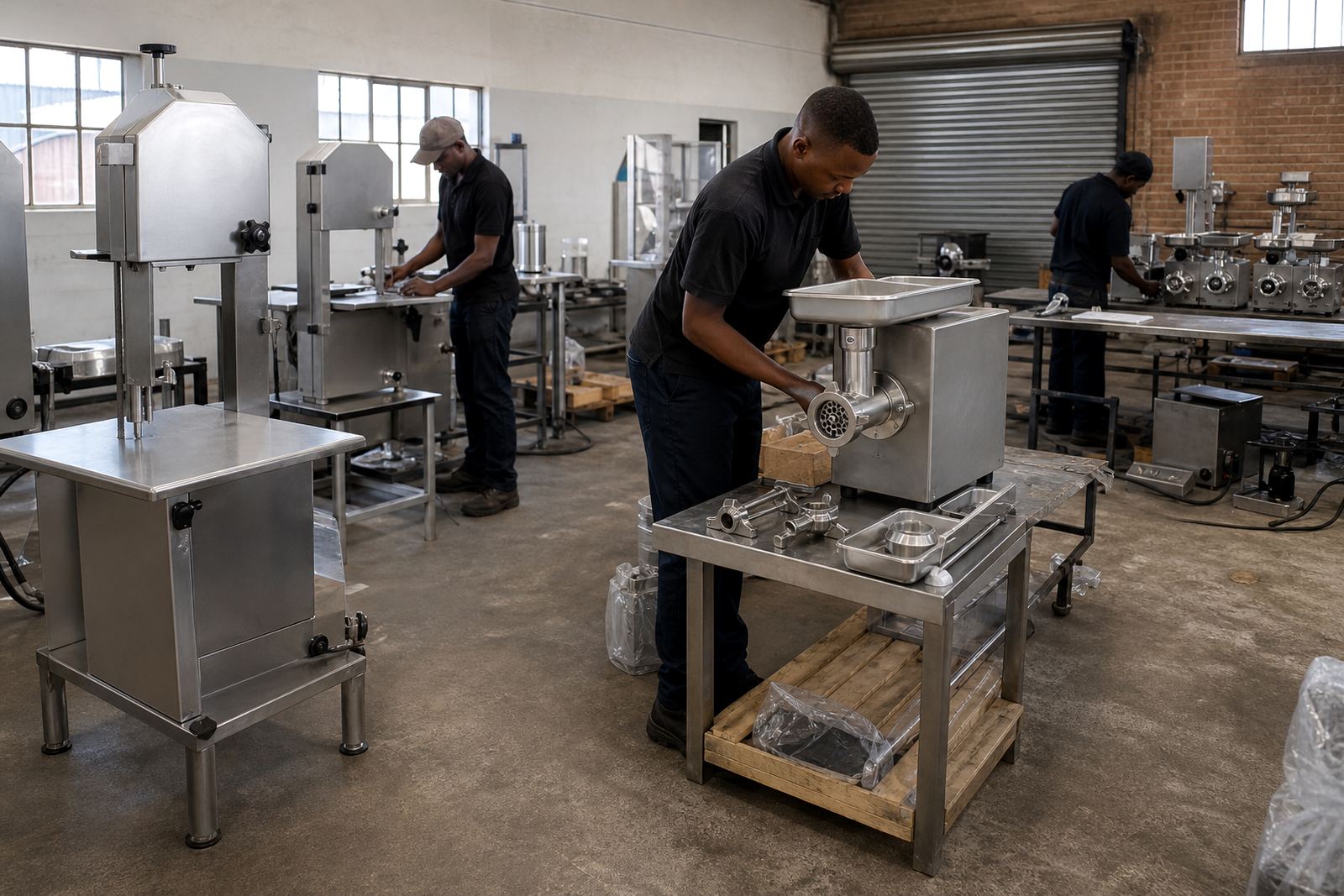
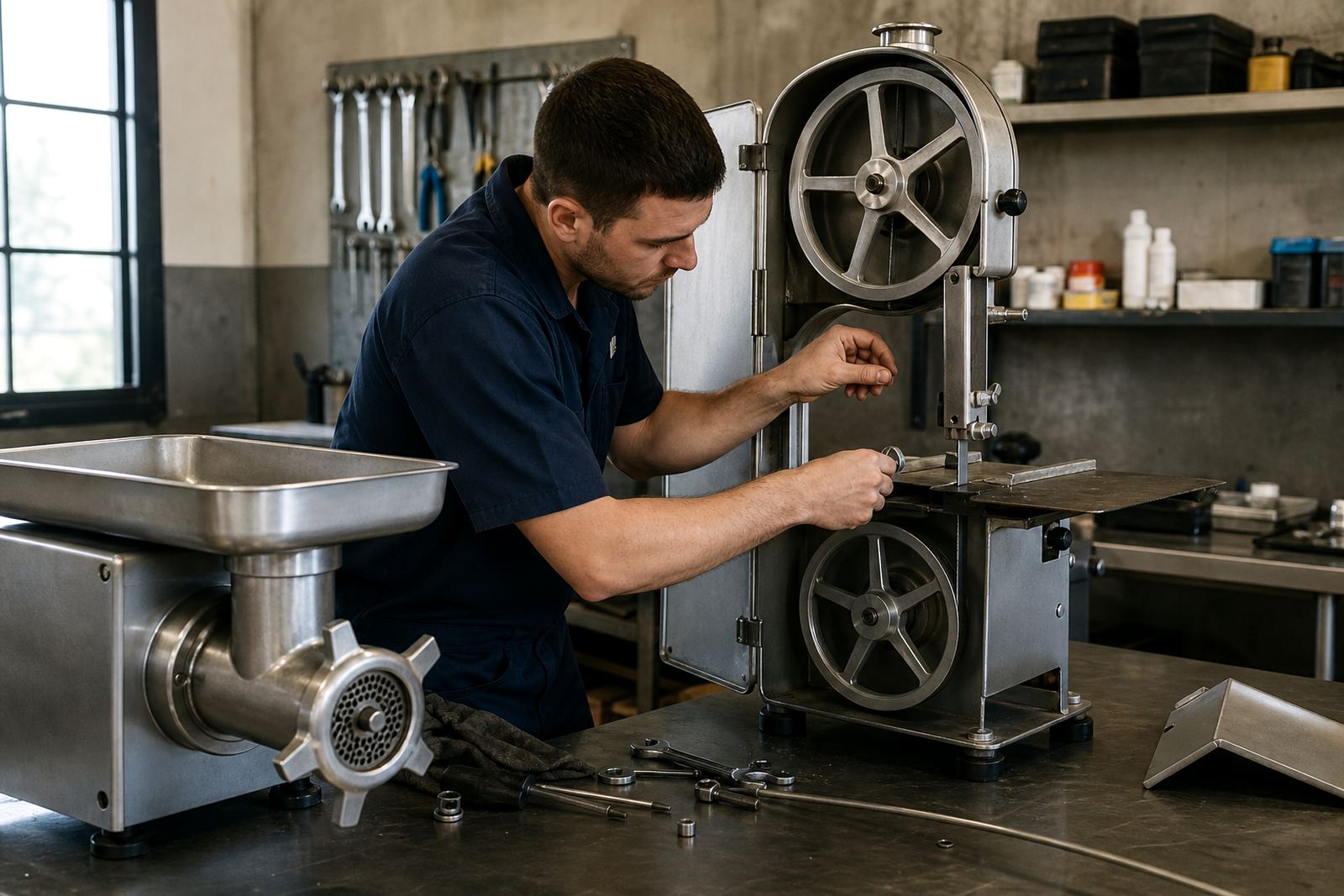
Start With the Work You Do Every Day
Before you compare features, think about the volume and type of meat you handle most often. A home butcher who grinds small batches on weekends has very different needs to a shop in Bloemfontein, Johannesburg or Durban that minces through the week. If the machine is too small, it slows the work. If it is too large for the task, you may pay for capacity you rarely use.
Write down how much meat you prepare in a normal day, how often the machine will run, and who will operate it. That simple step makes the rest of the decision much easier and it helps avoid buying a mincer that looks fine on paper but struggles in real use.
- Daily batch size
- How often the machine will run
- Fresh meat only, or mixed cuts with sinew
- Single operator or several staff members
- Space available on the work table or floor
Choose a Mincer That Matches Your Workflow
A mincer should fit the rhythm of the room. In a commercial setting, you want a machine that keeps product moving without constant stoppages for cleaning or clearing. In a home or small trade setting, ease of use may matter more than speed. Either way, the best choice is the one that lets your team work steadily and safely.
Look at how the feed area is arranged, how easy it is to load meat, and whether the controls are simple enough for different operators to use without confusion. If the machine will be used by staff who change shifts, clear controls are a big help. MorCut Butchery supplies mincers from Hamilton, Bloemfontein and supports delivery and setup across South Africa, including Pretoria, Cape Town and beyond.
- Simple controls that are easy to explain
- Stable footing on a solid surface
- Enough feed space for your daily batches
- Design that suits regular cleaning
- Access for servicing and parts replacement
Do Not Ignore Cleaning and Food Safety
Cleaning should be part of the buying decision, not an afterthought. Mincers that are awkward to strip down or hard to clean properly can cause delays and hygiene problems. In South Africa, where some areas deal with load-shedding and limited water pressure, a machine that is simple to wash and dry can save time and reduce waste.
Ask yourself whether the plates, knives and other contact parts can be removed easily, and whether the body of the machine can be wiped down without trapping residue. Good cleaning habits matter just as much as the machine itself. Always switch off, isolate power where needed, wear PPE and keep hands clear of moving parts.
- Easy access to meat contact parts
- Smooth surfaces that are simple to wipe down
- Clear cleaning routine after each use
- Dry storage after washing
- Safe reassembly before the next run
Check the Service Side Before You Buy
A mincer is only useful if it can be kept in working condition. Parts such as plates, knives and seals will eventually need attention, so it helps to know that support is available locally. That is especially important for businesses in towns like Welkom, Kroonstad and Kimberley where downtime can affect trade quickly.
Ask what servicing is available, how quickly breakdown callouts can be arranged, and whether guidance is given on routine care. A supplier that can assist with installation, operator training and preventive maintenance makes ownership easier. It is also worth asking how parts are identified and what the usual turnaround looks like for common replacements.
- Servicing and breakdown support
- Availability of wear parts
- Installation and setup help
- Operator training for safe use
- Regular maintenance planning
What to Ask During a Viewing or Enquiry
If you are comparing machines, bring a short checklist with you. The right questions help you see past the sales talk and focus on practical use. At MorCut Butchery, enquiries come through the contact page form, which keeps the process organised and lets the team respond with the details you need.
Ask how the machine handles regular work, what cleaning is required, and what support is included after delivery. If you run a butcher shop in Johannesburg, Pretoria, Durban or Cape Town, it also helps to confirm how delivery and setup will work on your premises, especially where access is tight or loading areas are shared.
- What type of daily use is the machine suited for?
- How easy is it to clean and reassemble?
- Which parts wear first and how are they replaced?
- Is training included for operators?
- Can setup be arranged on site?
Simple Care Steps That Keep a Mincer Going
Once the machine is in service, good care makes a real difference. A clean, dry mincer with properly fitted cutting parts will perform better and usually gives fewer problems. Small habits matter: do not leave meat on the machine overnight, keep the work area tidy, and check for loose fittings before use. It is the sort of upkeep that saves trouble later, even when the shop is busy.
If a machine starts sounding different, cutting poorly or slowing down, stop and inspect it rather than pushing through. That is when a servicing visit or a blade and plate change may be needed. For many butchers, a short maintenance routine at the end of the day prevents bigger repairs and keeps the work moving, even during hectic weeks.
- Switch off and unplug before cleaning
- Strip down the contact parts carefully
- Wash, rinse and dry every part fully
- Inspect blades, plates and seals
- Reassemble correctly before storage