

Start With Safe Set Up Before Any Product Goes In
Every training session should begin with the same basics: where the machine stands, how the guards fit, and who is allowed to operate it. In a Bloemfontein shop, or a small home butchery in Kroonstad, the setup routine should be simple enough for any new staff member to follow without guesswork. Make sure the floor is dry, the unit is stable, and there is enough space for loading, cutting and cleaning.
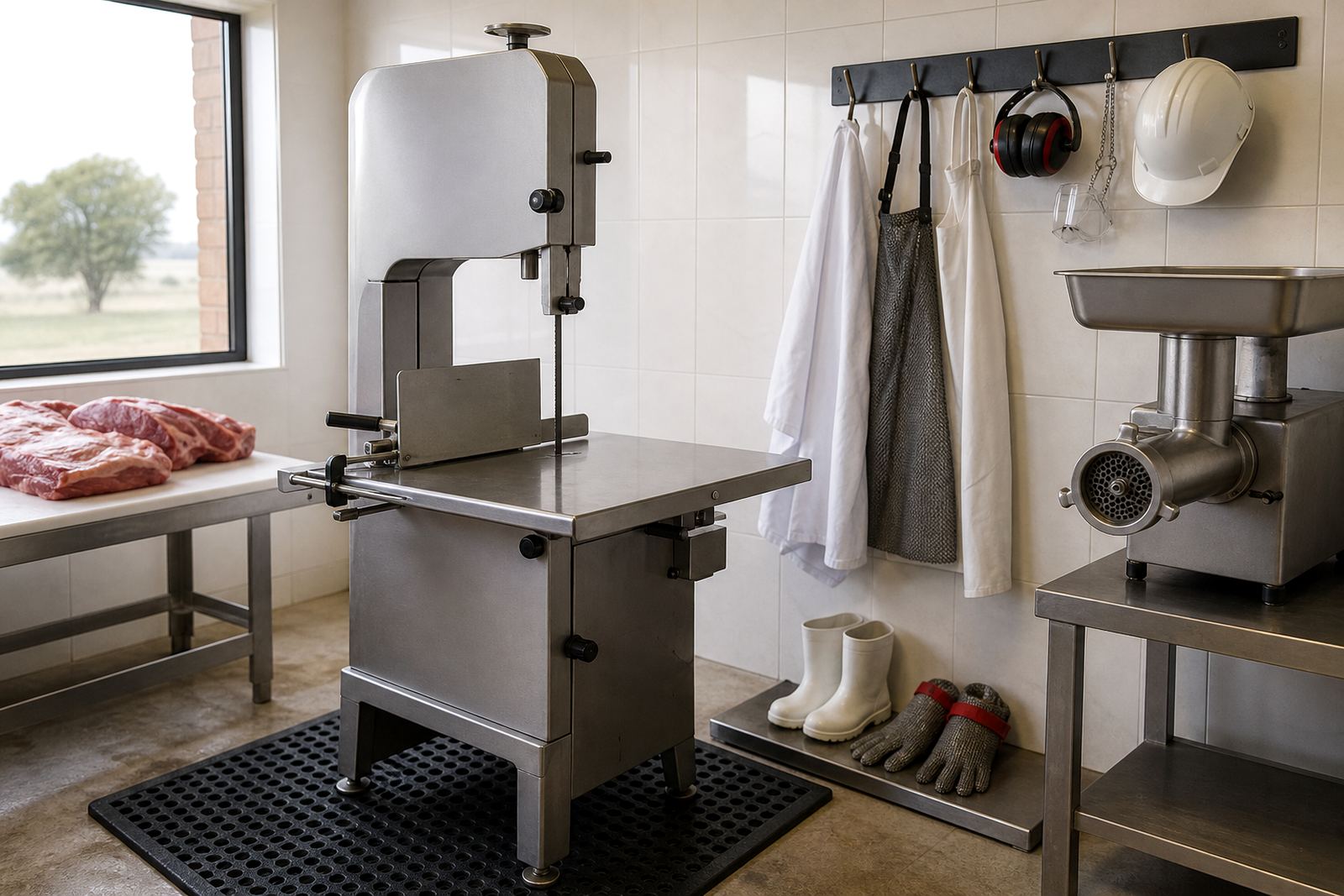
Show staff the main controls before they switch on the machine. Point out the emergency stop, on and off controls, blade or feed area, and the parts that must stay covered during use. Explain that loose sleeves, jewellery and unrestrained hair can get caught. PPE should be basic and suitable for the task, with cut resistant gloves where needed and clean aprons for handling meat. If load shedding affects your schedule, train staff to shut down properly rather than leaving product half processed.
- Check guards are fitted before every shift
- Keep hands clear of the cutting path
- Wear suitable PPE and closed shoes
- Confirm the work area is clean and dry
- Only trained staff should adjust or operate the machine
Teach the Right Way To Load, Feed and Work the Machine
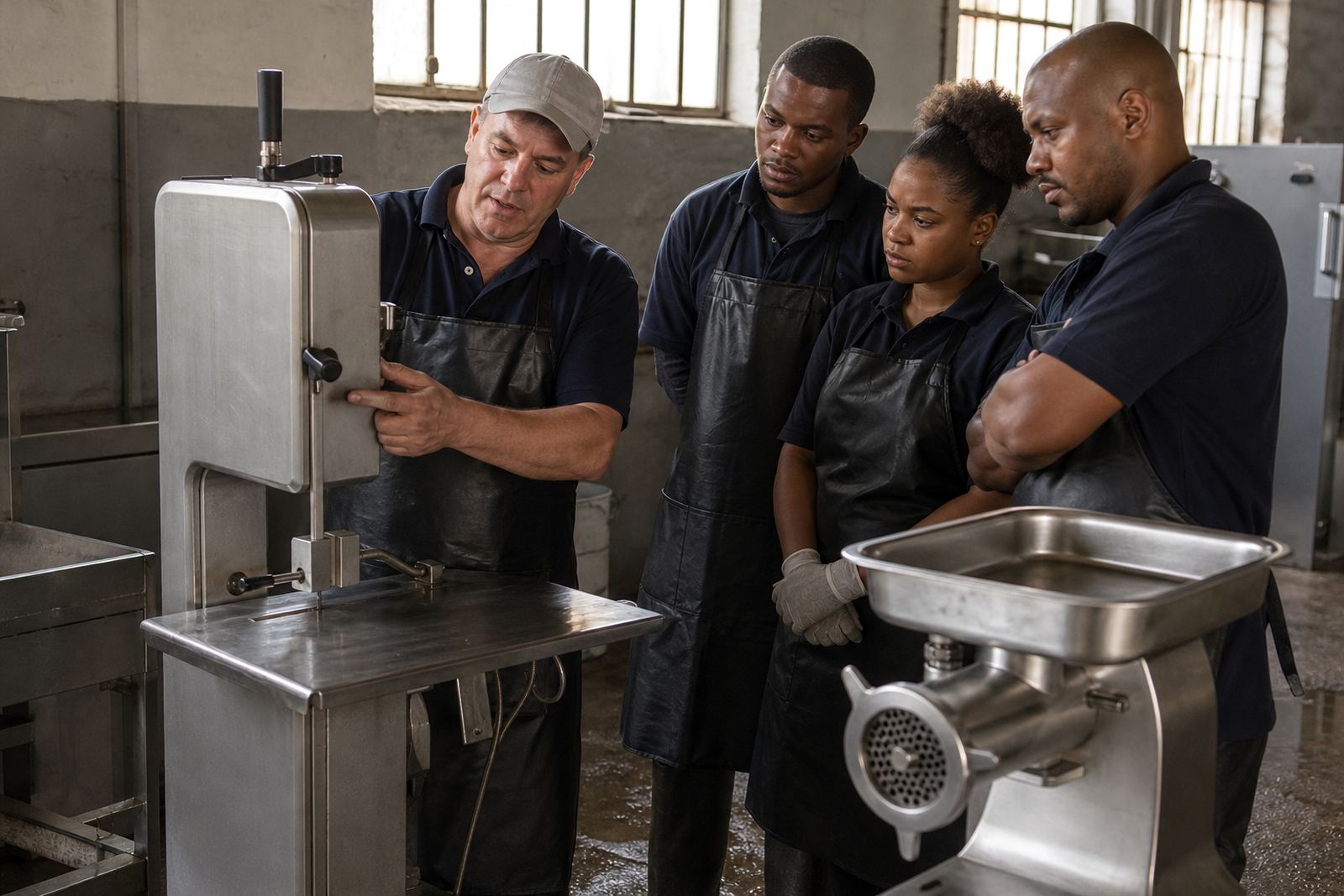
When training on a bandsaw or mincer, slow demonstrations work better than long speeches. Start with one product type at a time and show the correct feed rate, the best hand position, and how to avoid forcing meat through the machine. A rushed operator can cause jams, rough cuts and unnecessary wear on blades, plates and knives. For busy branches in Johannesburg or Durban, this part of the training helps new staff keep pace without making costly mistakes.
Explain that the machine should do the work, not the operator. Never push food in with fingers where a pusher or proper guide should be used. For a bandsaw, staff must keep the product steady and stay outside the blade path. For a mincer, the feed must be controlled so the motor is not overloaded. Good technique protects the machine and the finished product, and it also makes cleaning much easier after the rush. Small habits, like cutting product into manageable pieces first, can save time and reduce strain on the motor.
- Use the correct feed pace, not force
- Keep hands away from moving parts
- Cut product into workable sizes before processing
- Watch for strain, noise or vibration during operation
- Stop the machine if anything feels wrong
Use a Cleaning Routine That Staff Can Repeat Every Day
Cleaning is not something to leave until the end of the week. Staff should know exactly what to clean after each shift, what gets wiped down between tasks, and what needs deeper washing during close down. In a Free State climate, dust can settle fast, and in coastal areas like Cape Town or Durban, humidity makes regular cleaning even more important. A clean machine is easier to run and less likely to hold odours or old product residue.
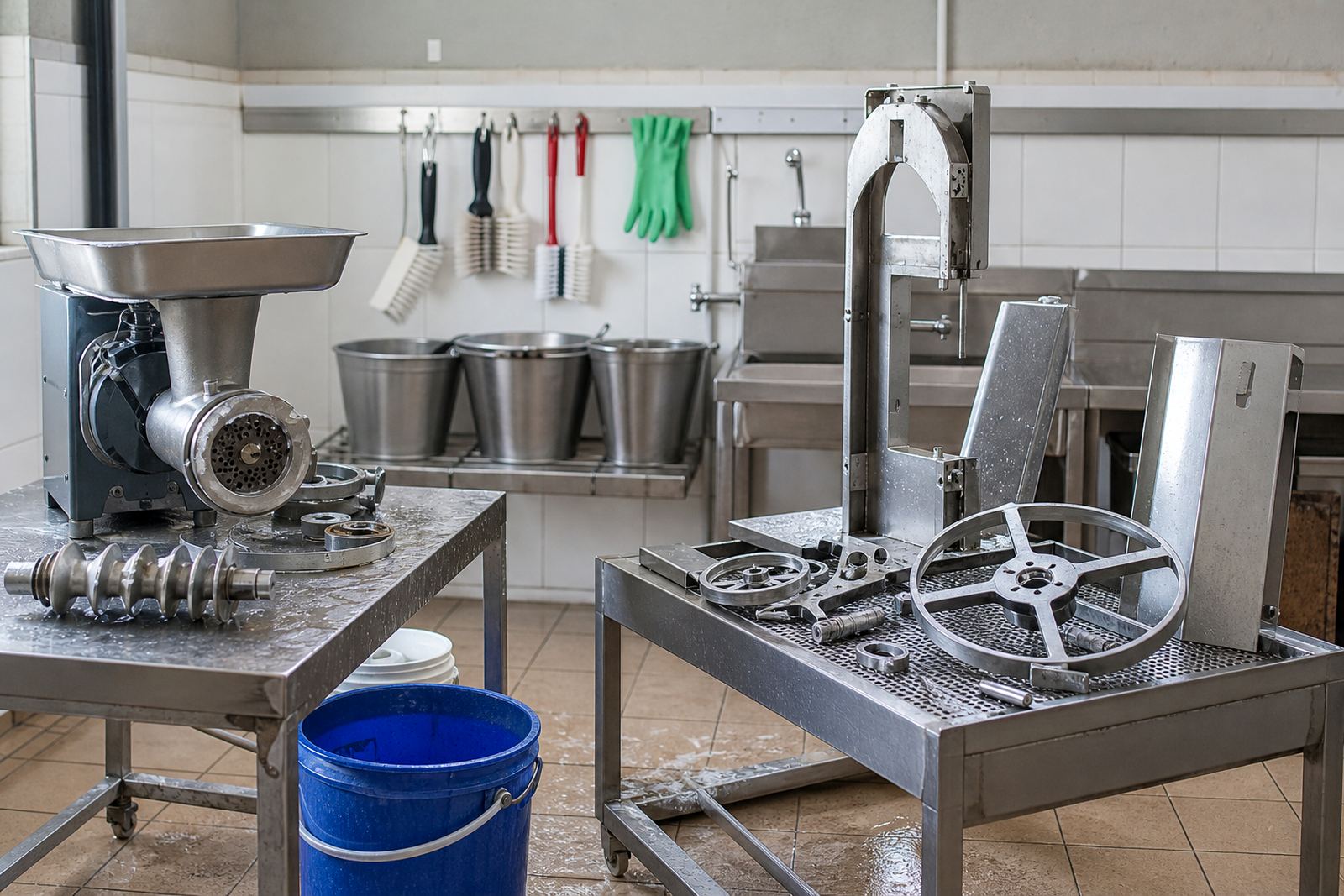
Demonstrate the full sequence for cleaning in plain steps: switch off, isolate power where required, remove loose product, strip the removable parts, wash and dry them properly, then wipe the housing and work area. Never hose electrical parts or leave moisture on metal surfaces. If the unit has been used for fatty product, show how to remove buildup before it hardens. Good cleaning habits also help staff spot wear, damage or loose fittings early, which is important when servicing schedules are tight and municipal inspection standards must still be met.
- Switch off and make safe before cleaning
- Remove all product residue straight away
- Wash removable parts fully and dry them
- Do not wet electrical sections
- Check for damage while cleaning
Show Staff What To Look For During Daily Checks
A short daily checklist is one of the best training tools you can give your team. It helps staff notice issues before they become breakdowns, and it supports better planning for servicing and parts supply. Teach them to look at the blade, plates and knives, belts or drive sections where relevant, fasteners, switches, and the general condition of the guards. If something is loose, chipped or dull, it should be reported before the next run.
This is also the right time to train staff on safe reporting. They should know who to tell, what to describe, and when to take the machine out of use. If there is unusual noise, excess heat, vibration or poor cutting quality, the unit should not be pushed harder. A quick note in the daily log can help the service team decide whether it needs adjustment, a blade replacement, plate and knife change, or a fuller inspection. That kind of record keeping saves time and keeps the team organised.
- Inspect blades, plates, knives and guards daily
- Listen for unusual sound or vibration
- Report wear before it becomes failure
- Record cleaning and checks in a log
- Take equipment out of use if safety is uncertain
Train For Swops, Breakdowns and End of Shift Care
Not every problem is a major one, but staff must know what to do when a blade dulls, a part wears down, or the machine stops during a busy spell. End of shift training should cover safe shutdown, power isolation, cleaning, drying and storage of small parts. In smaller towns like Welkom or Kimberley, where the nearest technician may not be on site right away, correct shutdown and care can make the difference between a quick fix and a full delay.
Teach the team never to improvise repairs. If a blade, plate or knife needs changing, it should be done by a trained person using the correct method. The same applies to deeper servicing and breakdown callouts. Staff should also know how to protect spare parts from dust and moisture, especially where storage rooms are shared or ventilation is poor. A small step like keeping cleaned parts packed and labelled can prevent mix ups and lost time.
- Shut down safely before any stoppage or change
- Do not force the machine through a fault
- Keep replacement parts clean and labelled
- Escalate faults instead of guessing
- Follow the same close down routine every time
Build A Simple Training Checklist For New Starters
New staff learn faster when the same steps are repeated in the same order. Use one checklist for operation and one for cleaning, then let a supervisor sign off when the person has shown they can do both properly. That way, the team in Bloemfontein or Pretoria is not relying on memory alone. A written checklist also helps when staff rotate between sections or cover a shift at short notice.
Keep the training practical. Let the new starter watch once, do it once with supervision, then repeat the process without help. Ask them to explain back the safety points in their own words. If they cannot explain the cleaning order or where the guard must sit, they are not ready yet. The goal is steady work, safe handling and a clean result every time, not speed for the sake of speed. With the right training, even a new operator can work confidently and help protect the equipment for the long term.
- Show, then supervise, then assess
- Use a signed checklist for each machine
- Repeat the same method for every new staff member
- Revisit training after any fault or upgrade
- Refresh the team whenever procedures change