

First purchases for a new butchery
When you are opening a new butchery in Bloemfontein, Johannesburg or a smaller town like Welkom, the first equipment should match daily volume and available floor space. A well planned start usually begins with a bandsaw for portioning meat cleanly and a mincer for mince, sausages and burger packs. That gives you a workable base before you add extra items for heavier production or specialised cuts.
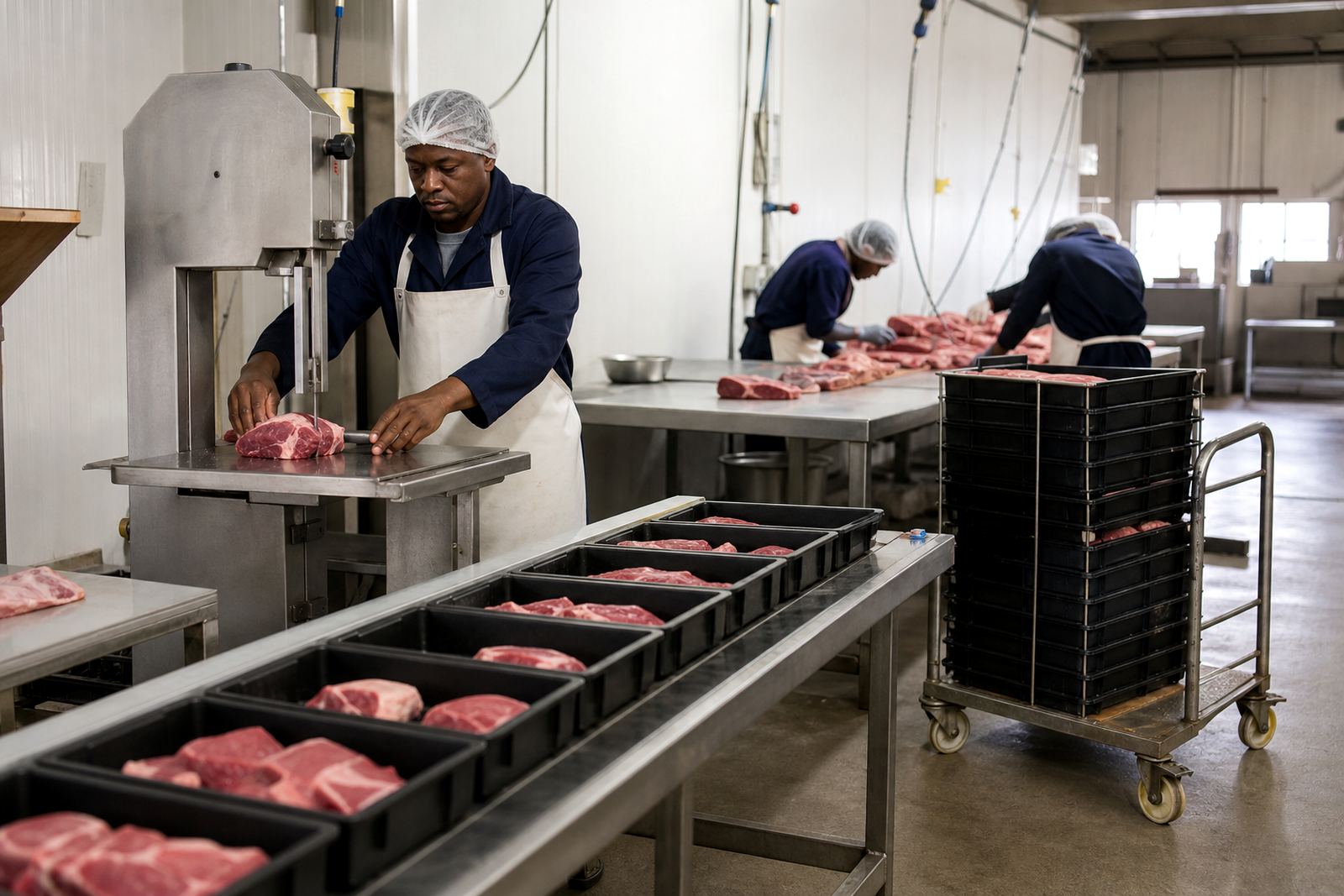
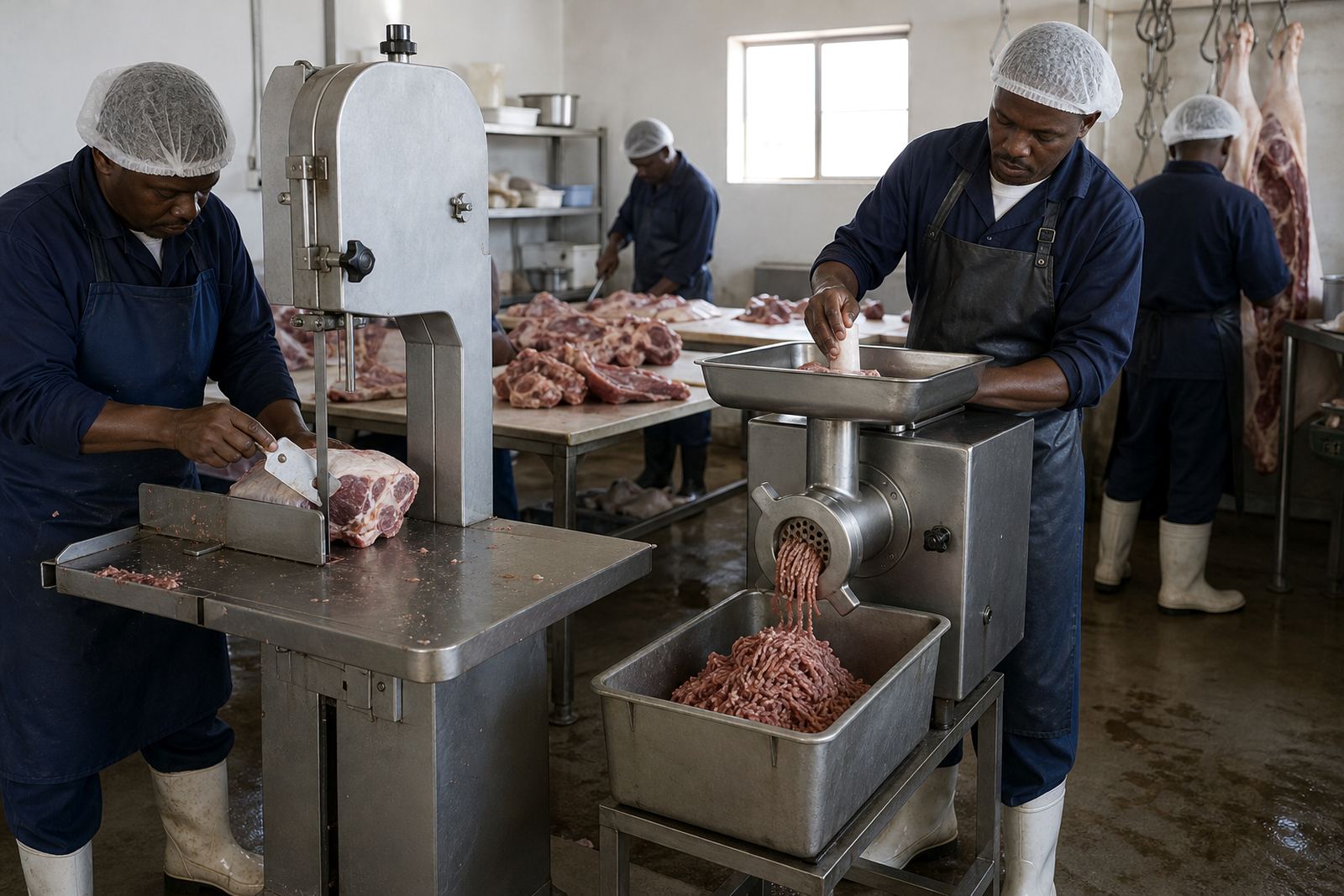
For many start-up shops, the main aim is simple flow. Carcass or primal cuts come in, the bandsaw handles portioning, the mincer handles value-added products, and the packing area stays close by so staff do not walk back and forth across the room all day. In a small shop, that movement matters as much as machine choice.
MorCut Butchery supplies and supports bandsaws and mincers for commercial and home butchers across South Africa, with delivery and setup in Bloemfontein, Johannesburg, Pretoria, Durban and Cape Town. We also assist smaller supply areas such as Kimberley, Kroonstad and Welkom where a new butcher often needs straightforward advice and practical after-sales help.
A simple starter equipment set that works
Most start-up butcheries do not need a large list of machines on day one. The better approach is to choose equipment that can be cleaned properly, serviced easily and used by staff with different experience levels. A bandsaw and mincer are the usual starting point, with blades, plates and knives kept on hand for normal wear and changeovers.
- One bandsaw for sectioning and portion control
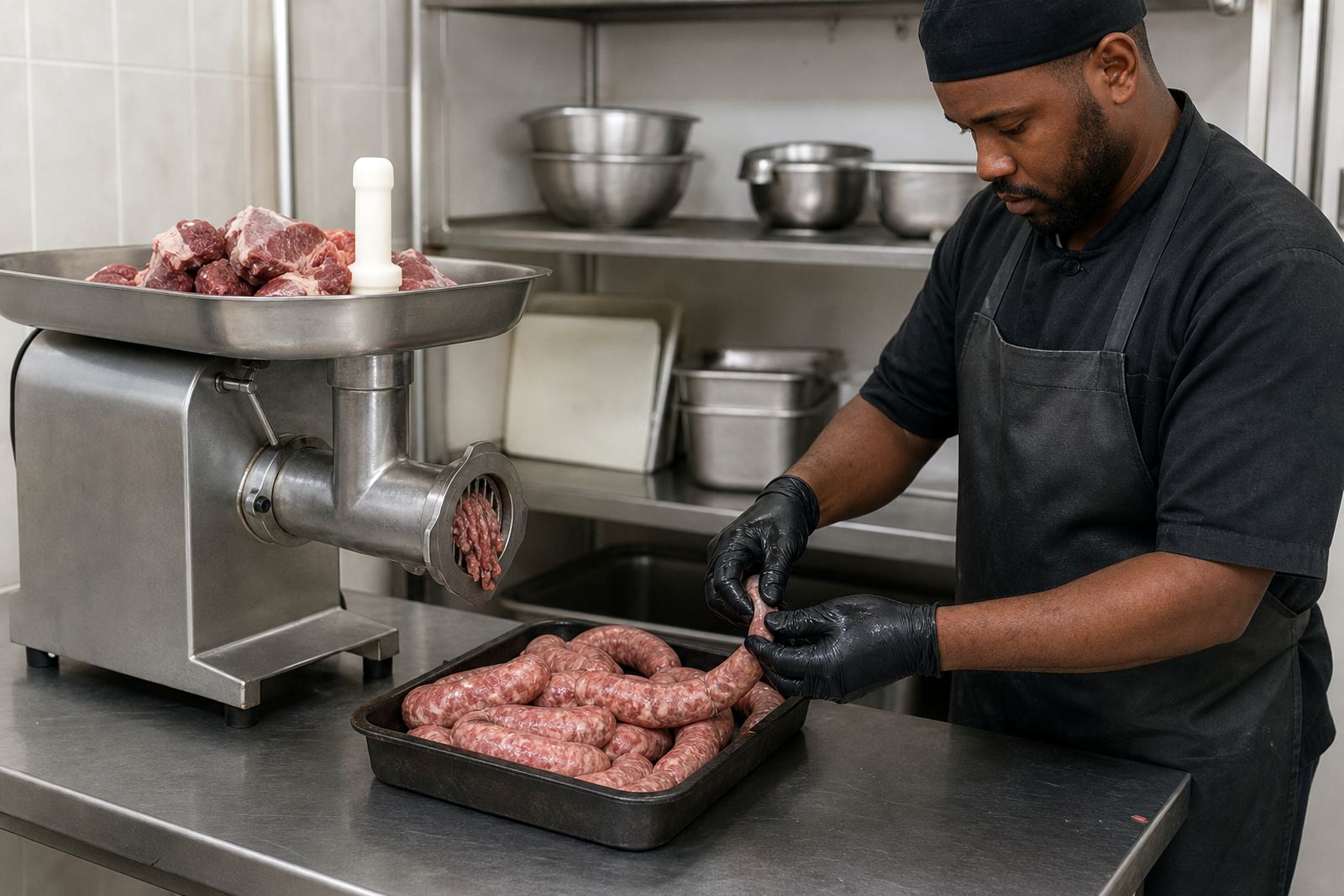
- One mincer for mince and mixed products
- Spare blades, plates and knives for routine change-outs
- Cleaning gear, brushes and approved sanitising materials
- Protective gloves, aprons and other PPE for operators
It is also worth planning for basic storage. Spare parts, cleaning tools and day-to-day consumables should have a dry place away from the processing area. In coastal areas like Durban and Cape Town, humidity can be harder on metal parts, so cleaning and drying need extra attention.
Layout advice for smoother daily work
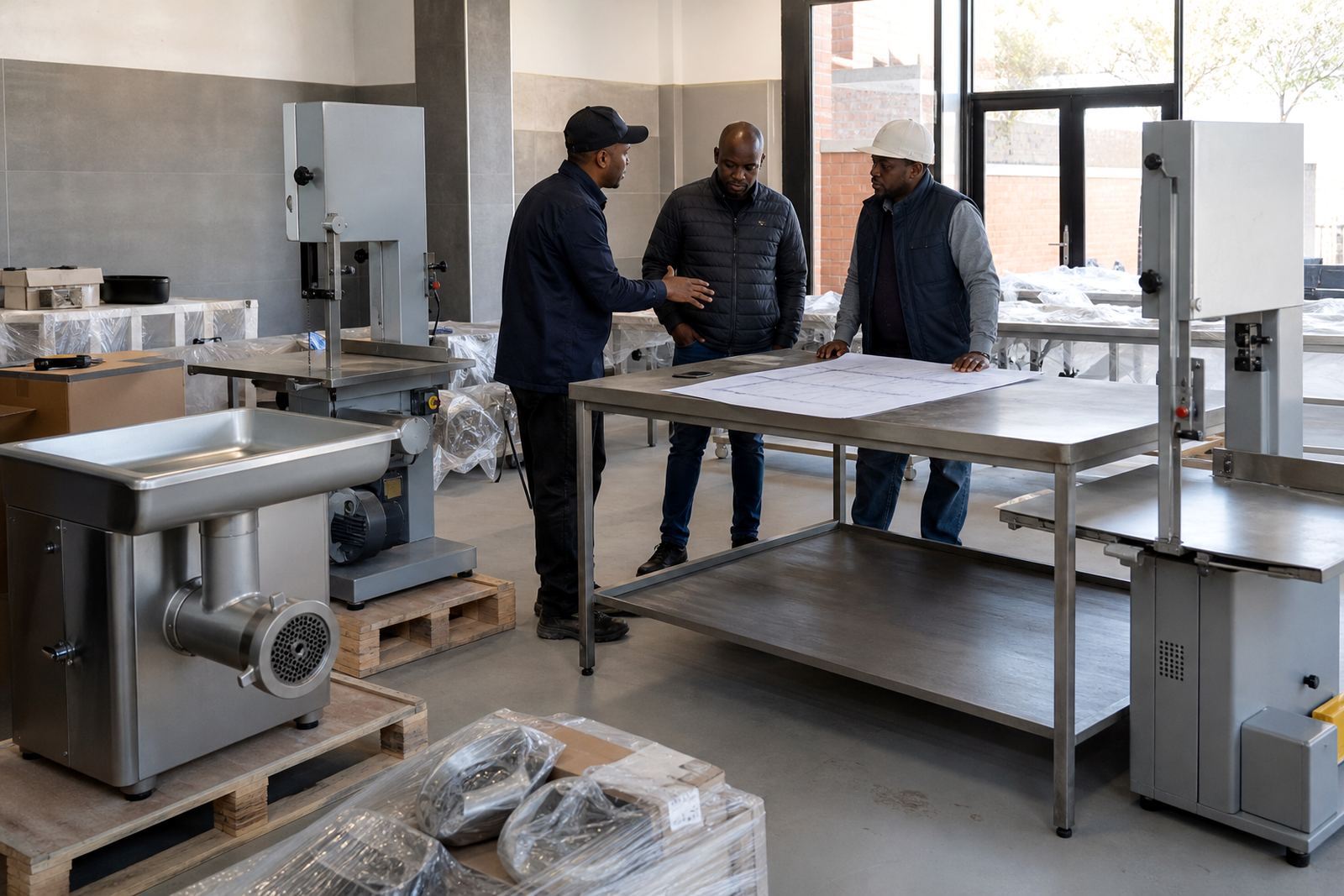
A good layout saves time and reduces mistakes. Put the bandsaw where staff can load, cut and clear product without crossing the wet cleaning zone. Keep the mincer near the prep area, but not so close that raw meat handling becomes crowded. Leave enough space around each unit for cleaning, inspection and safe operator movement.
Start-up butcheries in Free State towns often have smaller rooms and tighter budgets, so planning matters even more. Measure the floor carefully before ordering anything. Check power points, water access, drainage and floor slope for washdown. If the shop is in a municipal area with specific hygiene rules, make sure the layout supports easy cleaning and proper waste handling from the beginning.
It is also wise to think about load-shedding. If your area faces regular outages, plan how product will be stored safely, how cutting tasks will be managed and whether backup power is available for essential cold storage. A butcherie that cannot keep product cold loses money quickly.
Common mistakes new butcheries make
Many first-time owners spend too much on extras and too little on the core workflow. A shop can look busy and still run poorly if the cutting area is cramped, the mincer is undersized for the work or cleaning takes too long at the end of the day. The goal is steady production, not a showroom full of equipment.
Another common mistake is buying without asking about servicing, blades, plates, knife replacement and operator training. A machine that sits idle because a part is unavailable can hold up the whole day. For start-up shops, support matters just as much as the sale.
- Buying too much equipment before sales volume is clear
- Ignoring cleaning access around the machine base
- Forgetting about spare parts and routine servicing
- Poor ventilation, which makes the room uncomfortable for staff
- Not training operators on guards and safe feed methods
Simple planning at the start helps avoid costly changes later. It is easier to set up correctly than to move heavy equipment after trade has begun, especially in a shop that already has cold rooms, counters and packaging points in place.
Budget ranges in Rand for a realistic opening
Start-up budgets vary with shop size, workload and the condition of the building. A basic but practical opening budget for core butchery equipment can start in the lower tens of thousands of Rand and rise from there as production needs grow. The final figure depends on whether you need only the essentials or a fuller setup with extra support equipment and installation work.
Rather than asking what the cheapest option is, it helps to ask what the shop needs to trade safely and efficiently. A modest opening budget may cover a bandsaw, a mincer, basic parts and delivery setup. A larger budget may allow for installation, preventive maintenance, operator training and backup parts from the start.
For new shops in Bloemfontein, Pretoria or Johannesburg, the best quote is usually the one that matches your floor plan and expected daily volume. We can help you work through the practical side before you commit, so you do not overspend on the wrong machine or underspend on the equipment that matters most.
Support after the first week of trading
Opening day is only the beginning. After the first rush, new butcheries usually need help with blade replacement, plate and knife change, cleaning demonstrations and preventive maintenance. A machine that is cleaned properly and checked regularly will serve better, and the team will work with more confidence.
MorCut Butchery is based in Hamilton, Bloemfontein and supports customers through the enquiry form on our contact page. Our team includes Pieter Johannes van Rensburg, with Lerato Mokoena on sales, Willem Jacobus Smit on service coordination, Ayanda Khumalo in customer support, Morne du Plessis in the workshop, Naledi Sekgobela handling parts and logistics, and Themba Dlamini assisting with training. That mix matters when a start-up shop needs clear answers, not guesswork.
We provide delivery and servicing across South Africa, including Bloemfontein Supply, Johannesburg Delivery, Pretoria Delivery, Durban Delivery, Cape Town Delivery, Kimberley Supply, Welkom Supply and Kroonstad Supply. If you are setting up a new butchery, it helps to start with equipment that fits the room and a support plan that keeps the shop moving.