

Built for daily counter work, not occasional use
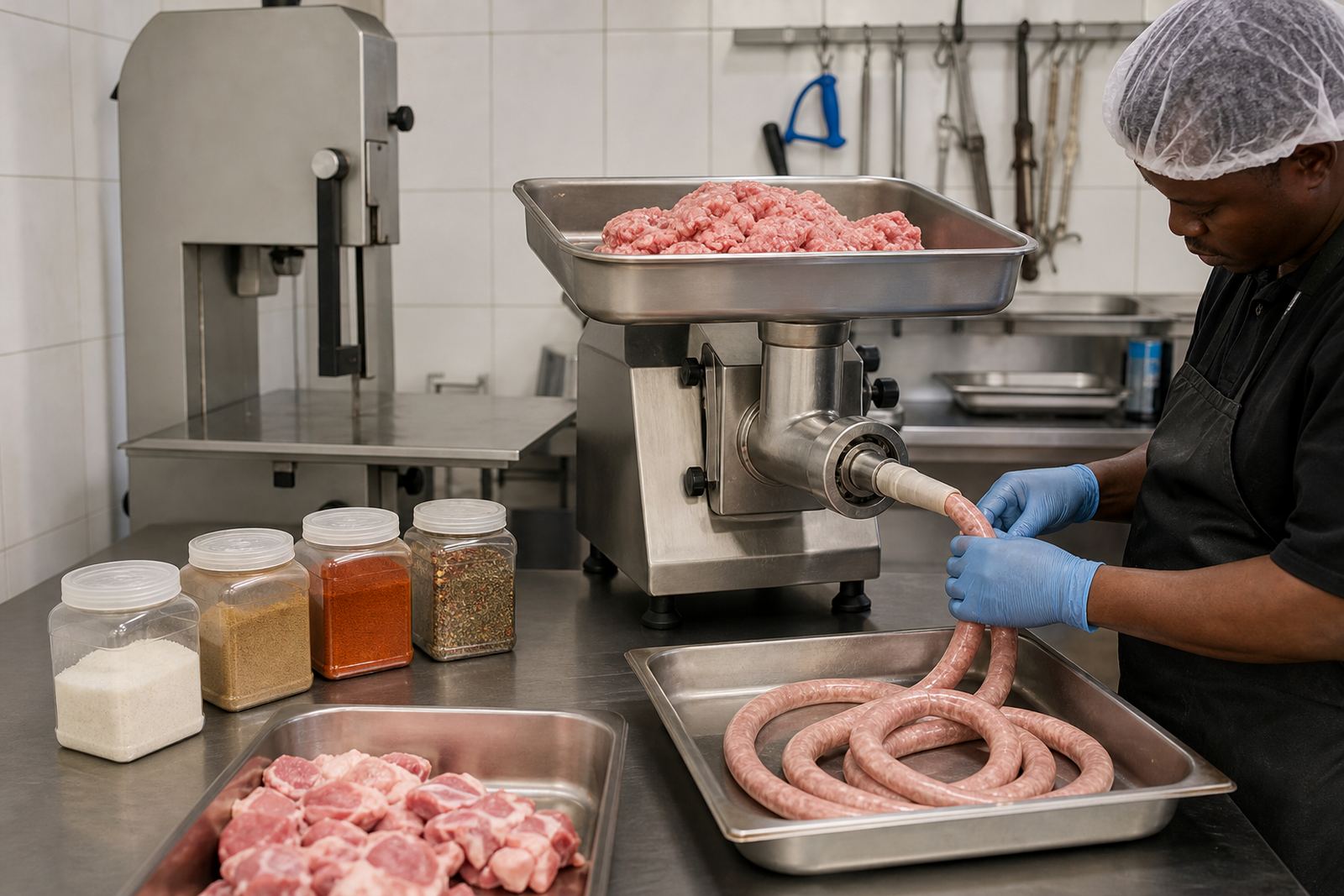
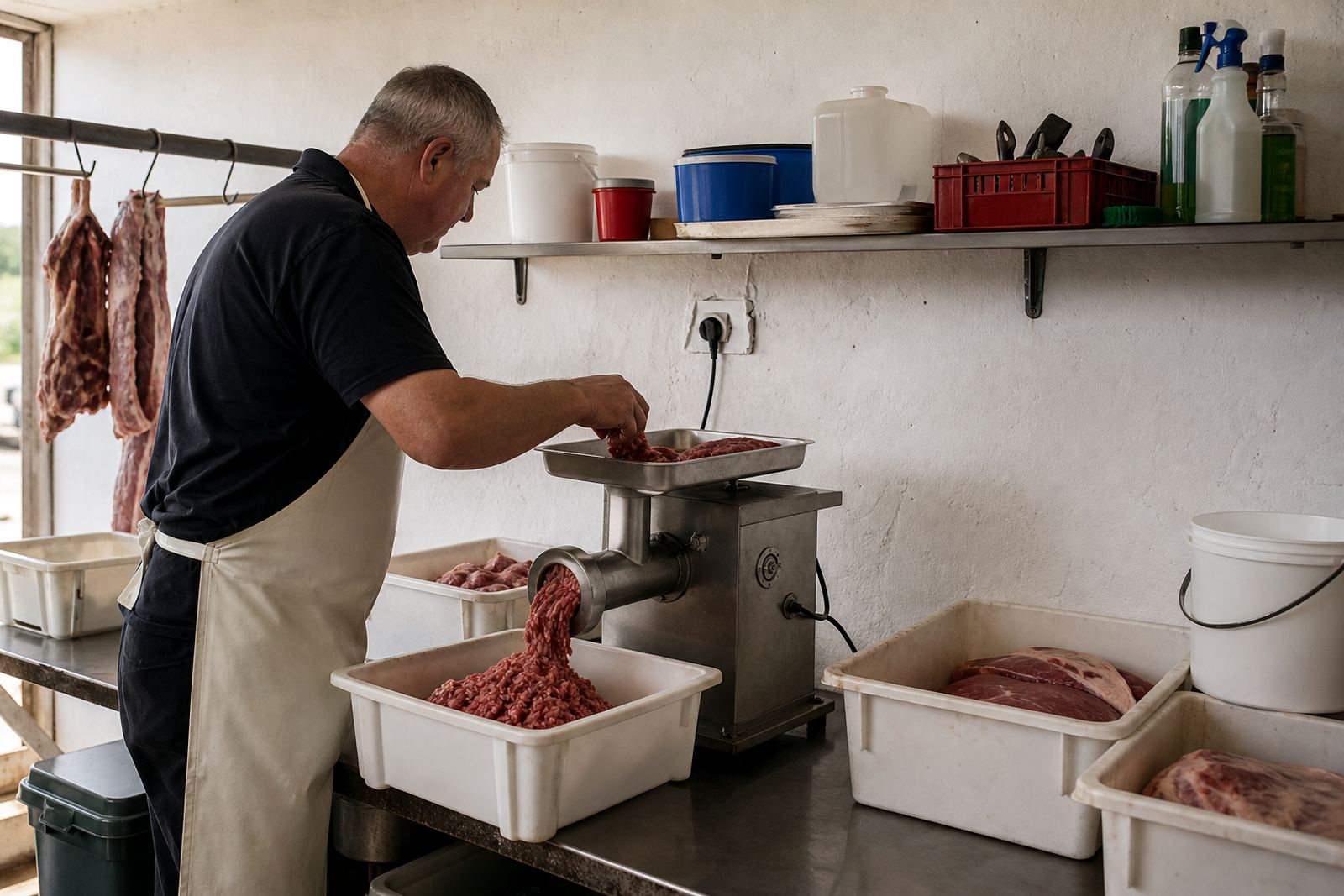
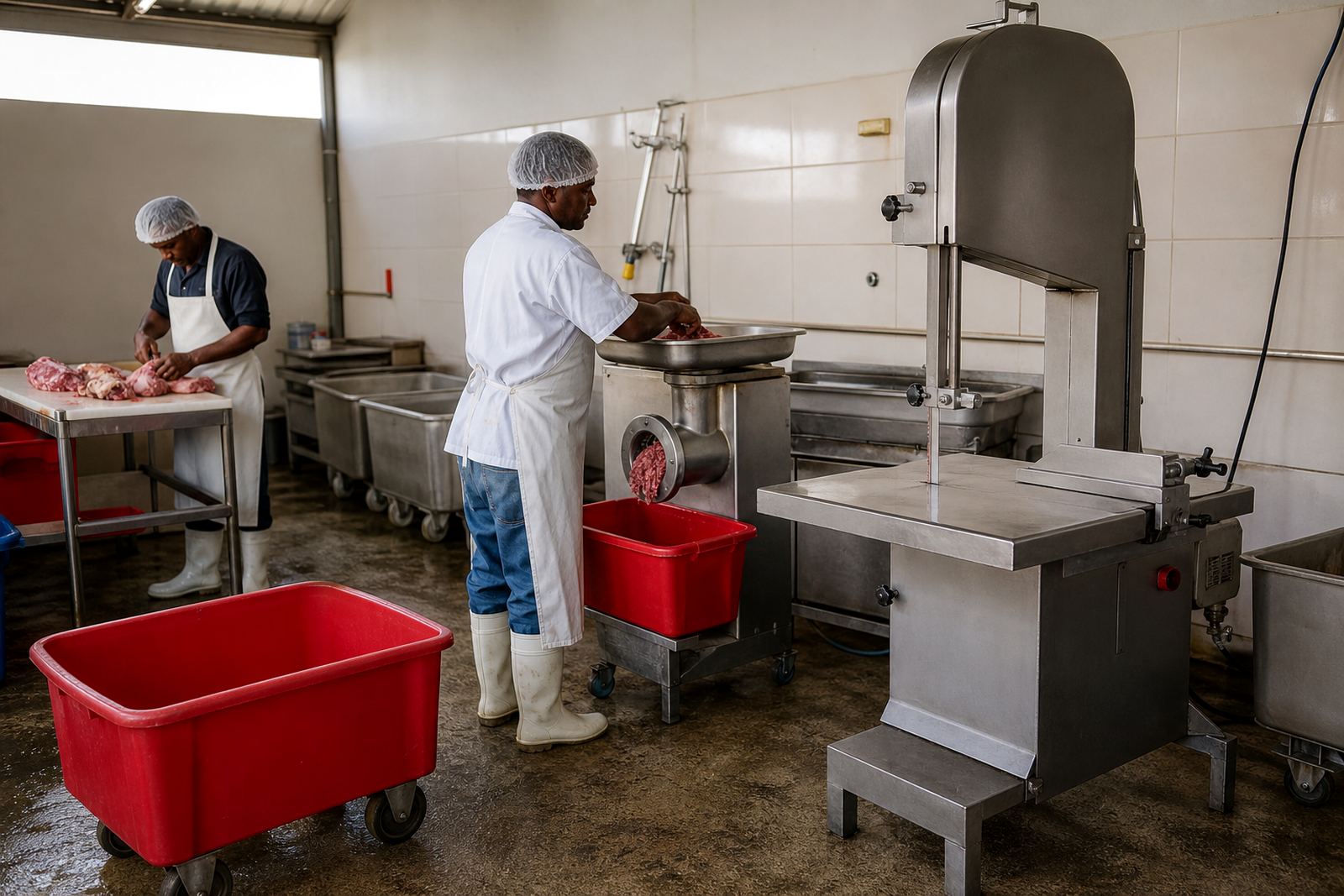
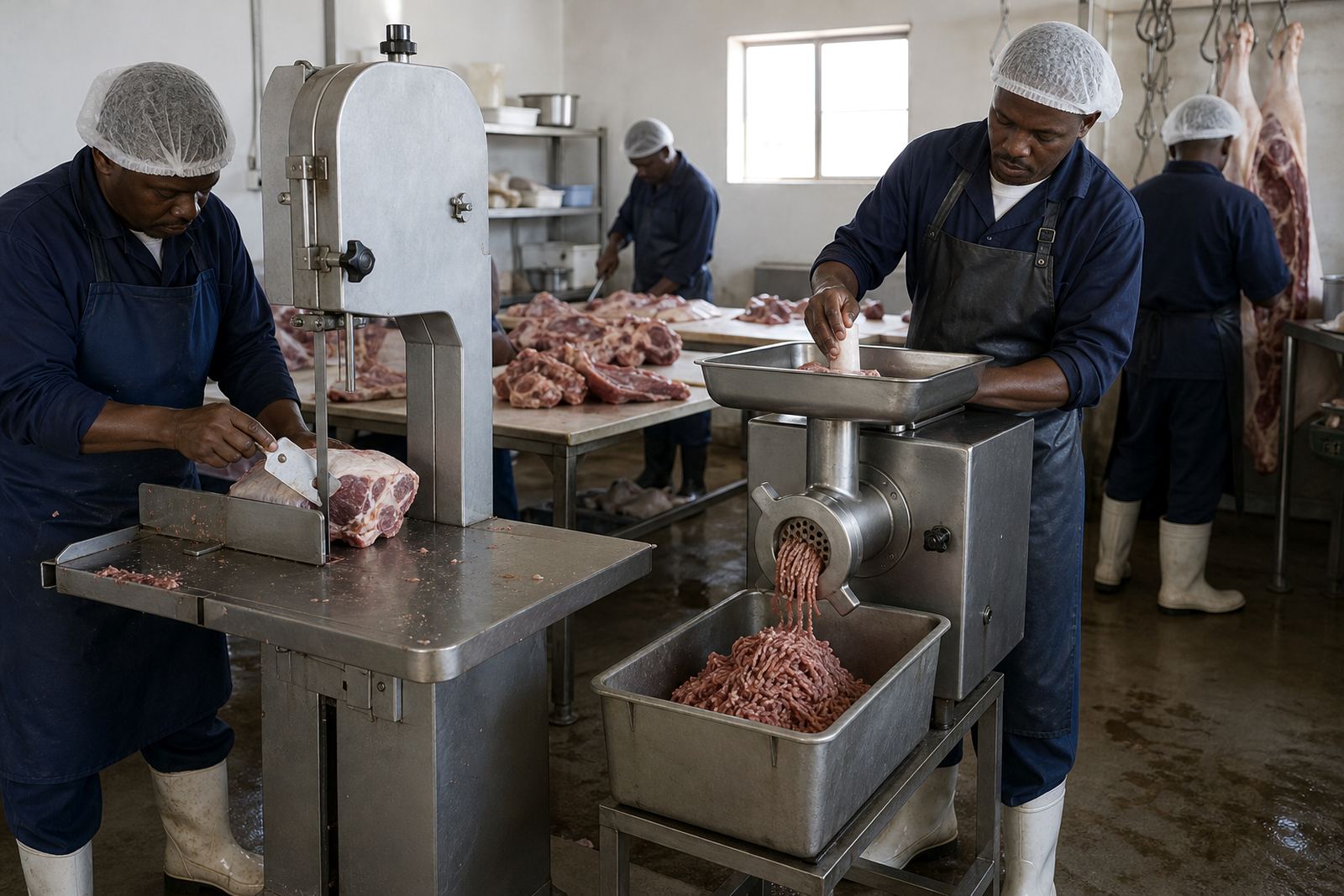
A retail butcher shop works on a simple rhythm: early prep, steady customer orders, quick turnaround, then cleaning down at close. That means the equipment has to support clean cutting, dependable mince production, and safe handling throughout the day. For most neighbourhood shops, the usual starting point is a butchery bandsaw for carcass and primal cutting, plus a mincer for fresh mince, sausages and trim handling.
The right choice depends on the volume you handle, how many people work behind the counter, and how much space you have in the prep room. A small shop in Bloemfontein or Kroonstad may need a compact setup that can fit into a tight back area, while a busier retail counter in Johannesburg or Durban may need a more organised work flow with clearer separation between cutting, mincing and packing.
What matters most is practical use. The equipment should be easy to clean, simple to operate, and suited to staff who need to work quickly without cutting corners. Good guards, safe blade handling, regular cleaning and proper PPE are part of the job from day one.
Typical equipment for a neighbourhood butcher shop
Most retail butcheries do not need a large industrial line. They need a sensible mix of tools that can cover daily fresh meat sales without overbuying. The core items usually include a bandsaw, a mincer, spare blades or plates, cleaning brushes, food-safe sanitising products and basic protective gear for staff.
- Bandsaw for cutting fresh meat, carcasses and portion control
- Mincer for mince, sausage filling and trim management
- Replacement blades, plates and knives for ongoing maintenance
- Cleaning tools for daily wash-down and residue removal
- Operator PPE, including gloves, aprons and suitable footwear
In a small retail butchery, one well placed bandsaw and one mincer can be enough to support the shop floor. In a higher volume store, it may make sense to plan for more efficient movement between the cold room, prep area and service counter so staff are not crossing paths unnecessarily. That matters especially in older premises where space is limited and floors can become slippery after cleaning.
Planning the layout before the first delivery
Good layout saves time every single day. The bandsaw should sit where staff can load and unload safely, with enough room to work around it and a nearby cleaning point. The mincer should be placed where trimmed meat can move in one direction from cutting to processing to packing. If the shop is in a coastal area like Durban or Cape Town, plan for extra care with corrosion and moisture control. If the shop faces load-shedding, think about what can still be done safely during power interruptions and what must wait until power returns.
When planning the room, keep these basics in mind:
- Leave enough clearance around moving parts and loading areas
- Keep cleaning access simple so the end-of-day wash-down is quicker
- Separate raw handling, cutting and packing as much as possible
- Use non-slip floors and make sure drainage is working properly
- Store blades, plates and knives in a locked or controlled area
For shops in Hamilton, Bloemfontein or Kimberley, dust and temperature changes can affect the work area too, so storage and cleaning routines should be practical. A little planning at the start avoids unnecessary strain on staff later on, and helps keep service moving when the queue gets long.
Common mistakes retail butcheries make
One common mistake is buying equipment only on price and not on fit. A machine that looks affordable may slow the shop down if it is awkward to clean, hard to service, or not suited to the daily volume. Another mistake is underestimating the space needed around the equipment. If staff have to squeeze past one another, the risk of accidents goes up and cleaning becomes a chore.
Other mistakes include skipping operator training, ignoring small wear on blades or cutting parts, and leaving cleaning until the end of a long shift when everyone is tired. A dull blade or worn plate can create poor results and put extra pressure on the team. It is also worth checking power supply stability and socket placement before installation, especially in older retail premises where wiring may need attention.
Retail butcheries should also avoid mixing maintenance with production. If a bandsaw starts to cut poorly or the mincer is not performing properly, stop and inspect it. Pushing through the problem usually leads to more downtime later and can create safety issues that are easy to prevent.
Budget ranges that make sense for a retail shop
Budget depends on the size of the shop, the level of daily trade, and whether you are fitting out a new business or replacing older equipment. A sensible retail butcher plan usually starts with the equipment needed for daily production, then adds servicing, spare parts and training so the shop can keep operating properly after install. It is also wise to keep a small budget aside for consumables and first-year maintenance.
As a broad guide, a smaller neighbourhood butcher may plan around an entry-level spend for a basic bandsaw and mincer setup, while a busier store could allow a higher budget for installation, delivery, setup and ongoing servicing. Exact figures vary, but it is better to think in practical bands of spend rather than chasing the cheapest option. This is where a proper site discussion helps, because the same equipment can have very different value depending on shop size, workload and staffing.
For many retail butcheries, the real cost is not just the machine itself. It is the full working setup: safe placement, correct install, blades and plates on hand, cleaning routines, and a plan for breakdown callouts. That is what keeps daily fresh-cut service moving without last-minute panic.
Care that keeps the counter running
Daily care is simple, but it has to be consistent. Clean equipment after use, inspect the guards, check for wear, and keep cutting parts sharp and correctly fitted. Staff should understand basic safe use, where to stop the machine in a hurry, and how to clean without damaging surfaces. Any blocked residue or loose parts should be dealt with before the next shift starts.
- Clean and sanitise after each production run
- Check guards and safety features before operation
- Replace worn blades, plates and knives on schedule
- Keep the area dry and free of slip hazards
- Use proper PPE for cutting, cleaning and handling meat
MorCut Butchery supports retail butcheries with delivery and setup across South Africa, including Bloemfontein, Johannesburg, Pretoria, Durban, Cape Town, Kimberley, Welkom and Kroonstad. Our team in Hamilton, Bloemfontein works with shop owners, managers and staff to help choose practical equipment and keep it in working order through installation, servicing, maintenance and training.