

What bulk portioning asks of the work area
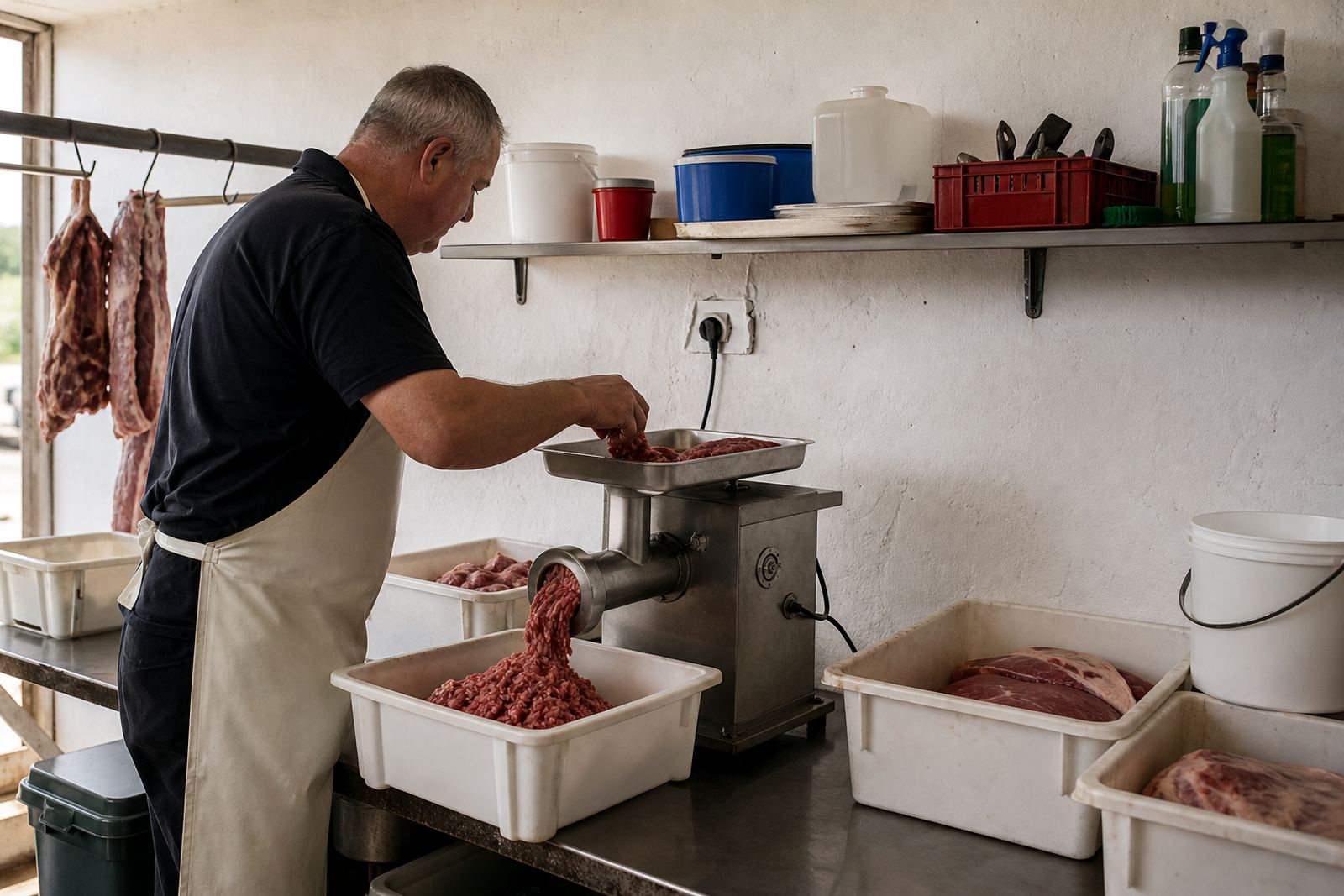
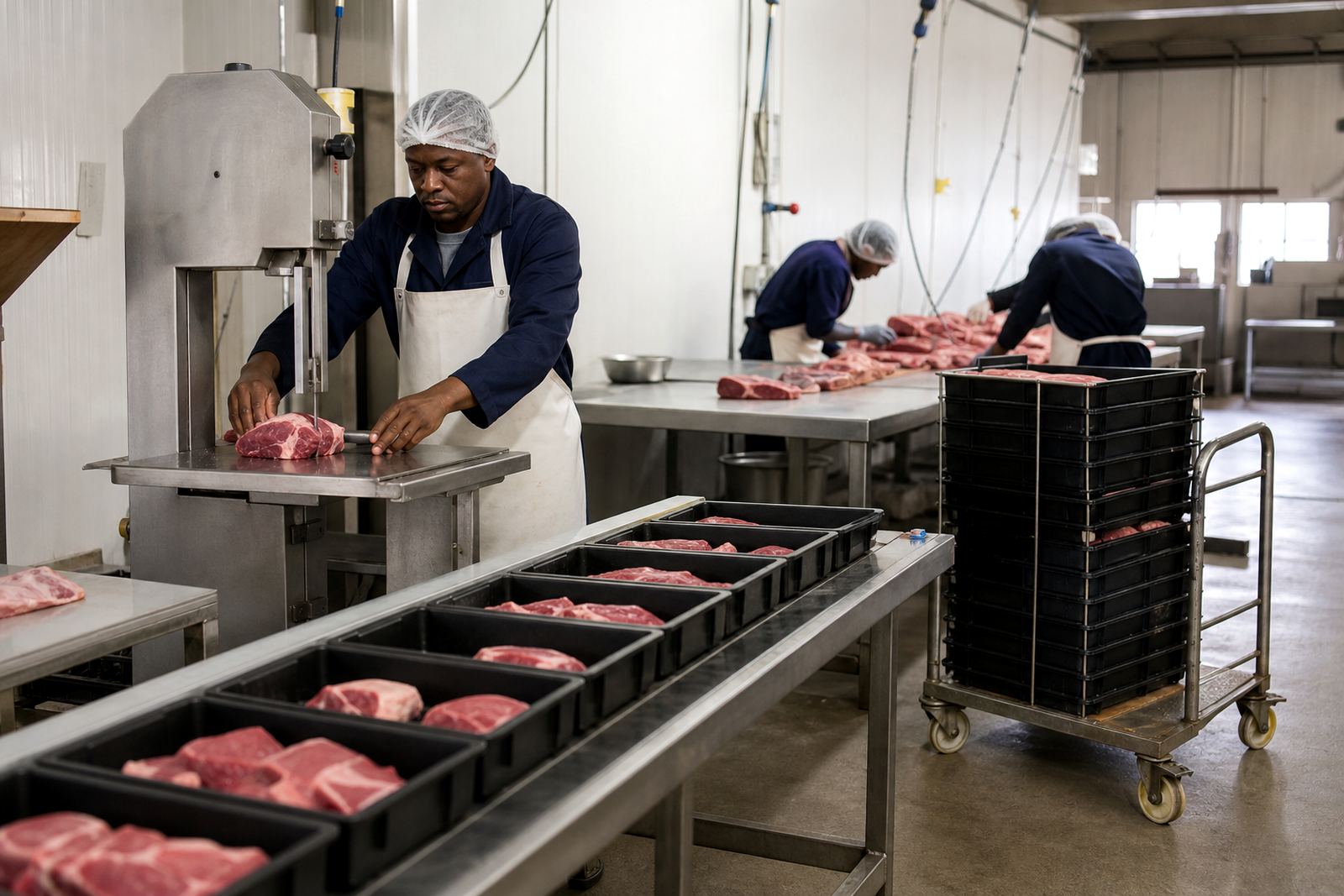
Bulk portioning is where speed and consistency matter most. In a production room, the bandsaw is used for repeated cuts on larger pieces, while the mincer handles trim and selected meat going forward for mince, patties or sausage work. The aim is not just to cut meat quickly, but to keep portions even, reduce waste and keep the line moving without unnecessary handling.
For butchers in Bloemfontein, Johannesburg, Pretoria, Durban and Cape Town, the conditions are rarely identical. A busy shop floor in the Free State may deal with dry dust and colder mornings, while coastal sites often have higher humidity that affects cleaning, drying and blade care. Good planning helps a machine work well in both home and commercial settings.
- Plan for a clear cutting zone with enough room for loading, trimming and cleaning
- Keep a separate area for waste, offcuts and finished packs
- Allow space for safe movement around the saw, not just in front of it
- Use strong, level flooring that is easy to wash down
Typical equipment set for repeated cutting
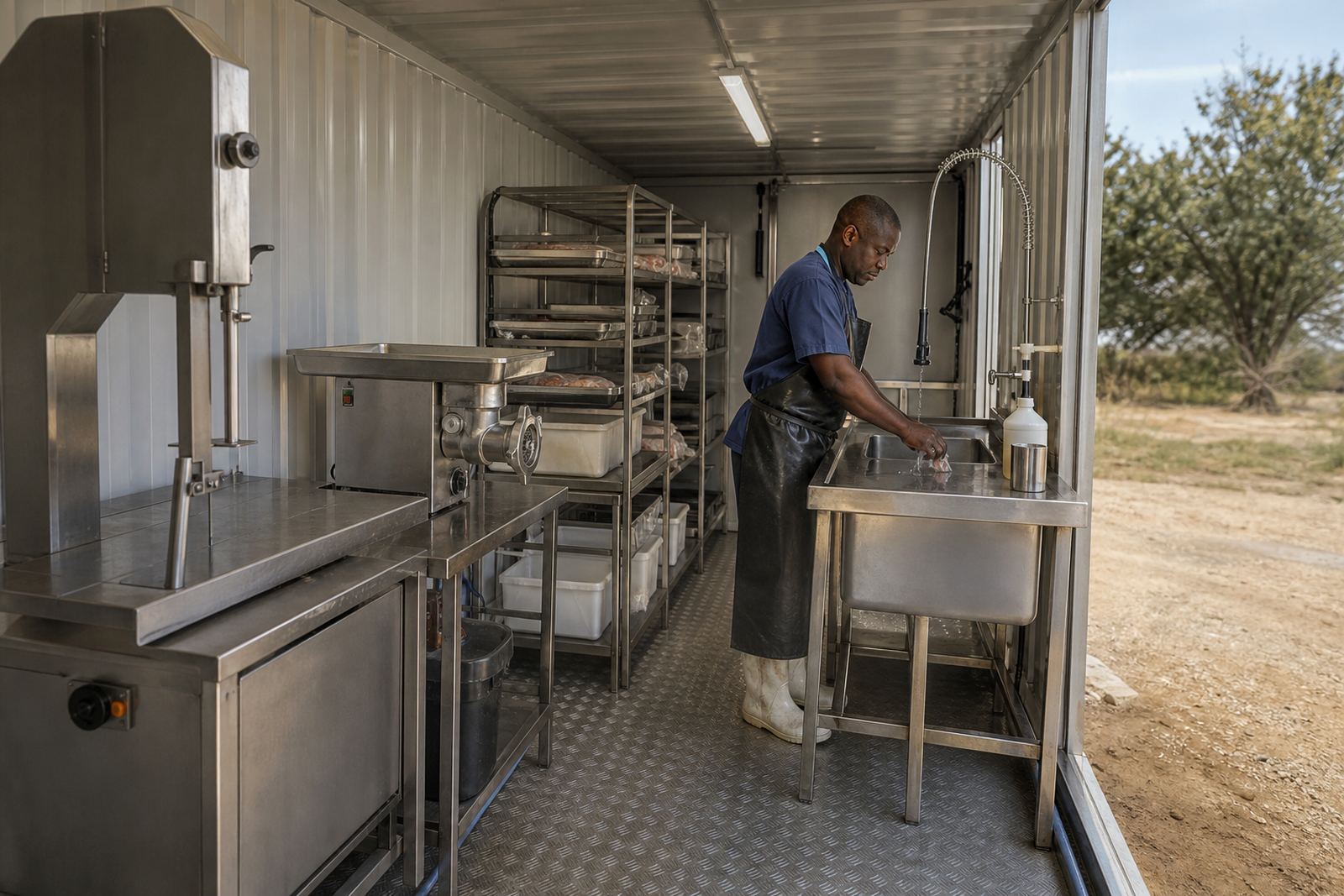
A bulk portioning setup usually starts with a bandsaw, a mincer, stainless work tables, a scale and basic hand tools for trimming and packing. Some operations also use a trolley system or labelled trays to move product between stages. The right set depends on how much meat is cut each day, whether the work is for retail, catering or home production, and how much floor space is available.
For many customers, a bandsaw is the main tool for bone-in cuts and portioning larger sections into saleable pieces. A mincer then takes over where trim and smaller pieces need to be processed. If the layout is cramped, staff spend too much time turning, lifting or crossing paths, and that slows the whole room down.
- Bandsaw for repeated portion cuts and bone-in work
- Mincer for trim, mince and batch processing
- Wash-up sink or cleaning point close to the work area
- Knife rack, blade storage and PPE such as gloves and aprons
- Clear signage for safe start-up, shut-down and cleaning steps
Planning the layout before the first cut
A good layout starts with the path of the meat, not the machine. Raw product should move in one direction, from receiving to cutting, then to mincing or packing without crossing back through the same space. That reduces congestion and keeps the process cleaner. In a small shop or backyard setup, this may mean placing the saw near the cold room and the mincer on the next station rather than pushing both into one corner.
Electrical supply also matters. In South Africa, load-shedding and local supply interruptions can affect production timing, so it helps to plan cut and mince sessions around your power schedule. Where needed, operators should check that sockets, extension use and breaker protection are suitable for the load, and that the machine is positioned away from water spray and cleaning splash. Municipal rules and hygiene standards differ by area, so it is worth checking local requirements before final installation.
- Keep cables, plugs and switches out of wet cleaning paths
- Leave enough access for servicing and blade changes
- Use bright task lighting over the cutting surface
- Separate clean product flow from dirty wash-down areas
Common mistakes in bulk portioning rooms
One common mistake is buying equipment before measuring the room. Another is placing the saw too close to the wall, which makes cleaning harder and can trap scraps. Some operators also underestimate the need for safe storage of blades, plates and knives, or they keep spare parts mixed in with general tools. That leads to delays when a changeover is needed.
Using dull blades or worn cutting parts is another avoidable problem. It puts extra strain on the machine and can affect cut quality. Cleaning shortcuts are just as risky. A bandsaw and mincer need regular wash-down, drying and inspection, plus proper guards in place before use. Operators should wear suitable PPE and follow the machine sequence every time, even on a busy day.
- Do not overload the saw with pieces that are too large for the workspace
- Do not skip blade checks before starting a shift
- Do not let mince product wait too long before chilling
- Do not leave plates, knives or guards fitted incorrectly after cleaning
Care that keeps output steady
Bulk portioning equipment lasts longer when care is part of the shift, not just a once-off task. Daily cleaning removes meat residue and helps prevent build-up around moving parts. Regular servicing keeps alignment and cutting performance in order, while planned blade replacement and plate and knife change work prevent uneven cuts and unnecessary strain. In humid coastal areas, drying after cleaning is especially important to limit rust and water marks.
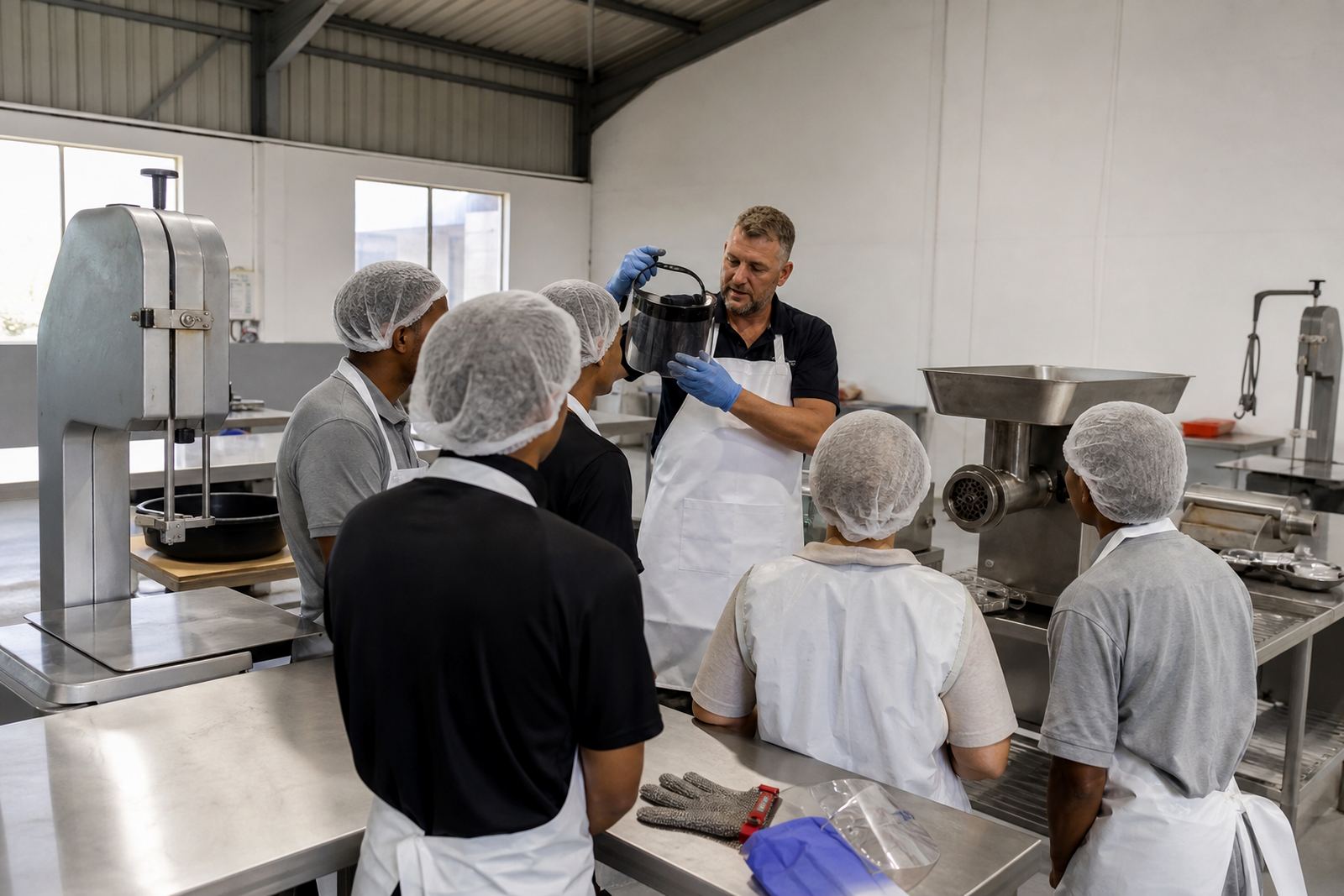
A simple routine also makes training easier for new staff. When the team knows how to strip, clean and reassemble the machine in the right order, less time is lost and fewer errors happen during busy periods. For many shops, a short cleaning demonstration and operator training session saves more money than a rushed repair later on.
- Clean after each production run, then dry all contact surfaces
- Check guards, switches and fasteners before the next shift
- Book preventive maintenance before the machine starts missing cuts
- Keep a small stock of common parts for quick turnaround
Budget ranges for a practical setup
Budget depends on how much work the room must handle, the level of finish required and whether the setup is for home use or commercial output. A basic bulk portioning arrangement with a bandsaw and a small mincer can start at a lower entry level, while a fuller production room with setup support, spare parts and training will cost more. Delivery, installation and servicing also affect the total spend.
As a working guide, many customers plan from around R15 000 to R45 000 for a modest setup, with more complete commercial arrangements moving higher depending on equipment choice and the work area. The important point is to buy for the real cutting volume, not just the starting budget. A machine that is too small for the task often costs more in repairs, delays and waste.
- Allow for delivery and setup, not only the equipment price
- Set aside a budget for blades, plates, knives and cleaning supplies
- Keep a maintenance reserve for servicing and unexpected callouts
- Choose equipment that matches your daily portioning volume
How MorCut supports bulk portioning setups
From our base in Hamilton, Bloemfontein, MorCut Butchery works with commercial and home butchers across Bloemfontein Supply, Johannesburg Delivery, Pretoria Delivery, Durban Delivery, Cape Town Delivery, Kimberley Supply, Welkom Supply and Kroonstad Supply. Our team includes people who can help with selection, delivery and setup, servicing, workshop support, parts supply and operator guidance.
If you are building or improving a bulk portioning area, the best starting point is a clear brief: how much product you cut, what space you have, and whether you need installation, breakdown help or training. That makes it easier to match the equipment to your workflow and keep the line moving through the week.
- Lerato Mokoena for sales guidance
- Willem Jacobus Smit for service coordination
- Themba Dlamini for training support
- Morne du Plessis for workshop repairs