

Fresh Meat Prep in a Deli Kitchen
A deli kitchen is usually tight on space, busy at peak times and expected to stay neat enough for front-of-house service. Once you start cutting portions, trimming packs and mincing on site, the equipment has to work without crowding the servery or slowing down staff. That is where compact butchery equipment makes sense. It gives you a proper prep area for fresh meat without turning the deli into a full-scale processing room.
For many delis in Bloemfontein, Johannesburg or Pretoria, the first step is a small but well planned meat prep station. The goal is simple: safe handling, easy cleaning and enough capacity for the sales you actually do. If the equipment is too large, too awkward to clean, or placed in the wrong spot, it becomes a daily nuisance. A smaller, well chosen setup is often the better buy.
Typical Equipment for a Deli Meat Station
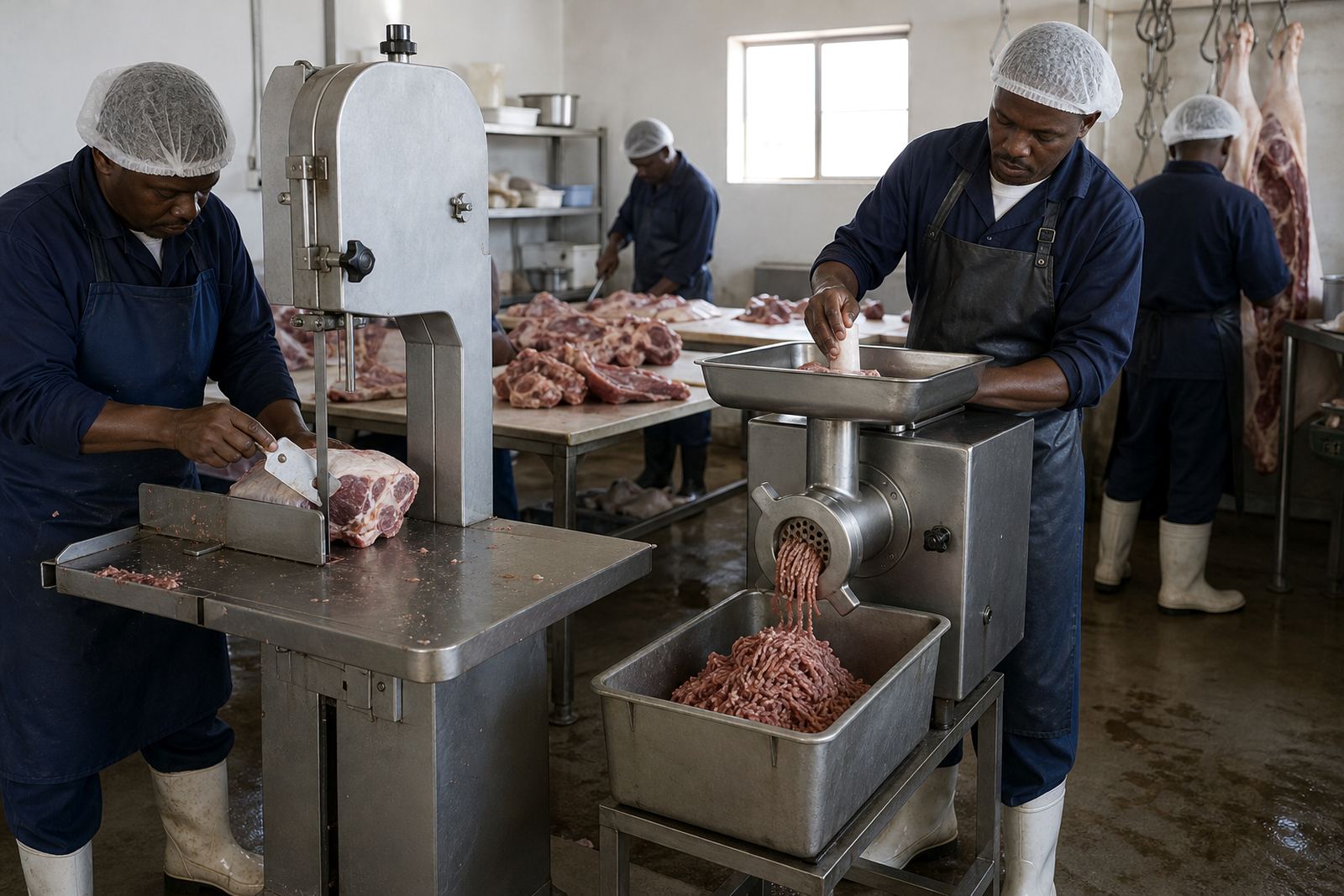
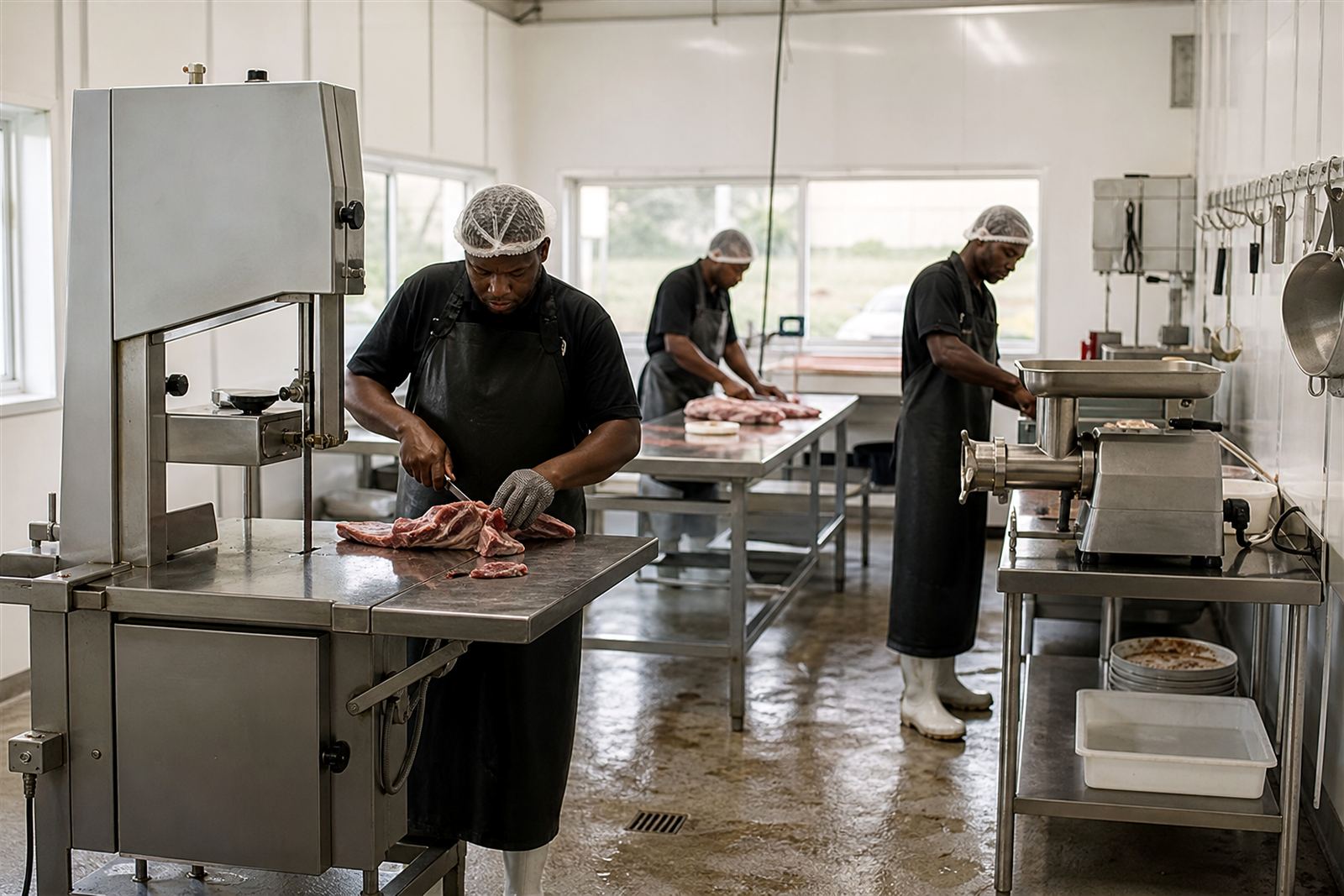
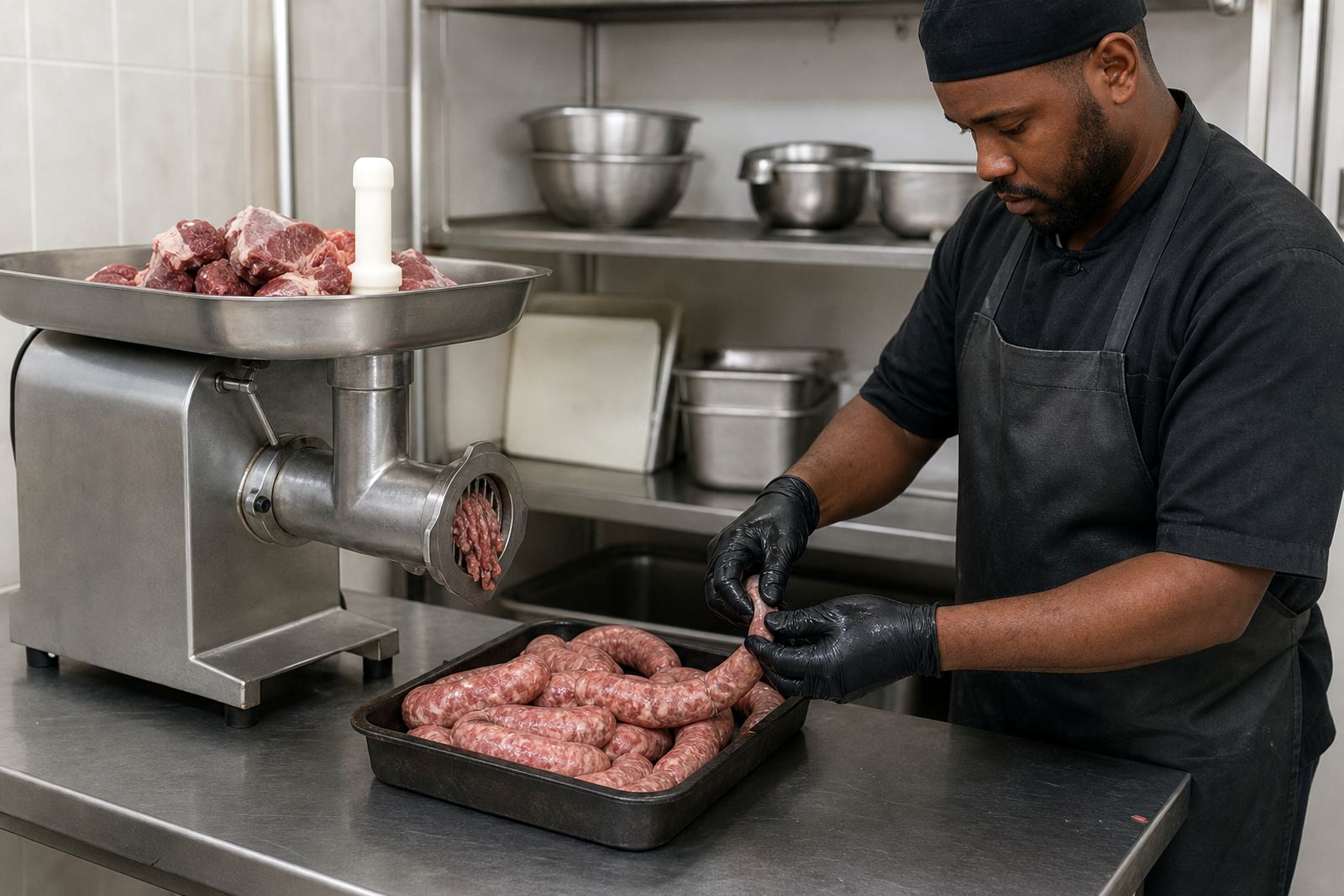
Most deli kitchens need two core machines: a bandsaw for portioning and a mincer for fresh mince, burger mixes or sausage prep. A bandsaw helps with clean cuts through meat and bones, while a mincer supports quicker turnaround on customer orders and prepared packs. Some shops use both from the start, while others begin with one machine and add the second as demand grows.
- Bandsaw for cutting steaks, chops and larger portions
- Mincer for fresh mince and mixed products
- Blade and knife changes for ongoing sharpness and clean cuts
- Cleaning tools and safe storage for daily wash-downs
- Protective gear for staff, including gloves and aprons
The right choice depends on your menu and your workflow. A deli that sells pre-packed family portions may need a different setup from one that prepares meat for take-away meals. We also see many small shops in Kimberley, Welkom and Kroonstad that benefit from one compact machine first, then expanding later once the prep counter is busy enough to justify it.
Planning the Layout Before You Buy
In a deli kitchen, layout matters just as much as the machine itself. You need enough room for receiving, trimming, cutting, packing and cleaning, with a clear path that does not interfere with customers or hot food service. Keep the meat prep area separate from ready-to-eat foods where possible, and allow space for washing hands, sanitising surfaces and storing clean tools properly.
In Bloemfontein, where many businesses work through power cuts and load-shedding schedules, it is also worth planning for how the prep area will function when electricity supply is interrupted. Even if the machine is only used at certain times of day, your workflow should still make sense when trading is busy and staff are under pressure. Good planning saves time every day, not just on installation day.
- Measure the counter, doorway and wash-up space before ordering
- Leave room for staff to move safely around the machine
- Place the prep station away from customer traffic
- Allow easy access for cleaning and servicing
- Keep drainage, water and power points close to the work area
Common Mistakes Deli Owners Make
The biggest mistake is buying equipment before mapping the work flow. A machine may look suitable on paper but still create problems if the area is too narrow or the power point is in the wrong place. Another common issue is choosing a unit that is more machine than the deli actually needs, which can tie up cash and take up valuable floor space.
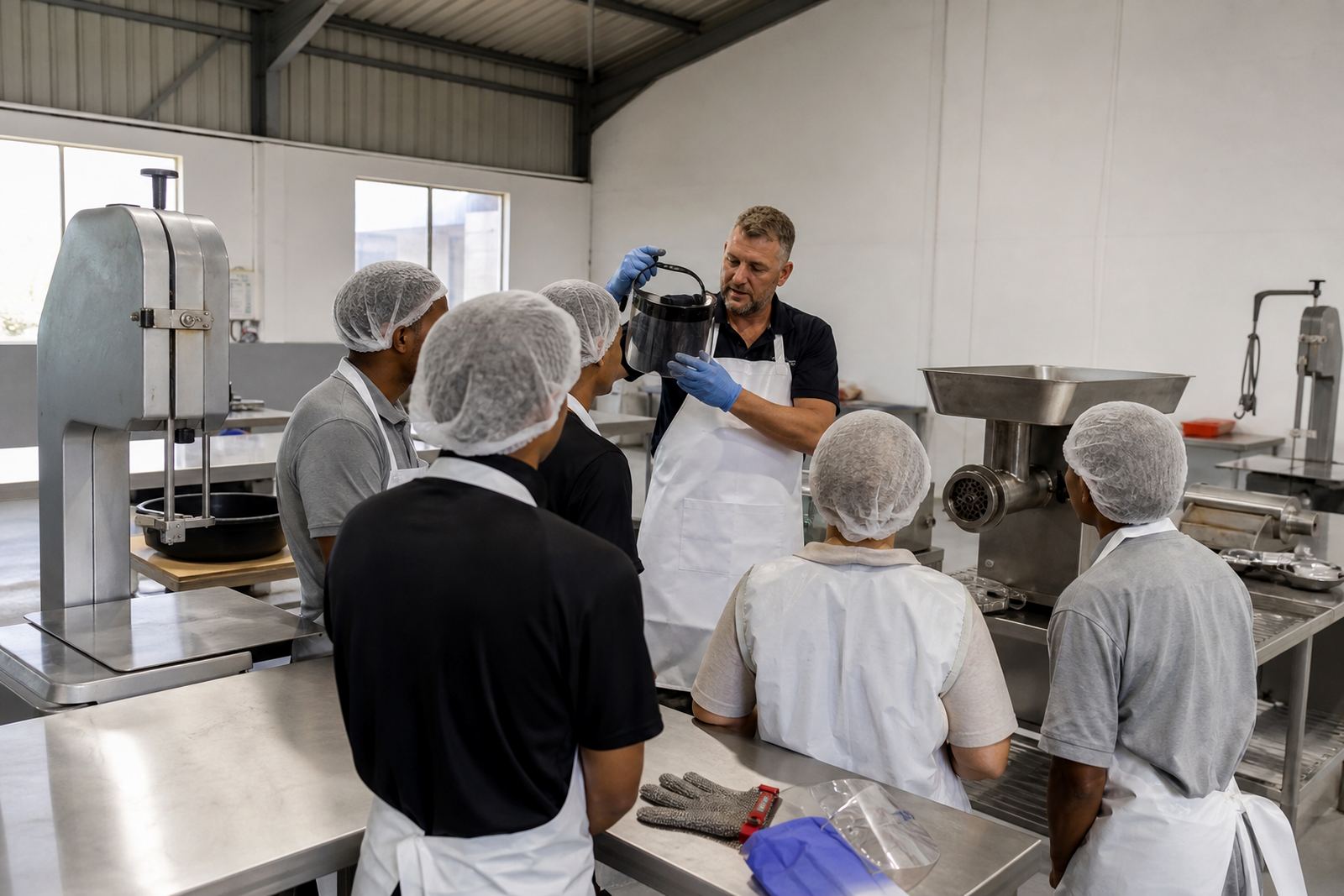
Hygiene is another area where shops sometimes cut corners. Deli prep equipment must be cleaned properly after use, with guards in place and staff trained on safe handling. If the team is not shown how to strip, wash and reassemble the machine correctly, cleaning gets rushed and wear starts showing sooner. A small shop can avoid many problems by building a simple routine from day one.
- Buying without measuring the available space
- Ignoring cleaning access and wash-up flow
- Skipping operator training for new staff
- Delaying blade, plate or knife changes until cuts become poor
- Forgetting spare parts and routine maintenance
Budget Ranges for a Small Deli Setup
Budget depends on whether you are starting with one machine or building a full prep station. A compact deli setup usually starts with a practical entry-level machine and grows from there. It is better to budget for installation, cleaning supplies, spare parts and routine servicing at the same time, because that is where many owners get caught out later.
As a general guide, a small deli may spend from a modest starter budget into a higher range once both a bandsaw and a mincer are included, along with delivery and setup. If you are fitting out a new shop in Durban or Cape Town, transport and site access can also affect the total. For existing stores in Johannesburg or Pretoria, the main cost difference often comes down to the amount of prep space and the level of daily use. We can help match the setup to the work you do, rather than pushing you into equipment you do not need.
Care and servicing also matter for the long term budget. Regular servicing, blade replacement, plate and knife changes, and preventive maintenance keep the equipment working properly and help avoid unnecessary breakdowns. That is especially useful for delis that rely on weekend trade or school holiday rushes, when a delay can affect the whole day.
Support, Training and Aftercare Across South Africa
MorCut Butchery is based in Hamilton, Bloemfontein and supports deli kitchens across South Africa with delivery, setup and servicing. We work with commercial and home butchers in Bloemfontein, Johannesburg, Pretoria, Durban and Cape Town, and also supply surrounding areas including Kimberley, Welkom and Kroonstad. If a deli needs help with installation, a breakdown callout or a service plan, the aim is to keep the prep area working and the staff confident.
Our team includes sales, service, workshop and support staff who understand how deli counters operate in real conditions. That includes practical guidance on cleaning demonstrations, operator training and parts supply, so the equipment stays useful after the initial purchase. Clients can reach us through the enquiry form on our contact page when they need help choosing the right setup for a fresh meat section.
- Band saw installation and servicing
- Mincer installation and servicing
- Blade replacement and plate and knife change
- Cleaning demonstrations and operator training
- Breakdown callouts, preventive maintenance and parts supply