

What a Training Room Needs From Day One
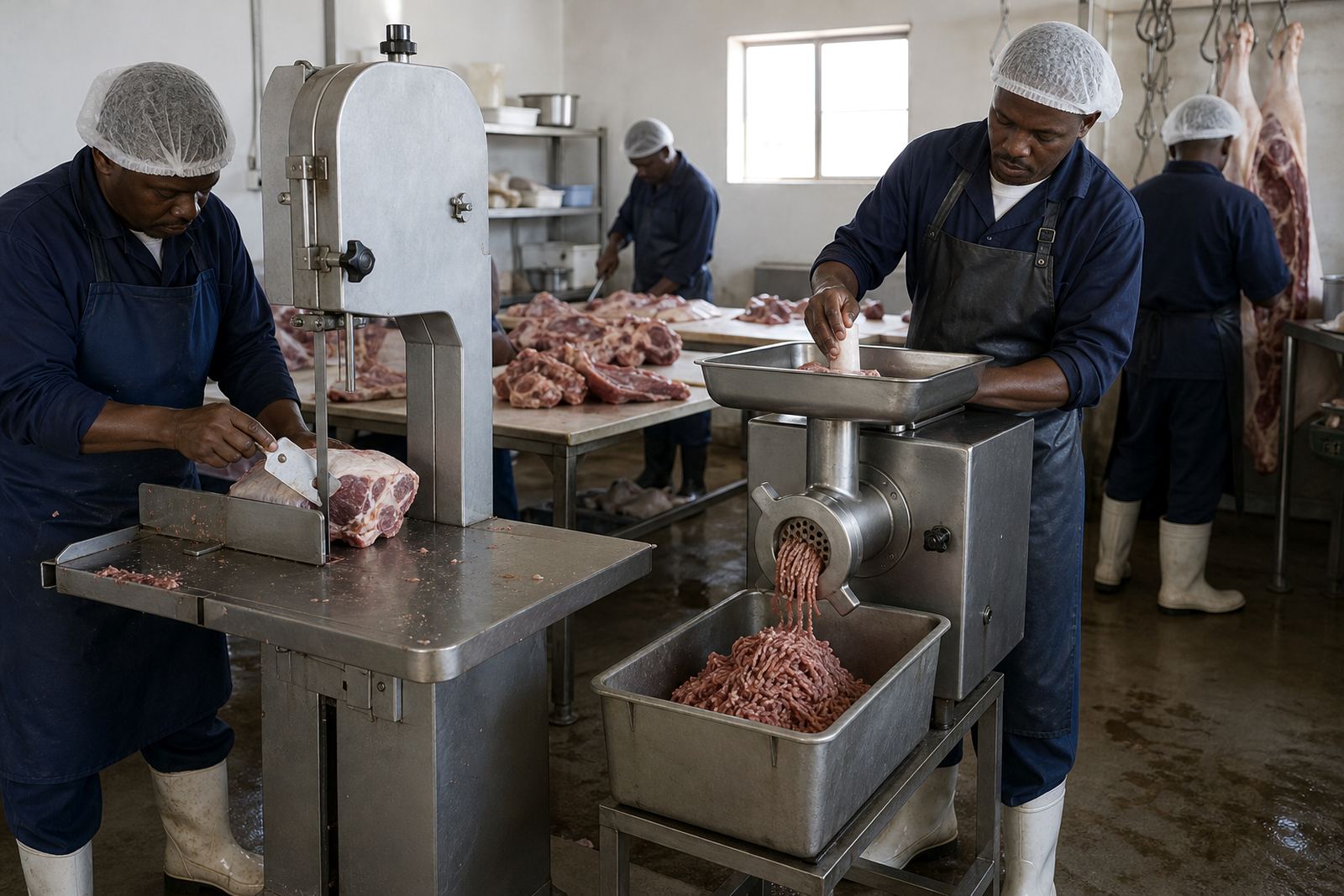
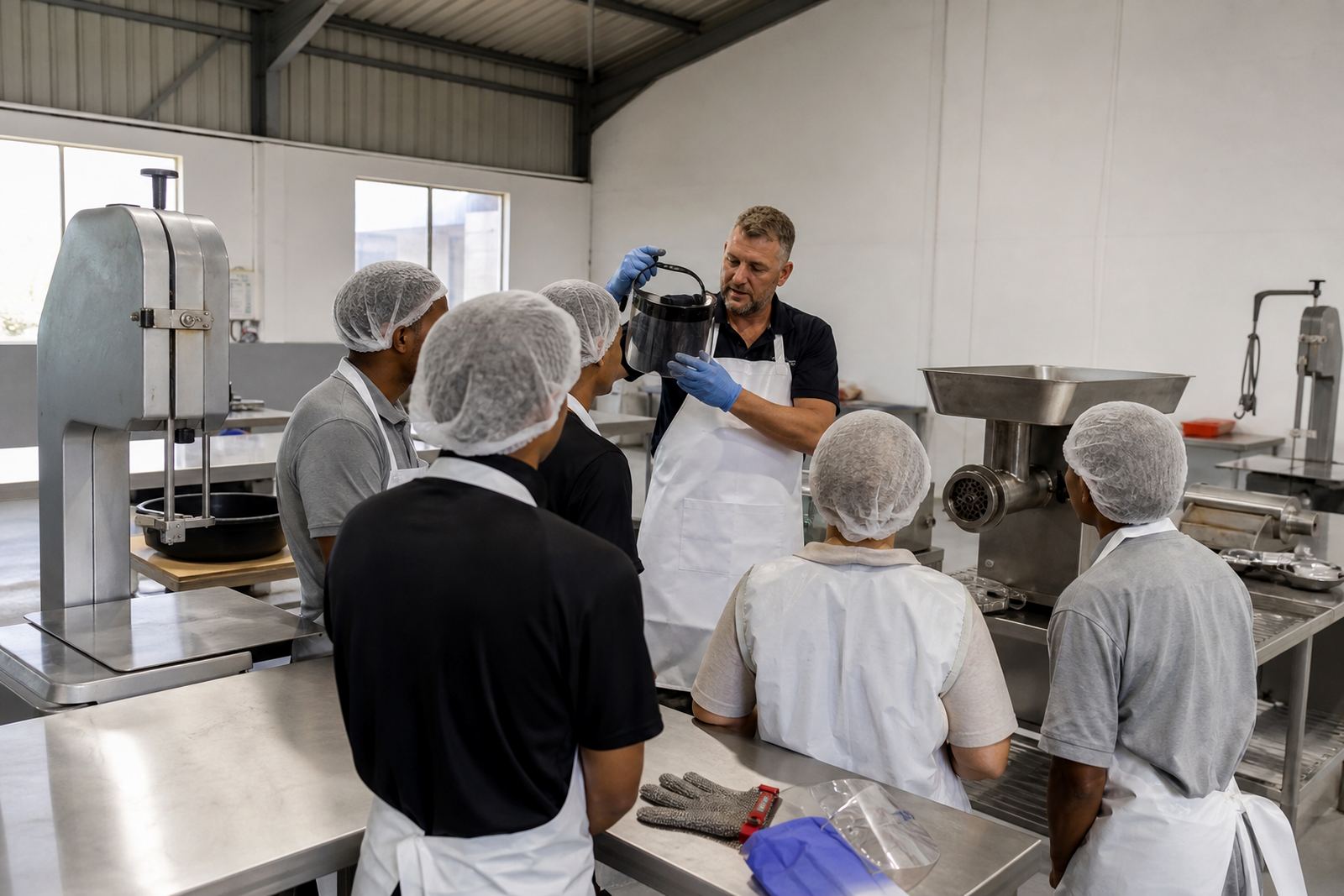
A training facility is not the same as a production floor. The goal is to teach correct handling, safe movement, basic cutting practice and hygiene without crowding the room or risking avoidable accidents. For that reason, the equipment set is usually kept practical: a butchery bandsaw for controlled cutting demonstrations, a mincer for showing preparation and output handling, and enough working space around each point so learners can watch, ask questions and step back safely.
In Bloemfontein and other Free State centres, many training rooms serve schools, community projects, small butcheries and in-house staff training. That means the layout must be flexible. A room may need to handle a class in the morning and a small practical session later in the day, so equipment should be positioned for easy supervision, quick cleaning and clear access to power and water. In summer the heat can build up fast, while coastal areas like Durban and Cape Town bring humidity that makes cleaning and drying even more important.
- Place the bandsaw where the trainer has a clear line of sight to the operator.
- Keep the mincer on a separate bench or stand to avoid mixing raw handling with cutting tasks.
- Leave open walkways for learners, with no loose cables or crates underfoot.
Typical Equipment Set for Safe Learning
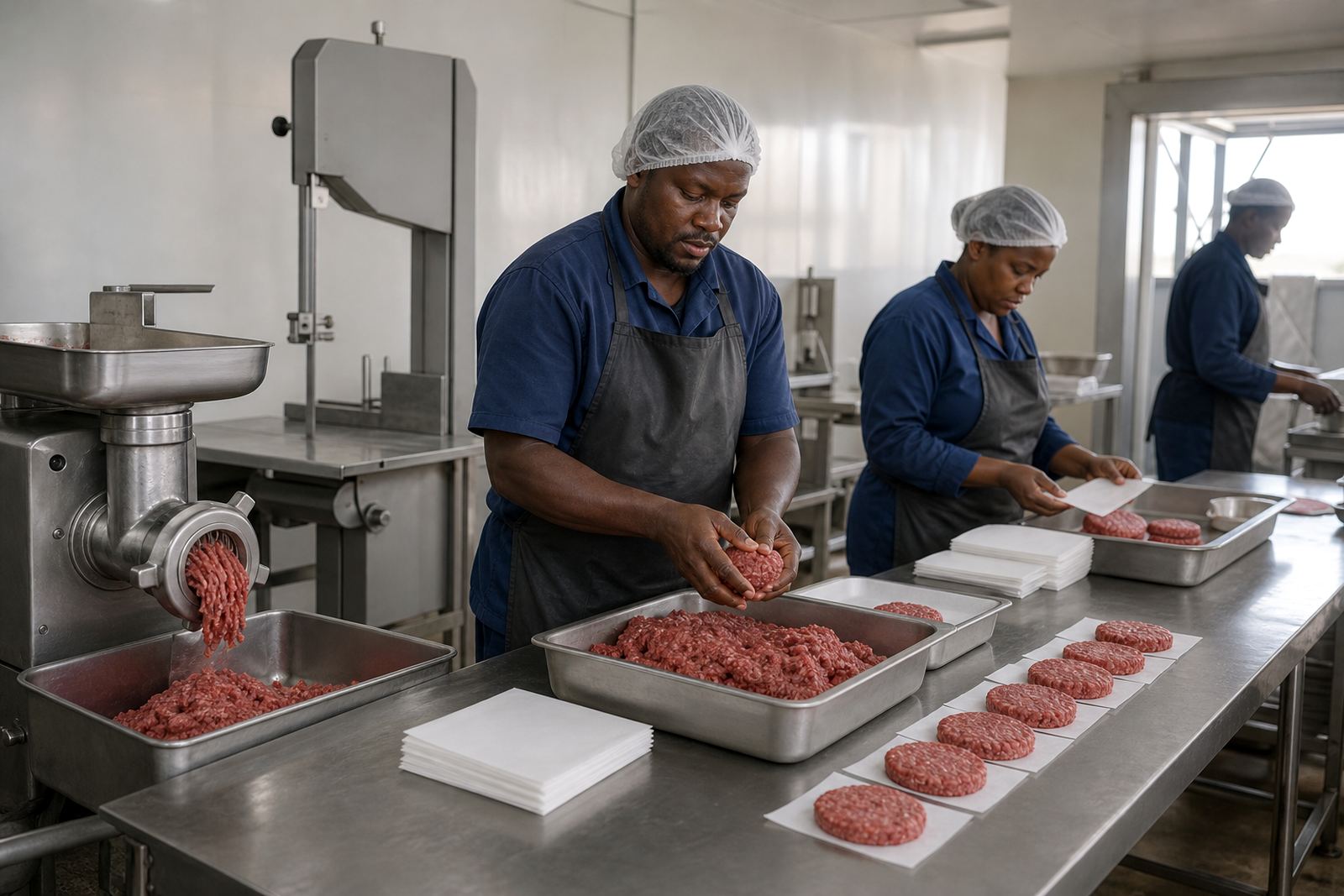
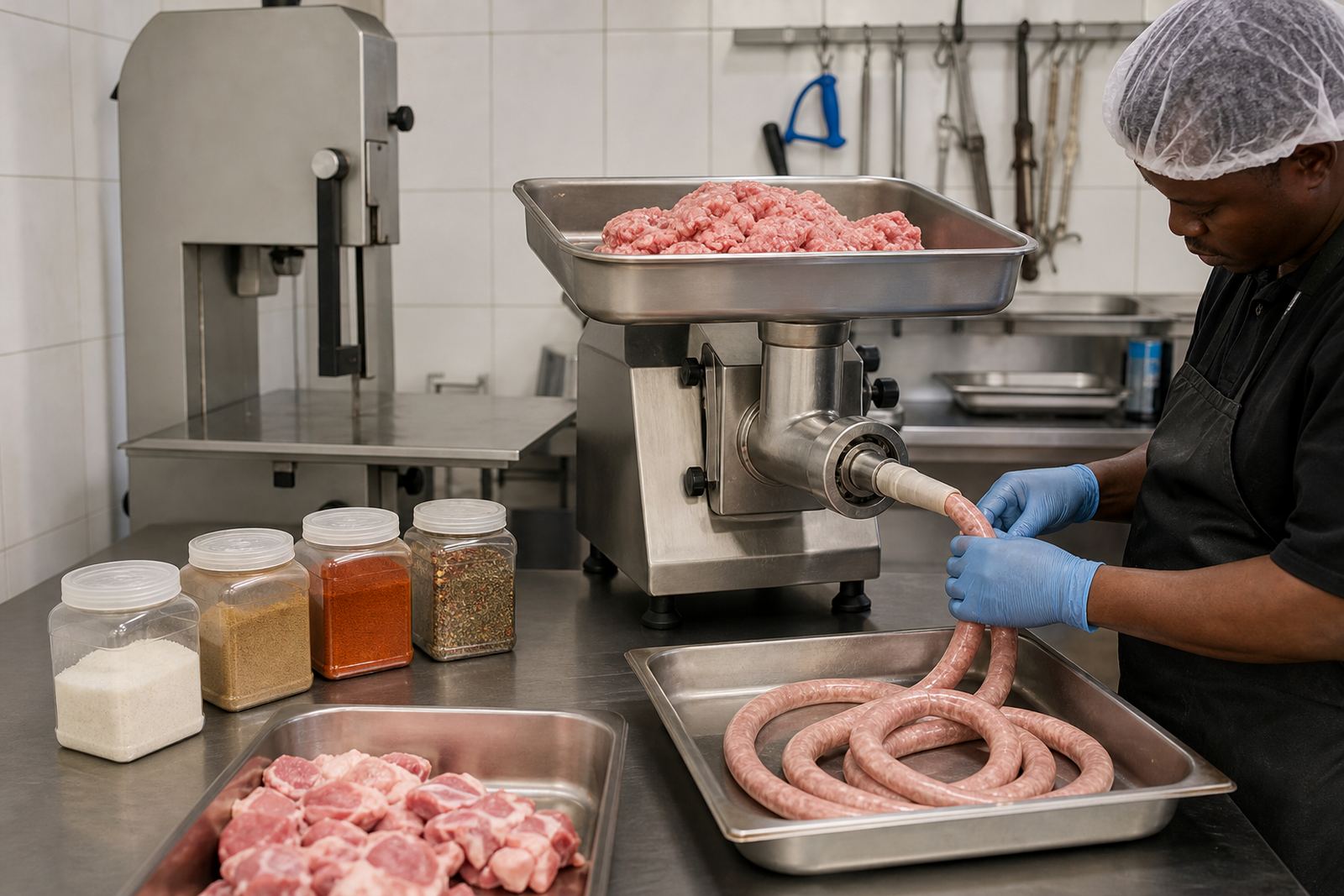
Most training facilities do not need every machine found in a commercial butchery. What they do need is a sensible set that supports the lesson plan. A bandsaw is useful for showing safe bone cutting, portioning and controlled feed technique. A mincer is useful for teaching preparation, loading, hygiene and the handling of minced product after processing. Depending on the course, a training room may also need a prep table, wash-up point, wall hooks for tools and a covered storage area for blades, knives and cleaning items.
It helps to choose equipment that can cope with repeated demonstrations and regular cleaning. In a training environment, people are still learning, so guards, switches and protective fittings must be kept in good condition and checked often. A missing guard or a loose part can quickly turn a practical lesson into a hazard. Operators should also use PPE that suits the task, including aprons, gloves where appropriate and non-slip footwear.
- Bandsaw for demonstration cuts and supervised practice.
- Mincer for teaching preparation, feeding and cleaning routines.
- Cleaning tools, sanitiser, drip trays and covered storage for parts.
- Simple signage for handwashing, PPE and machine use rules.
Layout Planning That Makes Teaching Easier
A good training layout saves time and reduces stress for both the trainer and the learners. The bandsaw should not be squeezed into a corner where the operator has to twist or stretch. The mincer should be close enough for efficient movement but far enough away that one learner does not block another. If possible, keep the clean preparation side separate from the raw side, even in a small room. That separation makes it easier to explain workflow and better hygiene habits.
Power points need to be planned properly too. In many parts of South Africa, load-shedding is a reality, so a training facility may want to plan for backup power or at least safe shutdown procedures. Tripping risk is another issue. Cables, extension leads and loose mats should be avoided where learners are moving around. If the room is in a municipal building or shared venue, check the local rules for drainage, waste removal and noise before fixing the layout in place.
From a practical point of view, the room should allow for cleaning after each session without moving half the setup. A floor that drains well and wall surfaces that wipe down easily will save time. It also helps to have enough light over the working area, not just at the doorway. A dim training room leads to poor supervision and unnecessary mistakes, and that is something no trainer wants.
Common Mistakes In Training Setups
The most common mistake is crowding too much equipment into too little space. When learners cannot stand back and watch safely, the session becomes harder to manage and the risk of contact with moving parts rises. Another mistake is buying equipment that looks suitable but is awkward to clean or maintain. In a training room, the machine must be serviced often and kept ready for the next class, otherwise lessons are delayed and confidence drops.
Some facilities also forget that beginners need clear routines, not just machines. A good trainer needs space to explain blade changes, plate and knife handling, cleaning steps and what to check before switching on. If the room has no proper storage for parts or no secure place for cleaning materials, items get lost or mixed up. That is a small problem at first, then suddenly a bigger one. Training rooms should also avoid wet floors, cluttered bins and poor lighting around the machine base.
- Do not place the machine where learners must cross behind the operator.
- Do not store loose blades, plates or knives on open shelves.
- Do not skip demonstrations on cleaning, guards and shutdown steps.
- Do not assume one setup suits every room, because sizes and class numbers vary.
Budget Ranges for Training Facility Planning
Budget depends on whether the room is being fitted for occasional demonstrations, regular staff training or a full learning programme. A basic setup with one bandsaw, one mincer and the needed support items will cost less than a multi-station room with spare parts stock, backup power planning and a dedicated wash area. It is usually wise to budget in stages so the facility can start properly and then expand as course numbers grow.
For many South African training spaces, it makes sense to separate the spend into equipment, installation, accessories and ongoing care. The first purchase is only part of the total. Training facilities also need servicing, blade replacement, plate and knife change support, and parts on hand so lessons do not stop because of a worn component. A modest room can often be set up in the lower tens of thousands of Rand, while a more complete learning environment with extra preparation stations and support items can sit much higher, depending on what is included. It is best to match the budget to the course plan rather than buying more than the room can safely handle.
Support for Bloemfontein and Beyond
MorCut Butchery is based in Hamilton, Bloemfontein and works with training facilities across South Africa, including Johannesburg, Pretoria, Durban, Cape Town, Kimberley, Welkom and Kroonstad. The team supports delivery, setup, servicing and training-related guidance for facilities that need practical equipment handling rather than fancy talk. Founded in 2008, the business has grown around real workshop needs and day-to-day use, including the maintenance side that keeps machines ready for the next class.
Clients reach the team through the enquiry form on the contact page, which is the simplest way to ask about machine choice, room layout or support for an existing training space. Whether the need is a new installation, a breakdown callout or a refresher on safe use, the aim is the same: a room that is easy to manage, easy to clean and fit for teaching the basics properly.