

Planning a sausage room that keeps trimming moving
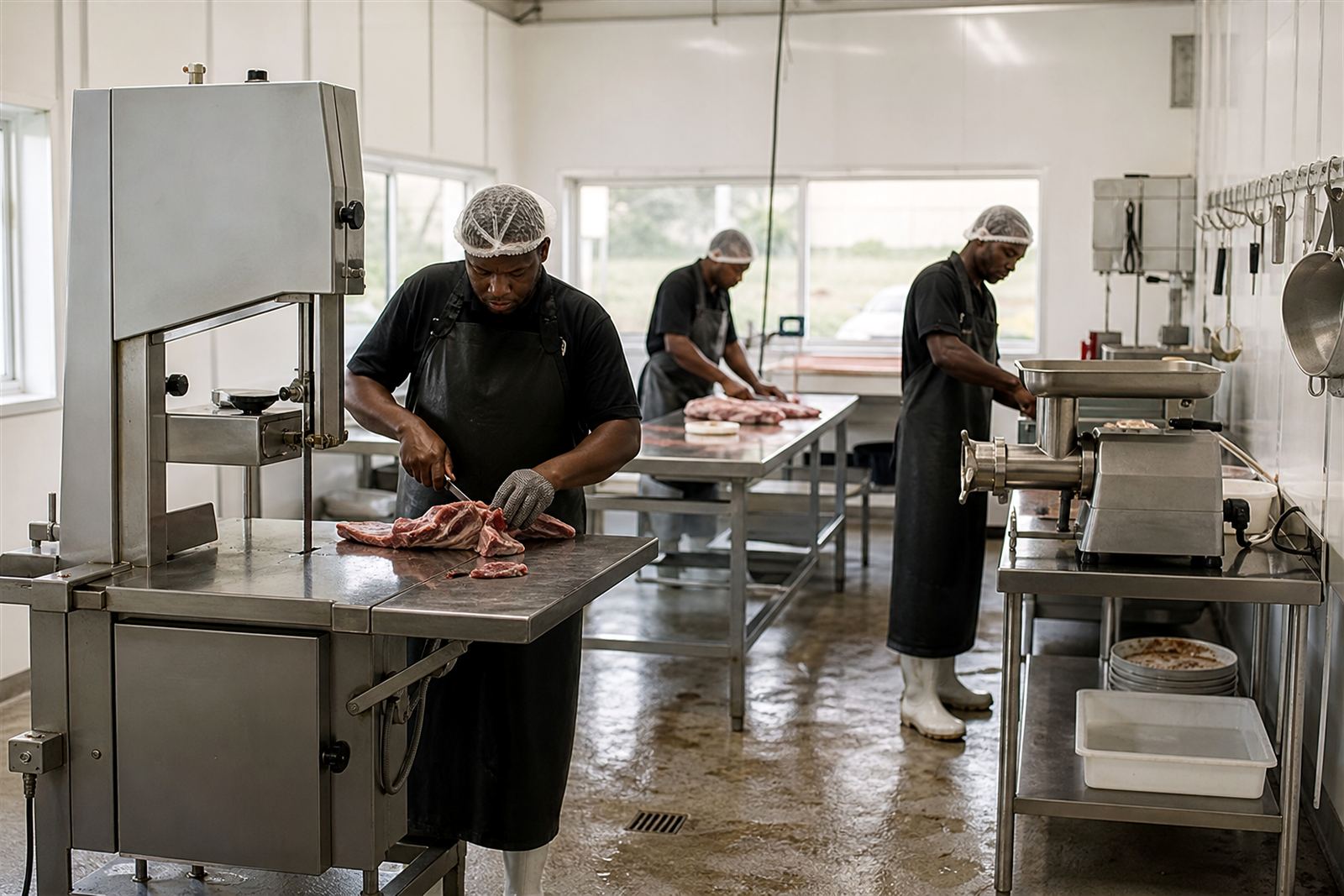
A good sausage making area starts with the cut up table, a sharp knife set, a dependable mincer and enough space for safe handling. When trimmings come in from beef, pork or mixed meat batches, the work should move in one direction: sort, trim, chill, mince, season and stuff. That order helps keep the meat cold and reduces delays, which matters in Bloemfontein heat and even more during load shedding when work pace can change quickly.
For smaller shops, the main question is whether the mincer will handle batch work comfortably without becoming a bottleneck. For larger butcheries, the question is how many people need to work at once and whether the room has enough outlet points, drainage and counter space. A compact layout can still work well if there is a clear path for trays, mincer loading and sausage filling.
When planning, think about food flow and cleaning flow together. The machine needs a place where staff can load meat safely, wash hands between tasks and clean down without crowding the next stage. In busy shops, the best layouts are usually simple and close to the chillers, with easy access for cleaning and maintenance.
What mincers do in sausage preparation
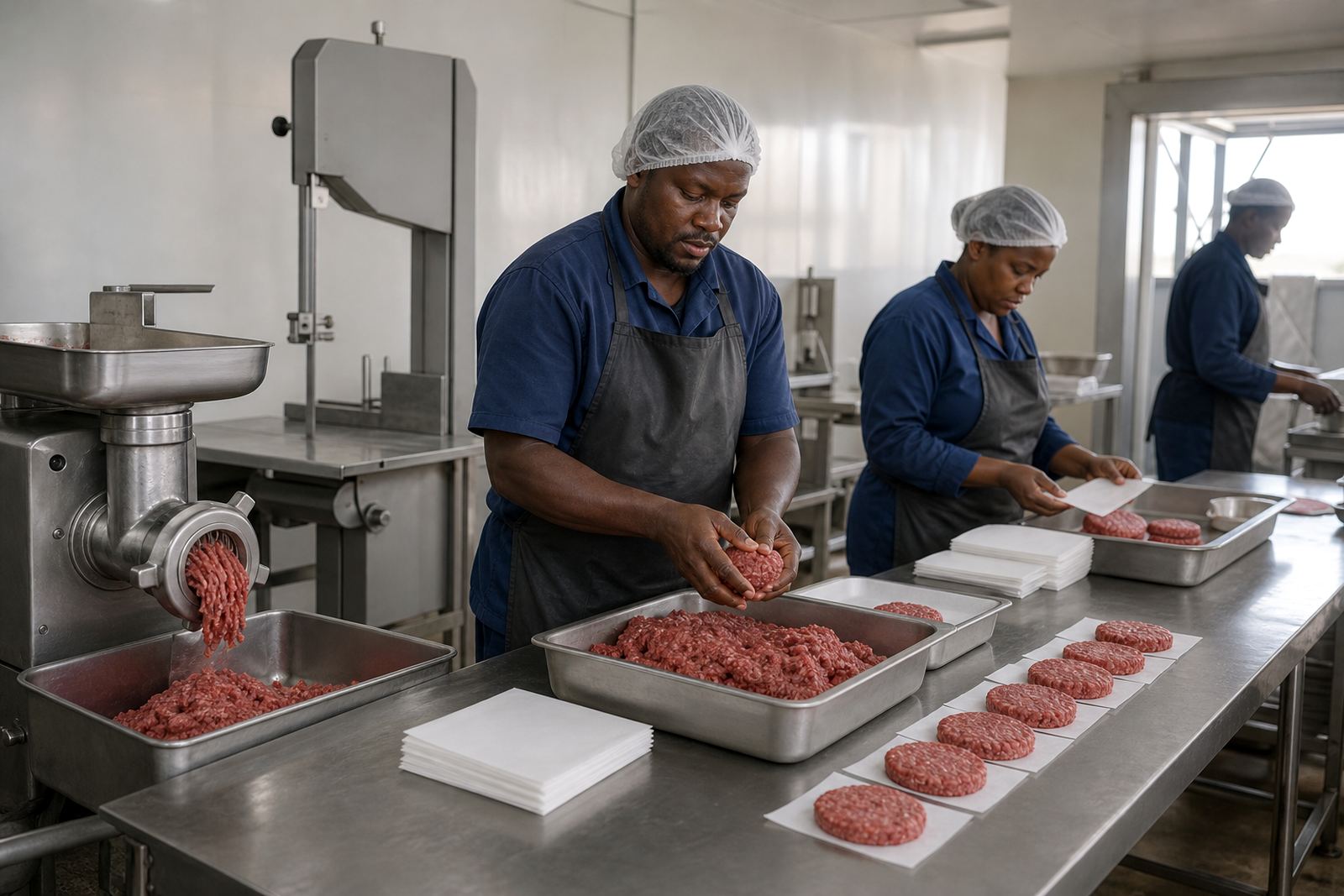
Mincers are central to sausage making because they turn trimmed meat and fat into a consistent mince before seasoning or stuffing. A good mince gives a more even finish in the final sausage and helps the mix bind properly. If the cut is too warm, the texture can smear and the mix becomes harder to manage, so cold handling matters from the start.
In everyday butcher work, the mincer is often used for more than one product line. It may handle sausage batches, mince for pies or patties, and trim from prep work. That makes cleaning and blade care important, especially when moving between different meats. Staff should follow a regular routine for guards, plates, knives and general cleanliness so that the machine stays reliable.
- Keep meat chilled before mincing so the texture stays firm
- Trim sinew and excess gristle before loading
- Check plates and knives for wear before a batch starts
- Use cleaning steps after each production run, not only at closing time
- Keep fingers, loose clothing and utensils clear of moving parts
Bandsaws, trimming and the prep that comes before mincing
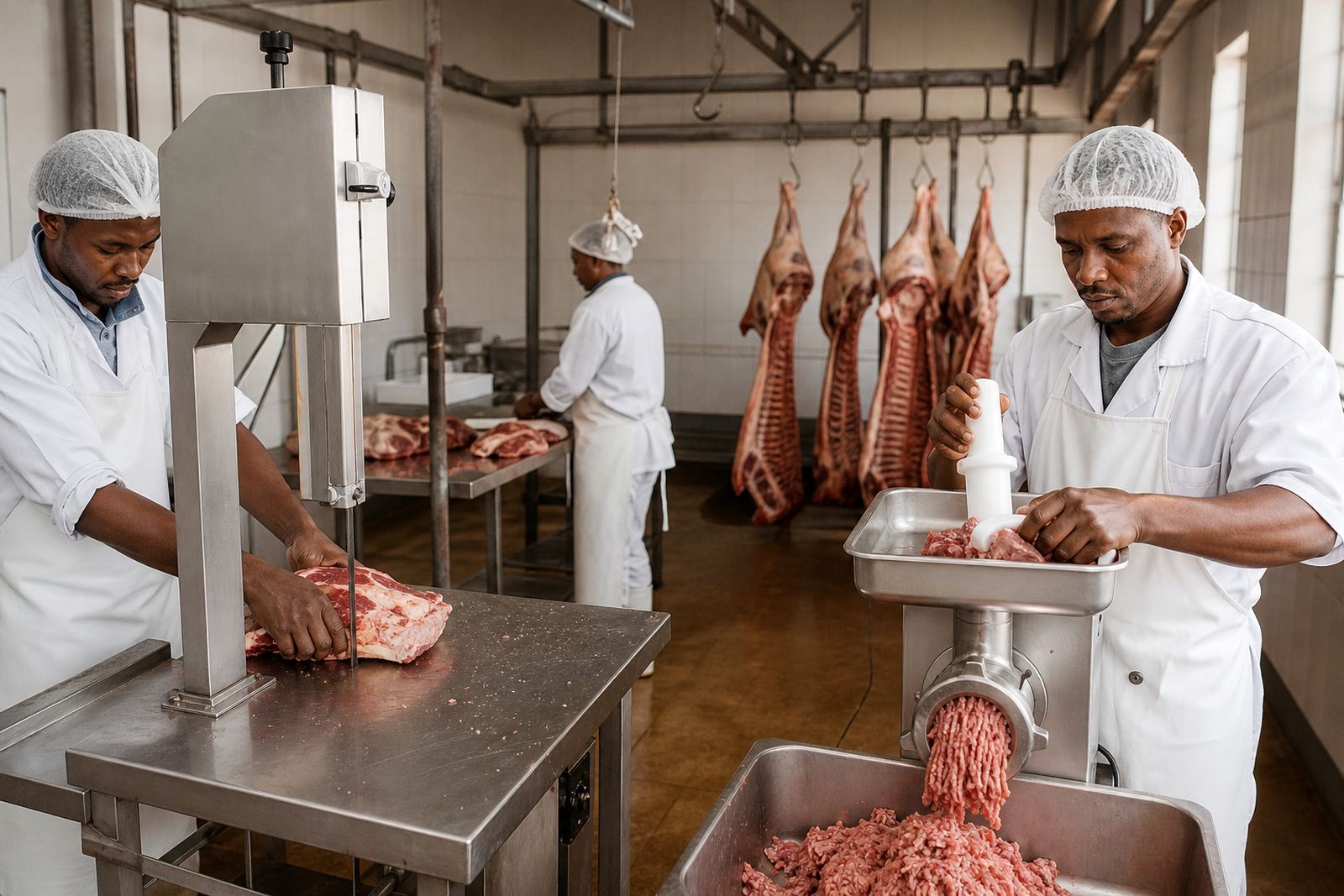
Many sausage lines begin with a bandsaw because the trimming stage is where the batch is shaped. A bandsaw helps break down larger cuts into manageable portions before the meat goes to the mincer. That is useful for shops processing whole cuts, mixed trimmings or case meat that needs to be portioned efficiently.
Safe use matters here. The blade guard should be in place, the table kept clean and the operator trained to feed meat steadily rather than forcing it through. If the bandsaw is used well, the prep team can work faster and with less waste. The goal is not just speed, it is control, cleaner cuts and less strain on staff.
For sausage making in a commercial setting, the saw and mincer should be planned as a pair. The bandsaw handles the breakdown stage and the mincer handles the conversion into usable mince. When both machines are placed sensibly, the whole line feels easier to run and the staff can keep up during weekend trade or seasonal peaks.
Typical equipment set for sausage production
The exact equipment set depends on volume, but most sausage making areas need a basic combination of cutting, mincing, mixing and filling support. The most common mistake is to focus only on the mincer and overlook the surrounding tools that make the work practical.
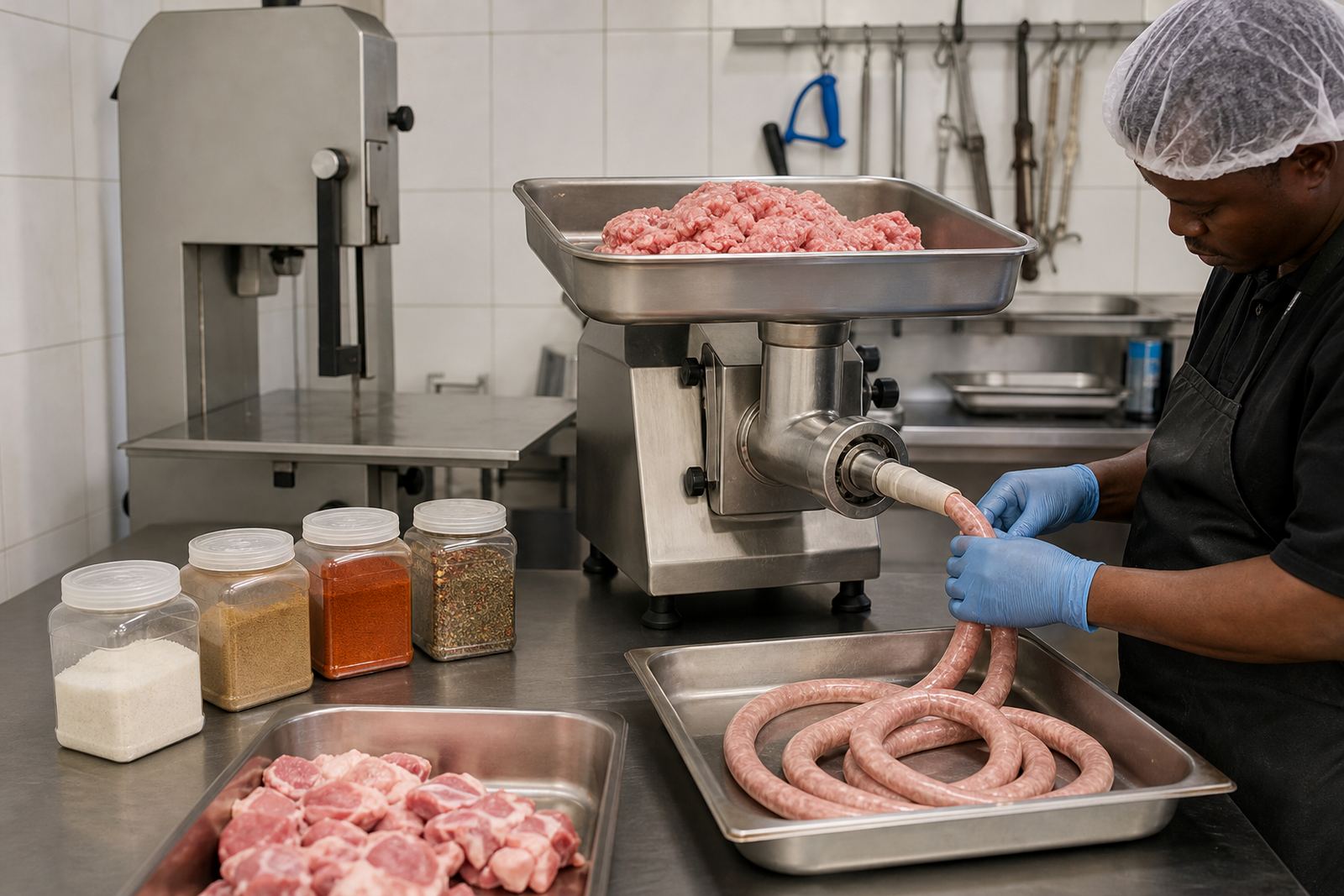
A sensible setup usually includes a bandsaw, a mincer, food safe trays, weighing scales, sharp knives, cleaning tools and a filling method suited to the batch size. Some smaller shops work with hand packing and simple filling attachments, while bigger operations use more structured production steps. Either way, the line should be easy to clean and simple to teach to new staff.
- Bandsaw for trimming and cutting larger meat sections
- Mincer for producing a consistent sausage base
- Tray space for chilled product staging
- Cleaning tools for daily wash down
- PPE such as aprons, gloves and cut protection where needed
Common mistakes that cause waste and delays
In sausage making, small mistakes can become costly very quickly. Overloading the mincer is a common one, especially when staff are trying to push through a rush. That can slow the machine, affect mince texture and put extra strain on parts. Another issue is using blunt blades or worn plates, which often gives an uneven result and more heat build up.
Cleaning mistakes are just as common. Some shops clean only at the end of the day, then find residue has dried onto the plates or around the feed area. It is better to clean in stages, especially when switching between batches. Staff should also be trained not to skip the guard or bypass basic safety habits just to save time. That sort of shortcut usually causes downtime later.
Another area that gets overlooked is batch planning. If the trimming stage does not match the mincing stage, staff end up waiting on each other. Good planning keeps the workflow balanced, which is often the difference between a calm prep room and one that feels like a bottleneck all morning.
Budget ranges and what local buyers usually allow for
Budgeting for sausage making equipment depends on whether you are buying for a home setup, a small butchery or a larger commercial room. A smaller operation may only need to cover one compact machine and basic accessories, while a busier shop may budget for a full prep line, servicing and setup. It helps to think in stages rather than trying to buy everything at once.
As a general guide, many buyers start with a few thousand Rand for entry level support items and move up into a much higher range when they need stronger capacity, installation and ongoing servicing. The actual spend depends on the working load, how often the machine will run and whether the shop wants delivery and setup included. In places like Bloemfontein, Johannesburg, Pretoria, Durban, Cape Town, Kimberley, Welkom and Kroonstad, transport and service planning should also be part of the budget.
For commercial butchery owners, the smarter approach is usually to match the machine to the busiest day, not the quietest one. That way the room keeps working when demand rises and the equipment is less likely to be pushed beyond what it was chosen for.
Support from Hamilton in Bloemfontein to the rest of South Africa
MorCut Butchery is based in Hamilton, Bloemfontein and supports sausage making customers across South Africa with delivery, setup, servicing and practical training. The team works with commercial and home butchers who need help choosing bandsaws, mincers and the right care routine for everyday use. For enquiries, customers can reach the team through the enquiry form on the contact page.
Service support includes installation, blade replacement, plate and knife change, cleaning demonstrations, operator training, breakdown callouts, preventive maintenance and parts supply. That is useful for shops that must keep running through busy weekends, municipal water interruptions or load shedding. When a machine is maintained properly, sausage making stays more predictable and the workday is easier to manage.
The team includes Pieter Johannes van Rensburg, with Lerato Mokoena in sales, Willem Jacobus Smit on service coordination, Ayanda Khumalo in customer support, Morne du Plessis in the workshop, Naledi Sekgobela handling parts and logistics, and Themba Dlamini as training advisor. Local support matters because a sausage room works best when the equipment, the people and the service all line up properly.