
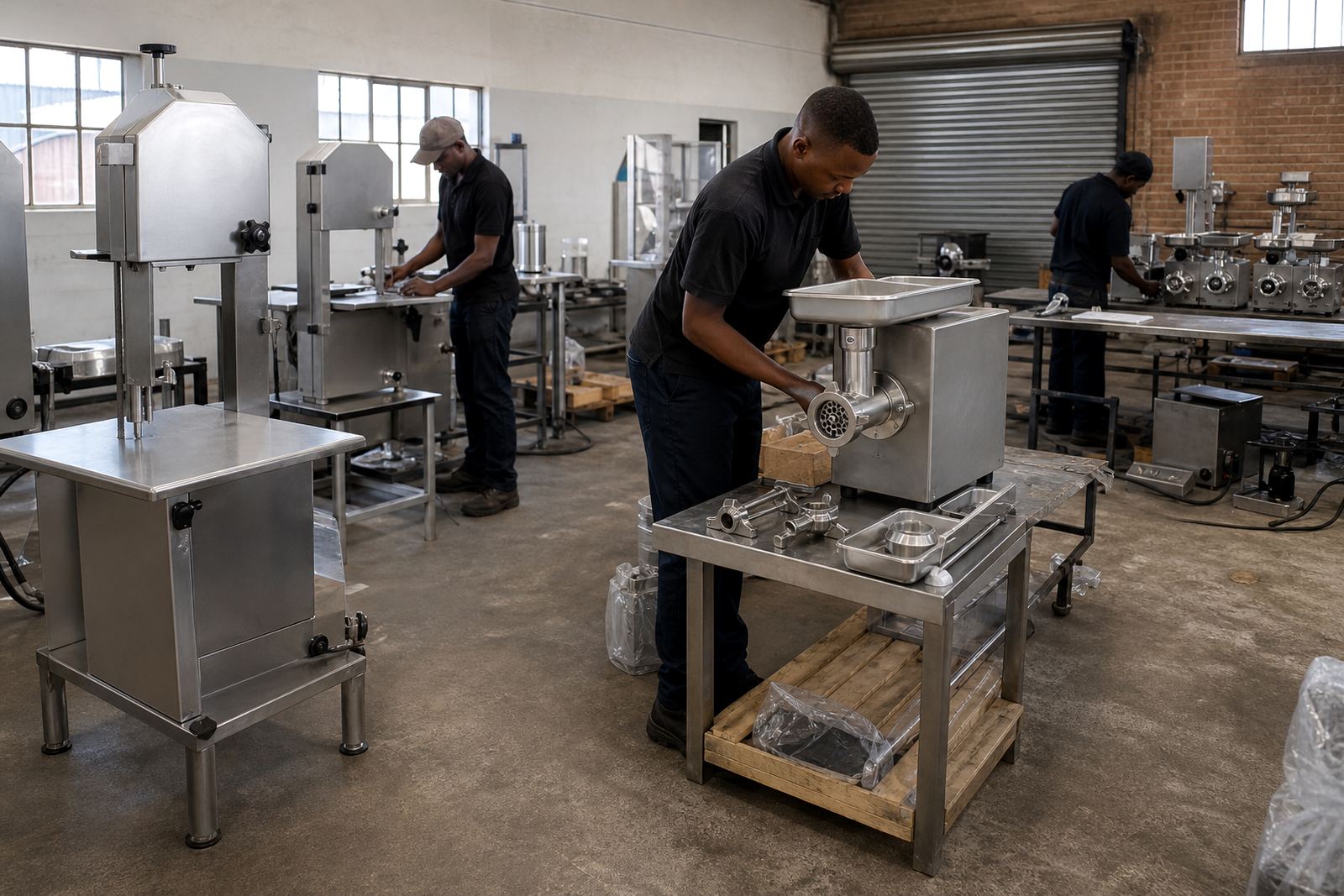
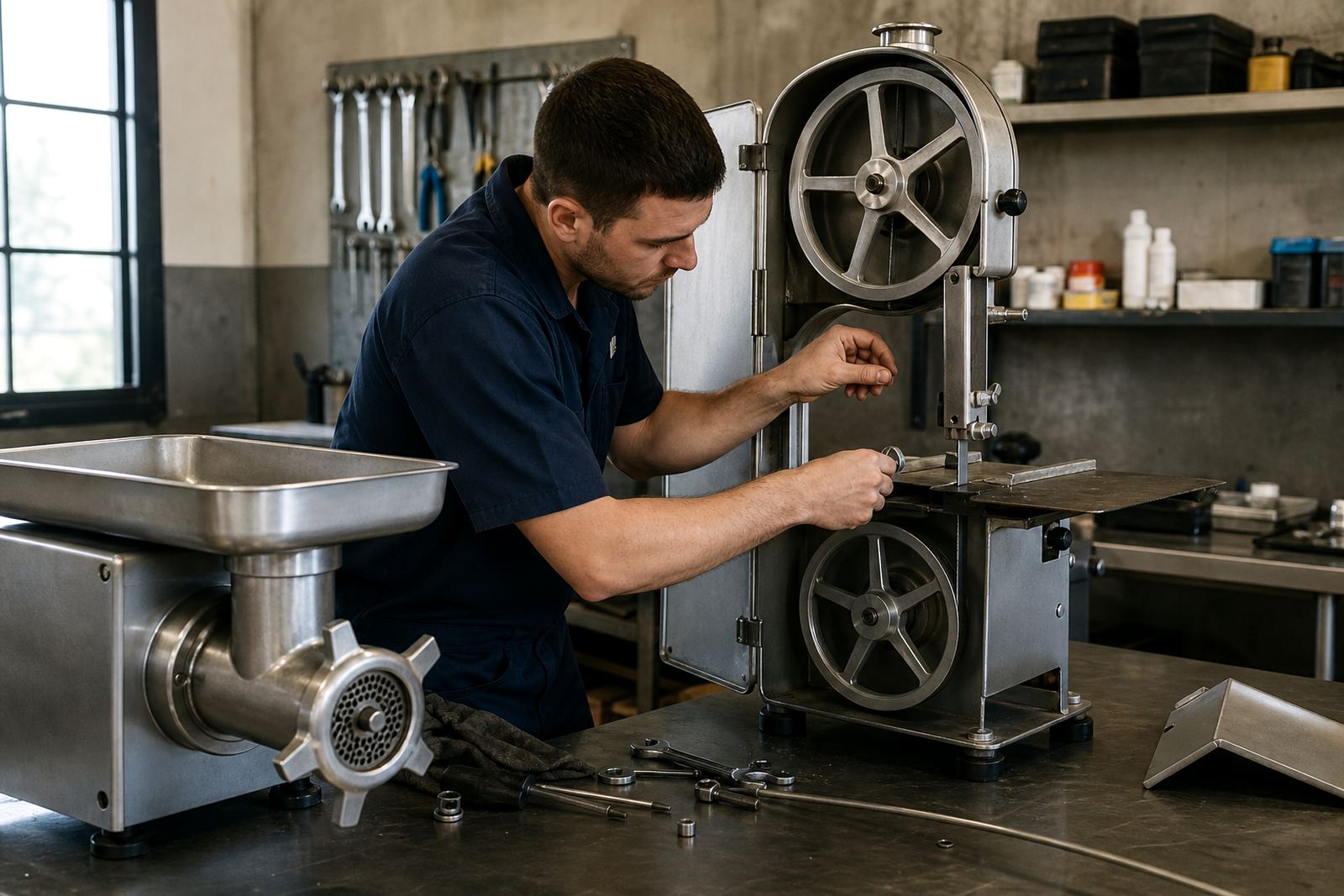
Matching the mincer to burger demand
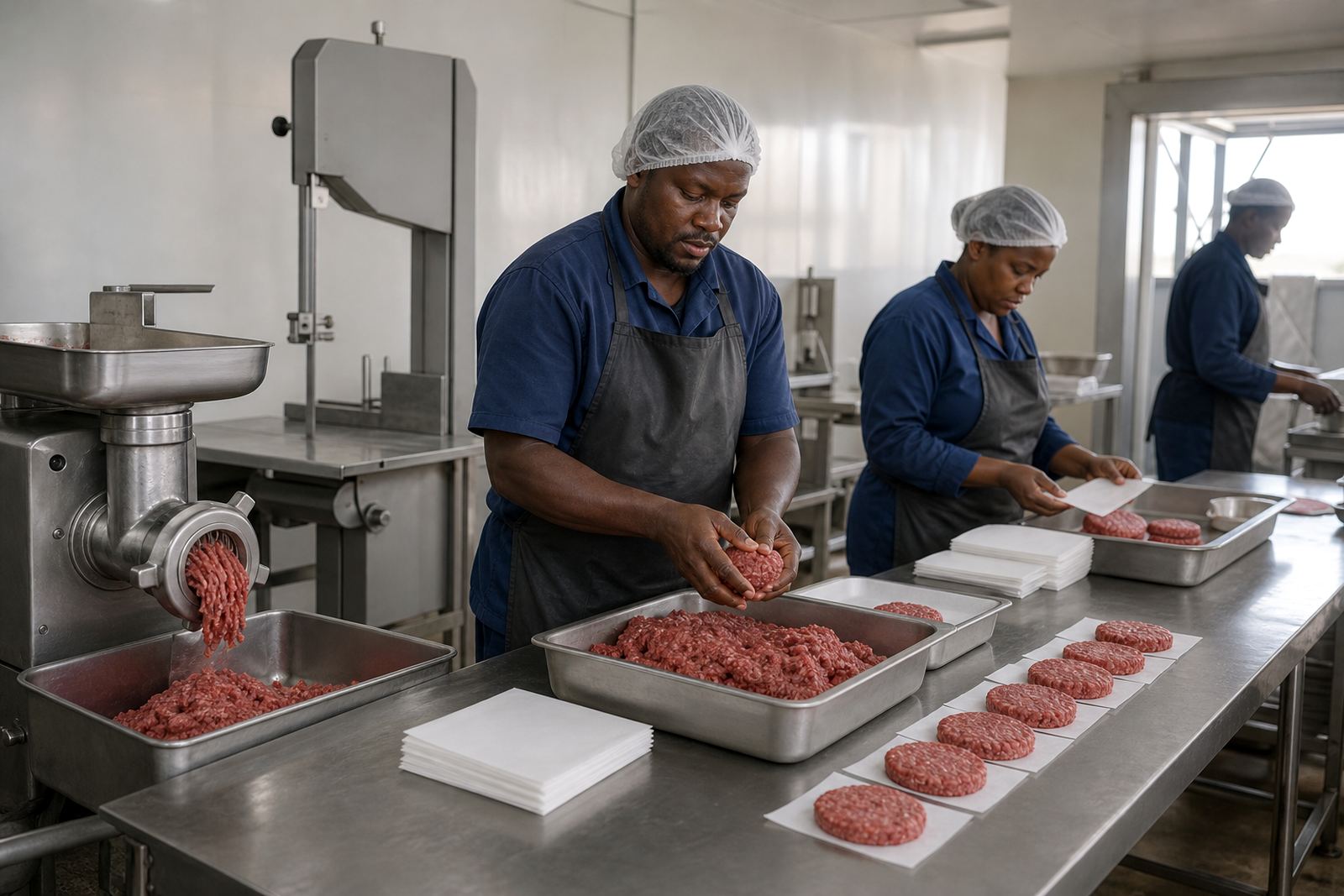
For burger production, the main aim is consistency. Customers want mince that portions well, cooks evenly, and holds its shape once patties are formed. The right mincer setup helps you work in sensible batches without wasting time on repeated passes or unnecessary rework.
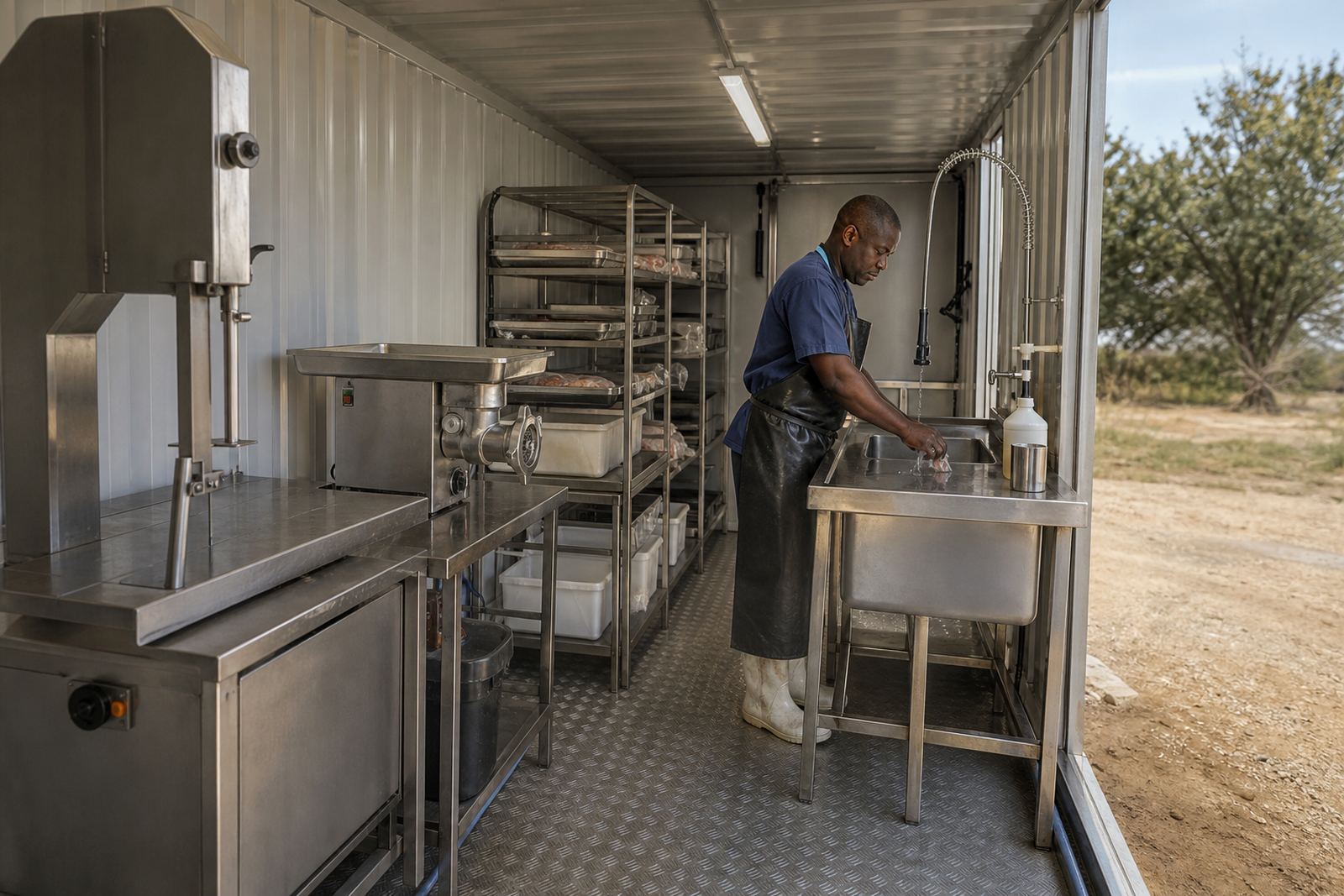
In a commercial butchery, a mincer is usually placed where raw product can move in one direction, from receiving and trimming through to mincing and packing. For home butchers working from a smaller prep area, a simpler layout can still do the job, provided the flow stays clean and the worktop is easy to wash down. In Bloemfontein and across the Free State, that matters even more when load-shedding interrupts the day and you need a plan for prep timing.
We usually advise thinking first about output, not just machine size. A shop doing regular burger packs for local sales needs a different pace from a butchery that grinds for counter mince and made-to-order patties. If the machine is too small for the workload, the operator ends up forcing the feed and the meat warms too quickly. If it is too large for the actual need, you pay more than necessary and may still not use the full capacity.
Typical equipment set for burger mince
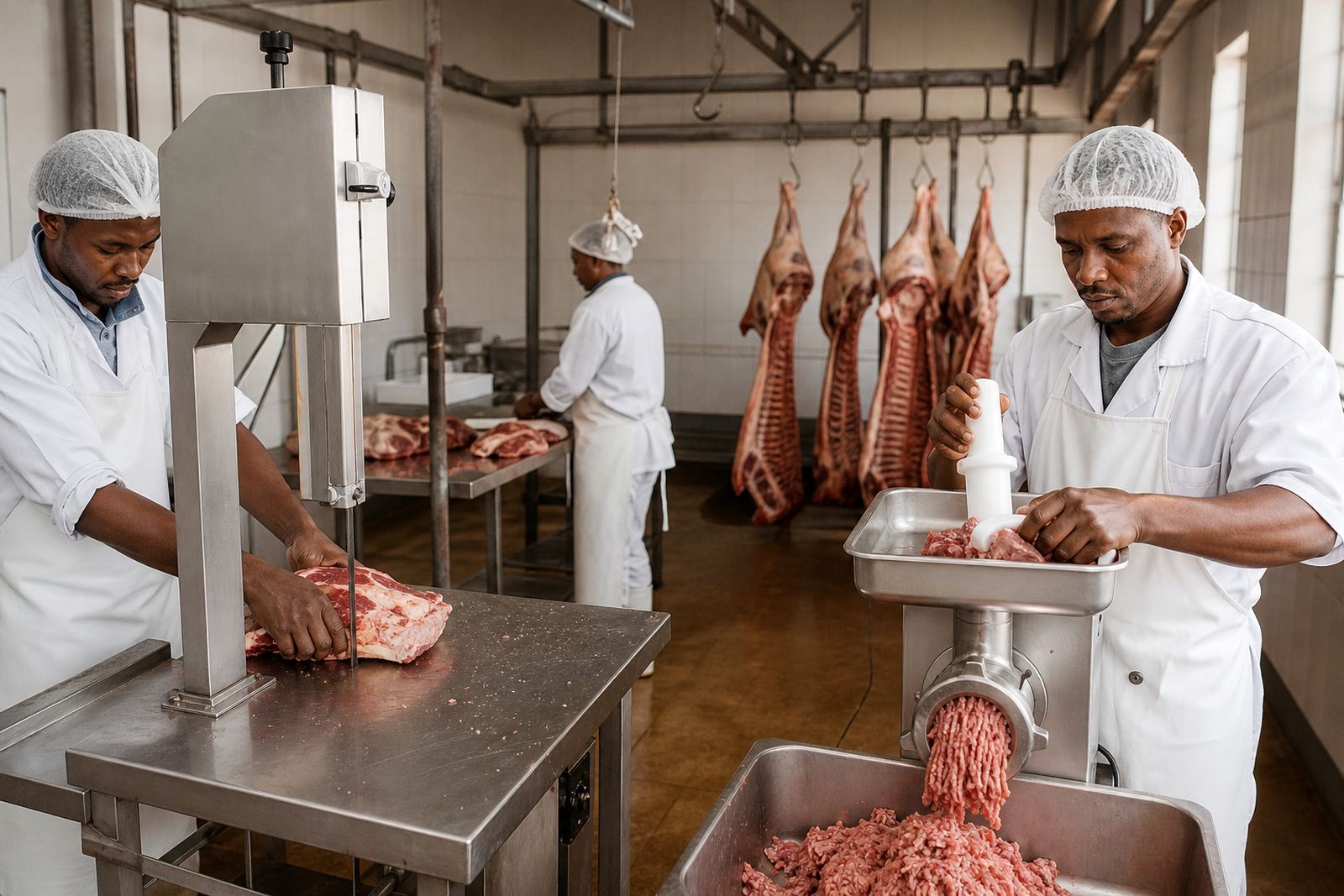
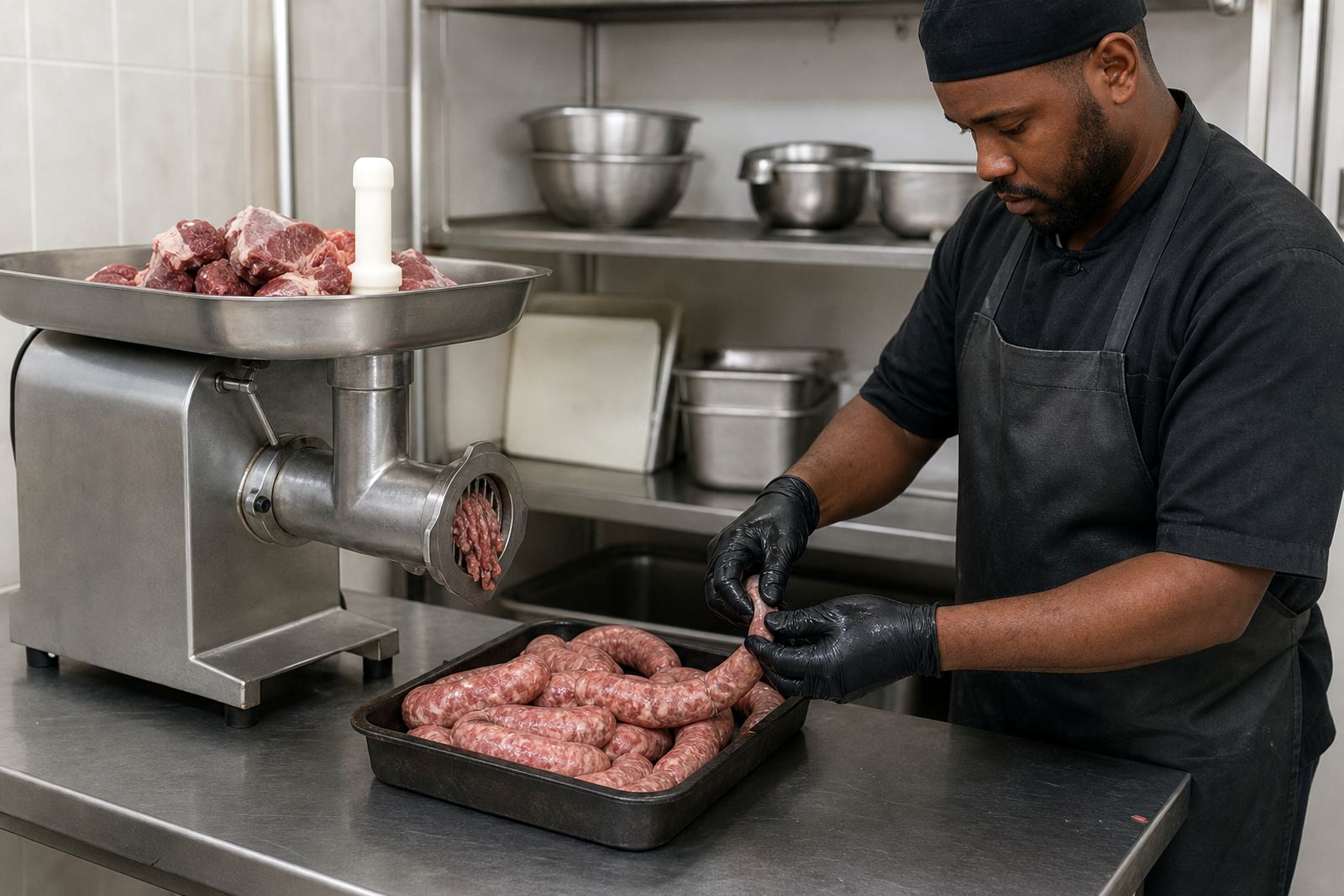
A burger mince area does not rely on one machine only. It works best when the mincer is supported by the right prep gear and a sensible cleaning routine. The exact set will differ from shop to shop, but most burger-focused operations benefit from a clear, simple work chain.
- A mincer suited to the batch size and daily output
- Sharp plates and knives kept in good condition
- Food grade trays or tubs for sorted meat
- A stable stainless steel work surface for prep and packing
- Scales for portion control
- Labels and date marking for stock rotation
- Cleaning tools set aside only for food contact areas
When the work area is planned well, operators spend less time moving product around and more time keeping the product cold and tidy. That is important for burger mince because once fat and meat start to soften, the texture changes and the result can be less predictable. In warmer months, especially in Durban and other coastal areas, extra care is needed with handling times and cleaning between batches.
Layout and planning for a clean workflow
Good burger production starts with a clean line of travel. Raw meat should come in, be trimmed, then move to mincing, weighing, mixing if needed, and packing. A layout that doubles back on itself creates confusion, more handling, and a greater chance of cross contamination. Keep raw product separate from finished packs, even if space is tight.
Plan where the mincer will sit before you decide on the rest of the room. You want enough space around it for safe feeding, easy cleaning, and moving trays without bumping into other staff. Leave room for guards and access panels so the machine can be serviced properly. If the outlet area is cramped, operators tend to stack trays awkwardly and that slows the whole job down.
For butcheries in Pretoria, Johannesburg, and Cape Town, local trading conditions also play a part. Busy retail foot traffic, municipal inspection needs, and stock storage all affect where equipment should be placed. In smaller towns like Kroonstad or Welkom, a simpler layout may work well, but the same rules still apply: keep the path clear, keep the floor dry and keep the washdown routine realistic.
Common mistakes that affect burger quality
Many burger problems come from handling, not from the recipe. A good mincer will not fix poor prep, warm product, or dull cutting parts. The most common mistakes are easy to avoid once the team knows what to watch for.
- Overloading the machine instead of feeding in steady portions
- Using blunt plates and knives that tear rather than cut
- Leaving mince out too long before packing
- Mixing raw and finished product on the same surface
- Skipping cleaning between shifts or batches
- Ignoring small changes in sound, vibration, or output
Operators should also wear suitable PPE and keep hands clear of moving parts. Guards must stay in place and no one should try to clear a jam while the machine is live. If the mince starts to look uneven or the machine sounds strained, stop and check it rather than pushing through. Small faults become bigger breakdowns fast, and that can disrupt a whole day’s production.
Care, cleaning, and service intervals
Regular care keeps burger production predictable. After each use, the machine should be switched off, isolated, and cleaned according to the normal food safety routine. Plates, knives, feed parts and contact surfaces need proper washing and drying before storage. Moisture left behind can cause wear and dullness, and in coastal areas it can speed up corrosion.
Routine servicing matters just as much as cleaning. A mincer that is used often will need checks on drive parts, fasteners, blades, and working condition. For shops with heavy daily use, scheduled maintenance is cheaper than waiting for a breakdown during a Saturday rush. MorCut Butchery assists with servicing, parts supply, blade replacement, plate and knife change, and cleaning demonstrations so the team knows what good care looks like.
Where there are staff changes, training helps keep standards steady. A fresh operator may know how to switch on the machine but not how to judge feed rate, cleaning timing, or safe shutdown. That is where simple, practical training saves time and product.
Budget ranges in Rand for burger production setups
Budgets vary according to output, how often the machine runs, and whether the shop needs one unit or a full prep area setup. For burger production, it is best to think in ranges rather than one fixed price. A smaller setup for home butchery use will usually cost less than a commercial unit intended for daily retail or wholesale work.
As a working guide, a basic burger mince setup can start from a modest entry-level range, while a heavier commercial arrangement with installation, setup, and extra parts will cost more. Many customers also allow room in the budget for servicing, spare plates and knives, and training. That helps avoid hidden costs later on.
- Entry-level setups for smaller volumes
- Mid-range setups for regular shop production
- Higher-budget setups for steady commercial output
- Ongoing costs for cleaning supplies, service, and wear parts
Delivery and setup can be arranged from Bloemfontein to Johannesburg, Pretoria, Durban, Cape Town, Kimberley, Welkom, and Kroonstad. If you are planning a burger production line or changing an existing one, it helps to speak through the full process first so the machine, space, and budget all line up properly.