

What Community Co-operatives Usually Need From Shared Equipment
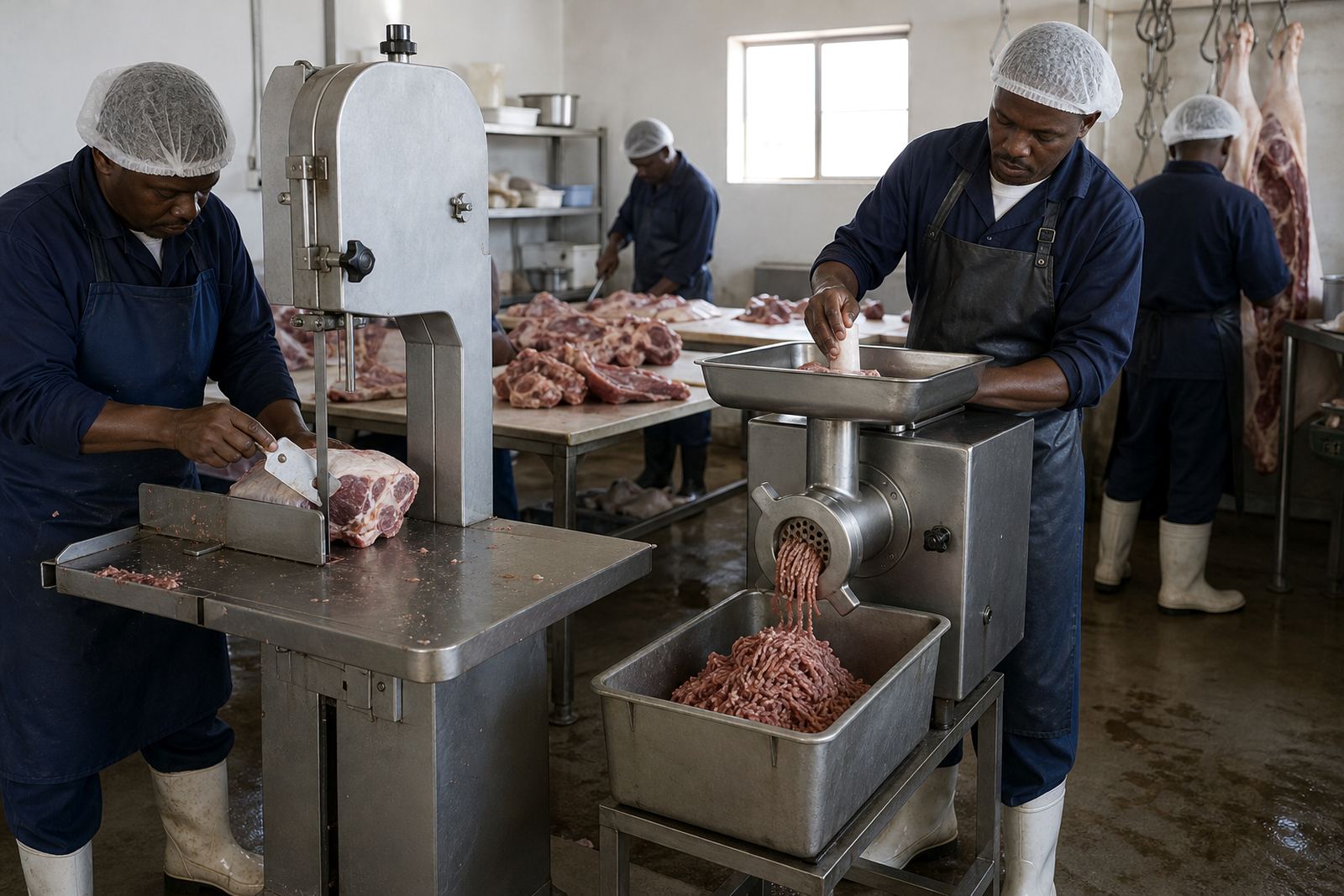
A community co-operative often works with one or two main products, then adds more as demand grows. In Bloemfontein, Kimberley, Welkom and Kroonstad, the same room may serve members on different days, so the equipment has to be easy to share, clean and maintain. A bandsaw is normally used for controlled cutting of meat, bones and primal portions, while a mincer supports minced beef, sausage filling and mixed retail packs.
The main challenge is not only buying the right machines, but also setting up a workflow that keeps people moving safely. Shared spaces need clear rules for who switches the power on, who cleans what, and where product is stored between jobs. If that part is missed, even a good machine can become a problem.
- Choose equipment that suits the volume of the co-operative, not just the busiest week
- Allow for cleaning time between users and between different meat types
- Keep guards, blades and moving parts easy to inspect before each shift
- Plan for operator training from day one, not after the first breakdown
Typical Setups For Small To Medium Shared Meat Rooms
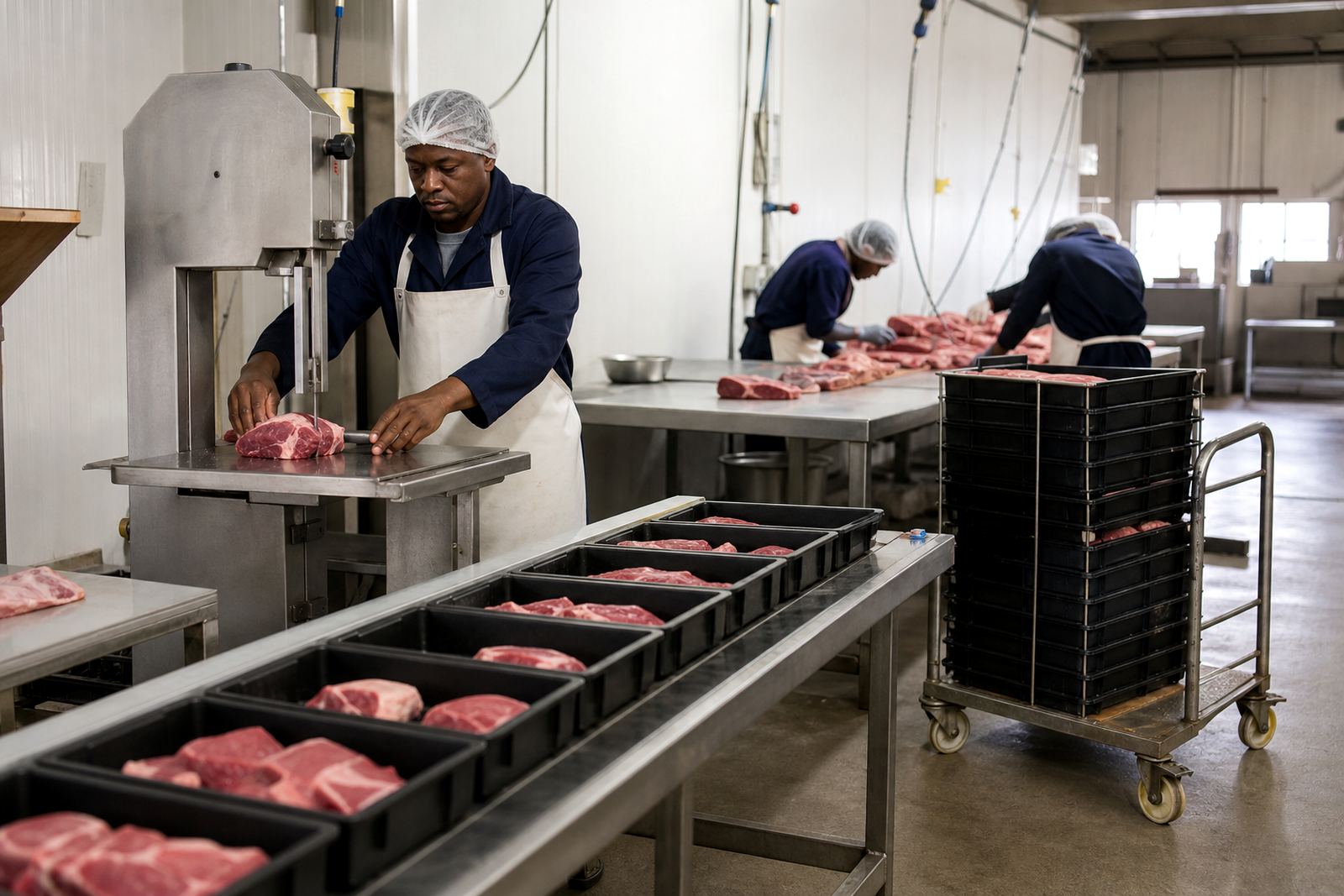
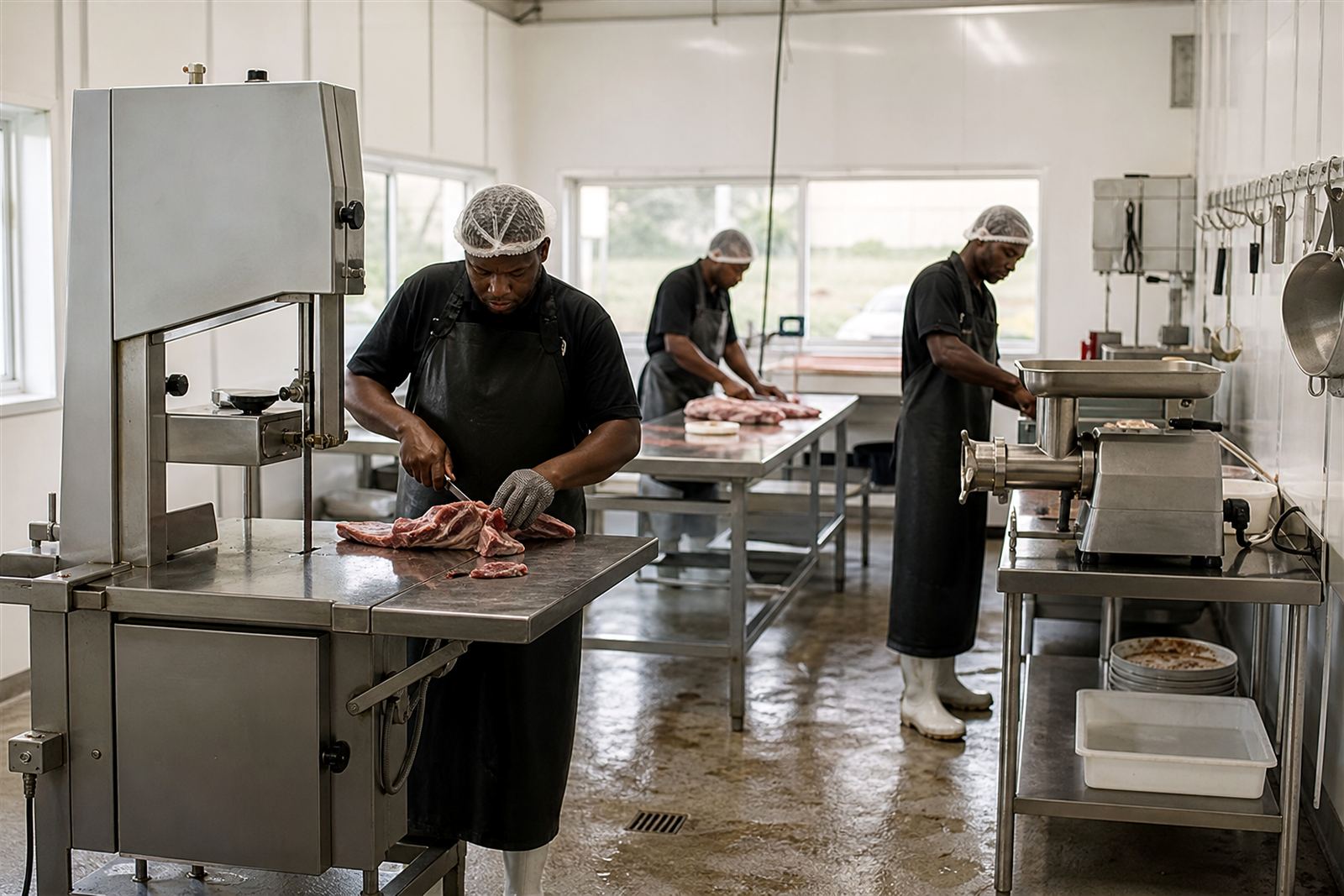
A lean setup for a co-operative usually starts with a bandsaw, a mincer, a solid prep table, wash-up area and enough chilled space for raw product. Some groups also need a separate packing table, a foot-operated bin and a dedicated handwash basin. In larger areas such as Johannesburg, Pretoria, Durban and Cape Town, the room often has to handle more traffic and stricter municipal expectations, so the layout should keep raw and finished product apart.
Many co-operatives try to run everything from one corner of a room. That can work for a short time, but it often leads to crowding, wet floors and poor cleaning access. It is better to place the bandsaw where operators can load and unload safely, then keep the mincer close to prepared meat and away from the main foot path. If the room is near the coast, extra attention should be given to corrosion, moisture and daily wipe-downs.
- Set the bandsaw in a stable position with enough space around it for loading and cleaning
- Keep the mincer close to prep space so meat does not travel far across the room
- Use separate zones for receiving, cutting, mincing, packing and washing
- Leave space for bins, detergents, spare blades and PPE without cluttering the floor
Layout Advice That Makes Shared Use Easier
Good layout planning reduces waiting time and mistakes. For a co-operative, that matters because different members may use the same equipment on different shifts. The room should be arranged so that one person can clean while another prepares packaging or product records. This is where a small change in table position can save a lot of time over a month.
Power points, drainage and lighting should be checked before the machines arrive. In some Free State towns, load-shedding planning is part of the picture, so the co-operative may need a clear shutdown routine and a practical restart process. The team should also think about how product is moved in and out of the room, especially if the building has narrow doors or uneven floors.
Co-operatives also benefit from clear signage for handwashing, blade handling and PPE use. Aprons, gloves, eye protection and cut-resistant practices should be standard. It sounds simple, but shared rooms often lose discipline when people assume someone else has already done the cleaning or checked the guard.
Common Mistakes We See In Co-operative Projects
The most common mistake is buying equipment before agreeing on the operating rules. Another is underestimating how much cleaning and maintenance a shared room needs. A bandsaw and mincer can serve a co-operative well, but only if members know who is responsible for daily checks, blade changes, plate and knife changes, and first response during a fault.
Some groups also try to save money by skipping setup support. That usually leads to poor placement, unsafe cord runs, or a machine that is difficult to clean properly. It is cheaper to plan the room once than to move everything after the first month. A small typo in the cleaning rota can even cause confusion, so written steps should be kept simple and clear.
- Do not run shared equipment without clear cleaning and sign-off routines
- Do not place machines so close together that operators bump shoulders or block exits
- Do not forget spare parts and consumables in the monthly budget
- Do not leave one person to carry all servicing knowledge for the whole group
Budget Ranges In Rand For Co-operative Planning
Budget planning depends on the scale of the project, the condition of the room and whether the co-operative needs installation, training and ongoing servicing. For a modest start-up or a smaller shared room, equipment and setup planning may begin in the lower tens of thousands of Rand, depending on the mix of machines and the amount of preparatory work needed. A more active co-operative with better finishing, more support items and routine maintenance planning will usually need a higher budget.
It is wise to set aside money for delivery, setup, blade or cutting part replacement, cleaning supplies and a service reserve. In practice, many groups forget the cost of training and call-outs until later, then the room has to stop while someone is brought in. A sensible budget also allows for replacements that happen over time, because shared use puts pressure on moving parts and cutting components.
MorCut Butchery works with co-operatives that want straight answers on what is needed now and what can wait for later. That kind of planning helps keep the business practical, especially when the group is serving local customers in townships, farming areas or smaller commercial centres across South Africa.
Servicing, Training And Ongoing Care For Shared Machines
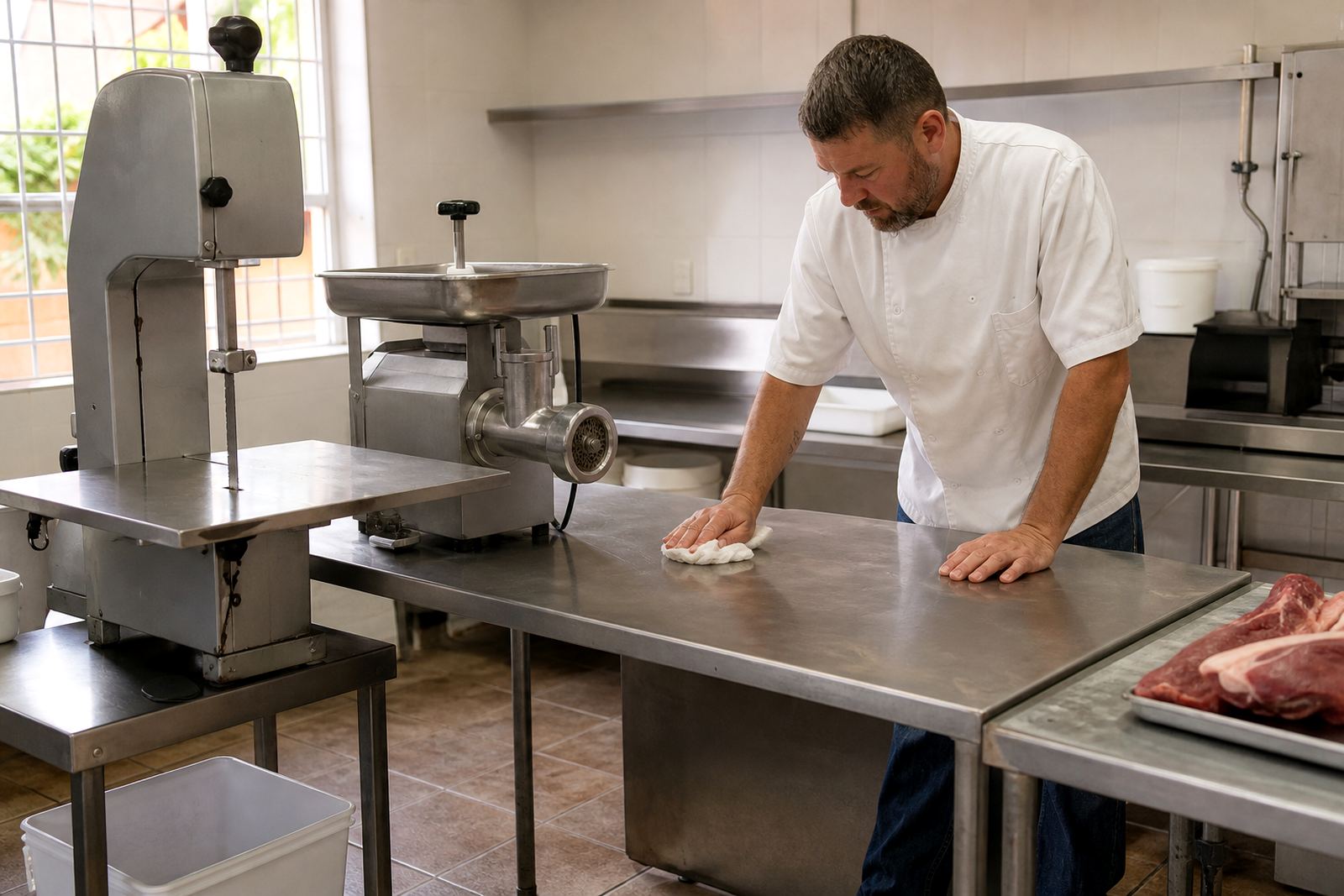
Shared machines last longer when the whole group follows the same care routine. That means cleaning after every shift, checking guards before use, and keeping the blade or cutting parts in good condition. A proper servicing schedule also helps spot wear before it turns into downtime. For a co-operative, even one day lost can affect orders and trust with customers.
We support co-operatives with bandsaw installation, mincer installation, servicing, cleaning demonstrations, operator training, breakdown callouts, preventive maintenance, parts supply, delivery and setup. From Hamilton in Bloemfontein, we assist businesses in Bloemfontein, Johannesburg, Pretoria, Durban, Cape Town, Kimberley, Welkom and Kroonstad. The aim is practical support that fits the way your team works, not a one-size-fits-all approach.
- Clean and dry machines properly after use to reduce wear and food residue build-up
- Keep operator training current so new members use the equipment safely
- Book servicing before a fault stops production
- Store spare parts and consumables where the whole team can access them quickly