

a leading make meat work starts with the right cutting flow
When a game carcass comes in, the work is often different from ordinary beef or lamb handling. Cuts can be denser, shapes can vary and trimming is usually more detailed, so the work area must be planned around safe cutting, quick cleaning and steady movement from one task to the next.
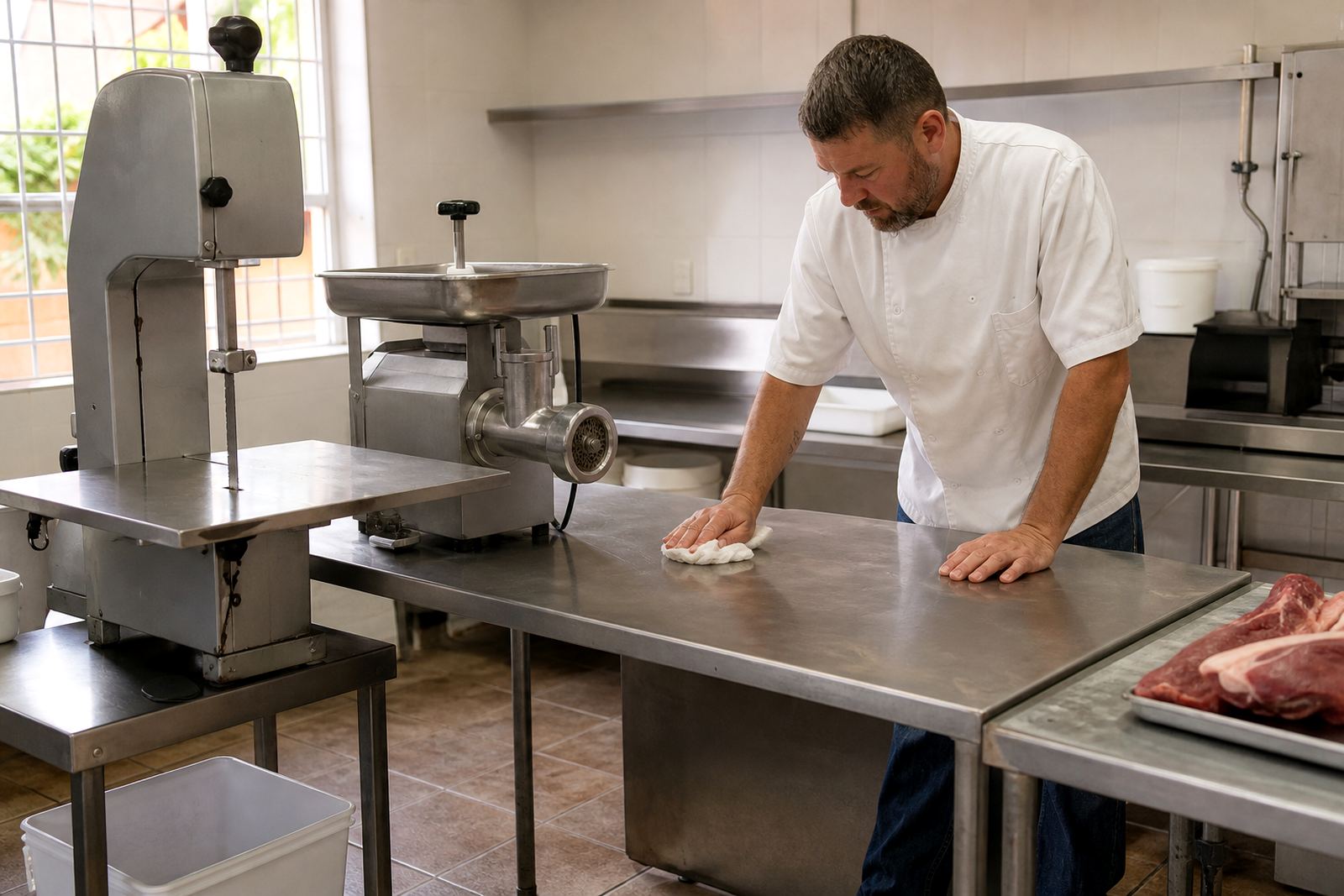
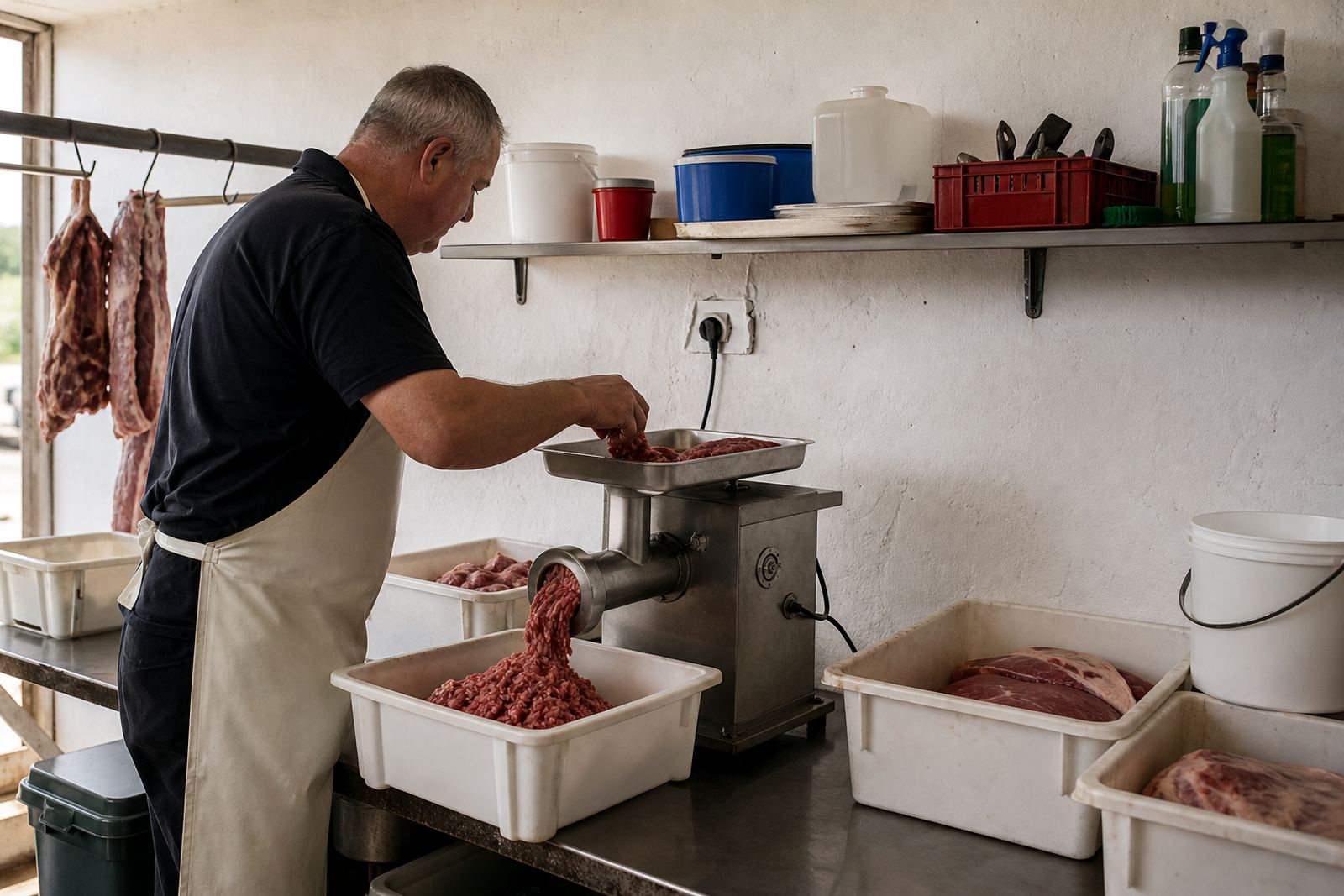
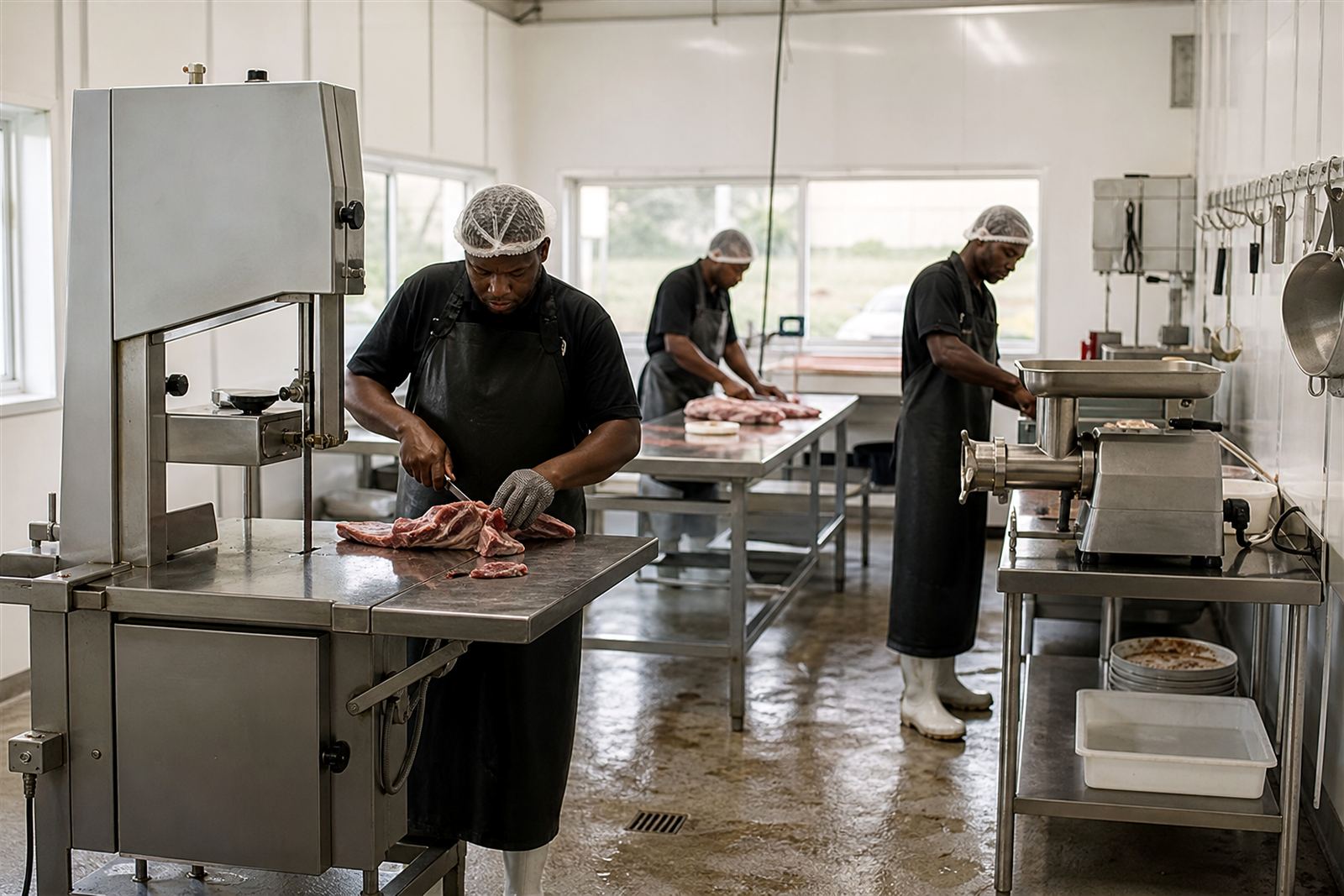
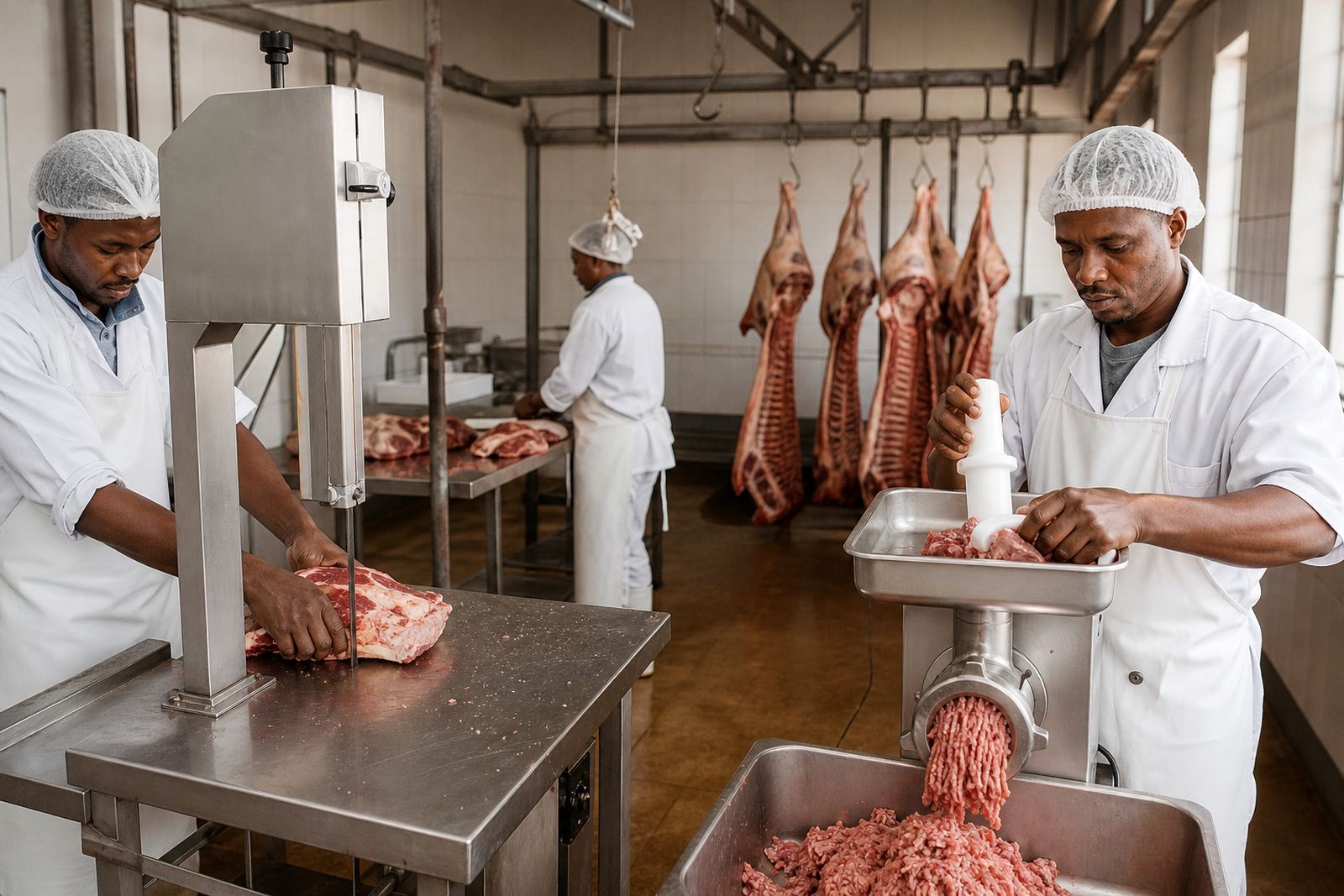
For many operations in Bloemfontein and surrounding Free State towns, the biggest issue is not only buying the right equipment but placing it properly. A bandsaw is used for breaking down larger sections cleanly, while a mincer handles trim and mince preparation after the boning and trimming stage. If the flow is poor, the team slows down, the floor gets cluttered and the cleaning job becomes harder at the end of the day.
a leading make processing also benefits from practical layout thinking. Keep cutting, trimming and mince preparation separated where possible, with enough space for trays, bins and wash-up. In hot weather, and with load-shedding in mind, you want a setup that still works when the day is long and the power is not always steady.
Typical equipment set for game processing rooms
Most game meat rooms do not need a complicated setup. They need dependable equipment that is easy to clean, simple to operate and suited to the volume coming through the door. A sensible starting point often includes a bandsaw, a mincer, a clean prep table, waste bins, sharp hand tools and proper wash-down points.
- Bandsaw for carcass breakdown and portion cutting
- Mincer for trim, mince and mixed product preparation
- Sturdy work table for sorting and trimming
- Blade and plate care tools for routine maintenance
- Cleaning supplies and PPE for daily hygiene control
For home butchers and small hunting lodges, a more compact arrangement may be enough. For commercial game processors, butcheries and farm shops, the work usually calls for better throughput, a planned cleaning route and more attention to operator training. The aim is not to overcrowd the room, but to keep the process orderly from the first cut to final pack-off.
Planning the room around safety and cleaning
a leading make processing rooms need to be easy to wash down and quick to reset after each session. Surfaces should be placed so that blood, fat and trim do not build up in corners, and drainage should not be left to chance. In many Free State premises, a practical layout saves more time than fancy fittings ever will.
Safety matters every day. Bandsaws should be used with guards in place, and the operator should keep hands clear and follow proper feeding technique. Mincers also need care, because people often rush the cleaning step and forget how important it is to switch off, isolate power and handle the plates and knives correctly. PPE such as aprons, gloves and slip-resistant footwear should be standard on the floor.
- Place the bandsaw where stock can enter and leave without crossing clean areas
- Keep the mincer near the trimming station to reduce carrying and drips
- Allow enough room for the operator to move safely around each machine
- Plan for easy access to cleaning points, drains and spare parts
Common mistakes we see in game processing setups
One of the most common mistakes is buying equipment before the room plan is settled. If the machine is too large for the space, cleaning becomes awkward and people start working around the problem instead of with a proper flow. Another issue is trying to use one machine for every task, which can create delays and unnecessary wear.
We also see poor maintenance habits. Blades go dull, plates and knives are left unserviced, and cleaning is rushed after a busy day. That is where breakdowns start. A small problem ignored during peak season can become a full stoppage just when the game meat is arriving fast. Careful daily cleaning, regular checks and prompt blade replacement are part of keeping the operation moving.
For premises in humid coastal areas like Durban or Cape Town, cleaning and drying routines matter even more. For inland sites in Bloemfontein, Kimberley or Welkom, dust and power interruptions are often the bigger issue. Each location needs its own practical plan.
Budget ranges for game processing equipment
Budget depends on the size of the operation, the condition of the room and whether you are buying new equipment, arranging installation or adding servicing and parts. A home butcher starting with game processing may work within a smaller budget, while a busy commercial setup with delivery, setup and training will need more room in the budget.
As a general guide, plan for a bandsaw and mincer package from entry level to higher duty ranges, with extra cost for delivery, installation, blade replacement, preventive maintenance and operator training. Many buyers also forget to allow for the first round of cleaning supplies, spare parts and safety items. It is usually better to budget properly at the start than to cut corners and pay for downtime later.
Across South Africa, from Bloemfontein to Johannesburg, Pretoria, Durban and Cape Town, the real value comes from choosing equipment that suits the workload and can be kept in good order. That includes servicing, parts support and advice on how to use each machine correctly.
Support for operators, workshops and growing businesses
MorCut Butchery works with commercial and home butchers, game processors and small food businesses that need practical support. Based in Hamilton, Bloemfontein and founded in 2008, the team can assist with delivery and setup, servicing, breakdown callouts, preventive maintenance, parts supply and training for safe day to day use.
For game processing work, that support is often what keeps a room productive through busy periods. Whether the need is a new installation, a blade change, a mincer service or a cleaning demonstration, the aim is to keep the workflow steady and the equipment in proper order. Clients can use the enquiry form on the contact page to start the conversation and plan what the site actually needs.
The team includes Pieter Johannes van Rensburg, Lerato Mokoena, Willem Jacobus Smit, Ayanda Khumalo, Morne du Plessis, Naledi Sekgobela and Themba Dlamini, each focused on a different part of the process from sales and support to workshop work and training.