

What Farm Processing Usually Needs on the Floor
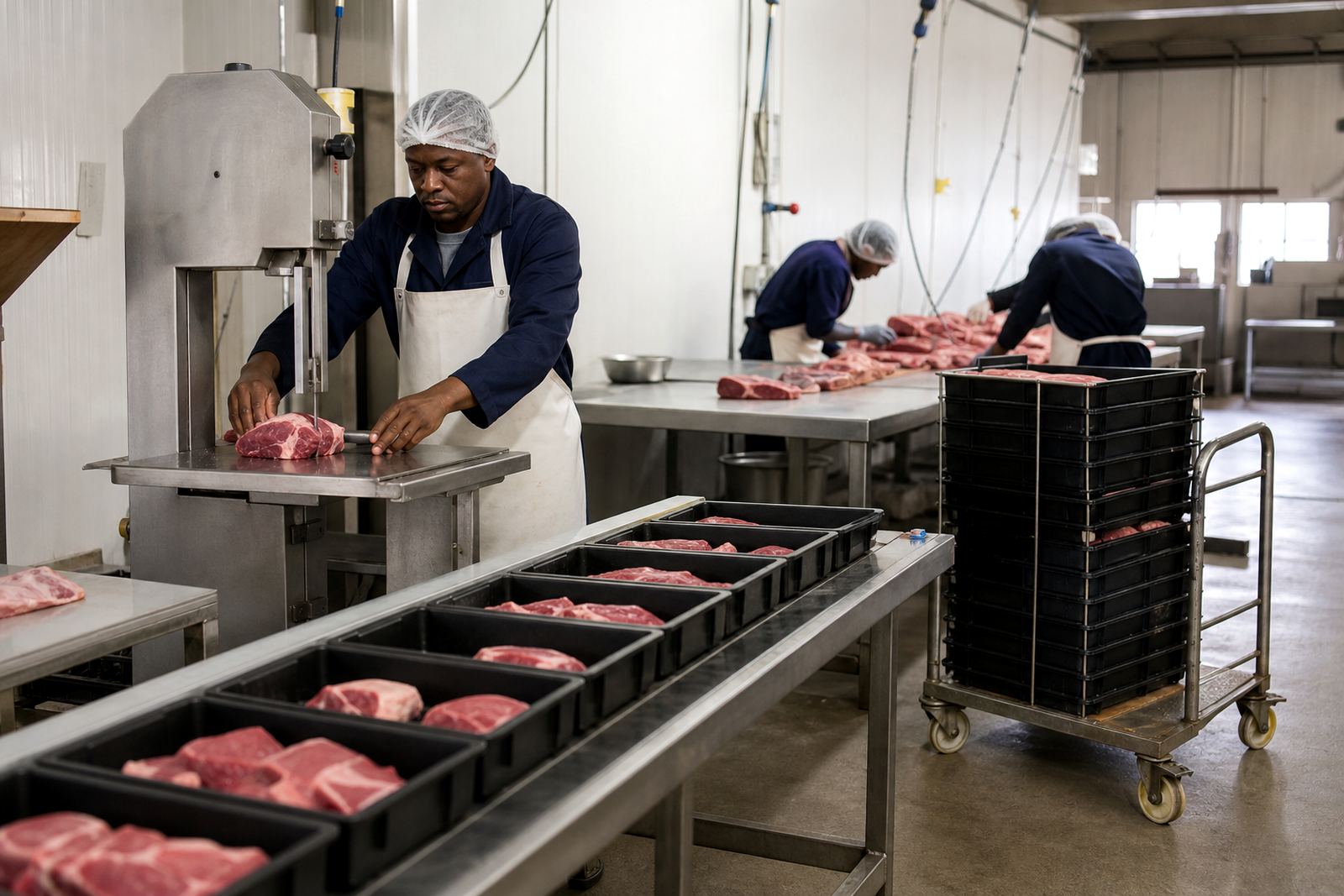
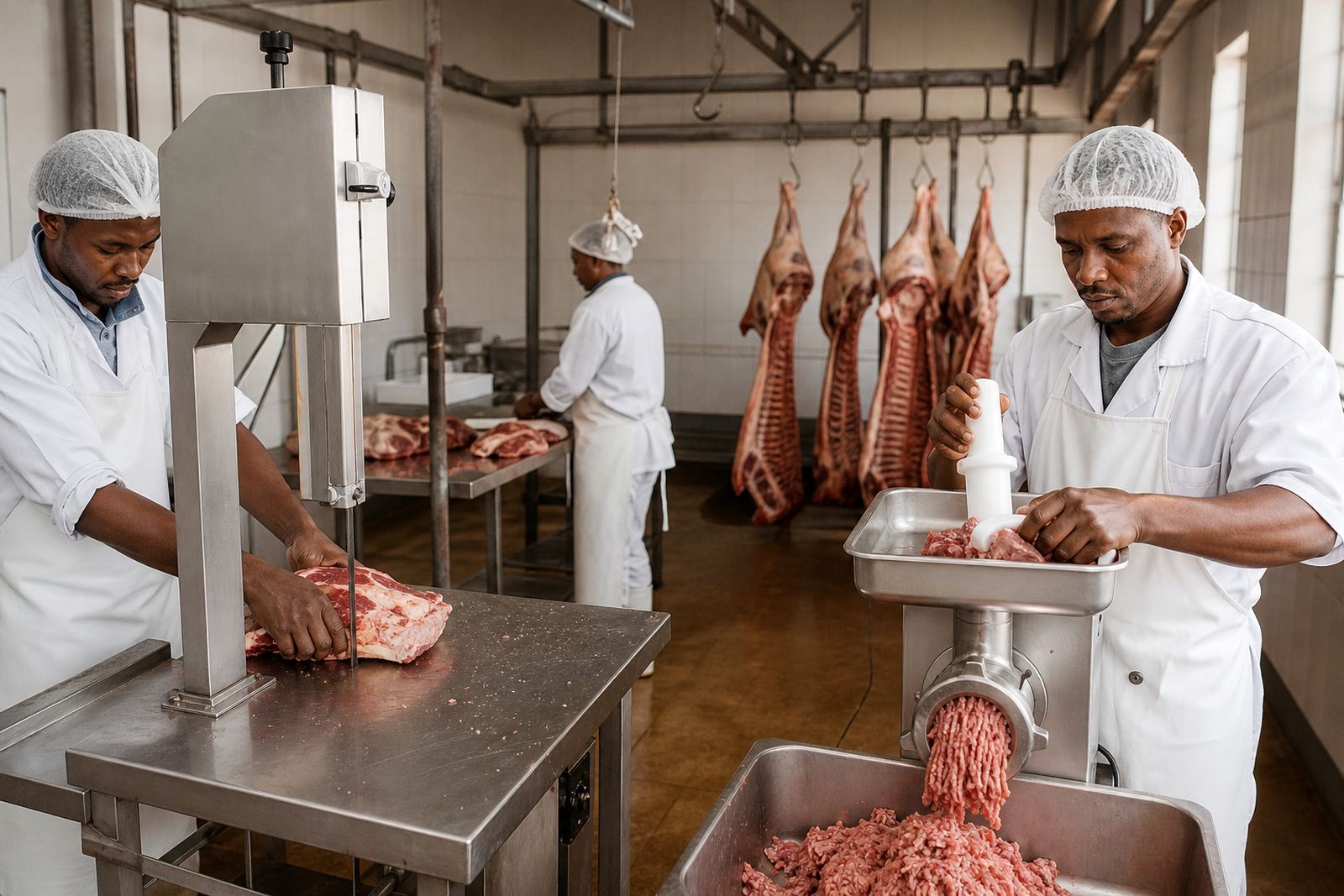
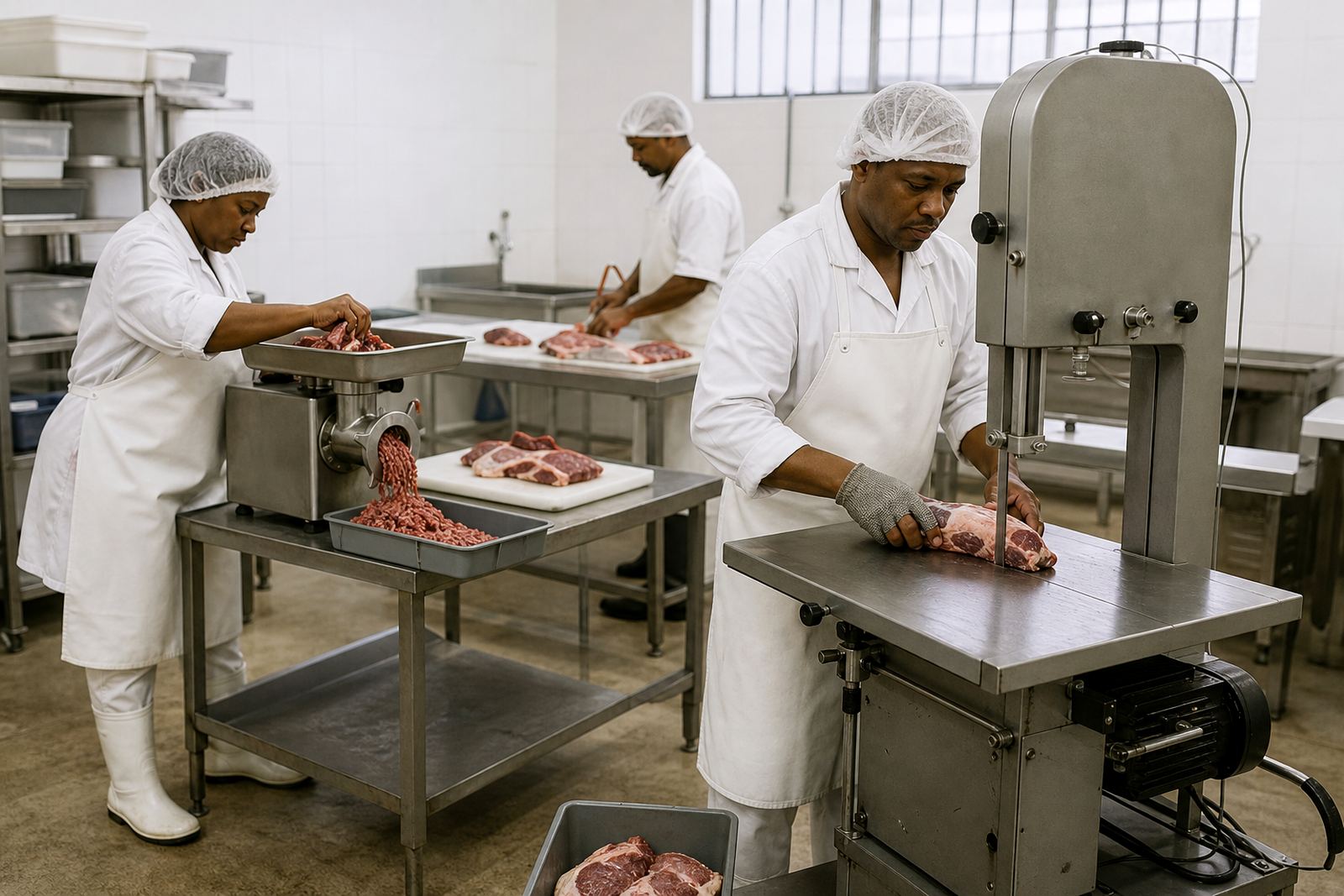
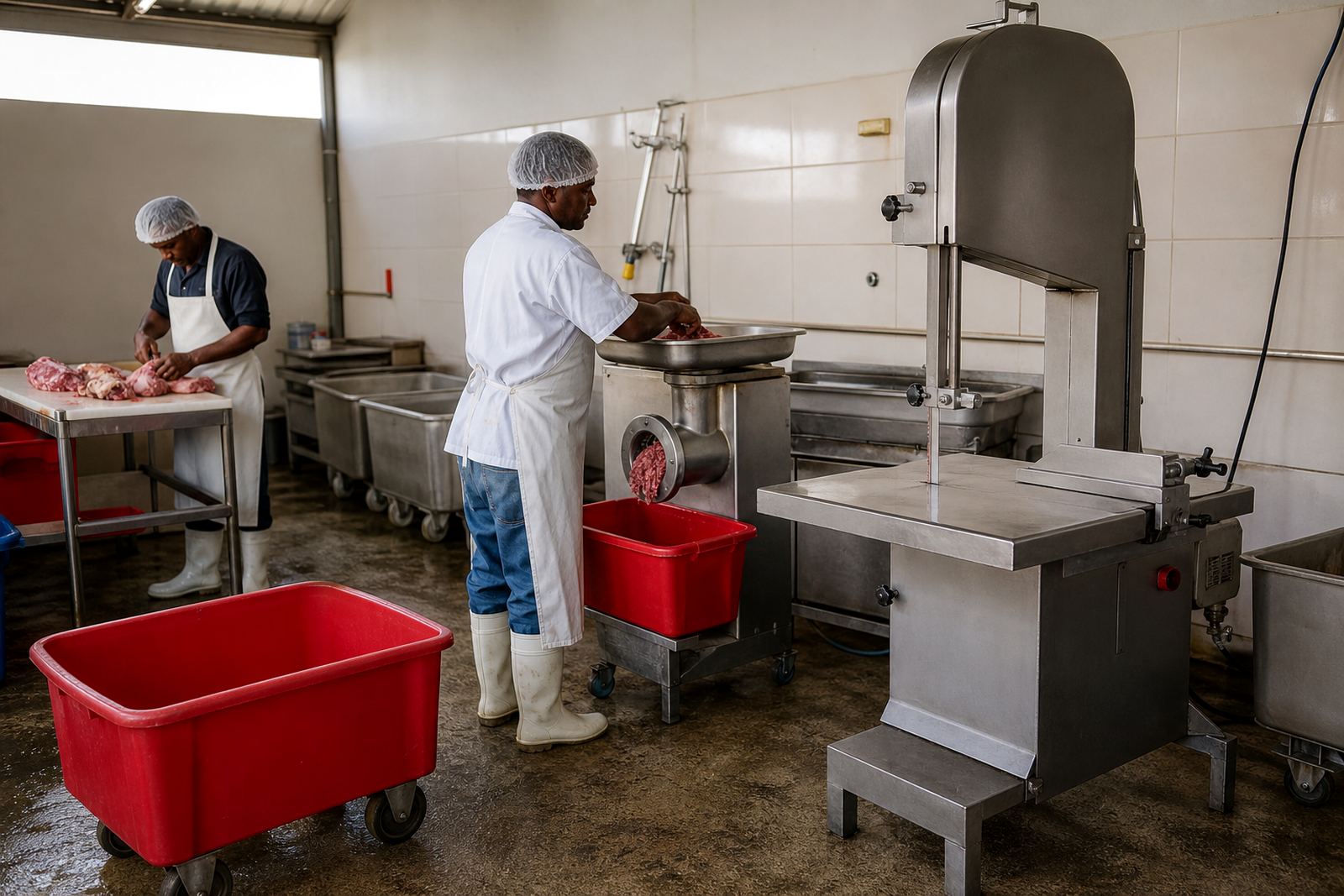
On a farm, meat preparation is often done in a smaller room or packing area that has to do a lot of jobs at once. A typical setup may include a bandsaw for cutting carcasses and portioning bones, and a mincer for preparing mince, burger mixes or trimmings for further packing. The right arrangement depends on how many animals are processed, how often the room is used, and whether the work is for home use, a farm stall, or regular supply into town.
In and around Bloemfontein, many farms need equipment that can handle dust, heat, load-shedding and water use that is practical rather than fancy. Good planning starts with flow. Meat should move from receiving to cutting, then to trimming, mincing and packing with as few backtracks as possible. That helps keep the room cleaner and makes the work quicker for one person or a small team.
- Use a bandsaw where bones and larger cuts need accurate sectioning
- Use a mincer where trim, sausages or burger packs are part of the workflow
- Keep the clean side and raw side clearly separated where possible
- Plan for safe power points and easy access for cleaning
Choosing the Right Bandsaw and Mincer Combination
Not every farm needs the same set of machines. Some clients only need a compact bandsaw for cutting through carcass portions and a small mincer for occasional use. Others need a heavier-duty setup for regular sale packs, boerewors prep, or work that supports a farm shop. The main point is to match the machine to the daily load, not just the purchase price.
When we look at a farm processing room, we consider space, cleaning access, the people using the equipment and the type of product being handled. A bandsaw should be easy to position, stable on the floor, and fitted with working guards. A mincer should be simple to strip down for cleaning and not awkward to feed or clear. If the room is near refrigeration, it also helps to plan for condensation and slippery floors, especially in colder mornings or coastal conditions when equipment is moved between areas.
- Choose a machine size that suits your actual throughput
- Make sure guards, switches and access points are easy to reach
- Allow enough bench or table space for sorting and packing
- Keep cleaning and maintenance access in mind before final placement
Layout Advice for a Clean and Practical Farm Room
A practical room does not need to be large, but it must be arranged sensibly. The bandsaw is best placed where the operator can work without bumping into the packing area. The mincer should sit close to trim prep and weighing, but not so close that raw material gets mixed up with finished packs. If the room is part of a farm store or outbuilding, it is worth thinking about drainage, lighting and airflow before the equipment goes in.
Good layout also reduces strain on the team. Heavy lifting should be kept short and direct. Wet cleaning areas need non-slip floors and a way to remove waste water without creating a mess outside the room. In towns and rural areas alike, it is also wise to check local rules around effluent, waste removal and food handling. A small room that is easy to clean will always work better than a bigger room that is badly organised.
- Place the bandsaw where carcass movement is shortest
- Keep the mincer close to the trimming and packing point
- Leave space for bins, trays and cleaning tools
- Fit proper lighting so blade work and trimming can be seen clearly
Common Mistakes We See on Farms
One common mistake is buying equipment before measuring the room. Another is placing machines too close together, which makes cleaning difficult and slows down the work. Some farms also underestimate the effect of dust, moisture and power interruptions. In the Free State, a room that is not dust controlled can become hard to keep clean, while load-shedding can interrupt a batch if the workflow has not been planned around it.
Another issue is poor knife and blade care. A dull blade or worn plate and knife on a mincer does not just affect the finish, it also makes the operator work harder. The same goes for cleaning shortcuts. Residue left in a machine can affect hygiene and shorten the working life of the unit. For safety, guards must stay in place, and operators should use the right PPE, especially gloves, aprons and suitable footwear. It sounds simple, but these are the steps that keep a farm room usable day after day.
- Do not squeeze equipment into a space without checking the working room around it
- Do not ignore blade, plate and knife wear
- Do not skip proper cleaning after each use
- Do not run a machine with missing guards or unsafe wiring
Budget Ranges and What to Plan For in Rand
Budgeting for farm processing equipment is easier when you split the spend into machine, installation, accessories and ongoing care. A basic setup for lighter farm use will cost less than a room that works most days of the week. The final figure depends on whether you need one machine or a matched set, whether delivery is needed to a remote area, and whether the room needs setup support.
As a general planning guide, many farms set aside separate budgets for the bandsaw, the mincer, installation and first service items. You should also allow for replacement parts, cleaning materials and any operator training needed for the team. If the property is in a place like Kimberley, Welkom or Kroonstad, transport and timing may also affect the final job. For farm use, it is better to plan a realistic budget from the start than to cut corners and face breakdowns later.
- Allow for the machine purchase and delivery
- Set aside money for installation and setup
- Keep a small parts budget for wear items and servicing
- Plan for cleaning tools, PPE and operator training
Support, Servicing and Training from Bloemfontein
MorCut Butchery is based in Hamilton, Bloemfontein, and supports commercial and home butchers across South Africa, including farm clients who need straightforward service and good advice. Our team includes people who handle sales, servicing, workshop work, parts, logistics and training, so farm clients can get help with selection, delivery, setup and ongoing care. We work across Bloemfontein, Johannesburg, Pretoria, Durban and Cape Town, with supply into Kimberley, Welkom and Kroonstad as well.
Farm processing works best when the equipment is kept in good order. Regular servicing, blade replacement, plate and knife changes, cleaning demonstrations and preventive maintenance all help avoid stoppages when meat is already on the table. If there is a breakdown, it is easier to sort out when the machine has been installed properly and the operator knows the basics. For practical support, clients can reach us through the enquiry form on our contact page.
- Bandsaw and mincer installation for farm rooms and packing areas
- Servicing, blade replacement and parts supply
- Operator training and cleaning demonstrations
- Breakdown callouts and preventive maintenance planning