

Home Butchery Setups That Work In Real Spaces
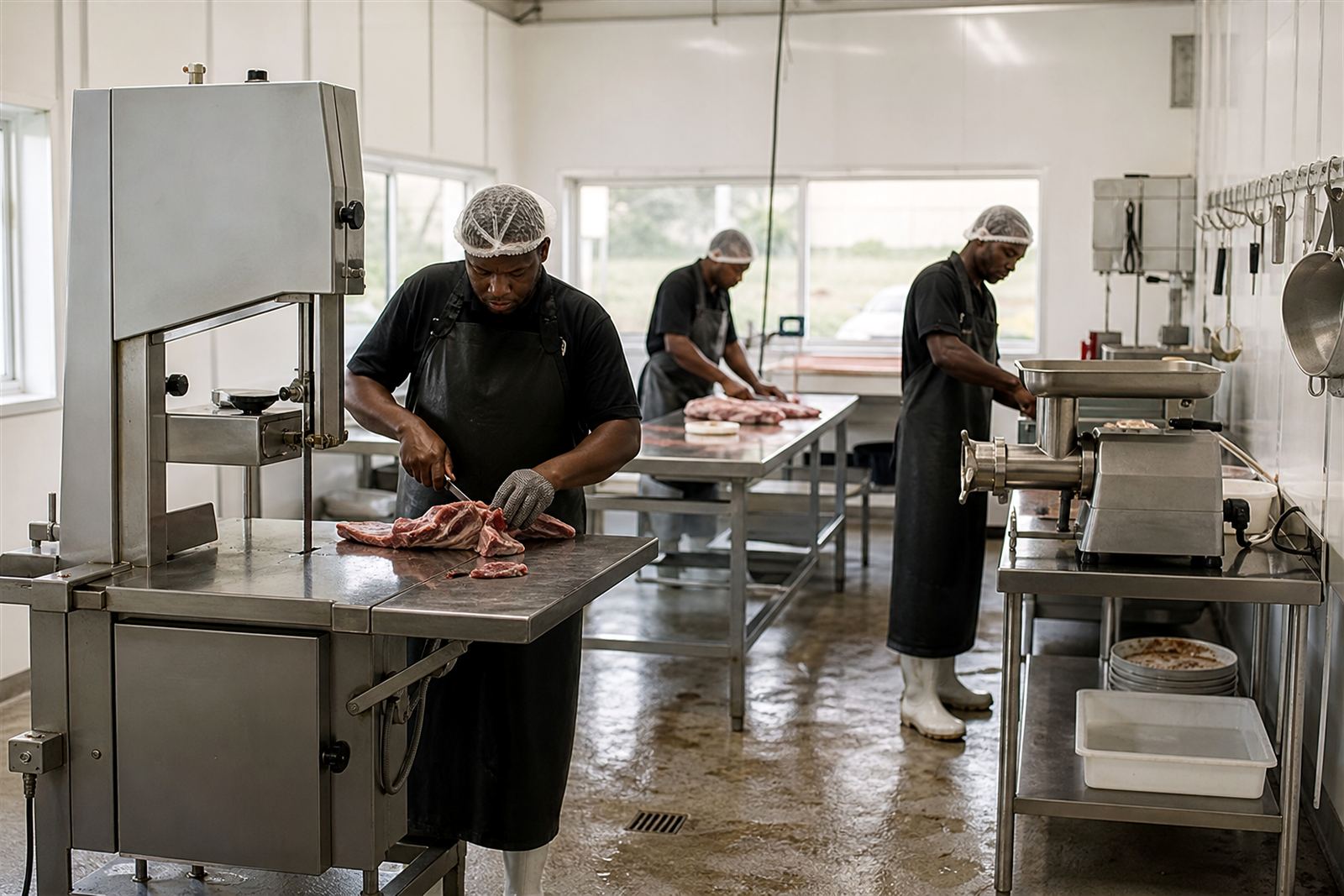
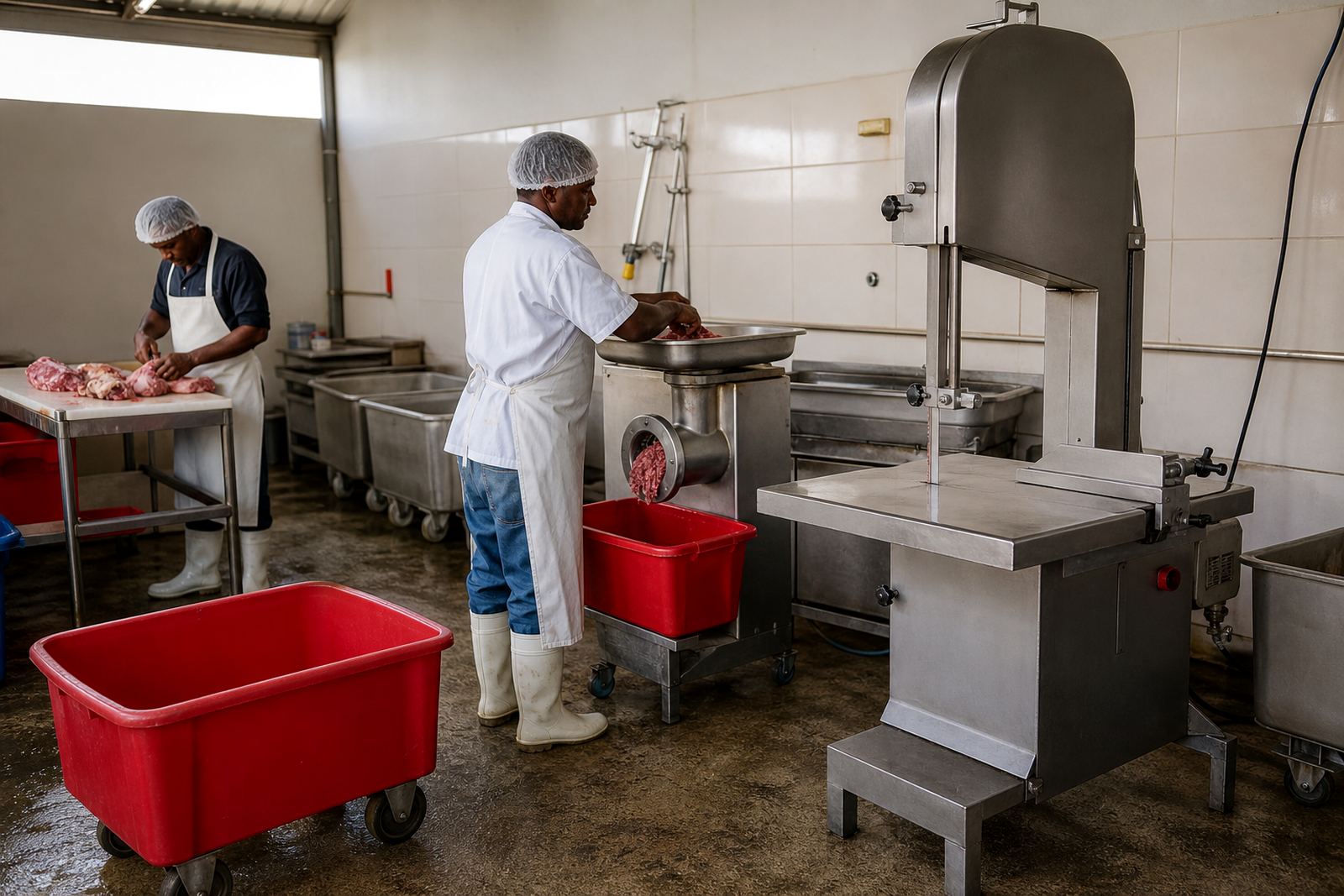
A home butchery does not need a large room, but it does need order. The best setups are usually built around a clean worktop, a stable cutting area, a washing point nearby and enough floor space to move around safely with trays, knives and meat crates. In Bloemfontein, where many homes and small holdings work with limited inside space, planning the layout first saves trouble later.
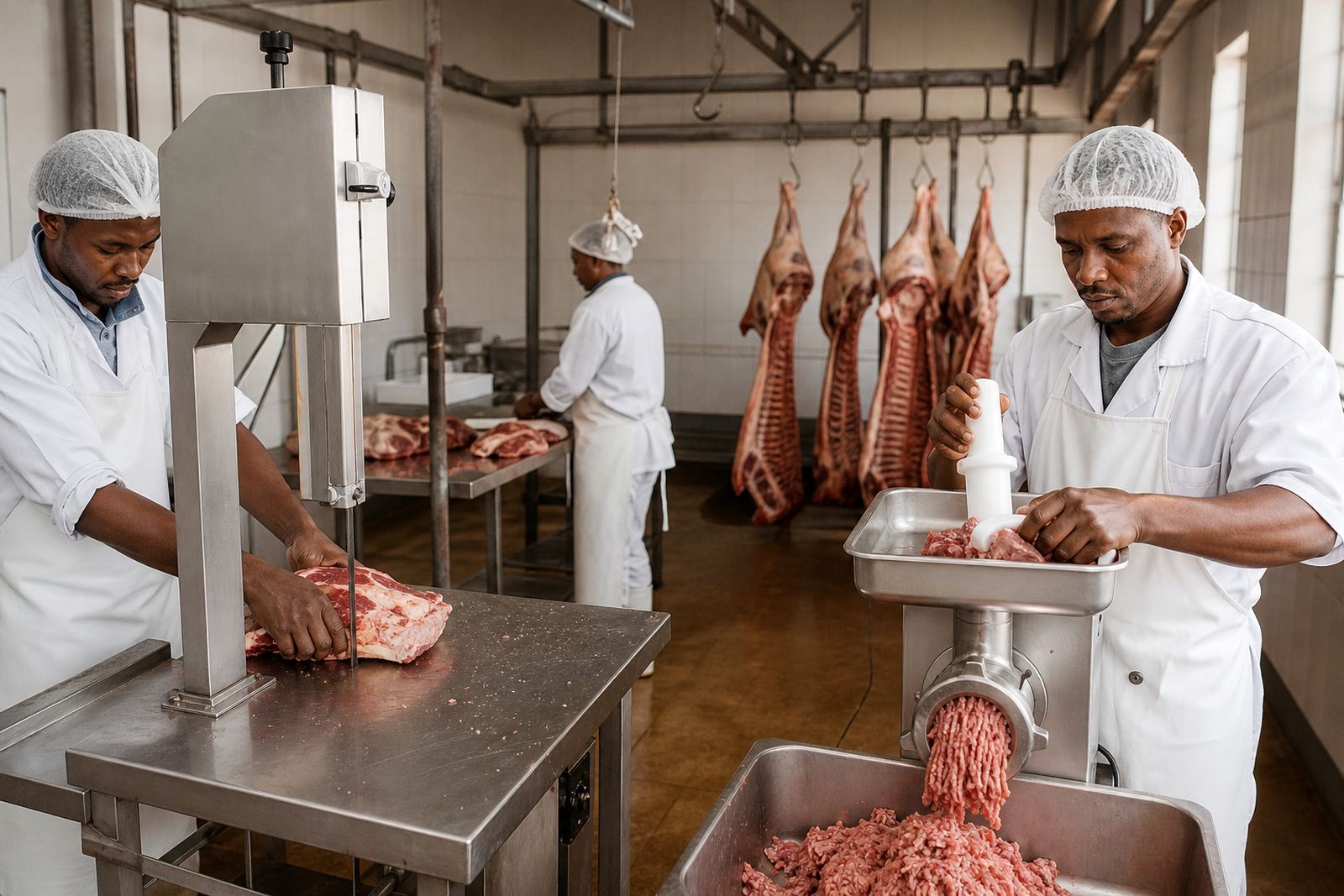
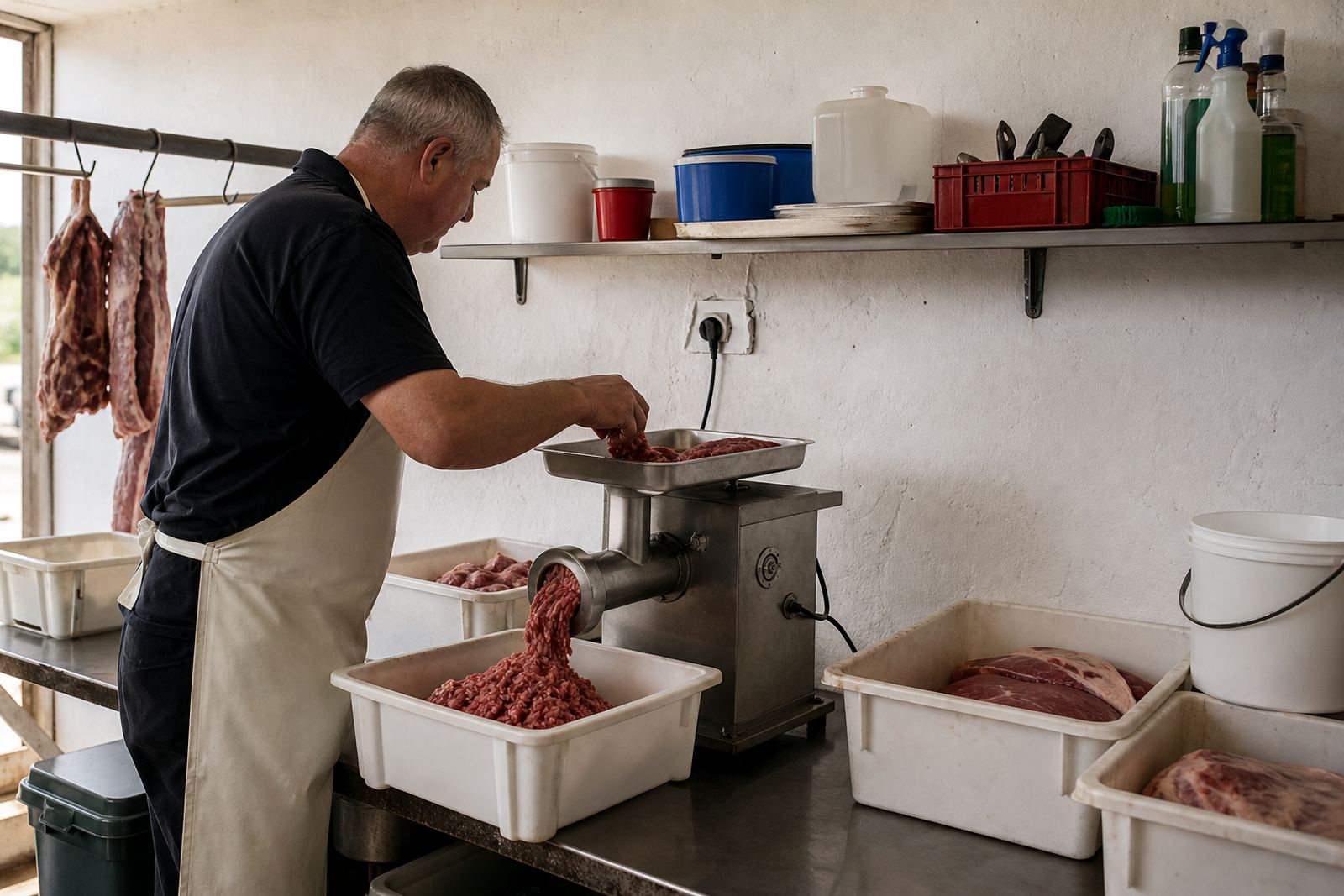
For smaller batches, a compact bandsaw and a mincer are usually the core items. The bandsaw helps with portioning bone-in cuts, while the mincer is useful for sausages, mince and burger mixes. Keep the saw in one area, the mincer in another and do not crowd both into the same corner. Good spacing makes cleaning easier and reduces mix-ups between raw and processed product.
- Keep raw meat handling separate from finished mince and packed portions.
- Leave space for a cleaning bucket, sanitiser and drying rack.
- Use a non-slip floor finish or matting where water may splash.
- Plan for load-shedding by keeping lighting strong enough for safe work.
Typical Equipment For Small-Scale Home Butchery
Most home users do not need every machine in a commercial butcher shop. A sensible starting point is a bandsaw for cutting through bone and a mincer for processing trimmed meat. Depending on how often you work, you may also want a meat tray, scales, sharpening tools, bone collection bins and a proper cleaning kit. If you are working from a garage, back room or small outbuilding, choose equipment that fits the room and can be cleaned without shifting half the area.
When choosing between options, think about the volume of meat you prepare, the type of cuts you make and how often the equipment will run. A machine that is too big for home use wastes space and power, while one that is too small becomes frustrating very quickly. It is better to match the machine to your actual use than to buy for a once-off large batch.
- Bandsaw for ribs, chops and bone-in sections.
- Mincer for sausages, mince and mixed filling.
- Knives, gloves, aprons and a face shield or similar PPE.
- Blade and plate care items for regular upkeep.
- Basic training on safe feeding, cleaning and switch-off steps.
Planning The Room Before The First Cut
Home butchery works best when the room is planned before the first delivery arrives. Check the door width, the walking space around the machine and where meat will come in and leave. If the unit is in a backyard area, think about weather, dust and direct sun. In coastal places like Durban and Cape Town, moisture can affect tools faster, so covered storage matters. In colder inland towns, keep the work area dry and easy to wash down after use.
Electric supply should also be considered. If your home has frequent outages or voltage dips, ask for practical advice on how to protect the machine and avoid damage. A stable socket and clean cable run are small details, but they matter when a machine is used regularly. Never place equipment where cords cross wet floors or where children can reach switches.
- Measure the room and doorway before delivery.
- Keep a clear path from storage to prep area to wash-up point.
- Store blades, plates and knives in a dry locked container.
- Use good task lighting, especially for evening work during load-shedding.
Cleaning And Care That Keep Equipment Working
Cleaning is not optional in a home butchery. Meat residue left behind causes smells, poor cutting and unnecessary wear. After each session, remove loose scraps, wash the parts that can be cleaned safely and dry everything fully before reassembly. For the bandsaw, guard areas, guide sections and the cutting zone need close attention. For the mincer, plates and knives must be cleaned and checked before the next use.
Simple care done regularly is cheaper than repairs later. Watch for dull blades, loose fittings, strange noise and slow feed performance. If a machine starts behaving differently, stop and check it rather than pushing on. That habit prevents bigger damage and keeps the work safer for everyone in the room.
- Wear gloves and suitable PPE when handling blades and sharp parts.
- Switch off and isolate power before cleaning or changing parts.
- Keep surfaces dry after washing to reduce rust and slipping.
- Do not run equipment with guards removed or damaged.
Common Mistakes Home Users Make
One of the biggest mistakes is buying equipment before thinking through the room and the workflow. Another is expecting one machine to do everything, which usually leads to poor results and unnecessary strain. Home butchers also often underestimate cleaning time, especially after processing fatty cuts or working with minced product. A tidy room is not only neater it is safer and quicker to work in.
Another common issue is mixing home use with commercial habits. Home batches are usually smaller, so the setup should be straightforward and easy to maintain. If you are doing regular weekend processing for family or a side business, keep notes on what worked, what caused delays and what parts need attention before the next batch.
- Do not overload a small machine beyond its intended use.
- Do not store wet parts together after cleaning.
- Do not skip training because the job seems simple.
- Do not place the mincer and saw too close together.
Budget Ranges For Home Butchery In Rand
Budget depends on the size of the machine, the level of finish and whether you need setup, training or ongoing servicing. For home users, it helps to budget in stages rather than trying to buy everything at once. Start with the main machine you will use most, then add the second machine and accessories once the room is sorted and the workflow is clear.
As a general guide, a basic home setup can be planned with a modest entry budget, while a more regular use arrangement with better accessories and support will cost more. It is also wise to allow for blades, plates, knives, cleaning supplies and periodic servicing. Delivery and setup across places like Bloemfontein, Johannesburg, Pretoria, Durban and Cape Town should also be considered in the final figure.
MorCut Butchery can help you choose a practical starting point, whether you are in Hamilton, Bloemfontein or in a supply area such as Kimberley, Welkom or Kroonstad. The aim is to match the equipment to the way you work, not the other way around.