

Why In-House Prep Makes Sense for Restaurants
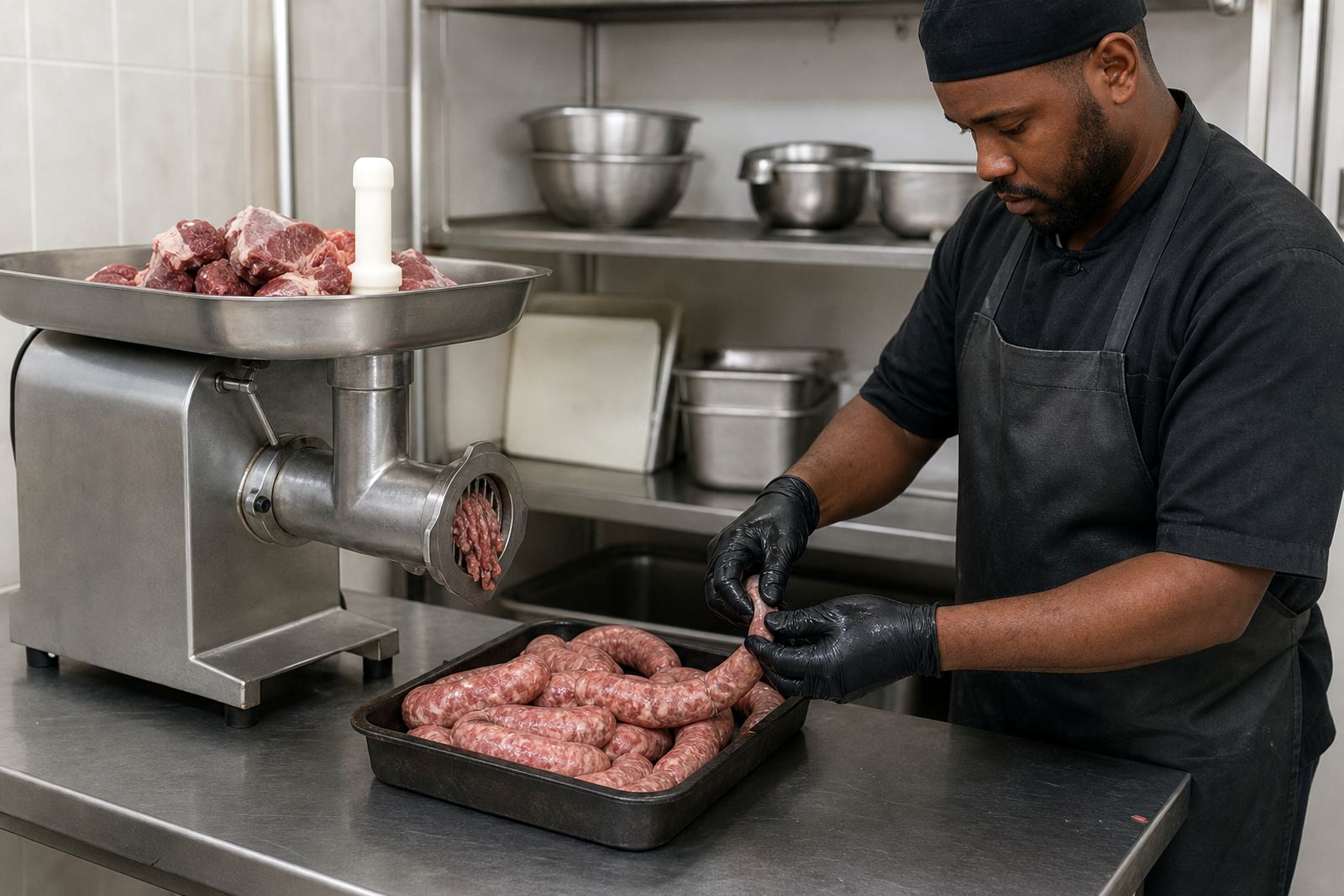
Many restaurants want tighter control over trim, mince and portion sizes, especially where menus rely on burgers, meatballs, schnitzels or house blends. When the prep team can process meat on site, it is easier to work to the day’s demand, reduce waste and keep service moving. It also helps when suppliers send cuts that still need trimming before cooking, because the team can portion them properly instead of working around what arrives.
For smaller kitchens, one compact mincer may cover the basics. For busier operations, a bandsaw can help with portioning bone-in cuts, while a mincer handles fresh mince and blended products. The right set-up depends on volume, counter space, cleaning routines and whether the kitchen works from one prep point or a separate butchery area. In Bloemfontein, for example, many kitchens plan around limited back-of-house space and warm summer afternoons, so airflow and a sensible cleaning routine matter just as much as the machine itself.
Typical Equipment Set for Restaurant Prep
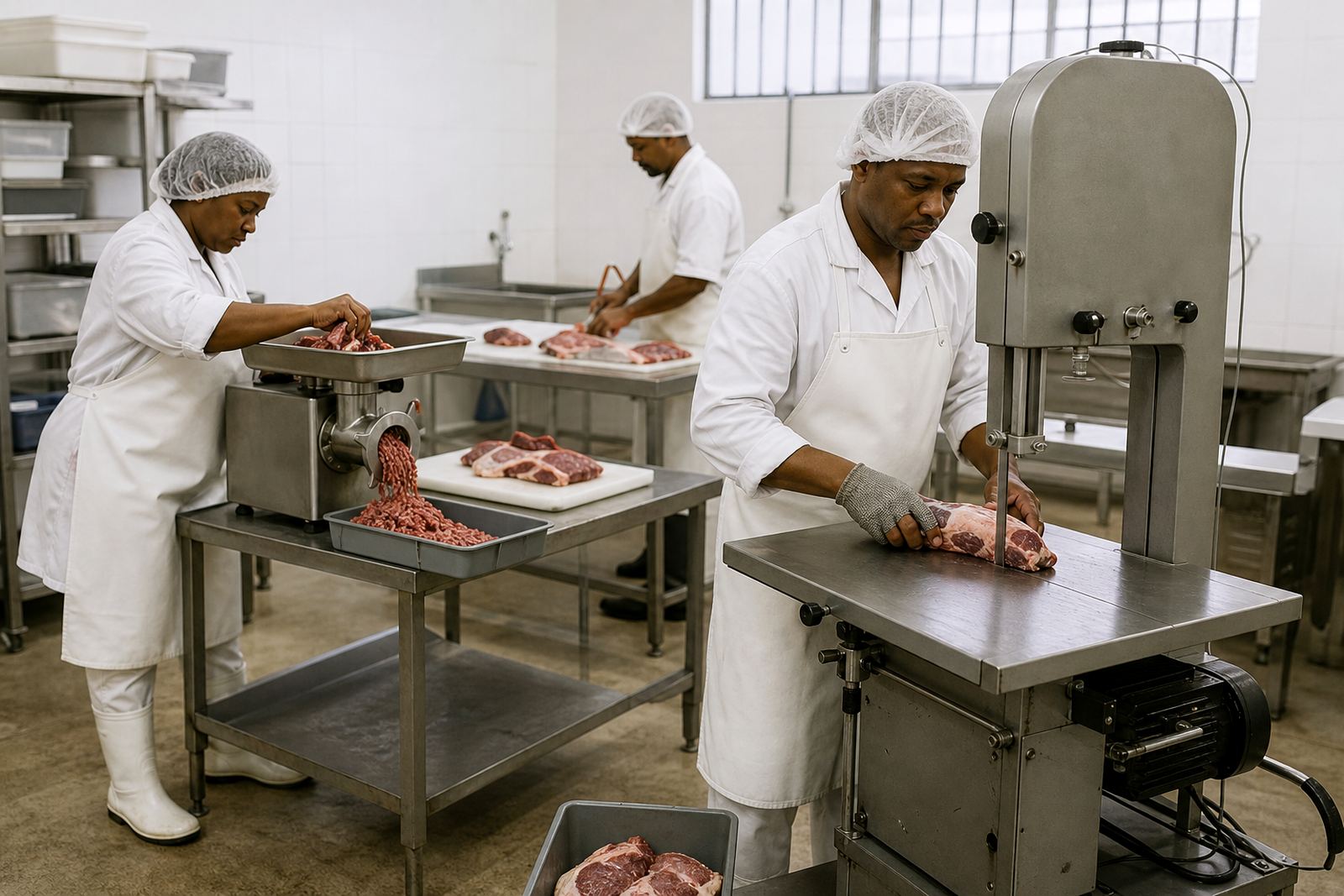
A restaurant prep area usually starts with a mincer, a suitable work table, washable floors and a clear cleaning station. If the menu includes bone-in cuts or thicker sections that need accurate portioning, a bandsaw can be added to the workflow. The important part is not just the machine itself but how the whole area is arranged so staff can move from receiving, trimming, cutting, mincing and cleaning without cross-traffic.
- A mincer for mince, burger blends and fine or coarse processing
- A bandsaw for portioning suitable cuts and working more accurately with bone-in product
- Separate prep surfaces for raw meat and cleaned product
- Knives, trays, sanitising supplies and PPE for daily use
- Access to power, drainage and a wash-down routine that staff can actually follow
We see many restaurants start with one machine and later add a second unit once service grows. That approach can work well, as long as the kitchen keeps enough room around each machine for safe loading, cleaning and operator movement. A cramped corner set-up often becomes a daily irritation, and in a busy kitchen that leads to shortcuts.
Planning the Layout Before You Buy
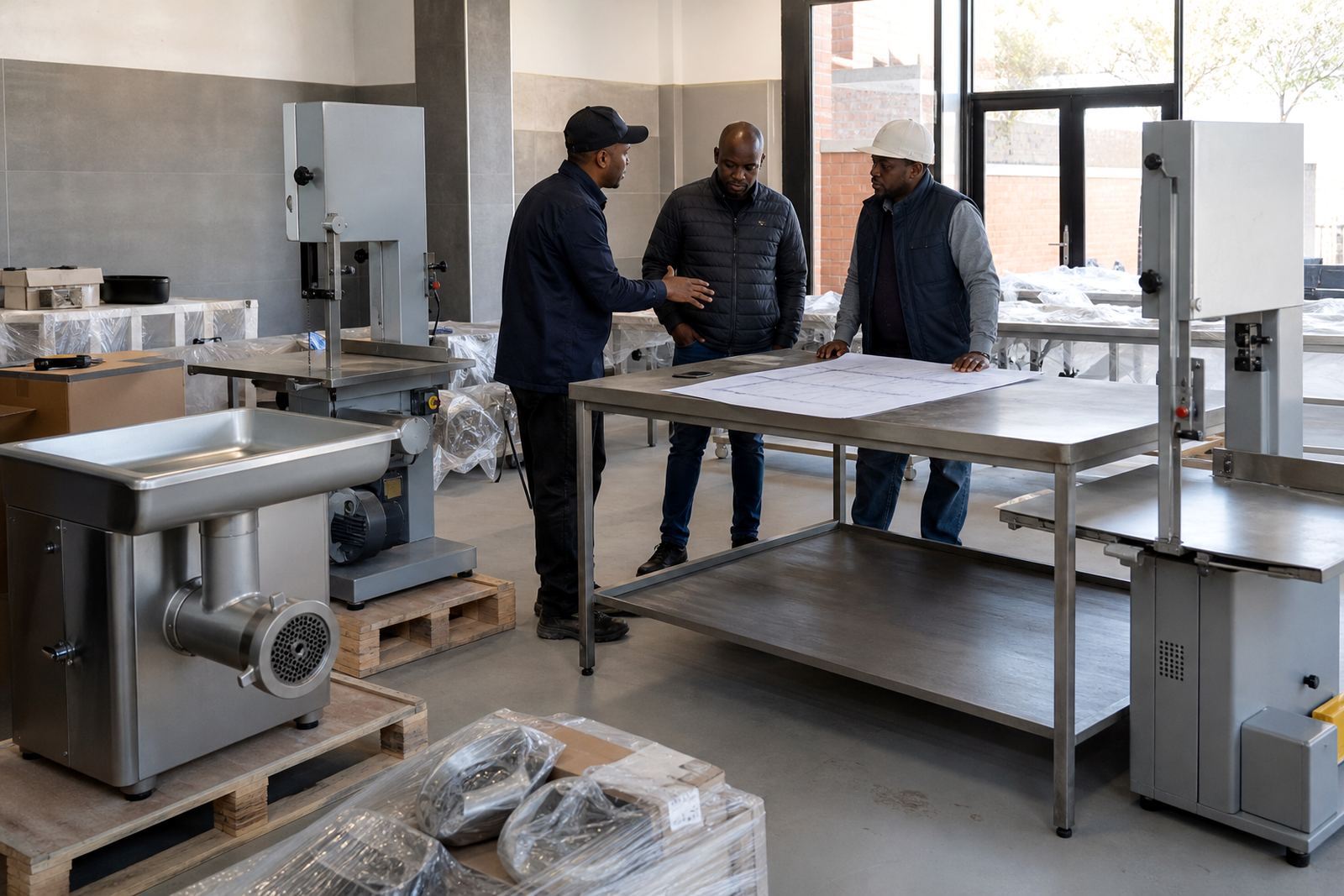
Before choosing equipment, it helps to map the actual flow of the room. Where does raw meat enter, where will it be trimmed, and where does the finished product go before cooking? If the answer is unclear, the prep area will usually slow down at peak times. Restaurants in older buildings or converted spaces often have to work around narrow doors, uneven floors and limited drainage, so it pays to measure properly before delivery.
Good planning also means thinking about cleaning. Meat prep equipment must be easy to reach around, with no awkward corners where scraps or moisture can build up. If the kitchen is near the coast, such as Durban or Cape Town, humidity can make poor cleaning habits worse, so wiping down and drying the machine after use is important. In inland towns too, dust and heat can affect the condition of blades, plates and moving parts if they are left dirty overnight.
- Allow enough space for the operator to feed product safely
- Leave room for trays, bins and cleaning access on all sides
- Keep raw meat handling separate from cooked food areas
- Plan where blades, plates and knives will be stored after cleaning
- Check that power points and floor drainage suit the layout
Common Mistakes Restaurants Make
One common mistake is buying a machine for the menu on paper rather than the actual production load. A restaurant may only need a modest mincer during the week but a much busier setup on weekends, functions or month-end trading. Another mistake is placing the equipment too close to heat, steam or the cooking line, which makes cleaning harder and can shorten the life of components. It is also easy to overlook training. If staff are not shown how to use guards, load product correctly and clean the machine after service, problems follow quickly.
Another issue is skipping routine maintenance until the machine starts making noise or the cut becomes inconsistent. Small signs like poor feed, rough cuts or longer processing times usually mean something needs attention. That can be a blade change, plate and knife replacement, a proper clean, or a service visit to check wear. For restaurants that run long hours, planned maintenance is usually cheaper than an unexpected breakdown during a Friday night rush.
Safety, Cleaning and Daily Care
Restaurant prep staff should always use the correct guards, keep hands clear of moving parts and wear suitable PPE such as cut-resistant gloves where appropriate, aprons and slip-resistant footwear. Training matters, especially when different staff members rotate through prep. A machine is only as safe as the person using it, and rushed service is where care tends to slip.
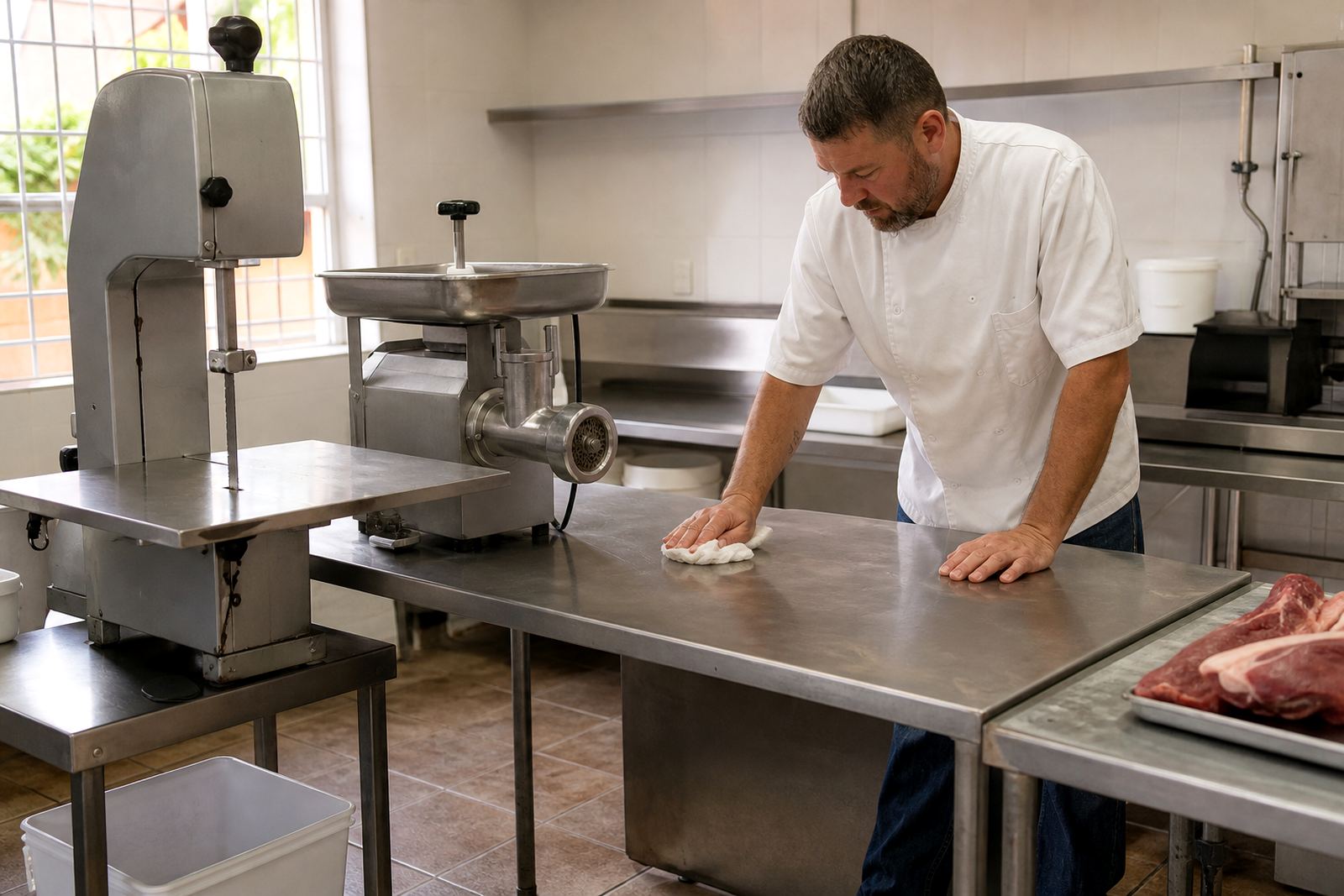
Cleaning should happen every day, not just when the machine looks dirty. Remove residue, wash all contact surfaces, dry thoroughly and reassemble correctly. Replace worn blades, plates and knives before they affect the cut or make the machine work harder than it should. In the Free State winter, indoor air can be dry but dusty, while in coastal towns moisture can linger longer, so proper storage after cleaning is part of the job. Good care is not complicated, it just has to be done properly and on time.
Budget Ranges for Restaurant Prep Set-Ups
Budget depends on whether the restaurant wants a single mincer, a bandsaw only, or a combined prep set-up with servicing and setup included. A modest entry-level arrangement for a smaller restaurant may start at a lower budget band, while a more complete in-house prep area with both machines, setup and training will cost more. Replacement parts, blade changes and scheduled servicing should also be allowed for in the running budget, not treated as an afterthought.
As a practical guide, many restaurants work within a budget of around R15 000 to R45 000 for a smaller prep set-up, while larger or busier kitchens may need to plan from about R45 000 upwards depending on the equipment chosen and how much support is needed at installation. The right figure depends on layout, delivery location and how often the equipment will be used. MorCut Butchery supplies and services restaurants from Hamilton in Bloemfontein, with delivery and support to Johannesburg, Pretoria, Durban, Cape Town, Kimberley, Welkom and Kroonstad, so the team can help match the set-up to the site instead of forcing one standard solution on every kitchen.
When a restaurant is ready to formalise the plan, the enquiry form on the contact page is the simplest way to start. From there, the team can discuss the menu, space, daily load and the service support needed after delivery.