
Prep Space That Has To Work In A Tight Footprint
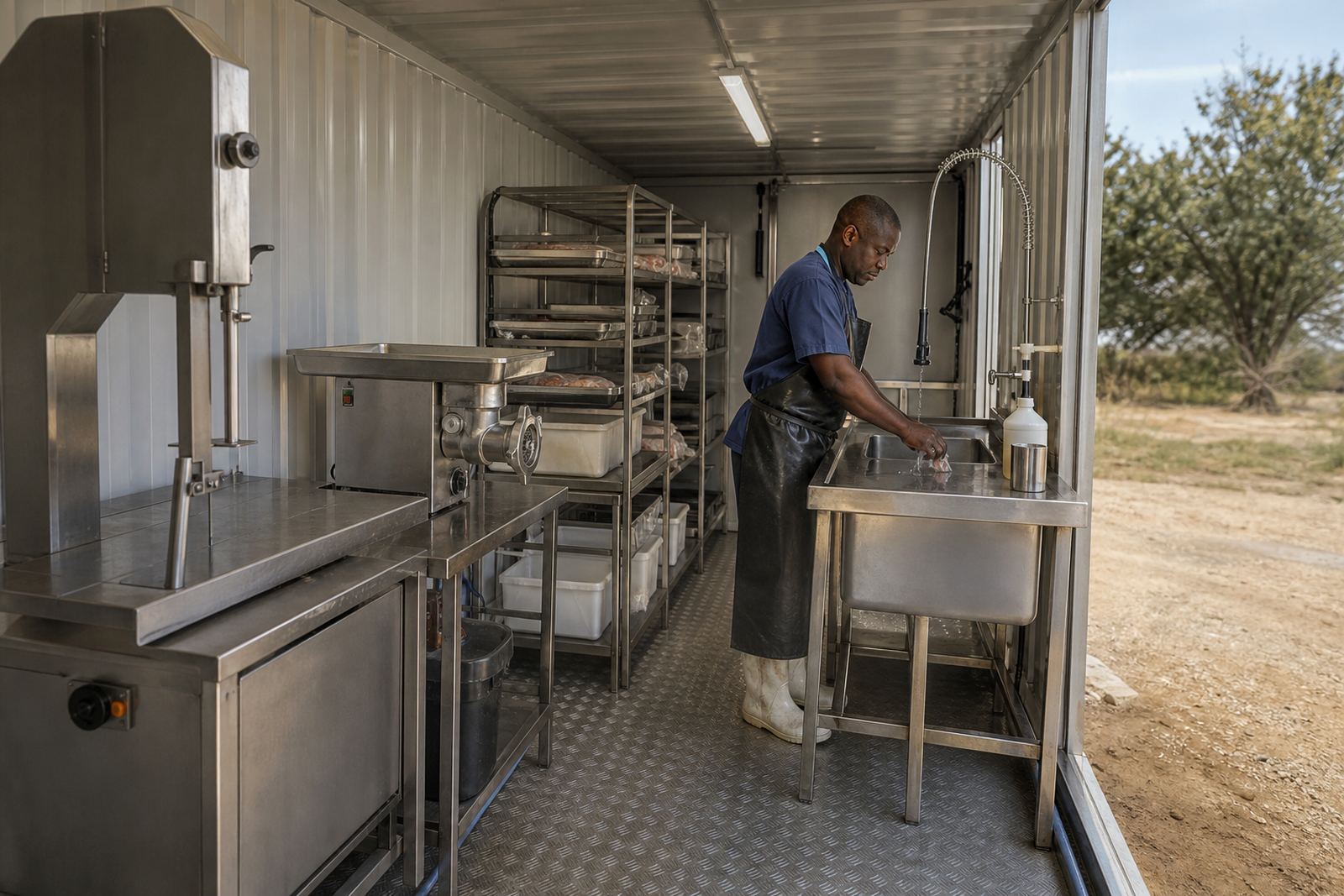
Mobile catering is different from a fixed butchery or kitchen. Space is tight, power can be limited, and the prep area often has to be packed up, moved, then set up again without wasting time. For operators in Bloemfontein, Johannesburg, Pretoria, Durban and Cape Town, the equipment has to fit the vehicle, the site layout, and the pace of the event.
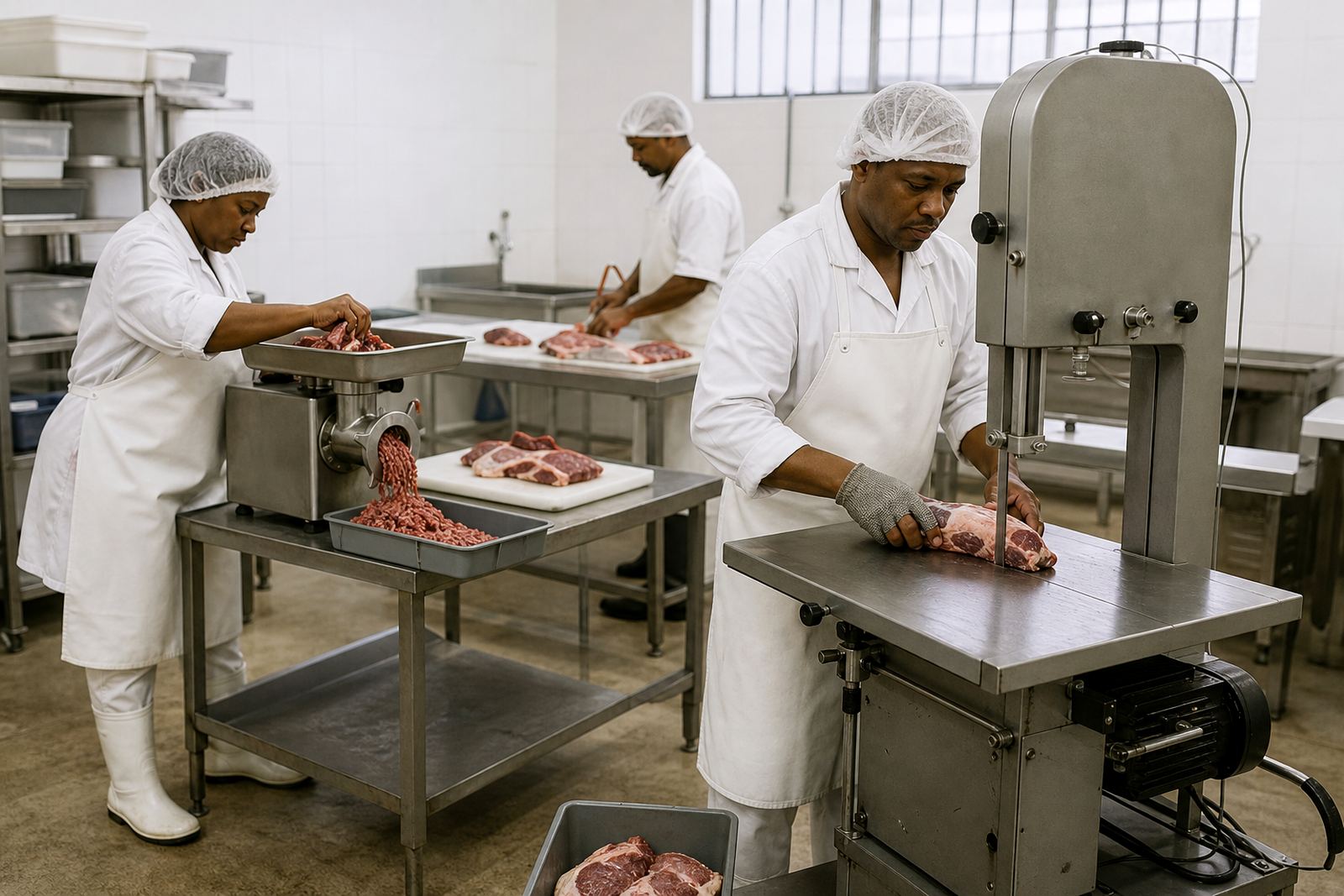
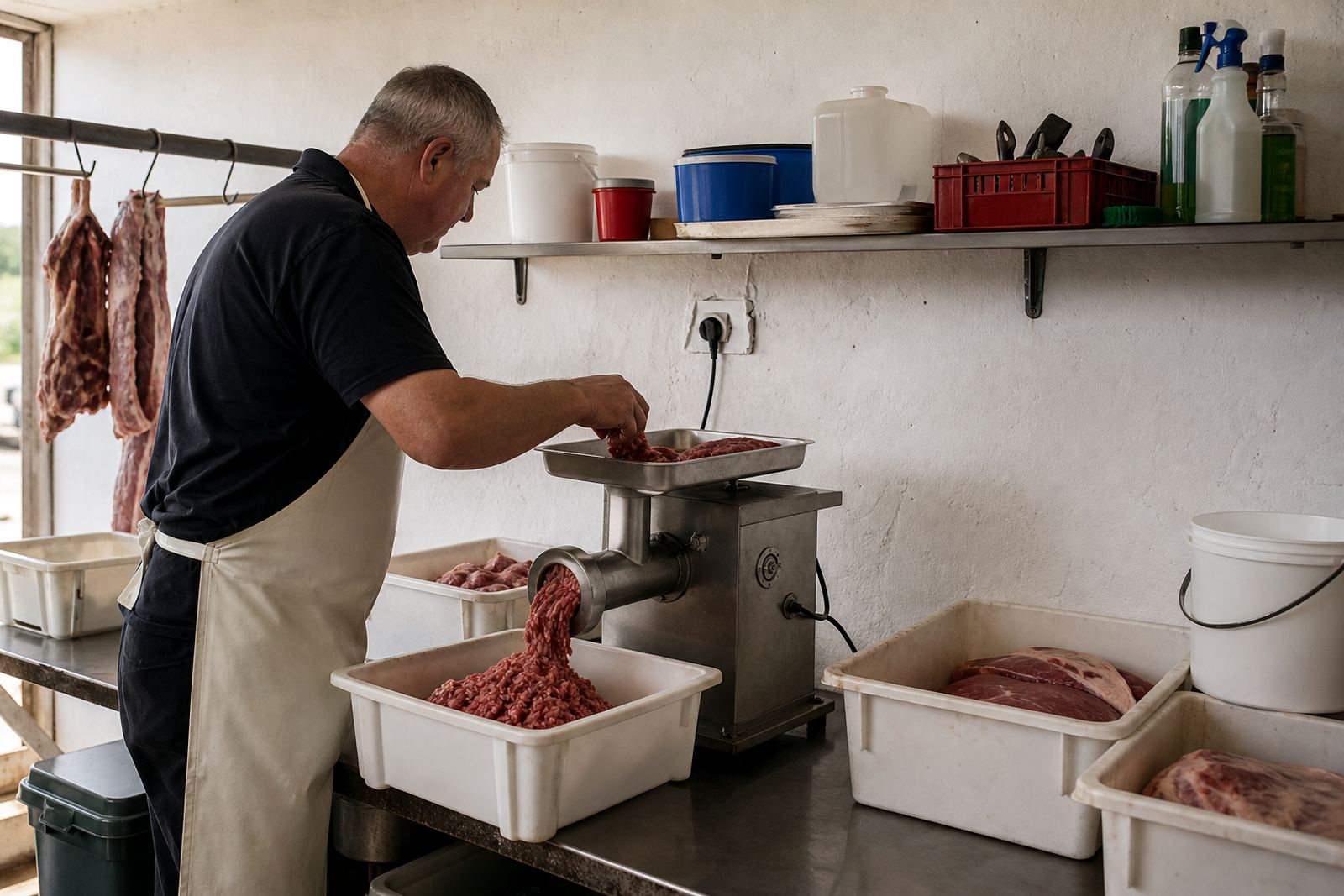
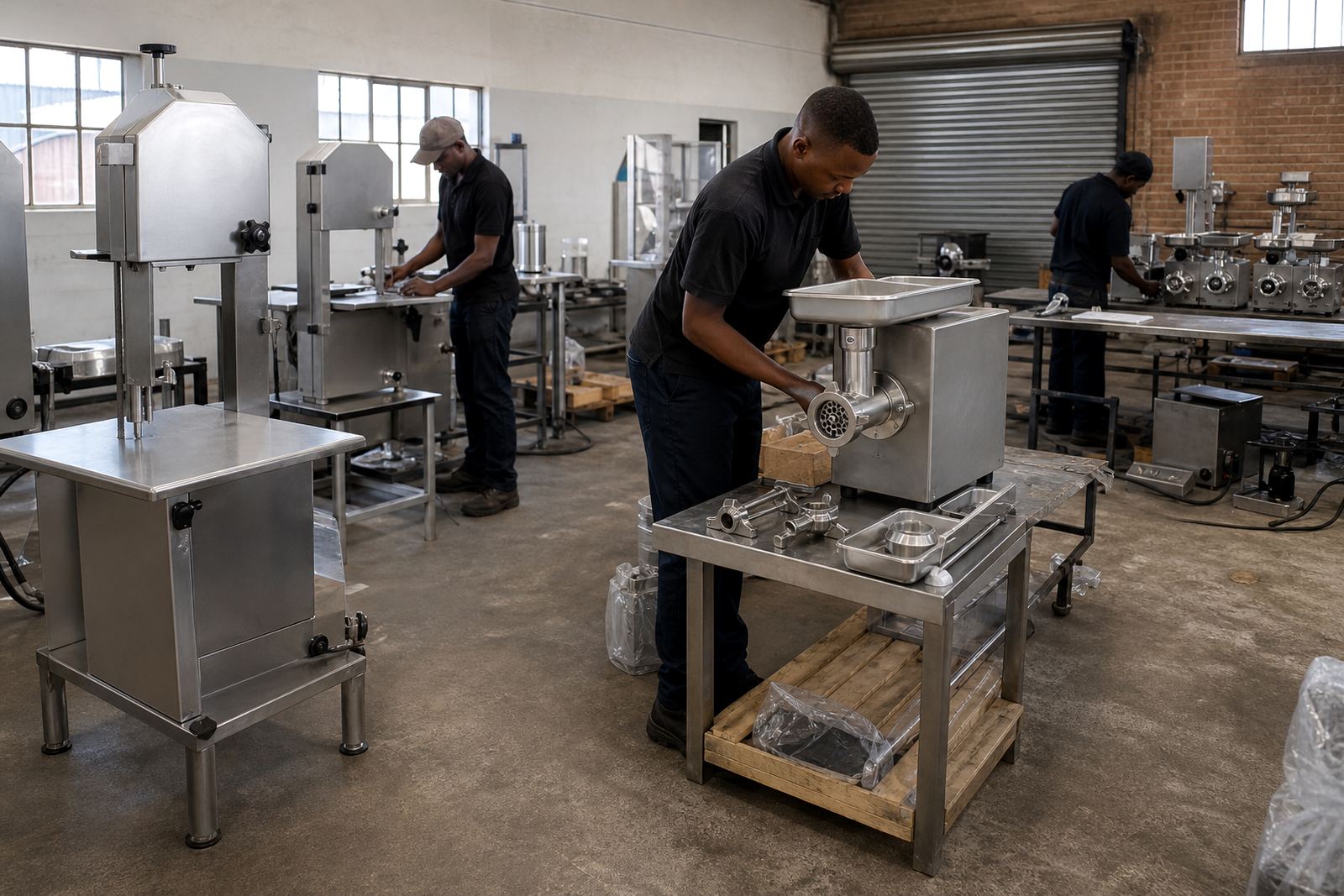
A compact mincer helps turn raw meat into a workable mince portion for burgers, sausage mixes, meatballs and fillings. A bandsaw is useful where portioning bones, frozen cuts or larger pieces is part of the prep plan. The aim is simple: less handling, cleaner cuts, and fewer delays during service. Good planning matters too, because a cramped table with poor cable routing or no wash-up space can slow everything down.
For mobile operators, the safest setup is usually the one that keeps the machine close to the prep flow but away from splash zones and crowd movement. The operator should have enough room to feed product, collect output, and clean around the base without reaching over exposed blades or loose packaging.
Typical Equipment Set For Events And On-The-Go Prep
Every mobile kitchen has its own rhythm, but a practical prep kit often includes a mincer, a bandsaw where permitted and needed, a sturdy work surface, trays, containers, sharpening and cleaning tools, and safe storage for spare blades, plates and knives. Some operators only need a mincer for ground meat and filling work. Others handle larger raw product and benefit from a bandsaw at the prep stage.
- Compact mincer for mince, burger mix, sausage filling and portion prep
- Bandsaw for controlled cutting of frozen or bone-in product
- Sealable trays and food-grade tubs for raw and prepared batches
- Cleaning brushes, sanitiser, cloths and a dedicated wash-down routine
- Protective gloves, aprons and other PPE for handling and cleaning
It is worth matching the machine to the actual menu. If the menu is mainly mince-based, the setup can stay simple. If the operation handles mixed cuts or needs fast portioning before service, then the workflow should allow for safe staging, cutting, mincing and holding. In South Africa, where events can run through hot afternoons or windy coastal conditions, clean storage and quick wipe-downs are not optional.
Layout And Power Planning For Mobile Service
Before buying or moving equipment, map out the prep process from raw delivery to final plate. Where will product arrive, where will it be stored, where will cutting happen, and where will waste go? A good mobile layout reduces cross-contamination and keeps the operator from walking back and forth in a small space. This is especially important on trailers, temporary kitchens, and event tents where more than one person may be working at once.
Power supply should be checked before the event or route starts. Some sites have stable mains power, others rely on generators or a mixed setup. During load-shedding or uneven supply, machines need to be switched on and off with care, and the operator should know what can run at the same time. Do not crowd the circuit with unnecessary appliances if the mincer or bandsaw must do the main prep work.
- Place machines on a level surface to reduce vibration and movement
- Keep cords, plugs and switches away from water and wash areas
- Plan a clear path for raw product, finished batches and waste
- Leave space for safe blade, plate and knife changes
- Allow for cleaning after service, not only before opening
In coastal areas like Durban and Cape Town, humidity can affect metal parts if cleaning and drying are rushed. In inland areas such as Bloemfontein, dust and heat can also take their toll. A sensible setup should protect the machine when it is not in use, especially when it travels between venues.
Safety And Cleaning Habits That Keep The Line Moving
Mobile catering prep gets busy fast, and that is when shortcuts creep in. The main safety rules stay the same: use guards properly, wear PPE, keep hands clear of moving parts, and never clean a machine while it is still live. For bandsaws and mincers, a calm and repeatable routine is worth more than speed alone.
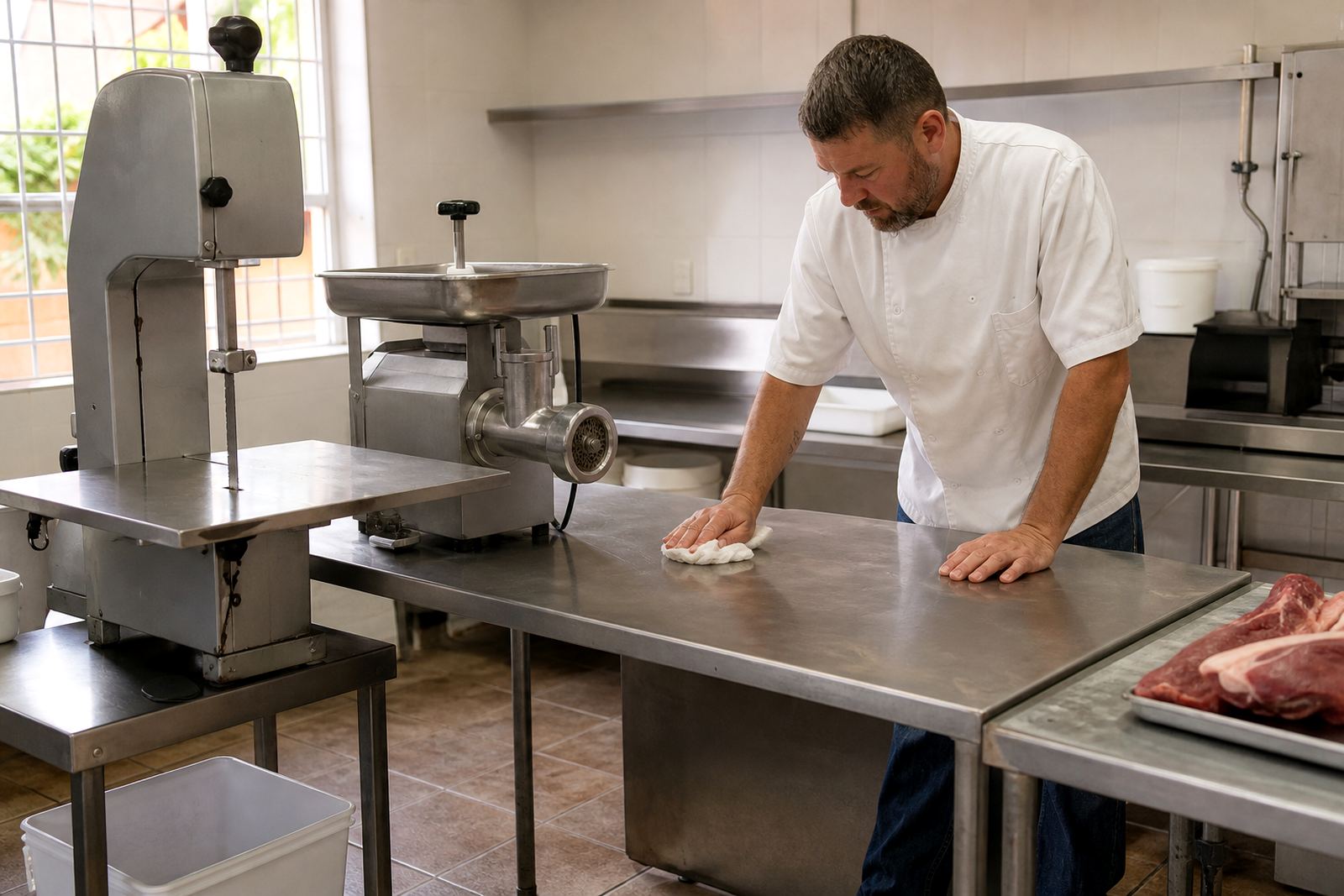
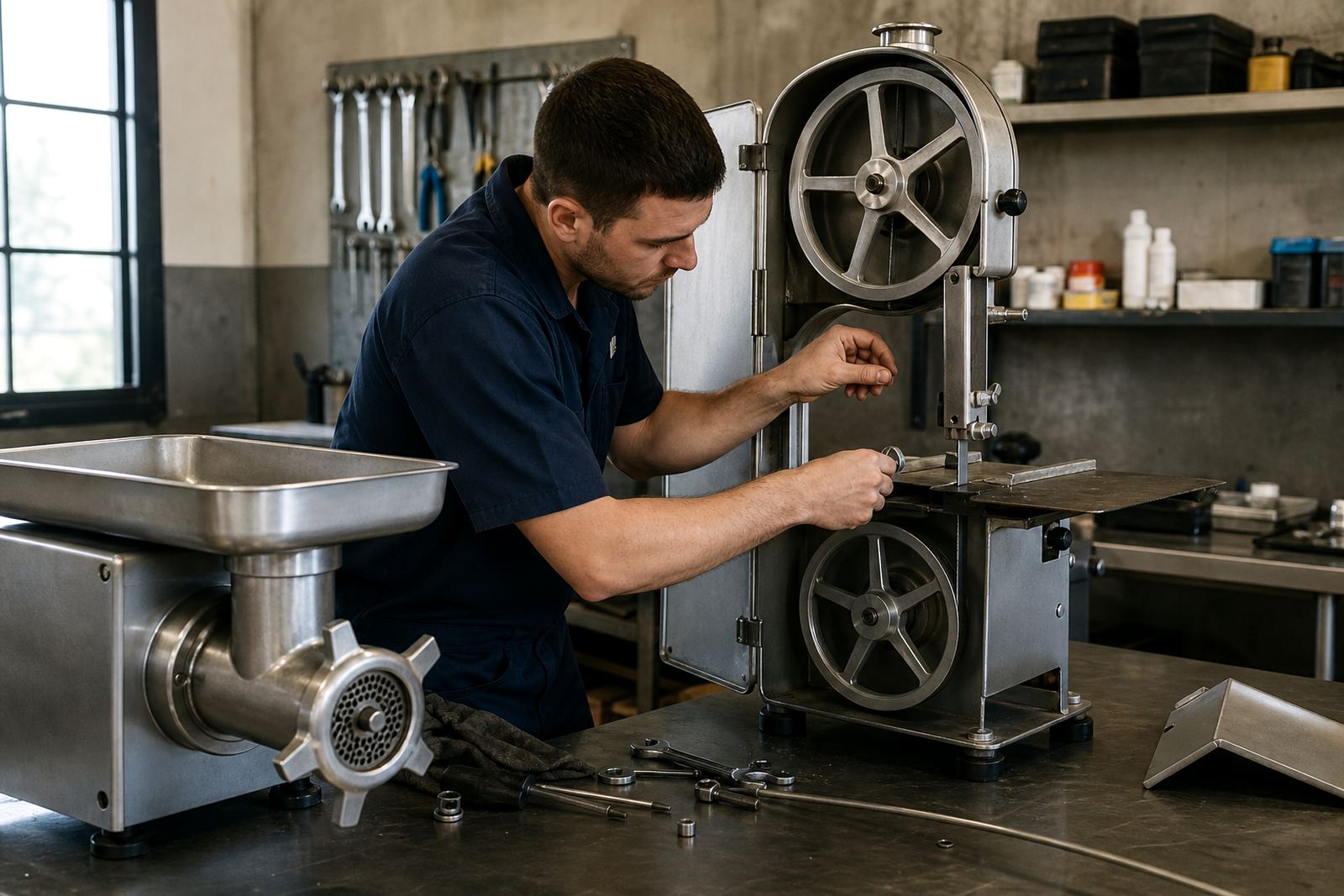
Cleaning should happen in stages. Remove product residue, dismantle the removable parts where appropriate, wash and sanitise them, dry them fully, then reassemble. Skipping drying leaves moisture where it should not be, and that can cause wear and poor performance over time. A clean machine also gives better control during operation, which matters when the next order queue is already forming.
Operators should also keep an eye on signs of wear. A dull cutting edge, loose fitting, unusual noise or uneven output is often a sign that service is due. If the machine is starting to labour, do not push harder and hope for the best. It is better to stop, inspect, and sort the issue before a breakdown callout becomes necessary in the middle of a booking.
Common Mistakes Mobile Operators Make
One of the most common mistakes is buying equipment for the menu that looks impressive but does not suit the real workload. Another is trying to use a machine that is too large for the vehicle or counter space. In a mobile unit, every centimetre counts and the wrong footprint can create daily frustration.
Another issue is underestimating maintenance. A mincer or bandsaw that is only cleaned when there is extra time usually ends up needing more attention later. Preventive maintenance, regular blade replacement and proper plate and knife changes are much easier to manage than last-minute repairs on a packed weekend.
There is also the problem of poor training. One person may know the setup well, but if the rest of the team does not understand safe feeding, shut-down, cleaning and reassembly, the operation becomes inconsistent. That is why hands-on training is useful, especially for teams that rotate between markets, festivals, weddings and private functions.
- Buying too large for the vehicle or prep table
- Ignoring cleaning between batches
- Running with worn blades or plates for too long
- Skipping safe storage for spare parts and tools
- Leaving the team to learn by trial and error
Budget Ranges For Mobile Prep Setups
Budgets vary depending on whether the operator needs a single compact mincer or a more complete setup with a bandsaw, spares, setup support and training. For mobile catering, it is wise to budget not only for the machine itself but also for delivery, setup, consumables and the first round of servicing. A cheaper unit that struggles under real event conditions can end up costing more in the long run.
As a broad working guide, a simple entry-level prep setup can start in the lower Rand range, while a more capable commercial mobile setup with installation and support will sit higher. The final figure depends on the machine type, workload, whether accessories are needed, and how much prep support is included. It is better to match the budget to the type of service you run than to buy on price alone.
For operators working across Bloemfontein, Kimberley, Welkom, Kroonstad and beyond, practical support matters. Delivery and setup can save time, while servicing helps keep the machine ready for the next booking. If you are planning a mobile catering unit, the safest approach is to price the machine, the setup, and the care it will need over the season, not only the first purchase.