

How a biltong prep room works day to day
A biltong prep room is usually where meat is received, trimmed, portioned and moved on for drying, packing or further cutting. In practice that means clear work surfaces, steady power, good drainage and a layout that lets staff move without crossing back and forth with raw product. When the room is tight or badly planned, cleaning takes longer and the risk of contamination goes up.
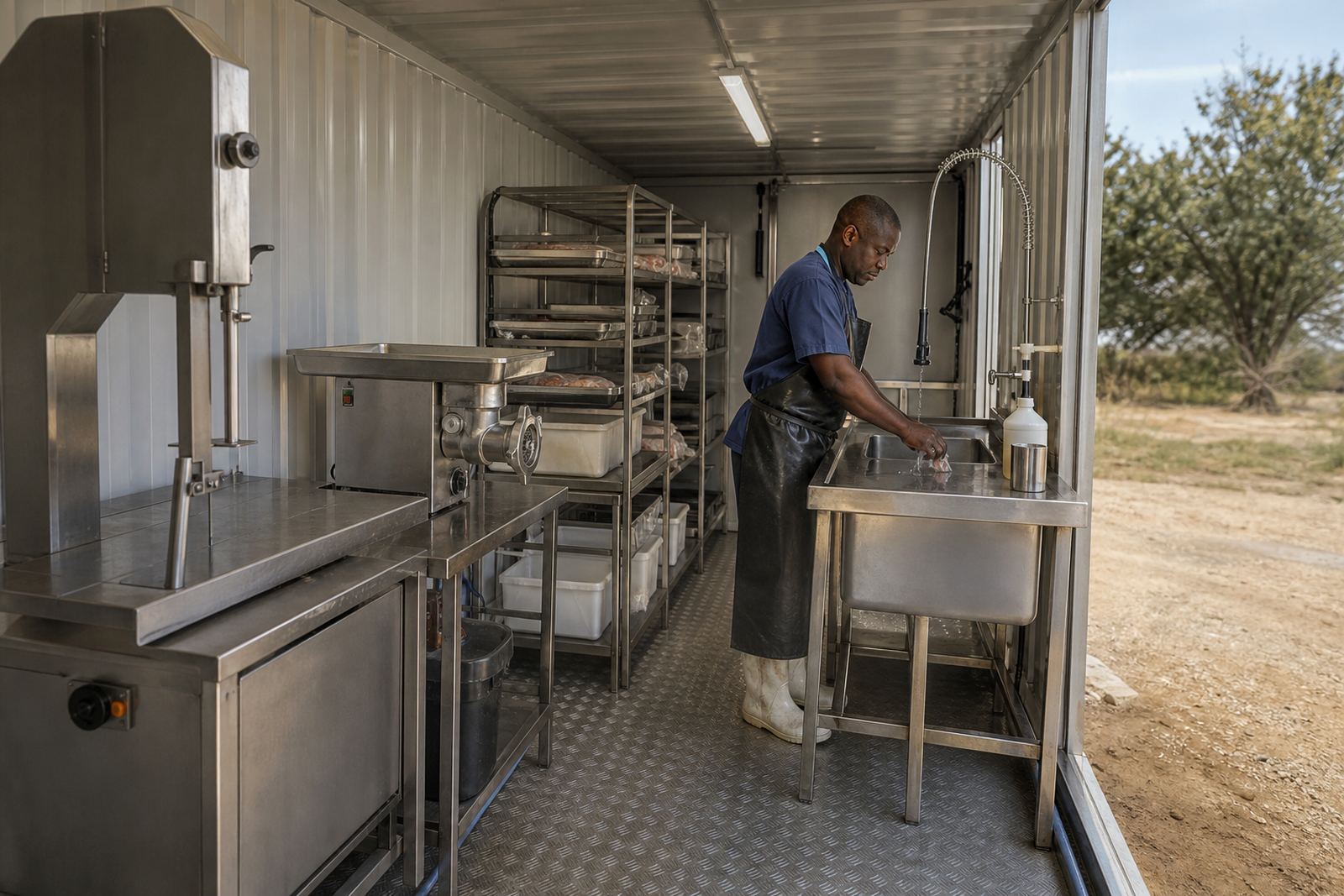
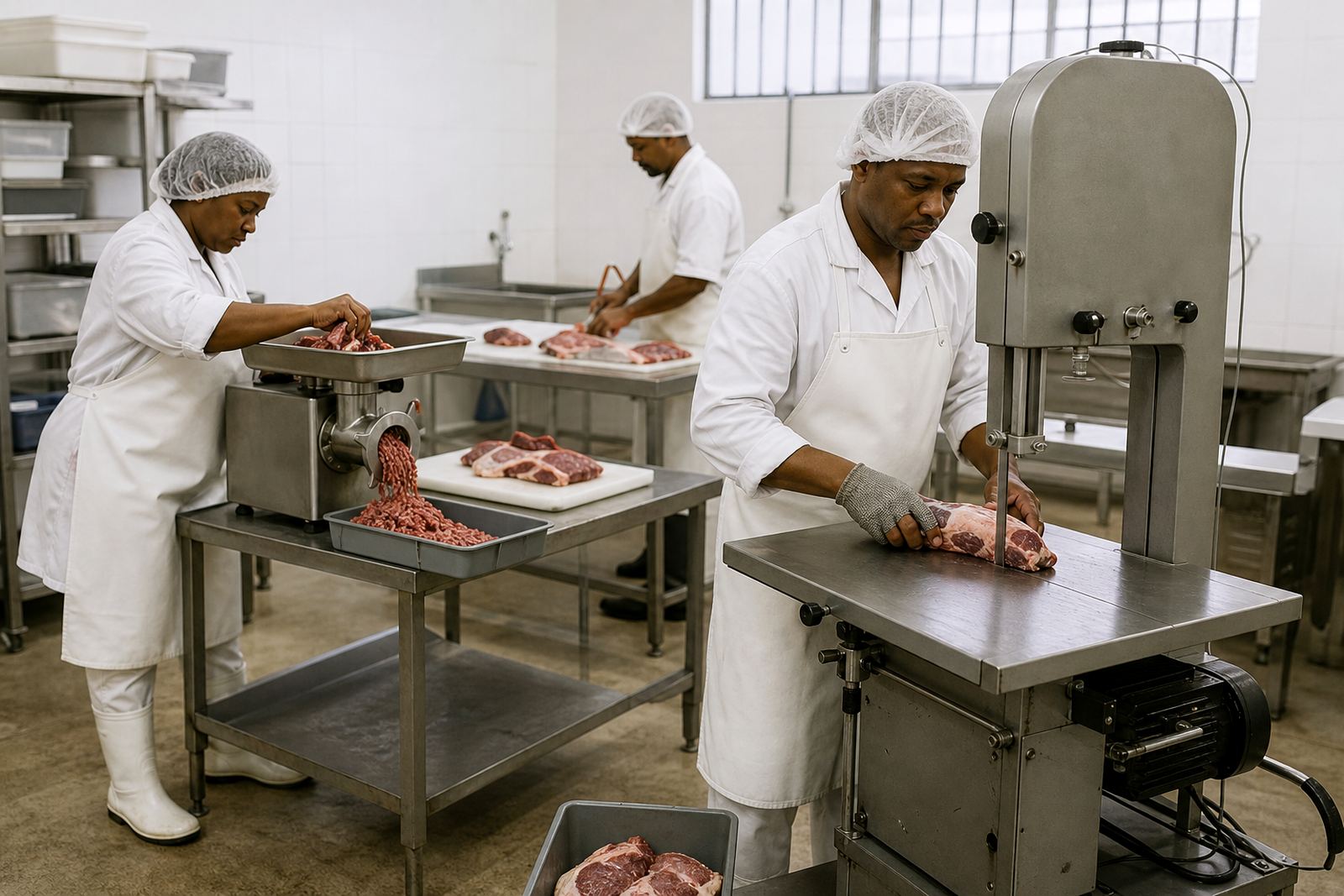
For many butcheries in Bloemfontein, Johannesburg, Pretoria, Durban and Cape Town, the prep room is one of the busiest parts of the operation. It has to cope with early starts, power interruptions and different levels of traffic through the week. A sensible setup keeps the bandsaw close to the receiving area, with the mincer and prep tables placed so trimming and packing can happen without crowding the cutting space.
Typical equipment set for biltong prep rooms
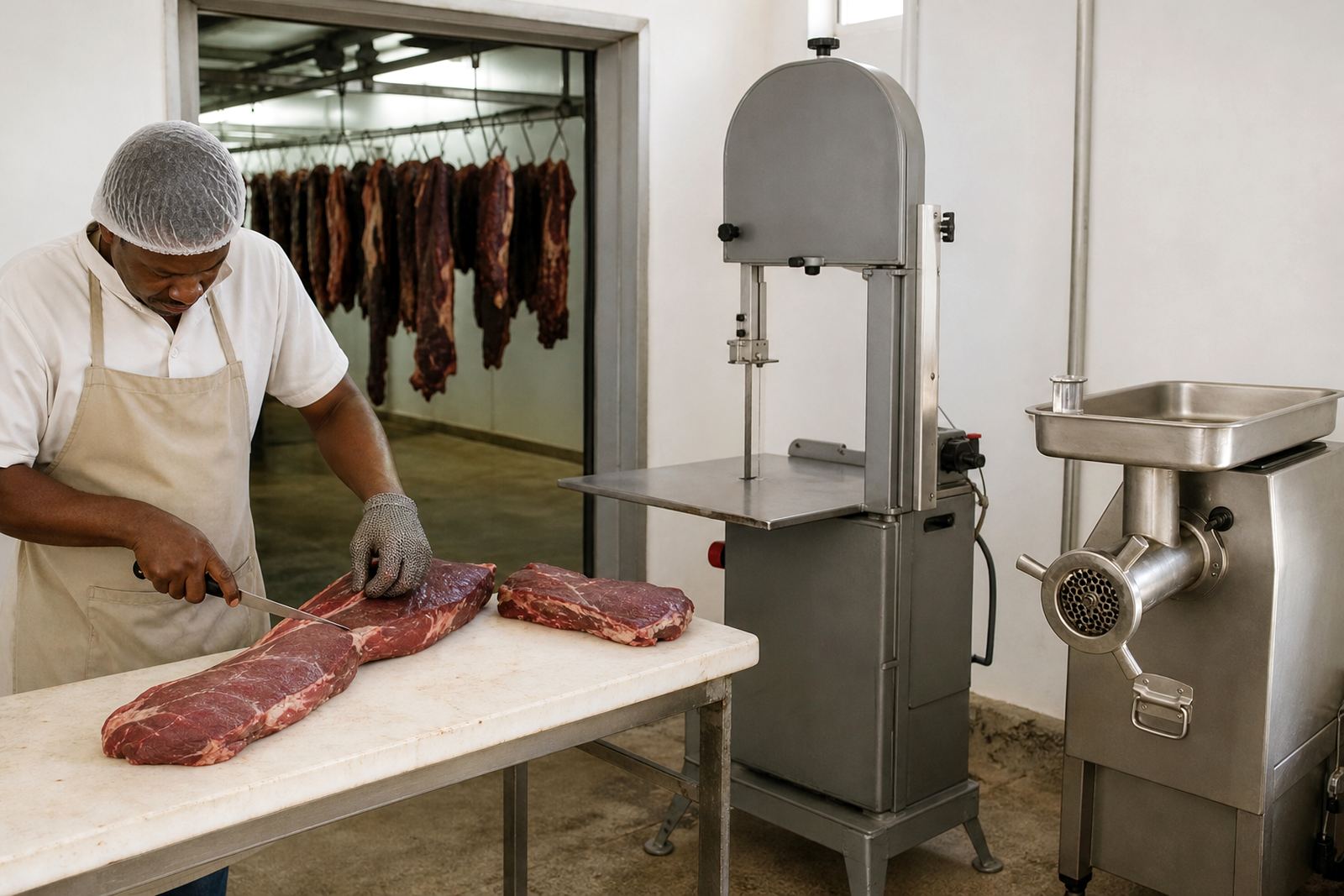
Most biltong prep rooms use a practical mix of cutting, mincing and surface space rather than a long list of machines. The aim is to keep raw meat moving in one direction and avoid unnecessary handling. A bandsaw handles larger cuts and cleaner portioning, while a mincer helps when trim needs to be processed for sausages, mince or mixed products.
- Bandsaw for portioning larger cuts and trimming meat to size
- Mincer for controlled processing of trim and secondary product
- Stainless steel prep tables for sorting, cutting and packing
- Wall racks or shelving for trays, knives and consumables
- Handwashing point, sanitiser and cleaning equipment kept nearby
Where space is limited, the best approach is to choose equipment that fits the room and not the other way round. A cramped setup slows the shift and makes cleaning harder, which is the last thing you want when load-shedding has already shortened the working day.
Layout planning that saves time and cleaning effort
Good layout starts with the room itself. Think about where product enters, where waste leaves, and where staff will stand during the busiest part of the day. A prep room should have enough clearance around the bandsaw for safe handling and enough space around the mincer for loading, cleaning and blade access. Keep the floor easy to wash down and make sure water does not pool near sockets or motors.
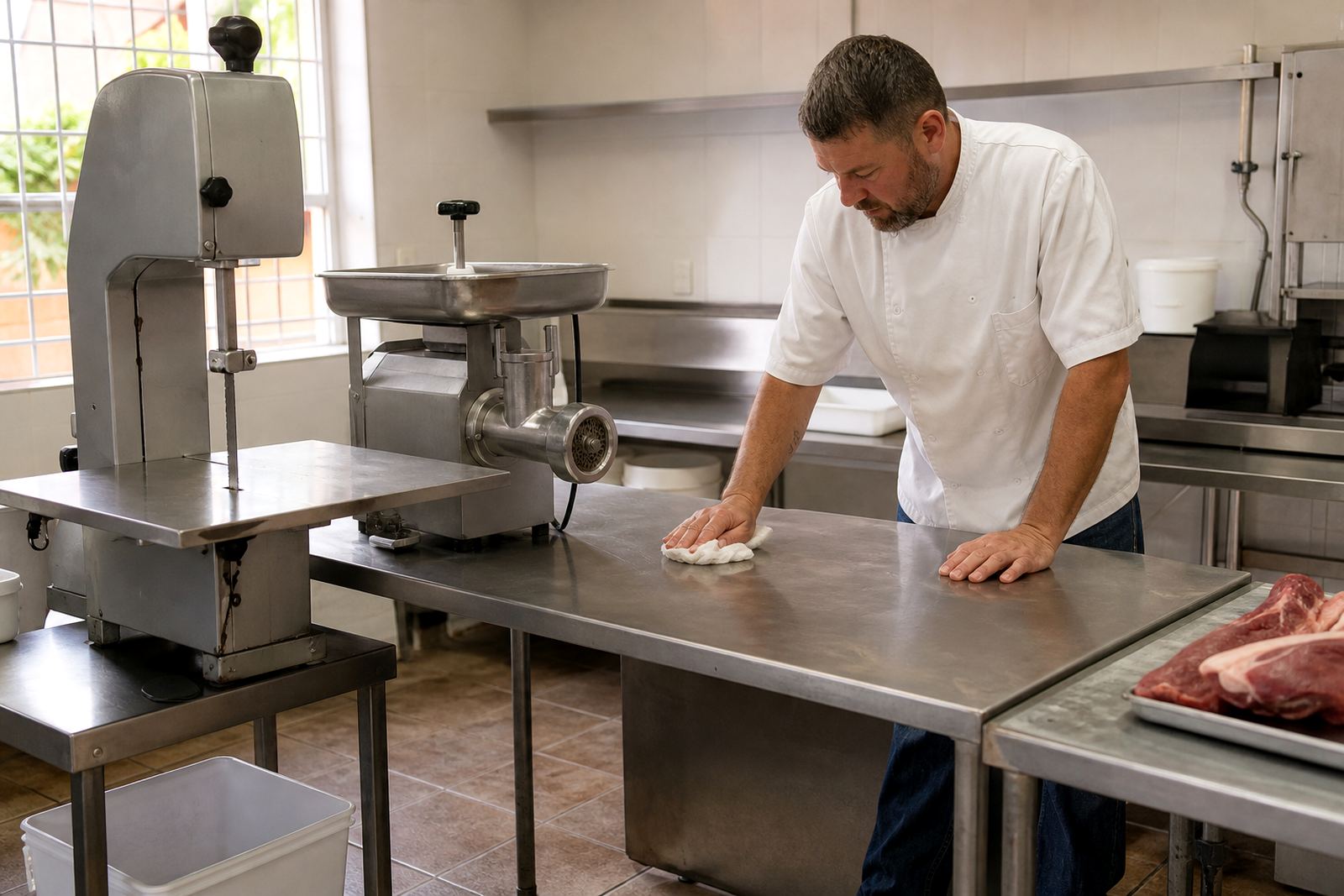
In coastal towns like Durban and Cape Town, humidity can make metal surfaces and stored parts harder to manage if cleaning is rushed. In the Free State, dust and temperature swings can affect how often the room needs attention. A proper plan includes storage for PPE, brushes, spare blades, plates and knives, plus a routine for wiping down high-touch points before the end of shift.
- Place the bandsaw where large cuts come in first
- Keep the mincer close to trim handling and packing
- Leave space for cleaning buckets, mops and chemical storage
- Separate raw handling from clean packaging as much as possible
- Use lighting that shows bone, fat and debris clearly
Common mistakes in prep rooms
One of the most common mistakes is buying equipment before measuring the room properly. Another is placing machines too close together, which slows cleaning and makes it difficult for two people to work at once. Some operators also forget that prep rooms need practical access for servicing, blade replacement and daily wash-down.
It is also a mistake to run a room without proper guards, clear operator instructions or PPE. Even experienced staff can rush when orders are heavy. Keep hands away from moving parts, do not bypass safety features, and make sure cleaning starts only once the machine is switched off and isolated. Small shortcuts tend to become expensive repairs later on.
- No clear route for raw meat and waste
- Insufficient bench space for trimming and sorting
- Poor lighting around the bandsaw and mincer
- Skipping routine cleaning and blade care
- Using the wrong machine for the amount of work
Budget ranges for a practical setup
Budgets for biltong prep rooms vary widely depending on room size, output and whether the equipment is for a home butcher or a commercial operation. A basic entry-level setup may suit a small shop or a home butcher doing limited volumes, while a heavier-duty room needs more space, stronger surfaces and better workflow planning. Installation, setup and servicing should be part of the budget, not an afterthought.
As a broad guide, a lean starter arrangement may begin around R25 000 to R60 000 for essential equipment and basic setup, while a more active commercial prep room can sit in the R60 000 to R150 000 range or more once delivery, installation and extras are included. The exact figure depends on the room, the machines chosen and the level of support needed after handover. It helps to plan for parts and maintenance as well, because a blocked schedule or a worn blade can stop work fast.
For businesses in Bloemfontein, Kimberley, Welkom and Kroonstad, local delivery and support can make the difference when a room needs attention before a busy weekend. In Johannesburg, Pretoria, Durban and Cape Town, setup timing and access rules at the premises matter too, especially in shared industrial parks or tight retail back areas.
Support, servicing and training that keep the room running
MorCut Butchery works from Hamilton, Bloemfontein and supports clients across South Africa with bandsaw installation, mincer installation, servicing, blade replacement, plate and knife change, cleaning demonstrations, operator training, breakdown callouts, preventive maintenance, parts supply, delivery and setup. That support matters in a prep room because small issues can affect the whole day’s output if they are left too long.
Our team includes Pieter Johannes van Rensburg as MD, with Lerato Mokoena in sales, Willem Jacobus Smit in service coordination, Ayanda Khumalo in customer support, Morne du Plessis in the workshop, Naledi Sekgobela in parts and logistics, and Themba Dlamini in training. Clients reach us through the enquiry form on our contact page, and we help assess the room, the machine fit and the service plan. A clean, well-run prep room is not complicated, but it does need proper attention from the start.