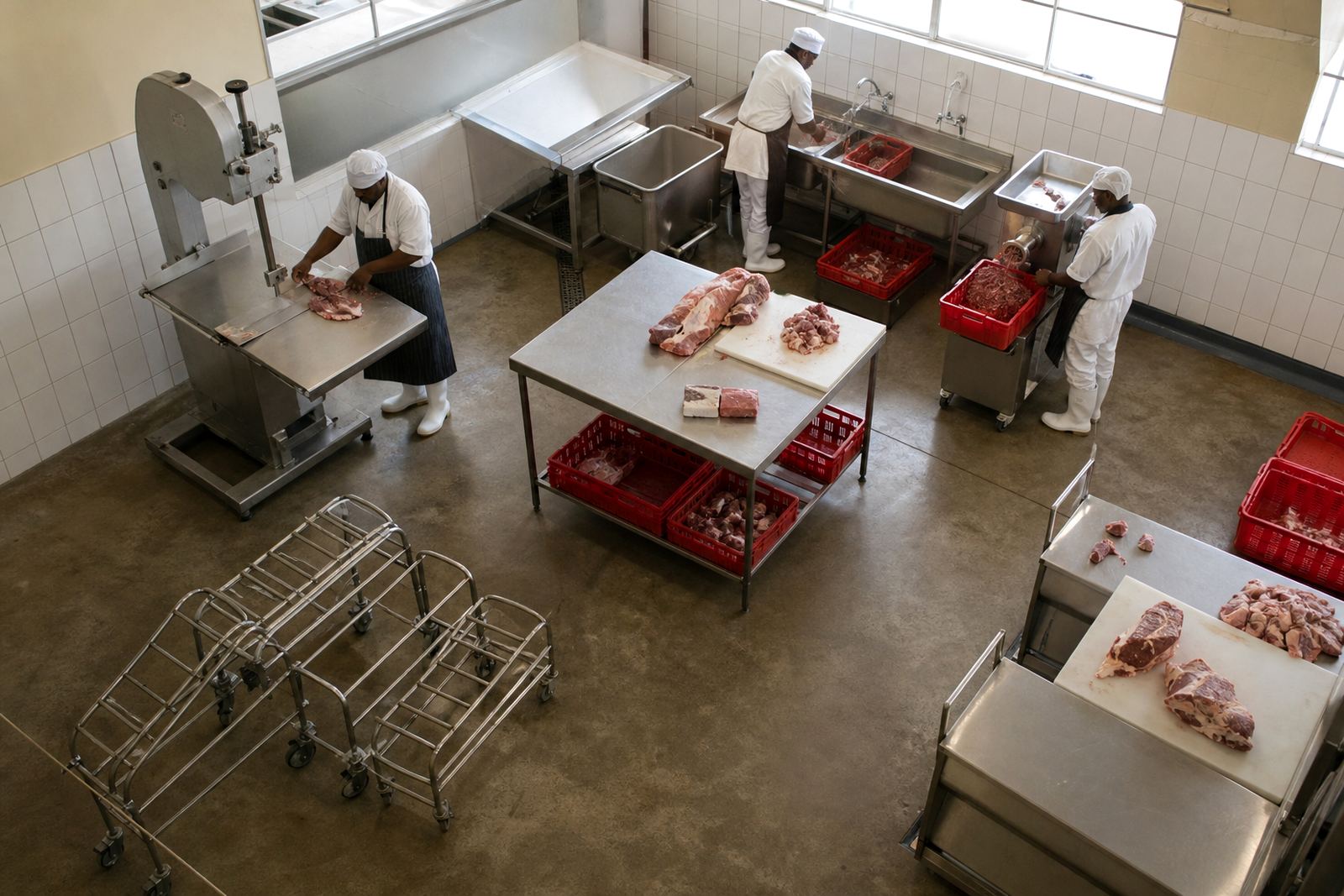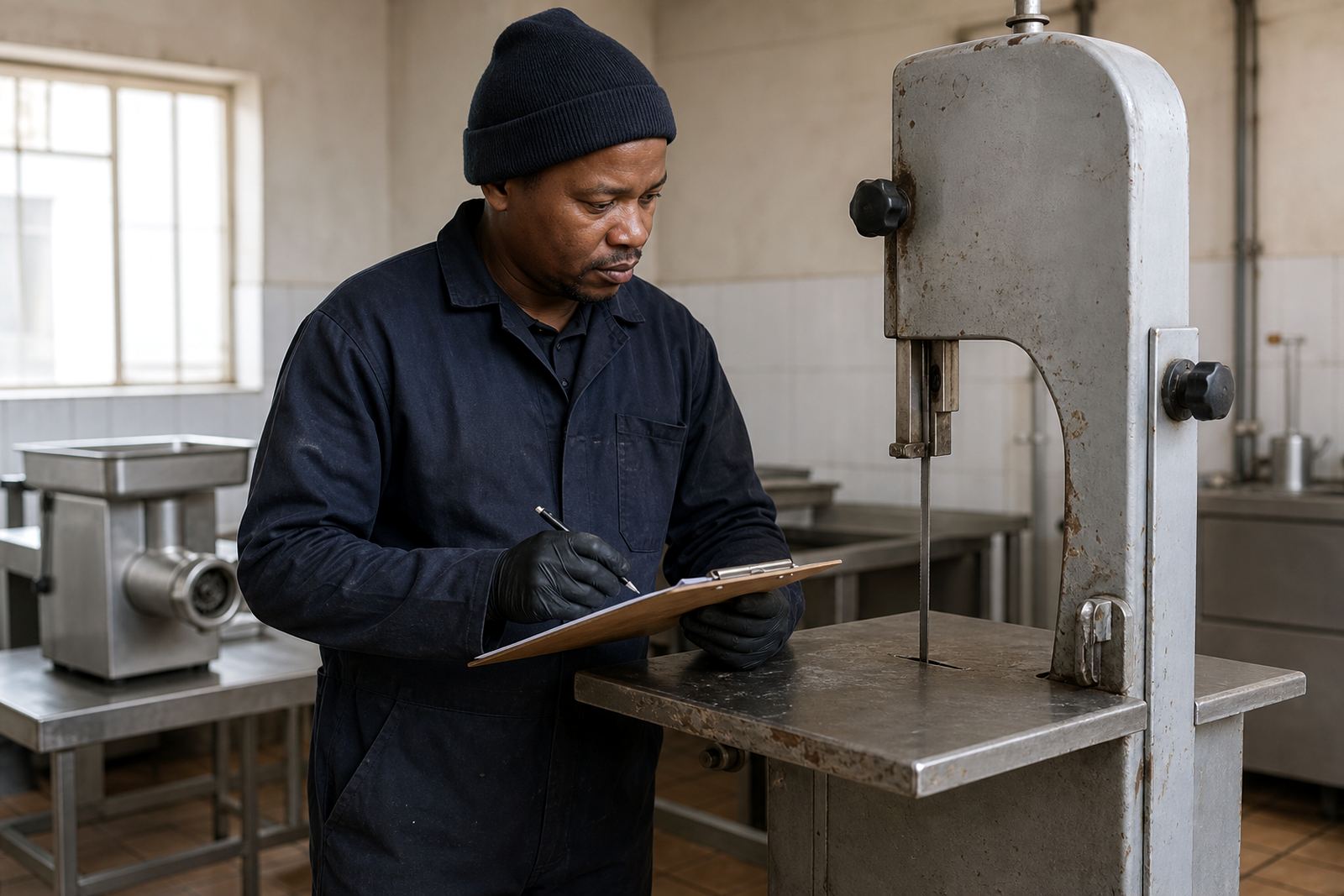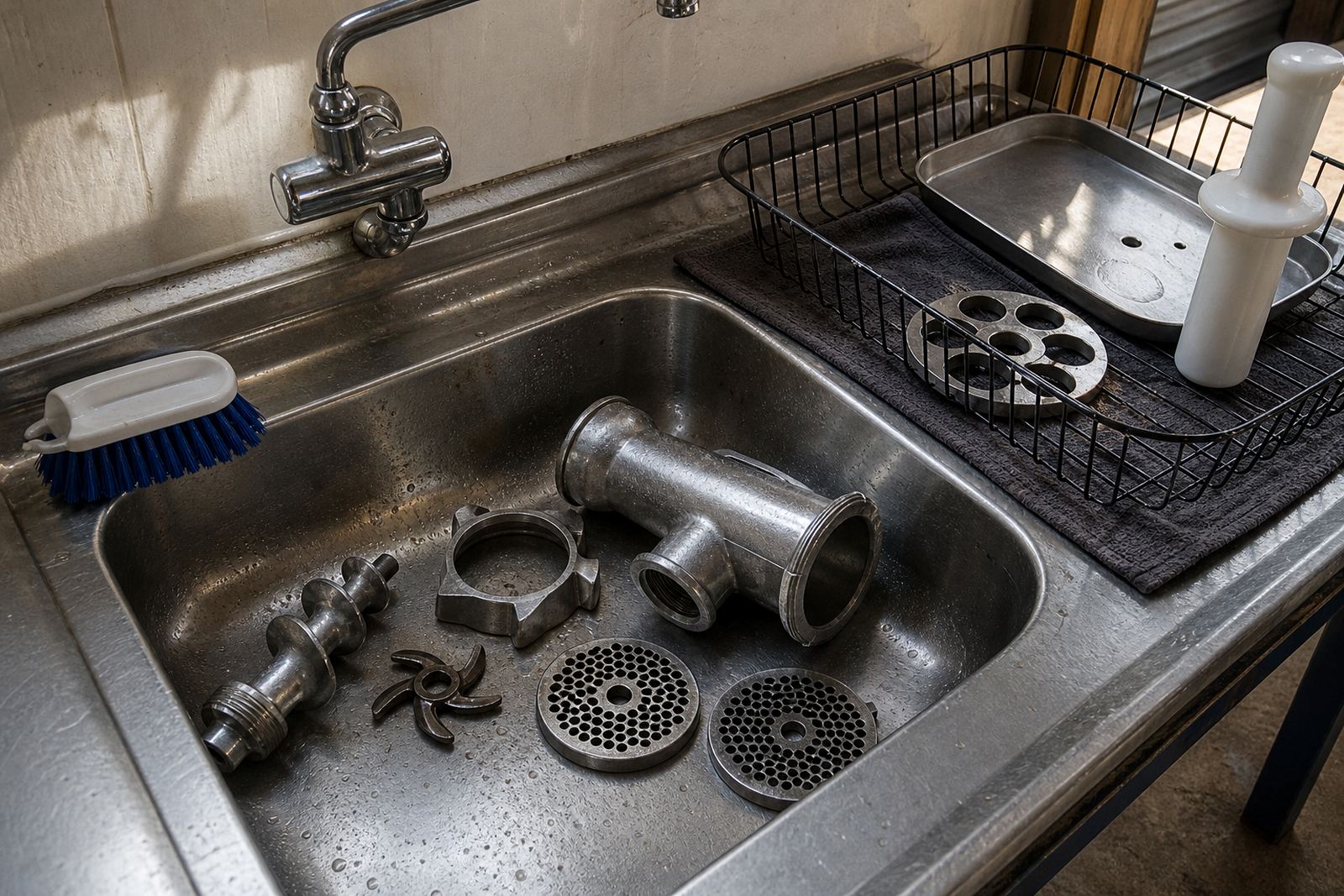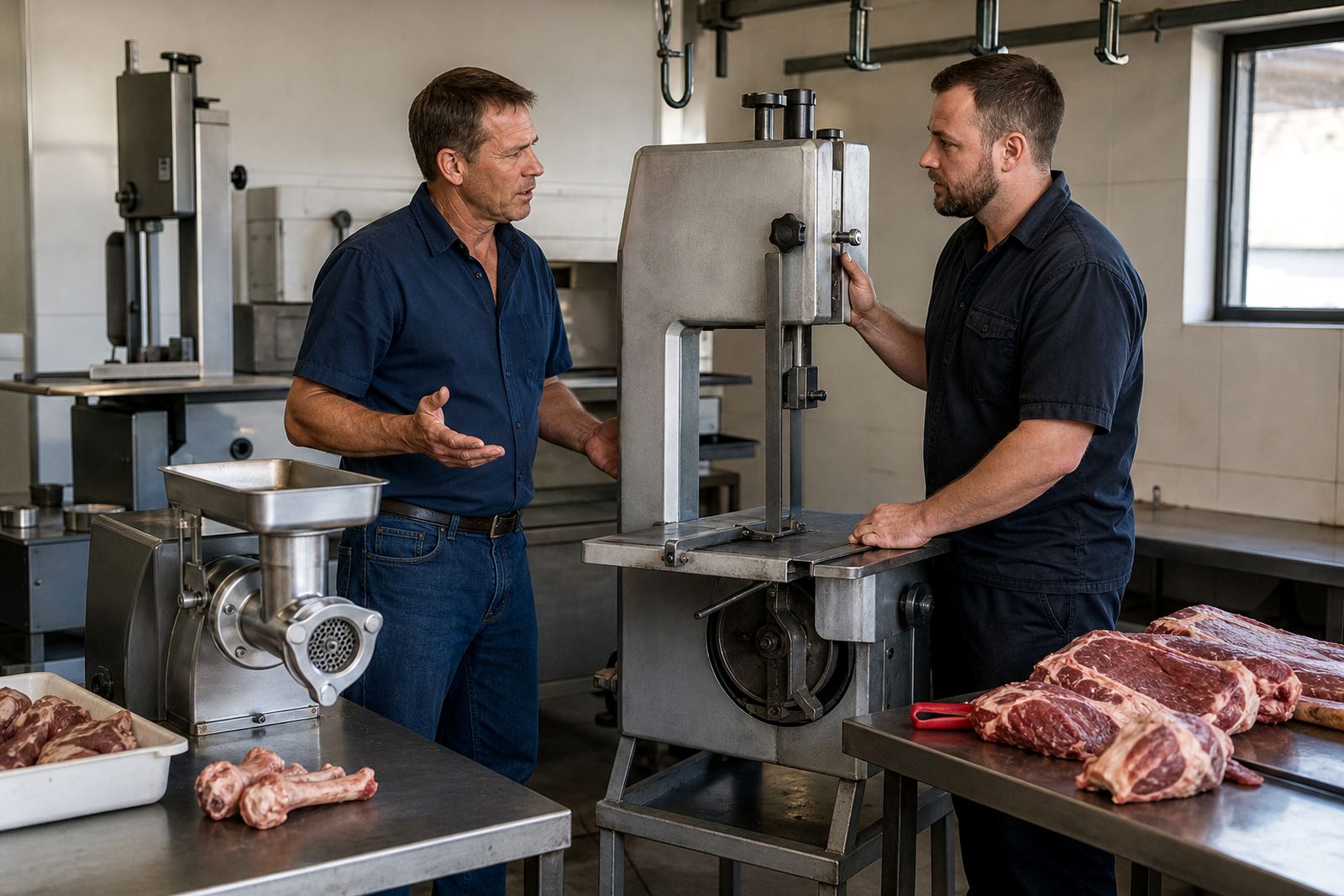


Start With the Machine Type And the Exact Problem
Before a service or fault visit, note whether the issue is with a bandsaw or a mincer, then describe what is happening in plain language. A technician does not need a long story, but they do need the basics: is the machine not starting, tripping power, cutting unevenly, making unusual noise, leaking grease, or leaving product poorly processed?
It helps to mention when the problem started and whether it was sudden or gradual. If the machine was working normally one day and then stopped, say so. If the fault only appears after an hour of use, or after cleaning, that detail can point the technician in the right direction. Small facts matter more than people think, especially when the machine is still partly working.
- Machine type: bandsaw or mincer
- What the fault looks or sounds like
- When it started
- Whether it happens all the time or only sometimes
- Any recent cleaning, blade change, plate and knife change, or service work
Give the Technician the Conditions Around the Fault
What the machine is used for often affects the fault. A mincer handling lean meat, fatty cuts, or a heavy daily throughput will behave differently from one used only now and then at home. The same goes for a bandsaw used in a busy shop in Bloemfontein versus one kept for weekend use in a small KwaZulu-Natal butchery that must also cope with coastal humidity. Rust, moisture, and cleaning habits all play a part.
Tell the technician where the machine is kept and what the working conditions are like. Is it close to a washdown area, exposed to dust, or stored in a room that gets very cold in winter and warm in the afternoon? If there has been load-shedding, a power cut, or a generator changeover before the fault, mention that too. Electrical interruptions can leave a machine with a different problem than a purely mechanical one. One missing detail can send the diagnosis in the wrong direction.
- Where the machine is used and stored
- How often it runs in a normal week
- Whether power cuts, generator use, or voltage issues were involved
- Any water, dust, or rust exposure
- Recent weather or humidity concerns
Have Access Ready Before the Visit Starts
A technician can only work well if they can get to the machine safely. Clear the area around the bandsaw or mincer, remove loose packaging, trays, crates, and any stock that blocks access. If the machine is built into a line or corner, make sure there is enough room to open panels, lift guards, or move parts as needed. No one wants to waste the first 20 minutes moving boxes and checking who has the keys.
Switch the machine off before the visit if it is safe to do so, and keep the area dry. If the fault callout is for a business in Johannesburg, Pretoria, Durban, Cape Town, Kimberley, Welkom or Kroonstad, the same rule applies: give the technician a clear path and make sure someone on site knows where the isolator, breaker, or socket is. If the machine is at home, keep children and visitors away while the technician is working.
- Clear a working space around the machine
- Make sure the machine can be isolated safely
- Keep floors dry and non-slip
- Provide access to keys, switches, and controls
- Keep bystanders away during testing
Share the Parts and Care History You Already Know
Good technicians want the service history, even if it is only partly remembered. If the blades were recently replaced, the plates and knives changed, or a service was done by your own staff, say so. A fresh part can still be fitted incorrectly, and a minor alignment issue can show up as noise, poor cut quality, or unnecessary strain on the motor. The same applies to cleaning. Harsh cleaning chemicals, poor rinsing, or water left sitting inside a machine can cause problems later.
If you have the original manual or any service notes, keep them nearby. You do not need a perfect file system, only a record of what has happened before. Even rough notes on a notepad or a photo on a phone can help. For example, a butcher in Bloemfontein may notice a mincer runs well in the morning but slows after lunch, and that the plate was changed the week before. That is useful information, not clutter.
- Recent blade, plate, knife, or cutter changes
- Any cleaning chemicals or washdown methods used
- Previous faults and repairs
- Signs of wear, rust, or loose fittings
- Any parts that were ordered or fitted recently
Keep Safety Information Close At Hand
When a technician arrives, the first priority is safety, not speed. Keep the machine switched off until the technician says it is safe to test. Guards should stay fitted where possible, and hands should stay clear of blades, feed openings, and moving parts. If the job involves a bandsaw or mincer, make sure suitable PPE is available for the person helping on site, especially if there is cleaning, testing, or product handling to be done.
Do not bypass guards to show how a fault happens. It may seem helpful, but it can create danger and damage the machine further. If the issue only appears when the machine is under load, explain that first and let the technician decide how to test it. A clear explanation is safer than a risky demonstration. Safety also includes hygiene: if the machine has been used for raw product, clean it as far as practical before the visit, then leave the final detailed servicing to the technician.
- Keep guards in place where possible
- Never reach into moving parts
- Use gloves, apron and other suitable PPE when needed
- Keep raw product and waste cleared from the area
- Allow the technician to control the test run
Tell Us Who Is On Site And What Outcome You Need
Not every service visit needs the same outcome. Sometimes you want a quick fault finding callout, sometimes a full service, and sometimes you need training after a new installation. If the technician is meeting a shop owner, a family member, a foreman, or a staff member at the branch, say who will be there and who can approve work. That keeps the visit moving and avoids waiting around for decisions.
It also helps to explain what a good result looks like for you. Maybe the machine must be ready for the morning cutting shift, maybe the mincer needs to be safe for weekend home use, or maybe a replacement part is required after inspection. MorCut Butchery works with commercial and home butchers across South Africa, from Hamilton in Bloemfontein to delivery areas in Johannesburg, Pretoria, Durban, Cape Town, Kimberley, Welkom and Kroonstad. The more practical your brief, the easier it is to plan the right service response.
- Who will meet the technician on site
- Who can approve repairs or parts
- Whether the visit is for fault finding, servicing, or installation
- What time pressure applies to the job
- What outcome you need by the end of the visit
A Simple Local Example Saves Time
Say a small butchery in Bloemfontein phones in because the mincer is slowing down and the meat is coming out uneven. If the owner can say the machine was cleaned the night before, the plate was changed recently, and the problem only started after a power interruption, the technician has a strong starting point. If the unit is in a tight prep room with limited access, that should be said before the visit. The callout then starts with the right tools, the right parts, and a better chance of fixing the issue without repeat visits.
The same idea works for a bandsaw in a busy Johannesburg shop or a home butcher in Cape Town who only uses the machine on weekends. A few clear facts, proper access, and basic safety steps make a real difference. Technicians do their best work when they are given useful information instead of guesswork, and that means less downtime for the butcher on site.
At MorCut Butchery, our team in Hamilton, Bloemfontein handles installation, servicing, breakdown callouts, parts supply, delivery and setup, plus operator training and cleaning demonstrations. If you prepare well before the visit, we can focus on the fault, the fix and the safest way forward.