

Start With a Clean Work Area Before You Touch the Machine
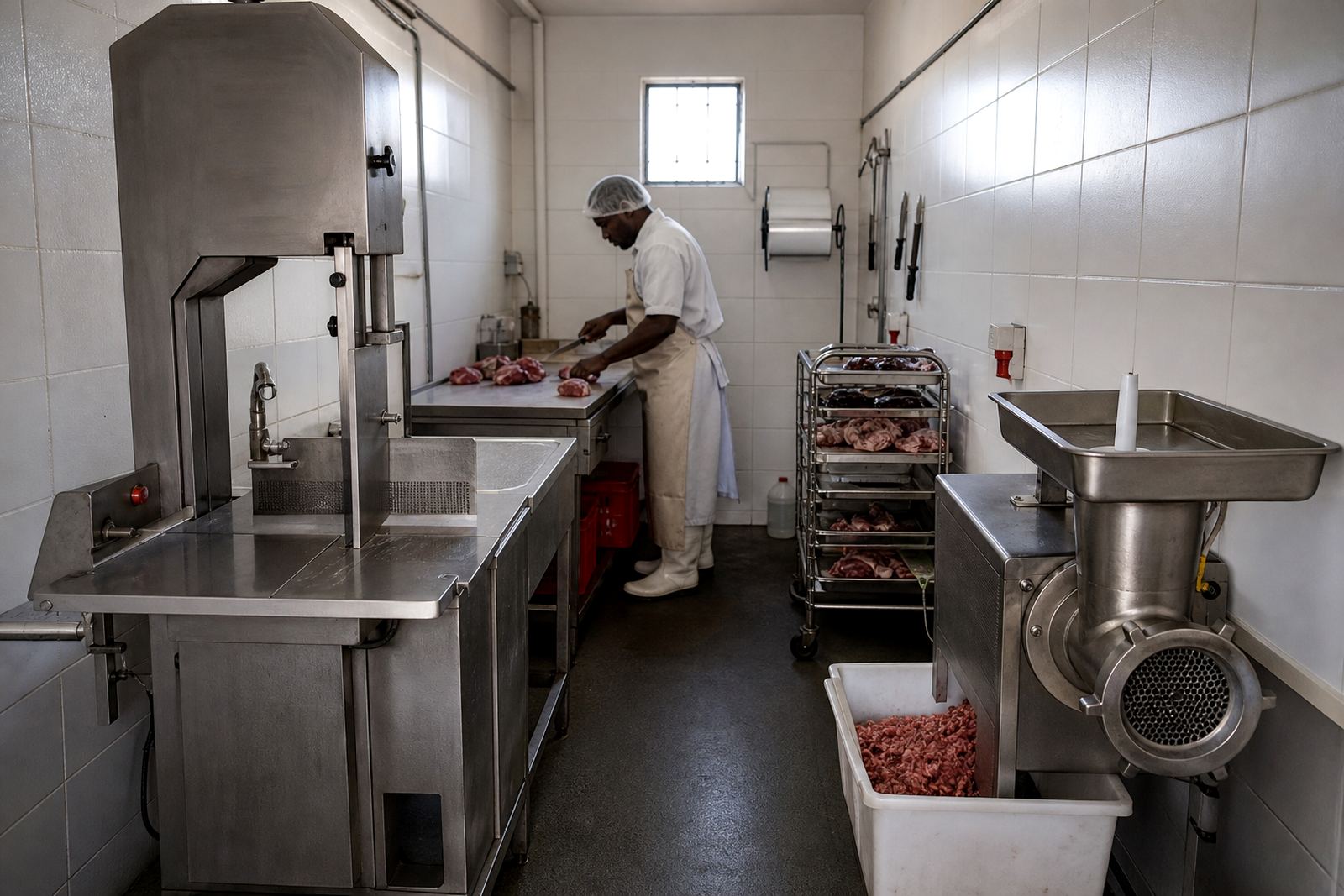
Good cleaning starts before the first part comes off. Clear the area around the machine, put away loose packaging, and keep a separate space for clean parts and dirty parts. If you are working from a garage, scullery or outside prep area in Bloemfontein, make sure the surface is stable and easy to wipe down, because meat residue, fat and water can spread quickly.
Switch off and unplug the machine before any cleaning begins. Let moving parts stop fully. Put on gloves, and if you are washing down by hand use footwear with grip so you do not step on a wet floor. A small bucket, soft brush, cloths and mild detergent are usually enough for daily cleaning. Avoid soaking electrical parts, switches or motors. Water where it should not be can cause faults later, especially after a load-shedding interruption when equipment may be switched on again in a rush.
Clean Bandsaws and Mincers Straight After Use
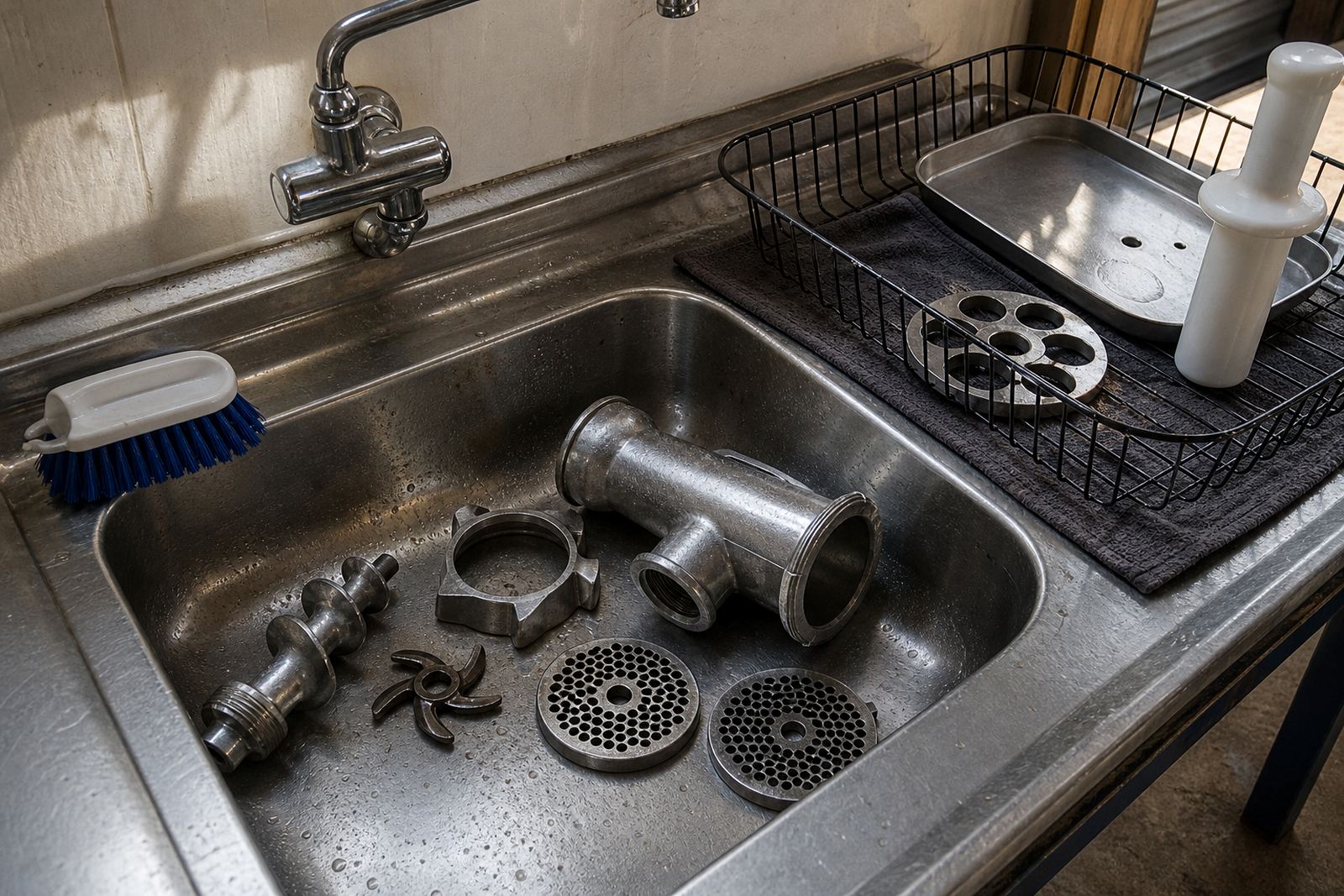
For home users, the best habit is to clean while residue is still fresh. Dried meat and fat take longer to remove, and that extra scrubbing can wear parts sooner. On a bandsaw, remove loose scraps, wipe down exposed surfaces, and wash removable parts according to the machine’s normal care routine. On a mincer, separate the working parts carefully, then clean the worm, plate and knife area so no fibres or fat are left behind.
A simple order works well:
- Switch off, unplug and wait for all movement to stop.
- Remove loose meat, bone dust and fat with a scraper or cloth.
- Wash removable parts in warm water and mild detergent.
- Rinse and dry every part fully before reassembly.
- Wipe the outer body and the work surface around the machine.
Drying matters just as much as washing. In humid coastal areas such as Durban or Cape Town, any leftover moisture can lead to rust spots on blades, plates and fasteners. Even in the drier Free State air, damp parts put away too soon can still tarnish or stain.
Handle Blades, Plates and Knives With Care
Sharp parts need special attention. A clean blade or plate still needs to be treated carefully, because slips happen most often during washing and reassembly. Keep your hands clear of cutting edges, and never leave blades loose in a sink where they can hide under suds. A small tray or lined container helps keep parts together and prevents damage.
Do not scrub cutting edges with rough pads or hard wire tools. That can damage the surface and shorten service life. Instead, use a soft brush and non-abrasive cleaner. If a blade, plate or knife shows signs of dullness, chipping or uneven wear, set it aside for replacement rather than forcing it to do more work. A blunt part makes the machine strain, leaves a poorer cut and can create more heat during use.
When reassembling, make sure each part goes back in the correct order and sits properly. If anything feels tight, misaligned or unusual, stop and check it again rather than forcing the fit.
Keep Grease, Bone Dust and Smells Under Control
Daily cleaning is not only about appearance. Fat build-up attracts dust, holds odours and can make a home prep area unpleasant very quickly. It also creeps into corners around guards, trays and feed areas where it becomes hard to remove later. A short wipe after each session is easier than a long clean once a week.
For the best result, build these habits into your routine:
- Wipe the machine body before residue dries.
- Clean drip points and collecting trays last.
- Wash cloths and brushes after each session.
- Keep raw meat tools separate from cooked food tools.
- Empty waste bins before they start to smell.
If you work from a small home kitchen, it helps to place the cleaning cloth, detergent and drying rack close by before you begin. That way the machine does not sit open while you hunt for supplies. In a place like Kroonstad or Welkom, where family kitchens often double as prep spaces, a bit of planning makes the cleanup much easier and safer.
Check Guards, Cords and Moving Parts While You Clean
Cleaning time is the best time to spot small faults before they become bigger problems. Look at guards, fasteners, switches, cords and any visible moving parts. If a guard is loose, a cable is damaged or a part rattles when it should not, stop using the machine until it is checked. Do not use tape as a long-term fix on electrical parts.
Pay attention to anything that changes from one cleaning session to the next. A mincer that suddenly sounds rough, or a bandsaw that leaves more residue than usual, may need servicing, a new blade or a plate and knife change. Small issues often show up first as more effort during cutting or cleaning. Catching them early saves time and helps avoid breakdowns.
For home users, it is better to do a careful visual check than to assume all is fine because the machine still turns on. That simple habit can prevent a lot of frustration later.
Dry, Store and Restart the Right Way
Once cleaning is done, drying and storage matter just as much as the wash itself. Do not stack parts while they are still wet. Spread them out on a clean cloth or rack so air can reach every surface. If you live near the coast, a light film of moisture can remain on metal longer than you expect, so give the parts enough time before putting them away.
Before the next use, check that every part is assembled correctly, guards are in place and the work area is clear. If the machine has not been used for a while, give it a quick inspection before switching on. That is especially useful after weekends away, power interruptions, or long spells of storage in a garage or back room.
For many home butchers, the aim is not a complicated process. It is a steady one. Clean right after use, dry fully, store neatly and inspect as you go. That routine protects the machine and makes the next prep session less of a chore.
When Home Cleaning Is Enough and When to Ask for Help
Basic home cleaning will cover the day-to-day work for most users. But if a bandsaw or mincer keeps clogging, smells persist after a thorough wash, or parts are worn and hard to fit back correctly, it is time to ask for help. Some issues sit deeper than surface dirt and need proper servicing, part replacement or setup advice.
That is where a local supplier with practical experience makes a difference. From Hamilton in Bloemfontein, MorCut Butchery supports home users and commercial operators with servicing, installation, training and parts supply across South Africa. If you are unsure about a cleaning step, need a blade replaced or want a safer way to look after your equipment, use the enquiry form on the contact page and ask for guidance before small problems turn into costly ones.