

Start With the Clean Route, Not the Machine
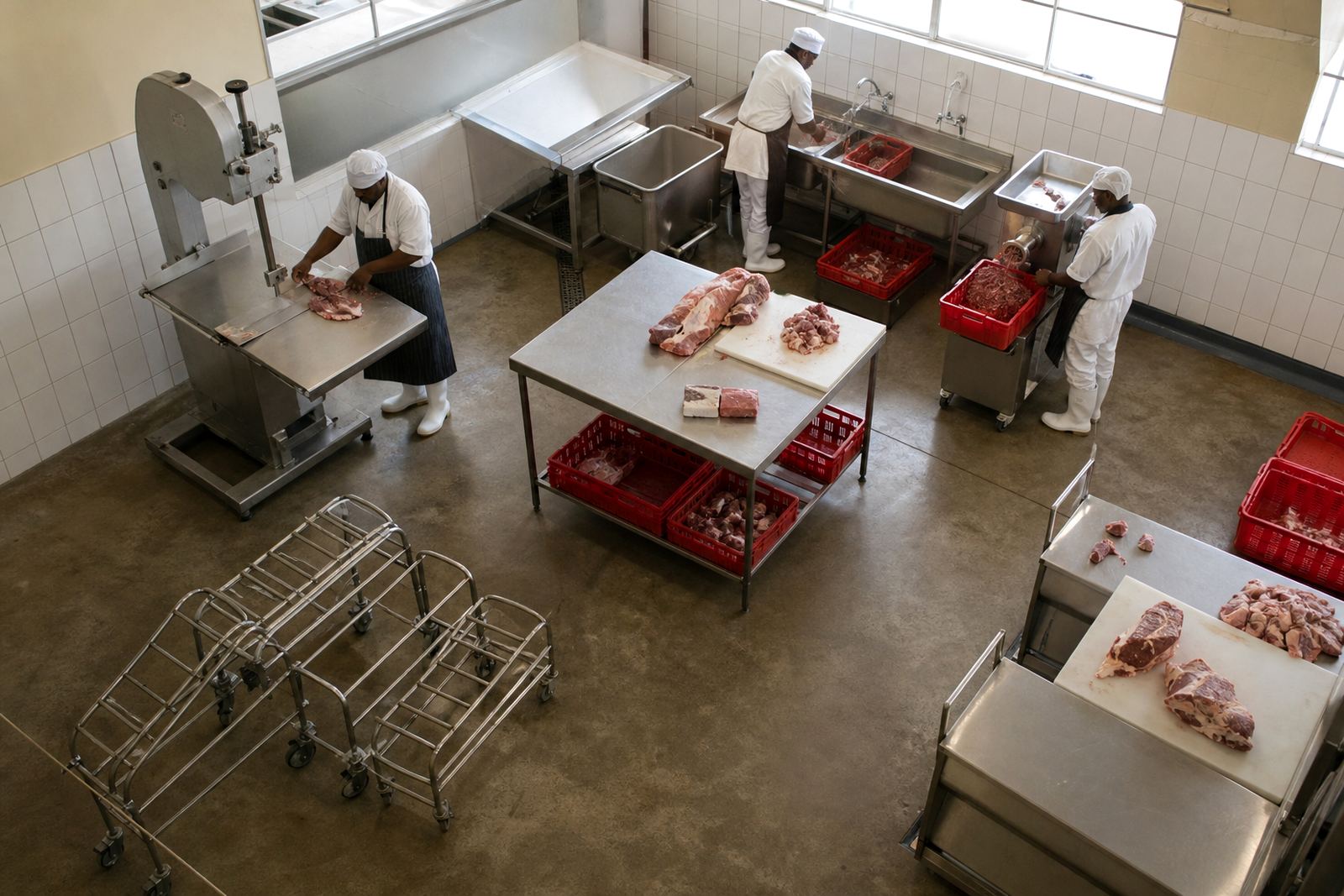
Before you choose a spot for a bandsaw or mincer, map the route from receiving to cutting, trimming, mincing and packing. The aim is to keep dirty product, clean product and wash-down areas separate enough that staff are not crossing back and forth with trays, knives and waste. If the room is tight, this matters even more because one poor turn can create bottlenecks at the busiest time of day.
In Bloemfontein, where many butchers work with modest floor space and hard surfaces that show every splash, a simple layout can make cleaning easier after a long shift. Keep the main path open, leave enough room for trolleys or crates, and place the machine so the operator is not forced to twist or carry product awkwardly. A straight path saves time and lowers the chance of slips.
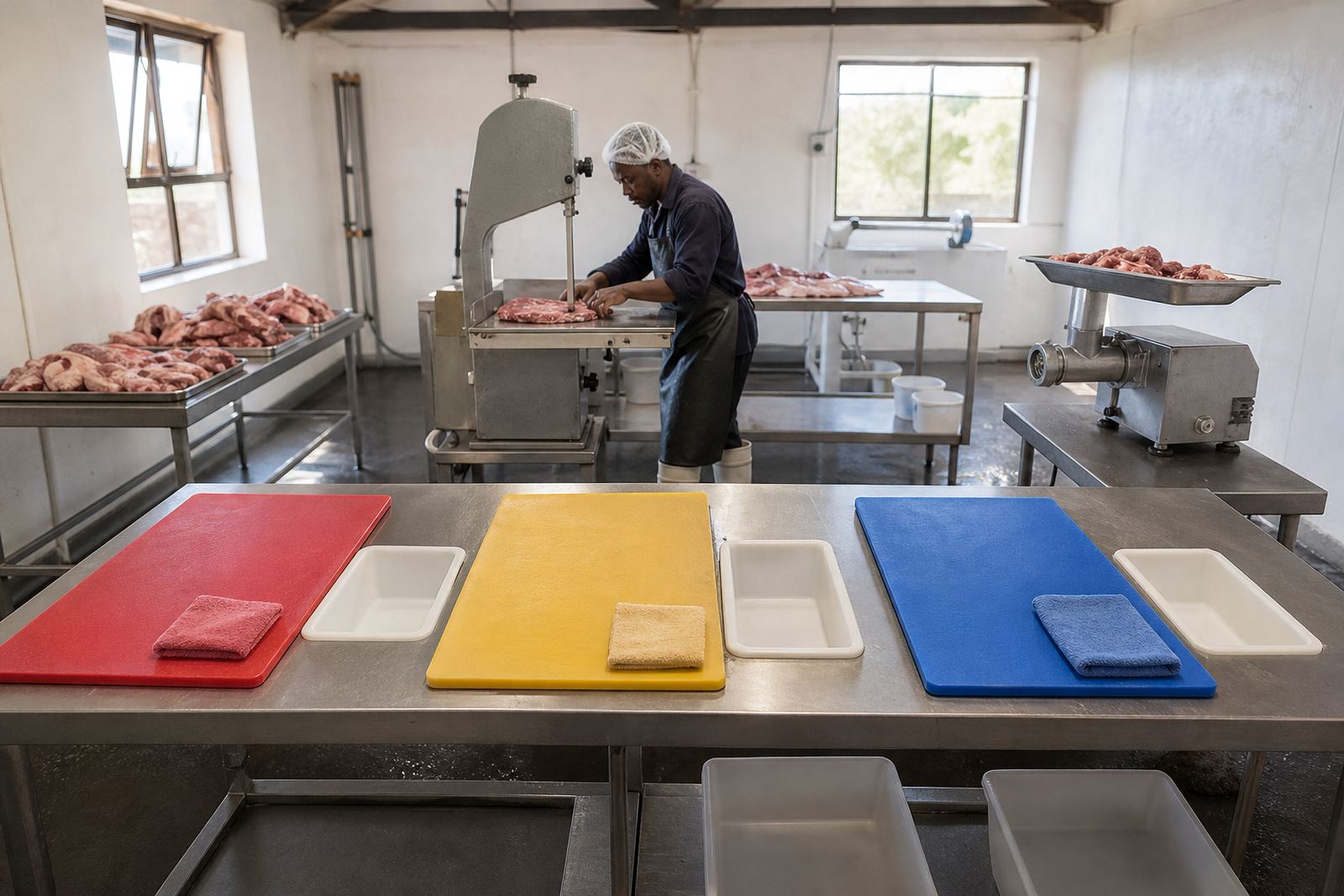
Think in zones rather than just equipment. One side for cutting and sawing, another for mincing and packing, with a clear wash area nearby. That way the room works with your team instead of against them.
Bandsaw Placement for Safer Cutting and Faster Clearing
A bandsaw should be positioned where an operator can feed product, check the cut and clear the area without crossing someone else’s work space. Leave enough clearance around the machine for opening guards, cleaning under and around the base, and checking the blade area safely. If the unit sits too close to a wall or another table, cleaning becomes awkward and people tend to miss corners.
Place the saw near the cutting station, but not so close that scraps, knives and trays all crowd the same surface. The operator should have room to move product in and out without reaching over the blade area. Good positioning also makes it easier to train new staff because the process is more controlled and less rushed.
- Keep the floor dry and level around the saw.
- Leave space to open and clean guards properly.
- Do not block access to the power switch or emergency stop.
- Store spare blades and tools away from the immediate cutting zone.
General safety practice always matters here: use the guards provided, wear the right PPE and never bypass a safety feature to save a few seconds.
Mincer Positioning That Supports Hygiene and Flow
A mincer works best when it sits close to prepared product, but separate from raw trimming that still needs sorting. If the machine is tucked too far from the prep table, staff carry meat across the room and the traffic starts to clog. If it is too close to the cutting area, the room can feel crowded and cleaning becomes harder. Balance is key.
For daily use, place the mincer where the feed tray, collection tubs and clean packing surface can all work together in one line. This keeps movement short and reduces the chances of product being left out while someone walks around looking for a tray. In humid coastal towns like Durban, that shorter handling time can also help with general product care and room cleanliness, especially when wash-downs are frequent.
Keep the surrounding surfaces smooth and easy to wipe down. Avoid stacking boxes or loose utensils around the machine base. A clear floor and a clear tray line make the whole prep room easier to manage, particularly during busy mornings or weekend trading.
Plan Around Water, Power and Load-Shedding
Good layout is not only about movement. It should also take account of power points, washing water and the reality of load-shedding. A bandsaw and mincer should be placed so cables do not cross walkways and where cleaning hoses or buckets will not create a wet hazard near plugs or switches. In many South African prep rooms, the best position is often the one that reduces cable runs while still keeping the machine accessible for servicing.
If your site uses standby power or switches equipment off between shifts, make sure the layout allows safe isolation and restart. Operators should be able to reach controls quickly without stretching over wet floors or packed crates. In older buildings around Johannesburg and Pretoria, outlet positions and drainage points sometimes decide the layout more than the machine itself, so it pays to plan carefully before fixing equipment in place.
- Keep electrical connections away from splash zones.
- Allow space for cleaning without dragging cords through water.
- Make sure the machine can be isolated quickly during maintenance.
- Leave access for servicing, blade changes and parts checks.
Cleaning Access Is Part of the Layout
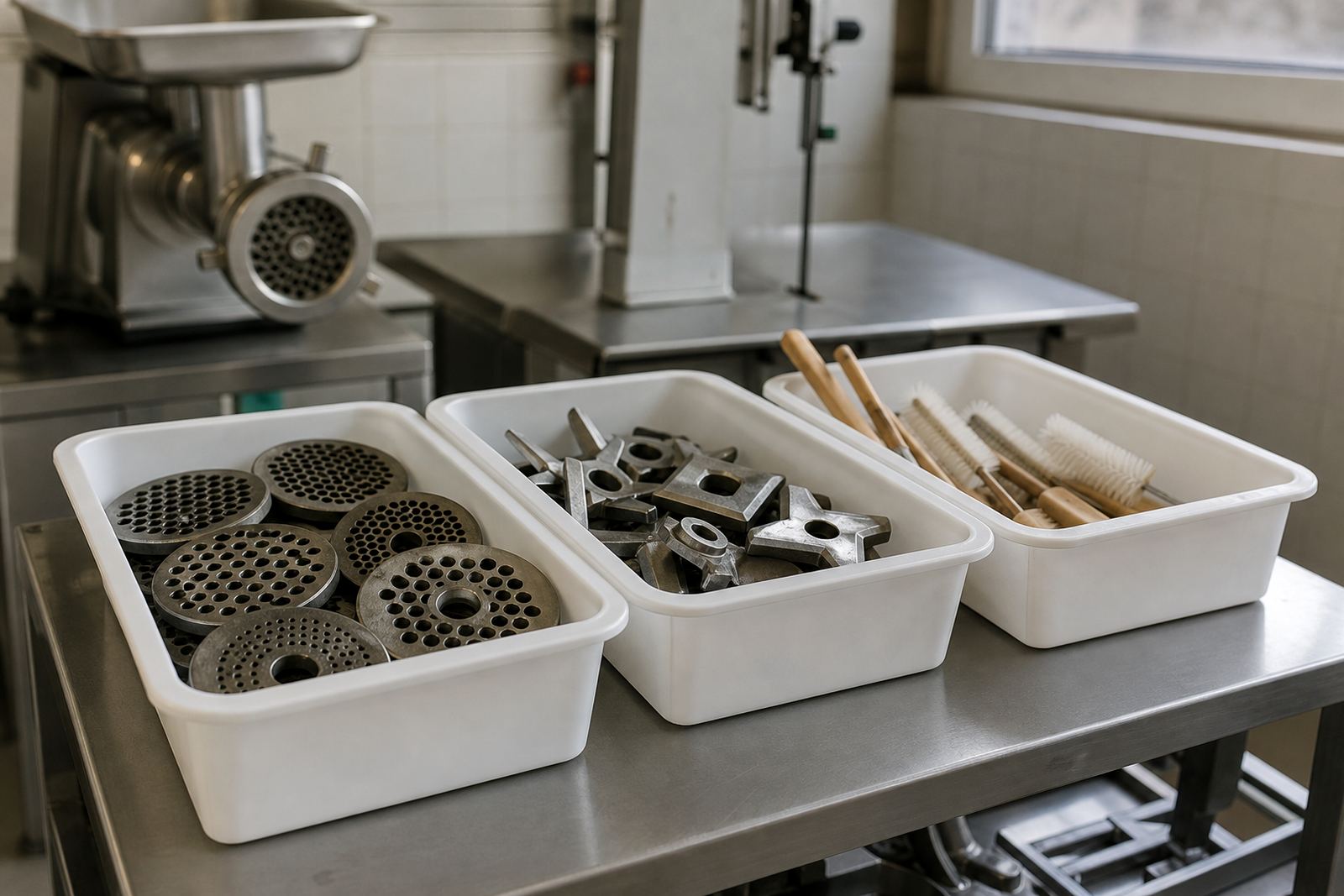
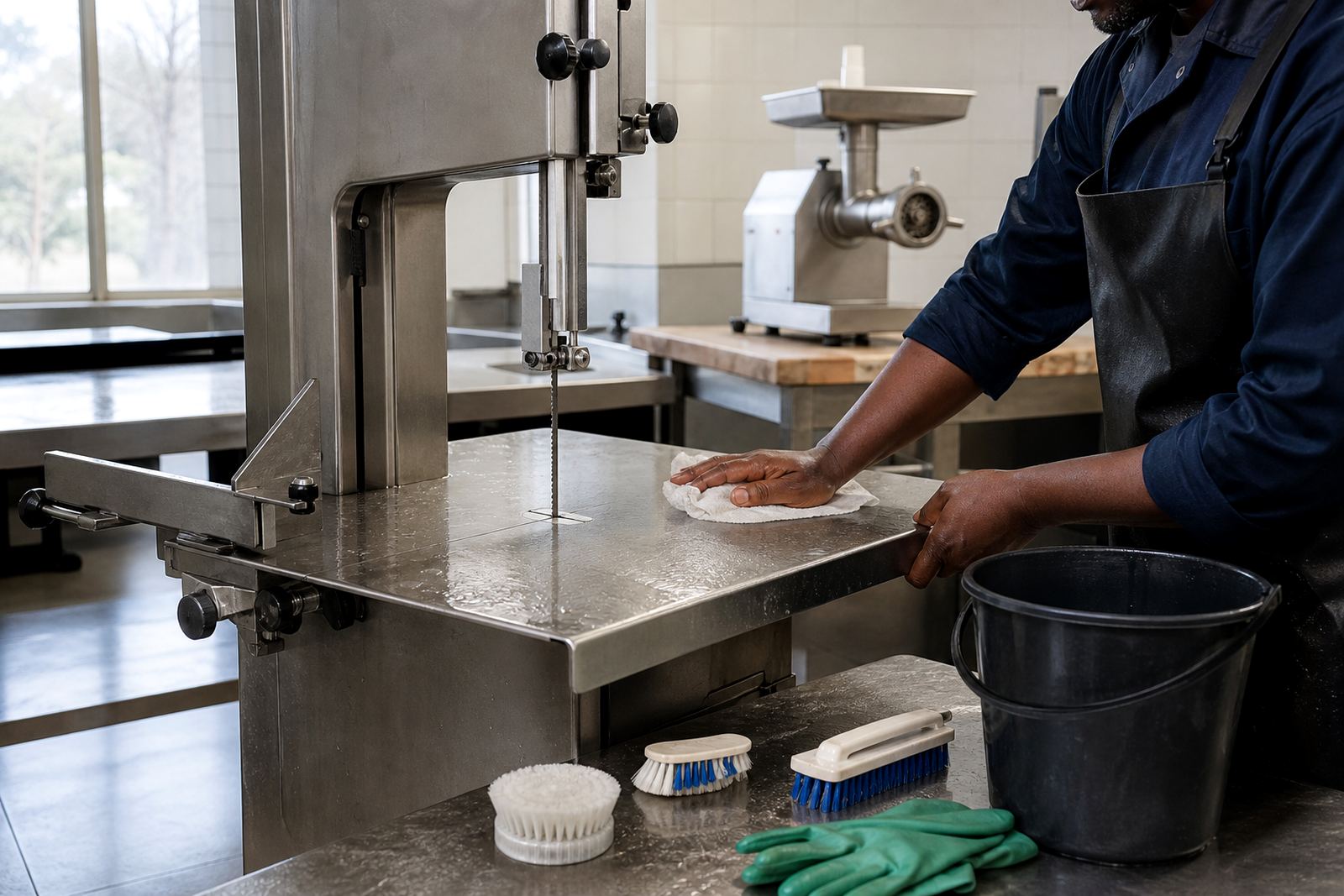
A prep room that is easy to clean will usually stay cleaner. When deciding where to place your equipment, think about how staff will reach the sides, back and underside of each machine during wash-down. If the layout forces awkward reaching or moving heavy units too often, cleaning gets skipped or rushed. That creates buildup around guards, trays and feet where dirt can sit.
At our Hamilton base in Bloemfontein, we often see that the best layout is the one that allows a direct cleaning path after close of trade. There should be room to lift removable parts, wash down the floor and inspect the machine area without having to shift everything out of the way. That is especially useful for small home butcher setups and smaller commercial rooms that need to finish cleaning quickly at the end of the day.
Good cleaning access also supports regular maintenance. When technicians or in-house staff can reach the machine properly, they are more likely to spot wear early and keep the equipment in working order.
Training the Team Around the Space You Have
Even a sensible layout will not work if staff use it differently every day. The team should know where product enters, where waste leaves and where cleaning starts. Clear routines matter just as much as floor space. A good setup reduces confusion, especially when more than one person is on the floor at the same time.
That is why operator training is worth planning alongside installation. Staff who understand safe feeding, cleaning and basic checks will use the room better and keep the machines in better condition. For example, a Bloemfontein butcher serving customers from Kimberley, Welkom and Kroonstad may need a room that handles both small batch work and busier days. The layout should support both without constant rearranging.
Simple habits help:
- Return knives and tools to the same place after use.
- Keep waste bins where they do not block the work path.
- Clean as you go rather than waiting for the end of the shift.
- Report noise, vibration or loose fittings early.
When the space and the habits match, the room runs smoother and the machines last longer.
Local Example: A Practical Setup for a Bloemfontein Prep Room
A small commercial butcher in Bloemfontein may have one room for receiving, cutting, mincing and packing. In that case, the best layout is usually a straight or L shaped flow, with the bandsaw close to the cutting bench, the mincer just beyond the trim area and the wash point within easy reach but not directly beside the electrical equipment. This reduces crossed movement and keeps the room easier to clean at knock off.
Where floor space is limited, the answer is not to crowd more into the room. It is often better to remove unnecessary items, create clear zones and place each machine where it serves a single purpose well. That practical approach helps commercial butchers and home users alike. For advice on bandsaw installation, mincer installation, servicing, parts supply or delivery and setup, our team in Hamilton supports customers across Bloemfontein, Johannesburg, Pretoria, Durban and Cape Town, as well as Kimberley, Welkom and Kroonstad.
The right layout will not replace good housekeeping, but it makes every task easier. And in a prep room, easier usually means safer, cleaner and faster.