
Why the Cold Season Changes the Workload
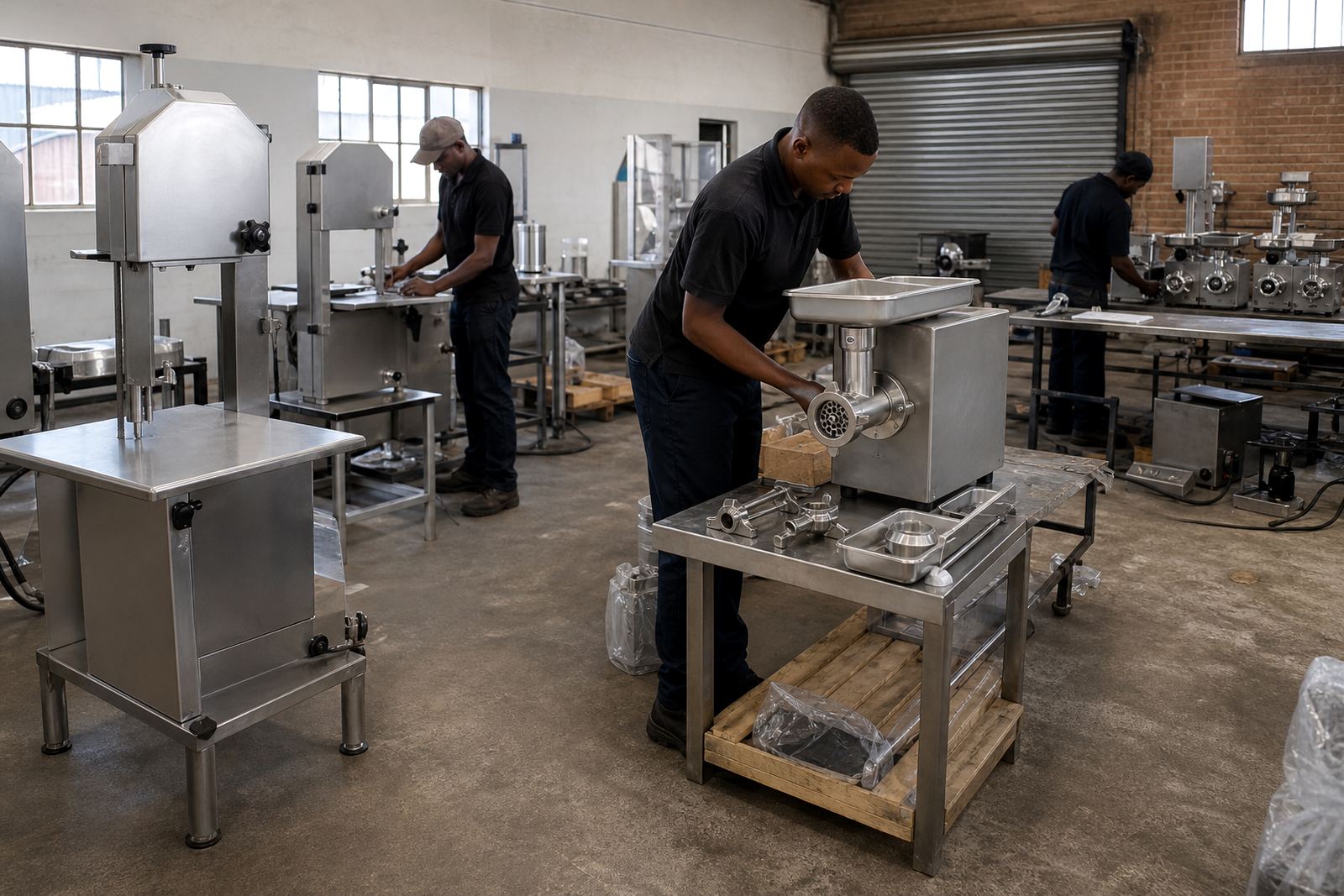
Winter usually brings steadier demand for biltong, sausages, stew packs and other meat cuts that keep a butcher shop busy from opening time to closing time. In Bloemfontein and across the Free State, that means more handling, more cutting and more pressure on bandsaws and mincers. If equipment is already tired before June, the season will show it quickly.
The best time to prepare is before the rush starts. Check how often the machines are used, what parts wear first, and whether staff are following the same cleaning routine every day. A small fault in a blade guide, feed area or guard can slow the whole counter. It also increases the risk of poor cuts, unnecessary waste and avoidable downtime.
For shops that service both walk-in customers and wholesale orders, winter prep is not only about the machine itself. It is also about having the right consumables on hand, keeping the work area dry and making sure operators know what to watch for during a long shift.
Parts to Keep on the Shelf Before the Rush
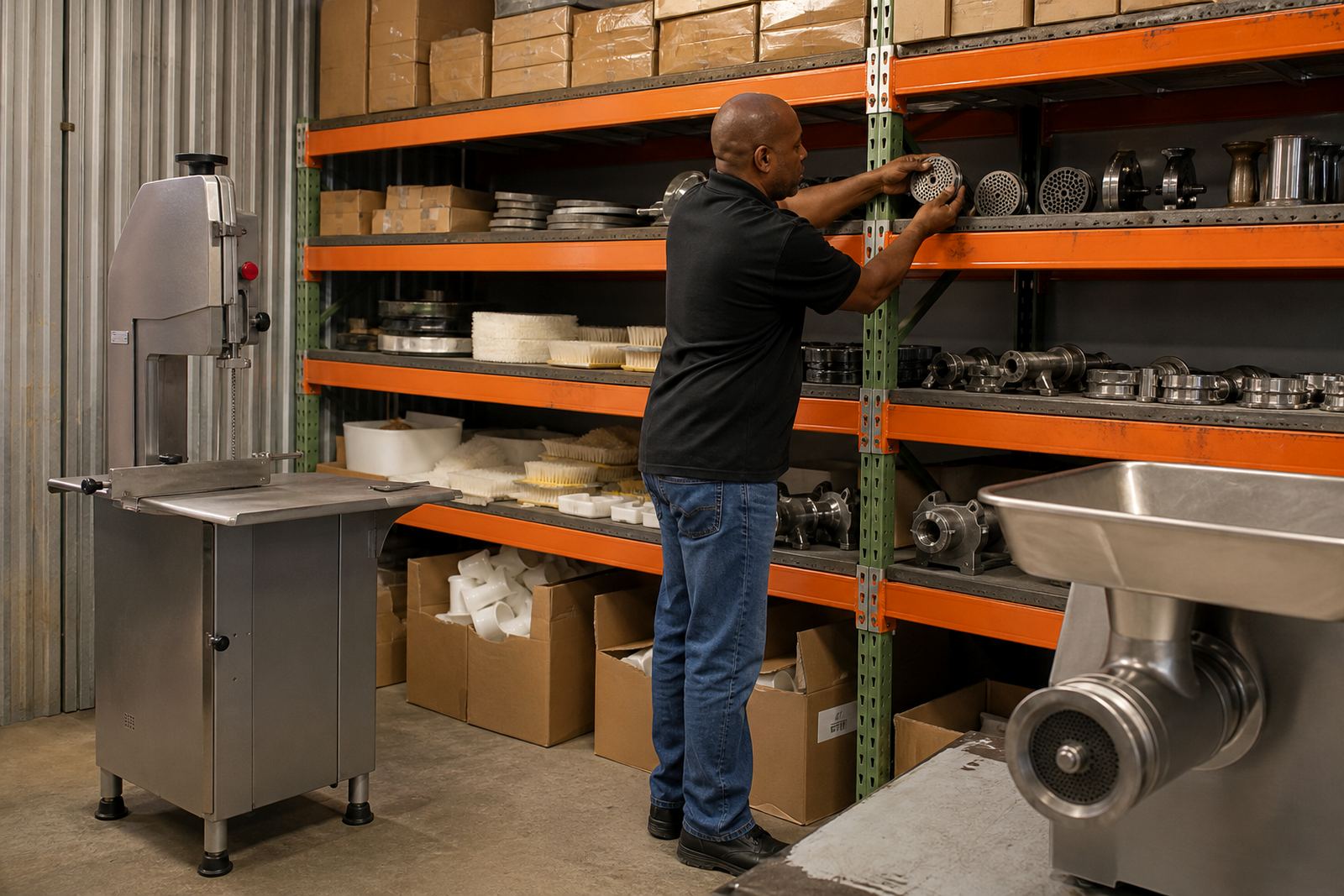
Spare parts do not take up much room, but they save time when a machine needs attention. In winter, the most useful stock is usually the simple items that wear through normal use. That includes blades, plates, knives, seals, guards and other common service parts. If a machine has been running hard through summer, do not wait until it fails before ordering replacements.
- Keep the most used cutting parts ready for quick changeover.
- Hold a small reserve of cleaning brushes, food-safe lubricants and service consumables.
- Check that fasteners, covers and safety guards are all in place.
- Review which parts are used most often in your shop and stock those first.
Businesses in Johannesburg, Pretoria and Durban often move through parts more quickly because of higher daily throughput, while smaller operations in towns like Welkom, Kroonstad and Kimberley may need fewer items but still need them at the right time. A basic stock review in April or May can prevent a lot of headaches later.
Bandsaw Checks That Protect Output and Staff
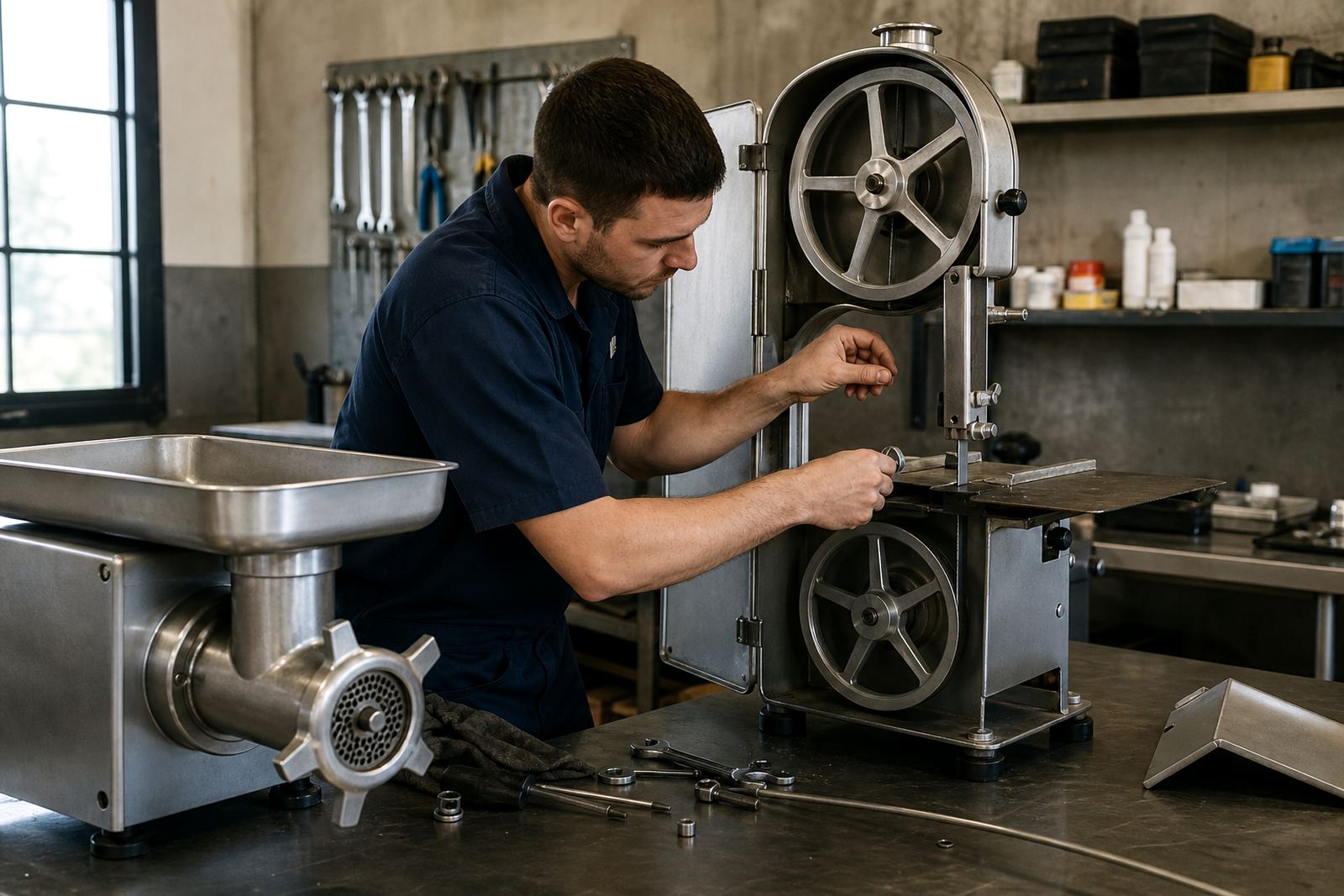
A bandsaw should cut cleanly, stay stable on the bench or stand, and keep the blade tracking properly. If it starts wandering, cutting unevenly or making unusual noise, it needs attention before the problem grows. Guards must stay fitted, the machine should be cleaned after use, and staff should not bypass safety features just to keep production moving.
During winter prep, test the saw under normal working conditions and look at the full path of the cut. If the product is forcing the operator to push harder than usual, that can point to blade wear or alignment issues. Water, grease and meat residue around the machine should be cleared promptly because they can create slip hazards and make cleaning harder later.
In meat rooms where power interruptions are common, especially during load-shedding periods, it helps to keep the area organised so the machine can be switched off and reset safely when supply returns. Operators should know the correct restart sequence and never rush the process after an outage.
Mincer Care That Keeps Throughput Steady
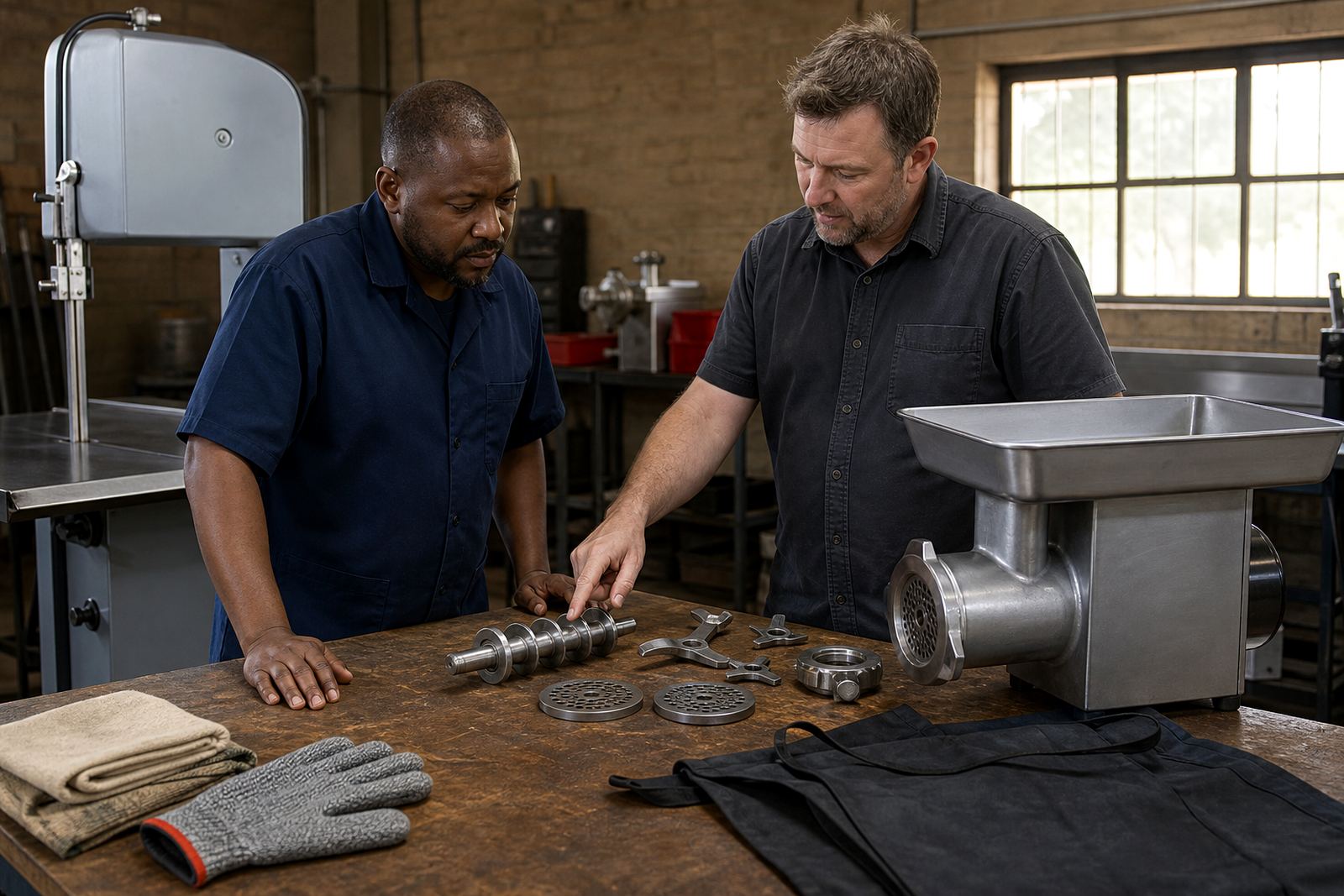
Mincers often show wear through changes in texture, slower feed and more strain on the motor or drive system. Before the busy season starts, check the condition of plates and knives, confirm the feed area is clean, and make sure the machine is not forcing the product through unevenly. A dull cutting set can affect both output and the quality of the final product.
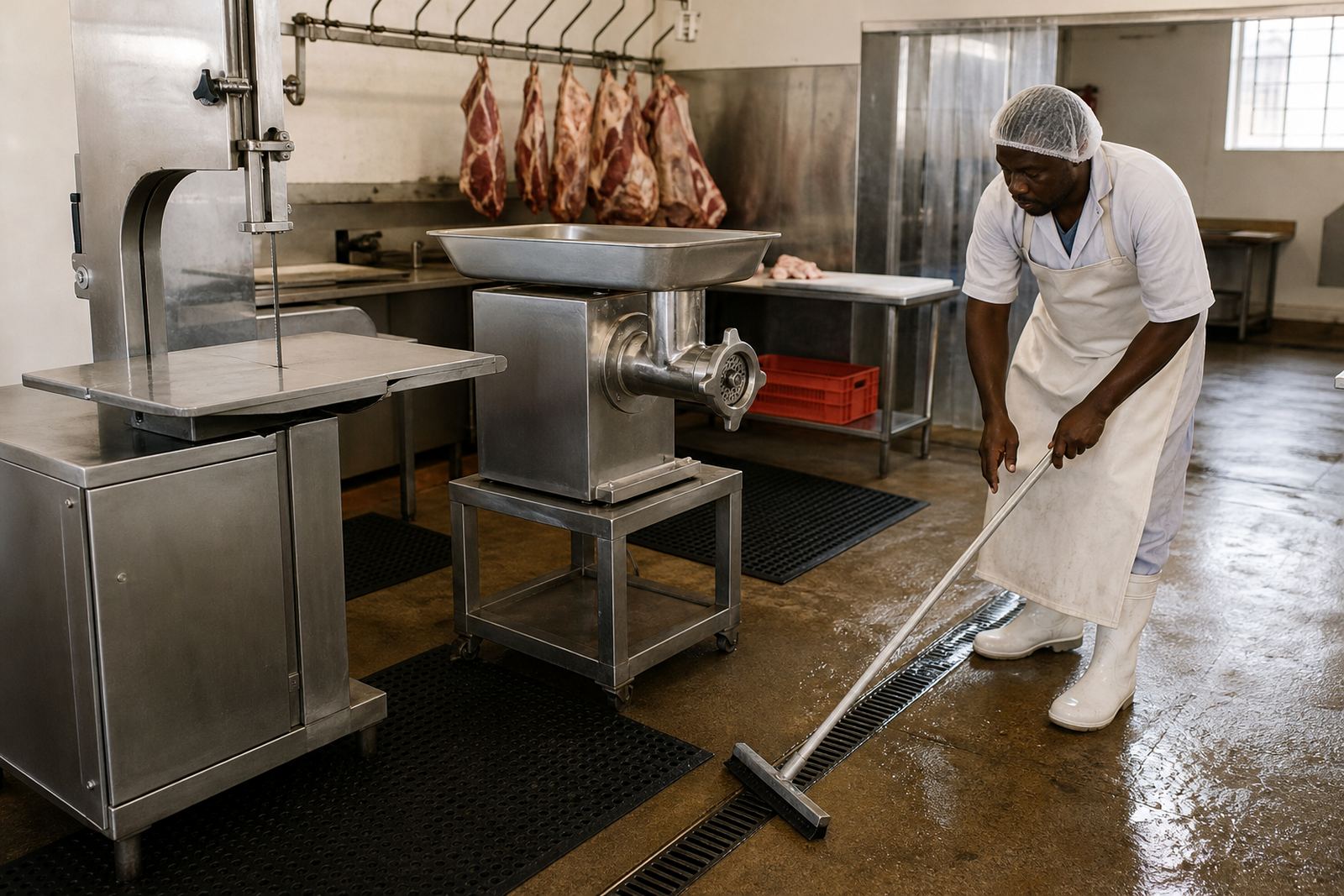
Cleaning matters just as much as mechanical condition. Residue left in the feed throat or around removable parts can harden quickly, especially if shifts are long and staff are trying to close late. A proper clean after each use helps protect the machine and supports better food hygiene. It also makes the next day easier, which is something every butcher values when the shop is full.
- Remove and inspect cutting parts as part of the weekly routine.
- Keep the feed area clear of residue before storage.
- Train staff to use the correct tools, not makeshift items.
- Watch for heat, vibration or slow performance during busy periods.
If a mincer is being used for longer stretches in winter, it may need closer servicing than it did during quieter months. That is normal. The important thing is to spot the early signs and act before a full stop becomes necessary.
Cleaning and Training Before June Starts
Good cleaning habits are one of the simplest ways to stretch the life of butchery equipment. Staff should know which parts can be removed, how to clean them safely, and where to dry and store them after washing. Wet parts left in a stack can rust or cause poor reassembly later. That is a small oversight, but it can cost time the next morning.
Training should be practical and specific to the machines in use. Operators need to understand guards, shut-off procedures, safe feeding methods and the correct way to handle blades, plates and knives. PPE should be part of the routine, not an afterthought. Gloves, aprons and cut protection help, but they do not replace proper handling.
For family shops, small home butchers and growing commercial operations alike, a quick refresher session before winter starts can pay off. It gives newer staff confidence and reminds experienced staff of the basics they may skip when the shop gets busy.
How MorCut Supports Winter Readiness Across South Africa
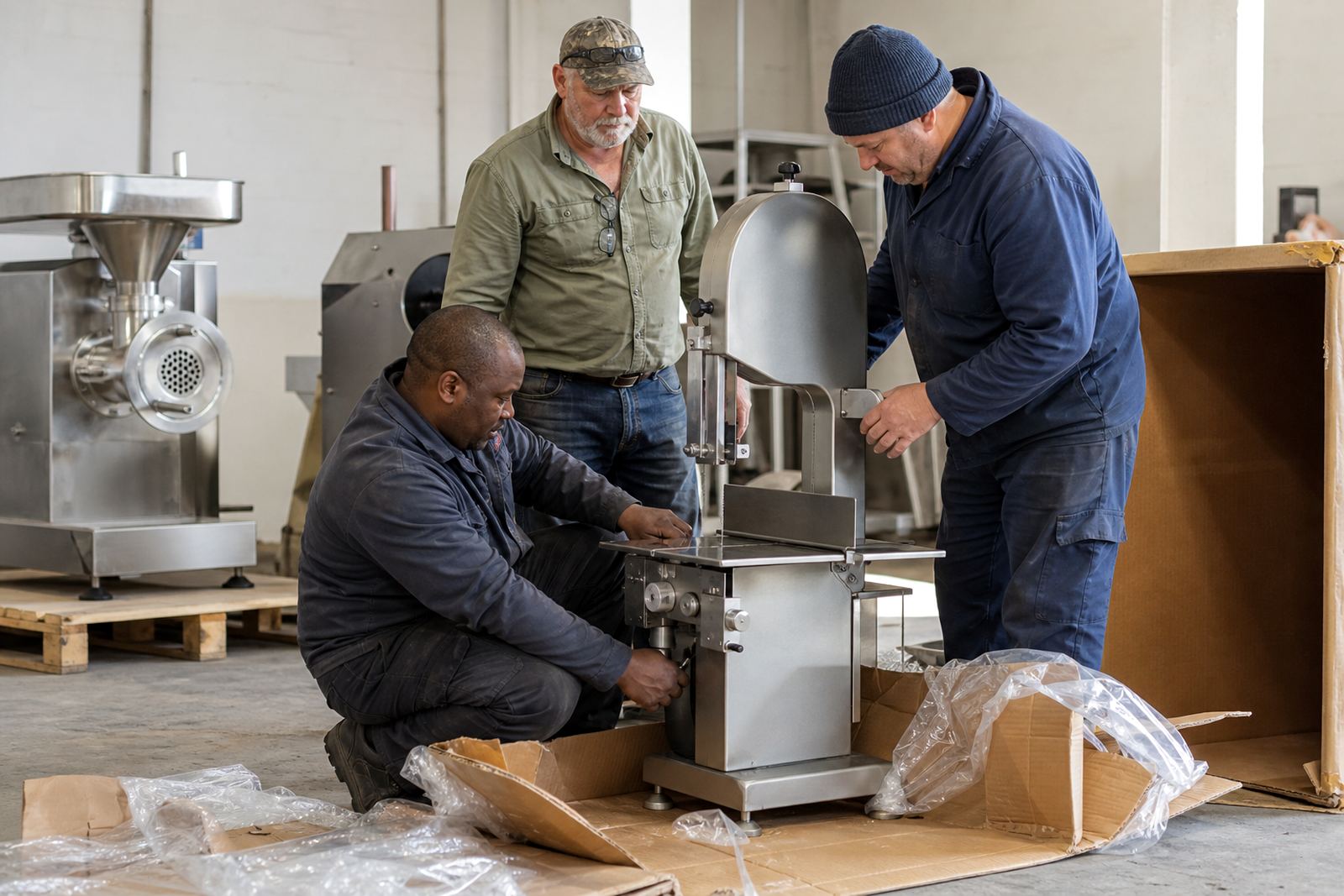
From Hamilton in Bloemfontein, MorCut Butchery works with commercial and home butchers who need reliable equipment support before the season turns busy. Our team handles bandsaw installation, mincer installation, servicing, blade replacement, plate and knife change, breakdown callouts, preventive maintenance, parts supply, delivery and setup. We also provide cleaning demonstrations and operator training where needed.
If your shop is in Bloemfontein, Johannesburg, Pretoria, Durban or Cape Town, or you supply customers in Kimberley, Welkom or Kroonstad, it helps to plan ahead rather than wait for a fault. Winter demand is easier to manage when your equipment has been checked, your parts are ready and your staff know the routine. That kind of preparation keeps the work moving, even when the days are short and the pace is on.
Clients can reach us through the enquiry form on our contact page, and we can help assess what should be checked first based on your current setup. In many cases, a careful look at the machines before the season begins is enough to prevent a much larger problem later. It is simple, practical work and it saves money in the long run.