

Check the delivery before you wheel it inside
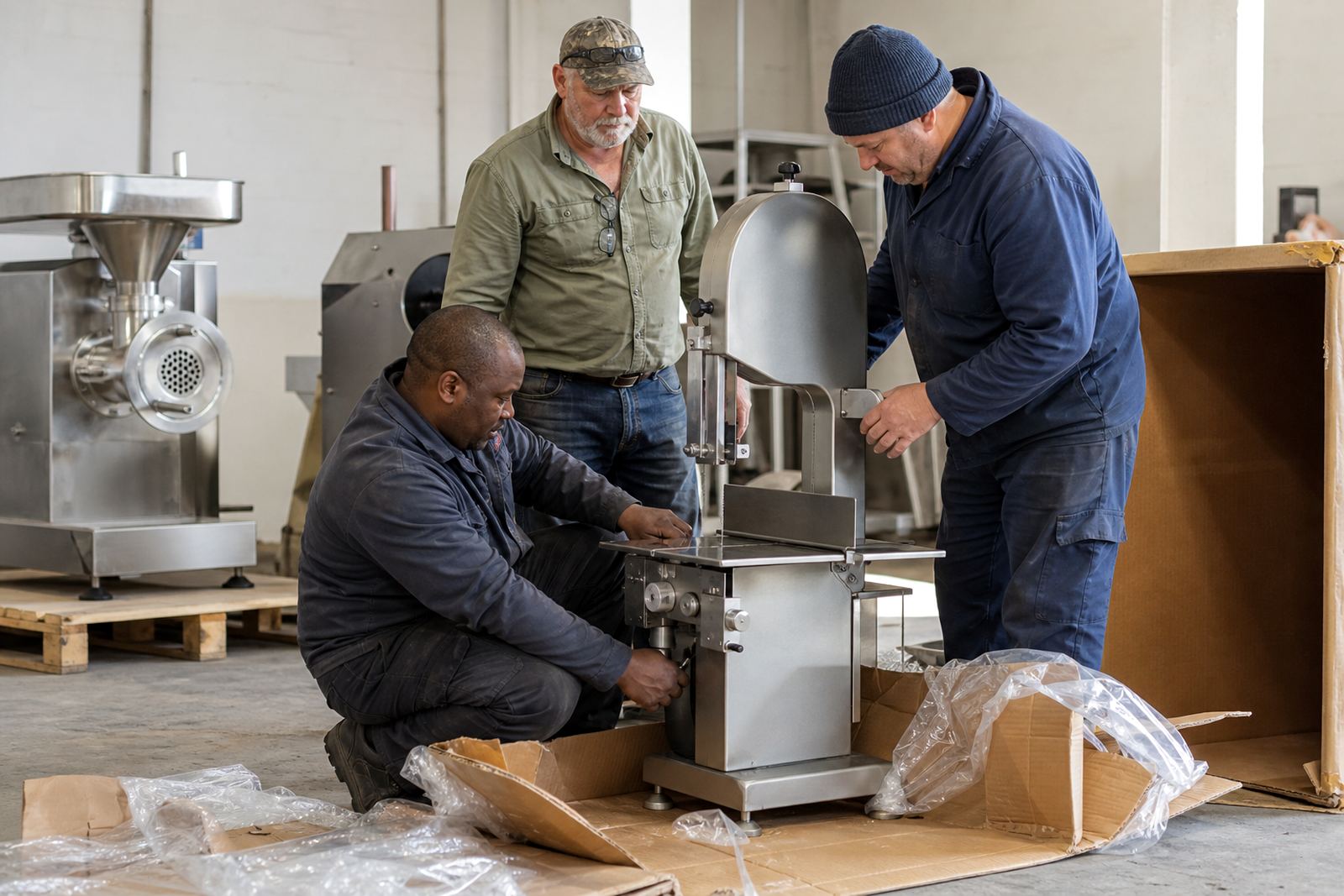
The first job is to inspect everything while the equipment is still easy to move and the packaging is still intact. Look for transit damage, loose fittings, missing parts and any sign that the machine was knocked during transport. If you are in Bloemfontein, Johannesburg, Pretoria, Durban or Cape Town, it is worth doing this check as soon as the delivery arrives, not after the driver has gone and the team has started unpacking.
Keep the crate, wrapping and small accessories together until you are sure every item is accounted for. That includes blades, plates, knives, guards, trays and fixings. If the machine came with manuals or setup notes, keep them in a clean file near the prep area so the operator can find them quickly. A short checklist at this stage prevents delays later on.
- Check for dents, cracks and loose parts
- Confirm all accessories and guards are present
- Keep packaging until the unit is fully tested
- Record any damage before installation begins
Choose a stable spot with enough room to work
Placement matters because a bandsaw or mincer that sits poorly will not perform well, no matter how new it is. Choose a level surface, good lighting and enough space for loading, cleaning and safe movement around the machine. In a compact shop or home butchery, the temptation is to tuck equipment into the nearest corner, but tight working space makes cleaning harder and increases the risk of accidents.
Also think about power supply, water access and drainage. In South African towns where load-shedding is part of daily planning, you want the equipment positioned so that changeovers and shutdowns can happen without clutter or trip hazards. In coastal areas like Durban, humidity means the surrounding area should stay dry and well ventilated. In a Free State setting like Bloemfontein, dust control matters just as much, especially if the room opens often to the outside.
- Leave space for safe loading and unloading
- Avoid uneven floors and wobbling benches
- Keep the work area dry and easy to wash down
- Place the unit near proper power and cleaning points
Get the power and fittings right before first use
Before switching anything on, check that the electrical supply and fittings are suitable for the equipment being installed. Do not rely on a quick glance at the wall socket. Make sure the plug, cable and switchgear are in good condition, and confirm that the area can handle the load without repeated trips or overheating. If something does not look right, stop and have it checked by a qualified person.
For water use, washdown and drainage, plan the setup so cleaning does not push liquid into sockets or onto motor housing. That is especially important in older buildings and back rooms where the layout was never designed for food processing. A tidy layout helps the machine last longer and keeps the workspace safer for everyone.
Before first use, confirm these basics:
- The machine sits level and does not move during operation
- All guards are fitted and secure
- Cables are clear of walkways and wet areas
- The operator knows the stop controls before starting
Clean new equipment properly before any product touches it
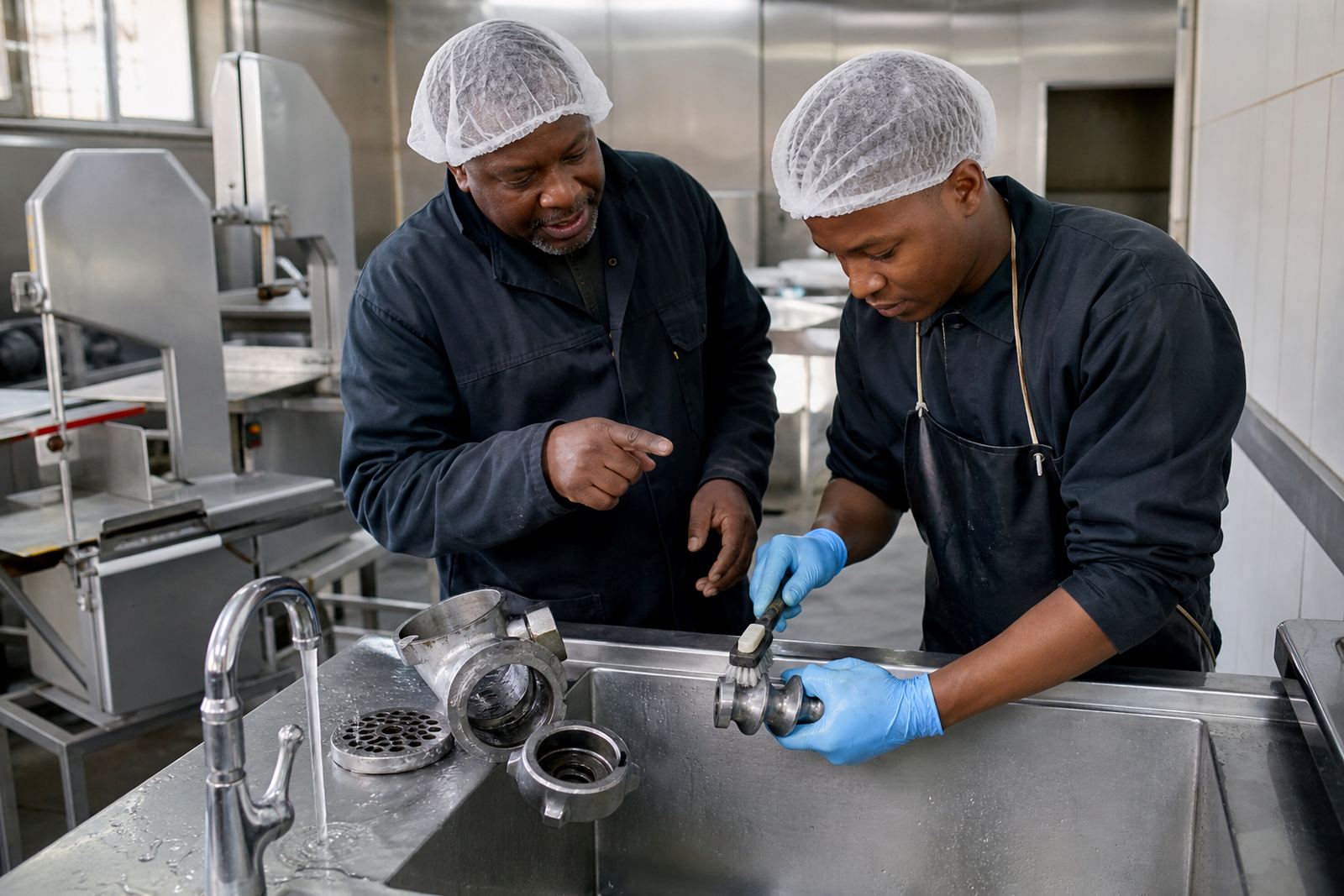
Even brand new butchery equipment needs a proper clean before use. There may be dust from storage, packing residue, light oil from factory protection or small particles left from transit. Clean all food-contact surfaces with the correct food-safe method, then rinse and dry them fully before the first batch goes through. A machine that looks clean is not always ready for food use.
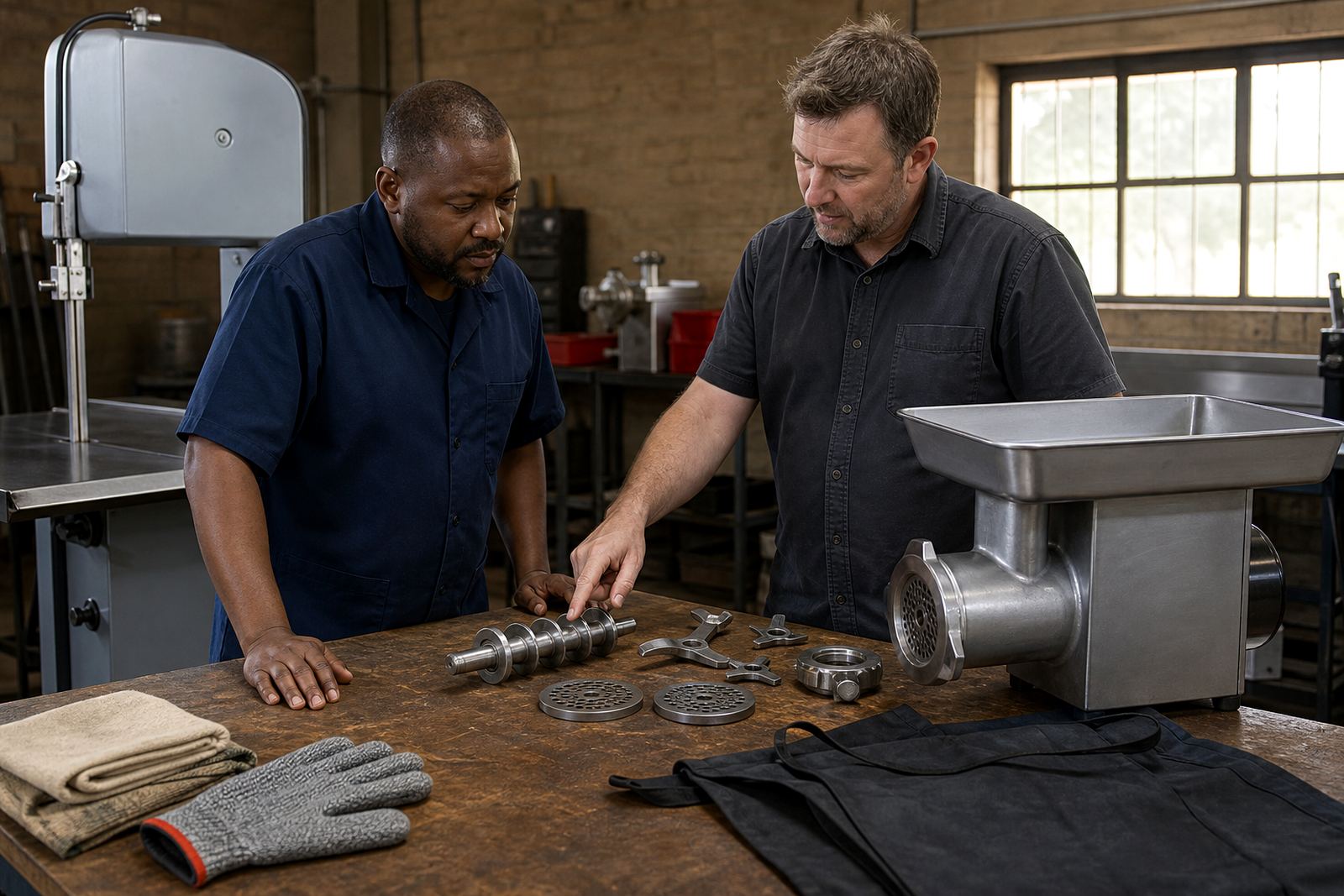
For bandsaws, pay close attention to the table, blade area, guards and any splash points. For mincers, clean the hopper, worm, plate, knife and outlet thoroughly. Drying is just as important as washing because moisture left in hidden corners can lead to staining, odour and early wear. In wetter coastal conditions, a few minutes spent drying properly can save a lot of trouble later.
- Remove packing residue and storage dust
- Wash food-contact parts with care
- Dry all components before reassembly
- Check that no cleaning cloths or tools were left inside the unit
Do a dry test before full production starts
Once the machine is clean and assembled, run a dry test before putting meat through it. This is the time to listen for unusual noise, check that moving parts run freely and make sure the stop controls work as expected. A short test is better than discovering a fault in the middle of a busy order.
For a bandsaw, the blade should track correctly and the guards should stay firm. For a mincer, the feed and discharge should move without strain and the parts should seat properly. If anything vibrates, rattles or binds, stop immediately and investigate. Do not force the machine into work while it is still being checked.
A practical first test can include:
- Starting and stopping the machine several times
- Listening for knocks, scraping or grinding
- Checking that guards stay in place
- Watching for vibration at normal working speed
Train the operator while the machine is still fresh
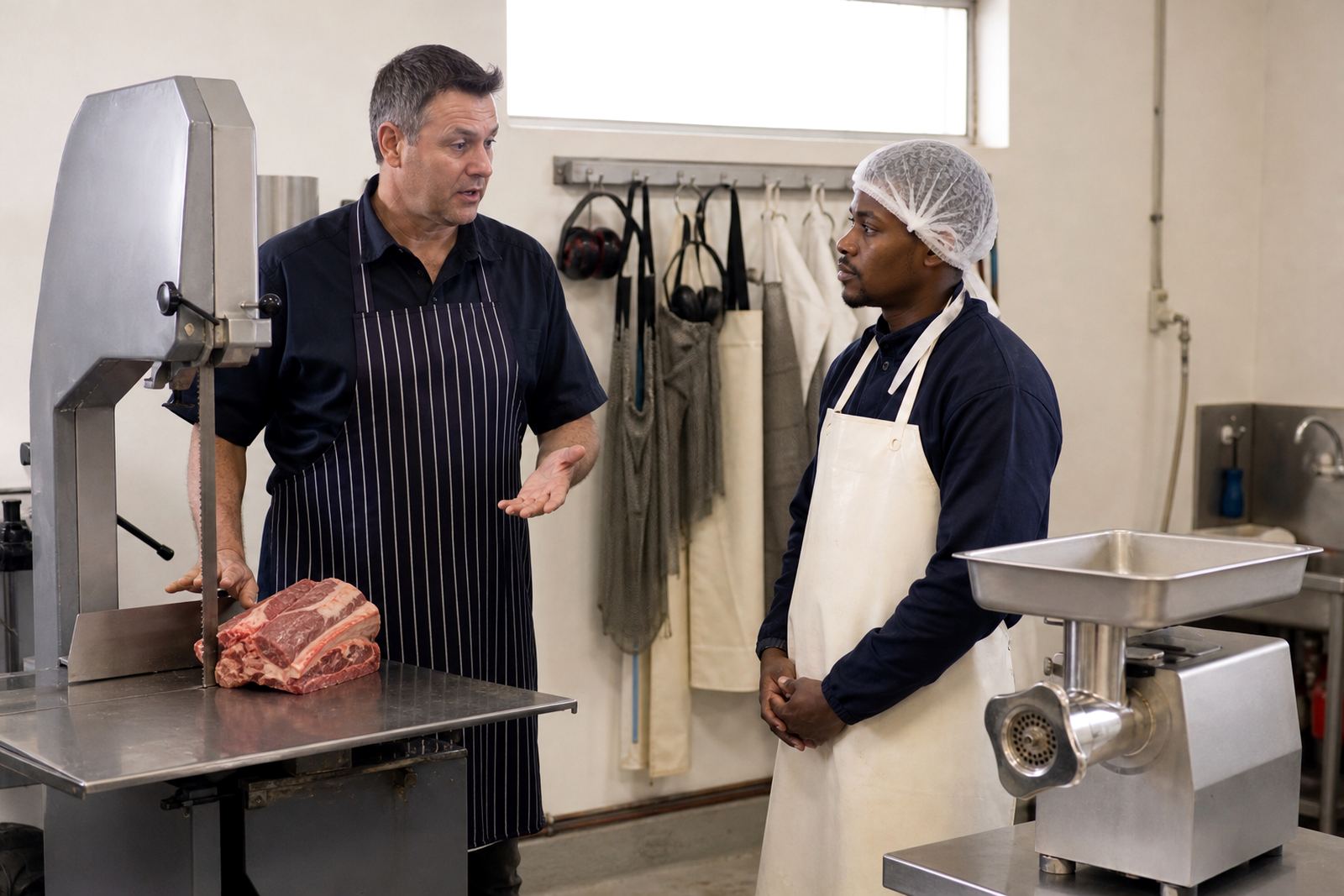
The best time to train staff is right after installation, before habits form and before the rush starts. Show the operator how to switch on, switch off, clean, strip and reassemble the equipment. Keep the instruction practical and short. The person who uses the machine every day should know how to spot early signs of wear, when to stop and how to report a problem.
This matters in family shops, farm stalls and larger butchery operations alike. A machine can be well installed yet still suffer damage if the wrong method is used from day one. Safety reminders should cover gloves where suitable, eye protection during specific tasks, hair tied back, hands kept clear of moving parts and no loose clothing near the blade or feed area. Cleaning demonstrations are useful too, because many faults start with poor cleaning rather than mechanical failure.
- Explain the start up and shutdown routine
- Show safe cleaning and reassembly steps
- Point out the guards and emergency stop controls
- Make sure one person is responsible for daily checks
Plan the first weeks of care, not only the first day
Installation is only the beginning. A new machine settles in better when there is a basic care routine from the start. That routine should include cleaning after use, checking blades, plates and knives, watching for wear on seals and fittings, and booking servicing before minor issues turn into breakdowns. In a busy shop, these small checks are often the difference between steady trade and a sudden stoppage.
MorCut Butchery works with commercial and home butchers across Bloemfontein, Kimberley, Welkom, Kroonstad, Johannesburg, Pretoria, Durban and Cape Town, so we see how different workspaces affect equipment care. A home butcher may need help with setup and training, while a commercial operation may need installation, parts supply and preventive maintenance built into the weekly routine. Either way, a sensible start keeps the equipment reliable and easier to look after.
Set aside time for these early care steps:
- Daily cleaning after use
- Regular blade and plate checks
- Prompt replacement of worn parts
- Scheduled servicing before busy periods
If you are preparing new butchery equipment in Hamilton, Bloemfontein or further afield, the safest approach is to treat delivery day as the start of a process, not the end of one. Good setup, clear training and proper care will help the equipment work the way it should from the first cut to the next busy season.