

Why Slip Risks Build Up So Quickly in a Butchery
In a butchery, wet floors are part of the job. You have rinsing, trimming, cleaning, foot traffic and equipment being moved for servicing or blade changes. Add fat, blood, ice melt and detergent residue, and a floor that looked fine at 7 o'clock can become dangerous by mid-morning.
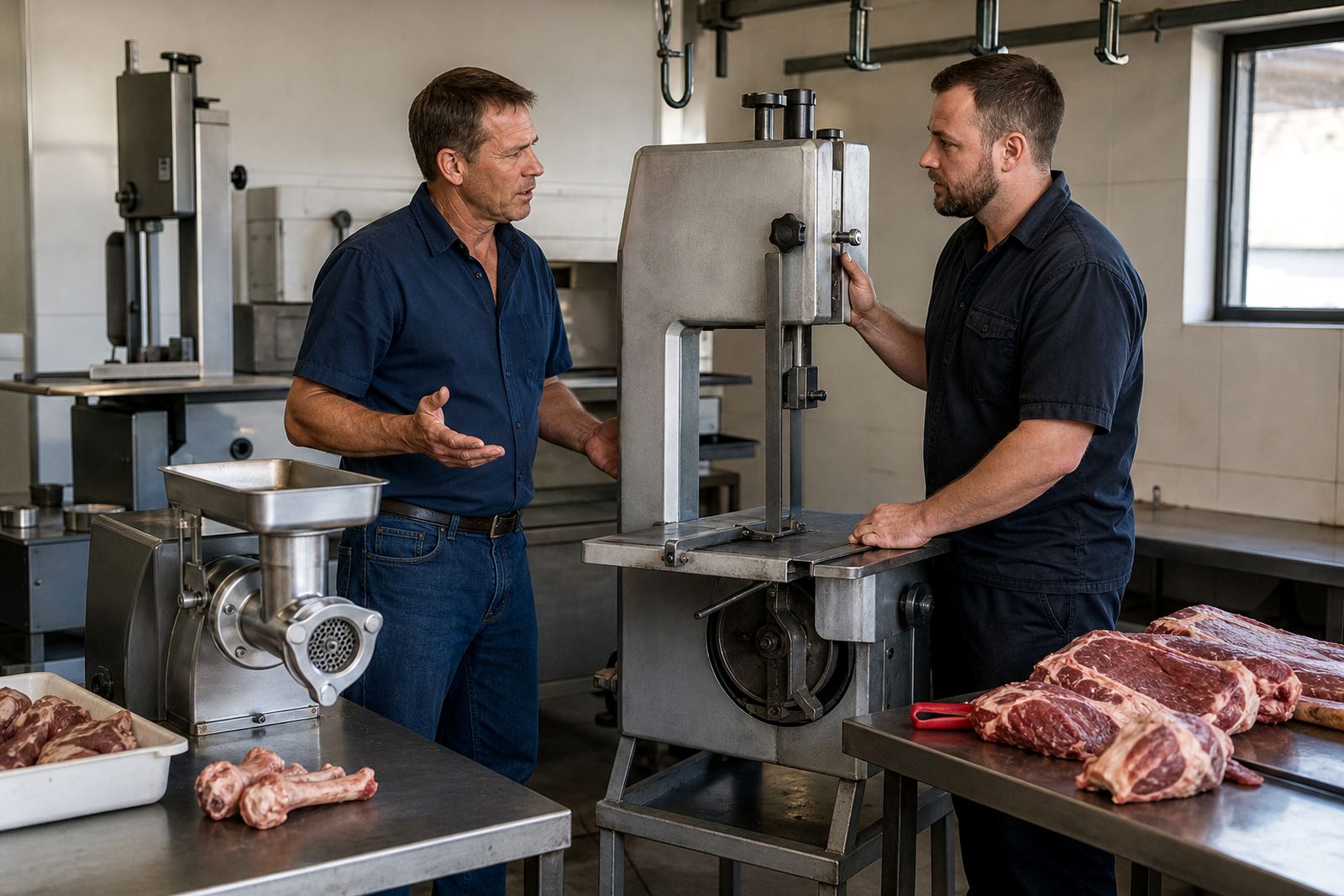
Slip hazards are often worst around bandsaws, mincers, sinks, drain points and the route between the cold room and the preparation area. The risk is not only a fall. A slip near moving equipment can lead to cuts, dropped product, damaged parts or a hard knock to the shoulders and back. Good housekeeping is not a nice extra, it is part of day to day butcher safety.
In Bloemfontein, where many shops run early and hard before the day warms up, the first clean-up of the morning matters. In coastal areas like Durban and Cape Town, humidity can keep floors slick for longer, so the same routine needs to be even stricter.
Keep Washdown Areas Under Control Before Water Spreads
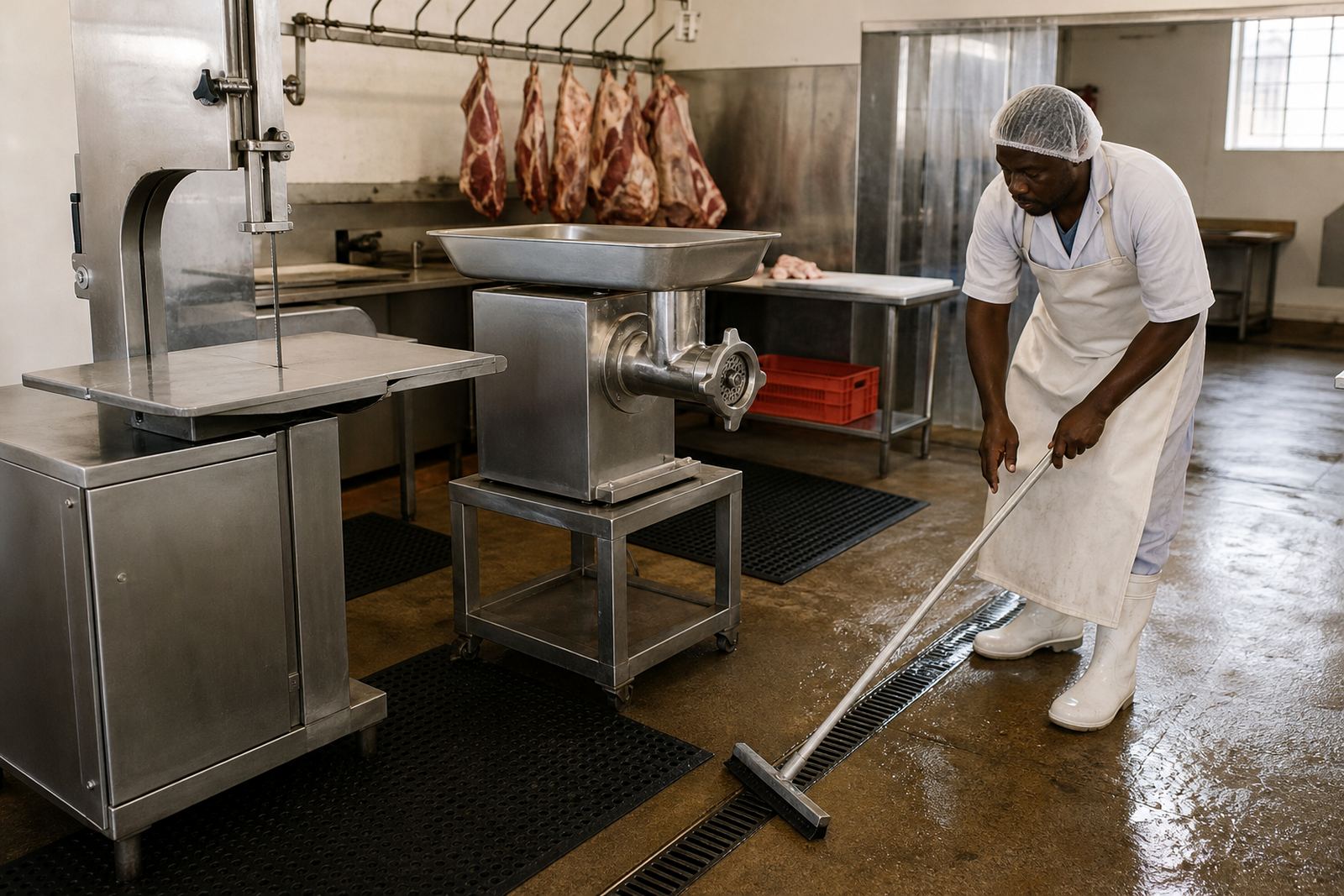
Washdown is necessary, but water should stay where it is meant to be. The trick is to clean in sections instead of flooding the whole floor and hoping it dries on its own. Use enough water to lift dirt and grease, then remove it with a proper squeegee or mop. Standing water should never be left near walkways or machine stands.
Drainage must also work properly. If a floor slopes the wrong way or a drain blocks up with fat and scraps, water will sit in the same places every shift. That is when people start stepping around puddles and creating new risk points. It is worth checking floor falls, drain covers and grout lines regularly, especially in older shops and backyard home butchery spaces where the floor was not built for heavy washdown.
- Use a squeegee immediately after washdown to move water to drains.
- Check for blocked drains before the busiest trading hours start.
- Keep hoses, buckets and cleaning tools out of main walking paths.
- Dry corners, thresholds and machine bases where water collects.
Floor Coverings, Mats and Footwear Make a Real Difference
Anti slip mats can help, but only if they are clean and laid flat. A curled edge or a loose mat can be worse than no mat at all. In preparation zones, choose mats that stay in place and can be lifted for proper cleaning. Do not place mats where they block drains or become soaked with fat and water.
Footwear matters too. Staff should wear shoes with proper grip and closed toes, especially in areas where knives, trays and machine parts are handled. Worn soles lose grip quickly. If a floor is always wet, it is worth reviewing whether the cleaning routine, the mat layout or the footwear policy needs tightening up.
For smaller home butchers, the temptation is to use any old rubber mat and call it done. That can work for a short time, but if the mat traps moisture underneath, the floor can become slick without anyone noticing. Inspect mats as often as you inspect the equipment itself.
Safe Cleaning Around Bandsaws and Mincers
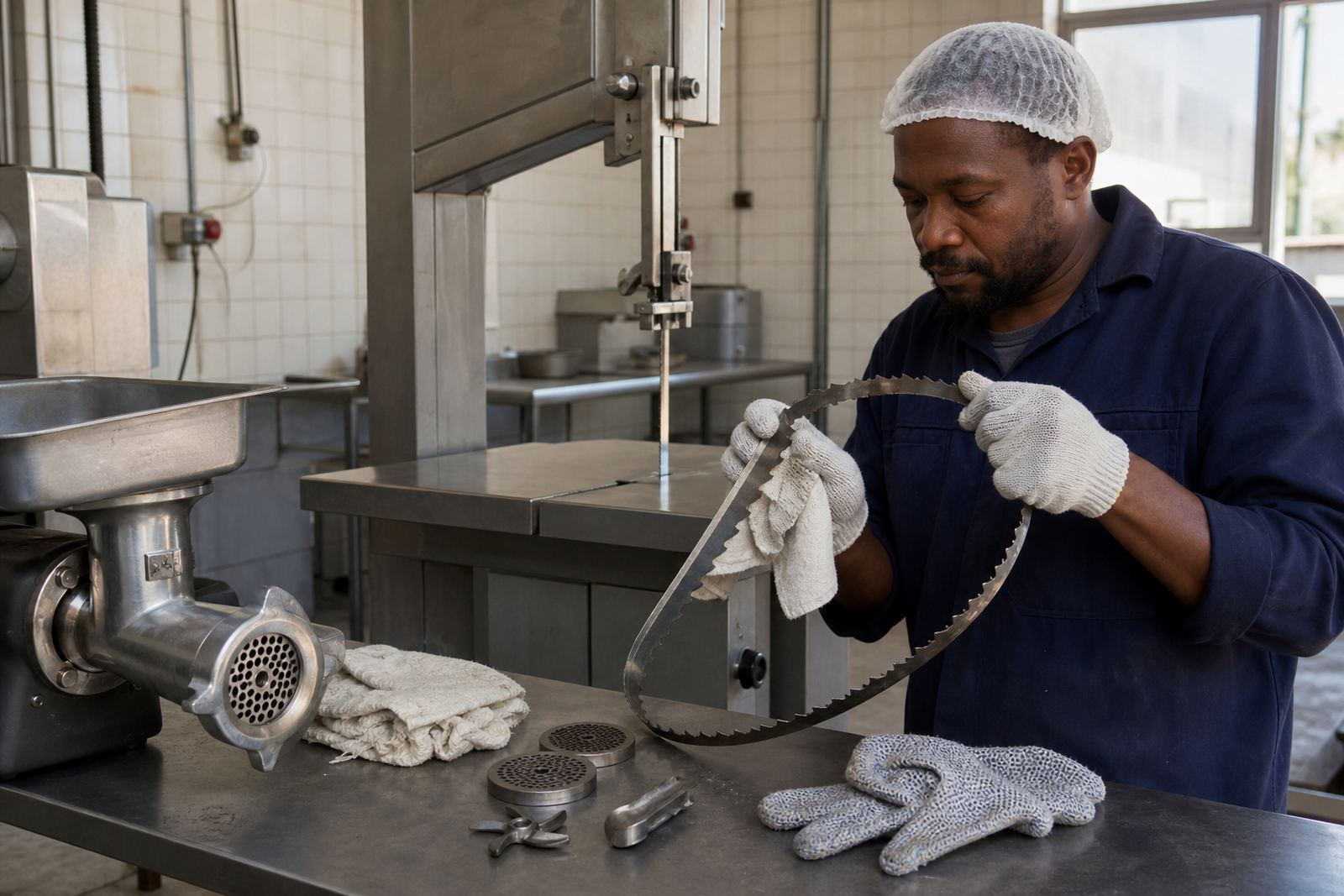
Cleaning around bandsaws and mincers must be done with the machine isolated, guarded as required and allowed to cool or settle before hands go near it. Never rush cleaning because the next order is waiting. A hurried wipe around blades, plates or moving parts can cause both injury and spills, especially when detergent and water are involved.
Use the right PPE for the job, including gloves suited to cleaning tasks, aprons and non slip footwear. Keep cloths, brushes and scraper tools in good condition. If cleaning tools are worn, they spread grease instead of removing it. After cleaning, dry the immediate area around the machine base, floor edges and any splash points where water may drip during the next shift.
- Switch off and isolate equipment before cleaning or changing parts.
- Keep guards in place and never bypass safety fittings.
- Do not leave cleaning chemicals open where they can spill onto the floor.
- Separate dry stock handling from wet cleaning wherever possible.
Housekeeping Routines That Work in Busy Free State Shops
A good routine is simple enough for staff to follow every shift. Assign who mops, who checks the floor near the equipment and who clears spills straight away. In busy shops, accidents often happen because everyone assumes someone else has dealt with the problem. Clear responsibility solves that.
A practical routine might include a quick floor check before opening, a mid-shift check after peak trimming or mincing, and a final clean-down before closing. Small spillages should be dealt with immediately, not left until the end of the day. It also helps to keep absorbent material, warning signs and a dedicated mop close to the work area so nobody has to go hunting for them while the floor stays wet.
In towns like Welkom, Kroonstad and Kimberley, where many butcheries run with lean teams, these routines should be short and realistic. If the system is too complicated, people skip steps. Simple works best.
Servicing and Setup Can Reduce Slip Problems at the Source
Some slip hazards come from the way equipment is positioned rather than from cleaning alone. If a bandsaw or mincer is installed too close to a splash zone, or if parts are serviced without attention to the surrounding floor area, water and scraps will end up where people walk. Good setup helps keep the mess contained.
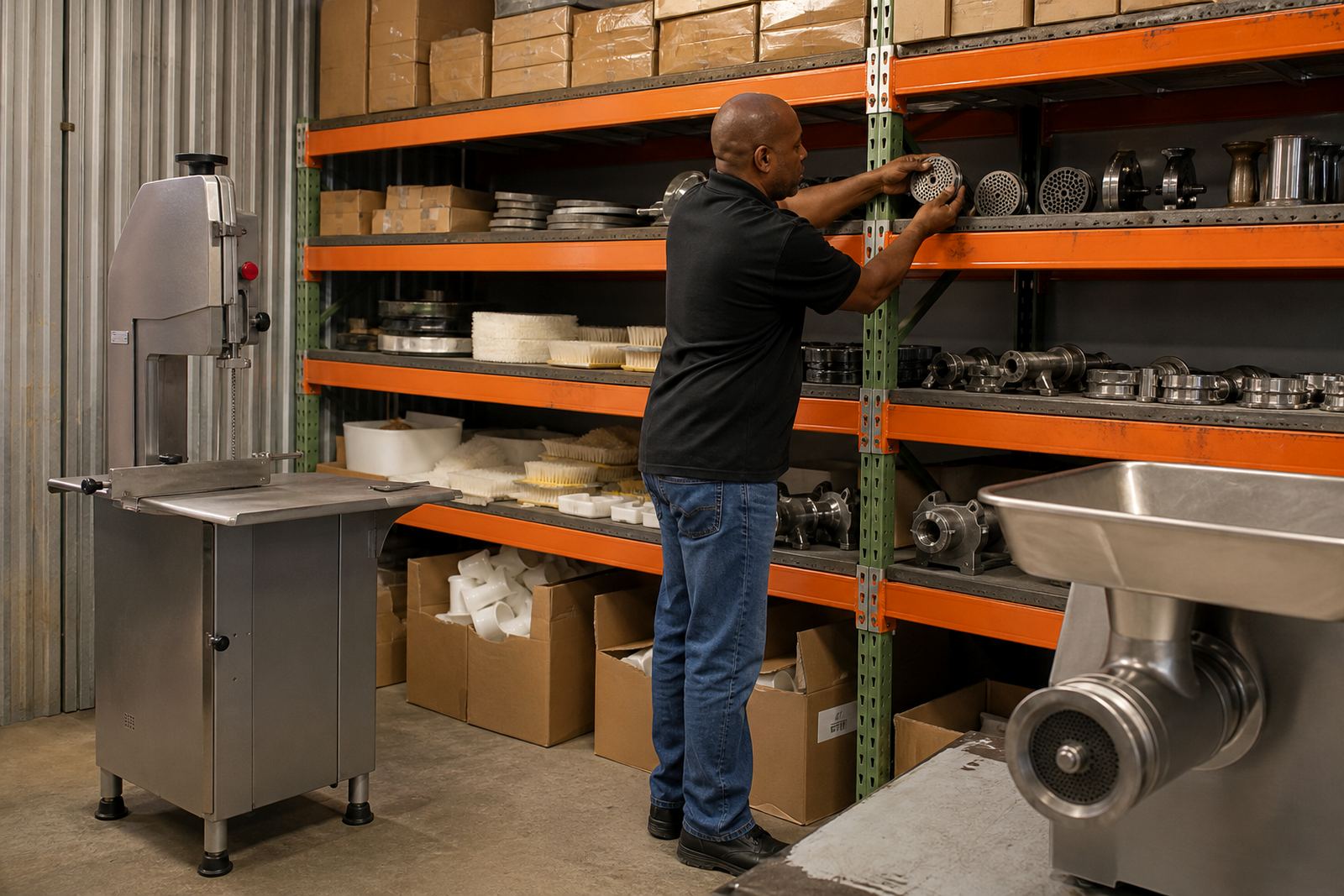
During installation, servicing or a breakdown callout, it is worth checking the space around each machine. Ask whether the floor can be cleaned easily, whether the operator has enough room to move safely and whether the nearest drain is doing its job. Preventive maintenance also helps because worn seals, loose fittings and damaged parts can drip or scatter residue more than they should.
Delivery and setup teams should leave equipment positioned so daily cleaning is practical. If staff must squeeze past a machine or step around a puddle every shift, the layout needs attention. A safer floor starts with a sensible plan, not just a mop and bucket.
A Local Example: One Small Change Prevented Repeated Slips
A small butcher in Bloemfontein may think the same wet patch near the prep area is just part of trading. But if the water keeps reappearing, the cause needs to be found. In many cases it is a combination of oversplash from cleaning, a drain that clears too slowly and a mat that does not dry out between shifts.
One practical fix can be as simple as changing the cleaning order, moving the mat slightly and adding a quick dry-off step after washdown. Once the cause is addressed, the whole area becomes easier to manage. Staff stop walking around the problem and the risk drops straight away.
That is the point of good housekeeping. It is not only about looking tidy. It is about keeping people on their feet, protecting equipment and making the workday less stressful for everyone involved.