

Why service timing matters in a working butchery
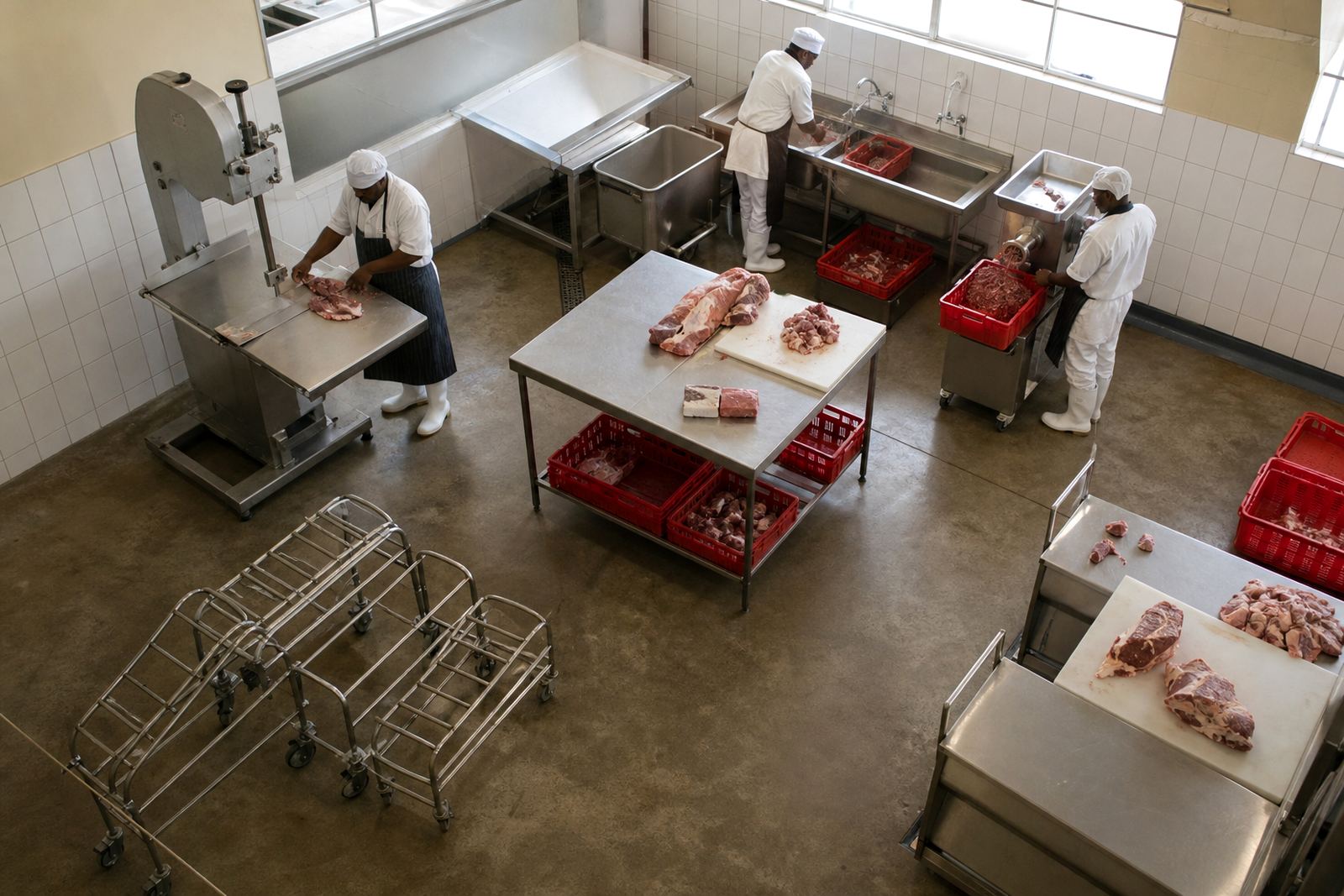
In a butchery, every hour counts. A bandsaw that needs a blade change or a mincer that starts to run rough can slow trimming, portioning and prep for the full day. When service is planned around production, the team can keep orders moving, protect product flow and avoid rushing repairs when the counter is busy.
That matters whether you run a commercial unit in Johannesburg, a family shop in Kroonstad or a home-based operation in Bloemfontein. Planned servicing gives you time to clear stock, switch off safely, and make space for cleaning, checks and any follow-up work. It also helps you spot small issues before they become a full stoppage.
We have seen many operators leave it until a machine is already struggling. By then the job often takes longer, costs more and puts pressure on the rest of the day. A simple schedule, even if it is only monthly or quarterly, can make a real difference to your service plan.
Match the visit to your production rhythm
The best time for a service visit is when it fits your workload, not someone else’s diary. Some shops prefer early mornings before the first prep cycle. Others work better late afternoon after the last clean-down. In larger operations, a Sunday or a quiet midweek slot may be the safest choice.
Think about the jobs that use the machine most. If your bandsaw handles most of the carcass work early in the week, arrange service after that peak. If your mincer is busiest before weekend trading, avoid that window and book ahead. The aim is simple: reduce disruption, keep staff productive and avoid unnecessary overtime.
- Book ahead of public holidays and month-end trading rushes.
- Allow time for cleaning, inspection and any parts replacement.
- Choose a slot when trained staff will be on site.
- Keep a short record of the last service date and any wear signs.
For businesses in places like Durban or Cape Town, delivery and servicing can also be affected by traffic, weather and access rules at the premises. A bit of planning around the route and the site helps keep the visit on time.
What should happen before the technician arrives
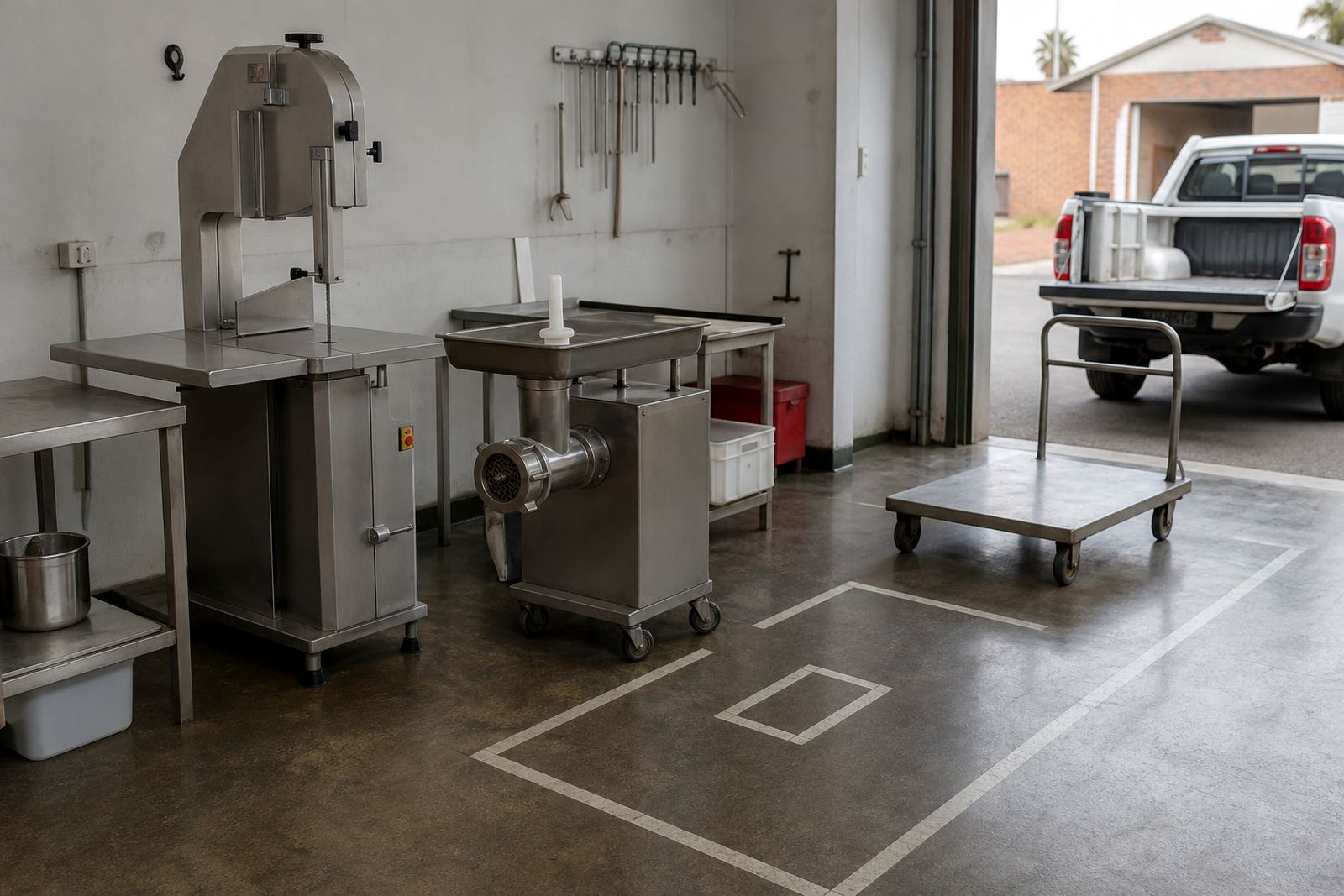
A proper service visit starts before anyone opens a toolbox. Clear the area around the machine, remove loose items and make sure the floor is dry and easy to work on. If the machine sits near a chopping area or packing line, give it enough space so the technician can inspect it properly.
It also helps to brief the team. Let staff know when the machine will be out of use and what product should be processed before the shutdown. That avoids confusion and prevents someone switching it on too soon. Safety matters too, so guards should remain in place where possible and PPE should be worn during cleaning and handling.
For operators, a short checklist works well:
- Switch off and isolate the machine before any cleaning or inspection.
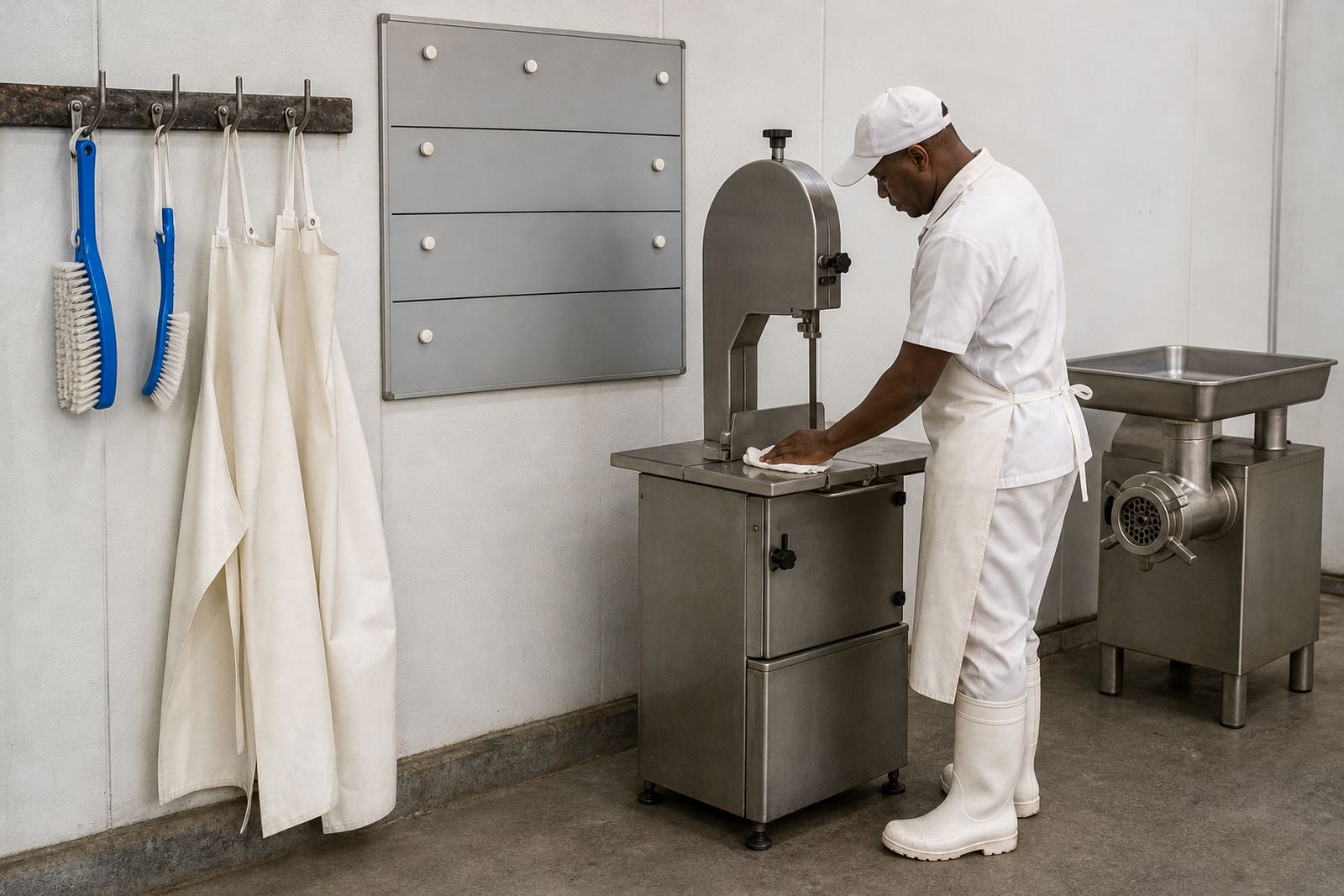
- Remove food residue and wipe down external surfaces.
- Check that blades, plates and knives are stored safely.
- Make sure the service area is lit properly, especially during load-shedding.
In many Free State businesses, load-shedding means the day can change quickly. If power cuts are expected, it makes sense to plan the visit for a time when the machine can be safely isolated and tested afterwards without rushing.
Bandsaw and mincer care between visits
Regular servicing is important, but day-to-day care carries a lot of the load. For bandsaws, that means keeping the blade area clean, checking guards, and watching for unusual noise or vibration. For mincers, it means cleaning the feed area carefully, checking the condition of plates and knives, and making sure the unit is not being forced with tough product or bone that does not suit the machine.
Good care also means using the machine as intended. Operators should not bypass guards, push product too fast, or use improvised tools during cleaning. A small habit, like wiping down after every shift, can save hours of trouble later. It also helps with hygiene, which is a major concern in every butchery whether you serve walk-in customers or supply restaurants and retailers.
- Listen for changes in sound, speed or cutting action.
- Check for loose fittings or unusual play in moving parts.
- Replace worn blades, plates and knives before they fail.
- Keep spare parts on hand where possible for faster turnaround.
Simple care between visits makes the next service quicker and gives the technician a clearer picture of what the machine needs. That saves time and helps the equipment last longer.
How to plan around different branches and delivery points
If your business operates across more than one site, the service plan should follow the work pattern at each location. A shop in Pretoria may need a different visit time to a supply point in Welkom, while a branch in Kimberley might need parts delivered separately from the service call. That is normal. The main thing is to make sure the machine is ready, the site is accessible and the team knows what will happen.
At MorCut Butchery in Hamilton, Bloemfontein, service planning is often tied to the practical realities of the day: stock arriving, staff shifts, freezer loading and customer foot traffic. The same approach works across South Africa. If the shop closes early on a Friday, use that slot. If the back area is tight, make space before the technician arrives. A bit of planning avoids repeat trips and wasted time.
When you submit an enquiry through the contact page, it helps to include the machine type, the issue, the best site access time and any notes about production pressure. That way the visit can be scheduled in a way that suits your operation, not just the calendar.
What a planned visit can cover
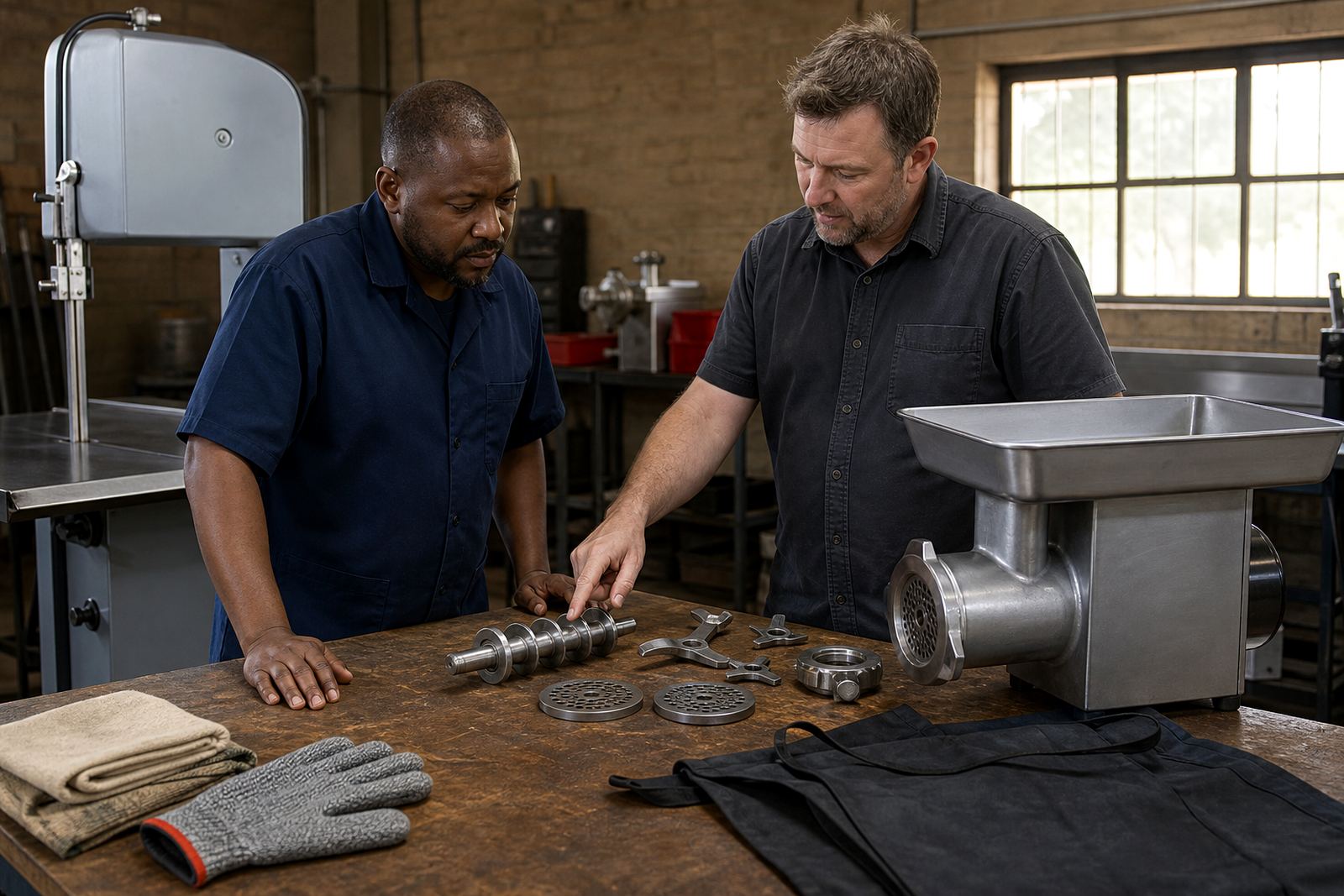
A planned service visit is more than a quick look-over. It can include installation support, cleaning demonstrations, operator training, parts replacement, preventive maintenance and breakdown callouts if something has already gone wrong. The exact work depends on the condition of the machine and the day-to-day demands of your business.
For some customers, the goal is simply to keep a bandsaw or mincer running cleanly and safely. For others, it is about reducing wear before a busy season. Either way, the main benefit is control. You choose the timing, prepare the site and keep production interruptions to a minimum.
For a small butcher in Bloemfontein, that might mean scheduling the visit after morning prep so the counter can still trade. For a larger operation in Johannesburg or Durban, it may mean splitting the work into sections so one machine stays active while the other is serviced. The plan should fit the business, not the other way round.
A practical way to keep service on track
The easiest schedule is the one your team can follow. Keep a written note of service dates, issues seen in daily use and any parts that were changed. Assign one person to confirm the next visit and another to make sure the machine is cleaned and ready. That small bit of structure can stop a lot of last-minute chaos.
MorCut Butchery supplies and services bandsaws and mincers for commercial and home butchers across Bloemfontein, Johannesburg, Pretoria, Durban and Cape Town, with support also reaching Kimberley, Welkom and Kroonstad. If you want the least possible disruption, plan early, ask for a slot that suits your trading pattern, and keep safety at the centre of every service step. It is simple work, but it pays off.