

Why the washdown area matters more than most people think
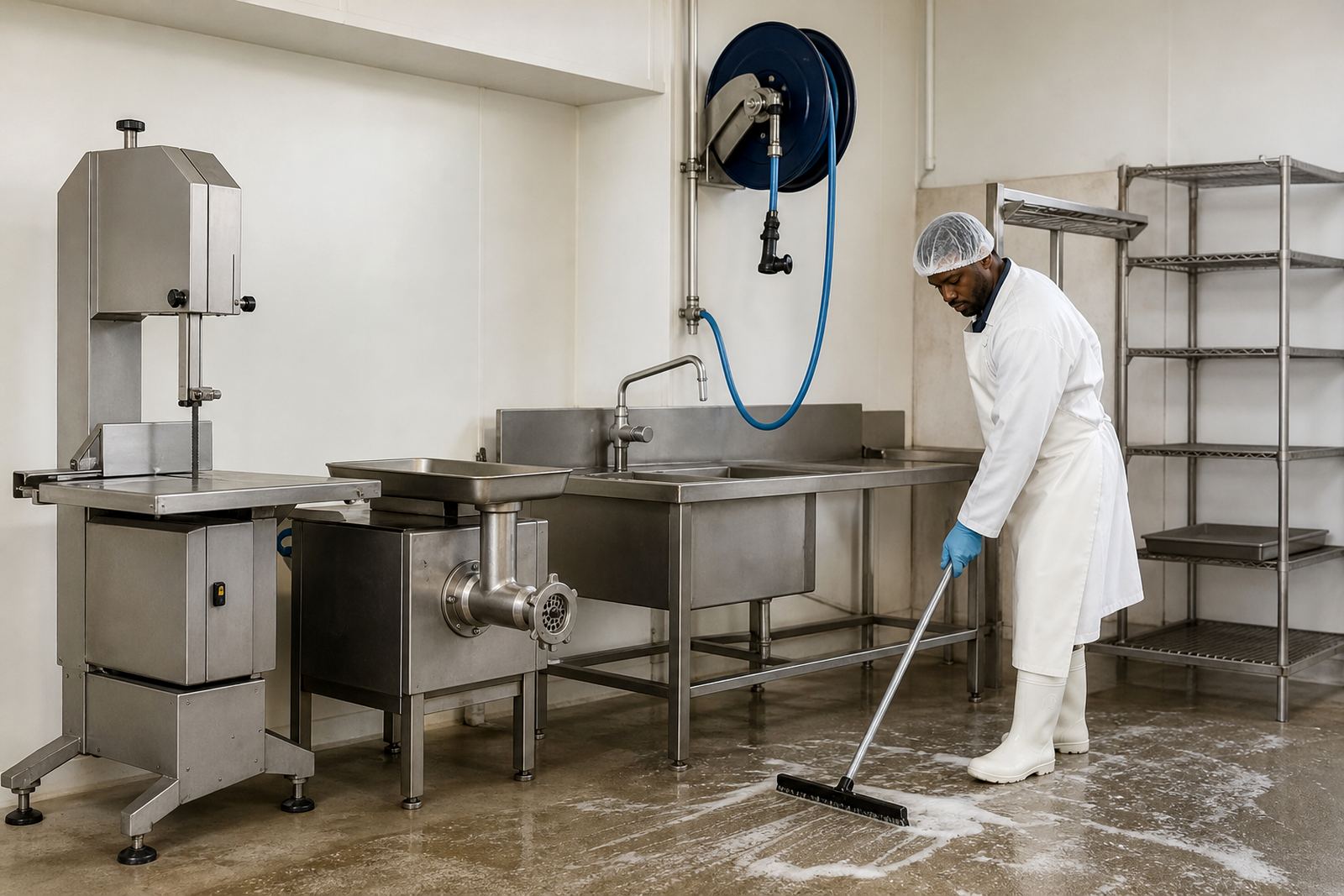
A washdown area is where the hard work ends and the cleaning begins, so it should be planned with the same care as the cutting room. If the space is awkward, cramped or badly drained, staff tend to rush the job, miss small bits of residue and leave water where it should not be. That is bad for hygiene and hard on equipment too.
For butchery bandsaws and mincers, regular cleaning is not only about appearance. It helps protect guards, bearings, blades, plates and knives from unnecessary wear. In a place like Bloemfontein, where dry dust can mix with meat residue, a clean washdown area also keeps grit from sticking to surfaces and being dragged back into the work area.
A practical layout that saves time
The best washdown area is simple, open and easy to reach from the processing room. Staff should be able to move equipment parts, cleaning tools and trays without squeezing past crates or stock. Keep the floor level where possible, with clear drainage points and enough space to work around a machine from more than one side.
- Use a non-slip floor finish that handles water, fat and cleaning chemicals.
- Keep hoses, buckets and brushes on hooks or shelves so they are not left on the floor.
- Make sure drainage carries water away fast, especially during busy production times.
- Allow space for dismantled parts to dry without touching the floor.
- Keep the area close enough to the equipment room so cleaning happens immediately after use.
A good layout also reduces the chance of someone carrying a wet component across a busy passage or leaving slippery patches near the doorway.
Water, drainage and cleaning pressure need the right balance
Too little water makes cleaning slow. Too much pressure can scatter splashback, push dirt into corners and force moisture into areas that should stay dry. The aim is controlled cleaning, not flooding the room. A washdown area should have enough water access for thorough rinsing, but the drainage must keep up with it.
In South Africa, load-shedding can interrupt the cleaning routine if pumps or hot water systems depend on power, so it helps to have a simple plan for those days. Keep the process workable even when power is off for a stretch. That might mean using manual cleaning tools, organising tasks in stages, or making sure the area can still drain properly without assistance.
In humid coastal towns like Durban and Cape Town, surfaces can stay wet for longer. That means drying matters just as much as rinsing. Standing water can lead to slippery floors and corrosion on parts left out too long.
Safe handling of bandsaws and mincers after cleaning
Cleaning should always follow a fixed sequence so no one skips a step. Switch off equipment, isolate power where needed and allow moving parts to stop completely before opening guards or removing components. Use gloves, aprons and other basic PPE, and keep hands clear of sharp edges at all times.
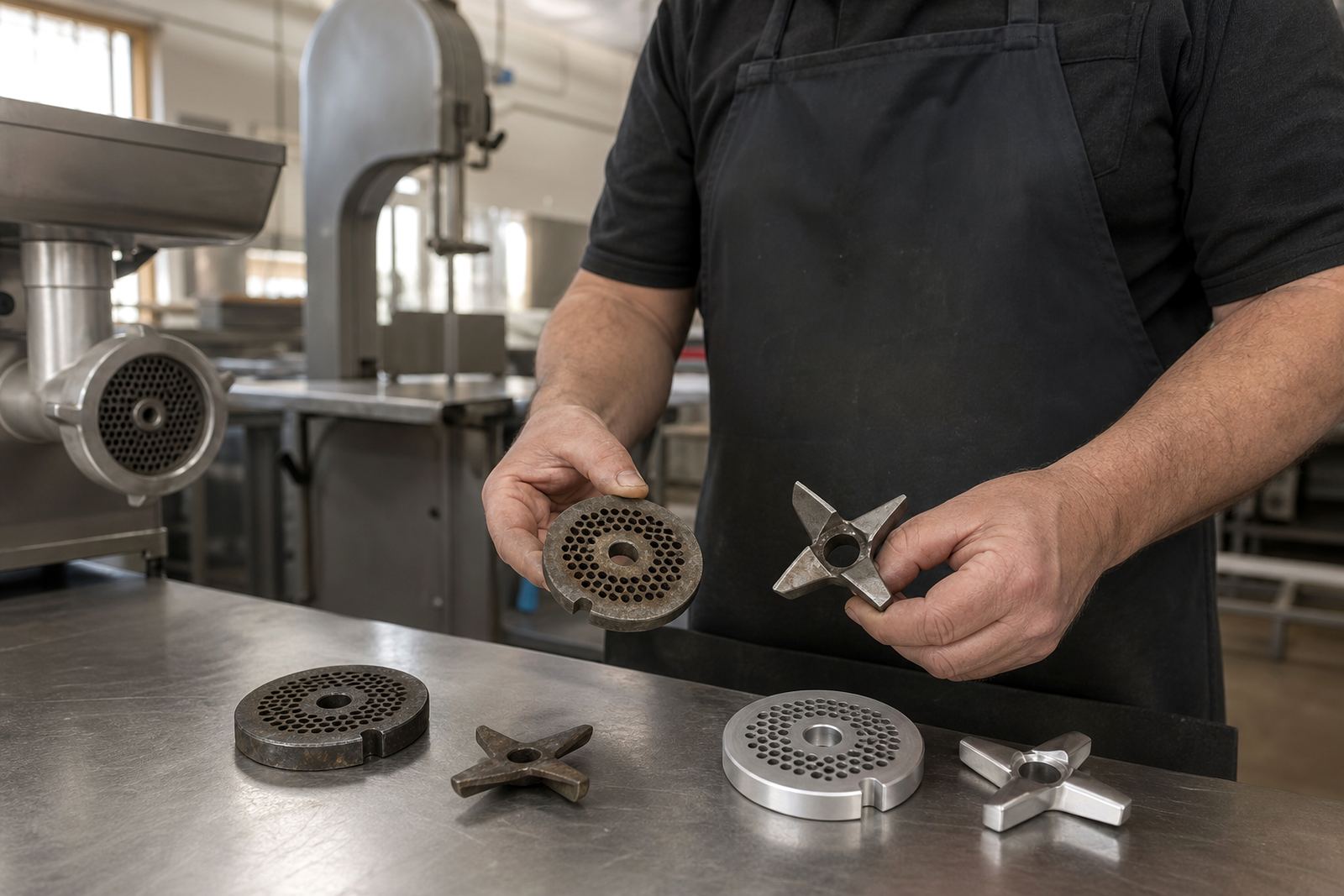
For bandsaws, the blade area, guides and surrounding surfaces need careful attention. For mincers, the plate, knife, feed area and hopper should be cleaned properly and dried before reassembly. If any part feels stiff, loose or out of line, it should not be forced back into service.
- Check that guards are fitted again before the machine is used.
- Dry all components before storage or refitting.
- Never leave cleaning cloths inside the machine area.
- Inspect for wear, chips or bent parts while the machine is open.
- Report faults early instead of waiting for a breakdown.
Daily habits that keep the washdown area under control
A washdown area only works well if the team uses it consistently. Small daily habits make a big difference, especially in a busy shop where several people may handle the same equipment. Keep a written cleaning routine nearby so staff know what gets done at the end of each shift and who is responsible for each task.
It is also worth setting aside a few minutes for a quick check of drains, hoses, brushes and storage points. If the area becomes cluttered, cleaning slows down and the risk of slips increases. In places like Bloemfontein, where winter mornings can be cold and mornings start early, it helps to keep the routine straightforward so staff do not avoid it because it feels too long.
- Rinse residue off immediately before it dries on.
- Separate clean tools from dirty ones.
- Keep the floor clear of loose packaging and offcuts.
- Review the routine after any spill, breakdown or service visit.
A local example from Bloemfontein
Consider a small butcher in Hamilton, Bloemfontein serving walk-in customers and local caterers. The shop has a bandsaw, a mincer and a limited back area, so space has to be used carefully. The washdown corner sits close to the processing area, with a floor that drains well and a shelf for brushes, cloths and spare gloves. That setup keeps cleaning quick after the morning rush and before the next batch is prepared.
Because the area is organised, staff can wash down the machine parts, check the guards and dry everything before packing up. The result is less wasted time, fewer slips and better care of the equipment. It is not fancy, but it works. And in butchery work, that usually matters more than anything else.