

When the mince stops looking uniform
The clearest warning sign is a change in the product leaving the mincer. If the mince starts coming out patchy, stringy or crushed instead of evenly cut, the plate and knife may no longer be meeting cleanly. In some cases the feed turns uneven too, with the meat pushing through in fits and starts rather than moving steadily.
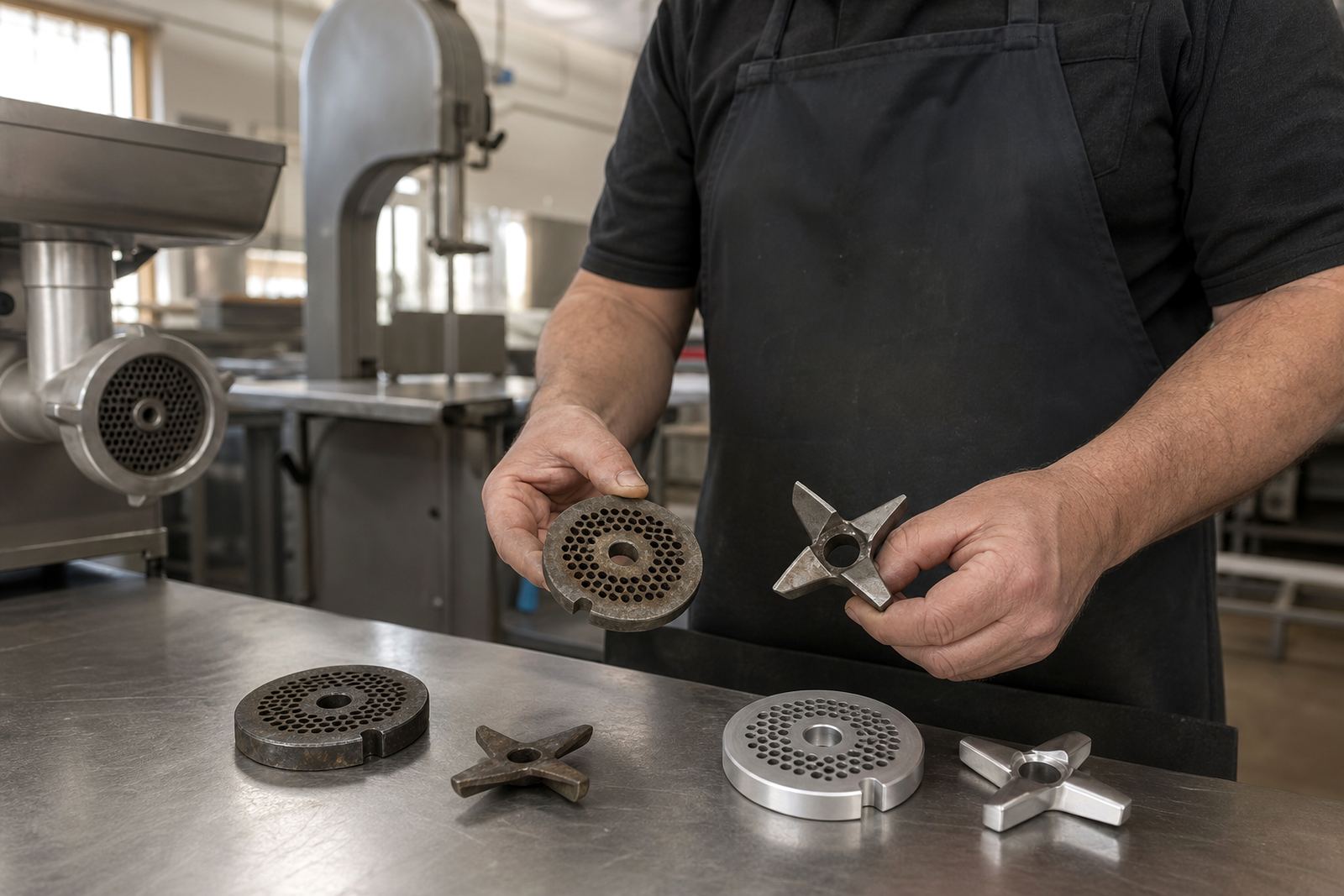
This often points to worn cutting parts, a loose fit, or buildup that is affecting contact between the knife and plate. It can also happen when the machine is not being cleaned well enough between shifts. If the cut quality changes from one batch to the next, do not ignore it just because the machine is still running.
- Uneven texture in the finished mince
- Long strands instead of a clean cut
- More smearing than slicing
- Product that looks different from batch to batch
Noise, vibration and heat are early clues
Many operators first notice wear through sound. A mincer that starts to chatter, rattle or grind harder than usual is telling you something has shifted. Extra vibration can point to a loose component, a worn bearing, or parts that are not sitting together properly. If the machine is getting hotter than normal during ordinary use, that is another warning worth checking.
Heat matters because it affects both the machine and the product. Excess friction can warm the meat too quickly, and that can create cleaning headaches later on. In a butchery in Bloemfontein, where dry conditions and long trading hours can already stretch equipment, it pays to listen closely to small changes before they turn into a breakdown.
- New rattling, knocking or grinding sounds
- More vibration at the base or housing
- Heat building up during normal use
- Frequent need to stop and rest the machine
Slow feeding and stubborn jams need attention
A healthy mincer should take product through with a steady feed when it is used correctly. If the meat starts backing up, clogging the throat or forcing the operator to push harder than usual, the cutting set may be struggling. Dull parts can cause resistance, and so can product that has been prepped badly or has too much sinew for the machine to handle comfortably.
Operators should not force the feed to get through a rush. That can make wear worse and put strain on the motor and drive parts. It is better to stop, clean, inspect and correct the cause. If the same jam keeps returning, there may be a part that needs changing rather than another quick clean.
- Meat backing up in the feed opening
- Operator needing to push harder than usual
- Repeated jams in the same area
- Slow output even when the machine sounds normal
More residue after cleaning is a warning
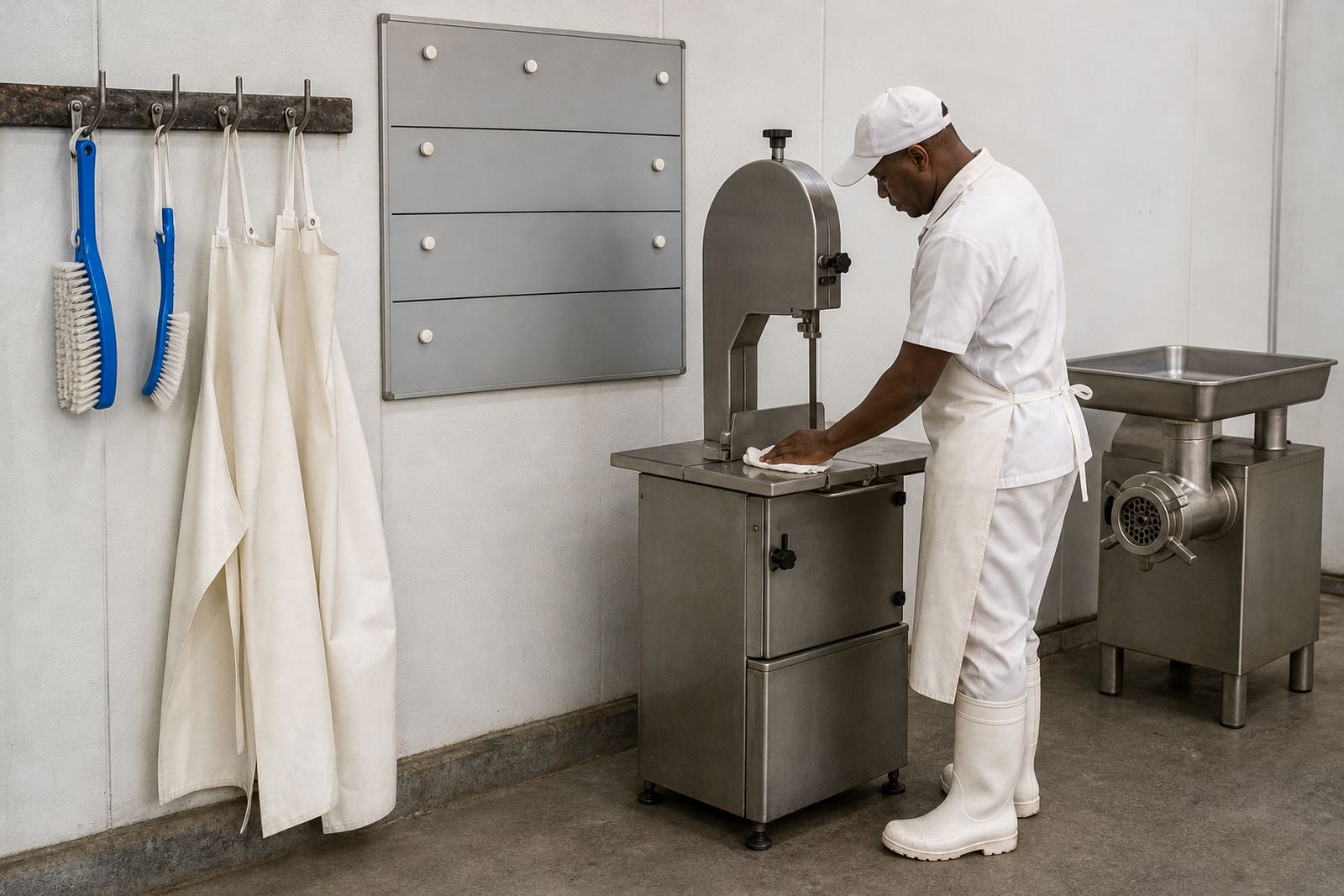
If the mincer is harder to clean than it used to be, that can point to worn parts, damaged surfaces or incorrect assembly. Meat residue should not hide in places that were once easy to wash down. When the plate, knife or adjacent surfaces are no longer seating properly, product can build up and create a hygiene risk. In humid coastal towns this can become a bigger issue, but even inland shops need to keep a strict cleaning routine.
Signs to watch for include dark residue that keeps returning, a sour smell after washing, or grease and fine meat particles collecting where they should not. General cleaning is not enough if a worn part is trapping material. A proper inspection should always be done with the machine isolated and safe to work on.
- Residue returning soon after cleaning
- Odours that do not clear properly
- Build-up around the cutting area
- Cleaning taking longer than normal
Loose fit, poor cut and uneven output usually go together
When the plate and knife are no longer making proper contact, the machine often shows a few symptoms at once. The mince may look rough, the feed may feel heavier, and the operator may notice that tightening or reassembling the parts does not restore the same finish. That usually means the cutting set, retaining parts or adjoining components need a closer look.
Do not wait until the machine gives a complete failure. A mincer that is still producing something can tempt a team to carry on, but poor cut quality affects yield and presentation. For a home butcher in Kroonstad or a commercial counter in Durban, that can mean more waste and more rework before the day is done.
- Poor finish even after normal cleaning
- Parts that do not seat as firmly as they should
- More trimming or reprocessing required
- Output that varies with no clear reason
What to do before wear becomes a stoppage
The best response is to slow down and check the obvious first. Confirm that the machine is clean, assembled correctly and used with the right guards and PPE in place. If the signs persist, arrange servicing before the problem gets worse. Preventive maintenance is usually cheaper than a full breakdown callout, and it helps keep trading steady when power interruptions or busy weekends already put pressure on operations.
MorCut Butchery supports commercial and home butchers with mincer servicing, blade replacement, plate and knife change, cleaning demonstrations, parts supply, delivery and setup, plus breakdown callouts and training. If you are based in Bloemfontein, Johannesburg, Pretoria, Durban, Cape Town, Kimberley, Welkom or Kroonstad, the safest approach is to act early rather than wait for a machine to stop mid shift.
- Keep guards in place at all times
- Switch off and isolate before cleaning or inspection
- Use suitable PPE for handling sharp parts
- Book servicing at the first sign of repeated wear