

Start with the work you actually do
A first bandsaw should match your daily cutting pattern, not the biggest job you imagine for next year. If you are portioning smaller carcasses, trimming cuts for the counter or handling occasional heavier work, think about how often the machine will run, who will use it and how much room you have around it. In a small operation, a machine that fits your workflow is usually better value than one that looks impressive but sits in the corner too large for the space.
In Bloemfontein, many first-time buyers are balancing a tight prep area, a limited power layout and staff who may be learning the process at the same time. That is why it helps to be practical. Measure the spot where the saw will stand, check where cleaning water will run, and make sure there is enough space to load meat safely without crowding other equipment.
- How much cutting happens in a normal day?
- Will one person use the saw, or a few staff members?
- Is the work more for retail prep, home use or regular processing?
- Do you have enough floor space for safe loading and cleaning?
Look for simple operation and safe handling
The best first machine is one that is straightforward to use. A bandsaw with clear controls, steady feed and proper guards makes it easier for a new operator to build confidence. There is no benefit in buying something complicated if the team must guess how to use it. Clear guarding, stable positioning and easy access for cleaning all matter more than flashy extras.
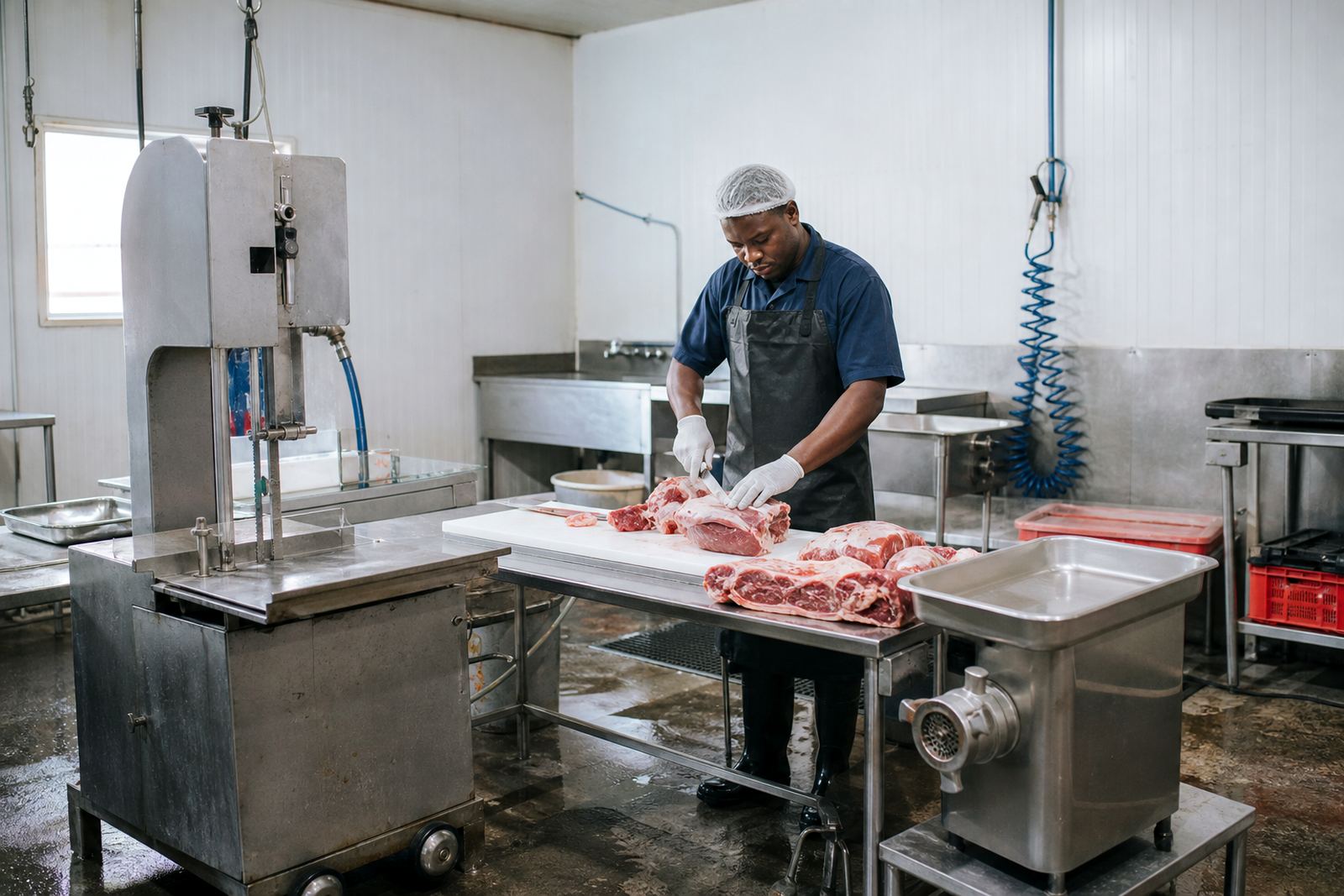
Safety should be part of the decision from the beginning. Keep hands away from the blade path, use the guards provided, wear suitable PPE and never bypass a protection feature to save time. Good habits matter just as much as the machine itself. If the saw is likely to be used in a busy room, training is worth including from day one, especially where more than one person may switch between cutting and packing tasks.
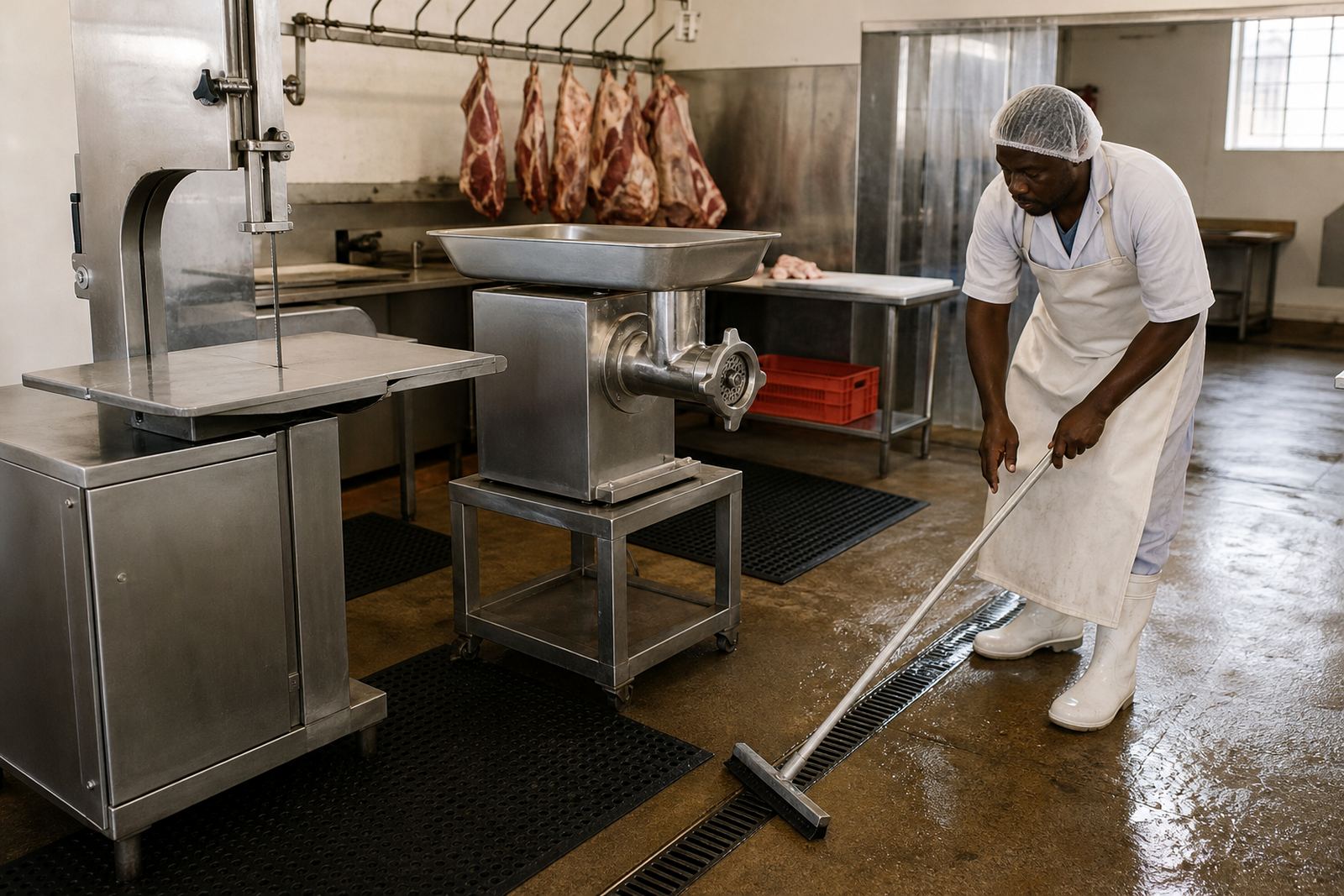
For smaller shops, it also helps when the machine can be cleaned without fuss. A saw that is awkward to wash down will soon become a chore, and that usually leads to poor routine and more stoppages later on.
- Check that the guards are easy to use and easy to keep in place.
- Make sure the machine can be cleaned properly at the end of the shift.
- Ask whether setup and basic operator training can be arranged.
- Keep the work area dry and free from offcuts and slippery fat build-up.
Think about cleaning, maintenance and local conditions
In South African butchery work, upkeep is not a side issue. A first bandsaw needs regular cleaning, blade care and a simple maintenance routine that your team can follow. In summer, dust, heat and long operating hours can all add strain. In coastal towns like Durban and Cape Town, humidity can also affect how fast equipment is cleaned and stored, while load-shedding means you should keep procedures practical for stop-start working days.
That is why service access matters. If a machine needs blade replacement, servicing or a breakdown callout, you want support that can respond without delay. Preventive maintenance is usually cheaper and less disruptive than waiting until a fault turns into a full stoppage. A small operation cannot afford unnecessary downtime when orders are waiting and the cold room is already full.
Cleaning demonstrations can help here too. When staff know how to strip, wash and reassemble the working parts properly, the machine lasts longer and stays safer to use. Small habits save money over time, and they also keep your operation in line with local hygiene expectations.
Do not overlook the mincer if you do mixed work
Many first-time buyers focus on the saw and only think about the mincer later, but the two machines often work as a pair. If your business handles trimming, sausage work or fresh mince for retail, a mincer can save time and keep product flow steady. For a home butcher or a small shop, the decision is about workflow, not just equipment count.
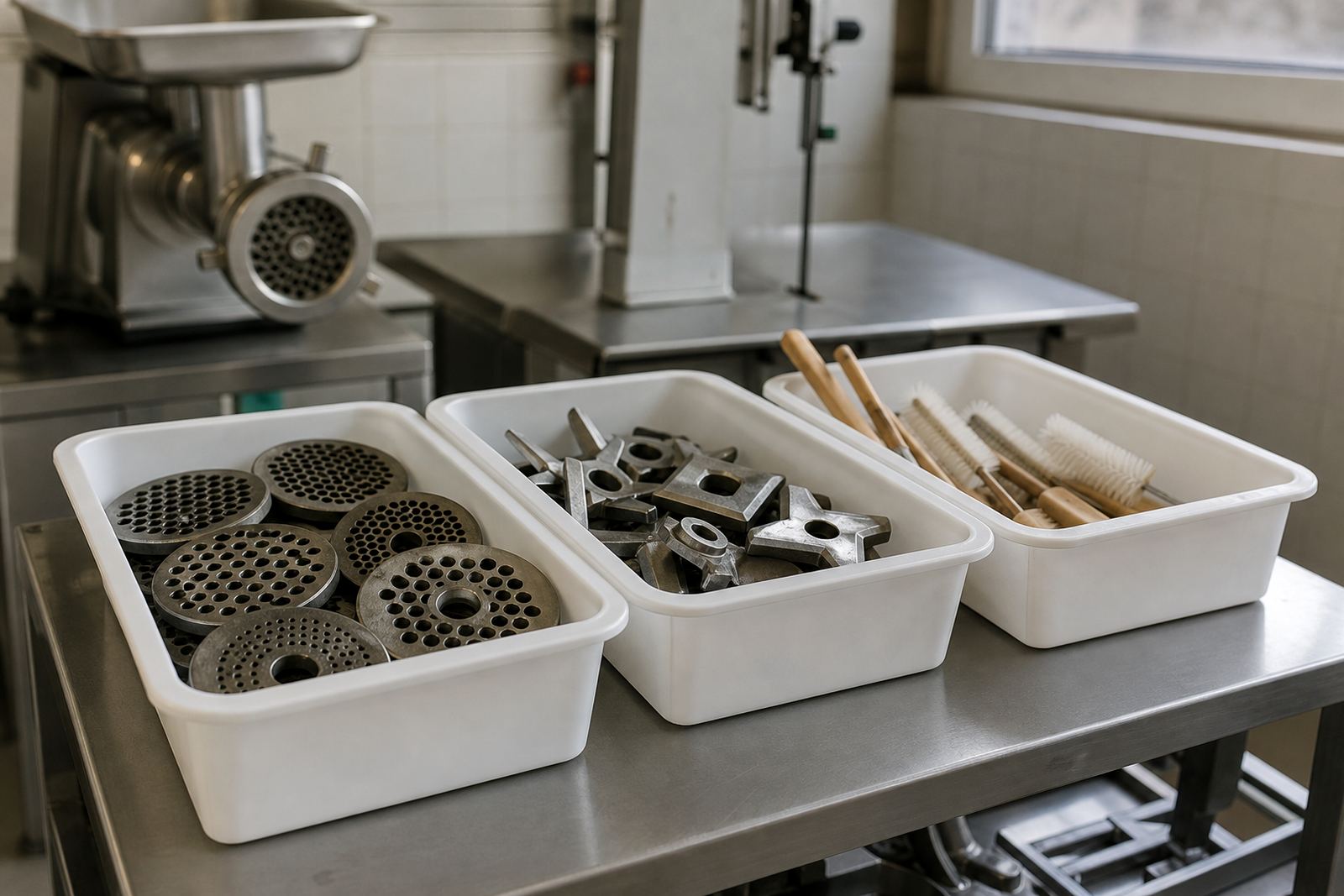
It helps to consider how the saw and mincer will fit into the same prep area. If staff move cut portions from one side of the room to another, the space needs to stay tidy and organised. Good layout reduces handling, keeps the process cleaner and makes the day easier for everyone. When the knife and plate need changing, or the machine needs a service, you want those tasks to be simple and quick.
For a first purchase, it is also worth asking whether parts supply and routine servicing are easy to arrange in your area. A machine should not become a problem because a small part is difficult to replace.
- Will you use the mincer every day, or only on certain batches?
- Is the machine easy to clean after fatty or sticky product runs?
- Can the plate and knife be changed without a long delay?
- Will the same operator manage both the saw and the mincer?
Get the right advice before you pay
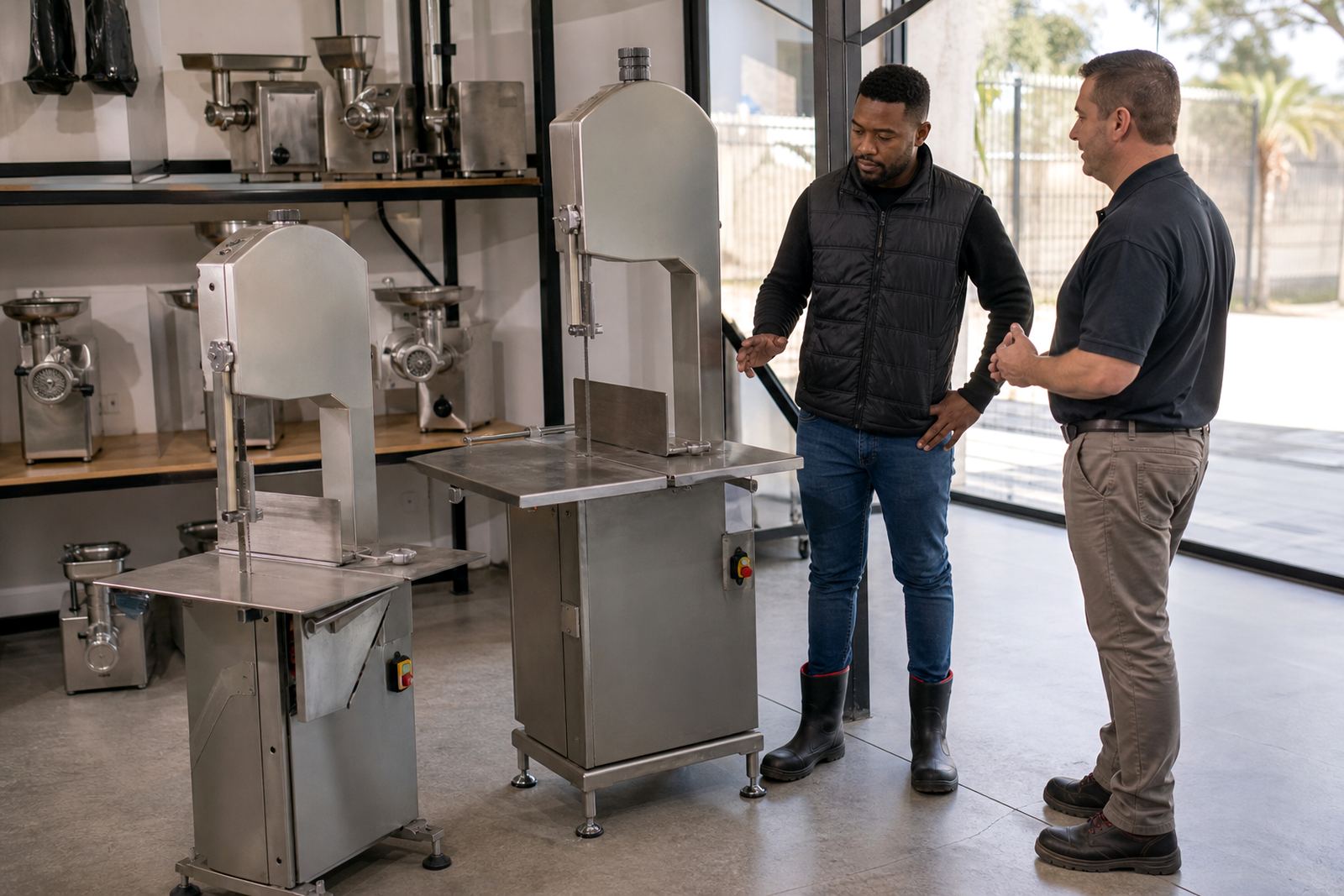
Buying a first bandsaw should not feel rushed. A proper discussion about your space, your daily volume and your staff setup usually points to a better result than guessing from a photo or a catalogue description. The right supplier should be able to explain what suits a small operation, what kind of servicing is needed and how delivery and setup can be handled across your area.
From Hamilton in Bloemfontein, MorCut Butchery works with commercial and home butchers in Bloemfontein, Johannesburg, Pretoria, Durban, Cape Town, Kimberley, Welkom and Kroonstad. That local reach matters when you want direct help with installation, servicing, parts supply or breakdown callouts. A first machine is a long-term buy, so it helps to deal with people who understand the pressures of real butchery work and can guide you without fuss.
If you are unsure, ask for a practical run-through before making a decision. The goal is simple: choose a saw that fits your work now, can be kept clean and safe, and can still be supported when the first service or blade change comes round.
A small operation needs a practical machine
There is no need to overcomplicate the first purchase. A well-chosen bandsaw should help you cut more steadily, keep the prep area safer and reduce strain on the team. For a small butcher, the smartest choice is often the one that is easy to maintain, easy to clean and suited to the amount of work you really do. That is how you avoid buying twice.
In a market where every Rand matters, the best decision is usually the one that keeps the process moving without adding avoidable problems. If you are starting out in Bloemfontein or supplying customers in another town, focus on the basics: safe use, routine cleaning, proper support and enough space to work properly. That approach pays off long after the first delivery has arrived.