
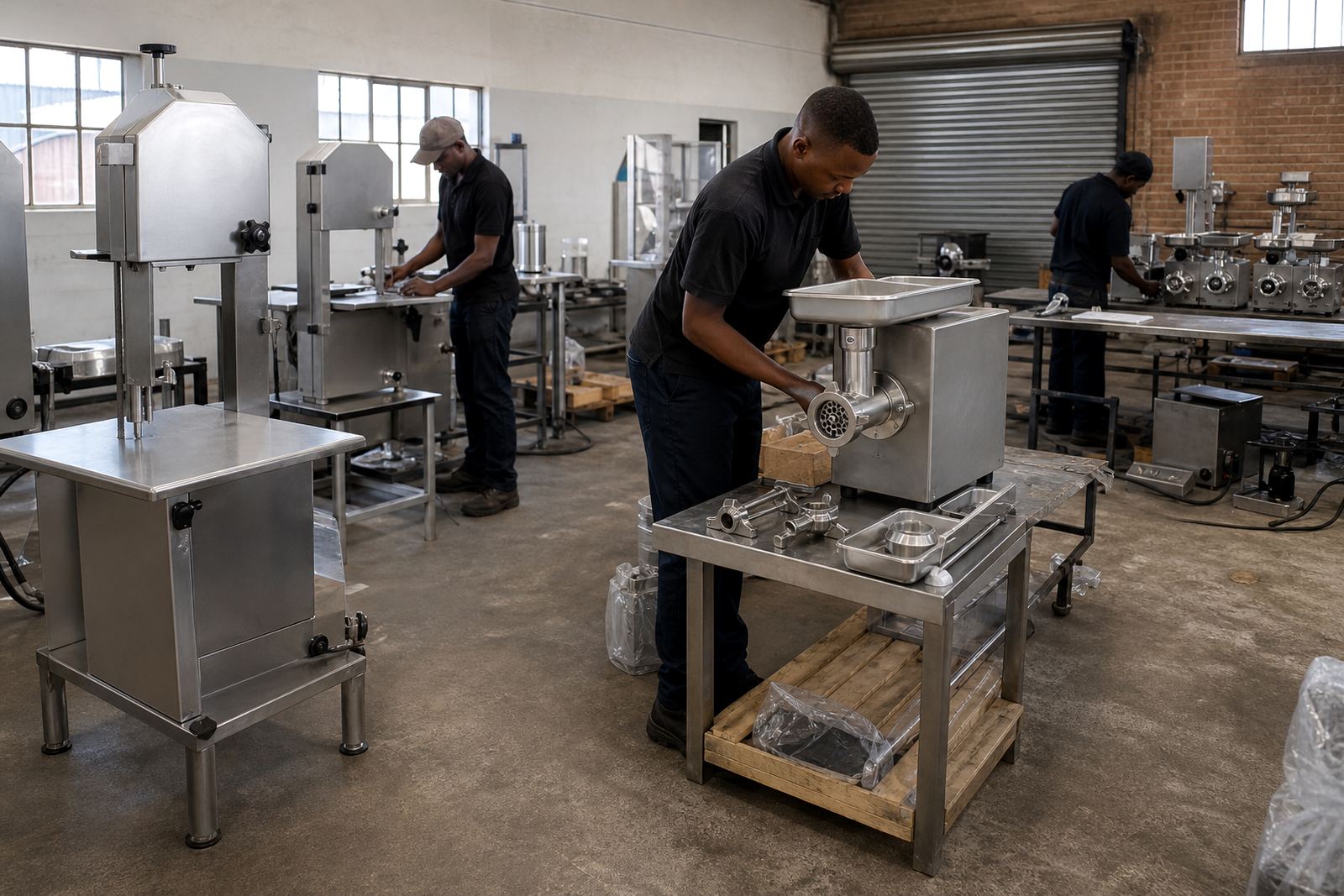
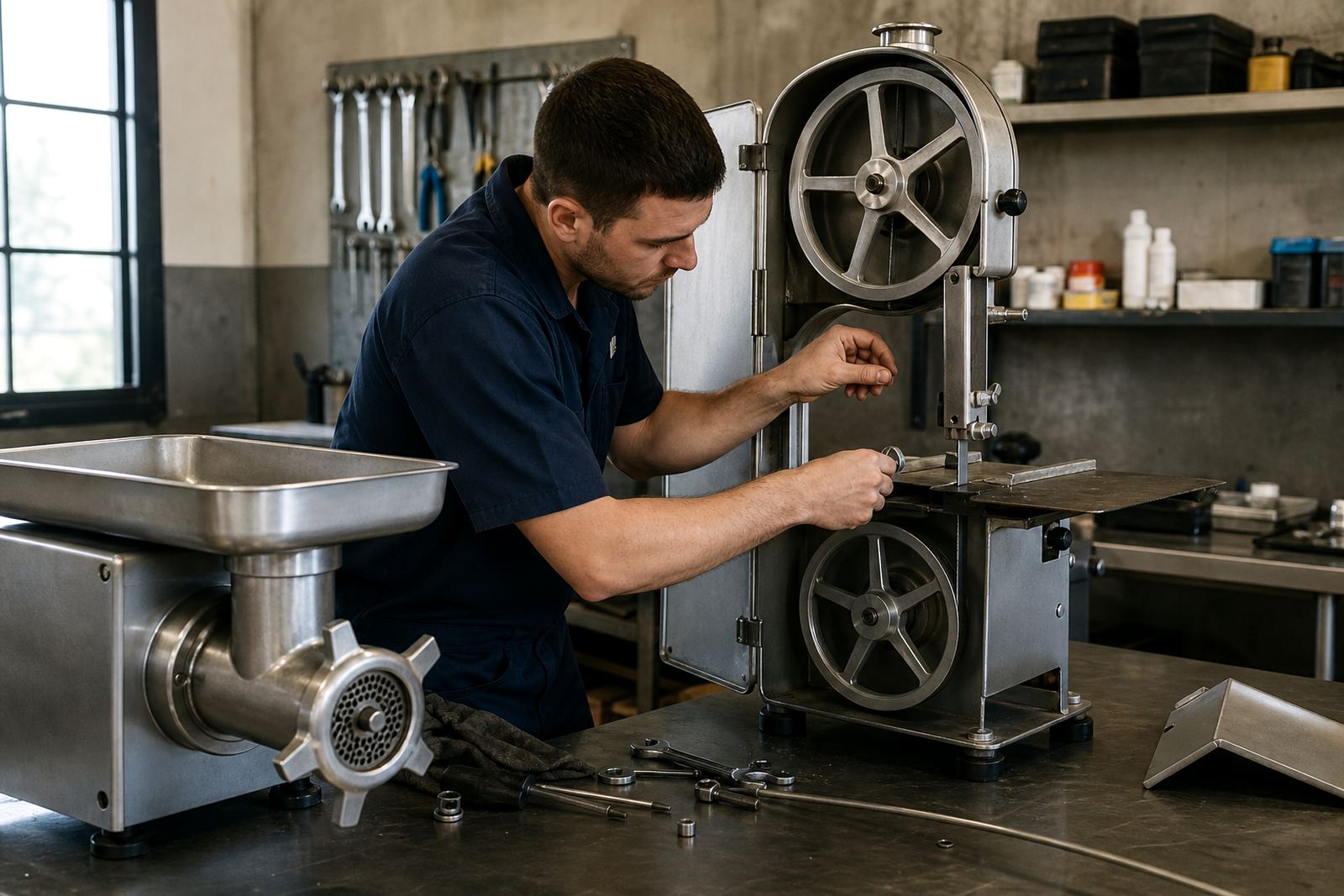
Why the last minutes of the shift need a fixed routine
When a bandsaw or mincer is simply switched off and left at that, the next person inherits the mess and the risk. A clear shutdown routine gives the team one way of working every day, whether the branch is handling a busy Saturday counter rush in Johannesburg or a quieter weekday clean-up in Kroonstad. It also helps new staff learn what must happen before cleaning starts, so there is less chance of someone reaching into the wrong place or starting a task before the machine is safe.
Shutdown steps should never be left to memory alone. A printed checklist near the prep area works well because staff can follow it in the same order each time. That matters in real kitchens and butcheries where noise, time pressure, and power interruptions can distract people. A short routine is better than a long one. Keep it practical, repeatable and visible.
- Stop feeding product before switching off.
- Wait for all moving parts to come to rest.
- Isolate power before any cleaning or strip-down.
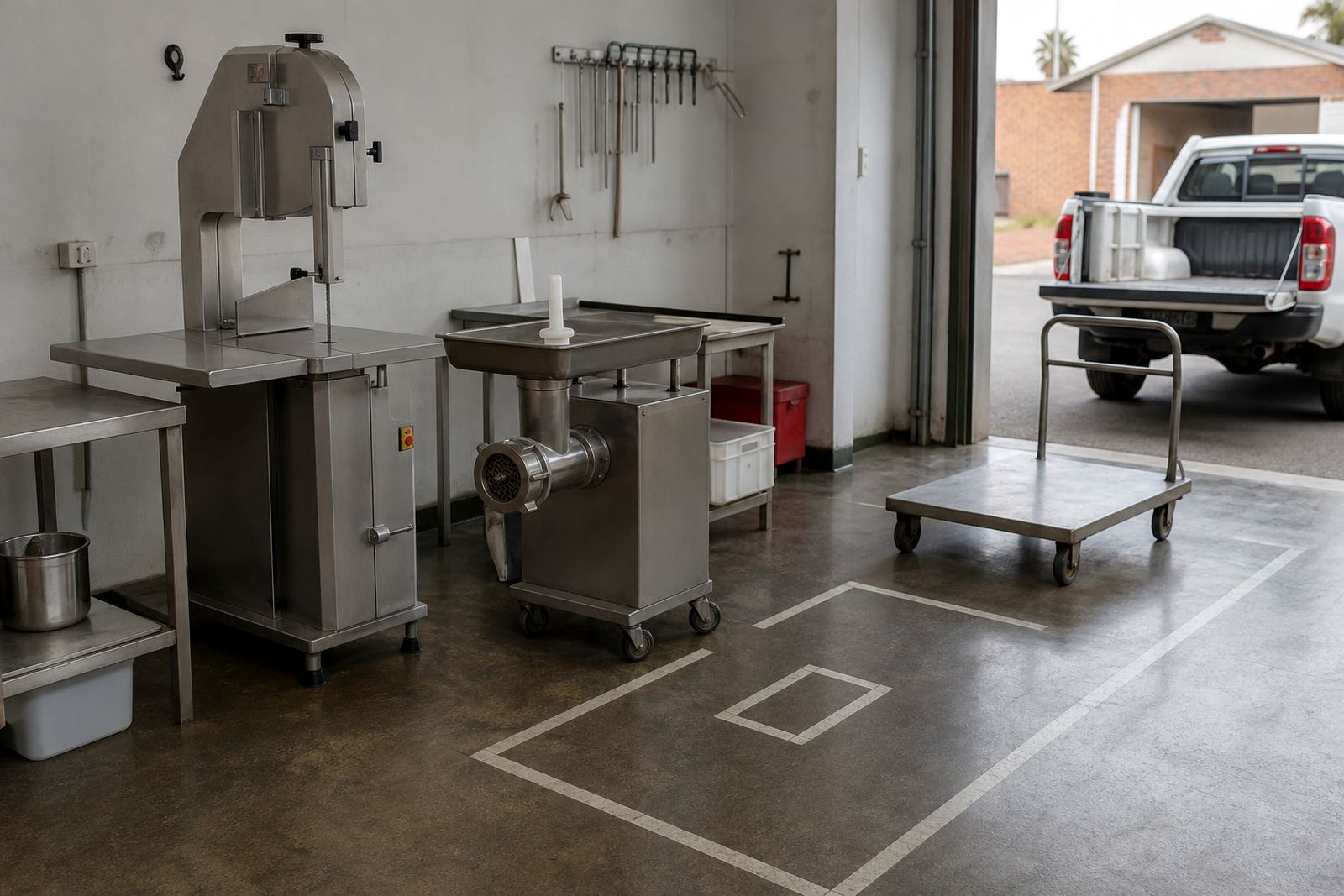
- Check that the area around the machine is clear.
Teach the same shutdown order every time
The best shutdown routine is the one that does not change from person to person. Start by clearing the feed area, then stop the machine and make sure nobody is still loading product. After that, isolate the power source according to the machine setup at that site. Only then should the operator move on to cleaning or handing over to the next shift. If your site has more than one operator, one person should lead the sequence and call out each step as it is done.
Consistency is especially helpful in mixed teams where some staff are experienced and others are still learning. A calm, standard sequence also reduces the risk of shortcuts when load-shedding interrupts work and everyone wants to finish quickly. Even a few extra seconds spent on the correct order can prevent a hand injury or a damaged part.
- Finish the last cut or grind before any switch is touched.
- Confirm the machine has fully stopped.
- Switch off, then isolate power as required.
- Place blades, plates and knives aside safely for cleaning or inspection.
Keep guards, blades and moving parts in mind
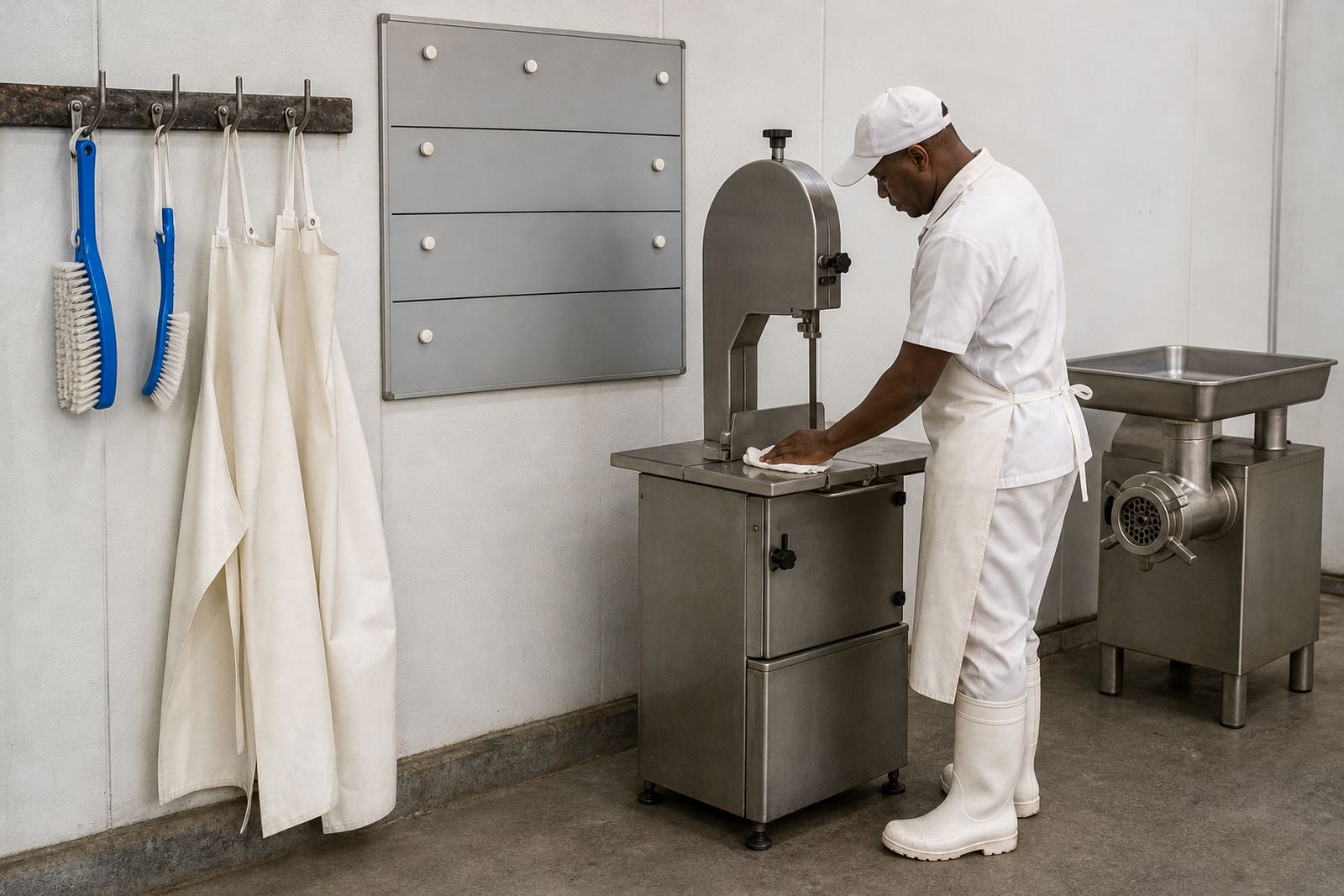
Shutdown is not only about turning the machine off. It is also the moment to check that guards are in place and that no one is tempted to bypass them for speed. On bandsaws, staff should never reach near the blade area until the machine is isolated and still. On mincers, the head and feed area must be handled with care because residue and sharp edges can create hazards even after power is off.
If the machine has parts that are removed for cleaning, show staff how to place them on a clean tray or rack, not on a wet floor or a crowded table. A dropped plate or knife can become damaged and that means extra cost and delay. In a coastal branch where humidity is high, drying the parts properly is just as important as washing them. Careless storage can lead to corrosion, staining or poor fit when the machine goes back into service.
- Never clean around a moving blade or auger.
- Use gloves and other PPE suited to the task.
- Inspect removed parts for wear, damage or loose fit.
- Keep small parts together so nothing goes missing.
Build shutdown steps around cleaning and drying
A good shutdown routine should make cleaning easier, not harder. Once the machine is safe and open for wash-down, staff can remove residue from all accessible surfaces, then dry parts thoroughly before reassembly. This is where many butcheries lose time, because the cleaning team has to guess what comes off first and what can stay in place. A simple shutdown sequence removes that uncertainty.
In Bloemfontein and other inland towns, dust can settle quickly on exposed surfaces if equipment is left open too long. Near the coast, moisture creates its own problems. That is why the handover from shutdown to cleaning must be tight. If your team works from a written checklist, include the order for stripping, washing, drying and setting aside components. Make sure everyone understands that water and electrics do not mix, and that no one should restart the unit until all parts are back in place.
- Remove product residue before it dries on.
- Wash parts with care, then dry them completely.
- Wipe down the body and surrounding work area.
- Reassemble only when every part is clean and dry.
Use shutdown training to reduce breakdowns later
Many faults begin with poor end-of-shift habits. If staff slam covers, force parts back into place, or skip cleaning after a tired evening shift, the machine pays for it later. Proper shutdown training helps staff recognise what the equipment sounds and looks like when it is operating normally, and what should happen before the day ends. That makes it easier to spot wear, loose fittings or unusual residue before they become a bigger issue.
A practical trainer should show the team not only how to use the machine, but how to leave it correctly. That includes safe removal of blades, plates and other working parts, plus how to check for damage before the next shift. In a busy butchery, this kind of teaching saves time because fewer breakdowns interrupt production. It also helps managers know when a part needs replacement or a technician needs to be called in for servicing.
- Show staff what normal wear looks like.
- Teach them to report chipped, bent or blunt parts immediately.
- Explain when to stop work and call for servicing.
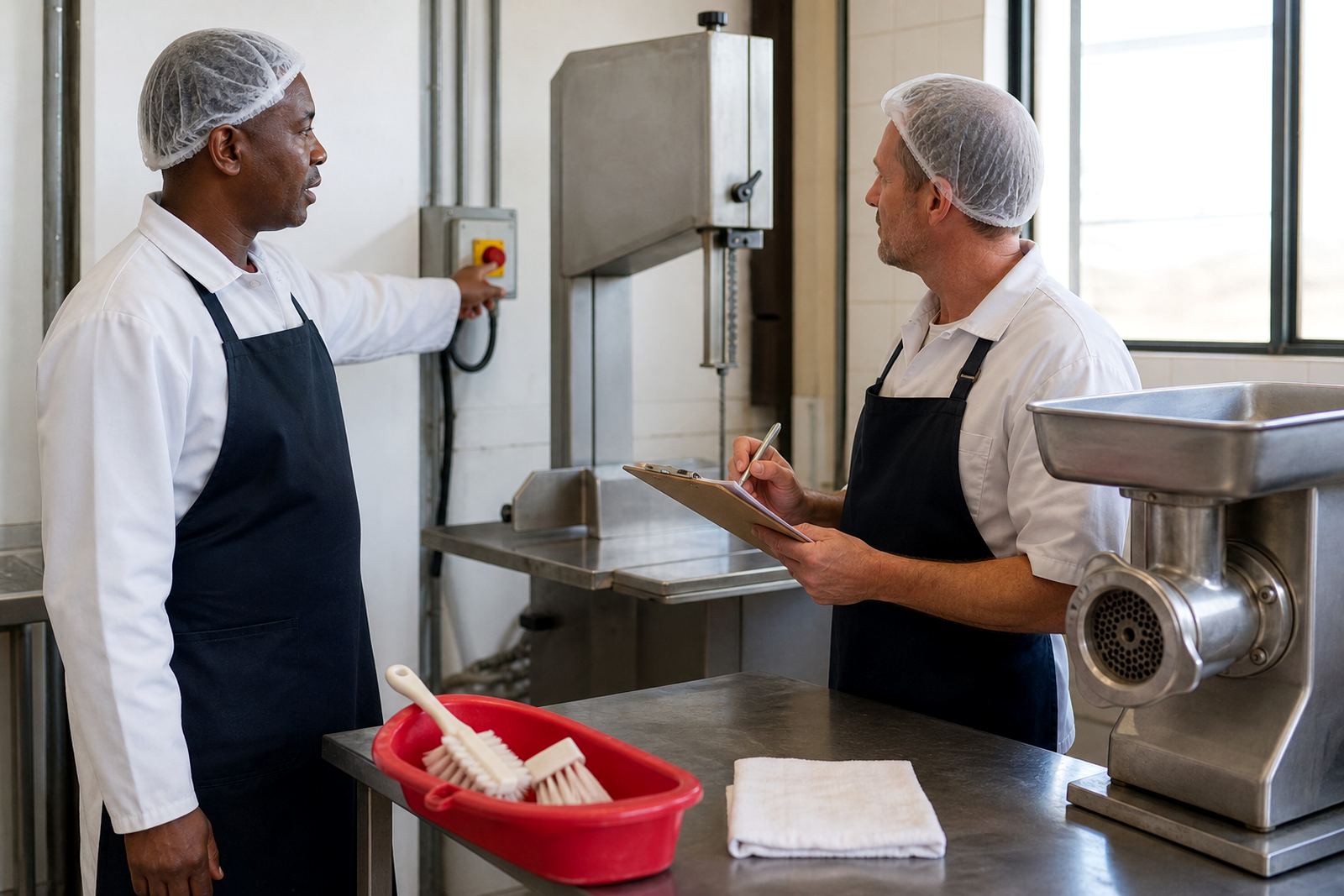
- Keep the checklist near the machine, not in a drawer.
A Bloemfontein example that works on the floor
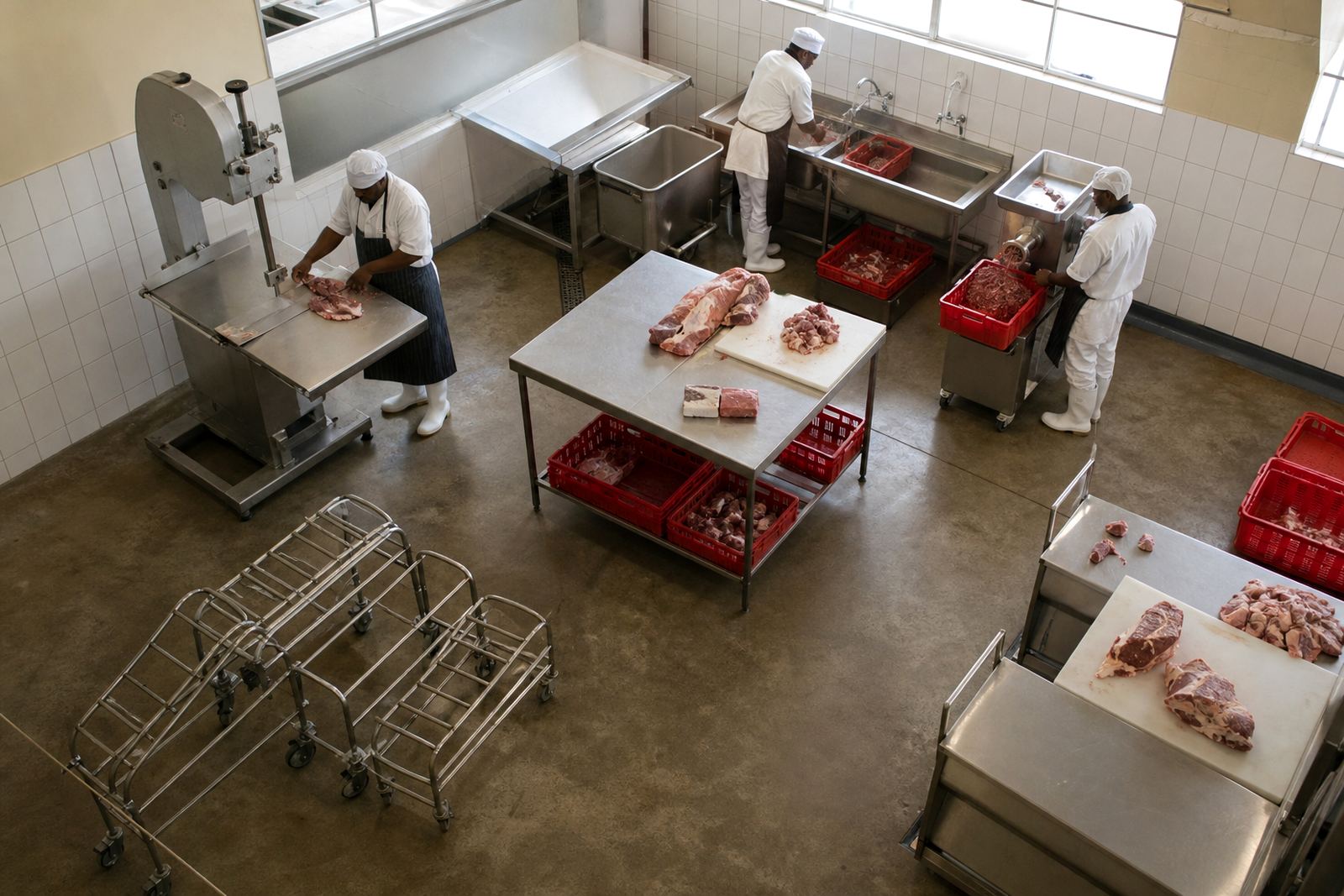
Take a small butchery in Hamilton, Bloemfontein. The team closes after a busy afternoon and has only a short window before the cleaning crew takes over. If the last operator follows the same shutdown steps every day, the shift ends calmly: product is cleared, the machine is switched off, power is isolated, and the parts are removed in order. The cleaner then has a safe, open machine and does not need to guess what was left running or what still needs to come off.
That kind of routine is useful whether the branch is in Bloemfontein supply, Johannesburg delivery, Pretoria delivery, Durban delivery or Cape Town delivery areas. Different premises have different layouts, but the principles stay the same. A good shutdown protects people, keeps equipment in better order, and makes the morning start easier. If your team is still learning, keep the steps short, practical and easy to repeat. Do that and the machine, and the staff, are better prepared for the next day.
What to include in a simple shutdown checklist
A checklist does not need to be long. It just needs to cover the steps that matter and match the way your butchery actually works. Keep it nearby, use plain language, and review it whenever the team changes or a new machine is installed. If the branch has a separate closing team and cleaning team, the checklist should show where one task ends and the next begins.
It also helps to include one line for reporting problems. If a blade feels off, a plate is not sitting properly, or a guard is not fitting as it should, the issue should be flagged before the next start-up. That small habit can prevent repeat faults and unnecessary downtime.
- Clear product from the machine.
- Switch off and isolate power.
- Wait for full stop.
- Remove and store parts safely.
- Clean, dry and inspect.
- Report faults before the next use.