

Check the route from gate to work area
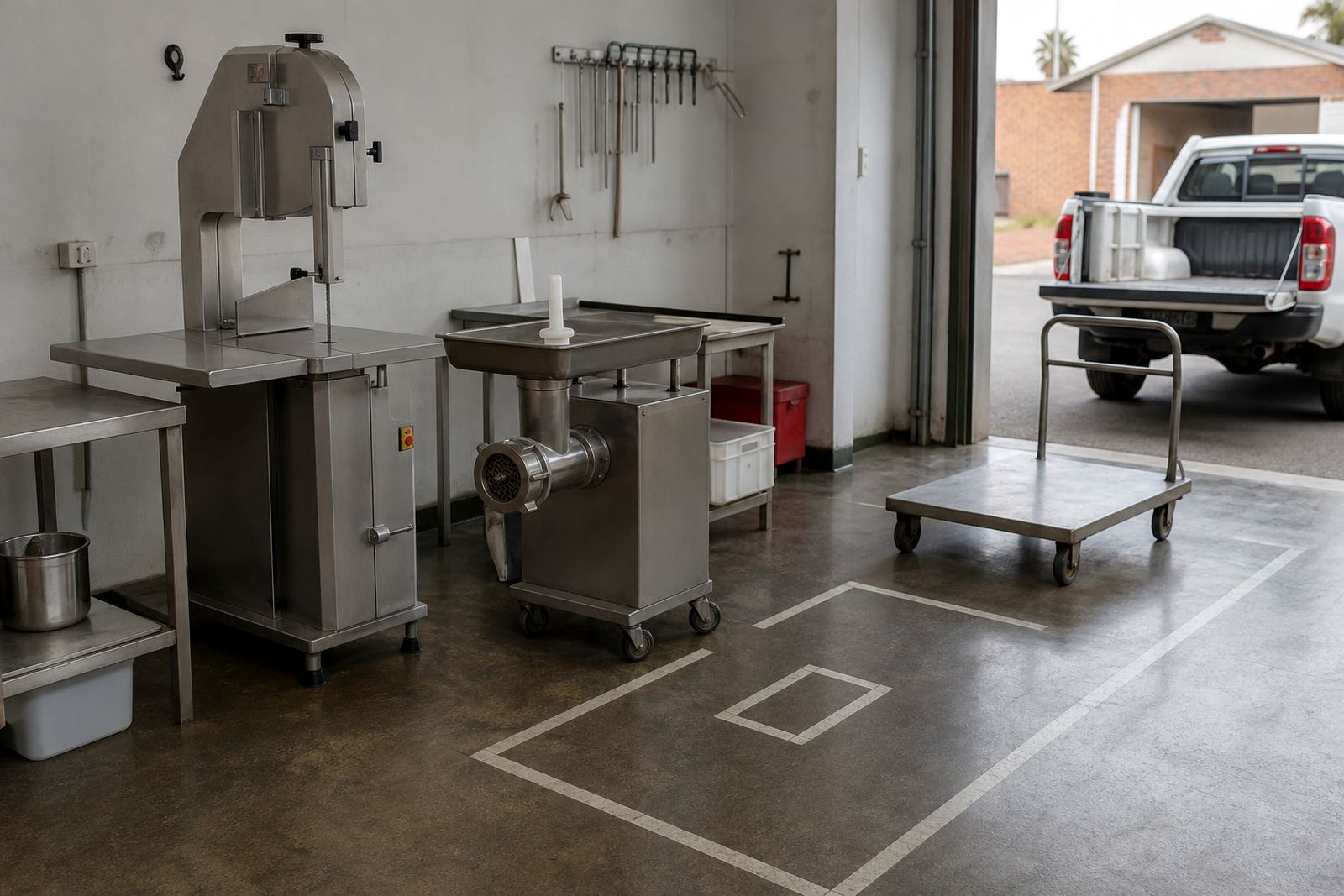
Before delivery day, walk the full route that the equipment will take from the gate, through the yard and into the butchery room. Measure door widths, tight corners, ramps and any low door frames. If there is a step or uneven paving, sort that out early so the unit does not have to be forced or tilted awkwardly. That reduces the chance of damage and keeps the delivery team working safely.
In places like Bloemfontein, where many sites sit on busy streets or inside shared business yards, it helps to reserve a clear bay near the entrance. If the delivery is going into a home butchery, move cars, loose crates and braai gear out of the way. Keep the path dry and free from grease, because wet floors and heavy equipment are a poor mix, especially when a team is moving in gloves and safety boots.
- Measure all doors, passages and corners before the truck arrives
- Remove loose items, mats and anything that could trip the team
- Make sure gates can open fully and stay open
- Check for slopes, steps or cracked paving that need attention
Make power and water points easy to reach
Bandsaws and mincers need the right services in the right place. Before delivery, check where the power point is, whether the plug point is in good condition, and whether the cable can reach without crossing a walkway. If the room uses extension leads, make sure they are in good order and not overloaded. In many parts of South Africa load-shedding also means you should think ahead about changeover plans, backup lighting and safe shutdown routines.
If your unit is near a washing area, confirm that water can be used for cleaning without pooling around the machine base. The floor should drain away properly and the surrounding wall area should be easy to wipe down. In a Free State winter, cold rooms can also leave condensation on surfaces, so keep the area dry enough for safe handling and cleaning. It is worth checking these details before setup rather than after, when the room is realy busy.
- Test the nearby socket or plug point before installation day
- Keep cables clear of foot traffic and splash zones
- Plan for load-shedding with lights, switches and shutdown steps
- Make sure floors can be cleaned without water collecting around the machine
Clear a proper working zone around the machine
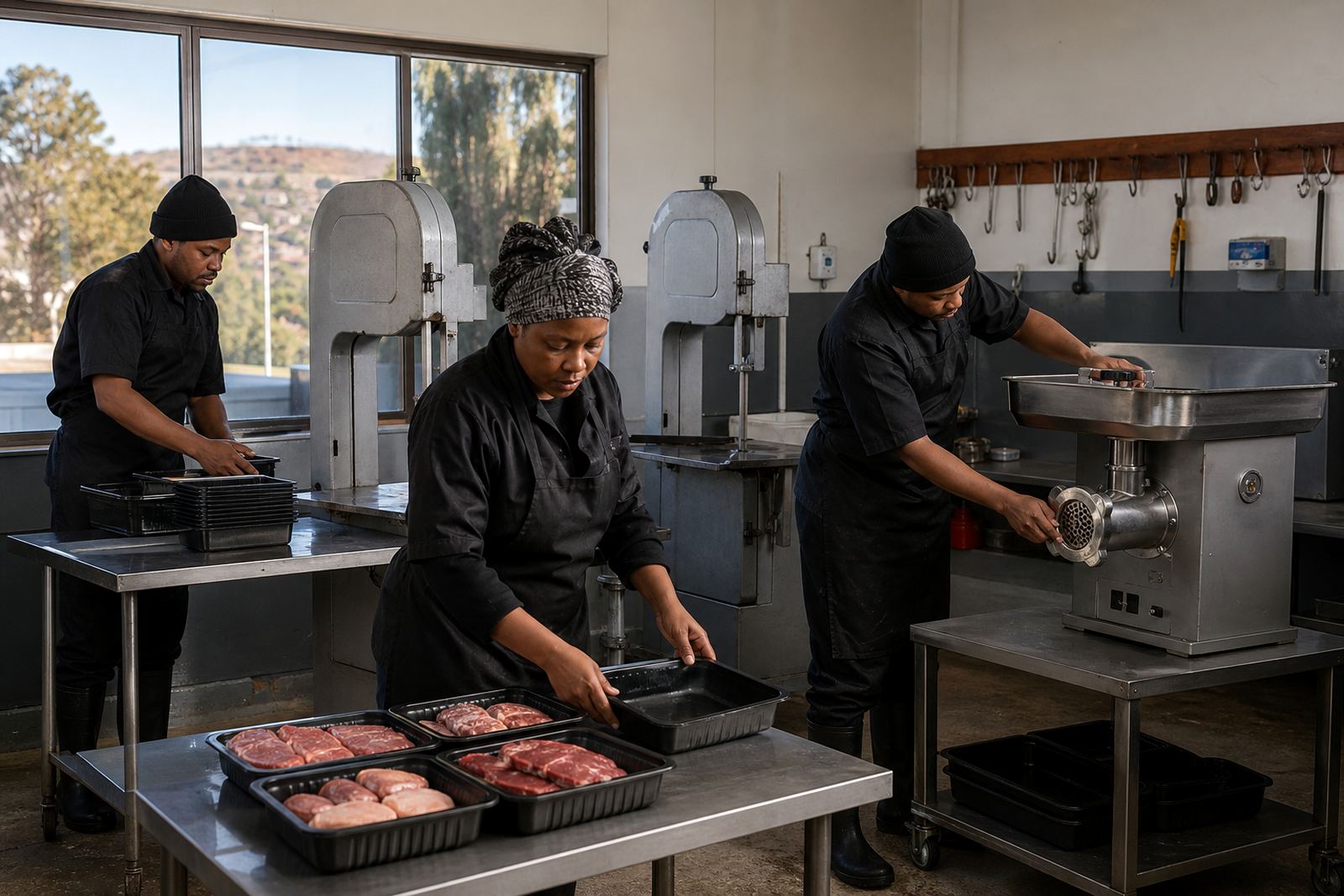
Once the equipment is in place, operators need room to move, load product and work safely. Leave enough space around the bandsaw or mincer for cleaning, blade changes, plate and knife changes, and general handling. Do not pack boxes, spices, trays or spare carcass hooks against the unit. A cramped room slows production and makes daily cleaning more difficult.
A practical setup also keeps the machine away from direct splashing and from areas where people cross behind the operator. If possible, set the unit against a solid wall with a clear front working area. The goal is simple: easy access for the person using it, and easy access for the person cleaning it at the end of the shift.
- Leave enough standing room in front of the machine
- Keep storage boxes and loose tools off the floor nearby
- Set aside a clean area for trays, cuts and waste bins
- Keep a clear path for servicing and breakdown callouts
Prepare the room for food-safe work
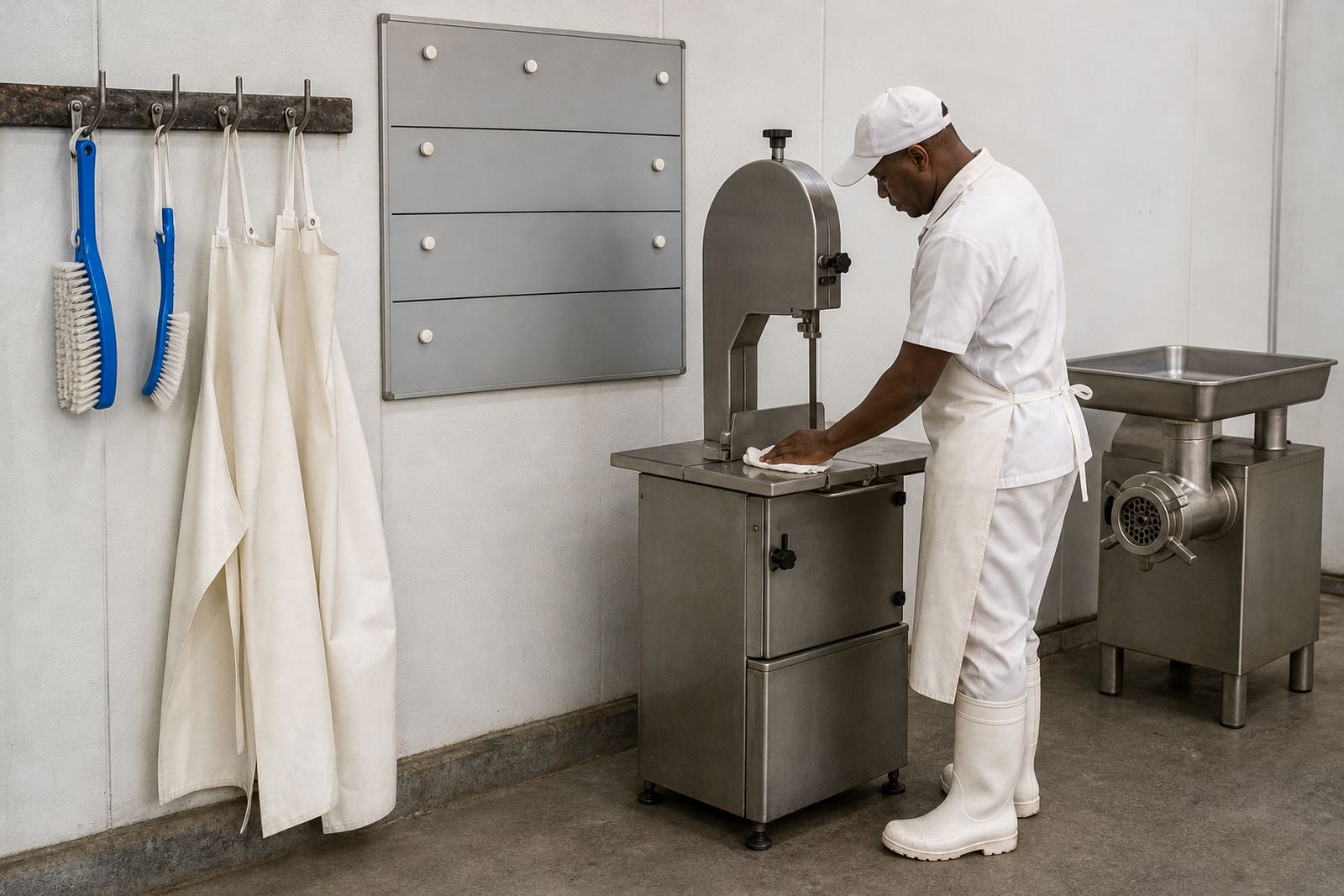
Before a new machine arrives, clean the room properly from top to bottom. Sweep and mop the floor, wipe down nearby surfaces and remove dust from ledges, pipework and shelves. If the area has old paint flakes, rust or stubborn grease, deal with that first. A clean room gives you a better start and makes it easier to keep the machine in good condition from day one.
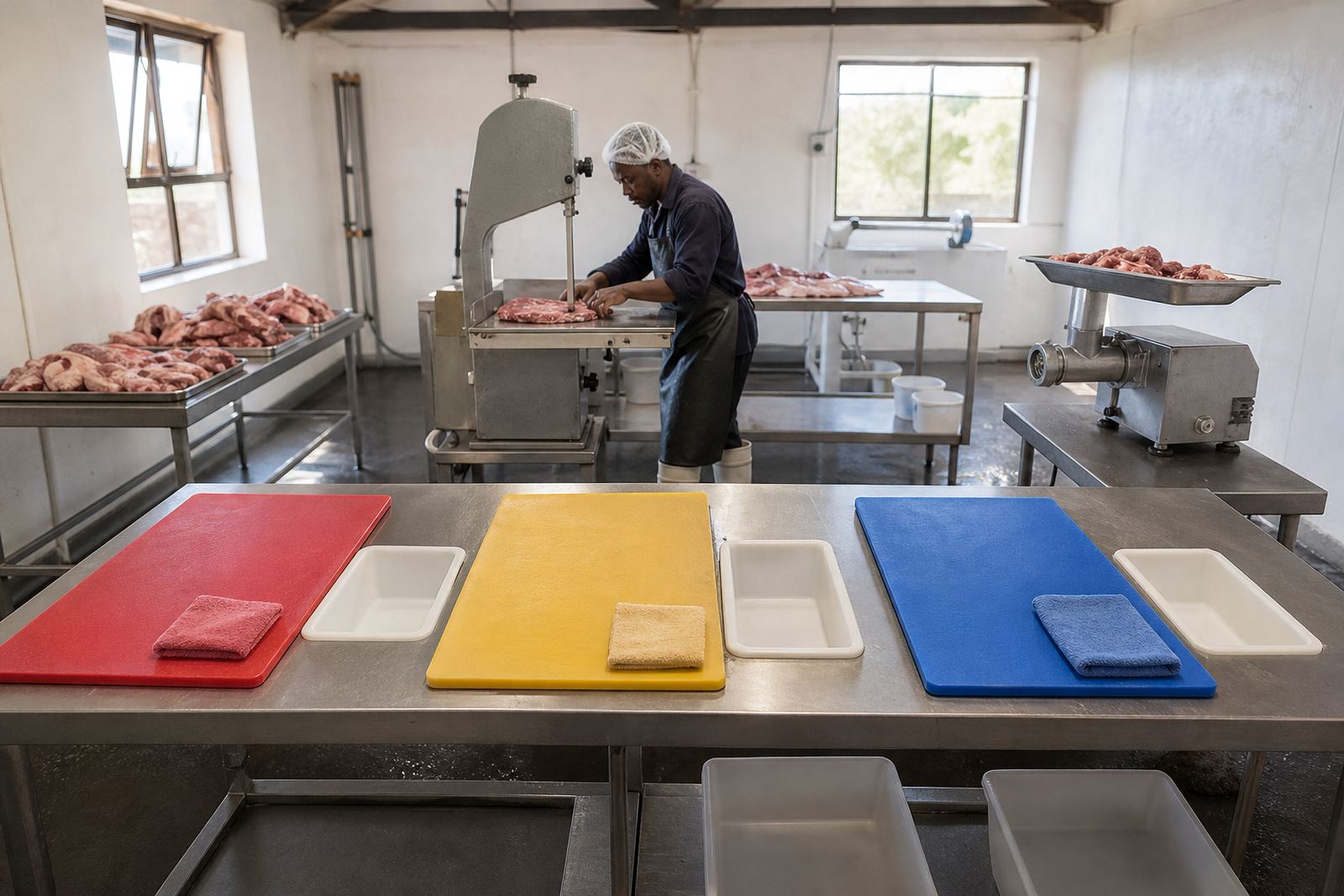
For commercial butchers in places like Johannesburg or Durban, where rooms may see heavy daily use and higher humidity, regular cleaning matters even more. Keep separate cloths for general cleaning and food area work, and use PPE such as gloves and non-slip footwear when handling sharp parts or cleaning chemicals. Good housekeeping also makes it easier to notice leaks, worn seals or loose fittings before they become a bigger problem.
- Clean the floor, walls and nearby surfaces before delivery
- Remove rust, grease build-up and dust from the area
- Keep cleaning cloths and PPE ready for setup day
- Set up bins and waste handling so the room stays tidy
Think about the first day of use, not only the delivery
Delivery is only the first step. The real value comes when the machine is ready for daily work without delay. Plan where the first cleaning cloths, spare parts and routine tools will live. Make sure the team using the equipment knows who to call for servicing, parts supply or a breakdown callout. A simple handover helps everyone work with confidence.
If your butchery is in Pretoria, Cape Town or Kimberley, and the unit is going straight into a busy retail space, it helps to schedule installation outside peak trading hours. That keeps customers out of the way and gives the installer time to check the placement, guards and basic operation. At MorCut Butchery, that kind of practical planning is often what makes the difference between a rushed start and a smooth one.
- Set out the cleaning tools and PPE before the first shift
- Keep the operator instructions where staff can find them
- Plan training time for new staff and casual hands
- Arrange servicing contacts and spare parts access in advance
A simple local example from Bloemfontein
A small butcher in Hamilton, Bloemfontein might have a compact prep room with a single doorway, a tiled floor and a counter packed close to the wall. The smartest preparation is often not complicated. Clear the passage, check the socket, move the meat crates, mop the floor and make space for the installer to work. That basic preparation saves time on the day and lowers the chance of damage during unloading.
The same approach works for home butchers in Welkom or Kroonstad, where the room may be part garage and part prep area. Keep the route wide, protect clean surfaces, and avoid storing chemicals or unrelated tools in the working zone. Once the machine is in place, regular cleaning, proper guards and sensible operator habits will do most of the work of protecting it.
What to confirm before the truck arrives
If you want delivery day to run well, check the basics the day before. A few minutes of preparation can prevent delays, extra lifting and avoidable stress. If anything is unclear, it is better to ask questions early than to discover a problem when the equipment is already at the gate.
- Access is open and measured
- Power point is reachable and in good condition
- Floor is dry, clean and safe to walk on
- Working space is clear for setup and servicing
- Cleaning tools, PPE and waste handling are ready
MorCut Butchery supplies bandsaws and mincers to commercial and home butchers across Bloemfontein, Johannesburg, Pretoria, Durban, Cape Town, Kimberley, Welkom and Kroonstad, with delivery and setup support where needed. If you are preparing a room for new equipment, a little planning now makes the first day easier for everyone involved.