

Why Cleaning Roles Matter On A Busy Floor
In a butchery, cleaning is not just about appearance. It helps keep equipment ready for the next shift, supports food safety and reduces the chance of build-up around guards, blades, plates and moving parts. If no one knows who is responsible for what, jobs get repeated or missed, and that usually shows up when the rush starts.
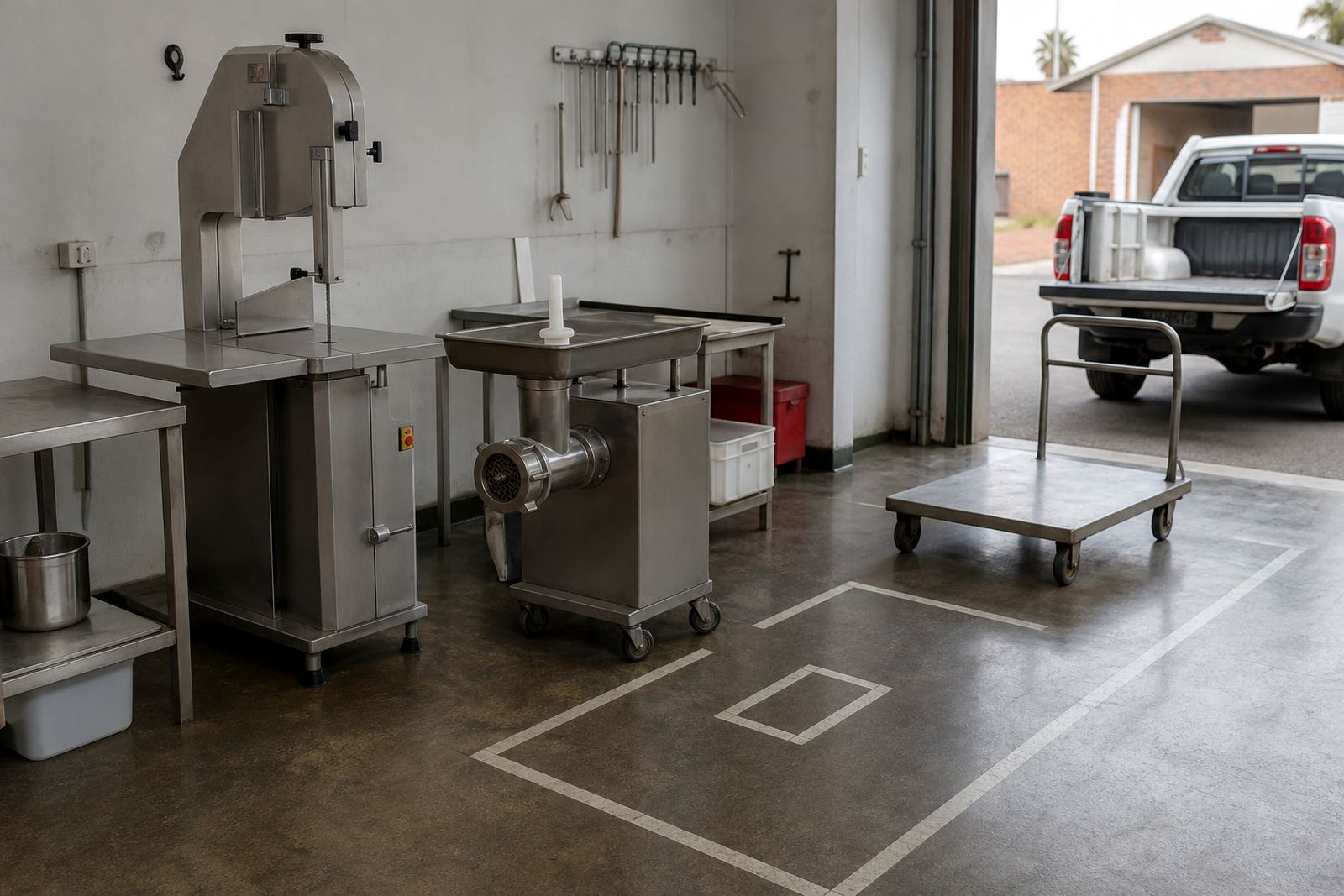
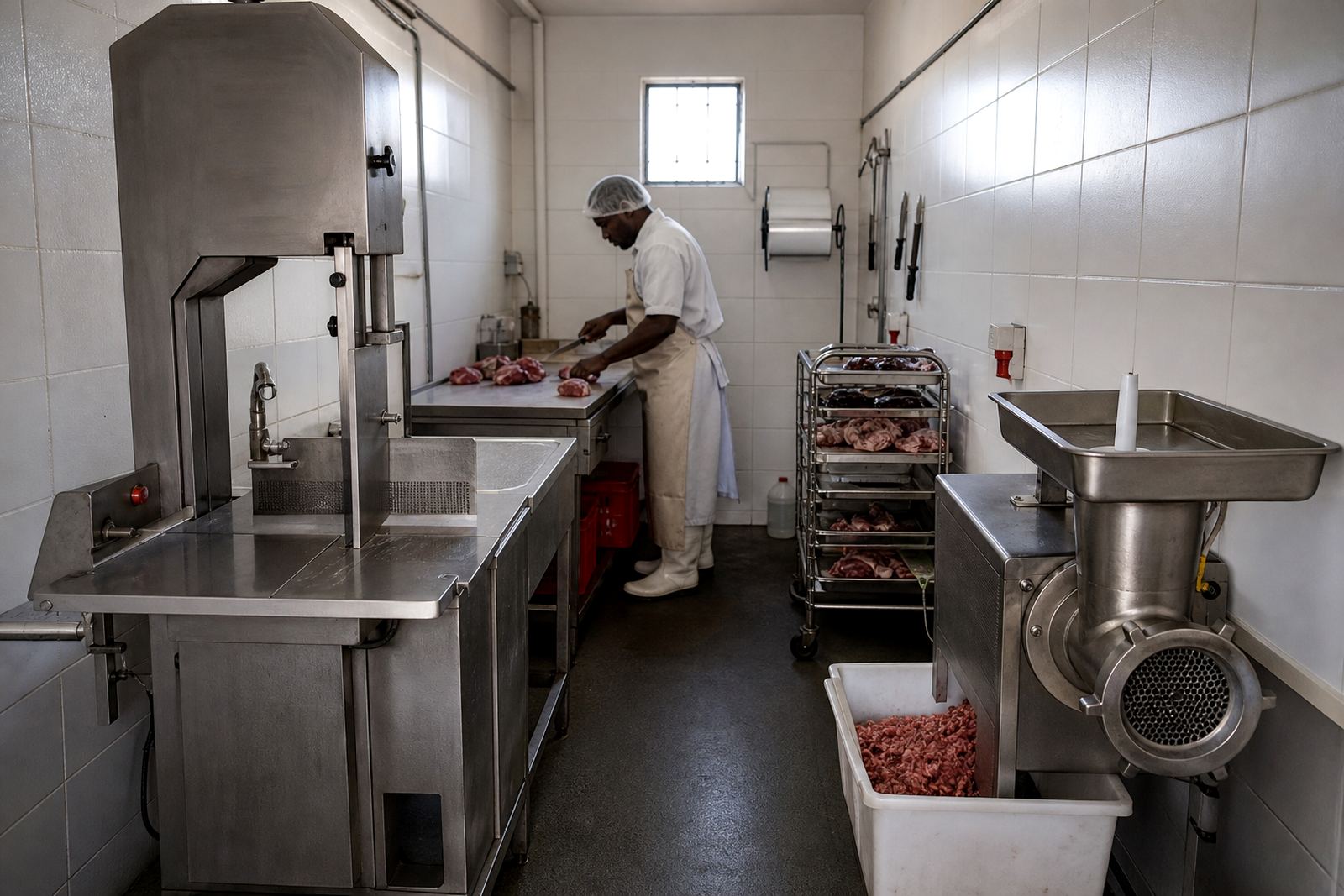
Clear roles are especially useful where a bandsaw and mincer are shared between morning prep, midday production and closing clean-down. One person can be assigned to strip down the removable parts, another to clean external surfaces, and a supervisor can check that the final rinse and reassembly have been done properly. That kind of system saves time and keeps standards consistent.
Set Roles By Shift, Not By Guesswork
The simplest way to avoid confusion is to tie each task to a shift handover. In a small Bloemfontein operation, the opening team might focus on inspection, wipe-downs and confirming that guards are fitted. The mid-shift team can handle quick clean-ups between batches, while the closing team does the full wash, sanitising and storage routine.
That structure works for home butchers too, where one person may do most of the work but still needs a clear sequence. When cleaning is attached to a routine rather than memory, the machine is less likely to be left with residue in hard-to-reach spots. It also becomes easier to spot wear early, especially on parts that are removed often.
- Assign one person to pre-use checks and surface wipe-downs.
- Assign another to removable parts, trays and feed areas.
- Nominate a final checker for reassembly and storage.
- Record faults, missing parts or blunt cutting components straight away.
Keep Bandsaw Cleaning Safe And Practical
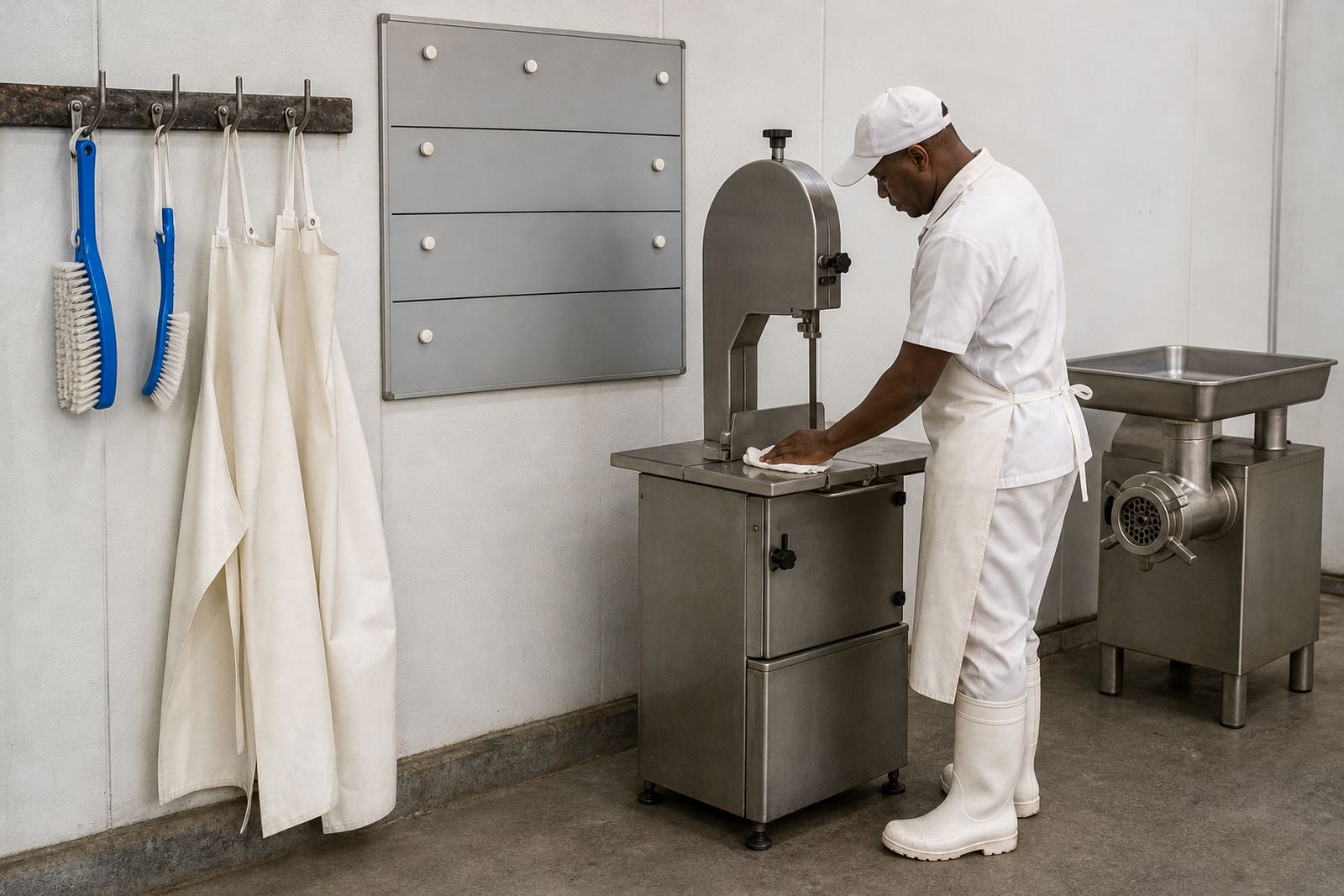
Bandsaws need careful handling because the cutting area, guides and surrounding surfaces can collect fat, bone dust and residue quickly. Cleaning should always happen with the machine switched off and isolated from power. Guards should be put back in place correctly, and staff should use suitable PPE such as gloves and an apron when washing down sharp or slippery parts.
Do not rush the process. A quick wipe is not enough if build-up has collected around the blade path or under the table. Use the correct cleaning method for each part, and make sure everything is dry before reassembly. In humid coastal areas like Durban, drying matters even more because moisture left on metal can lead to rust sooner than expected.
- Switch off and isolate the machine before any cleaning starts.
- Remove loose debris before washing.
- Check that guards and covers go back properly after cleaning.
- Dry all parts fully before the next use.
Mincer Cleaning Needs A Proper Handover
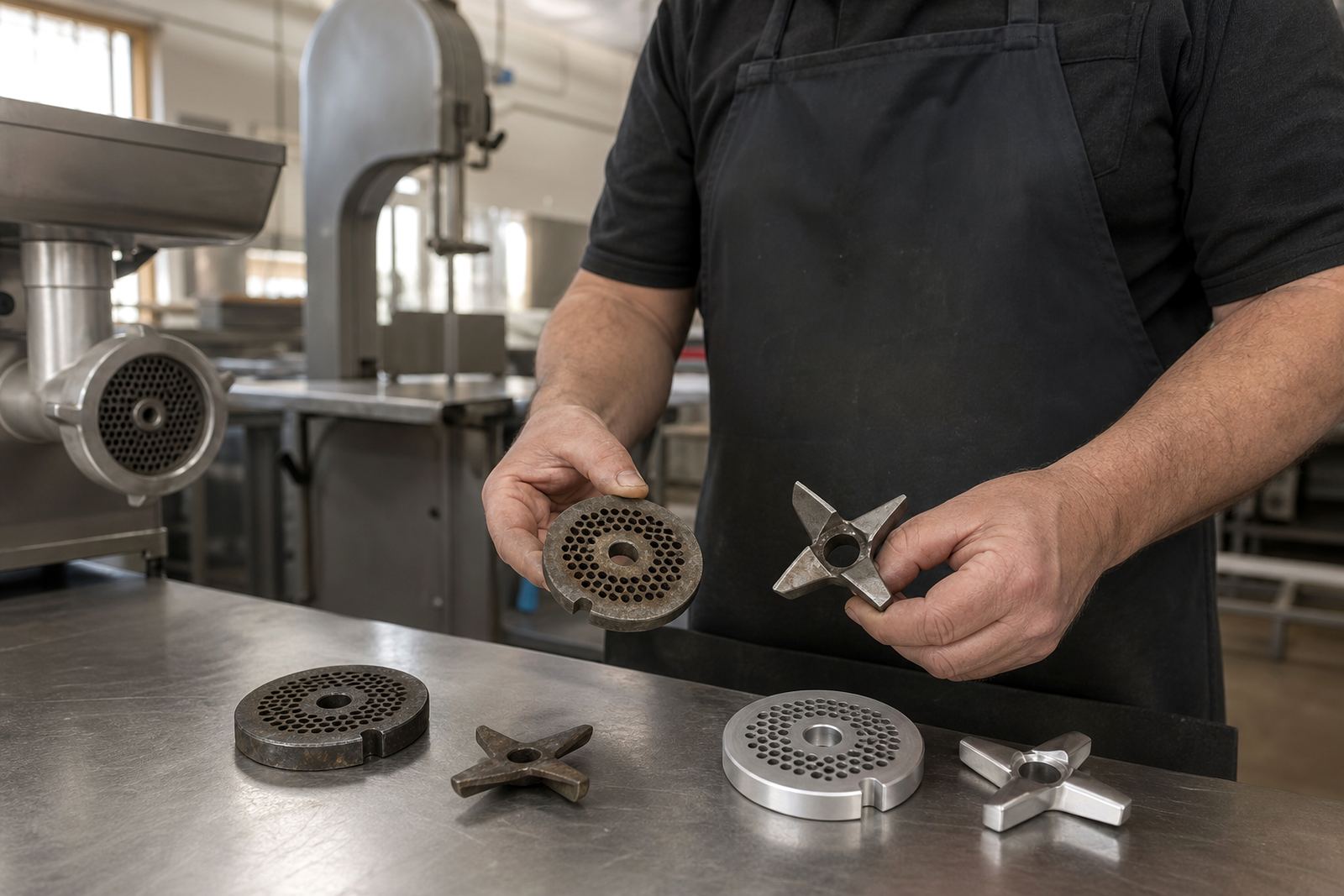
Mincers need a different kind of routine because the plate, knife and feed areas must be cleaned thoroughly after use. If different people use the same unit during the day, the handover should say who removed the parts, who washed them and who returned them to storage or reassembly. That prevents confusion and helps keep the working surface consistent.
A practical rule is to separate the cleaning job into steps. One person handles the strip-down and wash area, another checks for residue on the hopper and screw housing, and a third confirms that parts are dry and stored safely. This is useful in larger branches, but it also helps a small shop in places like Welkom or Kroonstad where one person may be covering several tasks at once.
If the plate and knife are not changing cleanly, or if residue keeps appearing after washing, that is a sign the routine needs tightening. It may be a cleaning issue, or it may point to worn parts that need attention before the machine is used again.
Use A Simple Cleaning Checklist That Everyone Can Follow
Checklists work because they remove uncertainty. Staff do not need to remember everything, and supervisors can see at a glance whether the right steps were done. Keep the checklist short enough to use every day, but specific enough to cover the details that matter.
A good checklist should cover the equipment, the area around it and the storage of cleaned parts. It should also note any faults, missing screws, damaged seals or wear that could affect the next shift. In a busy shop, that small bit of admin can prevent a much bigger problem later.
- Was the machine isolated before cleaning?
- Were all removable parts washed, dried and stored correctly?
- Were blades, plates or knives checked for wear?
- Was the surrounding floor cleaned and left dry?
- Was any fault reported before the next shift started?
Train New Staff Before They Touch The Machine Alone
Even a simple cleaning routine needs proper training. New staff should be shown where the guards sit, which parts come off, how to clean safely and what not to force. They also need to understand that cleaning is part of machine care, not just a closing task.
A short demonstration works better than written instructions alone. Show the correct order once, then let the staff member repeat it while being supervised. That approach helps avoid damage and builds confidence, especially for workers who are new to bandsaws or mincers. It also creates fewer mistakes when the pressure is on and the shop is trying to keep up with orders.
MorCut Butchery works with commercial and home butchers across South Africa, including Bloemfontein, Johannesburg, Pretoria, Durban and Cape Town, and the same principle keeps coming up: the cleaner the handover, the smoother the next shift. A practical cleaning plan is easier to keep than a vague one, and it gives everyone a clear role.
Make Cleaning Part Of Daily Maintenance, Not An Afterthought
Cleaning roles work best when they sit inside a broader maintenance plan. That means cleaning, checking, reporting and servicing all connect. If a machine is cleaned properly every day, it is easier to notice when a blade is dull, a part is loose or a feed area is not working as it should. Catching those signs early can reduce breakdowns and help keep production moving.
For operations in Hamilton, Bloemfontein and other Free State areas, dust can also be a factor, especially in open prep spaces or storage rooms. Regular wipe-downs and dry storage help keep grime from settling into moving parts. If servicing is needed, it is best to deal with it before the machine is put under pressure again.
When everyone knows their cleaning role, the work runs more steadily and the team spends less time arguing over who missed what. That is the real value of a good routine. It keeps the floor organised, the equipment cared for and the shift changes much easier to manage.