

Why summer puts cleaning on the front foot
In a butchery, heat changes the way residue behaves. Fat softens quicker, moisture sits on surfaces longer in humid coastal areas, and dust can cling to equipment in dry inland towns like Bloemfontein and Kimberley. That means the same machine that looked clean at closing time can still carry dirt, grease and product build-up in places you cannot see.
For commercial and home butchers, summer is the season to tighten routines rather than relax them. Cleaning is not only about appearances. It supports safer handling, smoother cutting and more consistent results when the day gets busy. It also helps spot wear early, before a blunt blade, dirty guard or blocked part turns into a breakdown callout.
A good rule is simple: clean after use, inspect before the next shift, and never leave residue sitting overnight. In warmer conditions, that habit matters even more.
Bandsaw cleaning that respects the machine
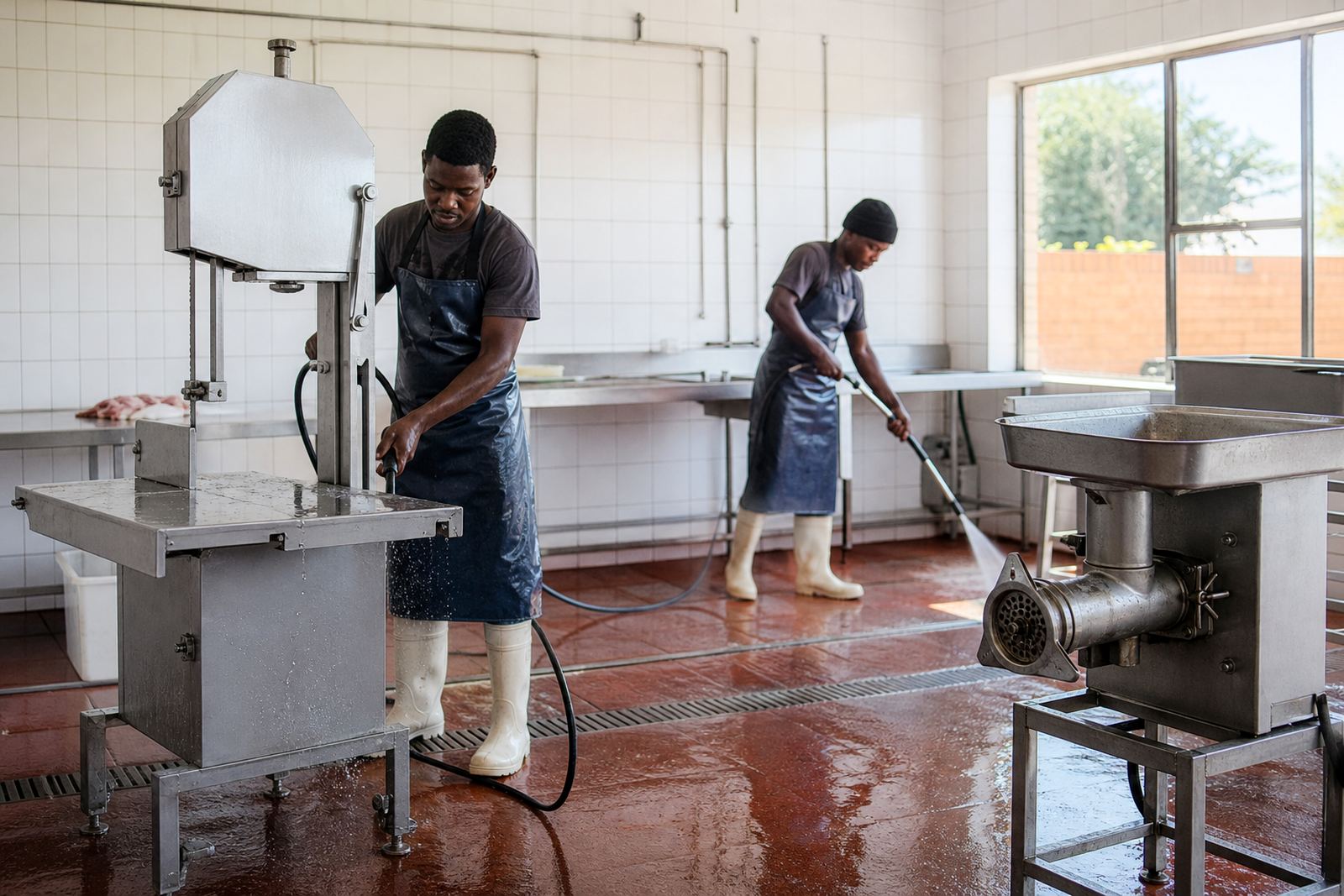
Butchery bandsaws need careful cleaning because they combine sharp edges, moving parts and hard-working surfaces. The aim is to remove blood, fat and bone fragments without forcing water into places where it should not go. A proper routine also makes it easier to notice loose fittings, worn guides or a damaged guard before the next cut.
Always isolate the machine first and use the right protective gear. Clean from the top down, then work through the table, blade area and surrounding surfaces. Use a method that suits the machine material and avoid soaking electrical sections. In summer, dry the machine fully after cleaning, especially if the room is not air-conditioned or if power cuts have interrupted your normal workflow.
- Switch off and isolate the machine before any cleaning starts.
- Remove loose residue first so you are not spreading grime around.
- Check guards and covers for damage, then refit them properly.
- Dry all contact surfaces before the next use.
- Keep the floor around the machine clean and free from slip hazards.
If your butchery serves walk-in customers in places like Johannesburg, Pretoria or Durban, regular bandsaw cleaning also helps maintain a tidy front area and reduces the risk of contamination carried from prep space to service space.
Mincer hygiene needs steady attention
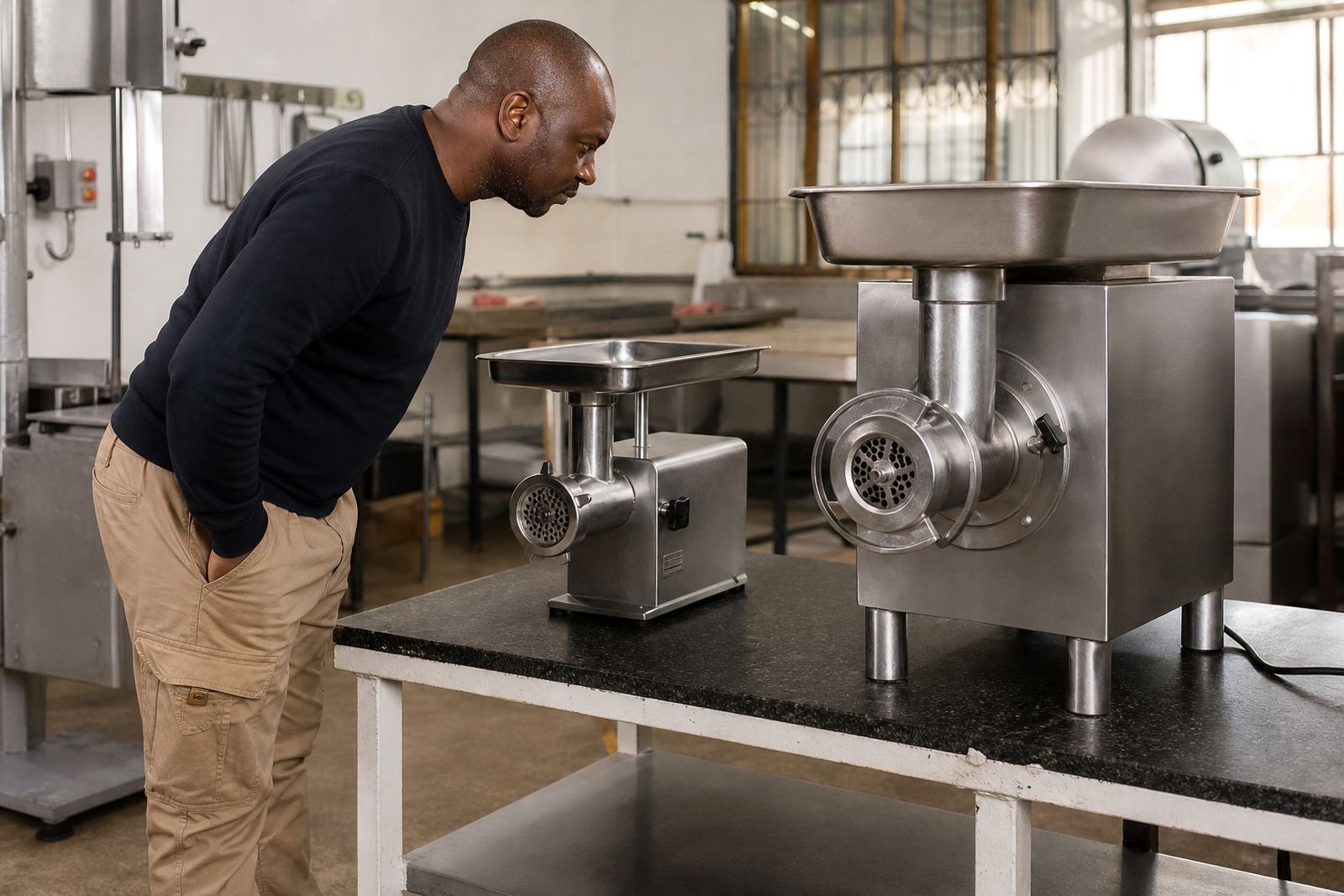
Mincers work with soft product and tight internal components, so they need a different cleaning approach from a saw. Summer heat can cause residue to cling faster and make odours more noticeable if parts are left unwashed for too long. That is why the strip, wash, inspect and dry routine is so important.
Take apart the removable components according to the machine’s normal process, then clean each part carefully. Pay close attention to the plate, knife and feed sections where product build-up often sits unseen. If the machine has been working through a busy Saturday or a hot December rush, do not assume a quick wipe is enough.
- Clean all removable parts after use, not just the visible surfaces.
- Inspect the knife and plate for wear before reassembly.
- Keep water away from sensitive electrical sections.
- Dry parts fully to reduce rust risk and surface spotting.
- Reassemble only when every part is clean and correctly seated.
For businesses in coastal areas such as Cape Town and Durban, humidity can make careful drying even more important. A little extra attention after cleaning goes a long way when moisture is in the air most of the day.
What to include in a summer end-of-day routine
The best summer cleaning routine is practical and repeatable. It should fit into the end-of-day close without slowing the team to a standstill. The point is consistency. If everyone knows the steps, the machine gets the same standard of care whether the day was quiet or busy.
A well-run routine usually includes a quick pre-clean scrape, a proper wash-down, a safety check and a final dry off. The floor and surrounding work area should be part of the same process because a spotless machine on a dirty floor is still not a clean working station.
Many butchers also find it useful to assign one person to check that all tools are back in place and that the machine is left ready for the next morning. This is especially helpful in family businesses and smaller shops where several people share the same equipment. A clear routine saves time and cuts down on small mistakes.
In Bloemfontein, where summer can bring dry heat and wind-borne dust, a quick wipe during the day may not be enough. If the shop is near an open loading area or receives stock frequently, dust can settle on surfaces again before closing time. That is when an extra inspection is worth it.
Small faults are easier to fix before they grow
Summer cleaning also gives you a chance to spot issues that are easy to miss in the rush. A loose guard, a damaged seal, a noisy moving part or a knife that is not seating properly can often be noticed during a proper clean. Catching these signs early can prevent downtime and reduce the chance of a larger repair later.
If the machine starts to smell unusual, runs unevenly or leaves more residue than normal, do not simply push through the day and hope it sorts itself out. That can lead to more wear and a bigger interruption later on. Preventive maintenance works best when cleaning and inspection happen together.
For shops in Kimberley, Welkom or Kroonstad, where loading conditions and supply schedules can be affected by distance and temperature, it is worth keeping a basic spare parts plan in place. Items like blades, plates and knives should be checked before the season gets too busy, not after a breakdown has already disrupted trade.
Training your team to clean safely and properly
Good cleaning habits are not only about equipment, they are about people. Everyone who uses a bandsaw or mincer should understand the safe cleaning process, basic hygiene steps and the right way to handle sharp parts. A short refresher can make a big difference, especially in shops with new staff or seasonal help over the summer period.
Training should cover isolation, safe handling, correct reassembly and the use of gloves or other PPE where needed. It should also include the simple rule that guards must be put back in place before the machine is used again. In a busy butchery, small shortcuts are often where problems start.
MorCut Butchery works with commercial and home butchers across South Africa from Hamilton in Bloemfontein, supporting delivery, setup, servicing and practical training where required. Whether the need is a cleaning demonstration, a blade replacement or a preventive maintenance visit, the focus stays on keeping equipment ready for daily use.
A clean machine is easier to trust. In summer, that matters even more.
- Teach one clear cleaning method and keep it consistent.
- Make sure new staff know how to isolate equipment before working on it.
- Use cleaning as a chance to inspect wear and parts condition.
- Keep service notes so recurring issues are easier to track.