

Start with the way you will use it
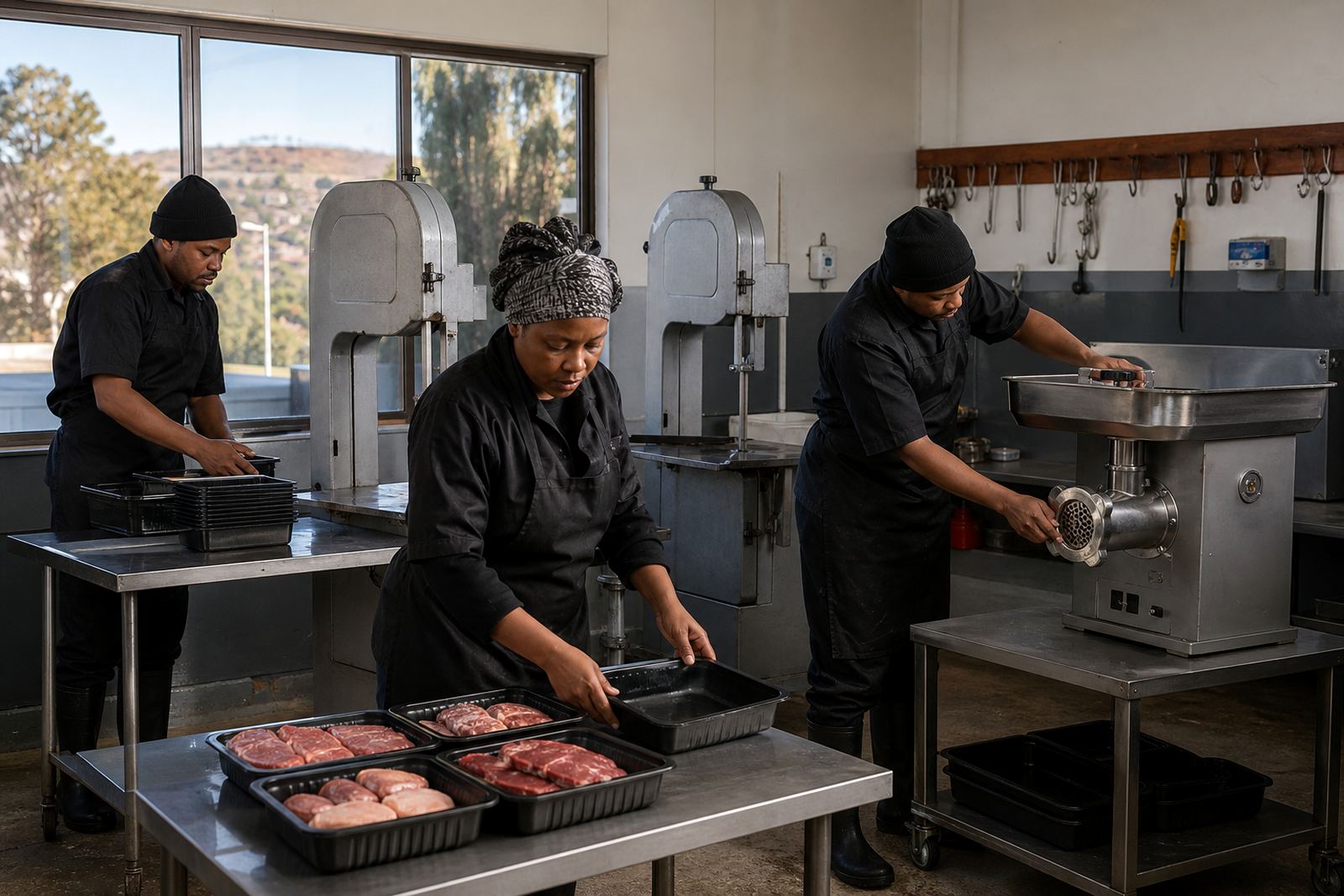
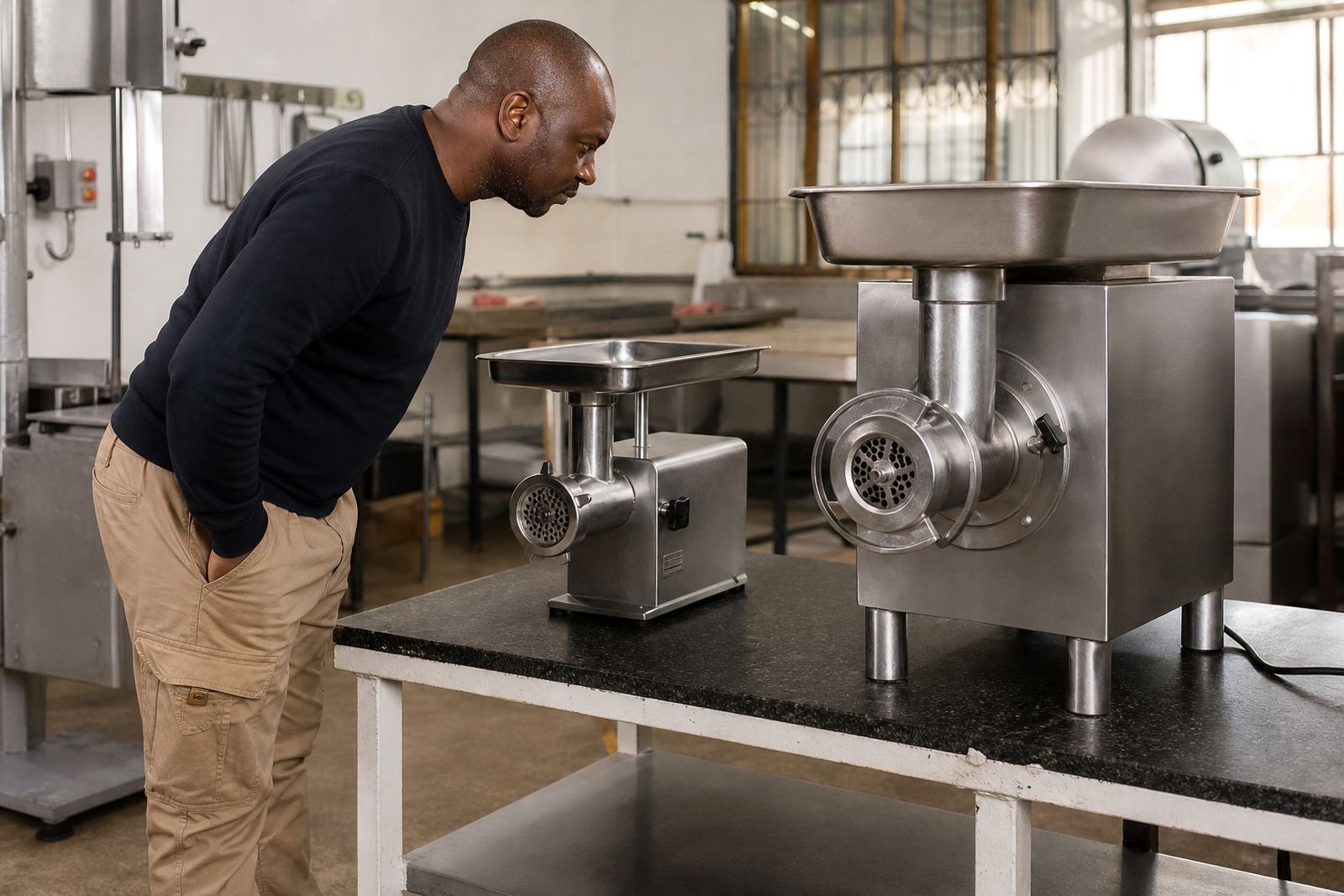
A first mincer should match your normal volume, not the busiest weekend you can imagine. If you are processing meat for family use, a small holding, or a modest counter in town, you want a machine that can cope with regular batches without becoming a strain to run or clean. For commercial use, think about repeated loading, cleaning between tasks, and how much time staff can spend at the machine during a busy morning.
In practice, the best starting point is to write down what happens in a normal week. Do you mince only once or twice, or most days? Will it be used for beef, lamb, pork, or mixed trimmings? Are you working from a home setup in Bloemfontein, or running a retail counter in places like Kimberley, Welkom or Kroonstad where the machine may be in daily service? Those answers matter more than a sales pitch.
- Choose a mincer that suits your actual daily volume.
- Allow time for cleaning after each use, especially in warm weather.
- Make sure the operator is comfortable with the feeding pace and controls.
Think about where the machine will stand
The space around the machine is just as important as the machine itself. A mincer needs a firm, level surface and enough room for safe loading, collection and cleaning. If it sits too close to a wall or sink, the cleaning job becomes harder and hygiene can slip. In a small butchery, a neat work flow saves time, especially when staff are moving between prep, packing and cold storage.
Power access should be checked early. If your site has load-shedding, you need to plan around that reality. Many businesses in the Free State and Gauteng keep a clear procedure for power interruptions so that product is not left out longer than necessary and staff are not trying to rush a machine back into use. Coastal humidity in Durban and Cape Town can also mean extra care with wiping down and drying after washing.
- Keep the mincer on a stable base with enough working room.
- Place it near washing and sanitising points, but not where splashback will be constant.
- Check your power supply and backup plan before the machine arrives.
Look closely at cleaning and food safety
A first mincer should be easy to strip, wash and reassemble without confusion. The quicker the parts can be cleaned, the better your routine will be. This is not only about appearance. It is about keeping food safe and avoiding leftover fat or meat build-up in hard to reach places. If a machine is awkward to maintain, staff often delay the job and that is where trouble starts.
General care is simple but must be done properly. Use the guards provided, wear suitable PPE, and keep hands well clear of moving parts. Switch off and isolate power before cleaning or changing plates and knives. Never hurry the process because the queue is growing. A few extra minutes spent cleaning properly is better than dealing with a breakdown or poor product later.
- Clean immediately after use, before meat residue dries.
- Dry parts fully before storage or reassembly.
- Use the correct PPE and never bypass guards.
Match the mincer to the cuts you use most
Different cuts behave differently when minced. Lean meat, fatty trimmings and tougher pieces all place different demands on the machine. If you often work with a mix of cuts, you need a mincer that can handle that routine without causing repeated jams or uneven output. The aim is a consistent mince that suits the product you want to sell or serve.
A good local example is a small shop in Bloemfontein that processes fresh meat for walk in customers and weekend orders. The owner may not need the largest machine available, but does need something dependable enough for steady use, simple to clean between batches, and suitable for staff who are still learning the system. That is where practical advice matters more than fancy features.
When planning your first purchase, ask yourself:
- Will I mince trim only, or full retail portions as well?
- Will more than one person use it in a shift?
- Do I need quick cleaning between different products?
- Will the machine still make sense if my volume grows a little?
Do not overlook plates, knives and spares
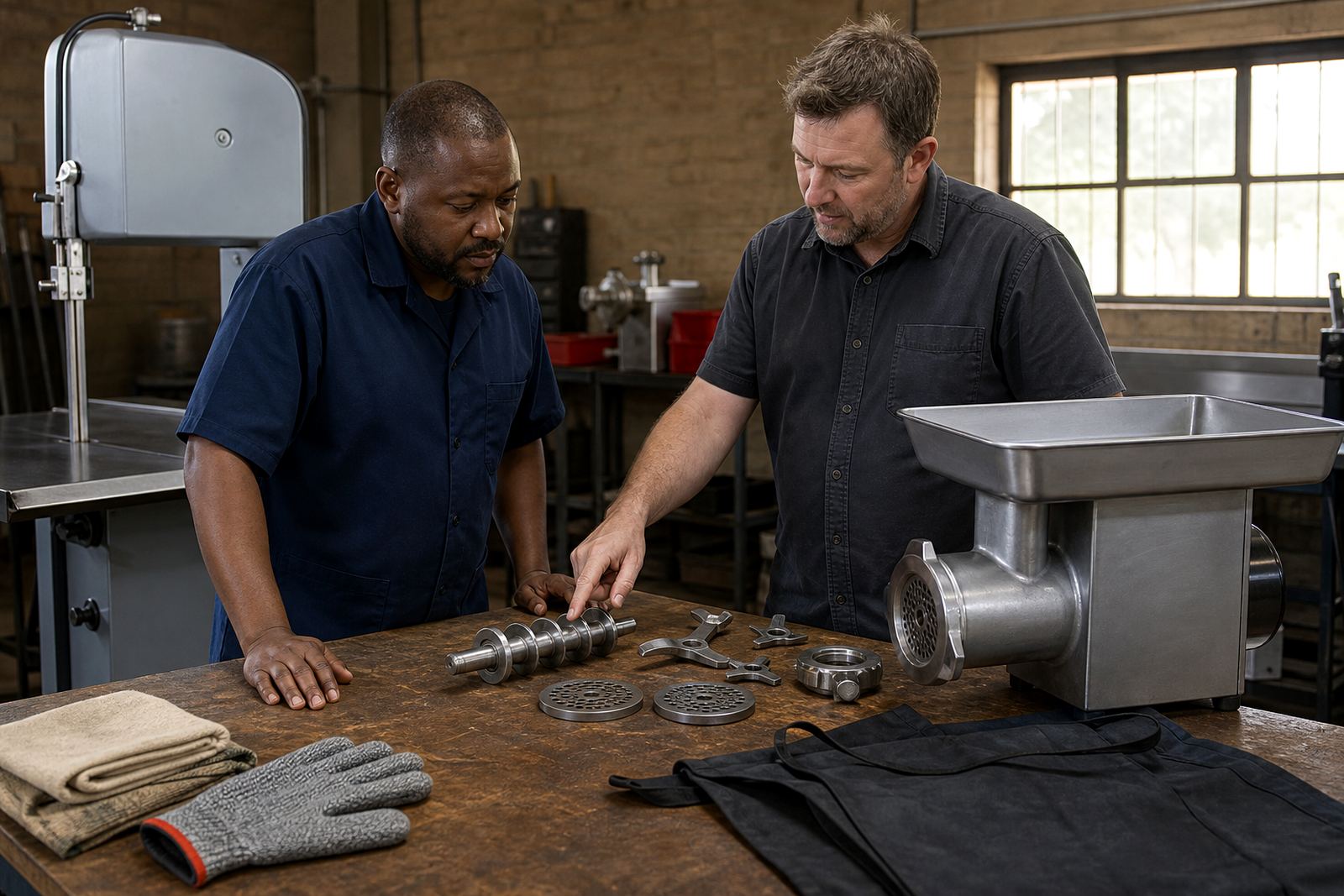
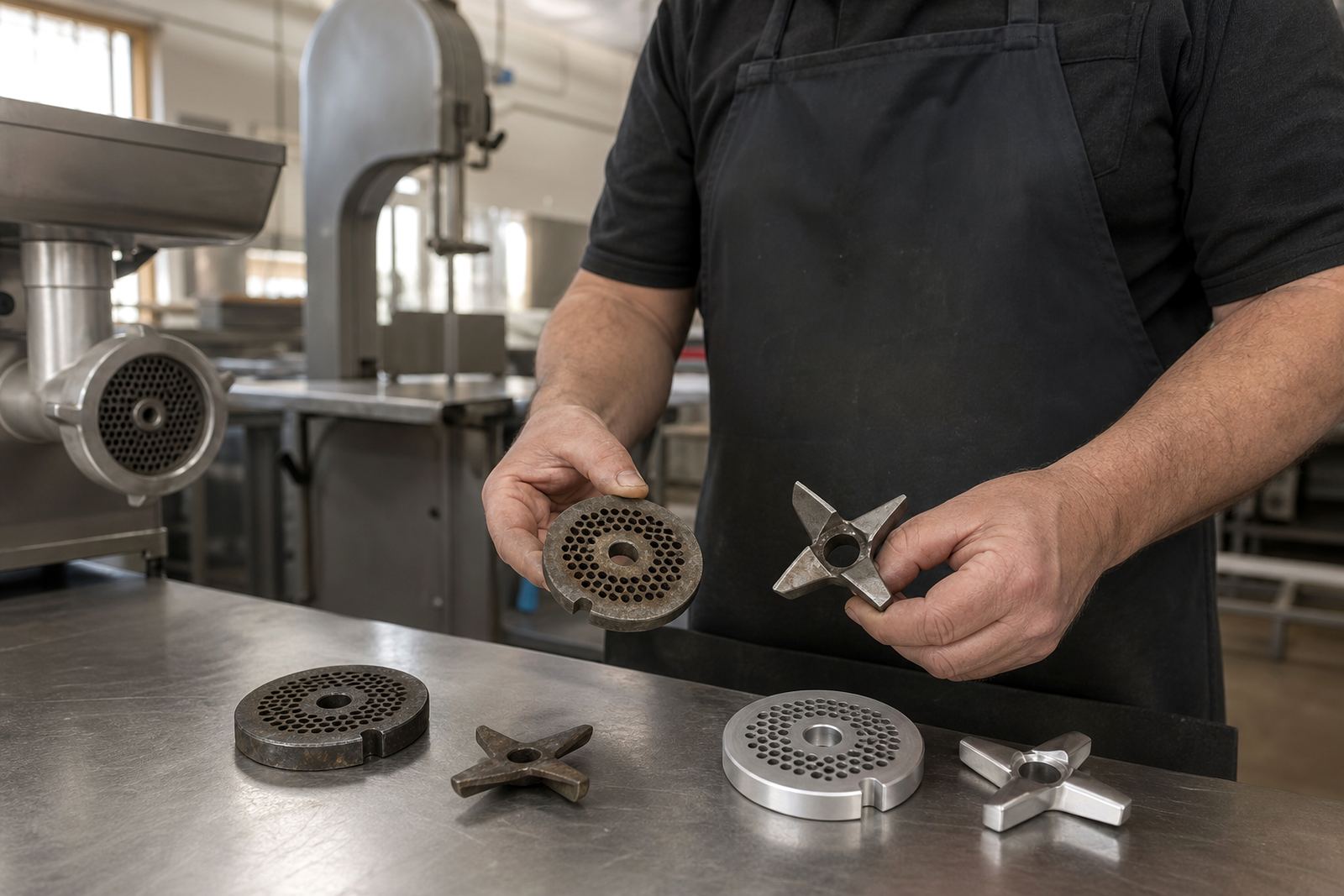
The machine body is only part of the picture. Plates and knives must stay in good condition if you want clean cutting and steady output. When these parts wear, the mince can become uneven and the machine may work harder than it should. For that reason, it is worth choosing a supplier who can guide you on blade replacement, plate and knife changes, and normal wear signs.
Parts supply also matters more than many buyers expect. A mincer that is out of service for a small part can interrupt a full day’s work. Whether you are in Bloemfontein, Johannesburg, Pretoria, Durban or Cape Town, having access to parts and practical servicing support helps keep the machine in use instead of standing idle.
- Ask how often basic wear parts should be checked.
- Keep a spare set of key parts where possible.
- Watch for dull cutting, slower feed, or change in texture.
Buy for service, not only for the sale
The right first mincer comes with proper setup, guidance and follow through. Delivery and setup help reduce mistakes on day one, while training shows staff how to use and clean the machine correctly. That support matters in both home and commercial settings, especially where one person may be handling buying, prep and cleaning all in the same shift.
MorCut Butchery works from Hamilton in Bloemfontein and supports clients through the enquiry form on the contact page. The team includes people who handle sales, servicing, workshop work, training and parts coordination, which helps customers get straightforward advice on installation, maintenance and breakdown callouts. For a first purchase, that sort of practical support is often worth more than chasing the lowest price.
If you want a mincer for regular local use, choose one that fits the space, the workload and the cleaning routine you can keep up with. The best machine is the one that stays safe, stays clean and keeps doing the job without fuss.