

Why feeding habits matter on busy shop floors
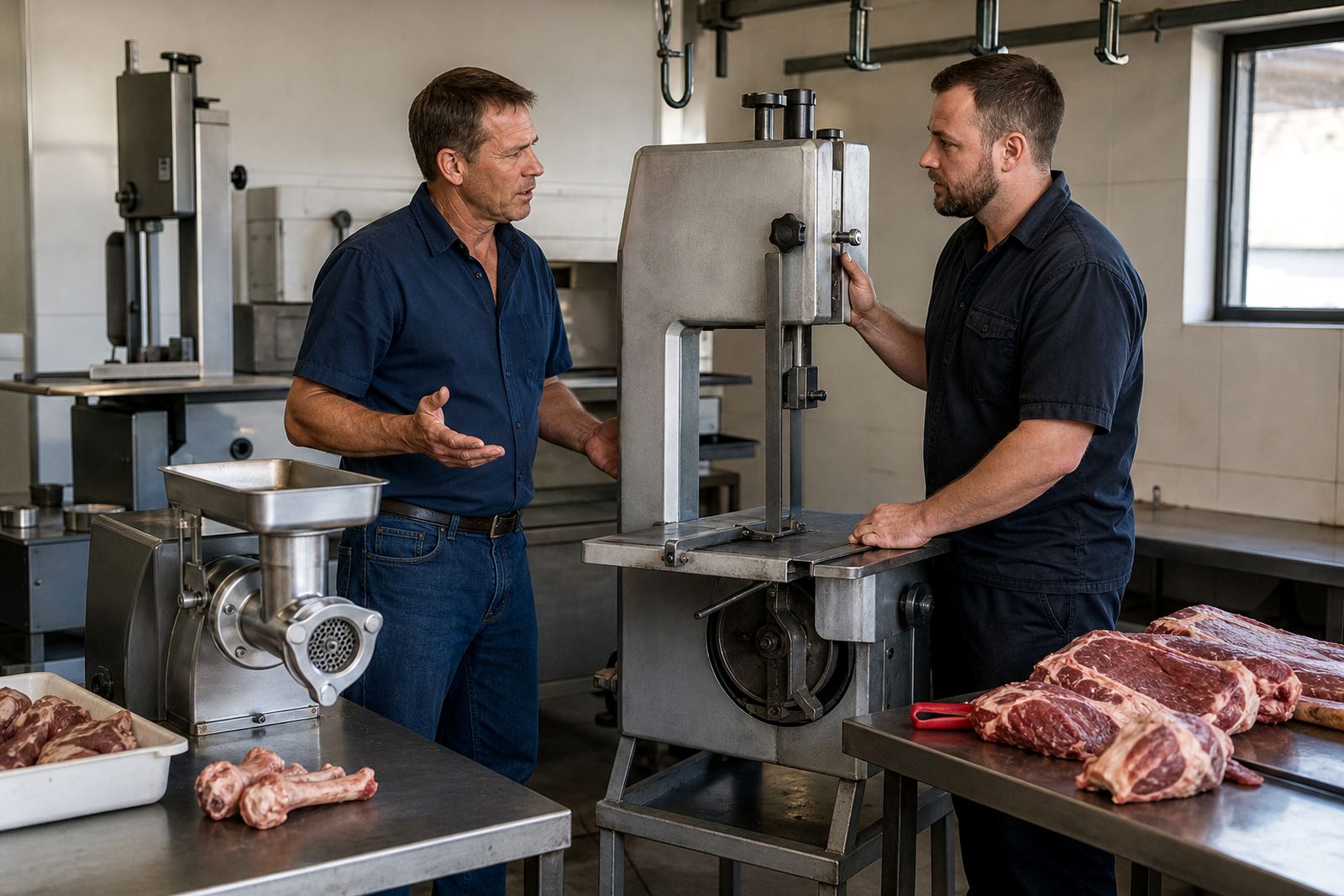
In a butchery, the way product is fed into a machine matters just as much as the machine itself. Whether you are working with a bandsaw or a mincer, rushed handling can lead to jams, poor cuts, uneven product and unnecessary risk around moving parts. Safe feeding habits start before the machine is switched on and continue right through to cleaning up at the end of the shift.
In Bloemfontein and other Free State towns, many operators work long hours with a small team, so shortcuts can creep in when the counter gets busy. That is usually when accidents happen. A calm routine, clear roles and proper preparation make it easier to keep hands away from danger points and maintain good output throughout the day.
- Keep the work area clear of scraps, water and loose packaging.
- Make sure guards and covers are in place before use.
- Feed product at a steady pace, never forcing it.
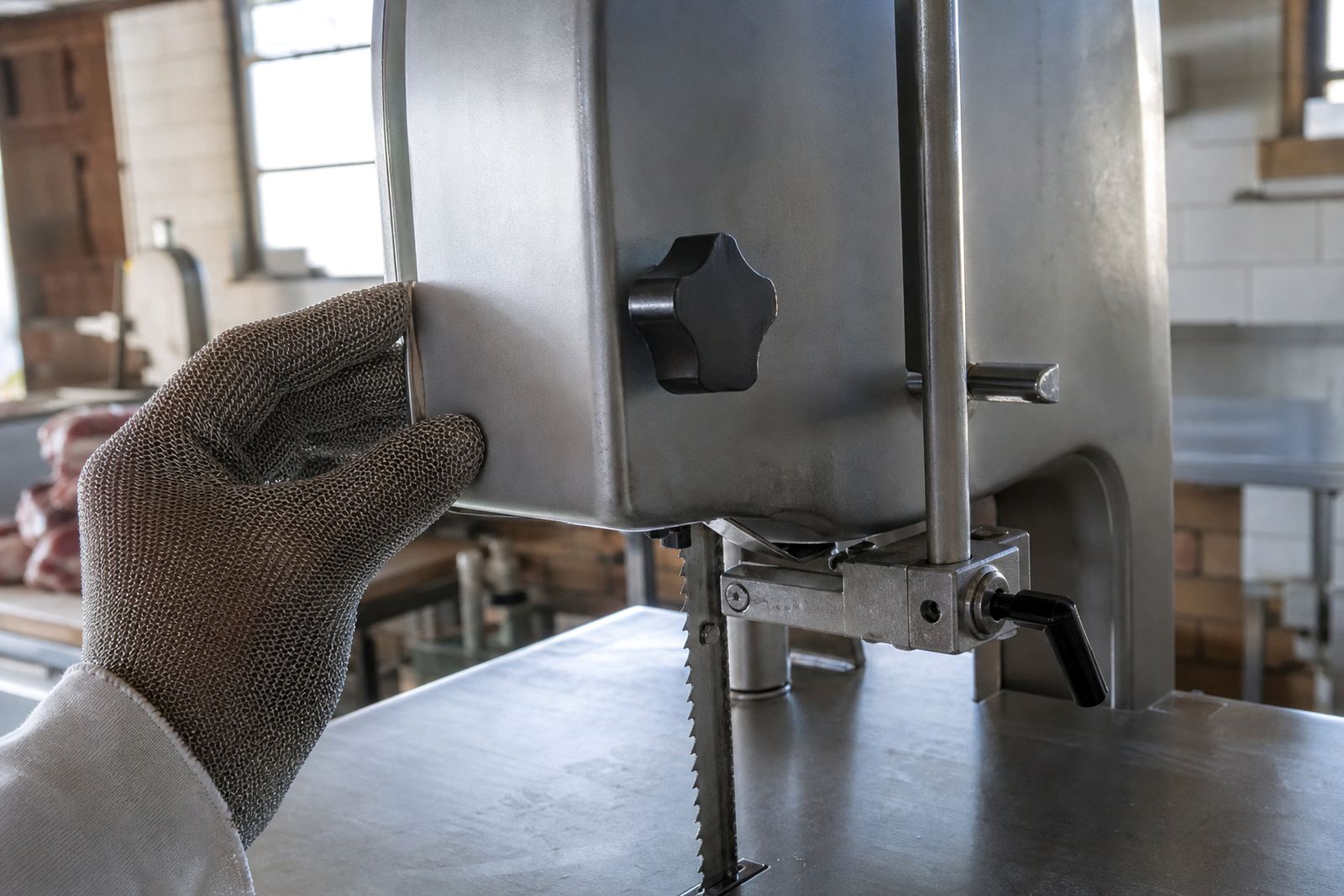
- Use proper PPE such as cut-resistant gloves where suitable, apron and non-slip footwear.
Preparing product before it reaches the blade or plate
Safe feeding begins with product preparation. Meat should be trimmed, portioned and arranged so it enters the machine in manageable pieces. Bones, sinew and excessive frozen sections can put unnecessary strain on the machine and increase the chance of kickback or a stuck feed. For a mincer, pre-cut pieces should be small enough to move through without pressure on the operator or the motor.
With bandsaws, product should be positioned properly on the table or carriage so the operator does not need to lean too close to the blade. A good setup keeps fingers well away from the cutting line and allows the machine to do the work. It also helps preserve the blade and reduce product loss. When the feed is awkward, people tend to push harder, and that is where safe habits start breaking down.
- Trim away hard foreign matter before feeding the machine.
- Keep pieces of a consistent size where possible.
- Never use hands to guide product near moving parts.
- If the feed feels tight, stop and check the cause instead of forcing it.
Bandsaw feeding habits that protect hands and cuts
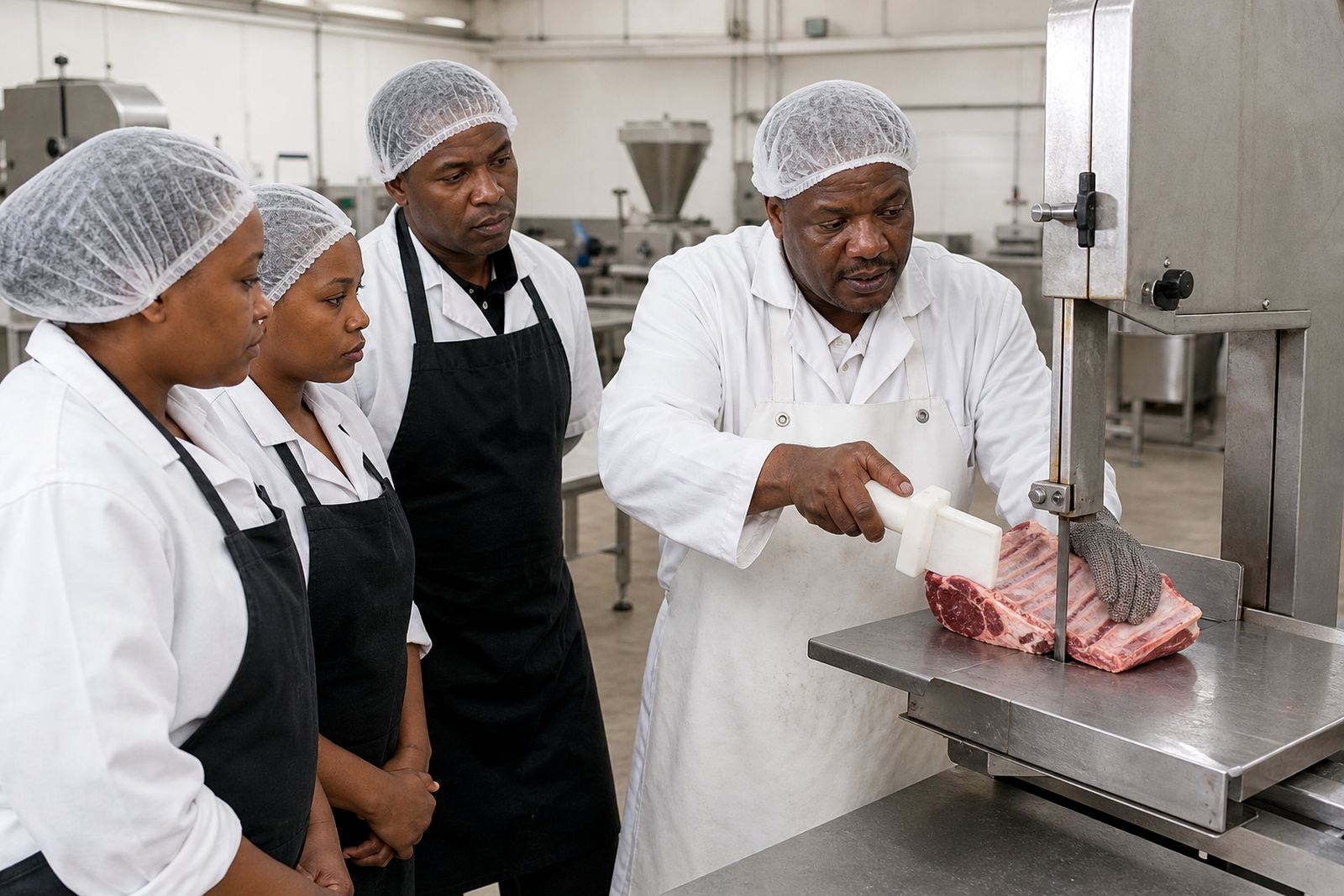
A bandsaw is powerful, and safe feeding depends on control, not speed. The operator should maintain a stable stance, keep both feet planted and use the correct push tools or guides where fitted. Product should be set up neatly so the cut line is easy to follow. If the item shifts or twists, stop and reposition it rather than trying to recover the cut with a quick grab.
One common mistake is overloading the table. When too much product is placed in one go, the operator loses space to work safely and may crowd the blade. Another risk is reaching across the table to clear offcuts too soon. Wait until the blade has stopped and the machine is in a safe state before clearing waste. In a butchery in Johannesburg or Pretoria, where the pace can be high from early morning, that pause matters.
- Feed one controlled piece at a time.
- Keep both hands in a safe position throughout the cut.
- Do not remove offcuts until motion has fully stopped.
- Watch for blade wear, poor tracking or unusual noise.
Mincer feeding habits that reduce jams and strain
Mincers need a steady, even feed. Overpacking the hopper or forcing product down with excessive pressure can overload the machine and create uneven grinding. It also puts the operator too close to the opening. The better method is to feed in measured amounts and let the screw draw the product through at its own pace. A pusher should be used where appropriate, never fingers or improvised tools.
Cleaning and blade care are part of safe feeding too. A dull plate or knife can make the machine work harder, which leads to more pushing and more risk. If the grind starts to look uneven or the machine sounds strained, stop and inspect the cutting set. Good operators know when to pause for a check instead of trying to push through the issue. That habit saves time later and helps keep the product quality consistent.
- Feed in smaller amounts rather than crowding the hopper.
- Use the correct pusher or feeding tool for the task.
- Stop if the mince starts to smear, clog or heat up.
- Check the plate and knife regularly for wear and correct fit.
Cleaning and changeover without risky shortcuts
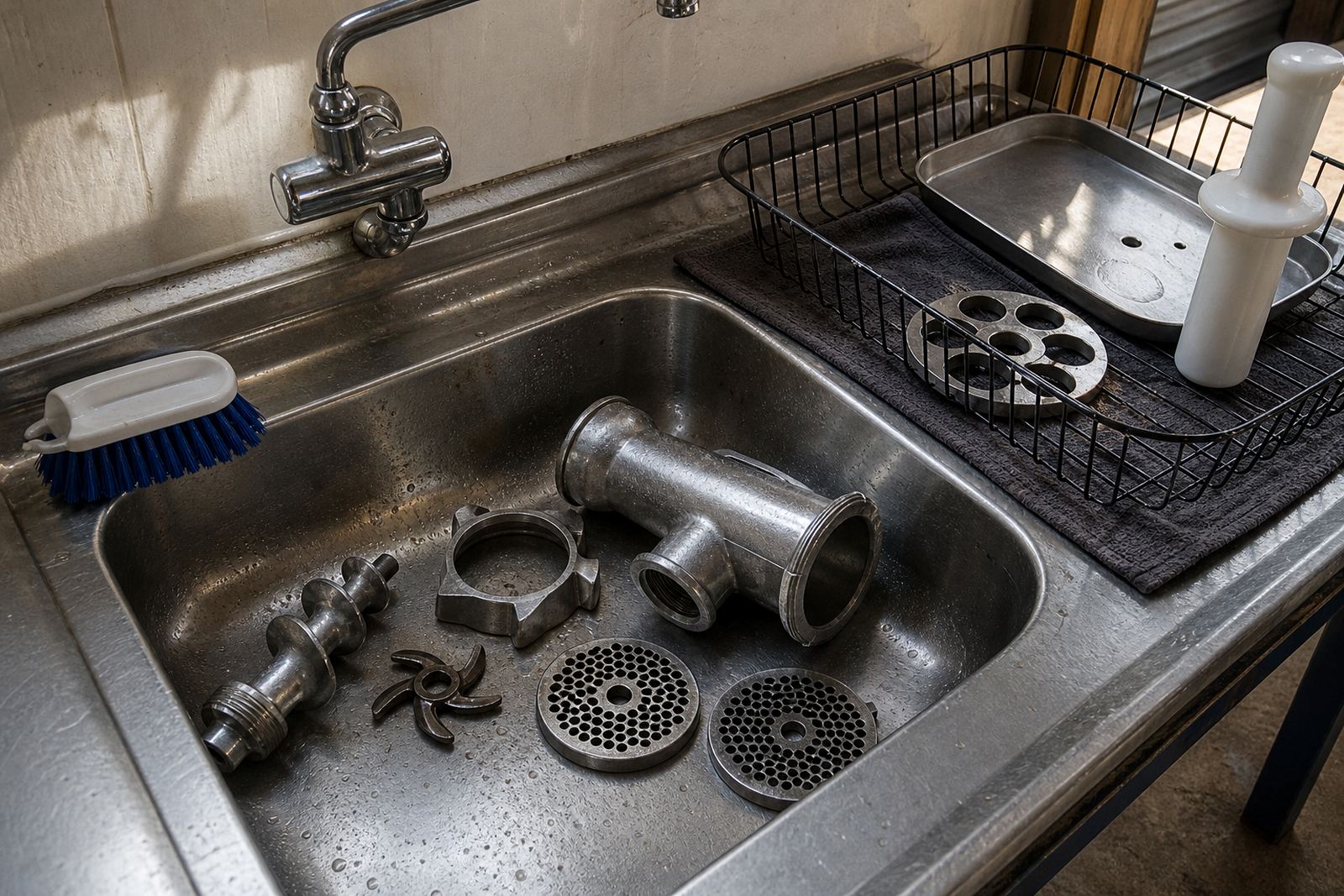
Many feeding accidents happen during cleaning or changeover, when people are less alert and want to finish quickly. Before washing down, switch off and isolate the machine according to site procedure. Wait for all movement to stop, then remove scraps carefully. Do not reach into guarded areas or try to dislodge product while the machine is live. Water, grease and soap can make floors slippery, so dry the area properly before starting the next run.
For shops in coastal areas such as Durban and Cape Town, moisture and corrosion can also affect machine parts if cleaning is rushed or drying is poor. In the Free State, dust and temperature changes can still affect seals and fittings. A proper clean helps protect the machine and the staff working around it.
- Isolate the machine before cleaning or changing parts.
- Keep the floor dry and free from slip hazards.
- Dry components properly before reassembly.
- Check guards and fittings before restarting.
Training the whole team to feed safely every time
Safe feeding is easiest when everyone follows the same routine. New staff should be shown how to stand, where to place their hands and what to do when product jams. It helps to keep the same sequence every day: check the machine, prepare the product, feed steadily, clear waste safely and clean down properly. When the process is consistent, there is less confusion and fewer risky habits.
MorCut Butchery supports commercial and home butchers from Bloemfontein, Hamilton, Johannesburg, Pretoria, Durban, Cape Town, Kimberley, Welkom and Kroonstad with delivery, setup, servicing and training support. For operators who want help with safe use, practical demonstrations and maintenance advice can make a real difference. Good feeding habits are not complicated, but they do need discipline, and that discipline is what keeps work moving without needless trouble.
- Give every operator the same basic feeding routine.
- Use refresher training after servicing or staff changes.
- Report faults early, before they turn into breakdowns.
- Keep the enquiry process simple so help is easy to request.