
Why Cleaning Tools Matter More Than Most People Think
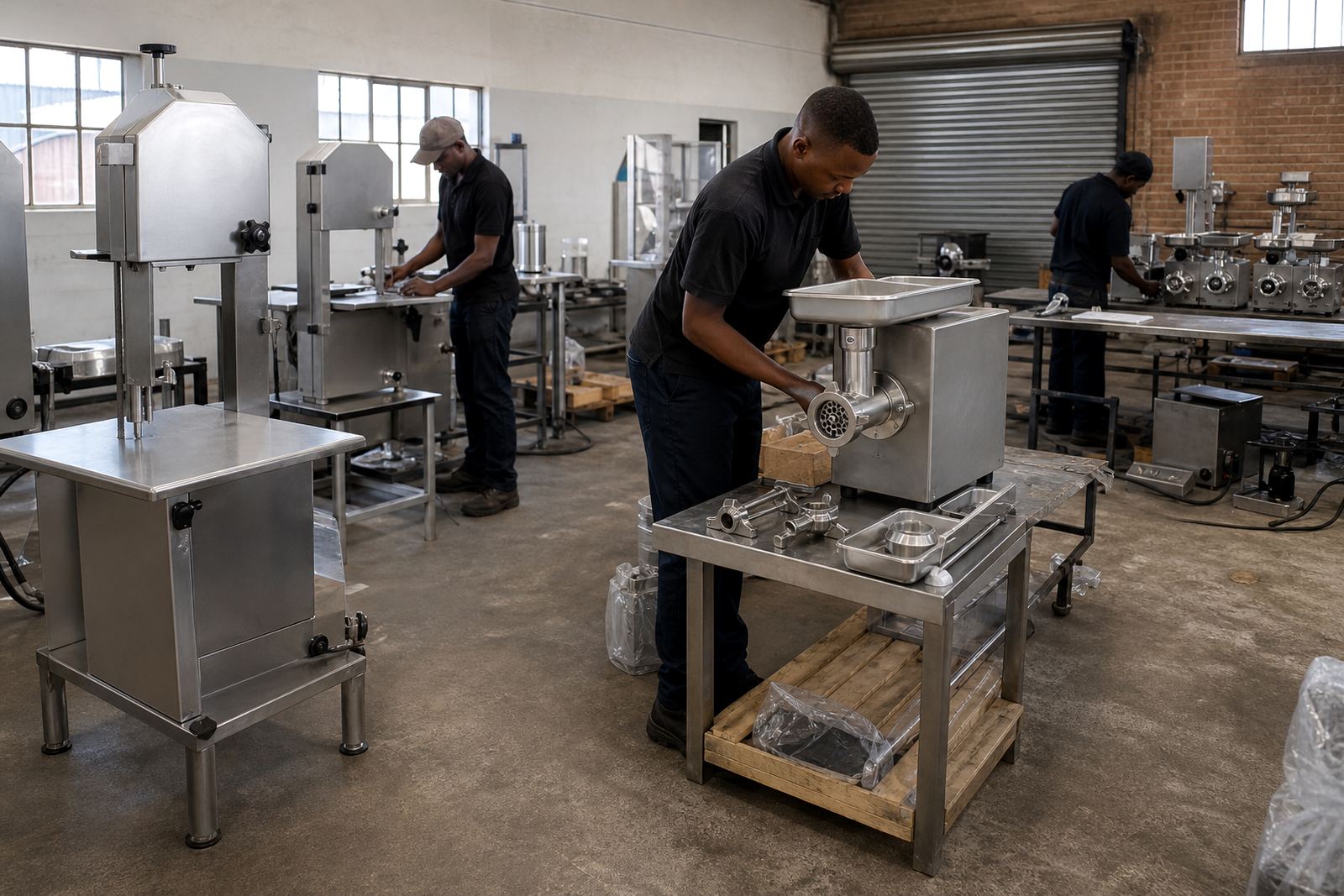
A bandsaw or mincer that is cleaned with the wrong brush or an over-wet cloth can wear faster than it should. Meat fibres, fat and bone dust settle into small corners, and if those areas are not reached properly they can affect hygiene, moving parts and day to day performance. The right cleaning tools make the job quicker and more thorough, while also helping staff work safely around blades, plates and other exposed parts.
In a butchery, cleaning is not only about appearances. It is part of basic equipment care. Good brushes, scrapers and washdown gear help remove build-up without damaging guards, switches or seals. That matters in a busy shop in Bloemfontein, but it also matters for a home butcher who only uses equipment a few times a week and still needs it to stay clean, dry and ready.
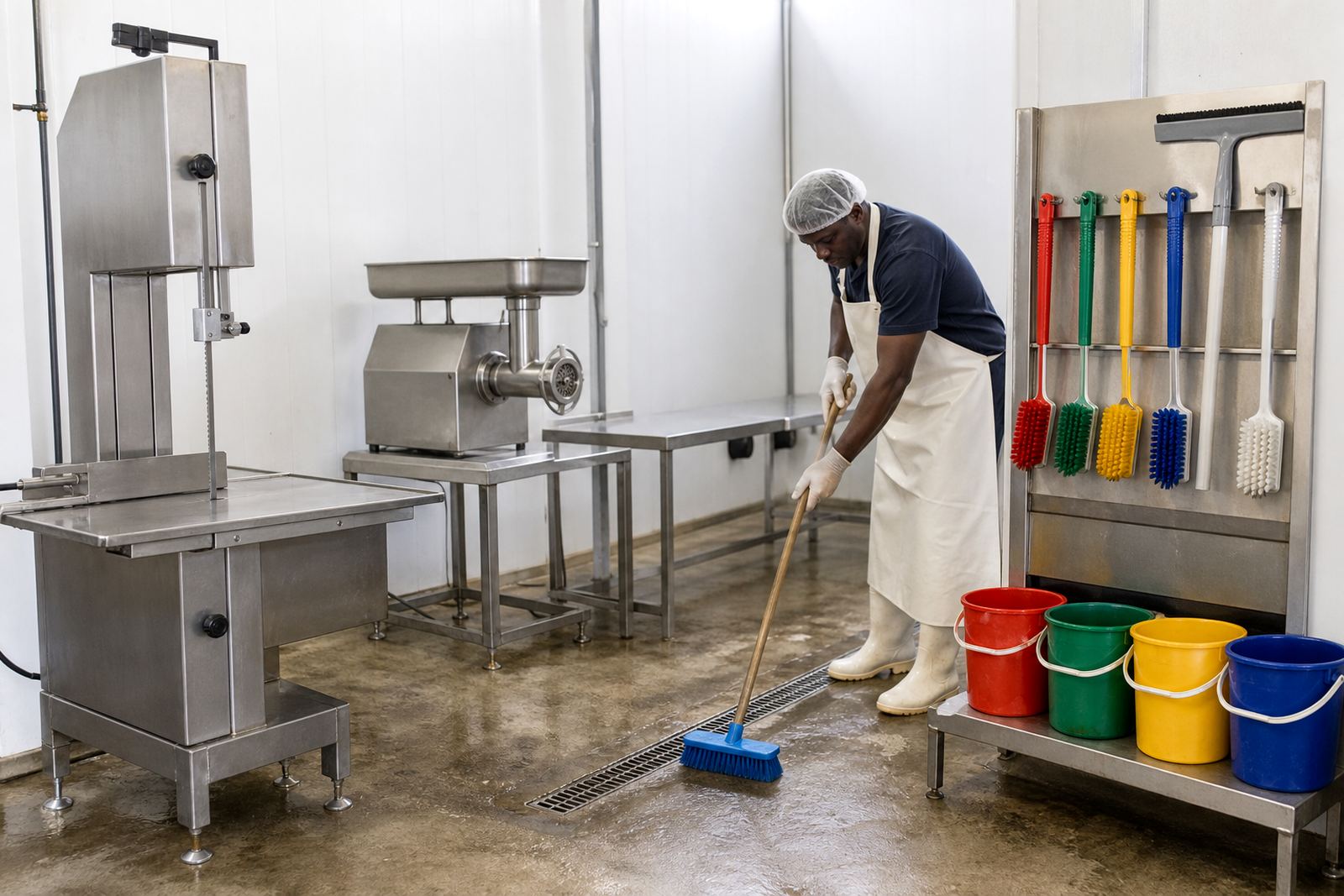
There is a simple rule to keep in mind: choose tools that clean well without forcing water or grit into places it should not go. A soft brush may be right for final cleaning, while a firmer brush is better for stubborn residue around heavy duty parts. The best setup usually includes more than one tool, so the operator is not trying to do everything with one worn brush.
Brushes That Reach The Small Gaps
Most cleaning problems in butchery equipment come from the same place, tight corners and hard to reach edges. A suitable brush should be strong enough to lift residue but not so stiff that it scratches polished surfaces or damages finishes. For bandsaws, the blade area, guides and table edges need careful attention. For mincers, the inlet, throat, plate area and surrounding surfaces need regular brushing after use.
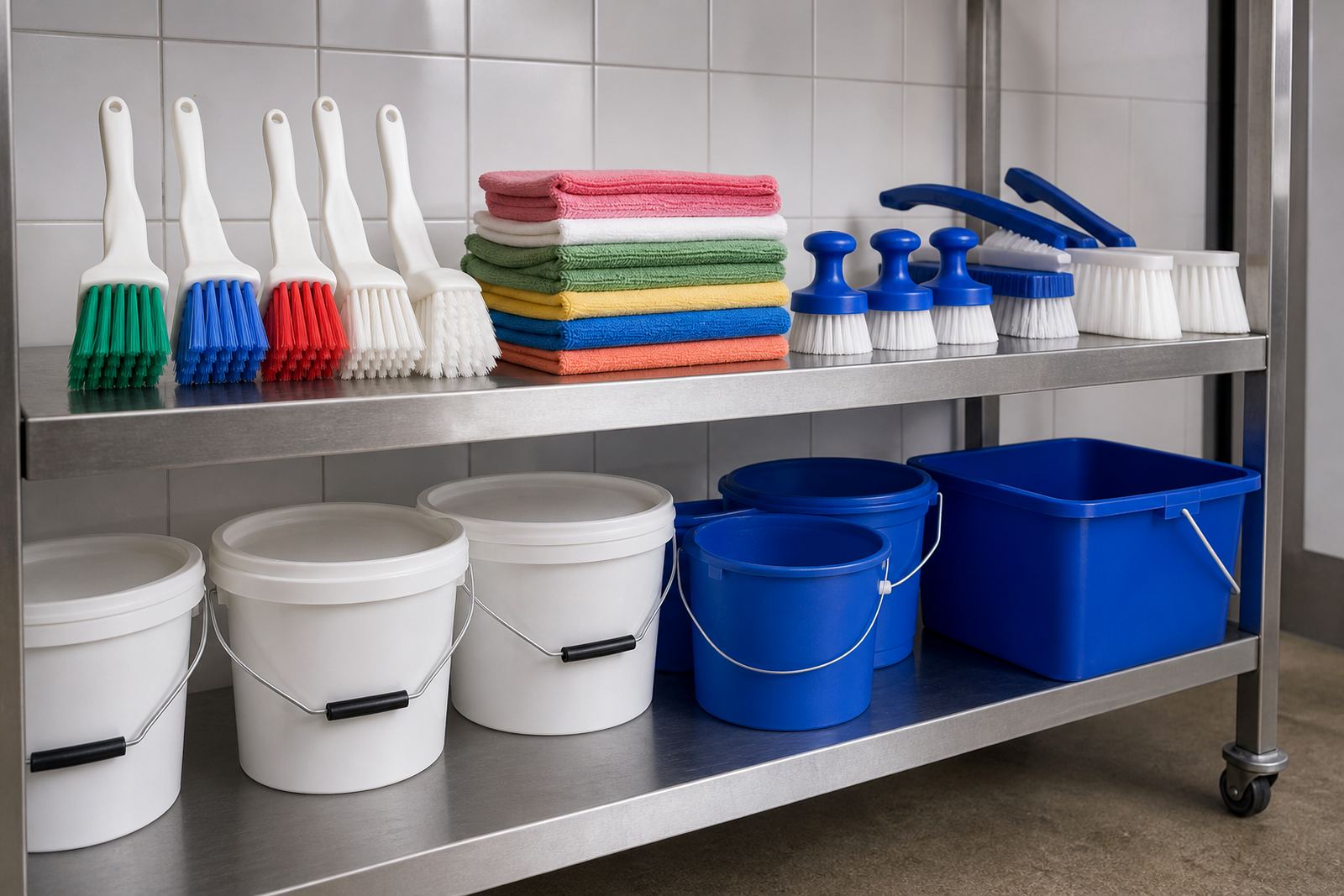
It helps to keep separate brushes for different tasks. Mixing a floor brush with an equipment brush is not a good idea, because grit from the floor can end up on food contact surfaces. Colour coding is useful in busy workrooms, and it reduces confusion when more than one person is on shift.
- Use a softer brush for general wipe-downs and final cleaning.
- Use a firmer brush for dried fat, meat particles and stubborn corners.
- Keep dedicated brushes for food equipment only.
- Replace worn bristles before they start spreading residue instead of removing it.
Where there is load-shedding and the cleaning routine gets interrupted, it is even more important to return to the same system each time. A proper set of brushes makes it easier to pick up where the team left off, without missing a section of the machine.
Washdown Tools That Do Not Cause More Trouble
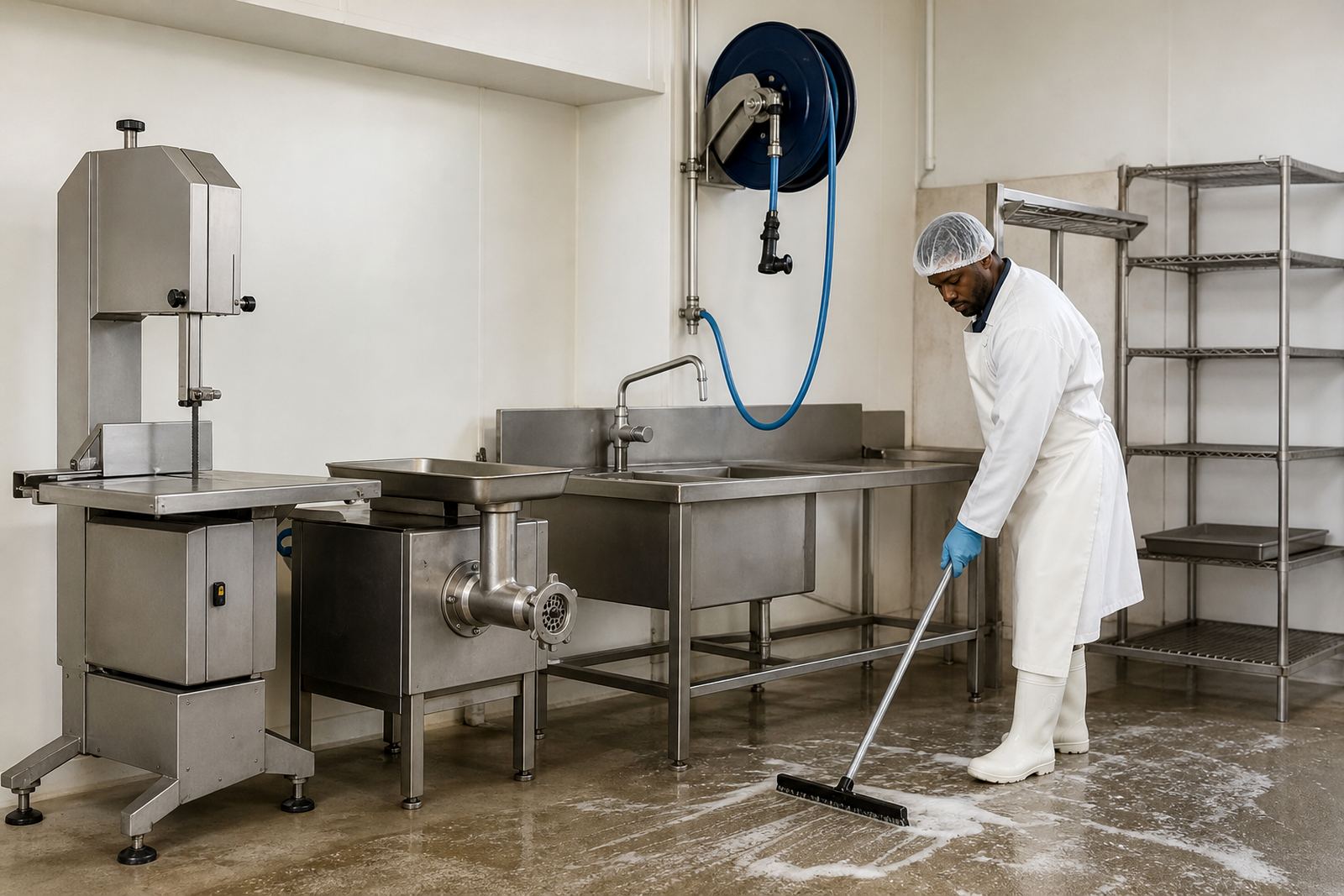
Water is useful, but too much of it in the wrong place can become a problem. Washdown tools should help move dirt and residue off external surfaces, not force liquid into motors, switches or bearings. A controlled spray, a bucket and clean cloths are often better than a strong hose blasting across the whole machine. That is especially true in smaller premises where drainage is limited or where municipal rules require careful control of wash water.
For stainless and other common food area finishes, a gentle washdown routine followed by drying is usually the safest approach. The aim is to remove waste, then leave the machine dry enough to avoid corrosion, odour and slip hazards. In coastal towns such as Durban and Cape Town, damp air can make neglected surfaces show rust or staining faster, so drying is just as important as washing.
Useful washdown items often include:
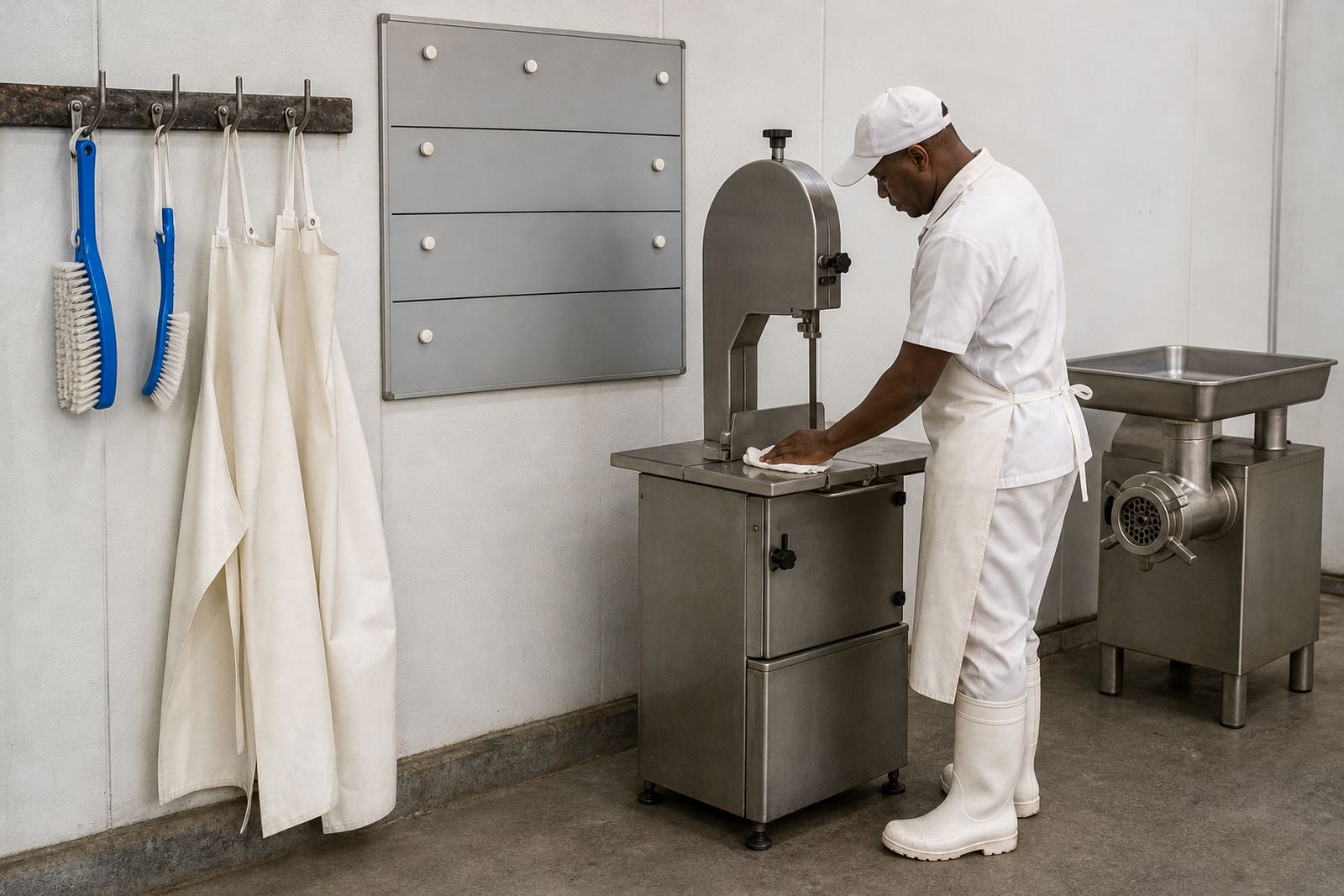
- Clean cloths or wipes for drying and finishing.
- Small buckets for controlled rinsing, not soaking.
- Scrapers for heavy residue on external surfaces only.
- Spray bottles for light cleaning where a full rinse is not needed.
Safety First Around Blades, Plates And Moving Parts
Cleaning tools must support safe work, not encourage risky shortcuts. A bandsaw blade and a mincer assembly can cause serious injury if cleaned while the machine is not properly isolated. Guards should stay in place where possible, and cleaning should only begin once the machine is switched off and made safe. PPE also matters. Gloves, apron and suitable footwear can reduce slips and cuts, especially during end of day cleaning when the floor may already be damp.
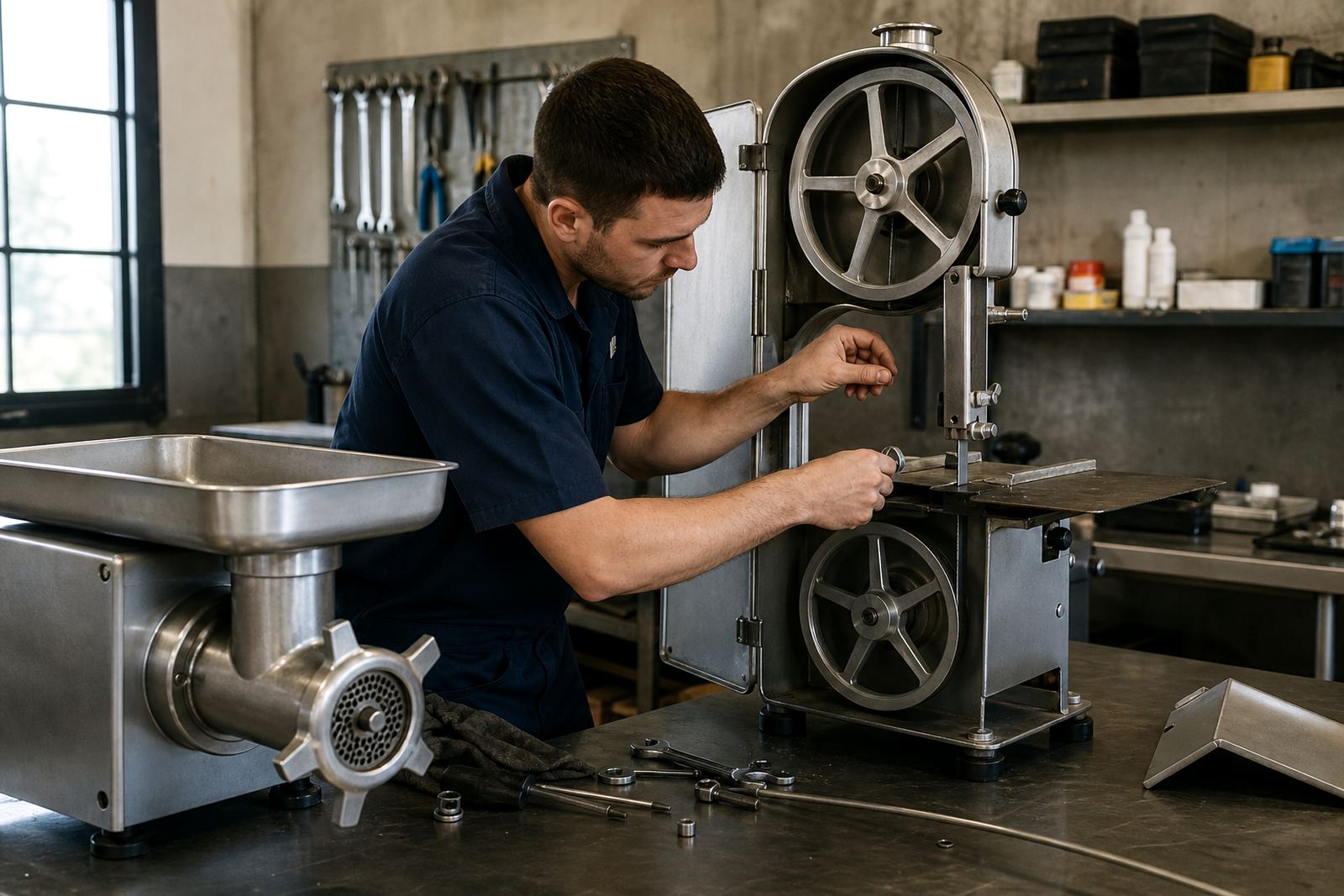
Never use hands where a brush or scraper should be doing the work. If a tool cannot reach a spot safely, the machine may need to be opened according to the correct procedure or serviced before the next use. That is not wasted time. It is part of keeping the equipment dependable and the operator safe.
A good habit is to clean from the outside in. Remove loose residue first, then tackle the smaller areas with the correct brush, then dry and inspect. This reduces the chance of pushing debris deeper into the machine. It also makes it easier to spot damage, missing fasteners or worn parts before they become a bigger issue.
How Cleaning Tools Support Service And Longer Equipment Life
Many service calls begin with something simple, heavy build-up, poor drying or the wrong cleaning routine. When tools are chosen well and used correctly, it becomes easier to spot blade wear, loose fittings, damaged seals and areas that need attention before a breakdown happens. That is why cleaning tools are part of equipment care, not just housekeeping.
For commercial butchers in Johannesburg, Pretoria, Durban or Cape Town, a daily cleaning routine has to fit into a busy trade environment. For smaller shops in Bloemfontein, Kimberley, Welkom or Kroonstad, it still needs to be practical enough to happen every time. The right brushes and washdown tools help both types of operations stay consistent.
Where the team has regular operator training, cleaning becomes quicker and more reliable. People learn which tool is used for which part, how to dry the machine properly, and what should never be forced with a blade or scraper. That sort of routine pays off in fewer stoppages and better working conditions.
A Practical Setup For Commercial And Home Butchers
You do not need a complicated kit to clean butchery equipment properly. A small, well chosen set of tools is usually better than a big box of mixed items that nobody uses correctly. The key is to match the tools to the equipment, the size of the operation and the cleaning frequency.
For a home butcher, the right setup might be a few dedicated brushes, cloths and a controlled washdown routine after each use. For a commercial shop, the list may need to be broader because the equipment works harder and cleaning has to happen more often. In both cases, the goal is the same: clean effectively, protect the machine and keep the workspace safe.
- Keep one set of brushes for food equipment only.
- Dry all cleaned surfaces before reassembly.
- Check guards, blades and plates during cleaning.
- Replace worn cleaning tools before they stop working properly.
MorCut Butchery supplies bandsaws and mincers to customers across Bloemfontein and nationwide, with delivery and setup support where needed. If you are unsure which cleaning tools suit your equipment, the enquiry form on our contact page is the best place to start. Good cleaning is part of good butchery, and the right tools make that work easier every single day.