

Why Storage Matters Between Jobs
After a busy day on the floor, it is tempting to rinse parts, dry them and leave them in a tray until tomorrow. In a butchery, that is usually when small damage starts. A blade can pick up a nick, a mincer plate can warp slightly, and a knife can get knocked against other metal pieces. Once that happens, cutting becomes less clean and the operator often has to work harder than necessary.
Neat storage is not only about order. It helps keep removable parts dry, separated and easy to identify. That matters in Bloemfontein where dry air can still carry dust, and it matters in coastal towns too where humidity can sit on metal overnight. Whether you are running a small home butchery or a commercial room serving a full counter, proper storage saves time and reduces waste.
Dry Each Part Before It Goes Away
Cleaning is not complete until every part is fully dry. Water left in a crack, around a fixing point or under a plate can lead to spotting and corrosion. Even a little moisture can create trouble when parts are stacked too closely together. A clean cloth and enough air time are usually better than rushing the job.
After washing, lay parts out on a clean surface and let them dry fully before packing them away. Do not place still-damp parts directly into a closed container. That traps moisture and can leave unpleasant odours too, which is not something you want in a food area.
- Wipe off all visible water before storage.
- Let parts air dry fully before stacking.
- Keep storage containers clean and dry inside.
- Do not mix wet parts with dry cutting parts.
Separate Blades, Plates And Knives
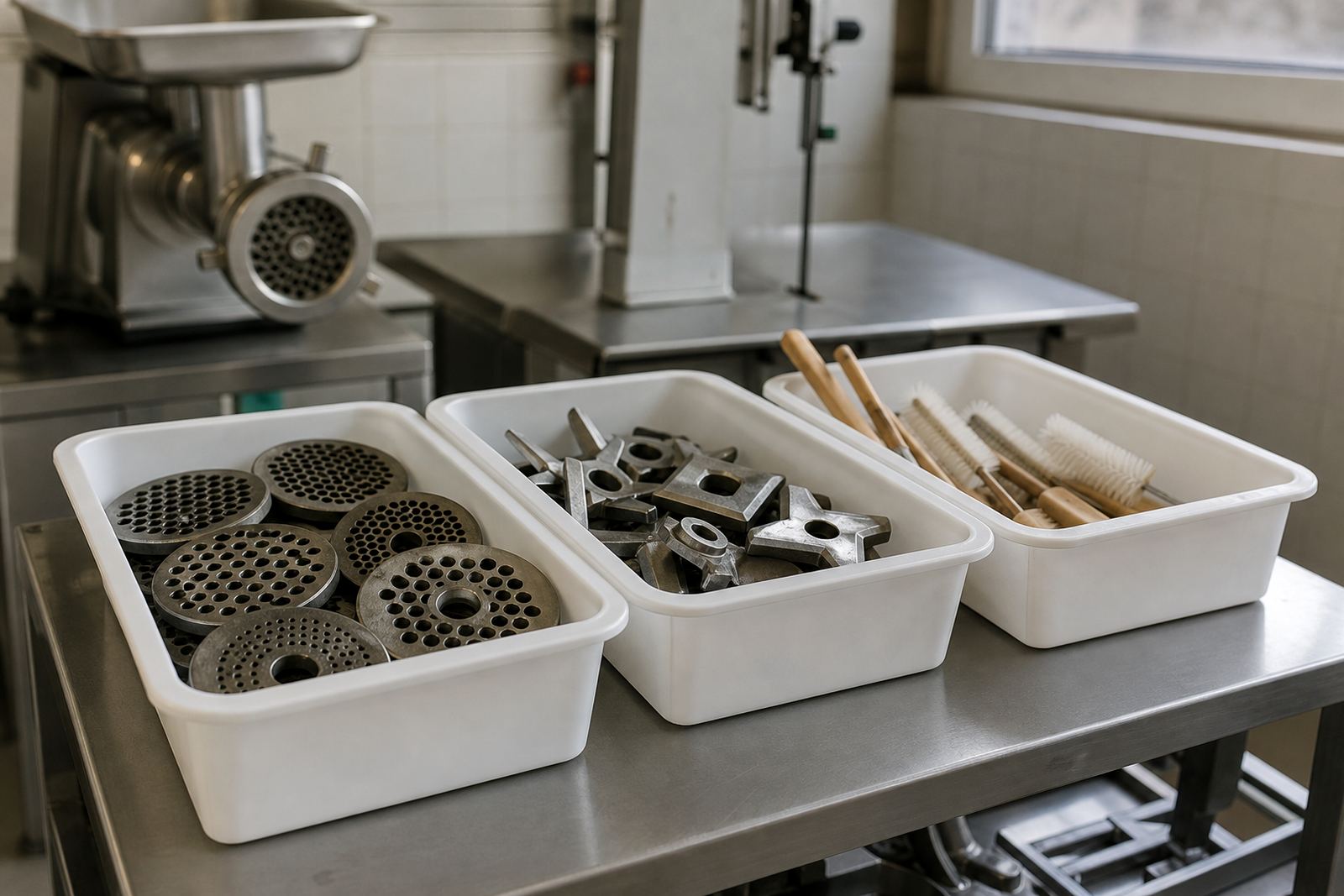
One of the simplest storage habits is also one of the most useful: keep each type of part separate. Bandsaw blades, mincer plates and knives all have different edges and surfaces, so they should not rub against one another. A blade stored loose beside a plate can pick up damage at the edge, while a knife can dull faster if it is allowed to knock around in a box with other tools.
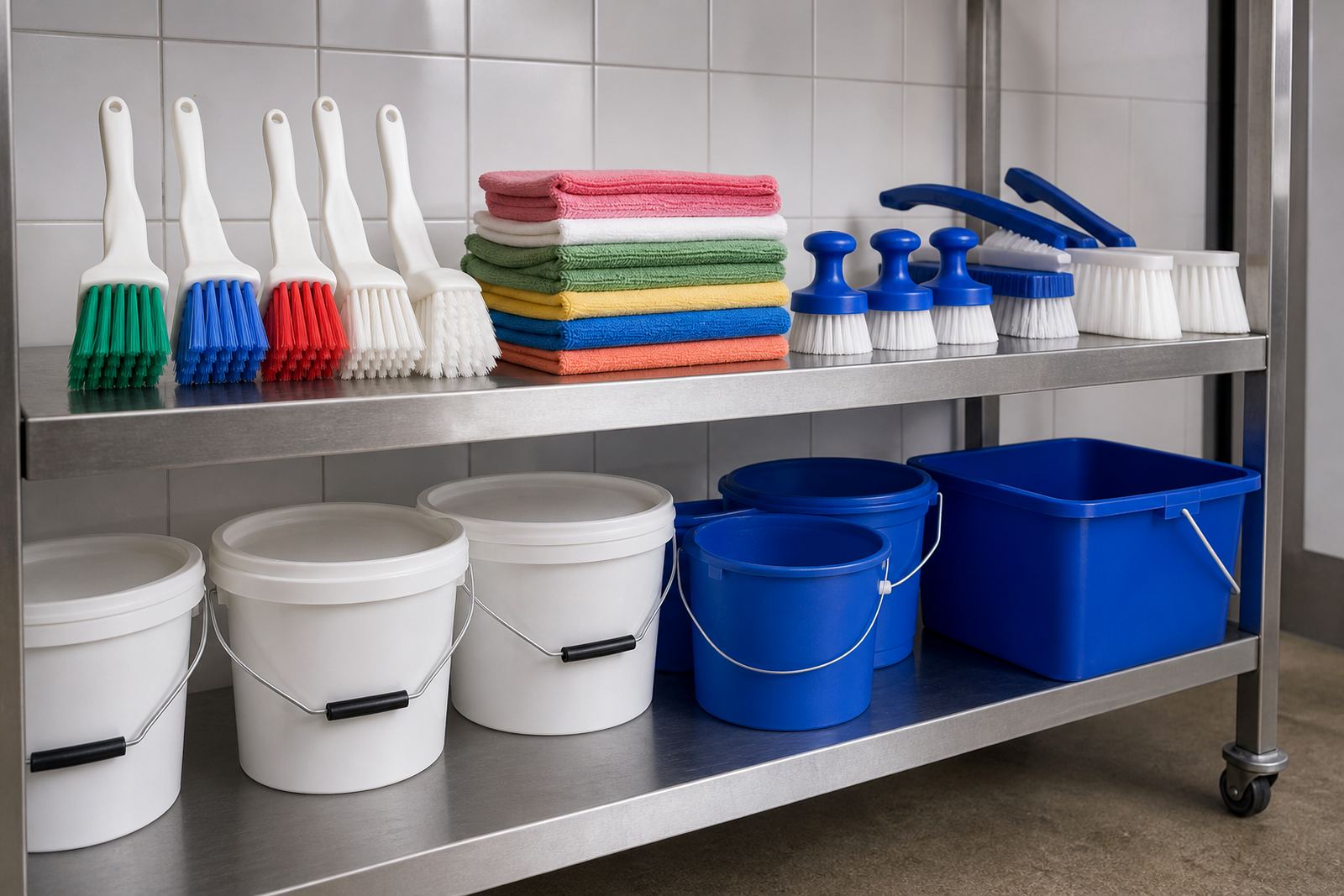
Use dedicated trays, marked containers or clean wrapped storage for each part type. If your team handles more than one machine, label the storage clearly so the correct part goes back to the correct unit. That helps avoid confusion during a rush and makes it easier for the next person on shift to find what they need.
Keep Spare Parts Close But Protected
Spare parts should be easy to reach, but not left exposed on open shelving where they gather dust. In a busy shop, it is common to keep a few frequently used items nearby for quick changeovers. That is fine as long as they are stored properly. Clean wrapping, covered tubs or a dry cupboard can all work well if they keep metal off dirty surfaces and out of the way of splashes.
If you service equipment at more than one site, make one person responsible for checking storage after each cleaning session. In Hamilton, Bloemfontein, a lot of shops keep prep areas running through load-shedding and back again, so parts can move from one surface to another more often than usual. A simple storage routine helps prevent parts from going missing during those changes.
- Use labelled containers for spare blades, plates and knives.
- Store parts away from sinks, drains and floor splash zones.
- Keep a simple count of parts that are shared between machines.
- Return every item to the same place after servicing.
Check For Damage Before You Store Anything
Storage works best when damaged parts do not go back into circulation by mistake. Before packing away a blade, plate or knife, check for chips, bends, rough edges and unusual wear. If something looks off, set it aside for servicing or replacement rather than mixing it with good parts. That small habit can prevent a bad cut on the next job.
Operators should also look for contamination from fat, bone fragments or cleaning residue. If a part is not properly clean, do not store it with ready-to-use items. Keep a clear system for parts that need attention so nobody picks them up and assumes they are ready for use.
Build A Routine That Fits The Shop
The best storage system is the one your team will actually follow. A small home butcher may only need a single shelf, clean containers and a written reminder near the washing area. A commercial shop may need a more detailed process with labelled bins, assigned checks and a weekly review of condition. Either way, the aim is the same: keep parts safe, dry and organised.
Practical routines matter across South Africa, from Bloemfontein to Johannesburg, Pretoria, Durban and Cape Town. In a hotter inland area, dust control may be the bigger issue. Near the coast, moisture control becomes more important. If you are not sure whether your storage setup is helping or hurting, look at the parts after a few days. If you see staining, dull edges or mixed-up items, the system needs tightening up.
For help with bandsaw and mincer care, servicing, parts supply, delivery and setup, MorCut Butchery works with commercial and home butchers across South Africa. Our team in Hamilton, Bloemfontein can assist with practical advice, training, breakdown callouts and maintenance support through the enquiry form on our contact page.