
Why Protective Clothing Matters in a Butchery
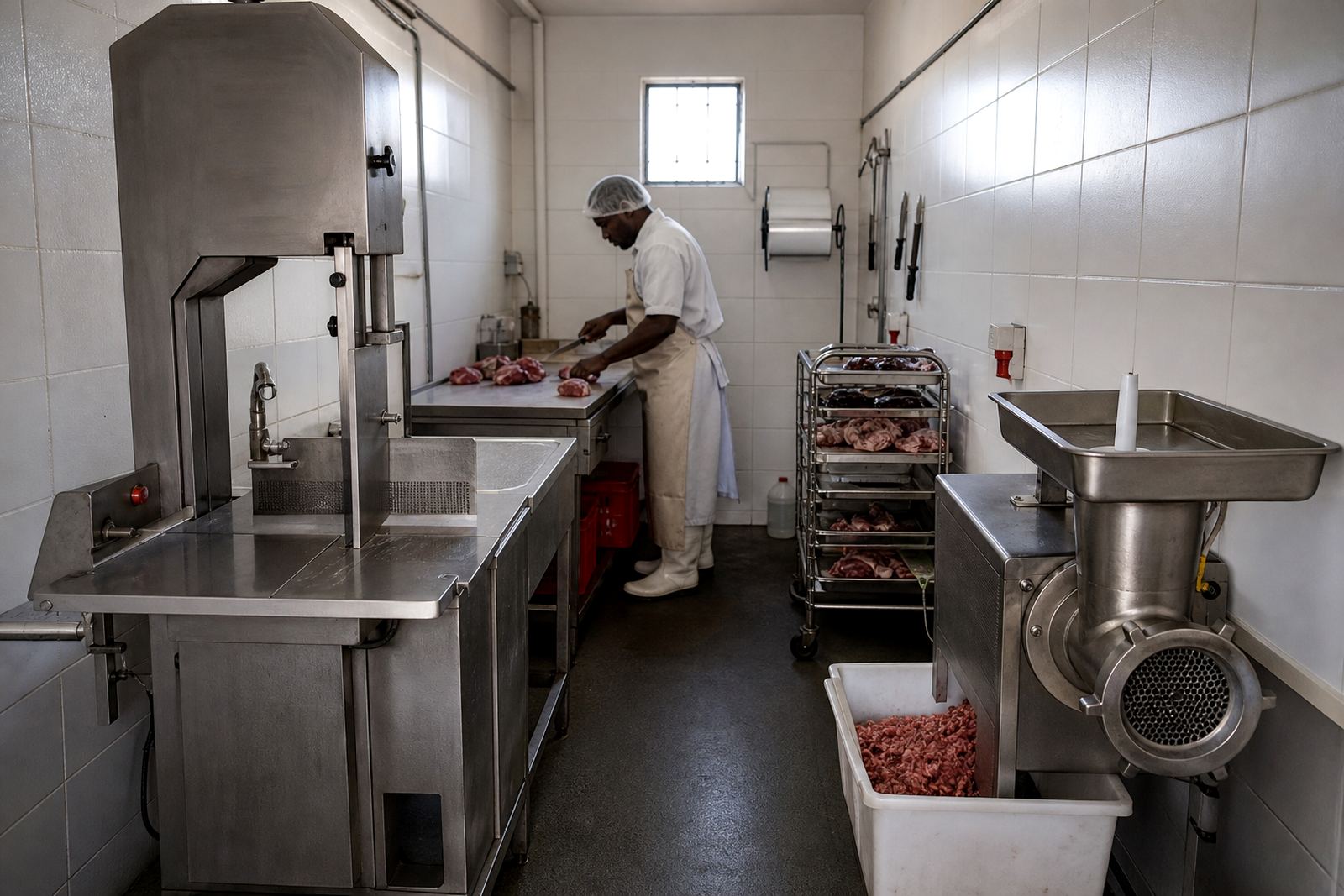
Protective clothing sits right in the middle of daily hygiene control. Aprons help keep blood and fat off clothing, gloves reduce direct contact during handling, and boots protect feet from wet floors, sharp scraps and heavy items. When those items are cared for properly, the whole work area stays easier to manage.
That is especially important in busy rooms where washing down happens several times a day. A clean apron or a fresh pair of gloves is not just about appearances, it helps stop grime from moving from one task to the next. In a Free State setting where a cold morning can quickly turn into a warm, damp room, clothing that is not dried well can start to smell and break down quicker than it should.
Clean Gear Works Better for Longer
Most protective gear fails early because it is treated rough, not because it was used too often. Aprons that are left folded while still wet, gloves that are hung near heat, or boots that are not rinsed after a shift can all wear out faster. A simple cleaning routine helps the material keep its shape and makes it easier for staff to use the gear properly day after day.
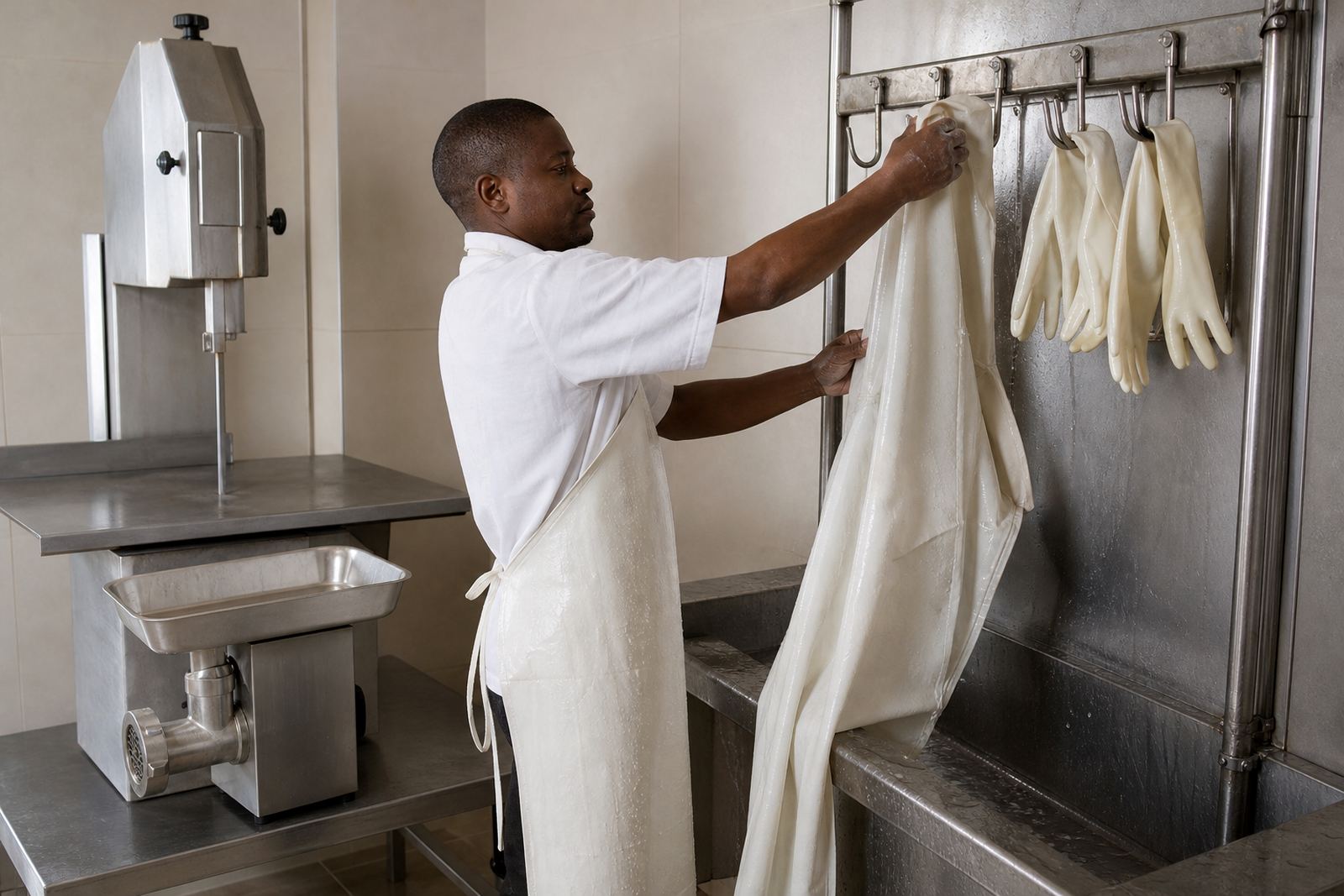
Set the habit at the end of each shift: rinse off visible dirt, wash with a suitable cleaner, and dry fully before storage. Do not leave gear in a sealed locker while damp, because that is where bad smells and mould begin. If the room is humid or if there has been a power cut and the drying area is not moving air, give the items extra time before packing them away.
- Rinse off fat, blood and loose debris as soon as practical.
- Wash with warm water and a mild cleaner suited to the material.
- Dry in a clean, ventilated area away from direct heat.
- Store items separately from knives, hooks and other sharp tools.
Aprons Need Daily Attention
Aprons take the most abuse in a butchery, so they need close attention every day. Check for splits at the seams, cracked straps, loose buckles and stains that are not coming out. Once an apron starts holding grime in the damaged areas, it becomes harder to keep clean and may not give proper coverage. A small tear can become a bigger problem very quickly if the apron is pulled, twisted or washed too hard.
For plastic or coated aprons, avoid harsh scrubbing pads that leave scratches. For cloth aprons, do not overload the wash with oily items that need a stronger soak first. If you are serving a smaller shop in Kroonstad or Welkom, it may be worth keeping one spare apron per worker so cleaning can happen without stopping the whole shift. That small buffer helps a lot when load-shedding changes the usual routine.
- Inspect straps, seams and fasteners before use.
- Separate heavily soiled aprons from lightly used items.
- Replace items that no longer cover properly or cannot be cleaned well.
- Keep clean aprons in a dry cupboard or covered bin.
Gloves Must Be Kept Clean and Dry
Gloves are often the item people forget to care for properly, probably because they are used for many short jobs. Yet dirty or damp gloves can undo other hygiene efforts. If the inside stays wet, the glove becomes uncomfortable, may smell, and can irritate skin. If the outside is not cleaned, residue can transfer to handles, trays and other contact points.
After use, wash gloves according to the material and let them dry fully before storing. Keep a separate pair for washing up or handling dirty equipment so clean work is not mixed with cleaning tasks. Workers should also check for holes and worn fingertips, because once a glove loses its barrier, it is no longer doing the job. A quick look before each shift saves trouble later on.
Boot Care Helps with Grip and Floor Safety
Bout boots, or gumboots and safety boots depending on the work area, need regular care because they deal with wet floors and slippery residue every day. If the soles are packed with fat or debris, grip is reduced and the risk of slipping goes up. Clean the soles after each shift and rinse the outer surfaces when needed, then dry them fully before putting them away. That also helps cut down on smell, which is a common complaint in enclosed prep rooms.
Check for split soles, worn tread, cracked uppers and loose laces or fastening straps. On coastal routes such as Durban and Cape Town, salt air and damp storage can age boots faster if they are left in a corner overnight. In inland towns like Bloemfontein or Pretoria, dust can still get into seams and stitching, so the same routine applies. A boot that fits well and stays clean gives better support through a long day.
Simple Room Routine for Cleaner Clothing
The best care routine is one that staff can follow without fuss. Build it into the end-of-day close down so it does not feel like extra work. The aim is to keep used gear separate from clean gear, dry items completely, and report damaged pieces before they are put back into service. If that routine is followed daily, it becomes much easier to maintain room hygiene and keep replacements under control.
MorCut Butchery works with commercial and home butchers who want practical support, not fancy talk. From Hamilton in Bloemfontein, the team handles delivery, setup and servicing across South Africa, and that includes helping operators keep their working equipment and care routines in order. Whether the focus is a busy retail room in Johannesburg or a smaller family operation in Kimberley, the same principle holds: clean gear supports clean work.
- Keep a marked area for used aprons, gloves and boots.
- Do not mix clean clothing with wet or soiled items.
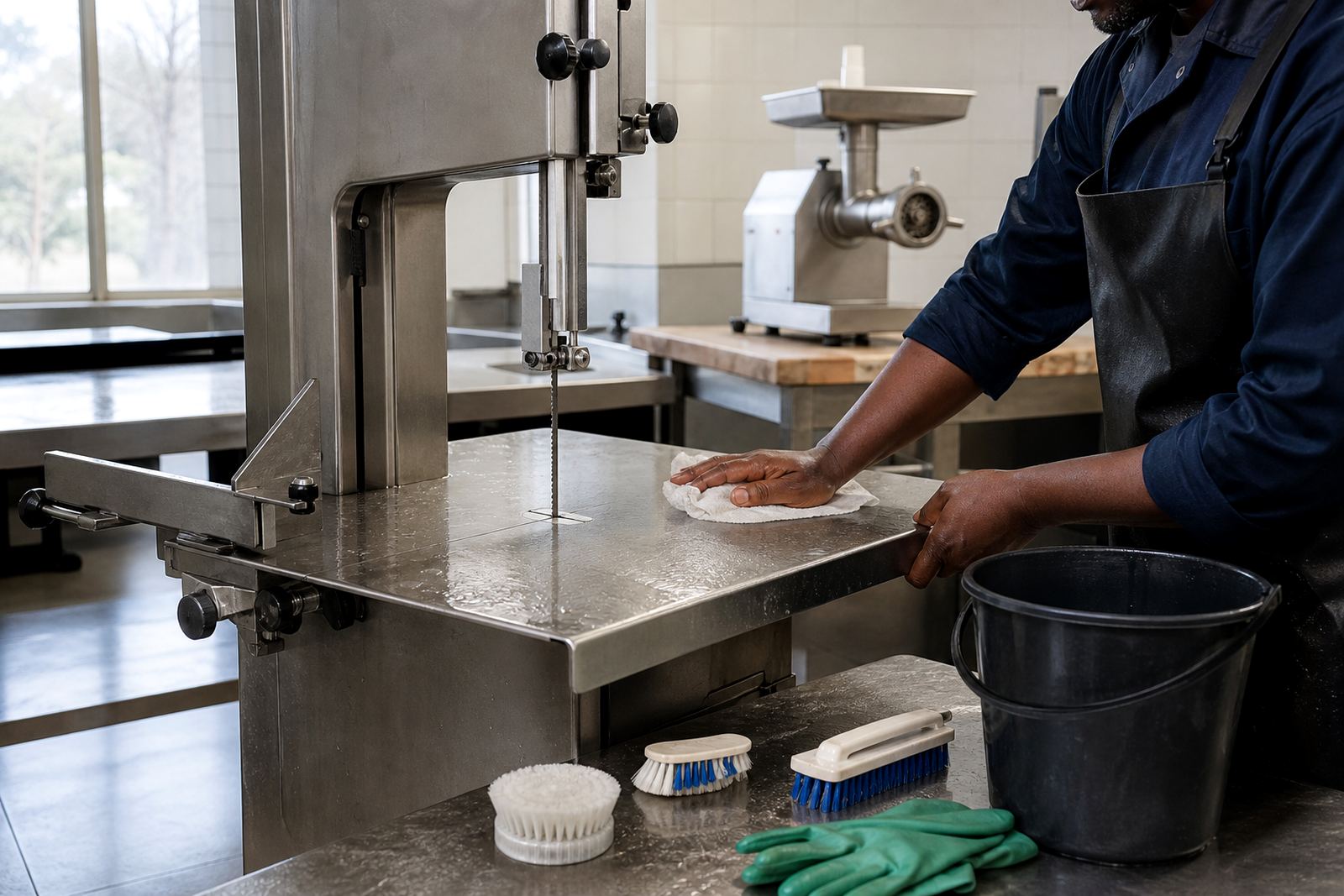
- Use PPE during cleaning so staff are protected while washing gear.
- Replace worn items before they become a hygiene problem.