

Start with the space, not the machine
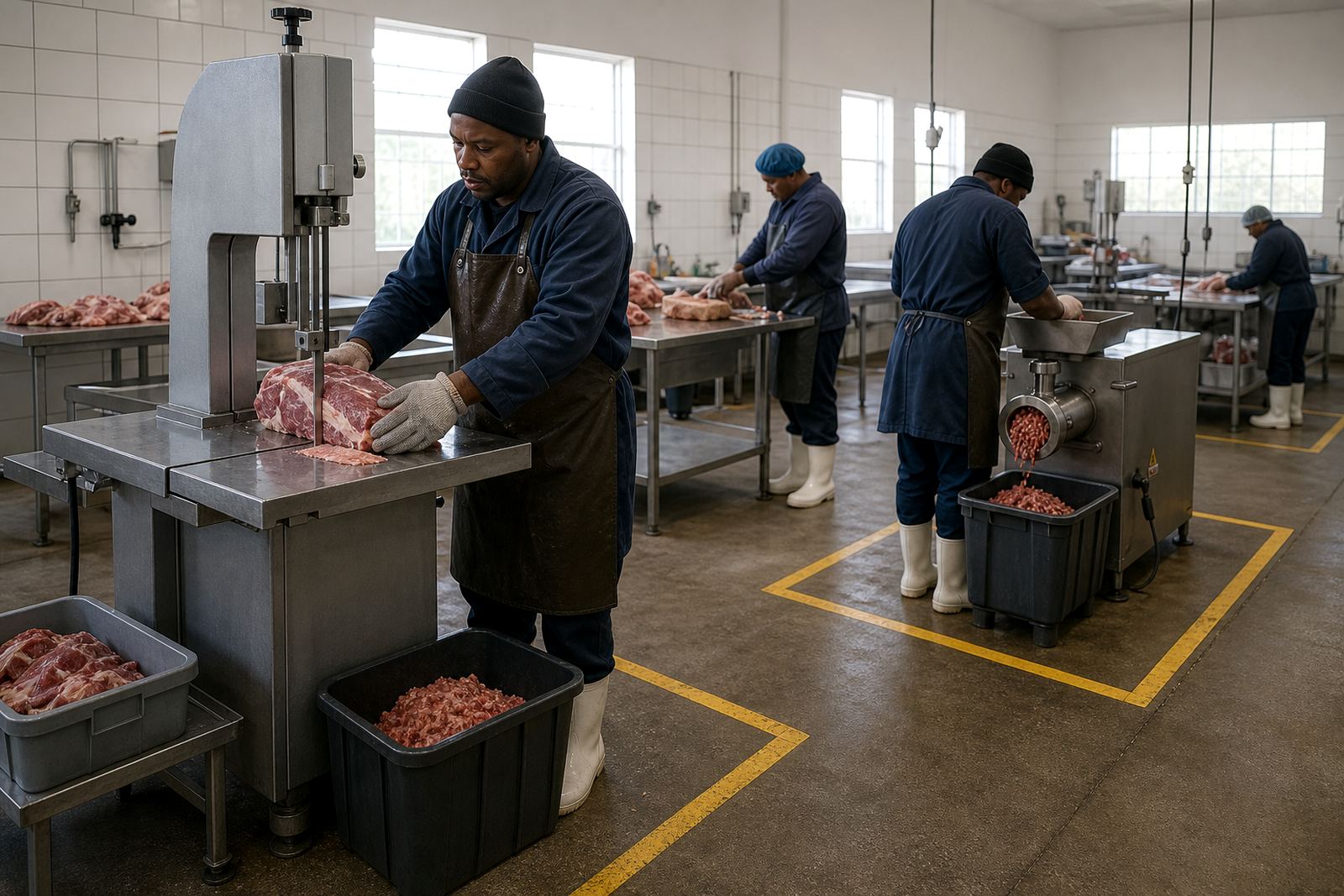
In a co-op, the room usually decides more than the sales brochure does. Before buying a bandsaw or mincer, look at the actual floor space, the wash-down area, drainage, power supply and where carcasses, trays and cleaned parts will move during a busy shift. In Bloemfontein, where many shared processing rooms run between early deliveries and afternoon collection, a machine that fits the room properly is often more valuable than one that simply takes up less money upfront.
Check how many people use the equipment, how often they change over, and whether the space serves one group or several members in rotation. A shared room needs clear traffic flow, enough room to work safely around guards and covers, and enough space to clean the area properly at the end of the day. If the room is cramped, breakages and accidents become more likely, especially when the team is rushing.
Choose between bandsaw and mincer by the type of work
Not every co-op needs the same combination. A bandsaw is useful when the work includes cutting larger sections neatly and consistently. A mincer is the better choice when the operation focuses on mince production, burger mixes or other ground meat prep. Many shared spaces need both, but the order of purchase should follow the actual workflow, not guesswork.
For a co-op serving butchers in Kimberley or Welkom, the team might process mixed orders on different days. In that case, it helps to ask what causes delays now. If cutting is holding everyone up, the bandsaw may come first. If hand mincing is slowing the whole operation, then a mincer should move up the list. It sounds simple, but shared spaces often buy the wrong item first and end up working around the problem for years.
- Use a bandsaw for cleaner cutting of larger portions and bone-in work.
- Use a mincer for ground meat production where consistency matters.
- Match the machine to the daily workflow, not just the biggest order.
- Keep enough room for loading, cleaning and safe movement around the unit.
Think about shared use, training and handover
Co-op equipment gets used by different people, and that means the machine must be simple enough for trained operators to use correctly every time. Clear handover matters. If one member knows the settings but the next person does not, wear and tear goes up fast and the cleaning standard drops. Good training saves time and reduces arguments, which is useful in any shared space.
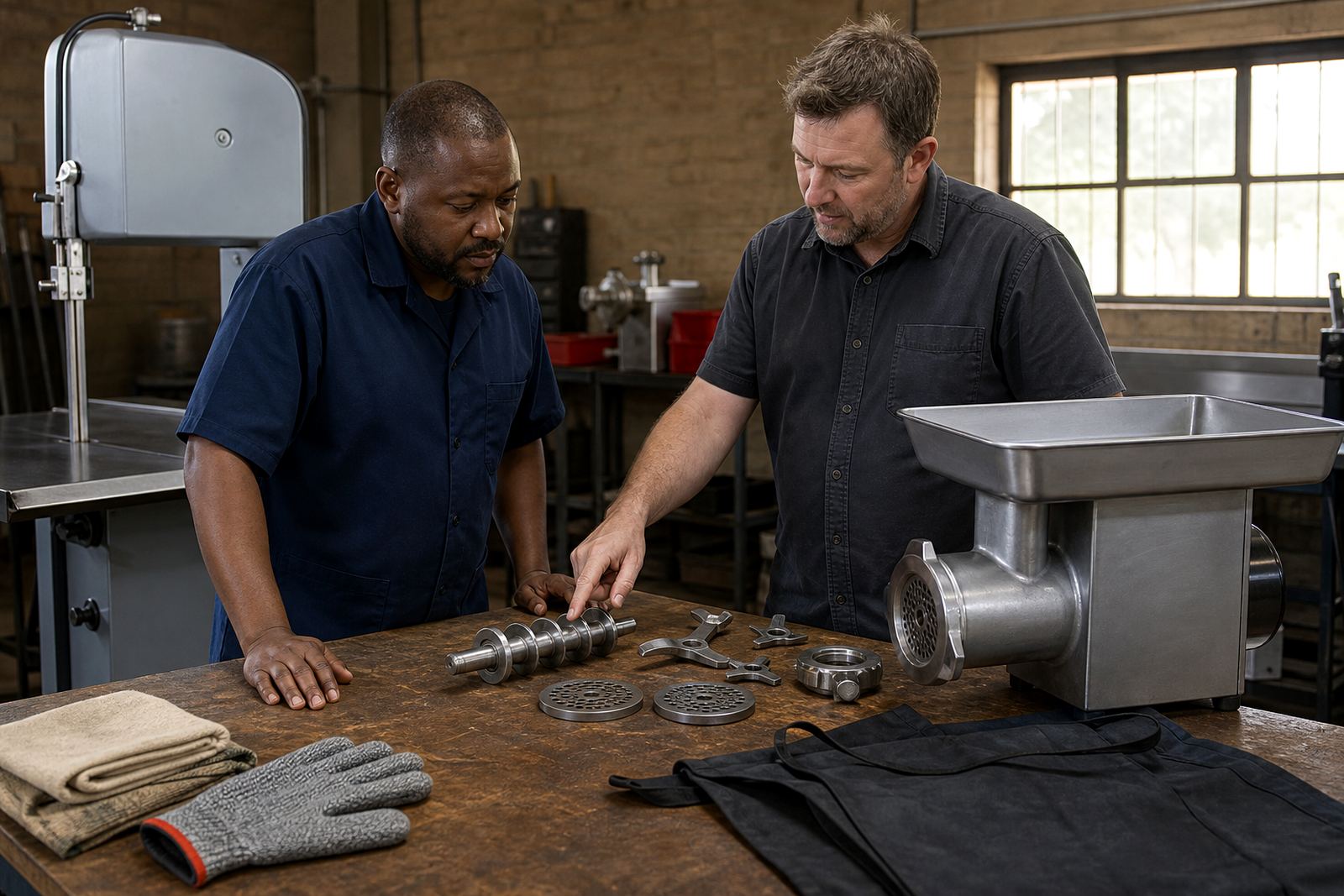
Operator training should cover safe loading, correct use of guards, stopping the machine fully before cleaning, and basic care between shifts. A co-op should also decide who is responsible for switching the unit on and off, who checks the blade or plate condition, and who signs off cleaning before the next user comes in. Small gaps in responsibility often turn into bigger repair bills later.
- Keep a simple log for use, cleaning and faults.
- Assign one person per shift to check the machine before startup.
- Make sure new users are shown the same steps every time.
- Store tools and removable parts in one marked place.
Build cleaning and hygiene into the purchase
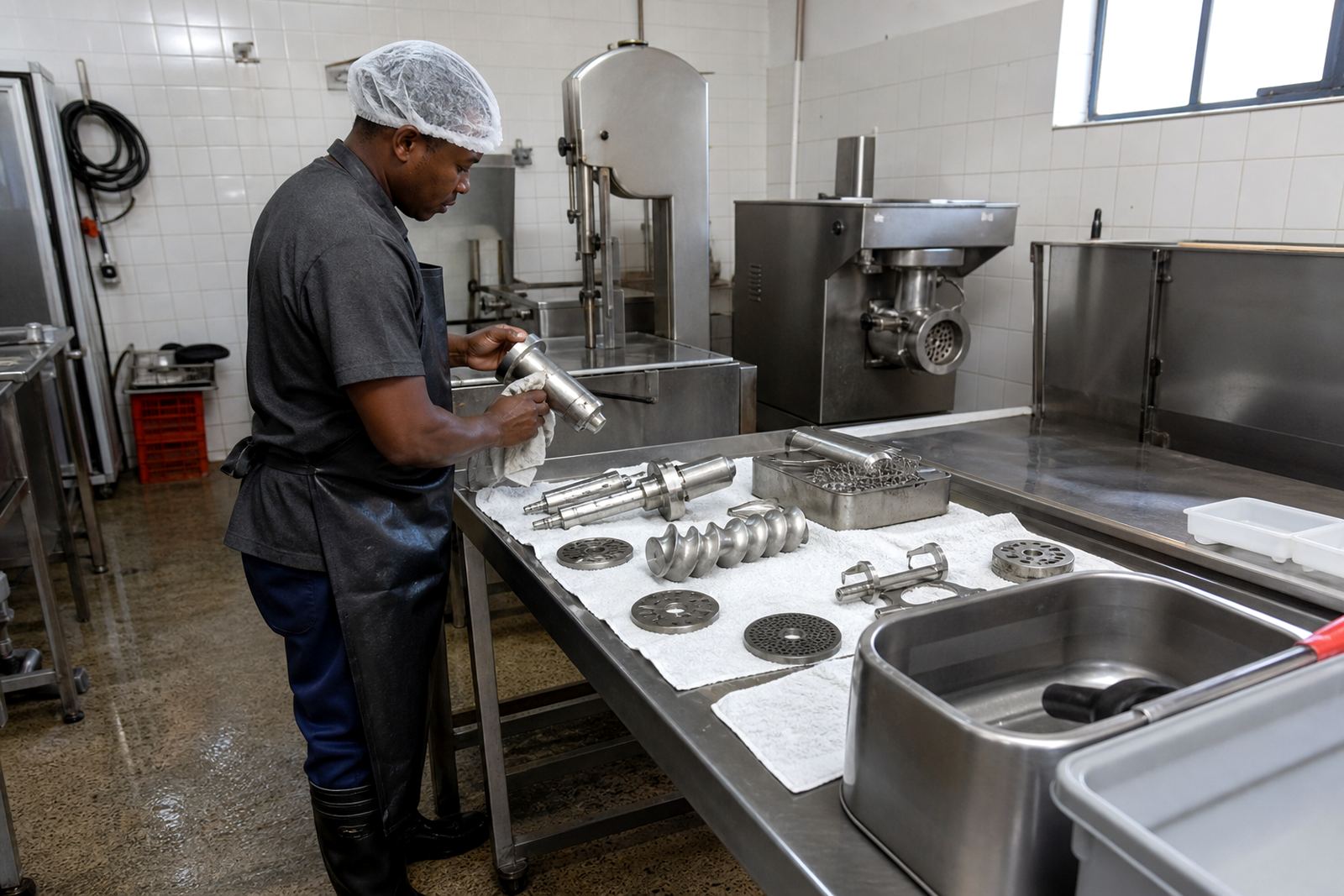
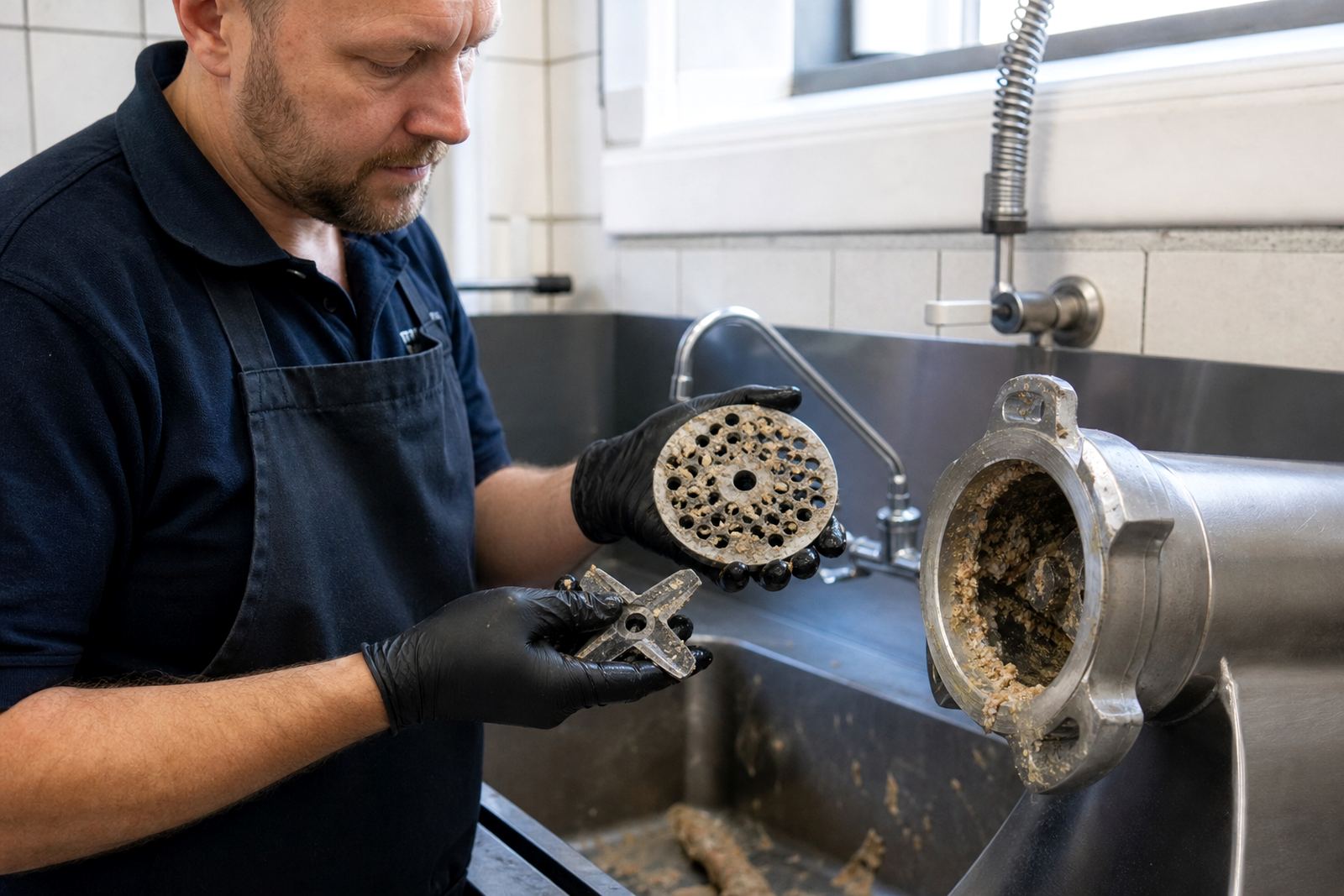
In a shared butchery space, cleaning is not an afterthought. It should be part of the buying decision. Surfaces, removable parts and the surrounding floor area all need to be easy to wash down. If the machine traps waste in hard to reach corners, the team will spend too long scrubbing and still miss spots. That creates hygiene problems and slows the whole room down.
Co-ops should also think about local conditions. In coastal areas like Durban, humidity can make rust and moisture control a bigger issue. In drier inland towns, dust and power interruptions can affect how the room is used and cleaned. During load-shedding, a shared team needs a plan for stopping work safely, securing product and restarting without rushing. Use proper PPE, keep guards in place and never clean a machine while it is still moving.
Regular cleaning demonstrations are worth far more than a single instruction sheet. When the whole team sees the correct method, there is less confusion over who should remove parts, where to rinse them and how to dry them before reassembly. That kind of practical routine keeps the space in better shape over time.
Plan servicing before the first breakdown
A co-op often feels pressure to spend only on the machine itself, but servicing is part of the real cost. Shared equipment works harder because it is used by many hands, often for long periods, and sometimes by people with different levels of experience. Preventive maintenance helps avoid surprise downtime, which is especially important when customer orders are already lined up.
It is better to arrange servicing at set intervals than to wait until the machine begins to struggle. Listen for unusual noise, check for poor cut quality, inspect blades, plates and knives, and make sure worn parts are replaced before they cause more damage. Breakdown callouts are useful, but a planned service schedule usually costs less over time and keeps the room moving.
For co-ops working across the Free State and nearby centres, a practical servicing plan also helps when deliveries, collections and production happen on different days. The machine should be ready when the team is, not the other way around.
A practical setup for a shared room in the Free State
Imagine a co-op in Bloemfontein supplying meat prep for members in the city and nearby towns such as Kroonstad and Welkom. The room gets early morning use, then a second shift later in the week. In that setting, the smartest buying decision is usually the one that keeps the process steady, easy to clean and simple to hand over between users. Not every workspace needs the largest unit available, but every workspace does need equipment that can be maintained properly.
The team should also think about parts supply, delivery and setup from the start. If a blade, plate or knife needs changing, it should be easy to get the right part without holding up the whole room. If the machine needs repositioning, the supplier should be able to assist with setup so the co-op is not guessing on day one. A good equipment choice supports the people using it, instead of making them work around the machine.
At MorCut Butchery in Hamilton, Bloemfontein, we work with commercial and home butchers who need practical advice on bandsaws and mincers, as well as servicing, blade replacement, cleaning demonstrations and operator training. Shared spaces do best when the equipment choice is matched to the room, the users and the routine, not just the purchase price.