

Start with the machine before the meat
New team members should first learn what each machine is for and what it must never be used for. A bandsaw is for controlled cutting and a mincer is for prepared product only, so the first lesson is not speed but correct use. When people understand the job of the equipment, they are less likely to force it, overload it or improvise with it.
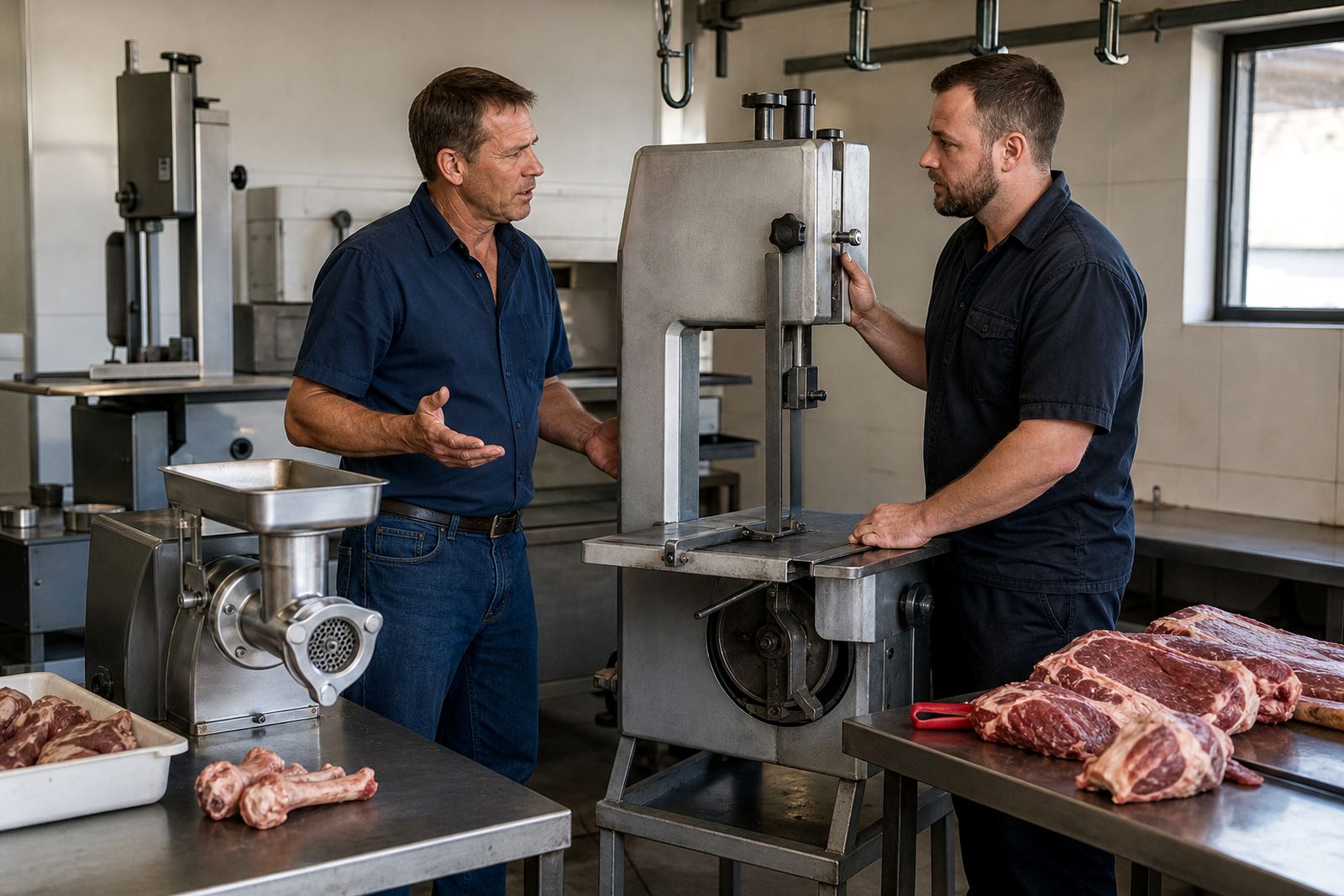
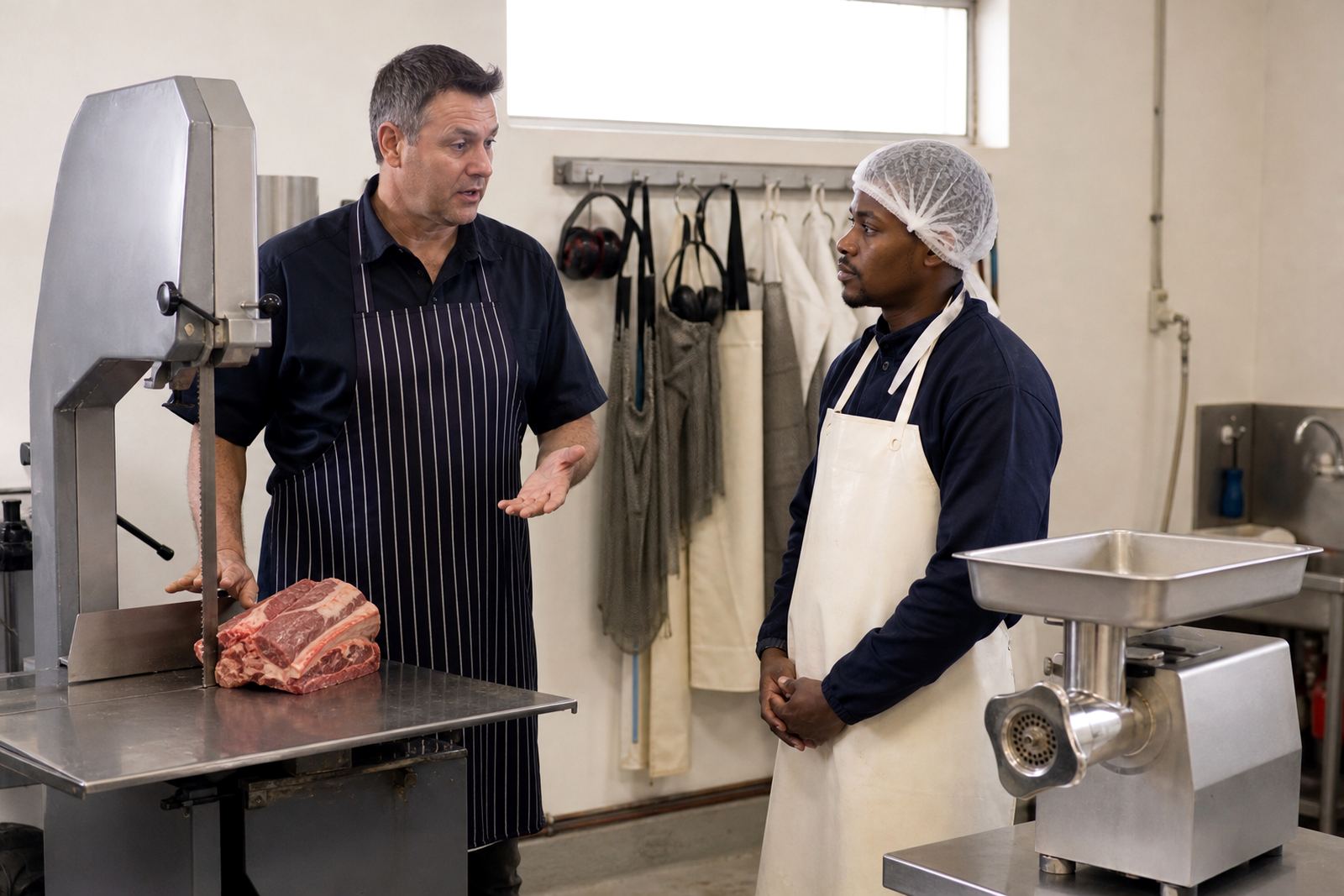
In Bloemfontein and other Free State towns, many shops work with lean teams and early starts, so induction has to be practical. Show the machine while it is off, point out the guard, the feed area, the stop control and the cleaning points. Then let the new person repeat the steps back to you in their own words before they touch a switch.
Use a simple first-day checklist
Keep the first day short and structured. A checklist helps the supervisor cover the same basics every time, even when the shop is busy. It also gives the new team member a clear sense of what is expected before they work around sharp blades and moving parts.
- Confirm they know where the isolator and emergency stop are.
- Show how to check guards, covers and trays before use.
- Explain what product goes into the mincer and what must stay out.
- Demonstrate safe stance, hand position and feeding method.
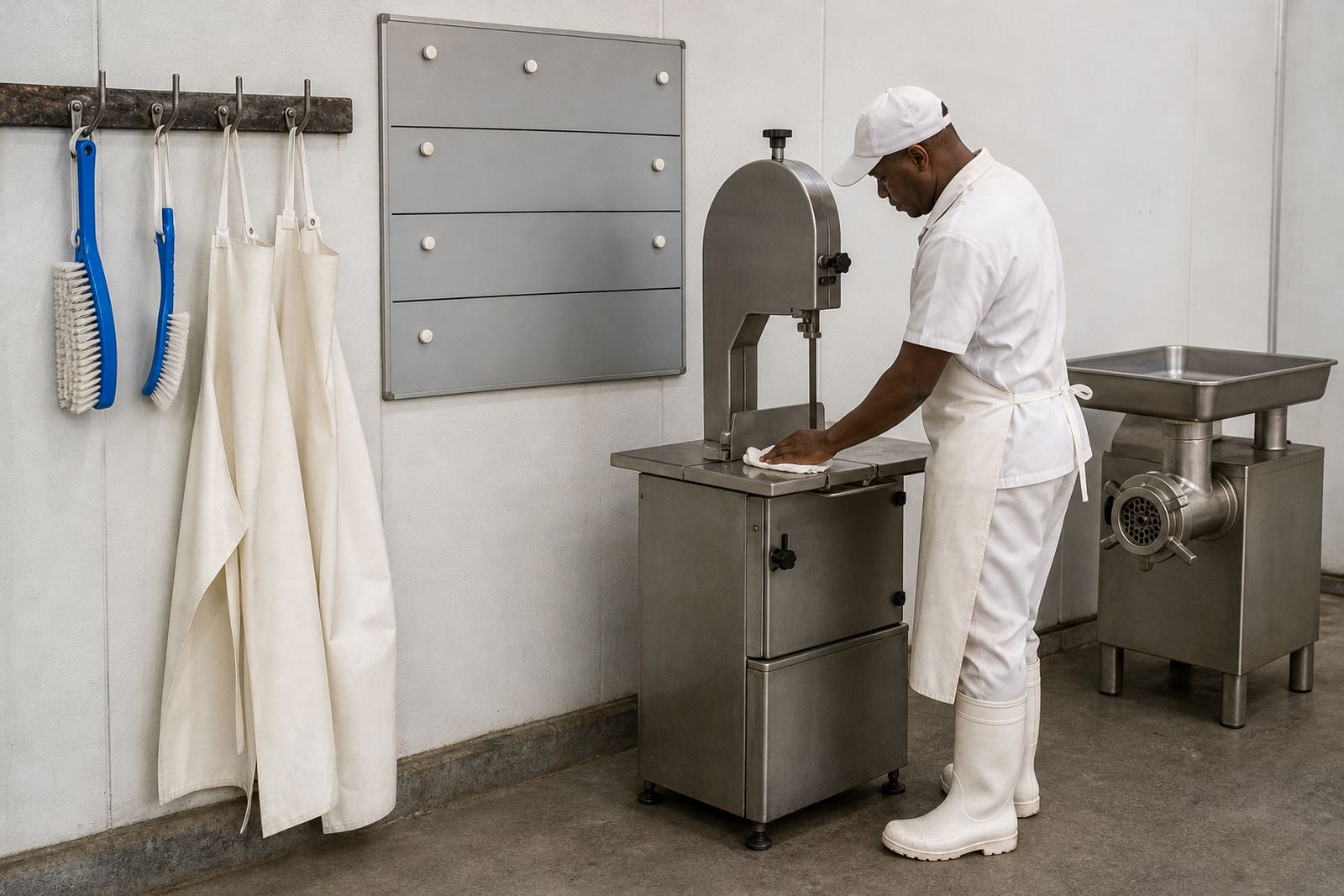
- Show the cleaning route, brushes, cloths and PPE required.
- Explain who to call if the machine sounds different or starts to vibrate.
It does not need to be a long lecture. Ten careful minutes before the first shift can save hours of stoppage later.
Teach cleaning as part of the job, not after it
New staff often see cleaning as the last task, but in butchery work it is part of safe operation. Fat, meat fibre and residue can build up in the wrong places and affect performance. A clean machine is easier to inspect, easier to use and easier to maintain.
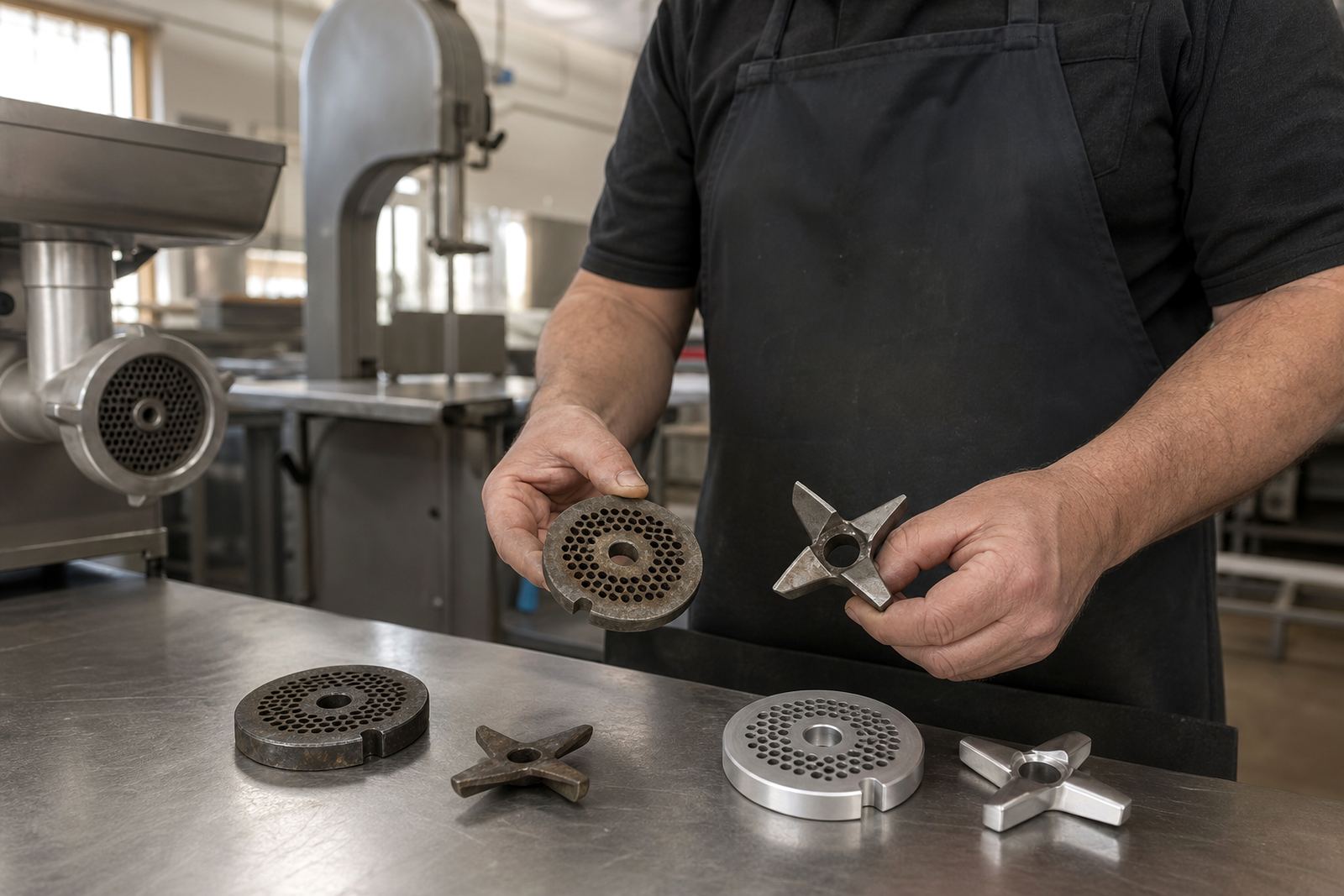
Explain that cleaning must happen with the machine isolated and safe to open. Use the right brushes, cloths and PPE, and make sure staff know which parts can be removed and which must stay in place. For a mincer, plates and knives must be handled carefully and stored properly after washing. For a bandsaw, the blade area, guides and tray need special attention so no residue is left behind.
Where load-shedding is part of the day, remind teams not to rush back to the equipment when power returns. Switch on only after a full check. In a cold room or prep area, this habit is especially useful because people tend to move quickly when the lights come back on.
Show the difference between safe and unsafe handling
Most accidents happen when a worker gets comfortable too quickly. A proper induction should show what safe handling looks like in real terms, not just in theory. New staff need to see the correct way to stand, feed, carry and clean, and they should also see the habits to avoid.
- Never bypass guards or use a machine with missing parts.
- Keep hands clear of moving parts and cutting areas.
- Do not wear loose clothing that can catch on equipment.
- Use gloves, aprons and other PPE as instructed.
- Keep the floor dry and free of offcuts and fat.
- Report loose screws, unusual noise or poor cutting straight away.
A supervisor in Bloemfontein once told us the fastest way to spot a new team member is by how they clean around a machine. That is usually true. The careful ones slow down at the right moment and ask before they guess.
Build confidence with one machine at a time
Do not expect a new recruit to learn everything in one morning. Start with one machine, one task and one cleaning routine, then add the next step once they are comfortable. This is especially important for home butchers moving into higher volumes, where the work can change from week to week.
A sensible order is to begin with awareness, then supervised use, then repeat use under observation. If the person is assigned to a bandsaw, let them observe several cuts before they work under supervision. If they are assigned to a mincer, make sure they understand preparation, feeding, cleaning and reassembly before they are left alone. Confidence comes from repetition, not from being rushed.
For shops in Johannesburg, Pretoria, Durban or Cape Town, where delivery schedules and customer flow can be tight, that repeat practice matters. A worker who knows the routine is less likely to cause delays or damage when the counter gets busy.
Keep the induction tied to maintenance and parts
Good inductions do not stop at the switch. New staff should know who handles servicing, where parts are kept and what signs mean the machine needs attention. If a blade is blunt, a plate is worn or the feed becomes uneven, the operator should not keep pushing on as if nothing is wrong.
Make it clear that maintenance is everybody’s responsibility, even if only one person is assigned to the machine. A clean, well looked after bandsaw or mincer lasts longer and gives better results. In smaller butcheries around Kimberley, Welkom or Kroonstad, this is often the difference between a smooth week and a long repair delay.
Include these points in the induction:
- Who to report faults to before the issue becomes a breakdown.
- Where blades, plates, knives and basic consumables are stored.
- How often the machine is checked, cleaned and serviced.
- What records are kept for training and maintenance.
That small bit of admin helps the next shift know exactly what was done and what still needs attention.
Use one local example to make the lesson stick
In a busy Hamilton operation, a new starter may begin on prep duty in the morning, then move to the bandsaw area later in the week. If the induction has been done properly, the person already knows where the stop control is, how to keep the work area clear and why the machine must be cleaned before the next run. They also know when to ask for help rather than guess.
That is the real goal of staff induction tips for butchery equipment: fewer mistakes, better hygiene and more predictable output. It is not about making a new worker into an expert on day one. It is about building safe habits from the start so the team can work with confidence.
When the basics are covered well, the machine gets treated properly and the butcher can focus on good cuts, tidy prep and steady service.