

Why cleaning training is part of production, not an extra task
Many butcheries in Bloemfontein and across the Free State treat cleaning as the last job of the day, handed to whoever is still on the floor. That approach often leads to missed parts, poor drying, rushed wipe-downs and avoidable wear on bandsaws and mincers. Cleaning training gives staff a clear method, so they know what to remove, what to wipe, what to inspect and what must stay dry.
When the team understands why cleaning matters, standards improve quickly. Meat residue left on guards, trays, plates and knife areas can affect hygiene and create unpleasant smells. Moisture left behind can lead to rust, especially where equipment is used in cooler prep rooms or in coastal towns with more humidity. Good training helps staff protect both the product and the machine.
What staff should learn before touching the machine
Before any cleaning starts, staff must know the safe shutdown routine for each machine. That means switching off properly, isolating power where required, waiting for moving parts to stop fully and only then opening covers or removing components. A simple step skipped in a busy butchery can cause injury, damage or a rushed close-up before the machine is ready.
Training should also cover the right personal protective equipment and basic handling habits. Gloves that suit the task, aprons, eye protection where needed and non-slip footwear all matter. If staff are unsure how a specific part comes off, they should not force it. Forcing fittings is how guards crack and threads strip. A clean machine is not useful if it goes back into service with a loose cover or a missing guard.
- Switch off and isolate the machine before cleaning starts
- Wait for all moving parts to stop completely
- Use the correct PPE for the task at hand
- Never bypass a guard to save time
- Report damage straight away instead of hiding it
Cleaning methods for bandsaws and mincers should be different
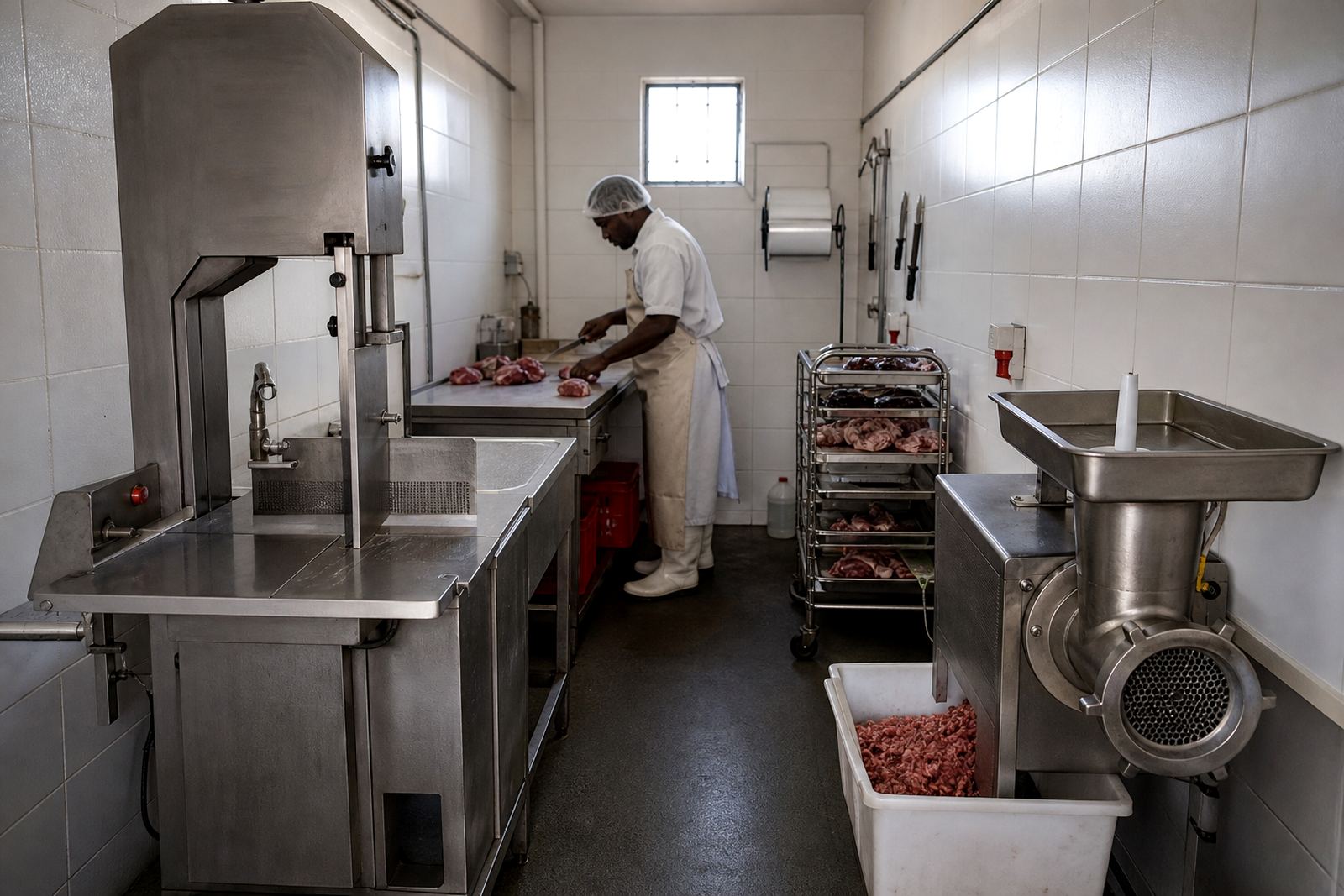
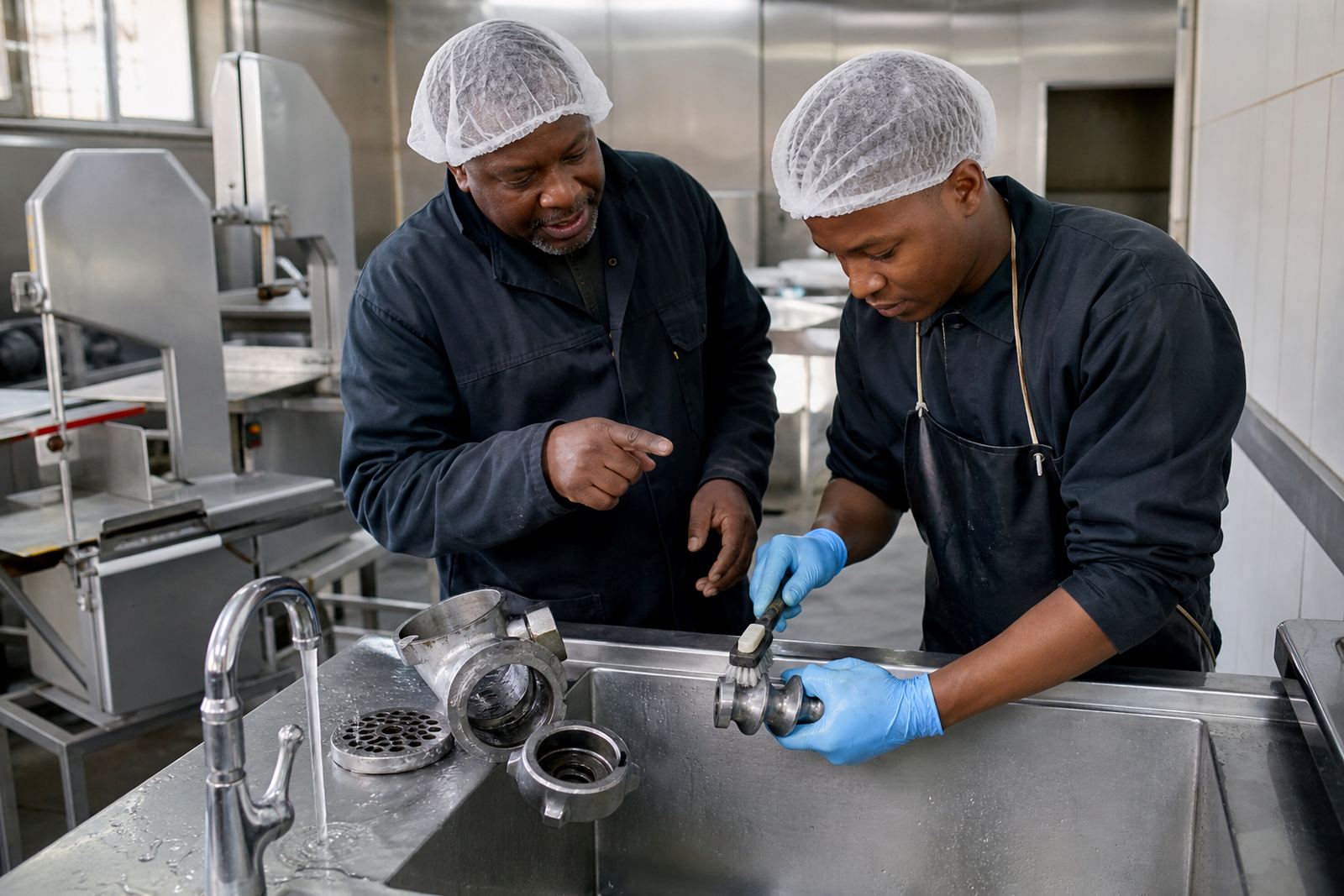
A bandsaw and a mincer are not cleaned the same way, even if they sit side by side on the same prep line. Staff need to learn the differences so they do not use the wrong brushes, too much water or harsh methods that shorten the life of the machine. A bandsaw has blades, guides and protected surfaces that need careful attention. A mincer has plates, knives, screws and feed areas that need full removal, washing, sanitising and drying before reassembly.
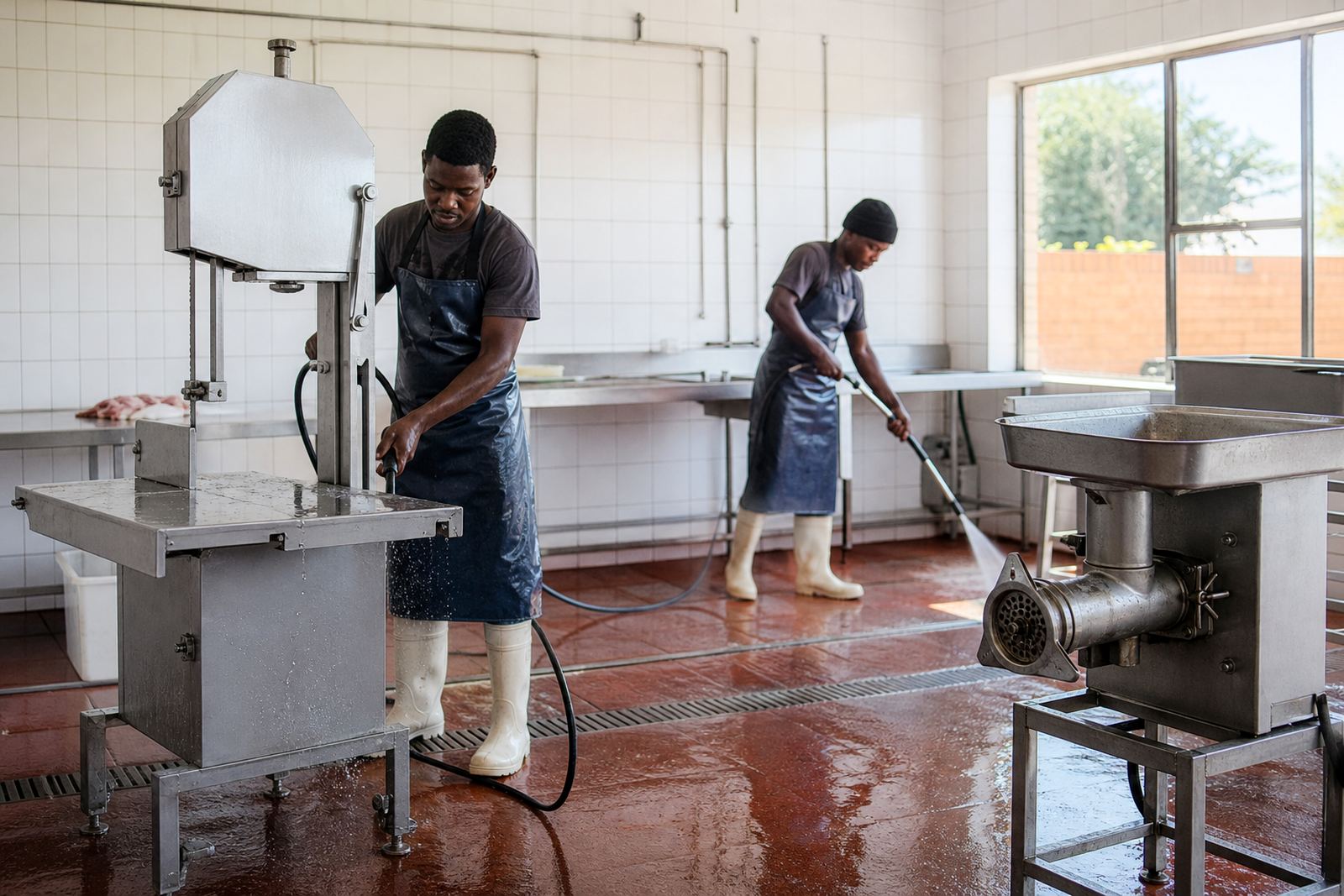
Training should be practical, not just verbal. Show staff how to strip the machine in the correct order, clean the contact surfaces, inspect seals and look for worn parts. Then show the drying routine. Wet components put back together too soon can lead to corrosion and poor performance. In a place like Johannesburg or Pretoria, where some sites run long hours, that little extra attention can save a service call later in the month.
- Use approved cleaning agents only
- Keep electrical parts dry and protected
- Wash removable parts separately from the frame
- Dry every surface before reassembly
- Store blades, plates and knives safely after cleaning
A short routine works better than a long lecture
Training sticks when it is simple. Most teams respond better to a repeatable routine than to long notes pinned to a wall. A supervisor can break the cleaning process into small steps: clear the work area, shut down the machine, strip removable parts, wash, sanitise, inspect, dry, reassemble and test. Once staff follow the same order every shift, the standard becomes part of the workplace culture.
It also helps to appoint one person to check the work before opening the line again. That final check should cover guards, fasteners, blade condition, plate wear and any unusual noise on start-up. If a site in Bloemfontein is doing early morning prep for retail and wholesale orders, a five minute check can prevent a morning of delays. Training is not only about telling people what to do, it is about making sure they can do it the same way under pressure.
Common cleaning mistakes that cause avoidable downtime
The most common mistakes are not complicated. They are usually small habits repeated every day until they become expensive. Staff may use too much water near motors or switches, leave parts wet overnight, forget to inspect worn components or rush reassembly when the queue is getting long. Over time, these habits lead to rust, blunt cutting parts, poor output and extra servicing.
Good cleaning training helps the team spot the warning signs early. If a mincer starts to sound different, if a bandsaw has a dull cut, or if residue keeps building up in the same place, the issue needs attention. The aim is not only to get the machine looking clean, but to keep it working properly.
- Do not hose down electrical areas
- Do not leave blades or plates wet
- Do not reassemble parts without checking wear
- Do not ignore unusual noise or vibration
- Do not store cleaning tools where they pick up dirt again
A practical Free State example for busy butcheries
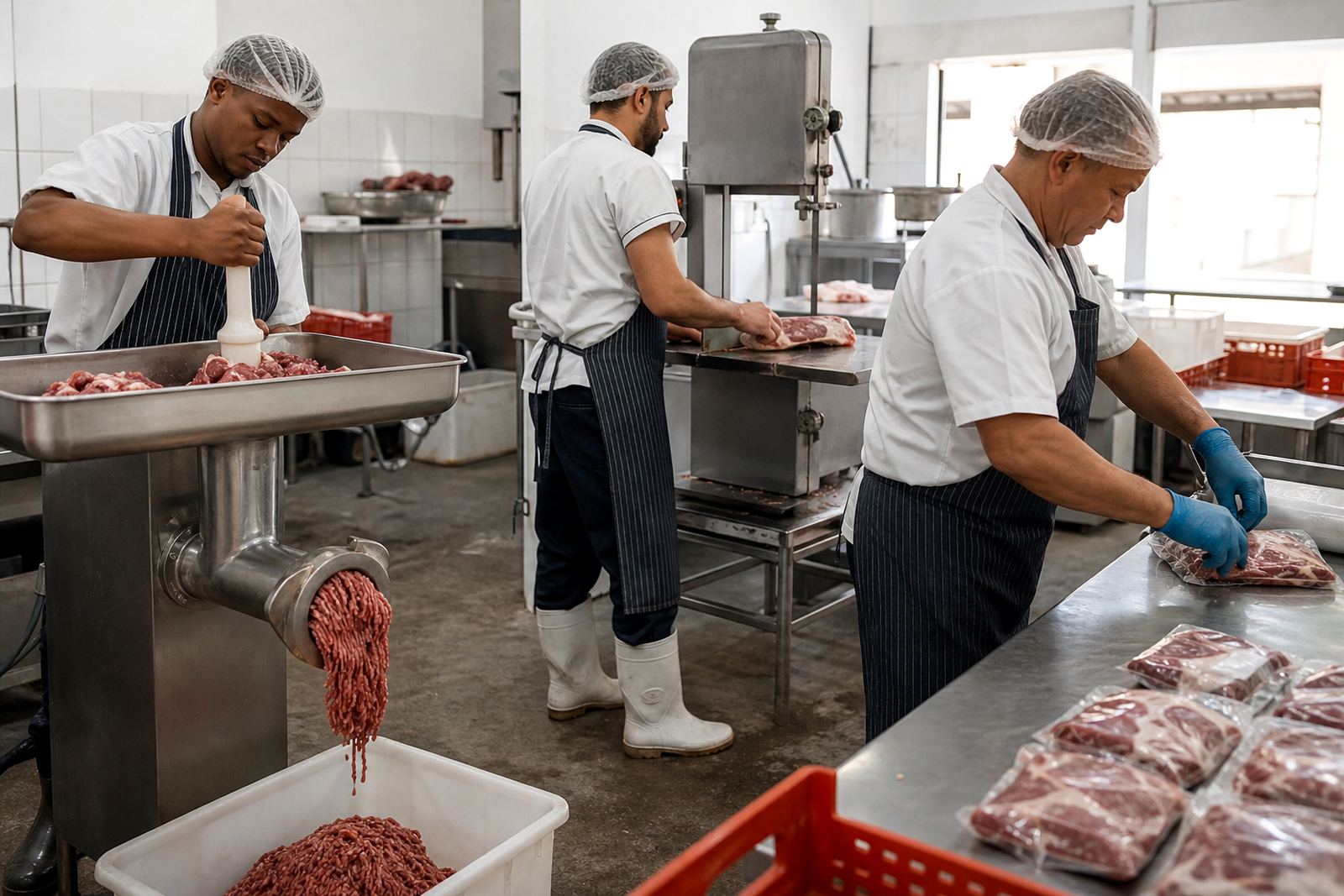
Think of a family butcher in Bloemfontein supplying walk-in customers and local caterers, with delivery runs into Kimberley and Welkom on the side. The team starts early, works hard through the morning and then cleans in a hurry before the next load comes in. Without proper training, the same worker may rinse one part quickly, leave another part damp and forget to check a worn blade guard. The machine may seem fine for a few days, then the cut quality drops and the service team gets called.
With proper training, that same team follows a set method every day. Parts are removed in order, the machine is cleaned safely, drying is checked and wear is reported before the next shift. That saves time, protects the meat room and keeps the business from losing trade to unnecessary stoppages. It also makes handovers easier when staff changes between shifts or during load-shedding interruptions.
Keep cleaning skills current with regular refreshers
Cleaning training should not be a once-off session. New staff join, routines drift and busy seasons put pressure on standards. A short refresher every few months keeps the team sharp and gives supervisors a chance to correct bad habits before they spread. It also helps to pair new staff with someone experienced until they can clean independently and confidently.
For butcheries that want fewer callouts and better uptime, the message is simple: teach cleaning with the same care you teach production. A machine that is used well and cleaned well lasts longer, performs better and supports safer food handling. That is useful in a small home butcher setup and just as important in a high-volume shop serving customers across South Africa.