
Set the counter flow before the first cut
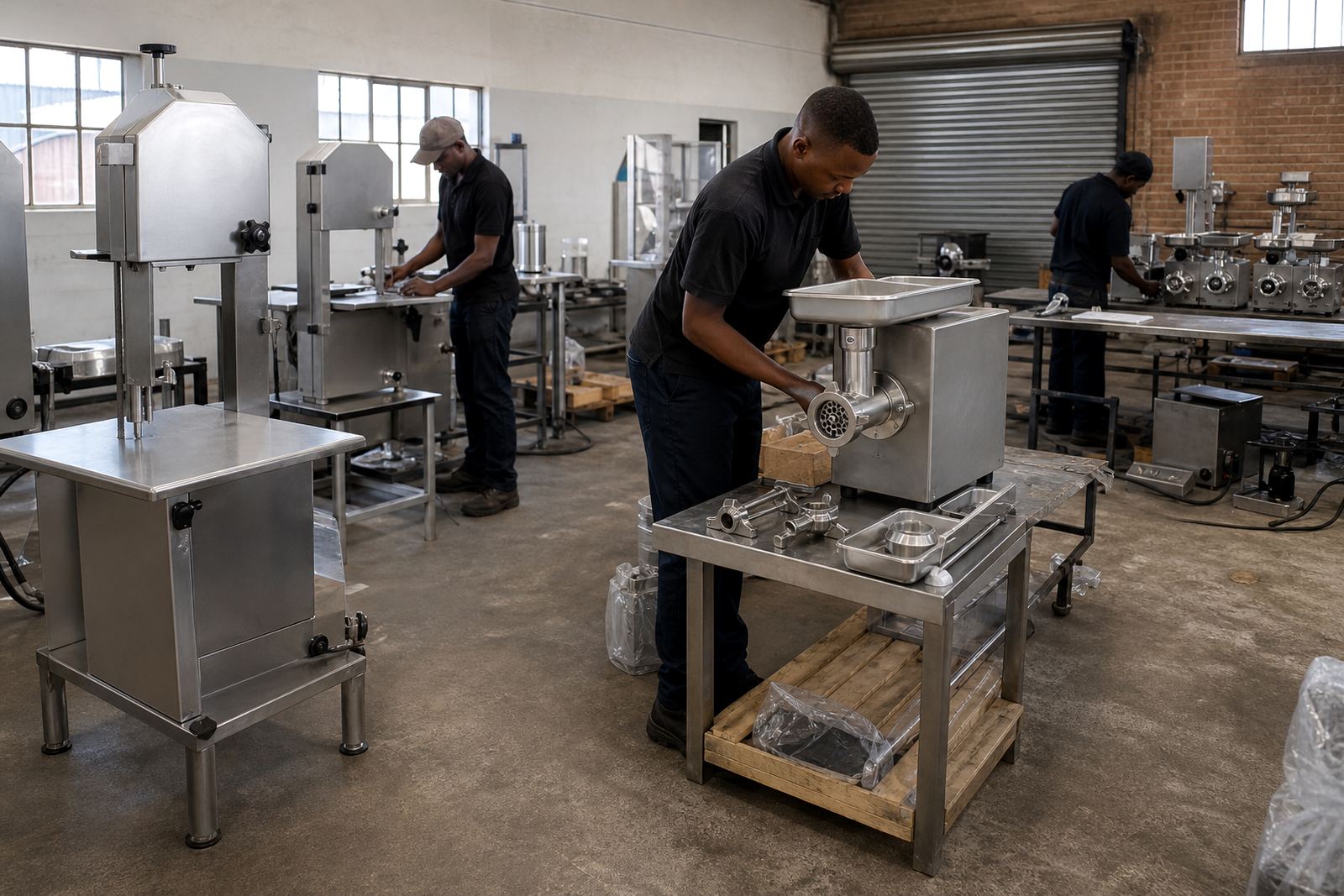
In a retail butchery, flow starts before the meat reaches the machine. If the receiving area, chill room, cutting bench and display counter are arranged poorly, staff spend too much time walking back and forth, and that is where product quality begins to slip. A clear path from storage to cutting to packing keeps the day moving, especially when trade picks up after month-end, long weekends or a rugby Saturday.
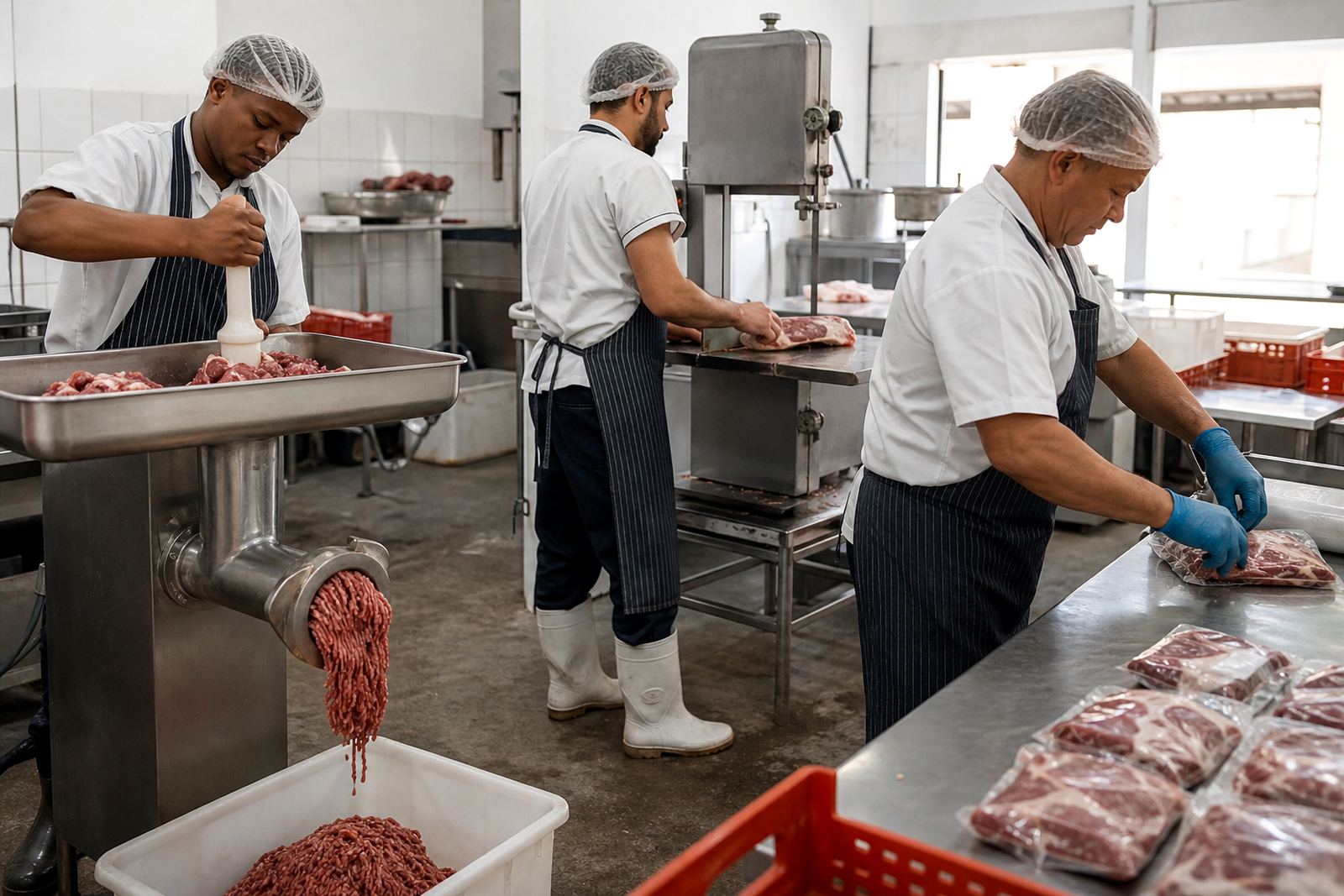
For many Free State and Gauteng shops, the challenge is not only volume but mix. One hour may call for clean forequarter cuts, the next for mince, sausages or trim for processed lines. A good setup lets one person feed the bandsaw while another handles mincing and packing without crossing paths. That matters in smaller spaces too, where every square metre must work hard.
Think in terms of order, not just equipment placement. Keep raw product, clean trays, packaging and finished goods separate. Use marked zones so staff know where each task happens and where nothing else should be placed. In humid coastal towns like Durban, this discipline also helps with hygiene because damp air can make sloppy handling and cleaning problems show up faster.
Match the bandsaw to the retail rhythm
A bandsaw is the backbone of fresh cut production when a shop needs accuracy and speed. It helps turn larger portions into chops, ribs, bone-in cuts and portioned packs that look neat on the shelf. In retail, the goal is not only to cut meat, but to cut it consistently so customers see the same size and finish every time.
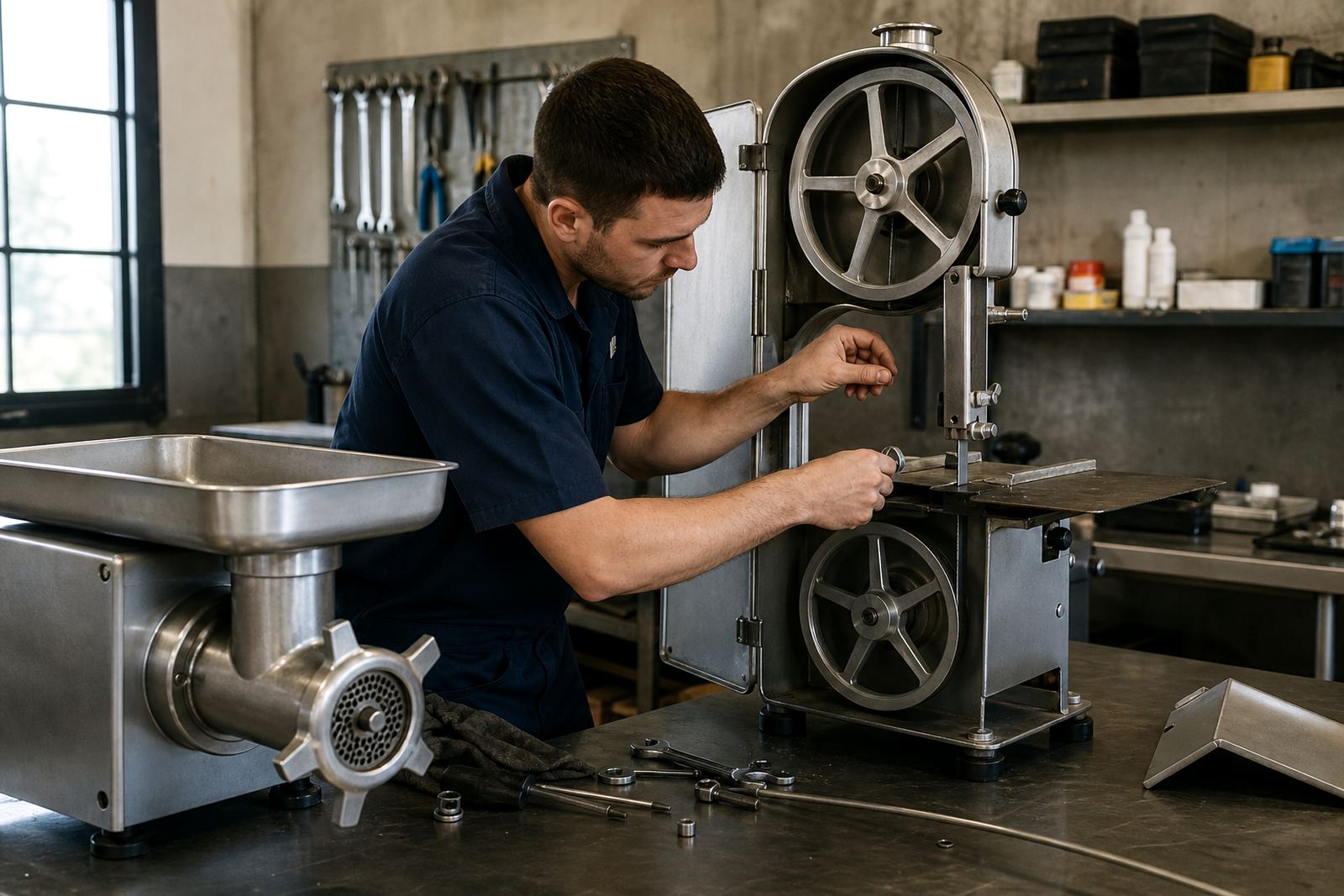
The best results come from a simple habit: keep the bandsaw reserved for work it handles well, and do not force it into tasks that belong elsewhere. Staff should use the guard correctly, feed meat steadily and keep hands clear of the blade path. A clean machine cuts better and is safer to use, which is why daily wipe-downs and proper blade care matter as much as the cutting itself.
- Use the bandsaw for bone-in and portioned retail cuts that need clean lines.
- Clean the machine often, especially after fatty or wet products.
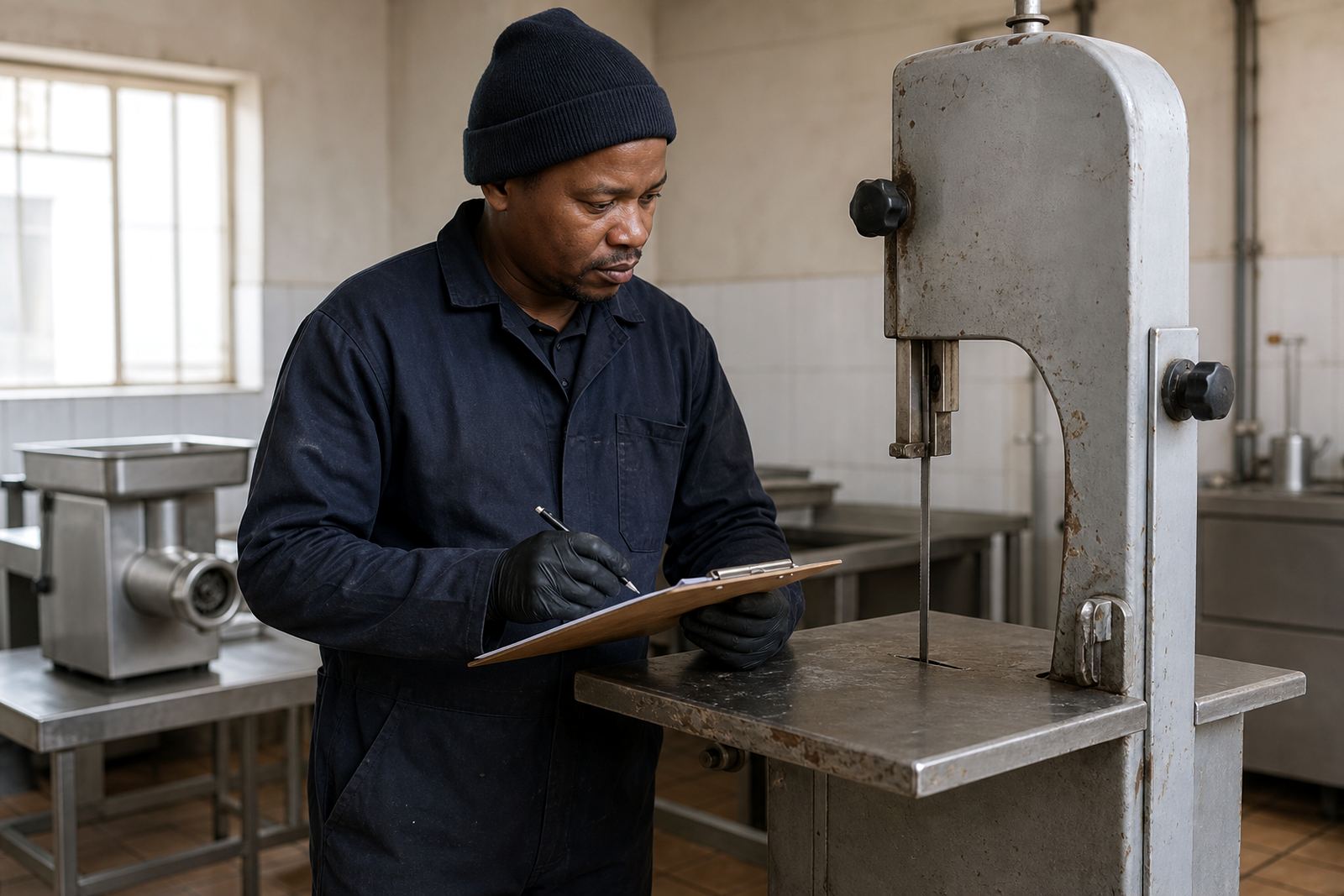
- Check guards and blade tension before trading starts.
- Keep work areas dry so slips and contamination are reduced.
In Bloemfontein, where many retail butchers serve both walk-in trade and household customers, the saw has to handle mixed demand without slowing the queue. That means training staff to work in sequence, with one person preparing the next batch while another clears and cleans the machine between jobs.
Keep mince moving without letting quality slip
Mince is one of the fastest moving products in a retail butchery, but it also carries the most risk if handling is careless. Trimmings, fat ratios and offcuts must be managed properly so the product stays neat and usable. A mincer should never become the place where poor trimming is hidden away. If the input is messy, the output will be messy too.
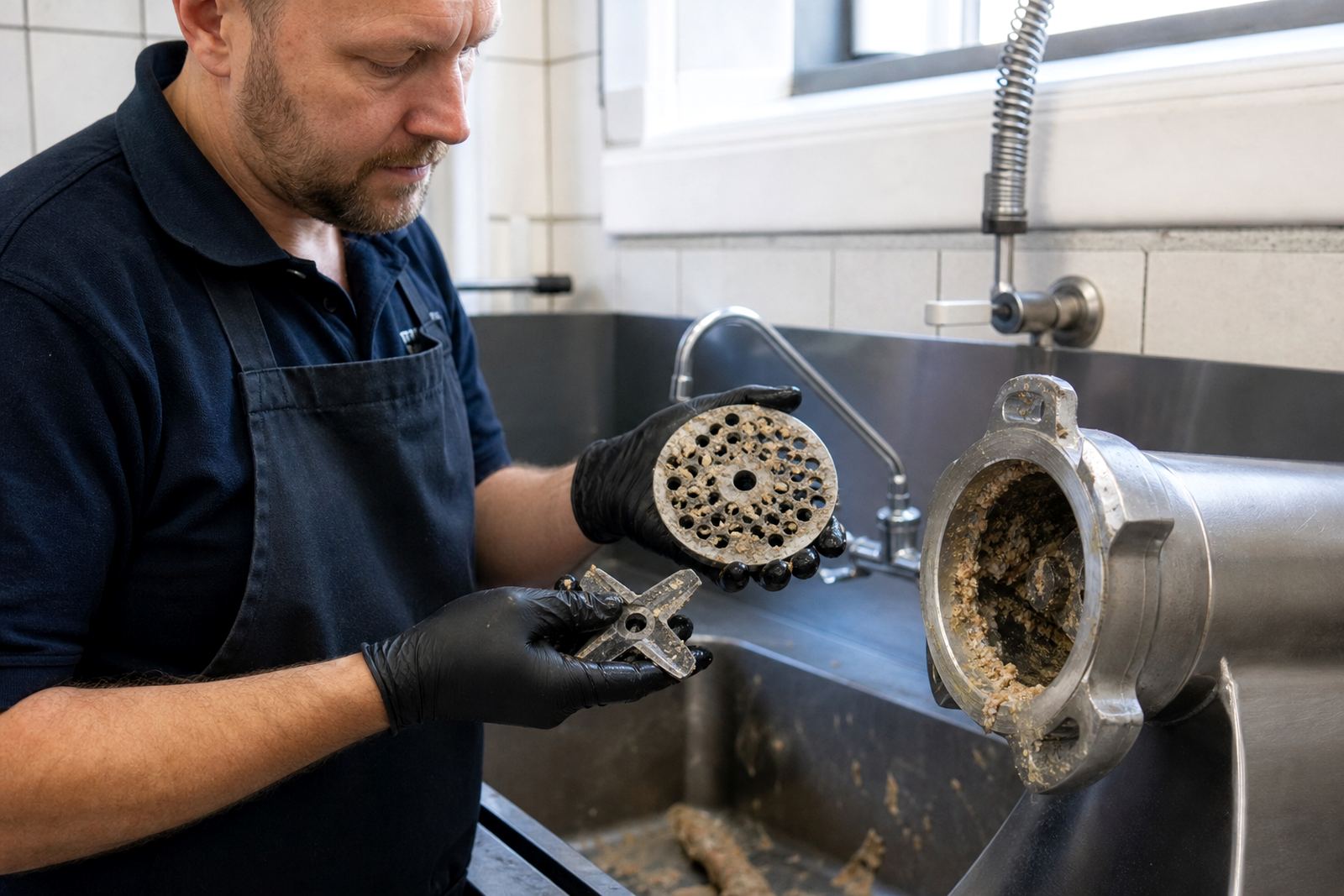
The best retail mince flow starts with sorting. Set aside trim that is suitable for mince, separate anything that needs further trimming, and keep a clear routine for cleaning between batches. Plates and knives should be checked, changed when worn and kept sharp enough to work properly. Dull parts make the machine strain, and that affects both texture and output.
For shops in Johannesburg or Pretoria, where turnover can rise quickly on Fridays and weekends, mince work often needs to happen in short controlled runs. That helps keep the display fresh and avoids overproducing product that must then be held too long. A clean, steady rhythm beats one big rush at the end of the day.
- Sort trim before it reaches the mincer.
- Keep raw and finished mince in separate containers.
- Use gloves, aprons and other PPE during handling and cleaning.
- Wash and sanitise contact surfaces after each production run.
- Watch for heat build-up during long sessions and pause when needed.
Balance fresh cut sales with mince demand
Retail mixes change from shop to shop. Some areas sell more bone-in cuts, while others move a lot of mince because households want quick meals. The trick is to watch what sells and build production around that pattern instead of guessing. If a shop constantly runs short on one item and overproduces another, the problem is often in the flow, not the demand.
A practical approach is to split the day into blocks. Early morning can focus on fresh cut preparation, mid-morning on mince and packed value products, and later trade on topping up the display. That does not mean every shop must follow the same timetable, but it does help teams avoid doing everything at once. Good flow protects freshness and keeps service consistent during busy periods.
In smaller towns like Welkom, Kroonstad and Kimberley, customer buying patterns may be more predictable than in a large city, yet the same principle applies. When the counter is prepared properly, staff can respond quickly to the customer who wants two chops, a tray of mince or a special cut for the braai. Retail success is often won in these small moments of speed and readiness.
Cleaning routines that save time later
Cleaning is not something to leave for the end of the day if the shop is busy. A quick wipe and rinse between tasks can prevent build-up that takes much longer to remove later. This is especially important around blades, plates, knives, trays and benches where fat and protein residue can collect. Good cleaning also supports better product appearance, which matters when customers are choosing with their eyes.
Load-shedding and water interruptions can make cleaning harder, so retail teams should plan for it. Keep a practical stock of sanitiser, spare cloths and cleaning tools, and make sure the team knows what to do if power goes off mid-shift. Where electricity returns after an outage, equipment should be checked again before production resumes. Safety first, then output.
Simple care habits make a real difference:
- Unplug equipment before cleaning or changing parts.
- Inspect blades, plates and knives for wear or damage.
- Dry components properly to reduce corrosion, especially in coastal areas.
- Store tools in a clean dry place after use.
Training the team for busy retail days
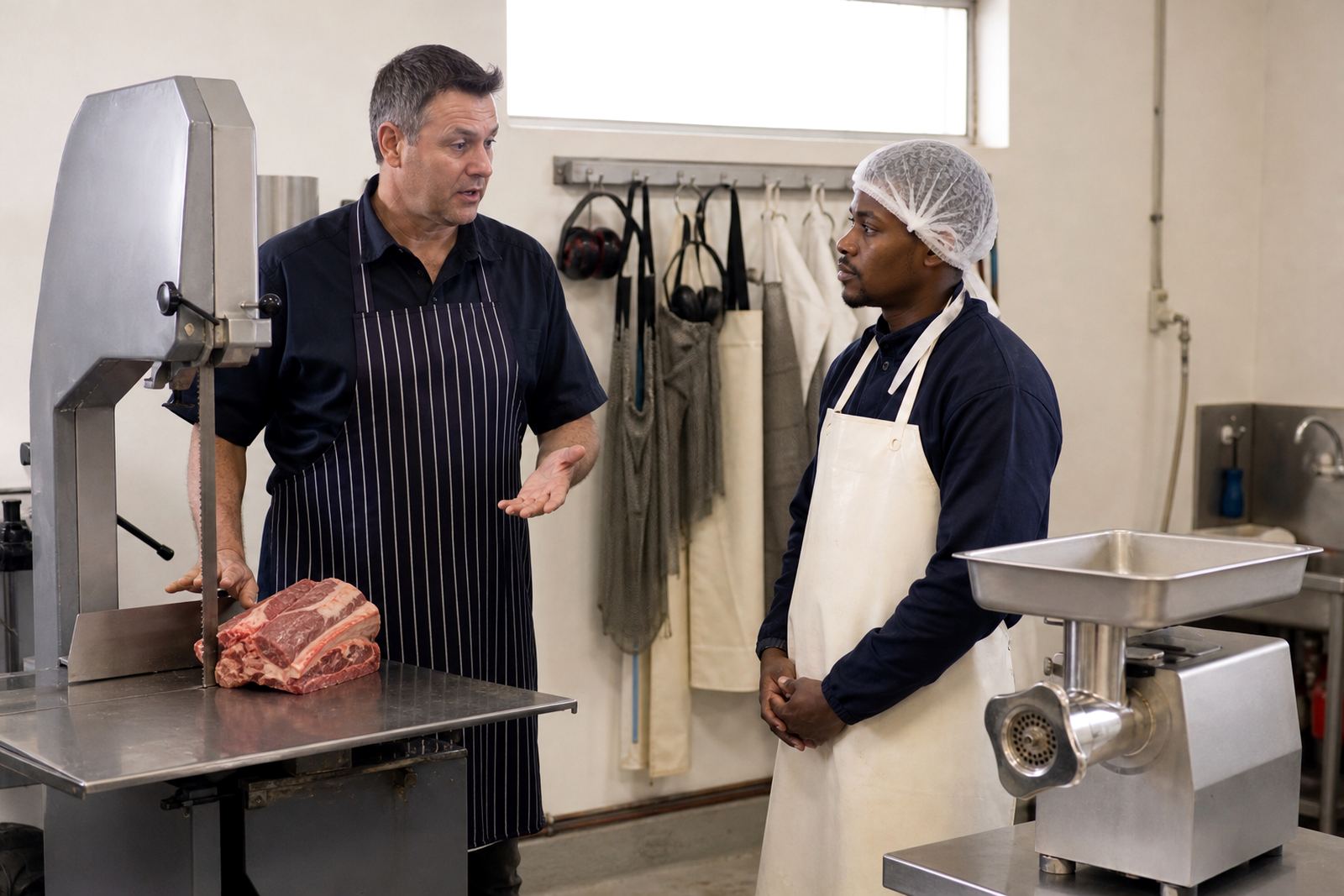
Even the best equipment will struggle if the team has no routine. Operators need to know how to feed product safely, when to stop the machine, how to clean it and who to call if something sounds or feels wrong. Training does not need to be complicated. It needs to be practical, repeated and relevant to the actual shop floor.
At MorCut Butchery in Hamilton, Bloemfontein, our focus is on helping commercial and home butchers build that practical discipline around bandsaws and mincers. That includes installation support, servicing, blade replacement, plate and knife change, cleaning demonstrations, operator training, breakdown callouts, preventive maintenance, parts supply and delivery and setup across South Africa.
When the team knows the process, the shop runs smoother. Customers wait less, wastage drops and the counter looks organised even on a busy day. In retail butchery, that sort of discipline is what keeps fresh cut production and mince output working together instead of competing for space and attention.