

Start With The Product Path, Not The Floor Plan
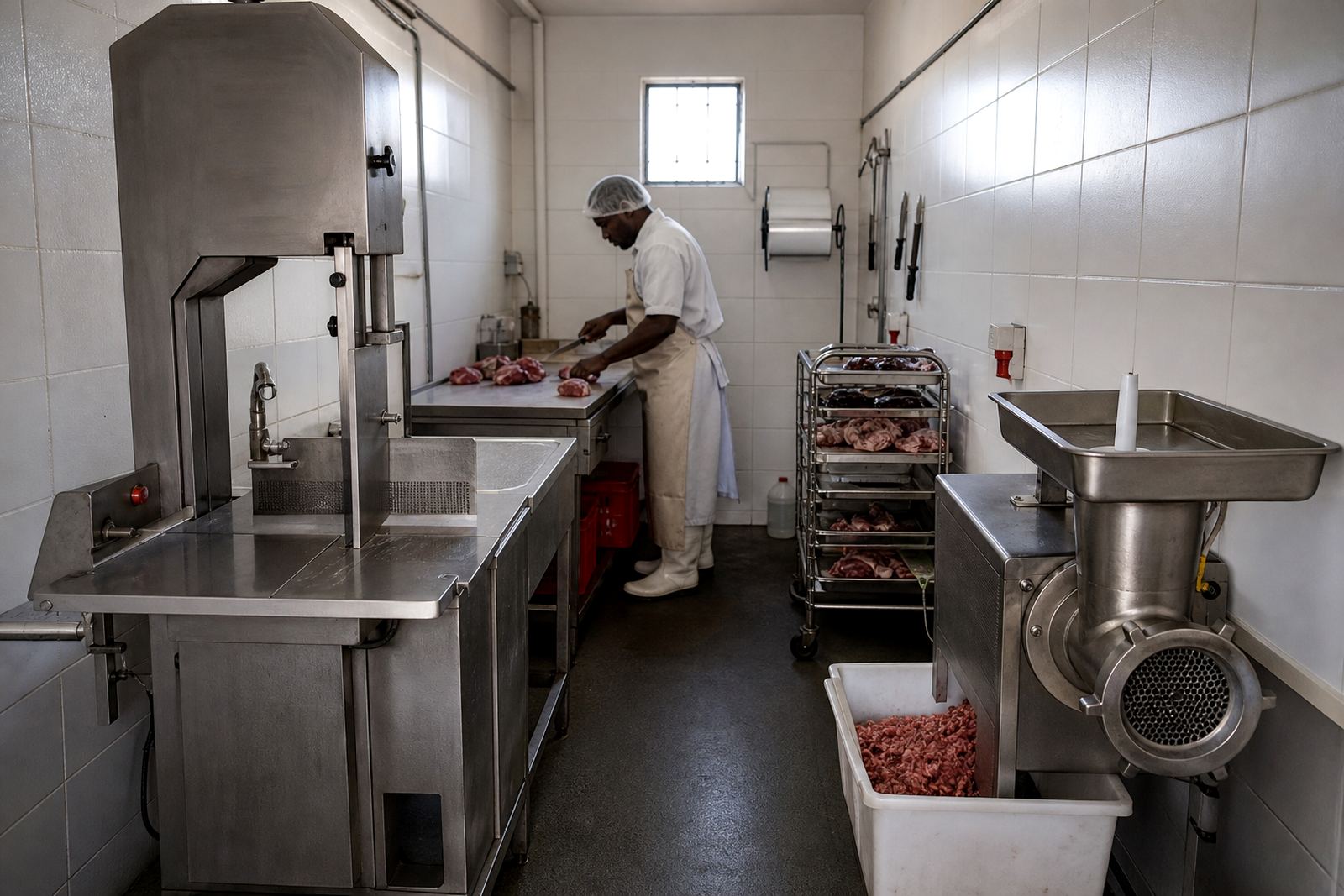
In a smaller shop, the first question is simple: where does the meat come in, where is it cut, where is it minced, and where does it leave the work area? If those four points are too close together, staff end up crossing paths, lifting more than they should, and cleaning around clutter instead of cleaning properly. A practical workflow starts with a clean path that keeps raw product moving forward in one direction.
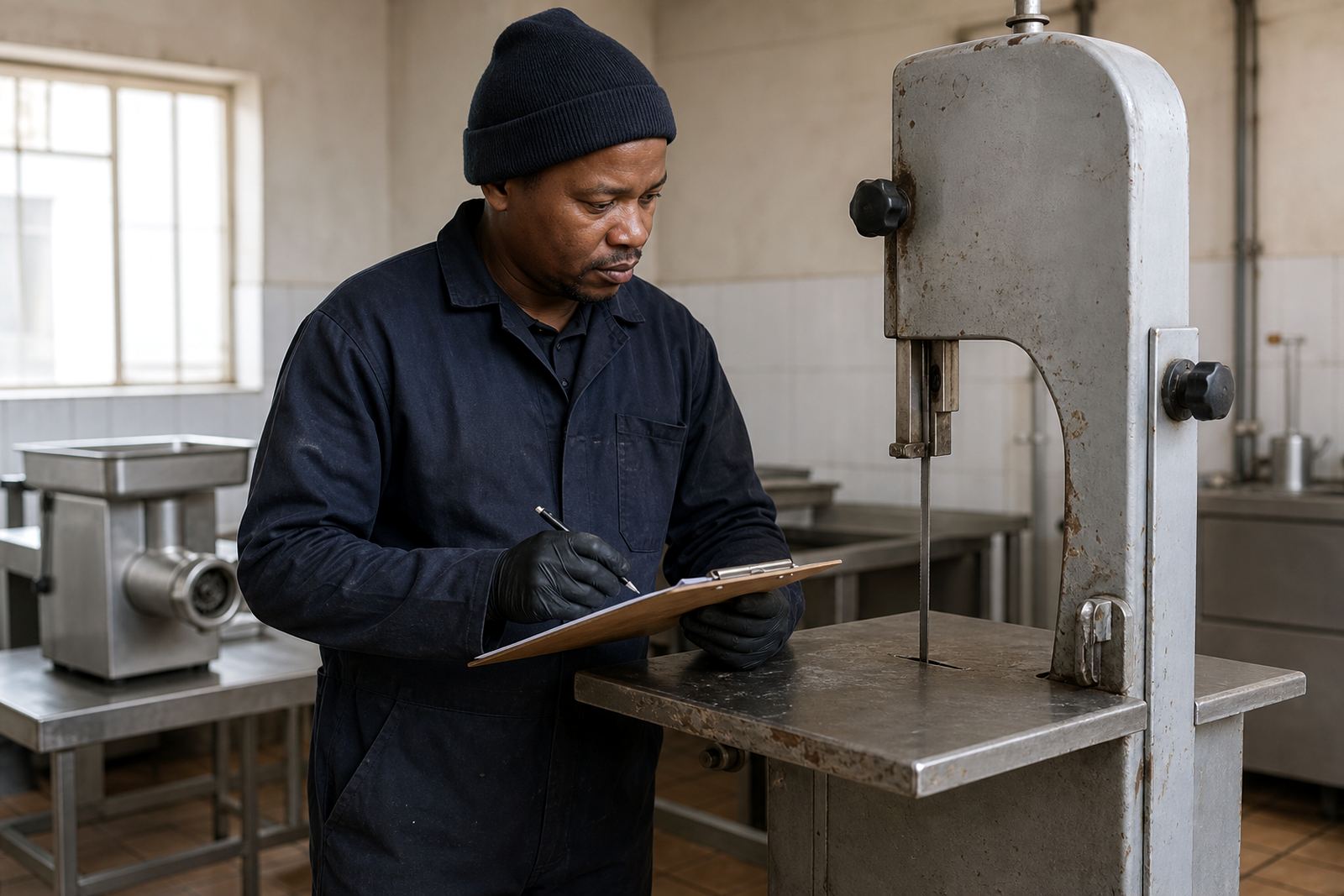
For many Bloemfontein butchers, space is limited by the building rather than the trade. That means the equipment choice has to suit the room, not the other way round. A bandsaw should sit where there is enough room for safe loading and unloading, while a mincer should be placed close enough to prep areas to reduce carrying, but not so close that splashes and scraps spread across the whole bay.
- Keep receiving, cutting, mincing and packing in a clear sequence
- Avoid cross traffic between clean and raw areas
- Leave space for a worker to step back from a machine safely
- Make sure cleaning access is not blocked by crates or offcuts
Choose Equipment That Matches The Shop Size
Small shops do not need a complicated setup. They need equipment that is straightforward to use, easy to clean, and dependable during busy periods. A bandsaw is useful for portioning larger cuts neatly, while a mincer helps turn trim into saleable product without wasting time. The main point is fit: the machine should suit the volume, the available counter space, and the number of staff using it each day.
In a compact butchery, it helps to keep each machine dedicated to its task. A bandsaw should not become a temporary storage point for boxes, knives or packaging. A mincer should not be placed where flour, seasoning, or wet cleaning work will interfere with the motor housing or the feed area. If the shop does mixed work, plan the day in stages so the machine can be cleaned and reset before the next task starts.
MorCut Butchery supports commercial and home butchers with bandsaws and mincers from Hamilton in Bloemfontein, with delivery and servicing across South Africa including Johannesburg, Pretoria, Durban and Cape Town. That matters when a shop needs practical advice on where a machine should sit, how much room is needed for cleaning, and what servicing will keep it working properly over time.
- Match machine size to daily output, not to guesswork
- Keep enough access space for cleaning and basic servicing
- Separate wet cleaning from active processing where possible
- Use only the equipment you need for the day’s workflow
Build A Safe Order For Cutting And Mincing
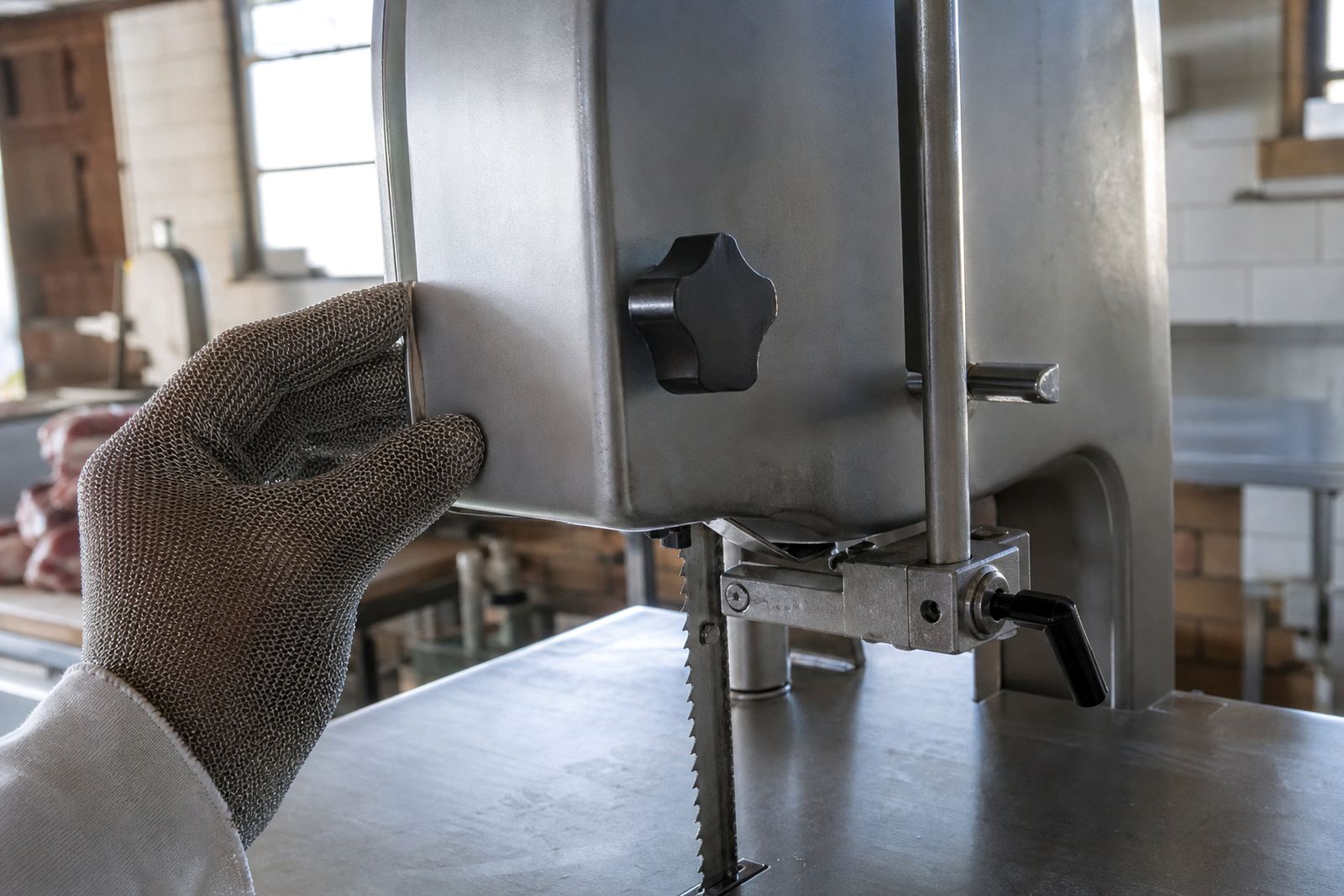
A good workflow protects both the product and the staff. The order of work should reduce carrying, limit the chance of slips, and keep hands clear of moving parts. Before any cutting starts, the area should be checked for wet patches, loose packaging and offcuts that could cause someone to slip. Guards must stay in place and every operator should wear the right PPE for the task.
For a small shop, one useful method is to set the day around batches. First prepare and sort the meat, then cut what needs the bandsaw, then move the trim to the mincer. This keeps the workflow tidy and reduces unnecessary back and forth. It also makes it easier to clean between batches instead of waiting until the end of the day when the whole room is already busy and tired.
If the team is small, assign one person to feed and another to receive, especially when larger cuts are being handled. That simple division can prevent accidents and improves pace without forcing anyone to rush. In a compact room, a slow and steady rhythm is usually better than trying to run everything at once.
Make Cleaning Part Of The Workflow, Not A Separate Chore
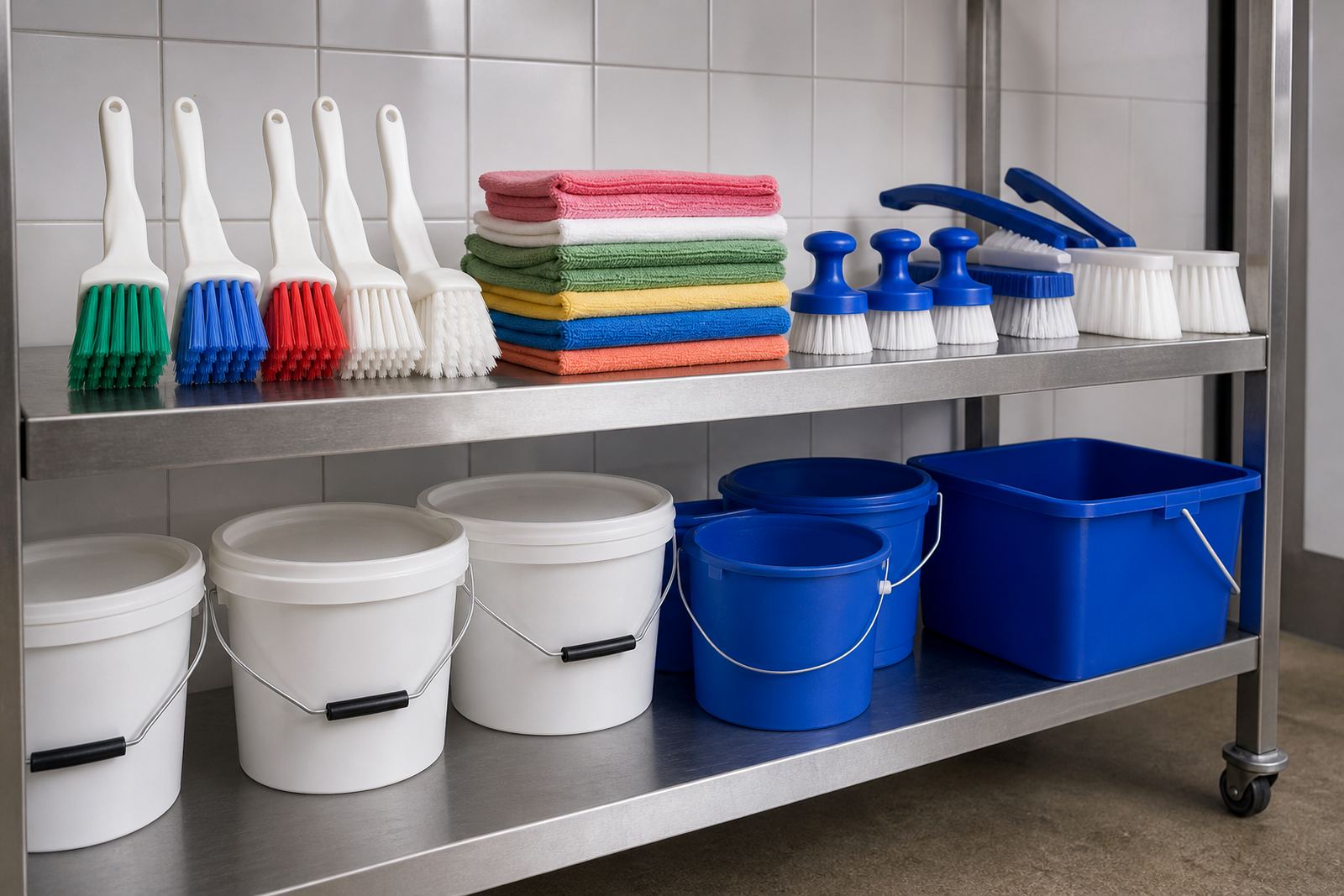
Cleaning is not something to do after the real work is finished. In a small shop, cleaning has to be built into the process because there is no spare room for mess to sit around. Mincer plates and knives need proper care, bandsaw areas need to be cleaned down, and all contact surfaces should be washed and dried according to the shop’s routine.
Smaller operations often struggle with the same issue: they are too busy to stop for cleaning, then spend more time later fixing the mess. A better approach is to clean between tasks, not only at closing time. That keeps the floor safer, helps the shop meet municipal health expectations, and protects the equipment from unnecessary wear.
- Clean up trim and bone debris before the next batch starts
- Wash and dry removable parts after use
- Check that drains and floors are kept clear of fat build-up
- Store blades and knives safely after cleaning
Plan For Power Cuts, Rushes And Maintenance
Small shops need a backup plan because business does not stop for load-shedding, sudden rushes, or a worn part that gives trouble on a Friday morning. If the shop depends on one bandsaw and one mincer, then basic care becomes part of the business plan. Preventive maintenance can save a lot of stress by catching loose parts, dull blades, worn fittings, or issues that should be fixed before they become breakdowns.
In practical terms, that means keeping a routine for checks, cleaning, and replacement parts. It also means making sure staff know who to call when a machine stops working. A breakdown callout is easier to manage if the shop already knows the machine’s normal setup, the last service date, and which part is likely to need attention. That kind of record-keeping saves time and helps the technician work faster.
For shops in Bloemfontein, Welkom, Kroonstad, Kimberley and beyond, local conditions matter too. Dry inland conditions can affect dust levels, while coastal humidity in Durban or Cape Town can make cleaning and drying even more important. A machine kept clean, dry and inspected regularly will usually give fewer surprises.
Train The Team To Work The Same Way Every Day
A small butcher shop cannot afford confusion. If one person loads the bandsaw one way and another person works differently, the shop loses time and the risk goes up. Good operator training gives the team one clear method for loading, cutting, mincing, cleaning and storing equipment. It also helps new staff settle in faster, which matters when the business is short on space and time.
Training should be practical and short enough to remember. The team should know how to use the guard, how to handle blades and plates carefully, and how to stop work if something does not sound or feel right. A few minutes spent showing the right method can prevent hours of lost production later.
MorCut Butchery’s team, including service, parts, support and training staff, works with shops that need clear advice rather than complicated talk. From Hamilton in Bloemfontein, we assist with delivery and setup, installation, servicing, blade replacement, plate and knife change, cleaning demonstrations, operator training and preventive maintenance.
A Practical Bloemfontein Example For Tight Spaces
Picture a small butcher shop in Bloemfontein serving local households, with one prep bench, one bandsaw and one mincer. The shop has limited room behind the counter and only enough floor space for two people to work comfortably. The smartest workflow is to keep the product moving in one direction, place the cutting machine near the prep point, and keep the mincer close enough for trim to move across without crossing the whole room.
That setup works because it reduces steps. Fewer steps mean less fatigue, fewer spills and less chance of someone bumping into a machine while carrying product. It also makes closing time easier: cleaning starts from the point of use and moves outward, instead of working around tools that were left in the wrong place. For a small shop, that discipline is often worth more than extra square metres.
Where space is tight, the best workflow is the one that feels calm. Staff should know what happens first, what happens next, and where each tool belongs at the end of the day. When that routine is in place, a small shop can handle busy trade without feeling cramped or unsafe.