

Why Guard Checks Belong in the First Job of the Day
Before the first carcass is lifted or the first cut is made, the guard should be checked as part of the opening routine. In a busy butchery, whether it is a shop in Bloemfontein or a prep room serving a farm stall outside Kroonstad, people tend to focus on the blade, the motor and the product on hand. The guard often gets less attention, yet it is one of the most important parts of the machine.
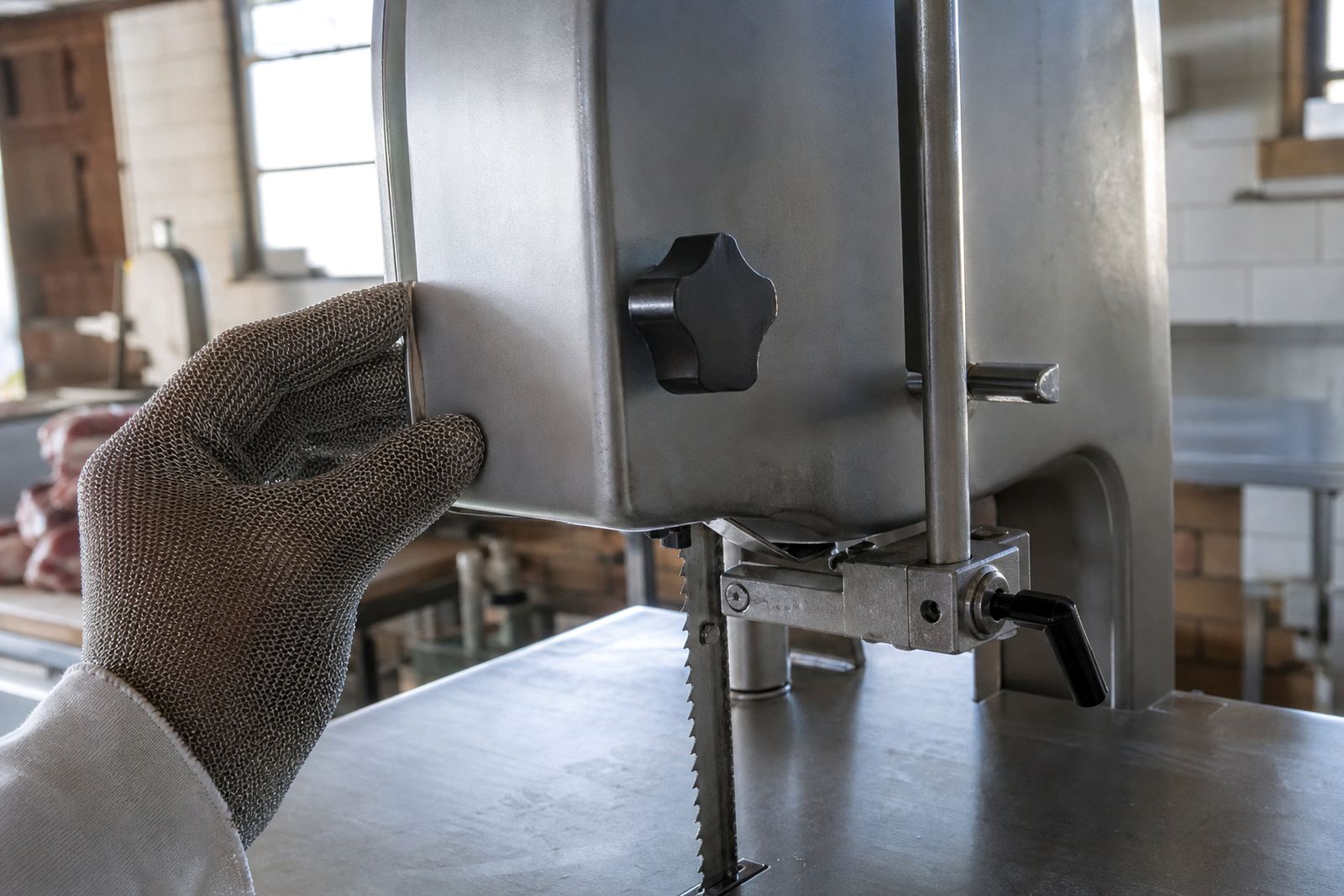
A proper guard helps keep hands away from the moving blade and keeps the cut area controlled. It also helps operators stay focused on the work in front of them instead of adjusting around a loose or missing part. If a guard is damaged, bent or not sitting correctly, the machine should not be used until it has been checked and put right.
What a Good Guard Check Should Cover
A guard check does not need special tools or a long delay. It should be a short visual and hands-on inspection before operation starts. The idea is to make sure the guard is secure, clean and able to move or stay fixed as intended. Dust, fat and meat residue can build up quickly and affect how parts sit together.
- Check that the guard is fitted correctly and firmly in place.
- Look for cracks, bends, loose fasteners or missing parts.
- Make sure the blade area is covered as designed and not exposed unnecessarily.
- Confirm that the guard does not rub, jam or catch during movement.
- Clean away residue so the operator can see the working area clearly.
If anything looks out of place, stop and report it. A small issue can become a bigger repair if the machine is pushed on too hard, especially in a shop that runs through load-shedding shifts and tries to make up time when power returns.
Common Problems That Start Small
Many guard problems begin with ordinary wear. A guard may be nudged during cleaning, knocked during loading or loosened over time from vibration. In some cases staff remove a guard for cleaning and do not refit it properly. That is when risk increases. The machine may still run, but it is no longer operating as it should.
Watch for these signs during daily use:
- Guard sits slightly off-centre
- Loose fittings that need repeated tightening
- Noise or contact where the guard touches a moving part
- Signs of impact, rust or fatigue
- Staff working around the guard instead of with it
In a place like Durban, where humidity can affect metal parts, cleaning and drying are especially important. In drier inland towns like Bloemfontein, dust can settle into hinges and edges. The local conditions may differ, but the need for a proper check stays the same.
Safe Cleaning Around Guards and Blades
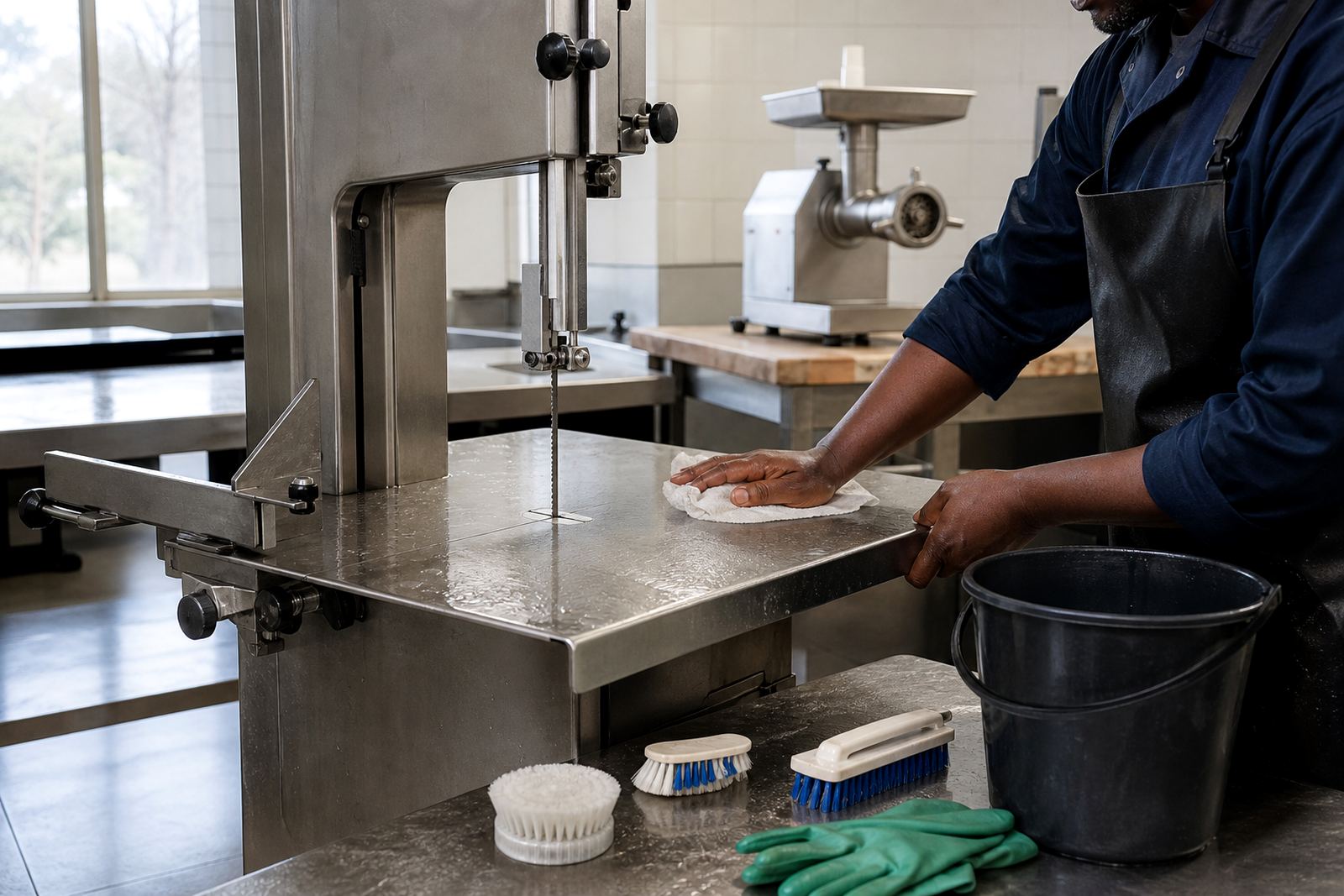
Cleaning is part of guard care, not separate from it. A clean machine is easier to inspect, and a guarded blade area is easier to keep safe during shut down. Before cleaning, switch off the equipment and follow the correct isolation steps used in the butchery. Never reach into the blade area with the machine live.
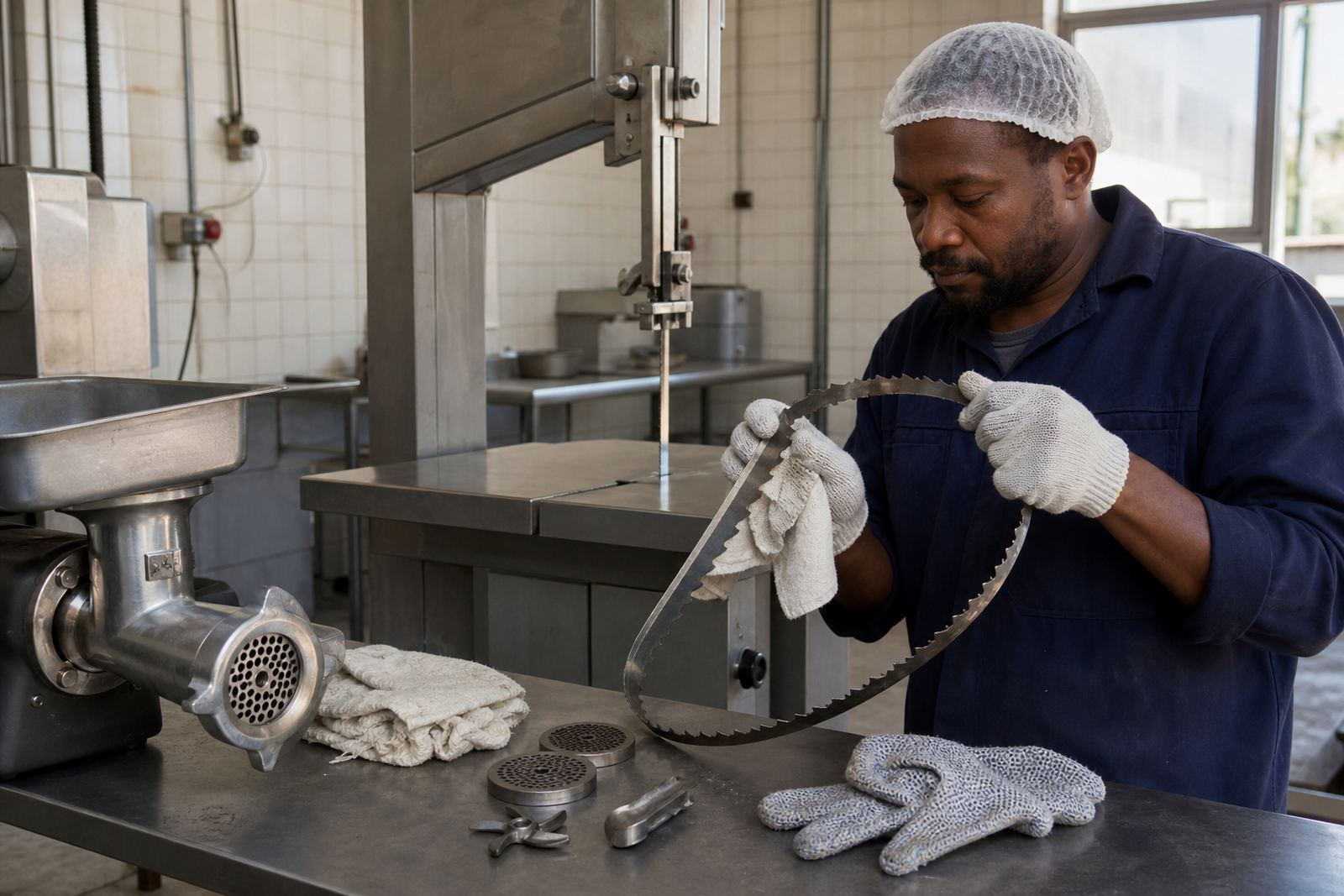
Use the right PPE for the task, including cut resistant gloves where appropriate, a apron and non-slip footwear. Keep cloths, brushes and cleaning tools close by so staff are not tempted to improvise. If the guard must be removed for cleaning or servicing, it should be refitted immediately and checked before the machine goes back into use.
Good cleaning habits also help with food safety. Fat build-up around guards and frames can attract grime and make the machine harder to inspect. That becomes a problem in any operation, from a home butcher in Pretoria to a commercial prep room in Cape Town where the pace is constant and the turnaround is tight.
How Guard Checks Fit Into Operator Training
A guard check works best when every operator knows what right looks like. New staff should be shown how the guard sits, what parts they may touch and what must be left alone. This should not be left to guesswork. A quick demo before the shift starts is usually enough to prevent confusion later in the day.
Training should cover a few simple rules:
- Never bypass or remove a guard to save time.
- Stop work immediately if a guard becomes loose or damaged.
- Report unusual sound, vibration or rubbing at once.
- Keep hands clear and use proper tools for pushing or positioning product.
- Only use the machine once the guard has been checked after cleaning or servicing.
Teams that work this way tend to have fewer interruptions and fewer rushed mistakes. It also creates a better handover between shifts, which matters when different staff members share one machine over a long trading day.
A Local Example From a Busy Bloemfontein Morning
Picture a butchery in Hamilton, Bloemfontein on a cold Monday morning. The counter staff are busy, the order book is full and the first load of meat has already arrived. The machine is switched on early so there is no delay. One operator notices that the guard is not sitting as firmly as it did the day before. It would be easy to carry on and hope it holds, but that is exactly when a small fault turns into a serious problem.
Instead, the team stops, cleans the area, checks the fittings and brings in the service coordinator if needed. The pause is brief, but it protects the operator and keeps the rest of the morning on track. That is the real value of a daily guard check. It avoids panic, protects the blade area and keeps the job moving with less risk.
For businesses supplying or servicing equipment across Bloemfontein, Johannesburg, Pretoria, Durban and Cape Town, this routine is one of the simplest ways to reduce breakdowns and avoid injury. It does not take long, yet it supports every other part of the day.
When to Call for Repair or Replacement
Not every guard problem can be solved with cleaning or tightening. If a guard is cracked, warped, loose after repeated adjustment or no longer covers the blade area properly, it should be repaired or replaced before the machine goes back into service. The same applies if the guard interferes with safe cutting or cannot be secured as intended.
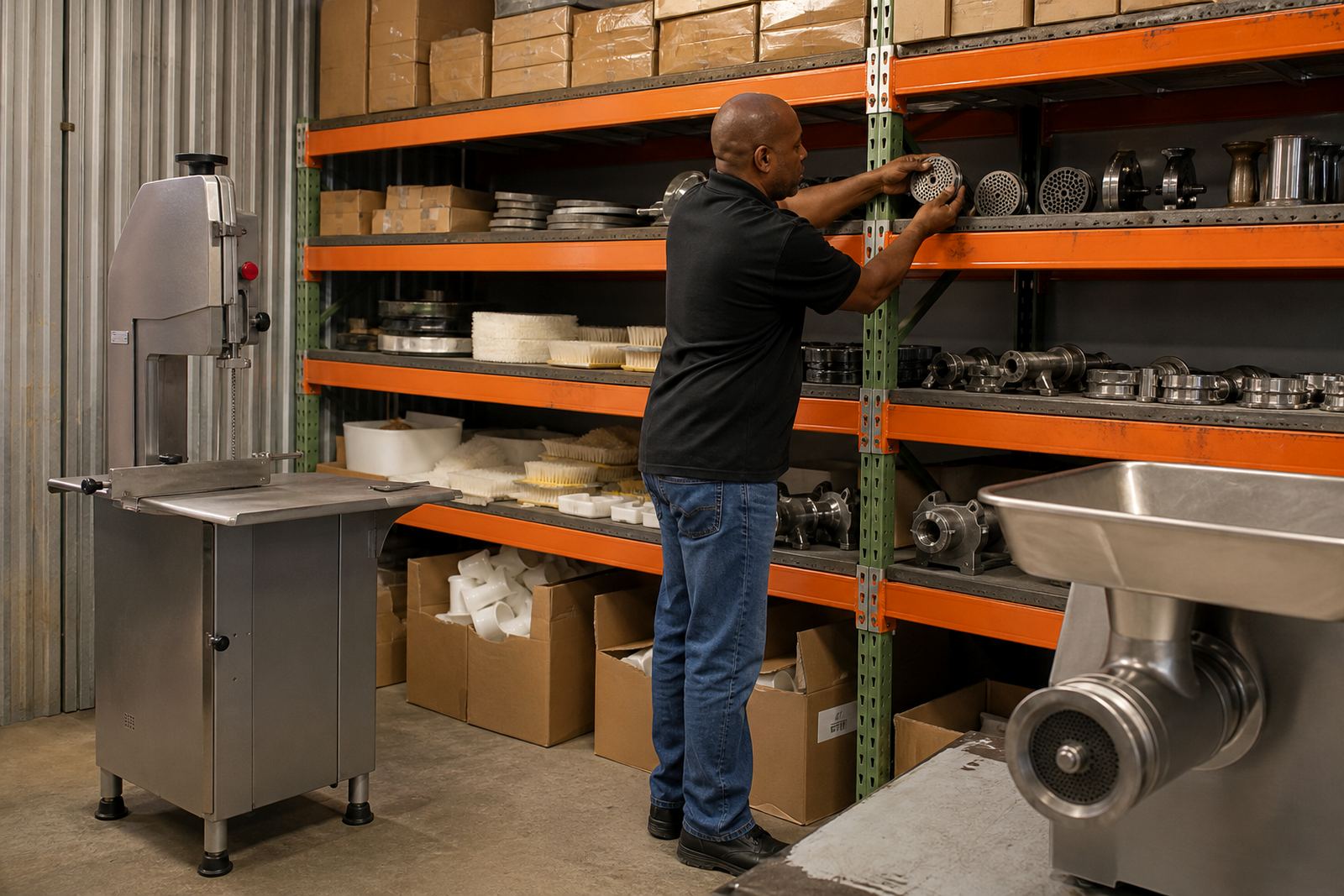
At MorCut Butchery, support for bandsaws and mincers includes installation, servicing, blade replacement, cleaning demonstrations, operator training, breakdown callouts, preventive maintenance, parts supply, delivery and setup. That kind of support matters because a guard is only useful when it is fitted, maintained and checked properly. For enquiries, customers can use the form on the contact page to arrange assistance from our Bloemfontein base serving towns and cities across South Africa.